Itineraries
France in 21 days: the grand tour, from Brittany to the Riviera
We may earn a commission when you book through links on this page, at no extra cost to you. We don't visit or try the places we cover: we summarize published sources. How we work
Day by day
- Day 1Land at Paris CDG, short drive to Chantilly
- Days 2-4Saint-Malo, Cancale and Dinan on the Emerald Coast
- Days 5-6Carnac's standing stones and the Morbihan coast
- Days 7-9Sarlat, Lascaux IV and the Dordogne valley
- Days 10-12Biarritz, Bayonne, Saint-Jean-de-Luz and La Rhune
- Days 13-14Cauterets, Pont d'Espagne and Lac de Gaube
- Days 15-17Avignon, the Palais des Papes and Villeneuve
- Days 18-20Nice and the Riviera coast by train
- Day 21Short drive to Nice airport and fly home
Where to sleep
- Chantilly1 night
- Saint-Malo3 nights
- Carnac2 nights
- Sarlat-la-Canéda3 nights
- Biarritz3 nights
- Cauterets2 nights
- Avignon3 nights
- Nice3 nights
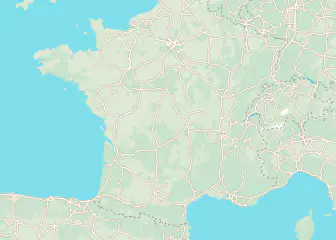
Opens the trip planner with these stops and nights already filled in. Add a stop, drop one or change the nights.
Weather through the year on this route
| Jan | Feb | Mar | Apr | May | Jun | Jul | Aug | Sep | Oct | Nov | Dec | |
|---|---|---|---|---|---|---|---|---|---|---|---|---|
| High °F (°C) | 478 | 5010 | 5613 | 6116 | 6820 | 7423 | 7926 | 8027 | 7323 | 6518 | 5412 | 499 |
| Low °F (°C) | 352 | 352 | 384 | 436 | 499 | 5513 | 5915 | 5915 | 5412 | 4910 | 426 | 373 |
Normals 1991–2020 at Chantilly, Saint-Malo, Sarlat-la-Canéda, Biarritz and Avignon: averages over 30 years, not a forecast. Source: NASA POWER (MERRA-2), grid of about 50 km. Figures computed by us in November 2026. Rain is shown only where a weather station confirms the figures.
In short
- Eight bases in 20 nights, from Paris Charles de Gaulle (CDG) to Nice (NCE), crossing Brittany, the Dordogne, the Basque Country, the Pyrenees, Provence and the Riviera.
- Longest transfer: Carnac to Sarlat-la-Canéda, 7 h 20 and 655 km (407 mi). Cauterets to Avignon (5 h 50) and Chantilly to Saint-Malo (5 h 00) are the other big days.
- Most bases get two or three nights, so day trips stay short and you unpack only eight times.
- Different pick-up and drop-off cities usually mean a one-way fee from the rental company; it varies, so compare offers.
This route is for travelers who want one long trip through the best-known regions of France without flying between them. You land in Paris, drive west to Brittany, cut south to the Dordogne, continue to the Basque coast, climb into the Pyrenees, turn east to Provence and finish on the Riviera. It is 21 days and 20 nights with eight bases, so you unpack eight times and every region gets at least one full day.
Most days are short. Four are not: Chantilly to Saint-Malo (5 h 00), Carnac to Sarlat-la-Canéda (7 h 20, the longest), Sarlat-la-Canéda to Biarritz (4 h 30) and Cauterets to Avignon (5 h 50). Plan those days as travel days, leave early and expect to see little else.
The route at a glance
| Days | Base | Nights | Drive from previous base |
|---|---|---|---|
| 1 | Chantilly | 1 | From Paris CDG: 30 min, 27 km (17 mi) |
| 2-4 | Saint-Malo | 3 | 5 h 00, 430 km (267 mi) |
| 5-6 | Carnac | 2 | 2 h 35, 181 km (112 mi) |
| 7-9 | Sarlat-la-Canéda | 3 | 7 h 20, 655 km (407 mi) |
| 10-12 | Biarritz | 3 | 4 h 30, 402 km (250 mi) |
| 13-14 | Cauterets | 2 | 2 h 25, 189 km (117 mi) |
| 15-17 | Avignon | 3 | 5 h 50, 530 km (329 mi) |
| 18-20 | Nice | 3 | 2 h 55, 260 km (162 mi) |
| 21 | Nice airport (NCE) | - | 15 min, 8 km (5 mi) |
Car rental in France
You pick up at Paris CDG and drop off in Nice, which usually means a one-way fee. Compare offers and book early for summer.
Day by day
Day 1: Chantilly
Pick up the car at Paris Charles de Gaulle Airport (CDG) and drive to Chantilly, 30 min and 27 km (17 mi) away. This is a soft landing after the flight. Our Hauts-de-France road trip mentions Chantilly only for its castle and stables, so the guides give no more detail than that. Paris is not covered by our guides: if you want a few days there first, pick up the car when you leave the city. Hotels in Chantilly.
Days 2-4: Saint-Malo, Cancale and Dinan
Day 2 is a driving day: Chantilly to Saint-Malo is 5 h 00 and 430 km (267 mi). Our guides do not describe the road between the two, so plan fuel and lunch stops yourself.
Saint-Malo’s ramparts are a walk of about 1.8 km (1.1 mi), roughly an hour, and free. Start early, before the groups arrive. Then wander the lanes inside the walls. At low tide you can walk to the Grand Bé islet, but the tide returns fast, so check the times posted at the tourist office first.
On day 3, Cancale is about 15 km (9 mi) east of Saint-Malo. Arrive in late morning for the oyster stalls at the Port de la Houle, then walk the customs officers’ path toward Pointe du Grouin, about 5 km (3 mi) from town. On day 4, Dinan is about 30 km (19 mi) south: half-timbered houses, the ramparts, rue du Jerzual and the river port on the Rance. Mont-Saint-Michel Bay and Cap Fréhel (each about an hour’s drive from Saint-Malo, per the guide) are the longer alternatives. More detail is in 3 days in Saint-Malo, Cancale and Dinan. Hotels in Saint-Malo.
Days 5-6: Carnac and the megalith coast
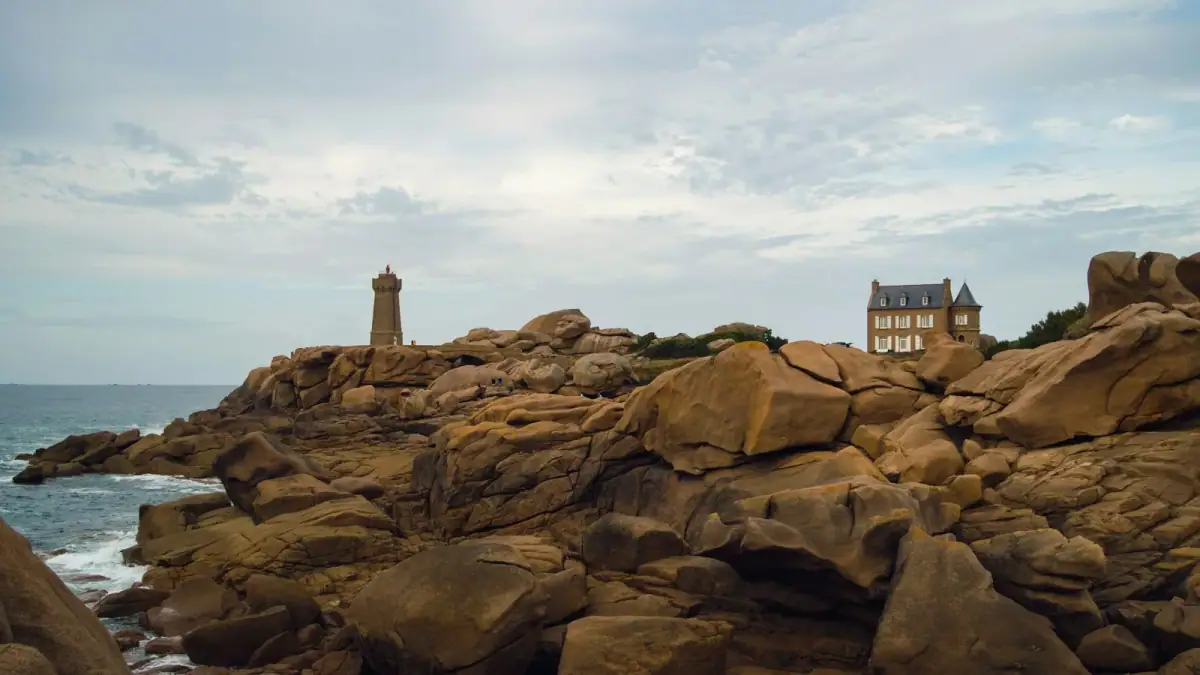
Carnac is 2 h 35 and 181 km (112 mi) from Saint-Malo. Start day 5 at the Maison des mégalithes, which faces the Ménec alignments; the guide recommends coming early or late in the day, when the low light shows the relief of the stones. Access depends on the season. From October to the end of March, some sites are open for free visits. The rest of the year you enter with a guide for €13 (~$15), and the path around the sites stays free. Climbing on the stones is forbidden in every season. Details are in our Carnac access and fees guide. The prehistory museum in Carnac traces the region’s history from its first occupants.
Day 6 stays in the area, with three options from what to see in Morbihan. Locmariaquer, at the entrance to the Gulf of Morbihan, has the broken Grand Menhir and the Table des Marchand, a passage dolmen with engravings. The Gavrinis cairn, on a small island in the gulf, is known for its engraved walls; visits go by boat from Larmor-Baden and should be booked ahead in season. Or take the Quiberon peninsula: calm beaches on the bay side, a wild coast on the ocean side where swimming is not advised, and boats from Port-Maria to the islands. Belle-Île can be done in a day from Quiberon, but the guide says the day is short. Crossing times vary by season, so check them.
The next day is the longest drive of the trip, so keep the evening easy. Hotels in Carnac. For the rest of Brittany, our Brittany road trip in 7 days covers the north coast and the Crozon peninsula, which this route skips.
Days 7-9: Sarlat-la-Canéda and the Dordogne valley
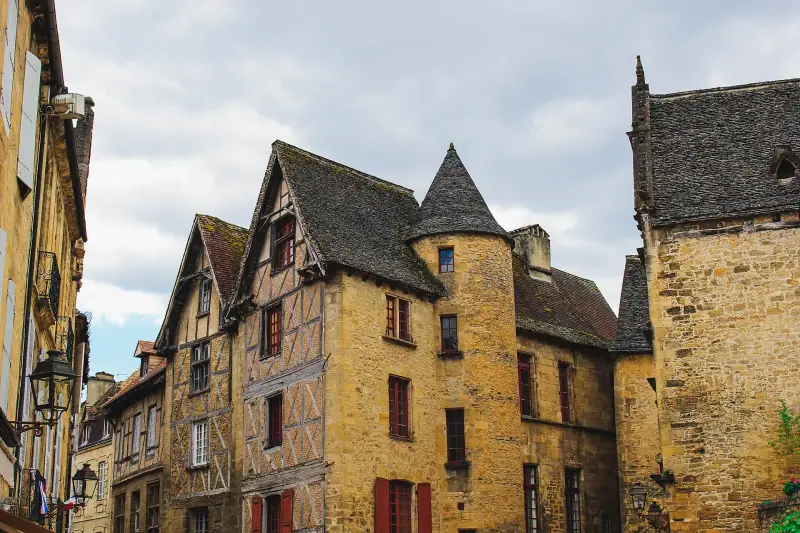
Carnac to Sarlat-la-Canéda is 7 h 20 and 655 km (407 mi), the longest transfer of the trip. Leave early and break the drive. Our guides do not cover the places on the way, so choose your stops on your own map. Arrive for an evening walk in Sarlat, when the honey-colored stone is at its best. The Place de la Liberté is the starting point; the Place des Oies and the Lanterne des Morts are close. The big market is on Saturday morning, with a smaller one on Wednesday morning. See visiting Sarlat-la-Canéda.
On day 8, go to Lascaux IV in Montignac, about 25 km (16 mi) from Sarlat. The original cave has been closed since 1963; Lascaux IV is a full replica. Book ahead, allow about two hours, and bring a jacket because the replica is kept cool. In the afternoon, Les Eyzies offers the National Museum of Prehistory. Our guide to Montignac-Lascaux has more.
On day 9, spend the day on the river with Domme, La Roque-Gageac and the facing fortresses of Beynac and Castelnaud (see the valley châteaux). Everything is within about 20 km (12 mi) of Sarlat, but summer traffic is slow, so start early. For a longer stay, see the Dordogne in one week. Hotels in Sarlat.
Days 10-12: Biarritz and the Basque coast
Sarlat-la-Canéda to Biarritz is 4 h 30 and 402 km (250 mi), a long day. Leave in the morning; our guides do not cover the places on the way. Keep the evening for the Grande Plage and the footbridge to the Rocher de la Vierge. Check tide times: the Côte des Basques has little sand at high tide. Our Biarritz guide covers the port, the Halles and the museums, including the Cité de l’Océan for a rainy day.
On day 11, Bayonne is about 8 km (5 mi) away, with its cathedral, chocolate makers and covered market. Day 12 can follow the 3-day Basque Country itinerary: Saint-Jean-de-Luz is about 15 km (9 mi) from Biarritz, and Espelette about 25 km (16 mi). La Rhune’s cog train costs €26 (~$30) round trip for an adult in 2026 and takes 2 h 30. In July and August, book two to three days ahead; the rest of the year, check the weather and buy on the day (see the La Rhune guide). Hotels in Biarritz.
Days 13-14: Cauterets
The drive from Biarritz is 2 h 25 and 189 km (117 mi). Cauterets is a former spa town at about 930 m (3,050 ft), at the end of a dead-end valley, so everything runs along one road. Spend the first evening in town or at a thermal center.
On day 14, go up to the Pont d’Espagne, in the Pyrenees National Park, and walk to Lac de Gaube: allow roughly one to one and a half hours to climb. For a calmer day, stay with the waterfalls near the car park. Parking at the Pont d’Espagne was €8 (~$9) a day in 2026, and it is free with the gondola-chairlift ticket (the Lac de Gaube pass, about €17 / ~$20). More walks are in the best hikes in the Pyrenees. Our 5 days in the Hautes-Pyrénées also describes the Cirque de Gavarnie and the Pic du Midi, which need more time than this route allows. Hotels in Cauterets.
Days 15-17: Avignon
The second long transfer is Cauterets to Avignon: 5 h 50 and 530 km (329 mi). Our guides do not describe the road between, so leave in the morning and plan breaks. Use the evening for Place de l’Horloge and a walk along the ramparts.
On day 16, visit the Palais des Papes (the popes lived here from 1309 to 1376; allow one to two hours) and go at opening time or late in the day from June to September. Then Pont Saint-Bénézet (about an hour), the Rocher des Doms for the view, and Les Halles, generally open Tuesday to Sunday morning. On day 17, Villeneuve-lès-Avignon, across the Rhône, is an easy half day. Our Avignon guide also lists the Pont du Gard, Châteauneuf-du-Pape and the Luberon as day trips; see the 5-day Provence itinerary. Hotels in Avignon.
Days 18-20: Nice and the Riviera
Avignon to Nice is 2 h 55 and 260 km (162 mi). On day 19, stay in the city: Old Nice and the cours Saleya market, Castle Hill for the view over the Bay of Angels, the Promenade des Anglais, and the Matisse and Chagall museums. The beach is pebbly, so bring water shoes.
On day 20, use the train along the coast, as our 3-day Riviera guide does: Villefranche-sur-Mer, Èze and Menton, or Antibes and Cannes. Summer parking is a real handicap on the coast. For more, read what to see on the Nice Riviera, where to stay in Nice and the 5-day Riviera road trip. Hotels in Nice or activities in Nice.
Day 21: fly home from Nice
Nice Côte d’Azur Airport (NCE) is 15 min and 8 km (5 mi) from the city. Return the car there.
Getting there and away
Fly into Paris Charles de Gaulle (CDG) and out of Nice Côte d’Azur (NCE). Both are among the usual international gateways of the country, which suits travelers from the US, UK, Canada and Australia. Check flight options with your own airline or booking site; our guides do not list routes. For entry rules, visas, ETIAS and whether you need an international driving permit, check the official government source of your own country.
Because you pick up the car at CDG and drop it in Nice, rental companies usually charge a one-way (drop-off) fee, more if the drop-off is in another country. It varies by company, so check it when you compare offers.
When to go
The regional guides agree on May, June and September as the best compromise: long days, pleasant weather and fewer people than in midsummer. Details by region:
- Brittany: the sea is often 16 to 20 °C (61 to 68 °F) in summer, with large tides. See when to go to Brittany.
- Dordogne: spring and early fall are the best compromise; July and August are the hottest and busiest. See the best time for the Dordogne.
- Basque Country: July and August are busiest and priciest. See when to go.
- Pyrenees: high-altitude hiking runs from mid-June to mid-September, and high passes like the Tourmalet close in winter. See the best time for the Pyrenees.
- Provence: lavender usually blooms from mid-June to late July. See the best time for Provence.
- Riviera: the sea is often 23 to 25 °C (73 to 77 °F) in July and August. May events like the Cannes Film Festival fill rooms. See the best time for the Riviera.
Budget
Our guides give no single figure for the whole trip, and there is no budget guide for Brittany, the Dordogne, Provence or Hauts-de-France. These figures come from the three regions that have one.
- Basque Country: a small-budget hotel averages about €107 (~$124) a night and mid-range about €139 (~$161). The frugal profile is €55 to €75 (~$64 to $87) a day. See the Basque Country budget.
- Pyrenees: Cauterets averages about €133 (~$155) a night, with an economy room around €106 (~$125), and the range is wide by season. The Pic du Midi cable car starts at €44 (~$51) in 2026. See the Pyrenees budget.
- Riviera: a hostel or very simple hotel in Nice averages about €57 (~$66) per person, and a lunch main course about €20 (~$23). The Matisse Museum is about €10 (~$12) and the Chagall Museum about €10 (~$12). See the Riviera budget.
Add the car, fuel, parking and the one-way fee, which no guide quotes.
Adapt it
For a shorter trip of about two weeks, drop Carnac or the Dordogne, or end after Cauterets and fly from Biarritz Pays Basque Airport (BIQ). For a longer one, add a night in Avignon and use Arles or Gordes, or add Antibes and Saint-Tropez to the Riviera leg. Finistère fits as a variant of the Brittany leg: Quimper (see where to stay in Quimper) and Concarneau, whose walled town sits on an islet and is about 20 km (12 mi) from Quimper, per visiting Concarneau. Our guides give no road time from Carnac, so check it before you add a night. Perros-Guirec also fits the Brittany leg, Bergerac the Dordogne, and Saint-Jean-de-Luz the Basque coast. Foix and Annecy are other bases in our planner.
Frequently asked questions
Is 21 days enough to see France by car?
It is enough for this route: eight bases, from Brittany to the Riviera, with two or three nights in most of them. It does not cover Paris, Corsica or the Alps.
Which airports should I use?
Fly into Paris Charles de Gaulle (CDG) and out of Nice Côte d'Azur (NCE). Both are usual international gateways, and the route runs one way between them.
Will I pay extra to drop the car in another city?
Rental companies usually charge a one-way (drop-off) fee when you return the car somewhere other than where you picked it up. It varies by company, so check it when you compare offers.
What are the hardest driving days?
Carnac to Sarlat-la-Canéda is the longest at 7 h 20 and 655 km (407 mi). Cauterets to Avignon takes 5 h 50 (530 km / 329 mi), and Chantilly to Saint-Malo 5 h 00 (430 km / 267 mi). Leave early and break each drive.
When is the best time to go?
May, June and September come up as the best compromise in the Brittany, Basque Country, Provence and Riviera guides. Mountain roads and high trails in the Pyrenees suit mid-June to mid-September.
Ready-made
France itineraries
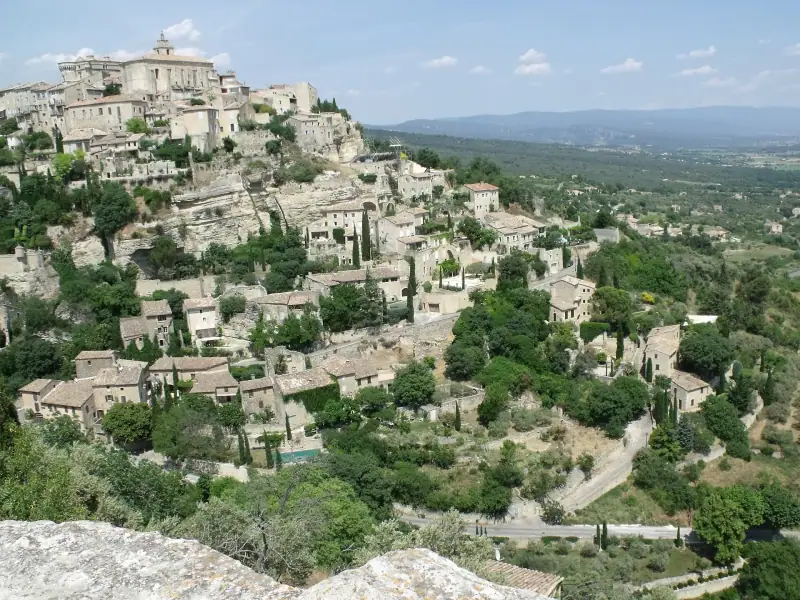
10 days
France in 10 days: Provence and the French Riviera by car
AvignonGordesMoustiers-Sainte-MarieNice
Can be adapted in the planner
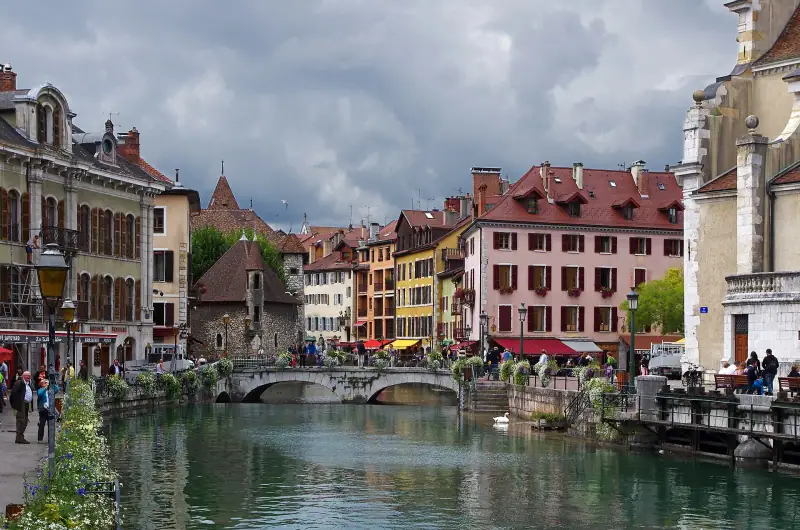
14 days
France in 14 days: from Paris to the Riviera via the Jura and the Alps
ChantillyArboisAnnecyAvignonGordesNice
Can be adapted in the planner
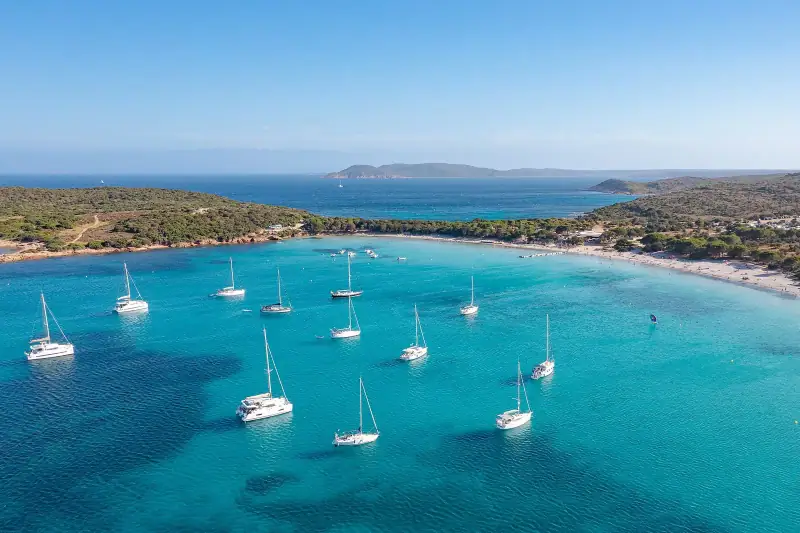
14 days
France in 14 days: the Riviera and Corsica by car and ferry
NiceBastiaCalviAjaccioBonifacioPorto-Vecchio
Can be adapted in the planner