Itineraries
One Week in the Dordogne: A Day-by-Day Itinerary
We may earn a commission when you book through links on this page, at no extra cost to you. We don't visit or try the places we cover: we summarize published sources. How we work
Day by day
- Day 1Sarlat-la-Canéda: medieval town
- Day 2Lascaux IV, Montignac and Les Eyzies
- Day 3Domme, La Roque-Gageac, Beynac and Castelnaud
- Day 4Rocamadour in the Lot, or a free day
- Day 5Périgueux, then on to Brantôme
- Day 6Brantôme and Saint-Jean-de-Côle
- Day 7Bergerac and the Monbazillac vineyards
Where to sleep
- Sarlat-la-Canéda4 nights
- Brantôme2 nights
- Bergerac1 night
Weather through the year on this route
| Jan | Feb | Mar | Apr | May | Jun | Jul | Aug | Sep | Oct | Nov | Dec | |
|---|---|---|---|---|---|---|---|---|---|---|---|---|
| High °F (°C) | 479 | 5010 | 5714 | 6217 | 6921 | 7625 | 8228 | 8329 | 7625 | 6619 | 5513 | 489 |
| Low °F (°C) | 341 | 341 | 384 | 436 | 4910 | 5513 | 5915 | 5915 | 5412 | 489 | 405 | 362 |
Normals 1991–2020 at Sarlat-la-Canéda and Bergerac: averages over 30 years, not a forecast. Source: NASA POWER (MERRA-2), grid of about 50 km. Figures computed by us in November 2026. Rain is shown only where a weather station confirms the figures.
In short
- Seven days cover the four Périgords with three bases: four nights around Sarlat, two in Brantôme and one in Bergerac.
- Days 1 to 3 cover Sarlat, Lascaux IV with the Vézère, and the Dordogne valley; day 4 is Rocamadour in the Lot or a free day.
- Days 5 to 7 cover Périgueux, Brantôme with Saint-Jean-de-Côle, then Bergerac and the Monbazillac vineyards.
- A car is strongly recommended; book Lascaux IV, the caves and the car ahead. May-June and September-October balance weather and crowds best.
One week is the ideal length to understand the Dordogne. Enough to go beyond the Sarlat postcard, and to discover the four “colors” of the Périgord: the black of the truffle oaks and prehistory, the white of the limestone cliffs of Périgueux, the green of the northern forests and the purple of the Bergerac vines. Here is a day-by-day itinerary, with short drives, a main base around Sarlat, then two stops to the west.
The week at a glance
The principle: start with the tourist heart (the Black Périgord), treat yourself to a trip into the neighboring Lot, then head north and finish with the vineyards.
| Day | Theme | Main stops | Night |
|---|---|---|---|
| Day 1 | The medieval town | Sarlat-la-Canéda | Sarlat |
| Day 2 | Prehistory | Lascaux IV, Montignac, Les Eyzies | Sarlat |
| Day 3 | River and châteaux | Domme, La Roque-Gageac, Beynac, Castelnaud | Sarlat |
| Day 4 | Trip to the Lot | Rocamadour (or free day) | Sarlat |
| Day 5 | The White Périgord | Périgueux | Brantôme |
| Day 6 | The Green Périgord | Brantôme, Saint-Jean-de-Côle | Brantôme |
| Day 7 | The Purple Périgord | Bergerac, Monbazillac | Bergerac |
Distances are indicative and rounded: check them on your navigation app, especially since valley roads are slower than they look. No day exceeds one to two hours of driving in total.
Day 1: Sarlat-la-Canéda, the medieval town
Arrive in Sarlat and settle in for four nights. It is the most practical base of the itinerary, since it sits at the center of the Black Périgord. If you are unsure about the neighborhood or type of lodging, our guide to where to stay in Sarlat-la-Canéda covers the options.
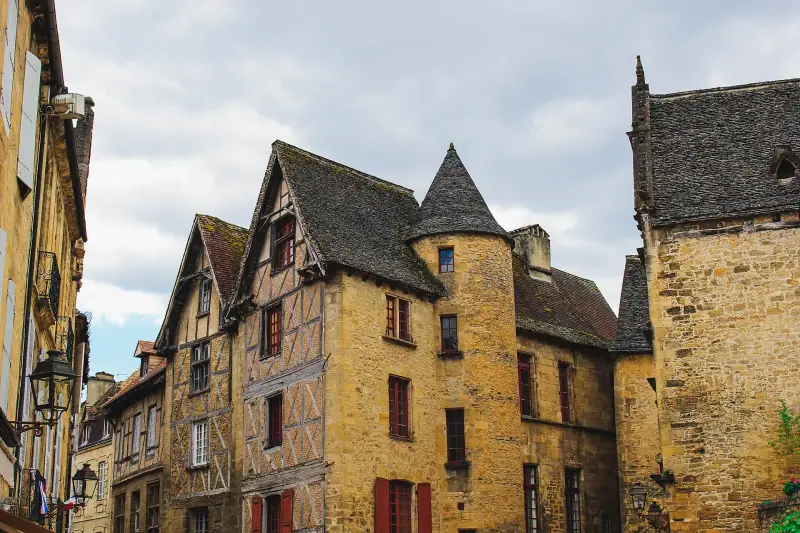
The historic center, with its ochre stone mansions, lauze roofs and narrow lanes, is one of the best preserved in France. It is visited entirely on foot. A few landmarks:
- Saint-Sacerdos Cathedral and its surroundings.
- The Place de la Liberté, heart of local life, where the markets are held.
- The Lanterne des Morts, a curious medieval stone tower near the cathedral.
- The side lanes, often deserted early in the morning, hiding inner courtyards and Renaissance facades.
For lunch, favor the midday set menu and short menus of seasonal products rather than the most obvious restaurants on the main streets. The dishes to taste are detailed in our guide to Périgord food specialties.
Stay in Sarlat for your first base
Four nights in Sarlat: compare hotels, B&Bs and cottages, and book early if you come in summer.
In the afternoon, stroll without a plan. The golden end-of-day light on the stone is one of the town’s great moments. For a first day, that is enough: the rest of the week will be more intense.
Day 2: Lascaux IV and the Vézère Valley
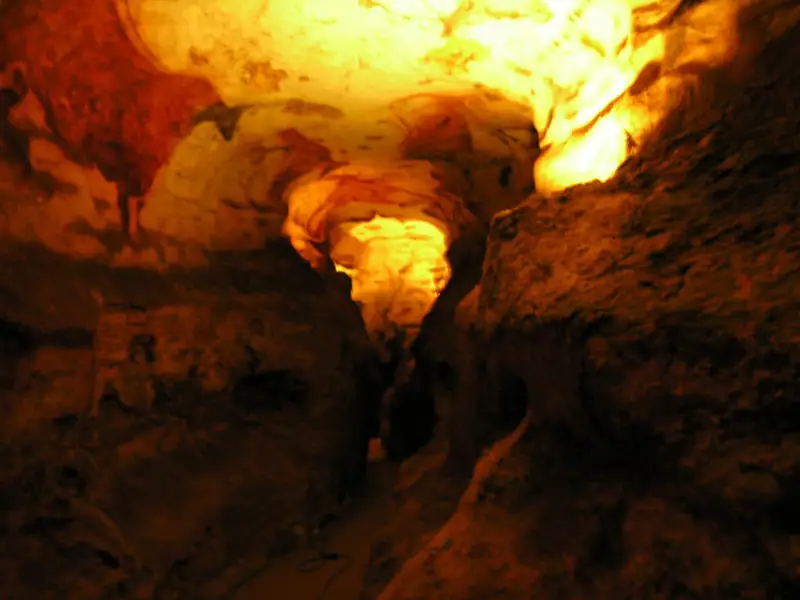
The Vézère Valley, a UNESCO World Heritage Site, concentrates an exceptional number of prehistoric sites. Our guide to Lascaux and the Vézère Valley gives all the details; here is the flow of the day.
Morning: Lascaux IV. Montignac is about 25 km (16 mi) from Sarlat, half an hour by road. The original cave has been closed to the public since 1963 to protect its paintings; you visit Lascaux IV, a complete replica with a museum route. Book ahead and allow about two hours. Bring a jacket: the temperature is deliberately low.
Afternoon: Les Eyzies. The village, built against the cliff, bills itself as the “world capital of prehistory.” Choose between the National Museum of Prehistory and a decorated or developed cave of the valley (booking well ahead advised in summer), then keep time to walk along the cliff and have a drink on a terrace. Back to Sarlat in twenty minutes to half an hour.
Do not try to cram in too many sites: a museum or a cave in the afternoon is enough, especially with children. For more family ideas, see our itinerary 5 days in the Dordogne with kids.
Day 3: Domme, La Roque-Gageac, Beynac and Castelnaud
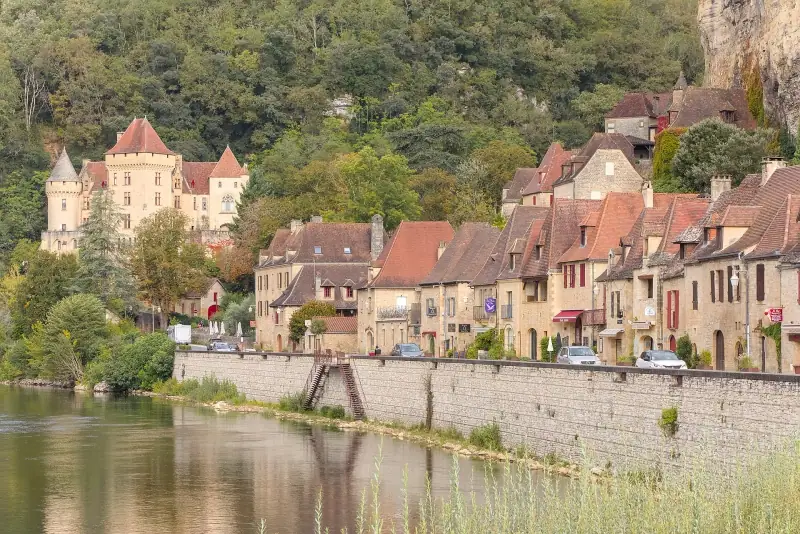
This is the most visually spectacular day. Everything happens within about 20 km (12 mi) of Sarlat, but summer traffic slows the roads: leave early.
- Domme: this bastide perched on a promontory, about a dozen kilometers (7 mi) from Sarlat, offers one of the finest viewpoints over the valley. See our guide to visiting Domme.
- La Roque-Gageac: a village clinging to the cliff beside the river, ranked among the most beautiful villages of France. It takes a little under an hour to visit and is the starting point for gabarre rides, the traditional flat-bottomed boats. See visiting La Roque-Gageac.
- Beynac and Castelnaud: two fortresses facing each other across the river, a legacy of the Hundred Years’ War. Visit one in detail (Beynac for the view, Castelnaud for its museum of medieval warfare). Our article on the châteaux of the valley helps you choose.
Boat ride on the Dordogne
See cliffs, villages and châteaux from the river: compare the rides and excursions offered in the valley.
If summer is hot, replace the afternoon château with a canoe descent of the river: our canoe descent guide covers the routes and precautions.
Day 4: Rocamadour, the trip into the Lot
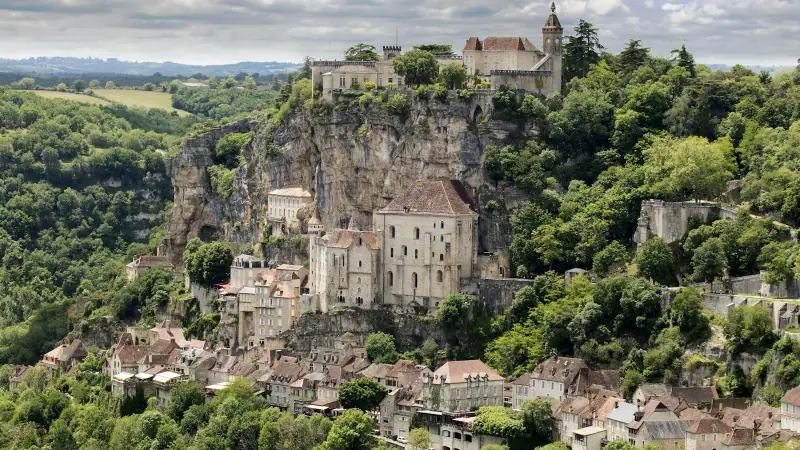
After three intense days, this day offers a change of scenery. Rocamadour, a sanctuary town clinging to a cliff above the Alzou canyon, is in the Lot, about an hour by road from Sarlat. The site is one of the most spectacular in the region: you climb by staircase, elevator or little train as you prefer, among chapels, ramparts and medieval houses.
Plan the morning for the visit and lunch there or in a village nearby, then return to Sarlat at an easy pace by the small roads, stopping where the landscape appeals. It is also a day of relative rest: little walking if you avoid the staircase.
Variant without the Lot: if you prefer to stay in the Dordogne, spend this day at a producers’ market, a farm visit (walnuts, foie gras) or a walk in the Black Périgord. Our article what to see in the Black Périgord lists many ideas.
Rent a car for the week
Essential to link villages and sights. Compare rental companies and book early in summer.
Day 5: Périgueux, the city of two faces
Leave Sarlat in the morning for Périgueux, the capital of the department, about an hour by road. The White Périgord, named for its limestone cliffs, is often overlooked by visitors: that is a mistake.
The center is explored on foot, in two main groups:
- The Puy-Saint-Front district, medieval and Renaissance, dominated by Saint-Front Cathedral and its domes reminiscent of Byzantine architecture.
- The Cité, the Gallo-Roman district, with the remains of the ancient city of Vesunna.
If your visit falls on a market day, make the most of it: it is one of the liveliest in the department. Our guide to visiting Périgueux gives the details, and what to see in the White Périgord offers ideas around the city.
In the late afternoon, take the road to Brantôme, about 25 km (16 mi) north of Périgueux, where you will spend two nights. See where to stay in Brantôme.
Day 6: Brantôme and Saint-Jean-de-Côle
In the Green Périgord the landscapes change: meadows, forests and peaceful rivers. Brantôme, often nicknamed the “Venice of the Périgord,” sits on an island surrounded by the Dronne. Its abbey backed against the cliff, its bridges and its waterside terraces make it an ideal place to slow down. Our guide to visiting Brantôme details the visit.
In the afternoon, head for Saint-Jean-de-Côle, a village with character in the Green Périgord, a little under thirty kilometers (19 mi) from Brantôme, with its château, old bridge and stone houses. It is a quiet detour, far from the crowds of the Dordogne valley.
Tastings and food workshops in the Dordogne
Wine tastings, local products, cooking workshops: compare the food experiences offered in the region.
Day 7: Bergerac and the Monbazillac vineyards
Last stop: the Purple Périgord, in the southwest of the department. Bergerac is about 80 km (50 mi) from Brantôme (allow a little over an hour by road). The historic center, with its half-timbered houses, cobbled squares and port on the Dordogne, takes a few hours to visit. See our guide what to see in the Purple Périgord.
The afternoon is for the vineyards: Monbazillac, famous for its sweet wine, and neighboring appellations like Pécharmant. A tasting at an estate, with a designated driver, is the nicest way to end the week. Our article on Bergerac, Monbazillac and Pécharmant wines explains how to choose. For lodging, see where to stay in Bergerac; the town has a train station, which makes the trip home easier.
Getting around during the week
A car is the simplest solution. A few tips:
- Book early in summer, when rental cars sell out. Our article on renting a car in the Dordogne covers the options.
- Leave before 9 am to avoid the crowd and full car parks near the châteaux.
- Allow a margin: valley roads are winding and you often end up behind a motorhome.
- If you arrive by train, Périgueux and Bergerac are the most practical train stations; Brive-la-Gaillarde, in the Corrèze, is another gateway.
When to do this itinerary
Each season has its charm, developed in our guide to when to go to the Dordogne:
- Spring: green countryside, mild temperatures, moderate crowds.
- Summer: everything is open and night markets liven the villages, but crowds and prices are at their peak.
- Fall: magnificent light, colorful forests, the season of walnuts and porcini. It is a favorite of regulars.
- Winter: calm and truffle season, but some sites reduce their opening days.
Budget and bookings
The budget varies mostly with lodging and season; our article on the Dordogne budget gives pointers. To save without sacrificing anything: have lunch with the midday set menu, make use of the markets, and pay for only one or two sites a day. Book ahead: Lascaux IV, the caves, the car and high-season lodging.
Tips for a successful week
- Comfortable shoes: cobbled villages, slopes and stairs everywhere.
- A small jacket, even in summer, for the caves.
- Check hours and opening days on the official sites before each visit.
- Stay flexible: a thunderstorm or a crush on a village can upend the plan, and that is a good thing.
The essentials
- Four nights in Sarlat, two in Brantôme, one in Bergerac: three bases are enough.
- Days 1 to 3: Sarlat, Lascaux IV and the Vézère, the Dordogne valley; day 4: Rocamadour or a free day.
- Days 5 to 7: Périgueux, Brantôme and Saint-Jean-de-Côle, then Bergerac and Monbazillac.
- Book Lascaux IV, the caves and the car ahead.
- May-June and September-October offer the best balance between weather and crowds.
Sources
- Lascaux IV (Lascaux International Centre for Cave Art): figures checked November 2026
Frequently asked questions
Is one week enough to see the Dordogne?
Yes, seven days let you cover the four Périgords: the Black Périgord (Sarlat, Vézère, Dordogne valley), the White Périgord (Périgueux), the Green Périgord (Brantôme) and the Purple Périgord (Bergerac). You simply have to accept making choices and limiting visits to two or three stops a day.
How many lodging bases should you plan for a week?
Two or three are enough. In this itinerary you sleep four nights around Sarlat, two nights in Brantôme or Périgueux, then the last night in Bergerac. This limits lodging changes while keeping drives reasonable.
Do you need a car for this itinerary?
Yes, it is strongly recommended. The châteaux, villages and caves are scattered across the countryside and public transport there is limited. The train stations at Périgueux and Bergerac let you arrive or leave by train, but not get around between the sights.
What is the best time for a week in the Dordogne?
May-June and September-October are ideal: pleasant temperatures, moderate crowds and superb light. July and August are very busy, notably in Sarlat and the Dordogne valley; you then need to book lodging and visits well in advance.
Do you need to book Lascaux IV and the caves?
Yes, especially from May to September and during school-holiday periods. Capacity is limited. Book online on the official sites and check hours and prices before you come, as they change by season.
Can you shorten this itinerary to five days?
Yes. Keep days 1 to 3 (Sarlat, Vézère, Dordogne valley), then choose either Périgueux and Brantôme, or Bergerac and Monbazillac. The 3-day itinerary and the 4-day one outside the Black Périgord combine very well.
How many kilometers do you drive over the week?
Days around Sarlat generally involve less than 100 km (62 mi) of driving each, and transfer days between bases stay under about 100 km (62 mi). The total is reasonable, but valley roads are winding: allow more time than the distance suggests.
More Dordogne guides
Keep reading
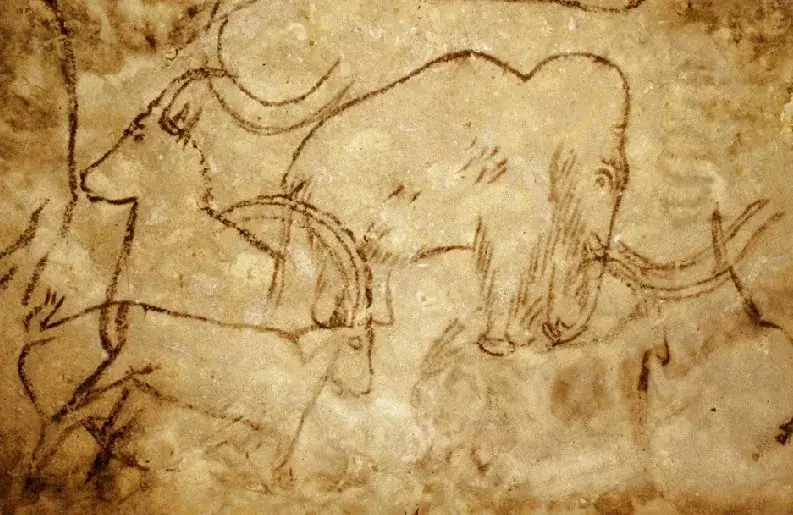
Rouffignac Cave: Train Visit, Prices, Booking and Opening Dates
Rouffignac Cave: prices, hours, booking (5 weeks ahead), length of the electric train ride and closure until March 28, 2027. Tips for families.
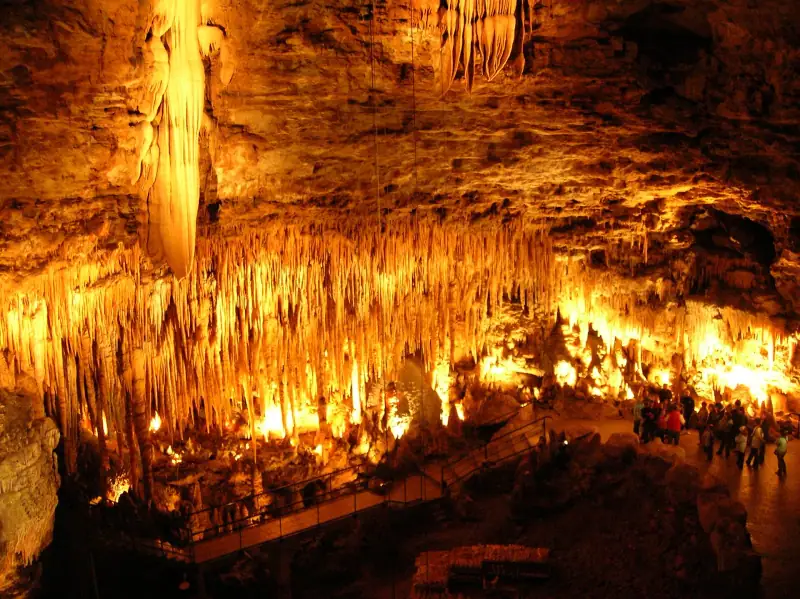
Proumeyssac Chasm: Prices, Hours, Booking and the Gondola Descent
Proumeyssac Chasm at Audrix: 2026 prices, hours by season, booking, gondola, strollers, dogs and tips for visiting without a wait.
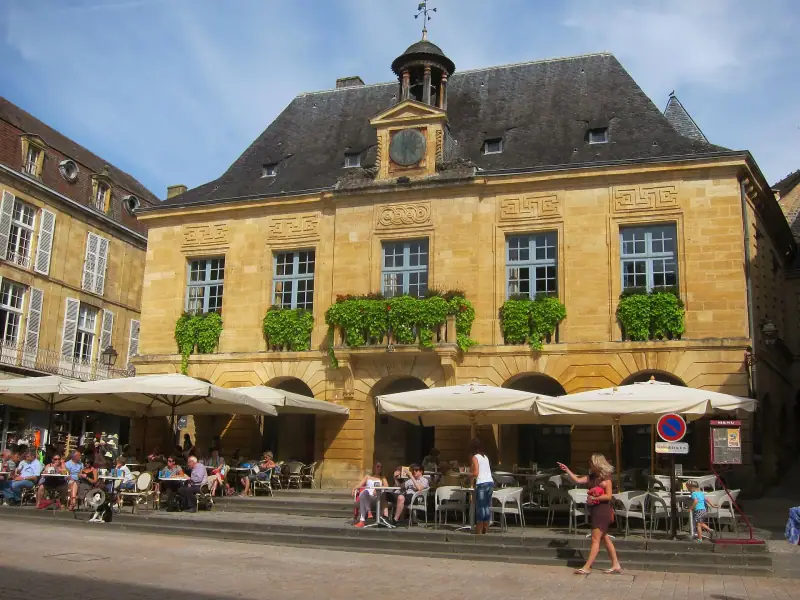
Visiting Sarlat-la-Canéda: What to See and Do in the Medieval Town
Visiting Sarlat-la-Canéda: cathedral, Place des Oies, medieval lanes, markets, Lanterne des Morts and day trips. A guide to plan your visit well.
Ready-made
Dordogne itineraries
5 days
Dordogne in 5 Days with Kids: Stops, Kilometers and a Realistic Pace
Dordogne in 5 days with kids: an itinerary from Sarlat with distances, drive times, breaks and suitable activities, without overloaded days.
Can be adapted in the planner
3 days
3-Day Dordogne Itinerary: Sarlat, the Vézère and Châteaux
What to do in 3 days in the Dordogne? A day-by-day itinerary around Sarlat: Lascaux, the Vézère Valley, châteaux, villages and practical tips.
Can be adapted in the planner