Plan your trip
When to go to the Basque Country: weather, seasons and events
We may earn a commission when you book through links on this page, at no extra cost to you. We don't visit or try the places we cover: we summarize published sources. How we work
In short
- May, June and September generally offer the best compromise: pleasant temperatures, long days, moderate crowds and gentler rates than midsummer; early October is also popular.
- The Atlantic stays cool: swimming is mostly pleasant from June to September, and rain can come in any season, so bring a waterproof layer.
- July and August are the busiest and priciest months; the Fêtes de Bayonne usually fall in late July or early August.
- September and October are the most spectacular months for the red peppers of Espelette; winter is quiet and cheap.
The Basque Country has a rare asset: it can be visited almost all year. But the experience changes radically from one month to another. In August, the coast is lively, sunny and very busy. In October, the hills are golden, garlands of peppers redden the facades and the beaches empty. In February, Atlantic storms give Biarritz a powerful show. The “best time” therefore depends on what you are looking for: swimming, surfing, hiking, food, culture or simple tranquility.
This guide helps you choose your period by comparing climate, crowds, prices and events, season by season.
Understanding the climate of the Basque Country
The French Basque Country has an oceanic climate. The Atlantic softens temperatures: summers are hot without being stifling and winters are rather mild on the coast. In return, rainfall is frequent, which explains the greenery of the hills, meadows and inland forests.
A few useful pointers for preparing your trip:
- The coast (Biarritz, Saint-Jean-de-Luz, Hendaye) benefits from the softening effect of the ocean. Temperature differences between day and night are moderate.
- The inland area (Espelette, Ainhoa, Saint-Jean-Pied-de-Port) is a little hotter in summer and cooler in winter, with frequent morning fog.
- The mountains (Soule, Iraty forest, Pyrenean summits) are markedly cooler, with possible snow in winter. The weather can change very fast there.
- The south wind, a warm, dry wind that sometimes blows in fall and spring, can make temperatures climb abruptly and announce a change of weather.
A simple rule to remember: never plan a stay in the Basque Country without a rainy-day plan B. Even in summer, a gray day can occur. Fortunately, the region is full of indoor activities: markets, museums, chocolate makers, wine cellars, restaurants, spas. For more ideas of varied programs, see our 3-day itinerary in the Basque Country.
Spring (March to May): nature in bloom
Spring is a transition season. March and April are still cool and damp, with frequent showers, but the countryside is a brilliant green and the villages are very quiet. It is an ideal period for hiking and photography fans, for those fleeing crowds and for tight budgets.
From late April, and especially in May, days lengthen and fine weather returns. Terraces fill up, the first brave swimmers venture onto the sand (the water is still cool), and surfing is in full swing, with waves generally more accessible than in winter.
Advantages of spring:
- Moderate crowds, especially outside long weekends and the May long weekends.
- Lower accommodation rates than in summer.
- Very green landscapes and flowers in abundance.
- Pleasant conditions for hiking.
Drawbacks:
- Unstable weather, with possible showers at any time.
- Sea water too cool for most swimmers.
- Some seasonal shops still closed at the start of the season.
To go beyond the classic stay, take the opportunity to go up La Rhune in clear weather or to hike in the hills of Labourd, when the heat does not overwhelm you.
Book early for the May long weekends
Spring long weekends quickly fill up on the Basque coast. Compare the hotels available for your dates.
Summer (June to August): beaches, surf and festive atmosphere
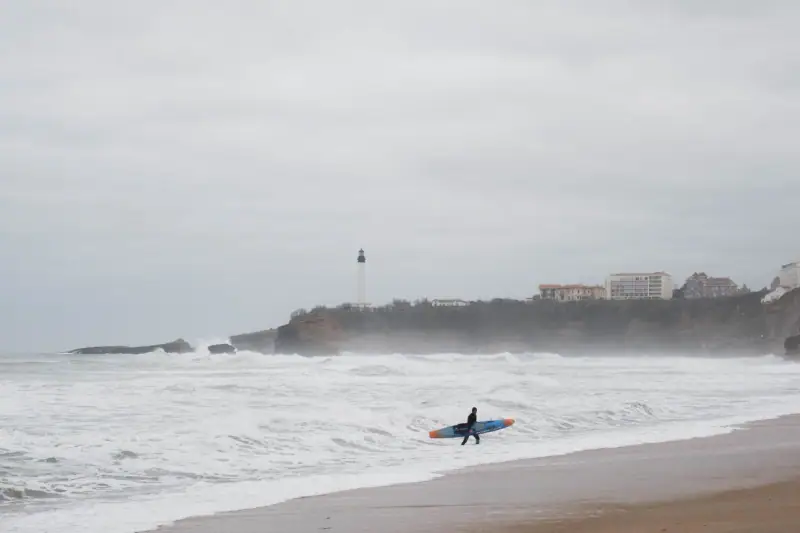
Summer is the peak season on the Basque coast. Days are long, beaches are alive, surf schools run at full speed and terraces never empty. It is also the period when the Basque Country is busiest and most expensive.
June is often an excellent choice: the sun is there, days are the longest of the year, and crowds remain reasonable before the summer school vacations.
July and August concentrate the crowds. Coastal roads are busy, notably late in the day and on weekends, parking becomes complicated in Biarritz and Saint-Jean-de-Luz, and accommodation books up well in advance. You will be rewarded with a festive atmosphere and the chance to enjoy the sea.
It is also the season of the very popular Basque festivals: parades, music, dances, pelota, white and red outfits, communal meals. The Fêtes de Bayonne, which traditionally take place in late July or early August, are one of the biggest festive gatherings in France. If you like the atmosphere, they are a highlight. If you prefer calm, absolutely avoid these dates, and check the official calendar before booking.
Tips for summer:
- Book accommodation and restaurants well in advance.
- Leave early in the morning to avoid jams and full car parks.
- Favor the inland villages in the hottest hours, or the beaches early in the morning.
- Respect the swimming flags and supervised zones: the ocean is more powerful than it looks.
- Protect yourself from the sun, even when the sky is hazy.
Surfing is particularly accessible to beginners in summer, when waves are generally smaller. Our guide to surfing in Biarritz details suitable spots and schools.
Fall (September to November): our pick
If you had to remember only one period, it would probably be September and early October. The summer vacationers have left, prices drop, but the weather often stays fine and the ocean has had all summer to warm up. It is the ideal time to swim without the crowd, surf in good conditions and discover the villages at a slower pace.
Fall is also the season of the Espelette pepper. In late summer and fall, red peppers hang in garlands on the white facades, a sight that has become iconic in the Basque Country. A pepper festival is held in Espelette in the fall: find out the exact dates, as they vary from year to year and draw many people. To know where to buy real AOP pepper and how to recognize it, read our article on Espelette pepper.
It is also the season of the grape harvest in Irouléguy, the return of mushrooms in the inland forests, and the first big swells of the year for experienced surfers.
Note: from October and especially in November, rain becomes more frequent and days shorten. Some seasonal establishments close, notably in small resorts. Keep some flexibility in your program.
Activities in the shoulder season
Guided tours, tastings, excursions: compare the activities available in the Basque Country, including in uncertain weather.
Winter (December to February): the authentic Basque Country
Winter is the season for travelers who like the raw character of places. The coast is quiet, storms offer an impressive show from the seafront, and prices are at their lowest. Temperatures generally stay mild compared with the rest of France, but humidity is present and rain frequent.
What you do there:
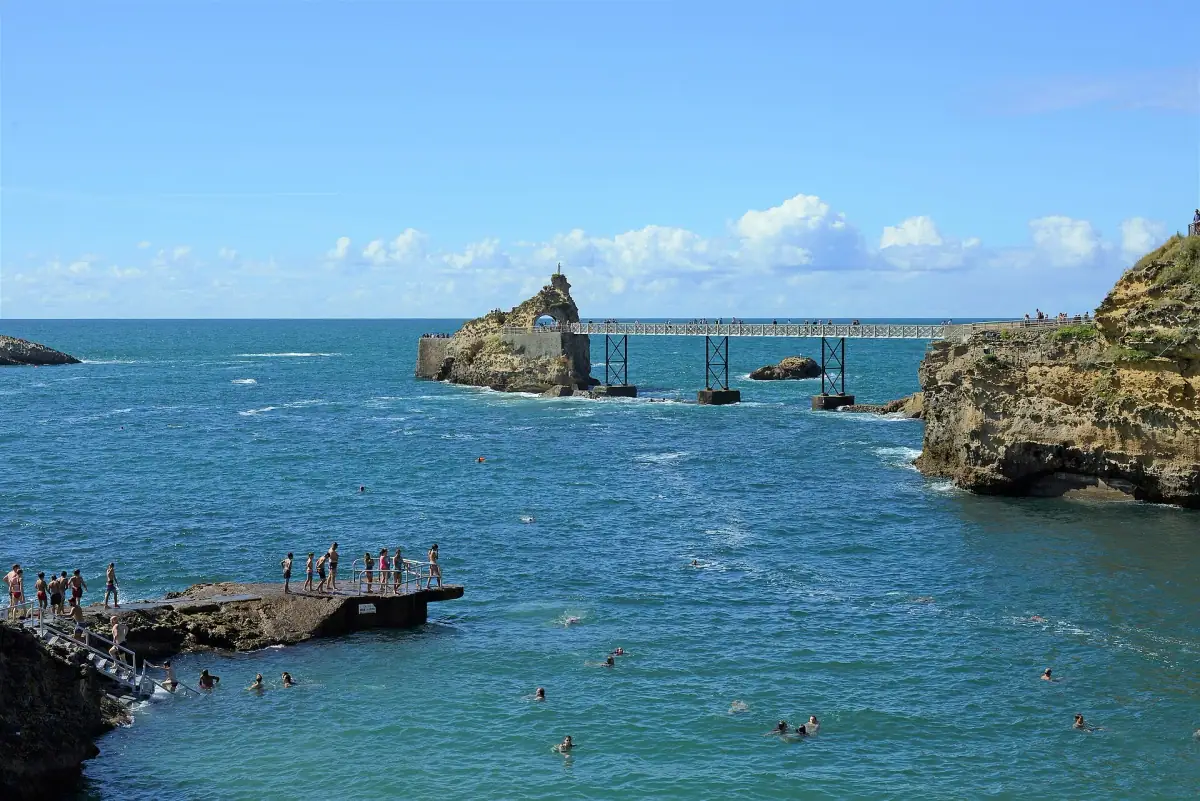
- Watch the waves from the corniche or the Rocher de la Vierge, keeping a safe distance. In heavy weather, never go near the edge.
- Enjoy the museums, covered markets and chocolate makers, notably in Bayonne and Biarritz.
- Discover the food: stews, garbure, sheep’s cheese, Irouléguy wines.
- Hike inland, in dry weather, in the hills of Labourd or in Lower Navarre.
- Relax at a spa or wellness center, often more pleasant in this season.
In the inland mountains, snow can cover the heights. It complicates some roads and hikes: check conditions before leaving and equip yourself accordingly.
For experienced surfers, winter offers fine swells, but conditions are demanding and the water is cold: a thick wetsuit is essential.
Month by month: the summary table
Here is a simple recap, to adapt to your wishes:
| Period | Atmosphere | Crowds | Ideal for |
|---|---|---|---|
| March – April | Quiet, green, cool | Low | Hiking, photography, small budgets |
| May – June | Fine days, terraces | Moderate | First stay, sightseeing, walks |
| July – August | Festive, hot, lively | Very high | Beach, surf, festivals, family |
| September – early October | Mild, bright | Moderate | Everything, our favorite |
| Late October – November | Rainy, authentic | Low | Food, culture, tranquility |
| December – February | Quiet, storms | Low | Waves, cooking, wellness |
When to go according to your budget
The Basque Country is not one of the cheapest destinations in France, especially on the coast. Accommodation prices vary strongly by season: the highest rates are concentrated in July and August, as well as during big festivals and long weekends. To cut the bill:
- Travel off season, preferably in September, May or June.
- Sleep in Bayonne or inland, often more affordable than Biarritz or Saint-Jean-de-Luz.
- Book early, with flexible cancellation terms if possible.
- Have lunch rather than dinner at restaurants, as lunchtime menus are generally better value.
- Put together picnics with products from markets and covered halls.
If you travel by car, also compare rental offers. In high season, book the car at the same time as the accommodation.
Flights to the Basque Country
Compare flights to the Basque coast and Biarritz airport for your dates, before prices go up.
What to pack by season
The Atlantic climate calls for a few precautions, whatever the period:
- All year: a light waterproof jacket, comfortable shoes that stand up to rain, a warm layer for the evening.
- In summer: swimsuit, sunglasses, sunscreen, hat, and a light sweater for evenings on the coast.
- In spring and fall: several layers, a windbreaker, walking shoes if you plan to hike.
- In winter: warm and waterproof clothing, boots or waterproof shoes, hat and gloves for excursions at altitude.
- For the mountains: even in summer, take a warm garment and something to protect you from wind and rain.
Finally, always check local weather forecasts before setting out on a hike or going up La Rhune: visibility there varies enormously from day to day.
Final recommendations
- First stay, ideal balance: late May, June or September.
- Espelette peppers, golden light, still-mild sea: September and early October.
- Swimming, festivals, lively atmosphere: July and August, with early booking.
- Calm, food, low prices: from November to March, with a rainy-day plan B.
- Surf for beginners: June to September. Surf for experienced surfers: fall to spring.
Whatever the period, keep a little flexibility in your schedule: in the Basque Country, the weather sometimes decides for you, and it is often a chance to discover a covered market, a chocolate maker or a cellar you had not planned.
Frequently asked questions
What is the best time to visit the Basque Country?
May, June and September generally offer the best compromise: pleasant temperatures, long days, moderate crowds and gentler rates than in midsummer. Early October is also much appreciated, with soft light and the red peppers on Espelette's facades.
Can you swim in the Basque Country?
Yes, but the Atlantic Ocean stays cool. Swimming is mostly pleasant from June to September, with warmer water at the end of summer. Beaches are supervised in season: always respect the flags, as currents and waves can be powerful.
Does it rain a lot in the Basque Country?
The climate is oceanic and the region is one of the wettest in mainland France, which explains its very green landscapes. Showers can occur in any season, often brief in summer and longer-lasting in fall and winter. Always bring a waterproof layer.
When should you surf in the Basque Country?
You can surf all year. In summer, waves are smaller and more accessible to beginners. From fall to spring, the swell is more regular and powerful, which attracts experienced surfers. Beginners can take lessons in summer as well as in spring, with a suitable wetsuit.
Which period should you choose to see the Espelette peppers?
Peppers are harvested at the end of summer and hung to dry in garlands on the facades in late summer and fall. September and October are therefore the most spectacular months. A pepper festival is held every year in Espelette in the fall: check the dates on the village's official website.
Do you need to book ahead in summer?
Yes. In July and August, as well as during the big local festivals, accommodation and restaurants fill quickly on the coast. Book several months ahead if you travel on these dates, and a bit less in advance in May, June or September.
What is there to do in the Basque Country in winter?
Winter is quiet and inexpensive. People come for the storms seen from the seafront, inland hikes, food, markets, museums and spas. Some seasonal shops on the coast are closed, so it is better to check before traveling.
More Basque Country guides
Keep reading
Basque Country budget: what a trip costs (3 priced profiles)
How much does a Basque Country trip cost? Real costs by item, three priced budgets (frugal, comfort, premium) and tips to spend less.
Where to stay in Biarritz: districts and types of accommodation for your trip
Palace, boutique hotel, apartment, guesthouse, campground or hostel: compare lodging types and districts to choose where to stay in Biarritz.
La Rhune cog train: book ahead or on the day? Prices, hours, weather
La Rhune cog train: do you need to book? 2026 fares, hours by season, parking, strollers, dogs and weather for the ride up from Sare.
Ready-made
Basque Country itineraries
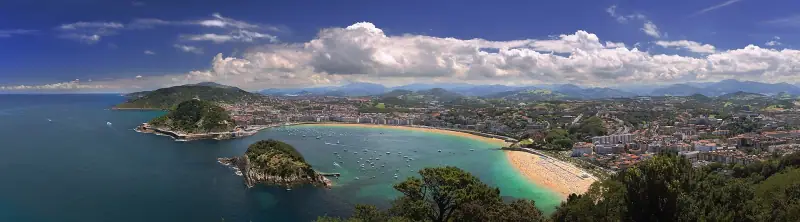
1 day
San Sebastián in 1 day from the Basque coast: itinerary and tips
One day in San Sebastián from Biarritz, Saint-Jean-de-Luz or Hendaye: how to get there, what to see and where to taste pintxos.
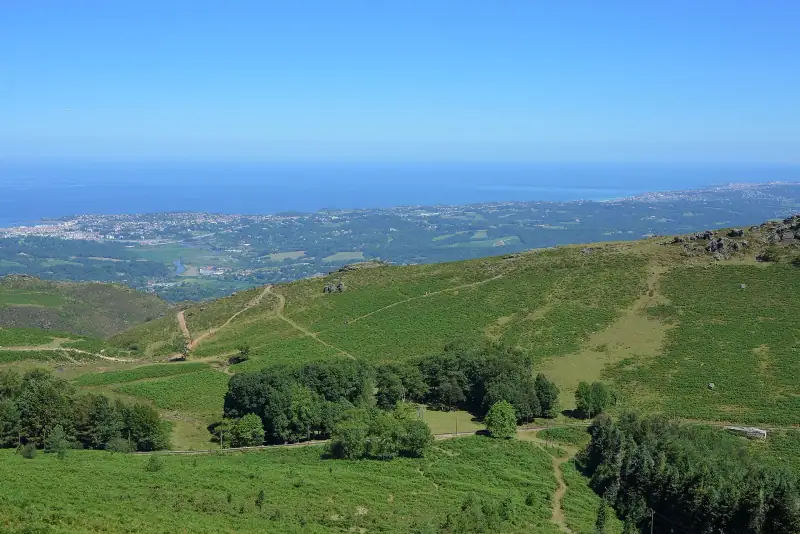
5 days
The Basque Country in 5 days with kids: stops and pace
The Basque Country with kids in 5 days: drive times, beaches, La Rhune cog train, Sare caves and a rainy-day plan B, at a child's pace.
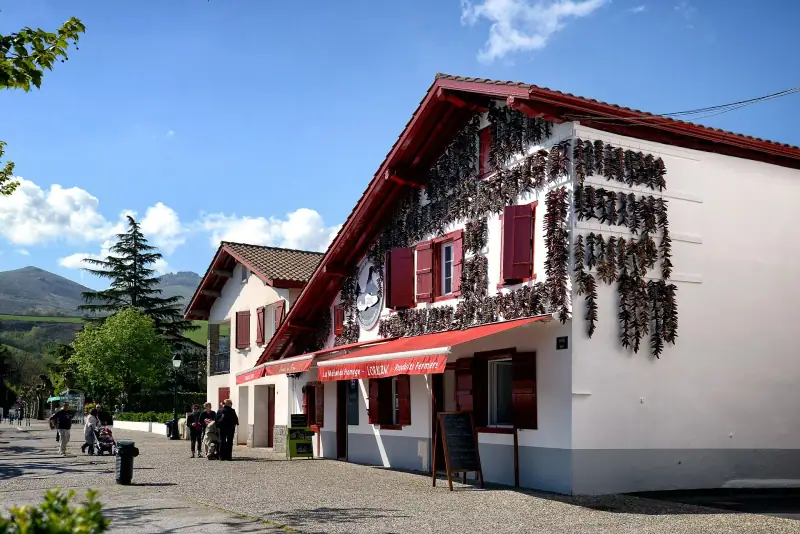
3 days
3 days in the Basque Country: coast and inland itinerary
A 3-day Basque Country itinerary: Biarritz, Bayonne, Saint-Jean-de-Luz, Espelette and La Rhune, with distances, tips and good addresses.