What to see
Visiting La Roque-Gageac: What to See and Do at the Foot of the Cliff
We may earn a commission when you book through links on this page, at no extra cost to you. We don't visit or try the places we cover: we summarize published sources. How we work
In short
- Two to three hours cover the village, the exotic garden and the cave fort; with a gabarre boat ride and lunch by the water, plan half a day.
- The village is squeezed between the Dordogne and a south-facing limestone cliff, ranked among the Most Beautiful Villages of France.
- The gabarre ride lasts about an hour and gives the best full view of the village; the cave fort, about 40 m (130 ft) above the roofs, reopened in 2020.
- Parking is limited from June to September: arrive early and finish on foot. Sarlat is about 15 km (9 mi) away.
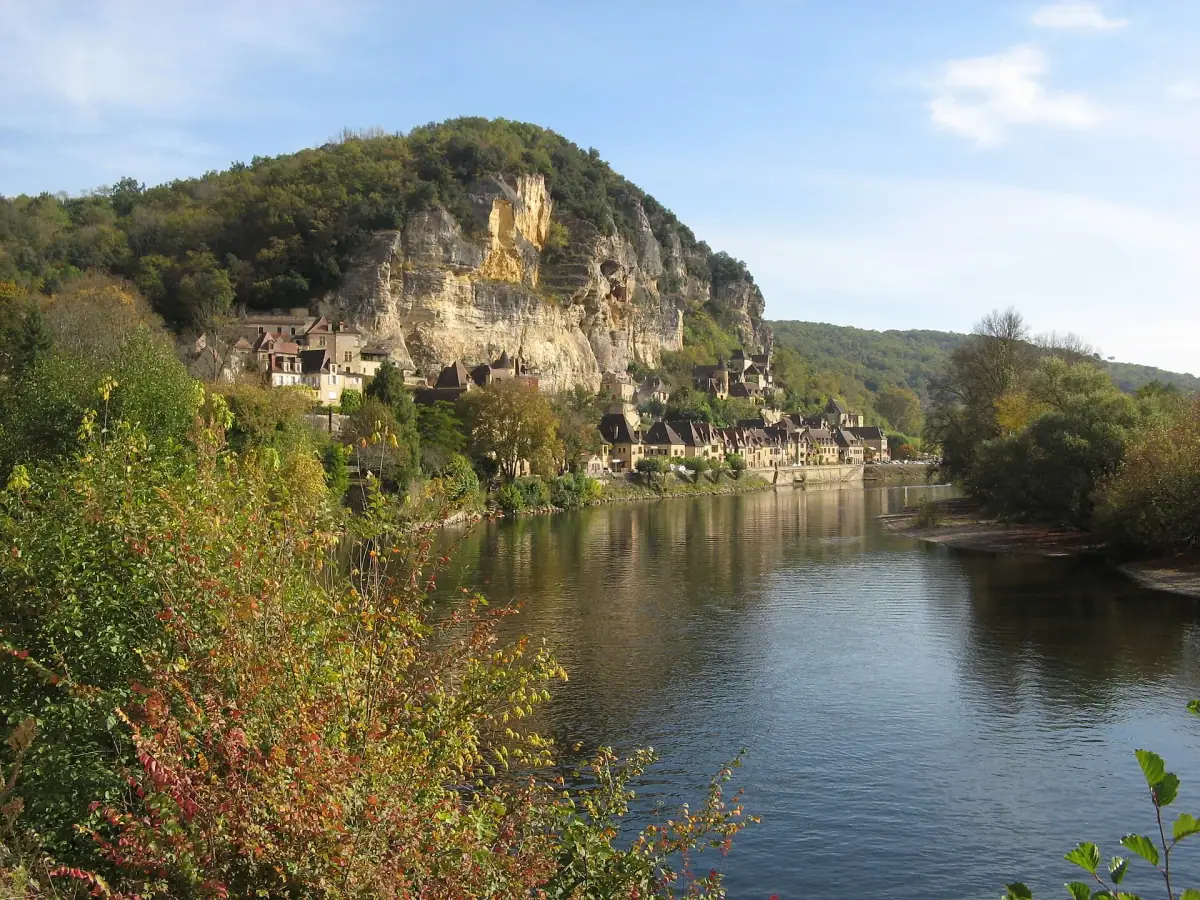
A limestone cliff, a peaceful river and, between the two, a village of golden stone that seems to hold on by a miracle: La Roque-Gageac is one of the best-known images of the Dordogne. Located in the Black Périgord, on the bank of the Dordogne, it has fewer than 500 inhabitants but attracts visitors from around the world, drawn by its silhouette stretched along the shore.
This guide helps you prepare your visit: the village’s history in a few lines, the highlights, the gabarre boat ride, the viewpoints, a sample plan and practical tips. Hours and prices change from season to season, so check them with the tourist office before you go.
La Roque-Gageac in brief: a village backed against the cliff
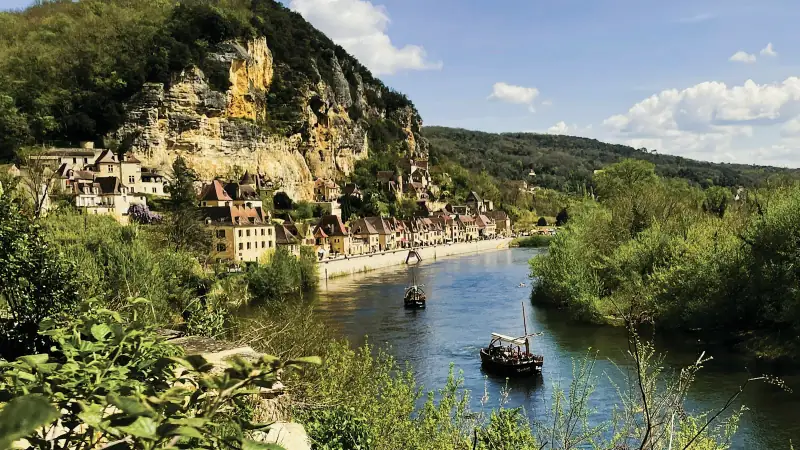
The village occupies a narrow strip between the Dordogne and a limestone wall that towers over the houses by several dozen meters. Facing south, this cliff stores the sun’s heat and gives it back: the site enjoys a mild microclimate, which explains the presence of plants more expected on the Mediterranean coast.
Historically, La Roque-Gageac belonged to the bishops of Sarlat. The site, protected by the cliff and the river, was fortified, and the village lived for a long time from river trade: in the 18th century, the port welcomed hundreds of gabarres each year, the flat-bottomed boats that carried goods on the Dordogne. Today tourism has taken over, but gabarres still sail, now loaded with visitors.
The village is ranked among the Most Beautiful Villages of France. It remains very compact, though: one main street along the water, a few lanes that climb, a fort in the rock. To place this stop in your stay, our complete Dordogne guide gives the geographic landmarks.
The riverfront: the best viewpoint
To understand La Roque-Gageac, start with the bank. The road and quays run along the Dordogne, and houses crowd against the rock, some almost glued to the cliff. The best panorama comes from looking at the village from the opposite bank or from a boat, since the whole silhouette appears with some distance.
As you walk, you will notice the uniformity of the architecture: blond stone, roofs of small brown tiles, colored shutters, terraced gardens. The light changes a lot during the day. In the morning the river is calm and the reflections superb; in late afternoon the cliff takes on golden tones that are especially photogenic.
One detail is a reminder that the cliff is not just scenery: in January 1957 a rockfall hit the village, destroying several houses and causing casualties. Monitoring and securing measures have been put in place since. If you see nets or work on the wall, these are the protections.
A gabarre ride on the Dordogne
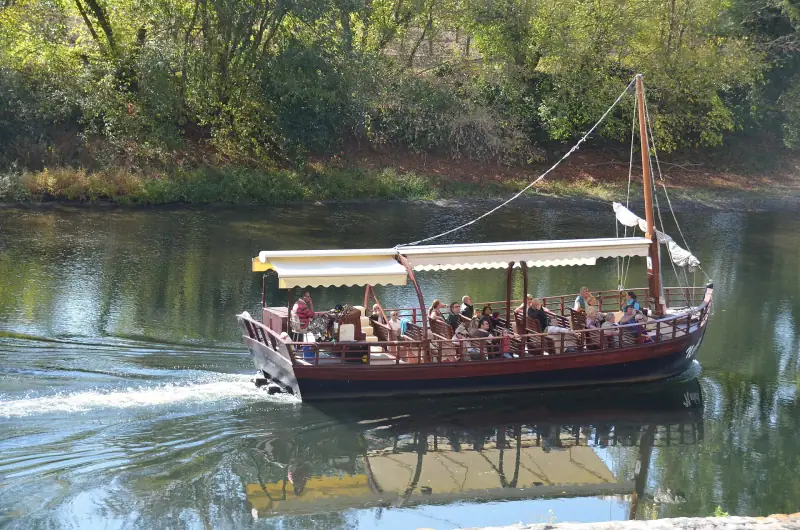
The gabarre is the river’s traditional boat, now reproduced for narrated rides. Several operators offer departures from the village port, in season. The ride generally lasts about an hour, at a very moderate speed, and lets you see the cliffs, the village houses, the gardens and, downstream or upstream, the outlines of châteaux.
Why do it? Because you get a view impossible from the bank: the village stacked against the rock, seen in full. The commentary also sheds historical light on river trade and on the river’s role in the local economy. It is an activity open to almost everyone, children and seniors alike, and a calm alternative to the canoe descent covered in our guide to canoeing the Dordogne.
A few tips for the ride:
- Book or arrive early in July and August, since departures can be full.
- Choose a late-day departure for softer light.
- Bring a hat and water: the boat deck offers little shade in strong sun.
- Check conditions: river level and weather can change or cancel trips.
Activities and excursions around La Roque-Gageac
Boat rides, guided tours and excursions in the Black Périgord: compare the activities offered for your dates.
The cave fort: a shelter dug into the rock
Above the village, in the cliff, hides the cave fort, developed from the Middle Ages and used as a refuge, notably during the Hundred Years’ War, by the bishops of Sarlat. Perched about forty meters (130 ft) above the roofs, it is reached by a staircase along the wall. After a long restoration period, it reopened to the public in 2020.
The visit combines two interests: defensive architecture, with its rooms dug into the rock and openings onto the valley, and the panorama, which opens onto the loop of the Dordogne, the village and the roofs. It is one of the best viewpoints in the area.
A few precautions: the staircase can be steep, the visit requires mobility, and access is sometimes restricted for weather or safety. Wear good shoes, avoid the hottest hours and check opening hours before climbing.
The exotic garden and its unexpected plants
Thanks to the microclimate created by the cliff, the village’s exotic garden shelters vegetation surprising for the Dordogne: palm trees, banana trees, lemon trees, mimosas, laurels, bougainvilleas and climbing plants. The contrast with the stone and the river is striking: for a moment you could be on the Riviera.
The garden, in the village, offers a pleasant break between two visits. It takes half an hour to an hour to explore depending on your pace. It is a good place for photographers, especially when flowers are in full season.
More broadly, walking in the lanes shows that residents gladly grow southern plants against sun-exposed walls. While looking at them, take care not to disturb residents’ peace: the village is above all a place to live.
Lanes, church and manor: the village heritage
Between the river and the cliff, several buildings are worth a detour. The church, medieval in look, is covered with lauzes, the heavy flat stones typical of certain Périgord roofs. The Manoir de Tarde, with its round tower, recalls the family of Jean Tarde, a canon and scholar of the 16th and 17th centuries tied to local history. Remains of fortifications and old houses complete the walk.
The simplest way is to follow the lanes that climb toward the cliff, with no precise goal. You find stairs, vaulted passages, wooden doors and small gardens. Allow half an hour to an hour for this tour, more if you like to photograph.
It is all done on foot, but slopes can be steep: bring comfortable shoes.
Where and what to eat in La Roque-Gageac
The riverside terraces look straight onto the water and the cliff. In season they are in high demand: book in the evening and on weekends, or come early for lunch. The cooking on offer remains that of the Périgord: duck confit, magret, Périgord salad, porcini in season, walnuts and local pastries.
A few pointers for choosing well:
- Short menus and seasonal products: often a good sign.
- Go one or two streets further: tables set back a little are calmer and less touristy.
- Plan a picnic: with a market in Sarlat or a neighboring village, you can put together a takeaway meal for the riverbank.
To discover the dishes and products to taste, see our guide to Périgord food specialties.
Stay near La Roque-Gageac
Hotels, B&Bs and cottages in the village or nearby: compare availability to enjoy the valley once the groups have left.
What to see around La Roque-Gageac
La Roque-Gageac sits at a central point of the valley, a few minutes from several major sights. The distances below are approximate:
- Domme, a bastide perched on a cliff, about 5 km (3 mi) away: its viewpoint looks over the valley and the loop of the Dordogne.
- Castelnaud-la-Chapelle, a few kilometers away, for its château devoted to medieval military history.
- Beynac-et-Cazenac, about 5 km (3 mi) away, with its fortress facing Castelnaud and its tiered village.
- The Marqueyssac gardens, between Vézac and Beynac, for their clipped boxwood and viewpoint.
- Sarlat-la-Canéda, about fifteen kilometers (9 mi) away, for its medieval old town and markets.
To prepare a day of châteaux and villages, read our article on the châteaux of the Dordogne valley. For the town of Sarlat, see our guide to visiting Sarlat-la-Canéda.
A sample plan for one day
Here is a balanced suggestion, to adapt to the season:
- Early morning: arrive before the crowd, park at the village entrance, coffee facing the river.
- Late morning: stroll the lanes, church, Manoir de Tarde and exotic garden.
- Early afternoon: lunch on a terrace by the water.
- Mid-afternoon: climb to the cave fort (if conditions allow) and enjoy the panorama over the valley.
- Late afternoon: gabarre ride, golden light on the cliff.
- Evening: dinner there or back to Sarlat, Domme or Beynac.
With two days, spend the second on Domme, Castelnaud and Beynac. Our 3-day Dordogne itinerary shows how to fit the village into a wider stay.
Planning your visit: access, parking, season
Getting there. The village is on the road that follows the Dordogne, between Vézac and Saint-Cyprien. From Sarlat, allow about twenty minutes by car outside heavy traffic. To plan, read our guide to renting a car in the Dordogne.
Parking. Space is short in the village, especially from June to September. Arrive early, use the signed car parks and finish on foot. As the road is narrow, avoid stopping on the roadway.
Duration. Two to three hours for the essentials, half a day with gabarre and lunch.
Shoes and gear. Sloping lanes, staircase to the fort, quays: bring good shoes, a hat and water.
Season. Spring and early fall are ideal. Our article on when to go to the Dordogne helps you choose.
Budget. Walking the village is free; allow for the gabarre, the fort and the meal. Our Dordogne budget guide gives pointers.
A longer stay in the valley
Cottages and holiday homes between Sarlat, Domme and Beynac: an ideal base to explore villages, châteaux and the river.
Practical tips for your visit
- Come early or late in the day to avoid the busiest hours.
- Book your lodging ahead in summer and during school-holiday periods.
- Respect residents: narrow lanes, private gardens and lived-in houses.
- Watch the weather: rain makes steps slippery, and the gabarre can be canceled.
- Ask the tourist office for the program: guided tours, events and seasonal happenings.
- Keep some time in reserve: the village invites you to slow down, and people often regret crossing it too fast.
Who La Roque-Gageac suits
La Roque-Gageac appeals to fans of beautiful landscapes, photography, quiet walks and human-scale heritage: couples, families, history buffs. It suits less those looking for a big city or nightlife: choose Sarlat instead.
In short, two to three hours are enough for the essentials, half a day to really enjoy it. Combined with Domme, Castelnaud and Beynac, it makes up one of the best possible stays in the Dordogne valley.
Frequently asked questions
How long do you need to visit La Roque-Gageac?
Two to three hours are enough to stroll the village, see the exotic garden and climb to the cave fort. With a gabarre ride and lunch by the water, plan half a day. The village combines easily with Domme, Beynac or Castelnaud on the same day.
Why is La Roque-Gageac ranked among the most beautiful villages of France?
The village sits between the Dordogne and a high south-facing limestone cliff, with golden stone houses and brown tile roofs stacked against the rock. This very uniform ensemble, its lanes, its church and its exotic garden earned it a place in the Most Beautiful Villages of France association.
Do you have to pay to visit the village?
Walking the lanes, the quays and the exotic garden is generally free. The cave fort, the gabarre ride and guided tours are paid; prices and hours vary by season, so check with the tourist office before you go.
Where do you park at La Roque-Gageac?
The road runs along the river at the foot of the cliff and parking in the village is limited, especially in summer. The simplest is to arrive early, find the signed car parks at the entrance of the village, then do everything on foot. Out of season, spaces are much easier to find.
Can you visit La Roque-Gageac without a car?
It is difficult: public transport is rare in this part of the Black Périgord. From Sarlat, about fifteen kilometers (9 mi) away, a car is the simplest solution. Some travelers combine bike and canoe, but it takes preparation.
What is the best time to visit La Roque-Gageac?
Spring and early fall offer soft light, pleasant temperatures and fewer people. In July and August the village is very busy during the day: arrive in the morning or late afternoon, when the stone takes on golden tones.
Is La Roque-Gageac suitable for children?
Yes: the gabarre ride, the exotic garden and the cave fort generally please children. Watch out for the staircase leading to the fort and the quays near the river, which call for vigilance with the youngest.
More Dordogne guides
Keep reading
Visiting Sarlat-la-Canéda: What to See and Do in the Medieval Town
Visiting Sarlat-la-Canéda: cathedral, Place des Oies, medieval lanes, markets, Lanterne des Morts and day trips. A guide to plan your visit well.
What to See in the White Périgord: Périgueux, the Isle Valley, Truffles and Villages
What to see in the White Périgord: Périgueux, truffles at Sorges, Saint-Astier, Neuvic, Mussidan and Montpon, for a quiet and authentic stay.
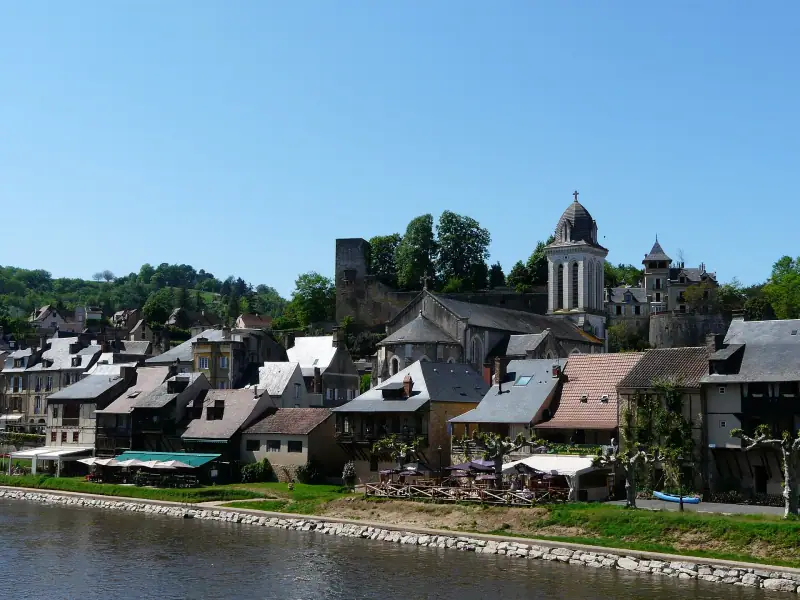
Visiting Montignac-Lascaux: What to See and Do on the Vézère
Visiting Montignac-Lascaux: old town on the Vézère, stilt houses, Lascaux IV, Regourdou, markets and walks. A guide to plan your stay in the Vézère Valley.
Ready-made
Dordogne itineraries
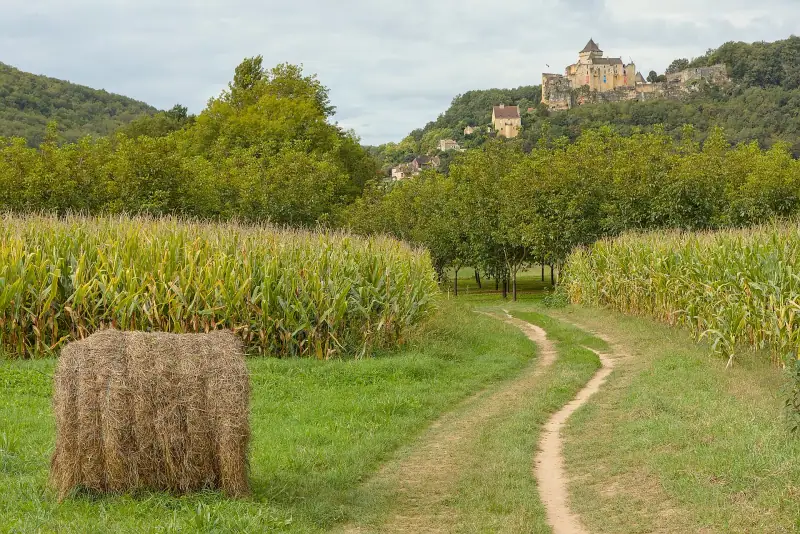
7 days
One Week in the Dordogne: A Day-by-Day Itinerary
Sarlat-la-CanédaBrantômeBergerac
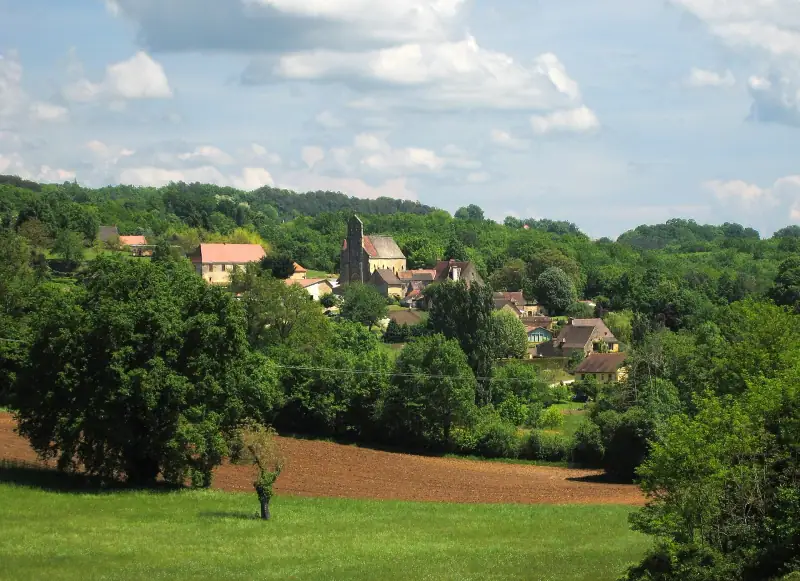
5 days
Dordogne in 5 Days with Kids: Stops, Kilometers and a Realistic Pace
Dordogne in 5 days with kids: an itinerary from Sarlat with distances, drive times, breaks and suitable activities, without overloaded days.
Can be adapted in the planner
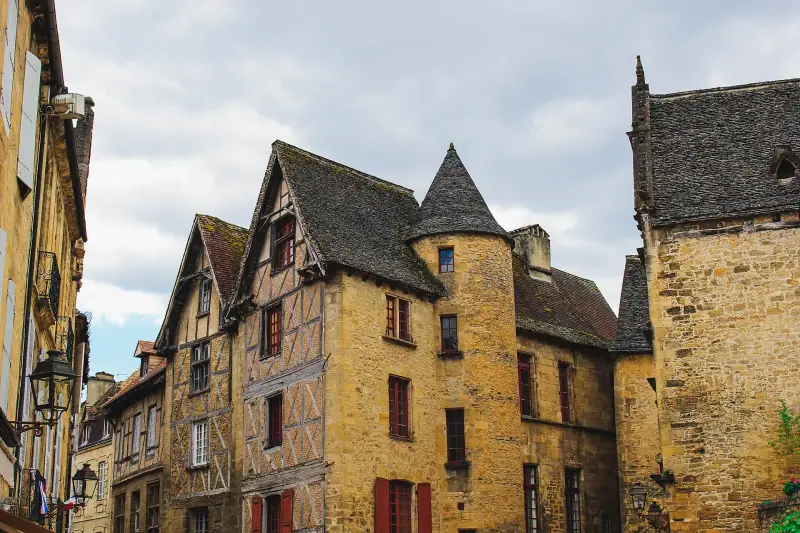
3 days
3-Day Dordogne Itinerary: Sarlat, the Vézère and Châteaux
What to do in 3 days in the Dordogne? A day-by-day itinerary around Sarlat: Lascaux, the Vézère Valley, châteaux, villages and practical tips.
Can be adapted in the planner