Where to stay
Where to stay in Nice: which neighborhood to choose for your trip
We may earn a commission when you book through links on this page, at no extra cost to you. We don't visit or try the places we cover: we summarize published sources. How we work
In short
- Old Nice and the area between place Masséna and the Promenade des Anglais are the most practical for a first stay: market, beach, Castle Hill and restaurants are on foot.
- Near the station, prices are often lower and you are well placed for train trips to Menton, Antibes or Cannes. The sea is about a 20-minute walk.
- Book several weeks to several months ahead for summer, long weekends and the Nice Carnival in February.
- A car is not needed in most cases: tram, bus and train serve Nice, and downtown parking is expensive and limited.
Nice is the capital of the French Riviera and the natural starting point for most stays in the region. But behind that obvious fact lies a genuine question: which neighborhood should you pick? Depending on whether you want the atmosphere of colorful lanes, a hotel with its feet in the water, a tight budget or an ideal base for train trips, the best choice changes. This guide goes through the main areas of the city, their pros, their cons and the type of traveler they suit, to help you book without regrets.
How to choose: the criteria that really matter
Before comparing neighborhoods, clarify four points. They weigh more than the property’s star rating.
1. How you like to sightsee. If you mostly plan to stroll, eat locally and spend time at the beach, favor a place in the center or near the seafront. If you plan daily train excursions to Monaco, Menton, Antibes or Cannes, being near the station becomes the priority. Our guide to getting around without a car details these links.
2. The season. In summer, heat and night noise change the picture: air conditioning is an important criterion, and a room on a lively street can prove tiring. In winter and shoulder seasons, a simple, well-located room is enough, and prices are often more accessible.
3. The budget. In Nice as everywhere on the Riviera, rates vary strongly with the period and closeness to the sea. In general, the farther you get from the seafront and the old town, the lower the prices, without giving up access to transport.
4. Hills and luggage. The city is largely flat in its central part, but some neighborhoods (Castle Hill, Mont Boron, Cimiez) climb steeply. With big suitcases, check for an elevator: in older buildings, it is far from systematic.
Old Nice: charm, market and activity
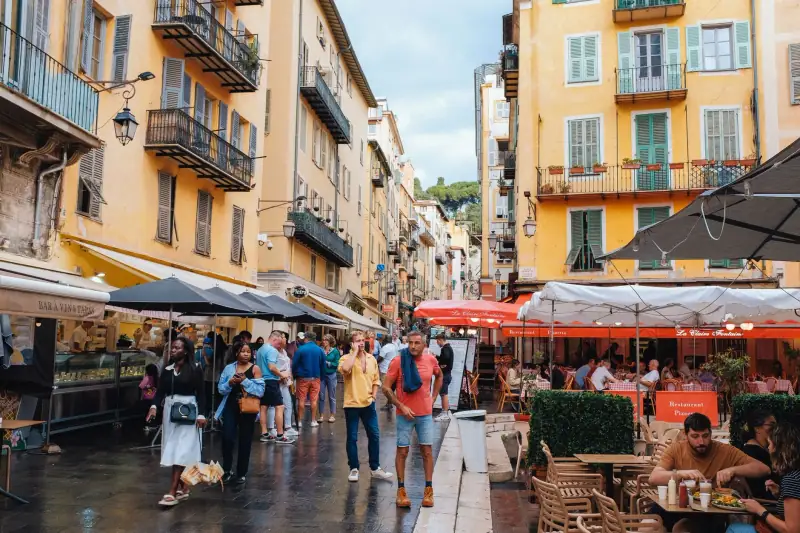
Old Nice, with its narrow lanes lined with ocher facades and its lively squares, is the most iconic neighborhood. It has the cours Saleya market, many restaurants, shops, baroque churches and, a few steps away, the sea and Castle Hill.
Pros. Everything is on foot: beach, market, restaurants, museums, promenade. The atmosphere is unique, and it is the best place to taste local specialties from breakfast on. If food interests you, our article on Niçoise specialties will keep you busy for several meals.
Cons. The lanes are busy late in the evening, especially around the squares and bars. Places are often in old buildings, sometimes with no elevator, with compact rooms. In summer, noise can be a genuine issue: ask for a courtyard-side room if you are a light sleeper.
Best for. Couples, food lovers, travelers who want to “feel” the city as soon as they step out of the hotel. Avoid it if you want absolute quiet or travel with a lot of luggage.
Stay in Old Nice
Compare hotels and apartments in the historic center, checking the elevator, air conditioning and cancellation terms.
The Promenade des Anglais and downtown: feet in the water
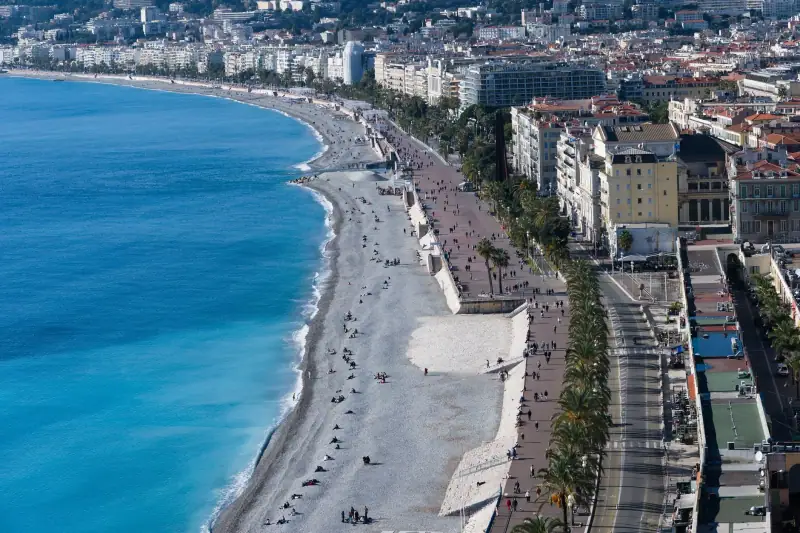
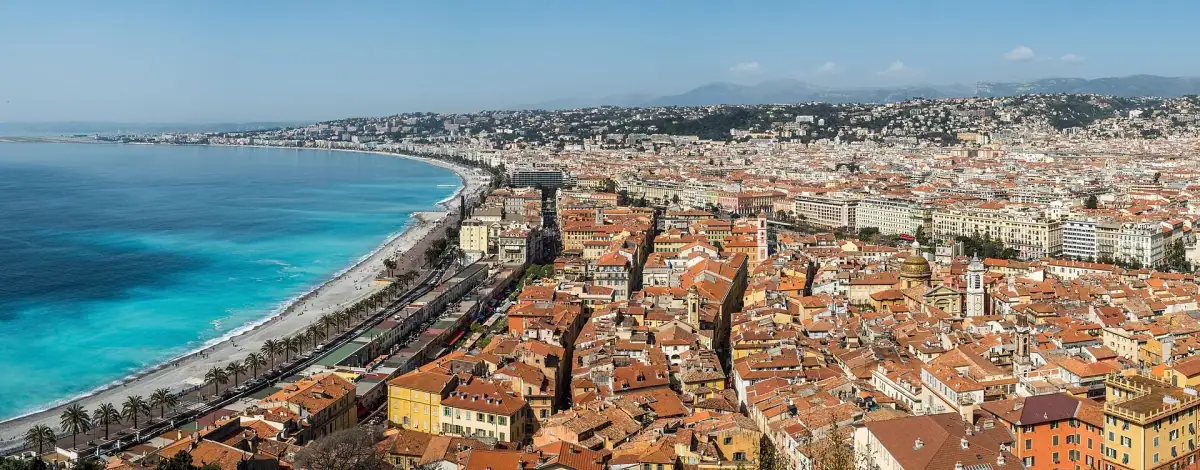
The famous Promenade des Anglais runs along the bay for several kilometers. The most iconic hotels line it, as well as the parallel streets and the area around place Masséna, the modern heart of the city with its checkerboard paving and its tram.
Pros. Sea views from well-oriented rooms, direct access to the beach (largely pebble) and to the promenade for running or cycling, a wide choice of hotels in all categories, the tram nearby. The area is well equipped with shops and restaurants, and you reach Old Nice on foot in about 15 minutes from Masséna.
Cons. This is the most expensive zone, especially for sea-view rooms. Traffic on the road along the promenade makes noise, and in summer it is crowded. State clearly in your booking that you want a sea-view room if that is the goal: a “street side” room is not worth the same rate.
Best for. Travelers who want a beach stay in the city, families who want easy beach access, lovers of comfort and large hotels.
Tip. If your budget is limited, aim for the second or third street back from the seafront: you are a few minutes’ walk from the beach for a price that is often more affordable.
The station area: practical and affordable
Around Nice-Ville station, avenue Jean-Médecin and the Thiers district, there is a large concentration of hotels in all categories, often more affordable than near the sea.
Pros. The station is the gateway to all your excursions: Monaco, Menton, Antibes and Cannes are easy by train, as our 3-day itinerary by train from Nice details. The tram passes nearby and links the airport to downtown. Shops, supermarkets and services are plentiful.
Cons. The atmosphere is more urban and less picturesque, and some streets near the station are busier and noisier, or less pleasant in the evening. The sea is about a 20-minute walk away, or a few tram stops: plan the trip to the beach.
Best for. Tight budgets, travelers arriving or leaving by train, stays focused on excursions rather than the beach. Read the most recent reviews carefully: in this area, quality varies more from one property to another.
The port and Mont Boron: quiet and authenticity
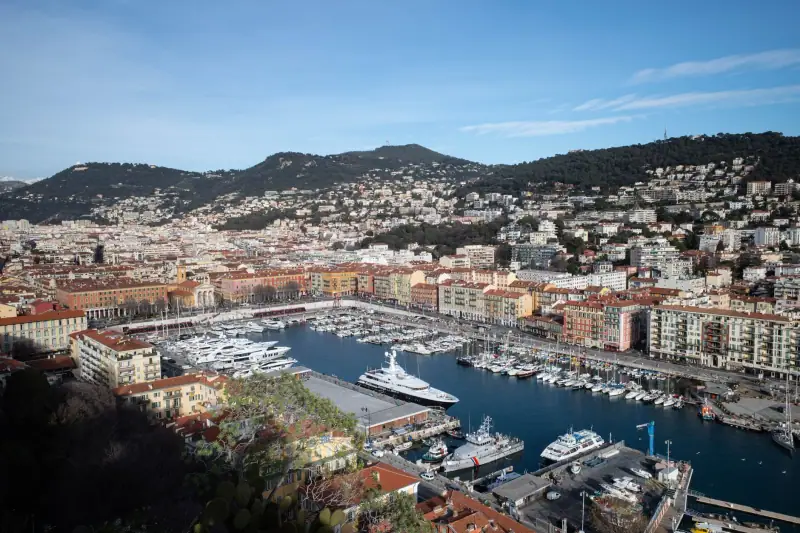
East of Old Nice, the port of Nice and the Mont Boron district offer a quieter atmosphere, among boats, quayside restaurants and wooded hills.
Pros. The port remains a lively neighborhood, with its cafés and local shops, a short distance from Old Nice. Toward Mont Boron, you will find more residential accommodation and viewpoints over the bay of Villefranche. It is an excellent compromise for those who want to be close to the center without the constant noise.
Cons. Hotel supply is less dense, and the relief of Mont Boron means climbing to get home. If you go out in the evening, check how you will get back (bus, taxi, walking).
Best for. Couples looking for quiet, travelers who like harbors, those returning to Nice who already know the center.
Cimiez and the heights: greenery and museums
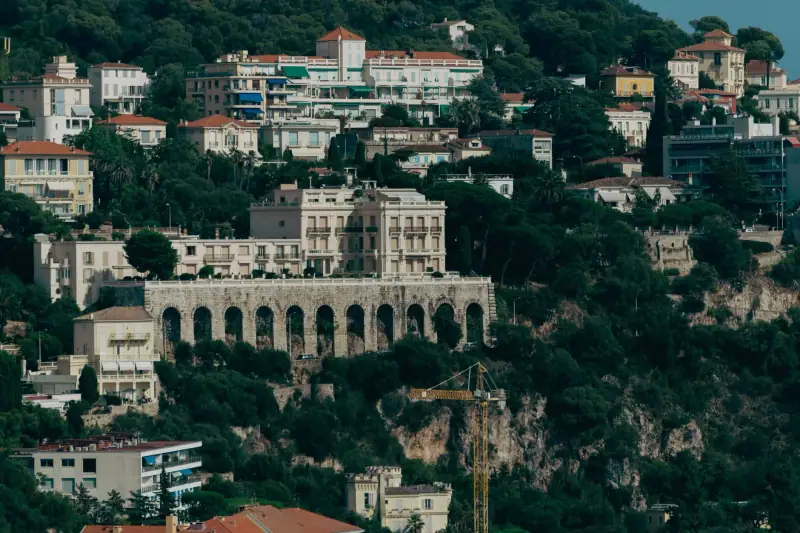
On the heights of the city, Cimiez is a residential, tree-lined district known for its Roman ruins, its monastery and its museums. It has villas, a few hotels and rentals.
Pros. Quiet, greenery, cooler air in summer and views over the city. It is an area appreciated by travelers with family or who want to get away from the bustle.
Cons. The district is away from the seafront: you must rely on the bus or a car to go down to town, and in the evening, dining options are fewer than downtown. Check the actual distance to the nearest bus or tram line before booking.
Best for. Long stays, families, lovers of history and tranquility. Avoid it for a short stay where every minute counts.
Hotel, apartment or hostel: which type of accommodation?
The neighborhood matters, but so does the type of accommodation.
Hotels remain the simplest choice for a short stay: front desk, housekeeping, breakfast, flexibility. They are particularly suitable if you arrive late or leave early. Check the air conditioning and room size, often small in the old center.
Apartments suit stays of several nights or families: kitchen, space, the chance to shop at the market and cook local produce. Check access conditions (keys, floor, elevator), cleaning fees and the tourist tax, which is usually added to the displayed price.
Hostels offer reduced rates and a friendly atmosphere for solo travelers or groups, especially in high season when hotel prices climb. Read the reviews on quiet and cleanliness carefully.
B&Bs are rarer right in the center but exist in the residential neighborhoods. They offer a personal welcome and good local tips.
When to book and what prices to expect
Nice rates vary strongly with the period. Summer, long weekends, the Carnival in February and the region’s events push prices up and empty the supply quickly. Spring and fall, with a pleasant climate and smaller crowds, are often the best value. Winter stays mild, with more accessible rates, even if some seasonal activities are reduced.
A few habits to optimize your booking:
- Book early for high season, favoring rates with free cancellation, which you can adjust later.
- Compare dates: shifting your stay by a day or two, or avoiding the weekend, can noticeably reduce the bill.
- Check the total: tourist tax, cleaning fees and possible extras are not always in the displayed price.
- Read recent reviews rather than just the overall score, looking in particular at what is said about noise, air conditioning and cleanliness.
Compare stays in Nice
Filter by neighborhood, budget and cancellation terms to find the room that matches your stay.
What if you stay somewhere other than Nice?
Nice is an excellent base, but some neighboring towns deserve consideration.
Villefranche-sur-Mer, to the east, is a fishing village overlooking a deep bay, quieter and more intimate than Nice, with a station that makes it easy to get back to the big neighboring city. Antibes combines an old town, ramparts and beaches, with good rail access to Cannes and Nice. Menton, at the far east, is quieter and milder in winter, ideal for those who want to explore Monaco and the Italian border. For these three options, expect less choice of accommodation than in Nice, but genuine charm and a less urban atmosphere.
If you want to explore the coast in both directions, Nice remains the most efficient base, with its central station and airport. Travelers who want to combine sea and hilltop villages can also devote a few nights to another area, after a first stay in Nice.
Excursions from Nice
Guided tours, boat trips or excursions to neighboring villages: compare the activities from Nice.
Our pick by type of traveler
To sum up, here is the neighborhood to favor depending on your profile:
- First visit, short stay: between Old Nice and place Masséna, to do everything on foot.
- Couple looking for atmosphere: Old Nice, or the streets near the port for a bit more calm.
- Beach stay: the Promenade des Anglais and neighboring streets.
- Small budget and train excursions: the station area and avenue Jean-Médecin, choosing the address with care.
- Family or long stay: an apartment near a tram line, or the heights of Cimiez if you want quiet.
- Quiet traveler: the port and Mont Boron.
Whatever you choose, keep in mind that Nice is compact and well served: a wrong neighborhood choice is easily fixed with a few tram stops. The most important thing is to book early, check the cancellation terms and read recent reviews.
Frequently asked questions
What is the best neighborhood to stay in Nice on a first visit?
Old Nice and its immediate surroundings, or the area between place Masséna and the Promenade des Anglais, are the most practical for a first stay. From there you walk to the market, the beach, Castle Hill and the restaurants, and the tram is close for everything else.
Is it better to stay near the station or near the sea?
Near the station, prices are often lower and you are ideally placed for train excursions to Menton, Antibes or Cannes. Near the sea, you pay more but gain atmosphere and views. The tram and walking (about 20 minutes between the station and the seafront) let you combine the two.
When should you book accommodation in Nice?
For summer, long weekends, the Nice Carnival in February and the region's events, it is better to book several weeks, even several months ahead, especially if you want a well-located room with free cancellation. Out of season, it is easier to find availability at lower rates.
Do you need a car if you stay in Nice?
No, in most cases. Nice is well served by tram, bus and train, and parking downtown is expensive and limited. If you plan to have a vehicle, check before booking that the accommodation has parking or a nearby solution, and the corresponding fee.
Is it better to stay in Nice or in a neighboring town?
Nice offers the best compromise: a wide choice of accommodation, a central station and an airport linked by tram. Villefranche-sur-Mer, Antibes or Menton are quieter and sometimes more charming, but supply is smaller there and high-season rates are not always lower.
Are Nice neighborhoods safe?
Nice is a large tourist city: the usual precautions apply (keep an eye on your belongings in busy places, be alert in crowds and at night). The tourist neighborhoods covered here are busy at all hours. Check recent traveler reviews for the exact address you are considering, as the street sometimes matters as much as the neighborhood.
More French Riviera guides
Keep reading
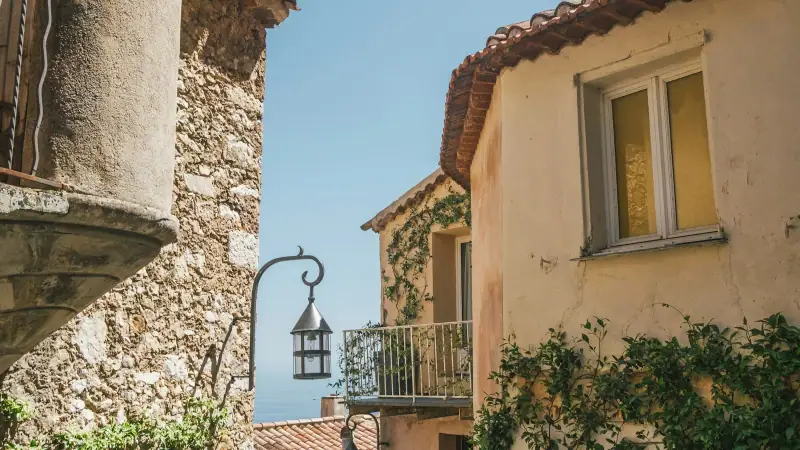
Where to stay in Èze: neighborhoods and types of accommodation
Medieval village, Èze-sur-Mer, Col d'Èze or Nice as a base: Èze neighborhoods and types of accommodation compared by budget and trip.
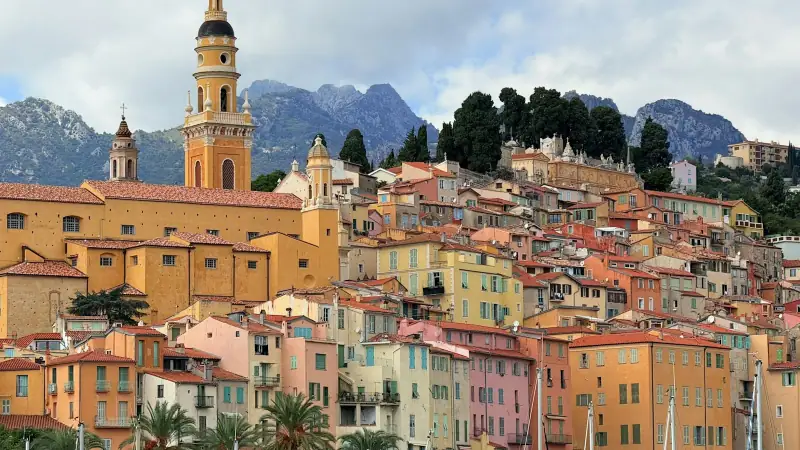
Where to stay in Menton: neighborhoods and types of accommodation
Old town, center, Garavan, seafront, hills: Menton neighborhoods and types of accommodation compared by budget and style of stay.
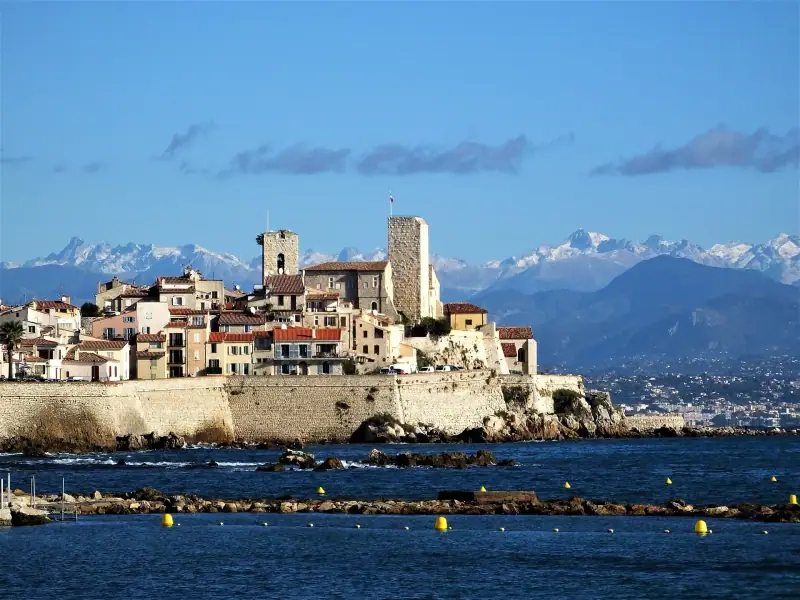
Where to stay in Antibes: neighborhoods and types of accommodation
Old Antibes, Juan-les-Pins, Cap d'Antibes, Port Vauban, the station: Antibes neighborhoods and types of accommodation compared by budget and trip style.
Ready-made
French Riviera itineraries
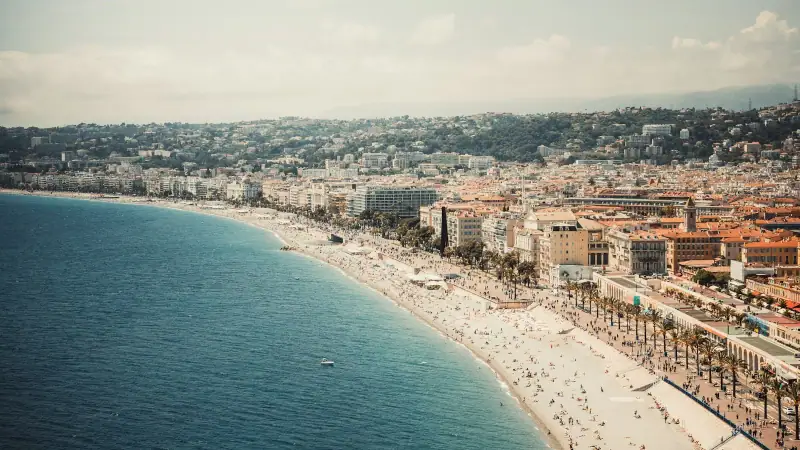
4 days
French Riviera in 4 days with kids: stops and pace
The French Riviera with kids in 4 days: a realistic plan from Nice, with travel times in minutes, short days, beaches and breaks, no car required.
Can be adapted in the planner
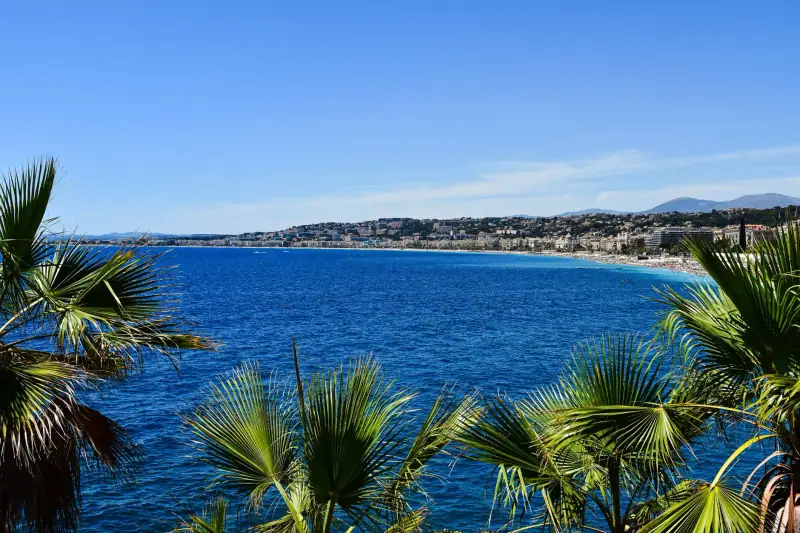
3 days
3 days on the French Riviera from Nice: a car-free itinerary by train
Nice, Villefranche, Èze, Menton, Antibes and Cannes in 3 days: a day-by-day itinerary by train and bus, with timing advice and tips to avoid crowds.
5 days
French Riviera road trip in 5 days: from Menton to Saint-Tropez by car
A 5-day road trip between Menton and Saint-Tropez: corniche roads, hilltop villages, the Esterel and parking tips to avoid traffic jams.