What to see
What to see on the Nice Riviera: Nice, Villefranche, Èze, Cap Ferrat and Menton
We may earn a commission when you book through links on this page, at no extra cost to you. We don't visit or try the places we cover: we summarize published sources. How we work
In short
- The Nice Riviera covers about 50 km (31 mi) of coast from Nice to Menton, served by a single train line that makes the stops easy to chain.
- Three days cover the essentials: Nice; Villefranche, Cap Ferrat and Èze; then Monaco, Roquebrune-Cap-Martin and Menton. With five days you can add beaches and walks.
- Nice is the best base thanks to its airport, station and range of accommodation. Monaco is about 20 minutes by train from Nice.
- Spring and early fall offer the best balance of mild weather, light and moderate crowds. Summer is crowded and parking is hard on the Corniches.
Between the cliffs of the Corniche and the Mediterranean, the Nice Riviera packs into about 50 km (31 mi) of coast the most iconic things the French Riviera offers: a big Mediterranean city, sheltered bays, capes covered in villas, hilltop villages and gardens where lemon trees grow a few steps from the Italian border. All of it is served by a single train line, which makes the stops easy to chain.
This guide tours the region: what to see, in what order, how long to plan and how to organize your days. For each stop, we point to a detailed guide when one exists. For opening hours and entry fees, which change with the season, always check the official websites before leaving: we give no figures here that could go out of date.
The Nice Riviera at a glance
The region reads from west to east, from Nice to Menton. Here are the main stops, with what sets them apart:
- Nice: the big city, its pebble beaches, Old Nice and its museums.
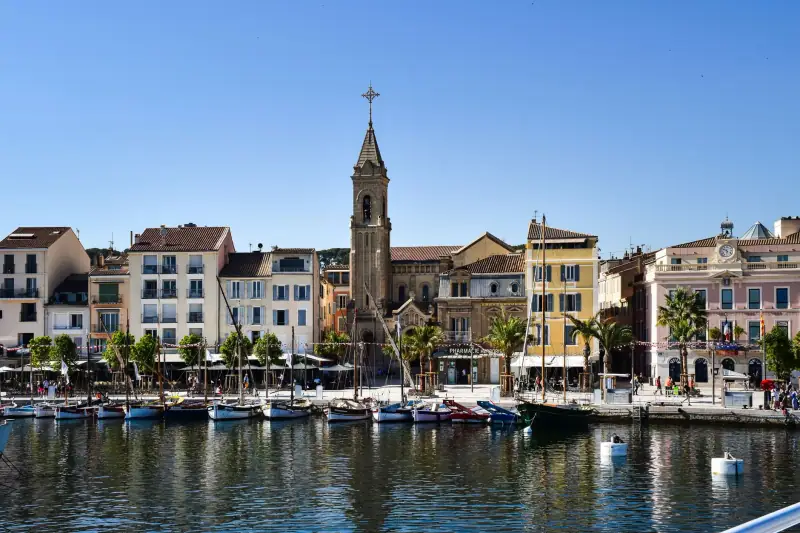
- Villefranche-sur-Mer: a deep bay lined with colorful facades.
- Cap Ferrat and Beaulieu-sur-Mer: villas, gardens and waterside paths.
- Èze: a medieval village perched above the sea.
- Monaco: an independent principality, to cross in a day.
- Roquebrune-Cap-Martin: a medieval village and a famous coastal path.
- Menton: the lemon town, close to Italy.
One feature makes everything easier: the railway runs along almost the whole coast. Our guide to getting around the French Riviera without a car details the trains, buses and trams, and explains when a car becomes a handicap rather than an asset, notably because of summer parking.
Nice, the capital of the Riviera
Nice is the fifth-largest city in France and the natural gateway to the region, with its international airport and its station. It deserves at least two days: there is enough to fill an entire stay without leaving the city.
The essentials come down to a few landmarks:
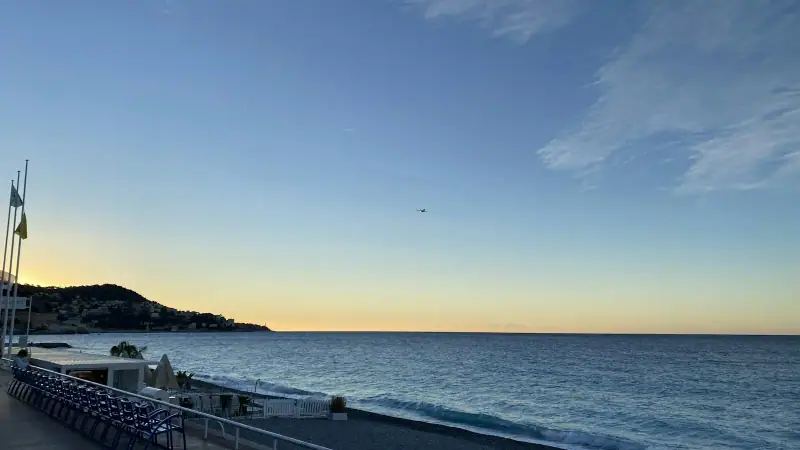
- The Promenade des Anglais, a long seafront avenue, ideal on foot or by bike to get a feel for the Niçois atmosphere.
- Old Nice, a maze of ocher and baroque lanes, with its squares, churches and small shops. The cours Saleya hosts its flower and local produce market.
- Castle Hill, which no longer has a castle but offers one of the finest panoramas over the Bay of Angels and the port.
- The museums, including the Matisse Museum and the Marc Chagall Museum, a reminder that Nice’s light attracted great artists.
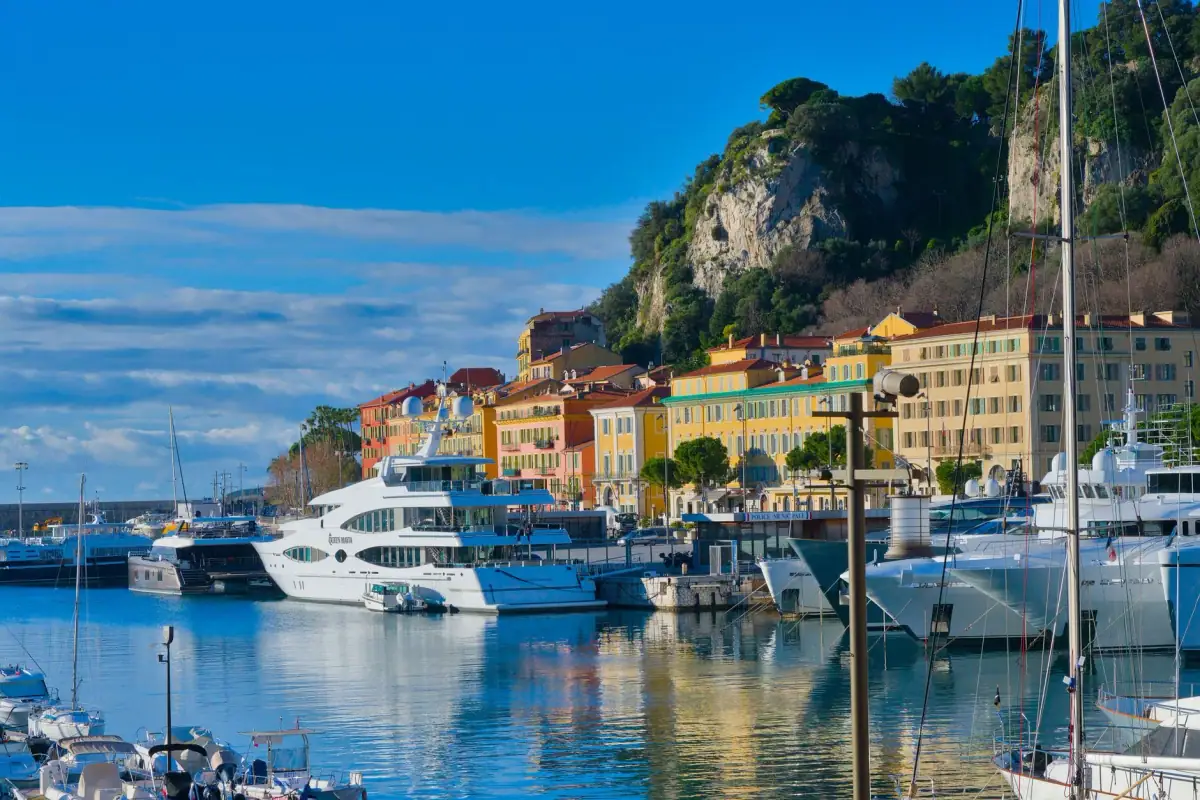
- The port district, more authentic and less touristy, for eating and having a drink.
Nice’s beach is pebbly: bring water shoes if you have tender feet. To organize your days, our guide to visiting Nice: what to see and do details a 2 to 3 day program, and the one on where to stay in Nice compares the neighborhoods. For food, discover Niçoise specialties.
Stay in Nice to branch out across the whole Riviera
Nice concentrates the stations, buses and tram: it is the simplest base for exploring the coast without a car. Compare available accommodation.
Villefranche-sur-Mer, the bay of colorful facades
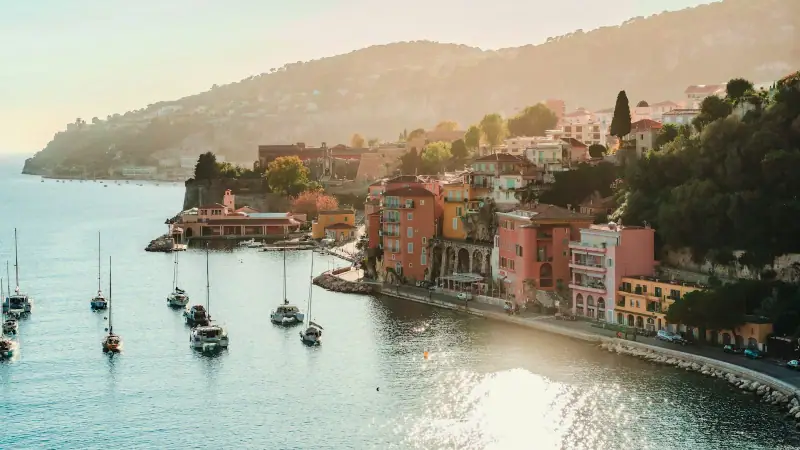
A few minutes from Nice by train, Villefranche-sur-Mer rises around one of the deepest bays in the Mediterranean. Its vaulted lanes, including the famous rue Obscure, its Saint-Elme Citadel and the Saint-Pierre Chapel decorated by Jean Cocteau make it a stop apart, calmer than its big neighbor.
Half a day is enough for the old town, the chapel and a lunch facing the harbor. Swimming is at Marinières beach, sheltered in the bay. Find all the details in our guide to visiting Villefranche-sur-Mer.
Cap Ferrat and Beaulieu-sur-Mer, villas and paths
Separated from Villefranche by the bay, Cap Ferrat (Saint-Jean-Cap-Ferrat) is a wooded peninsula known for its sumptuous villas. Its star visit is the Villa Ephrussi de Rothschild, a pink palace surrounded by themed gardens that look out over the sea on both sides. It is one of the most photographed places on the Riviera, best kept for a calm, slow visit.
The cape can also be discovered on foot. A coastal path follows the shore between the estates and the coves, with fine views over the bay of Villefranche and the open sea. It is an easy walk that suits most walkers, best done in the morning or late afternoon in summer. Our article on hikes and coastal paths will help you choose your routes.
On the other side of the peninsula, Beaulieu-sur-Mer appeals for its seafront and its Villa Kérylos, a reconstruction of an ancient Greek home built in the early 20th century. Together, Cap Ferrat and Beaulieu make a very pleasant day, among gardens, architecture and swimming. Expect some walking between sites if you travel without a car: some distances are short, others are easier by bus.
Èze, the eagle’s-nest village
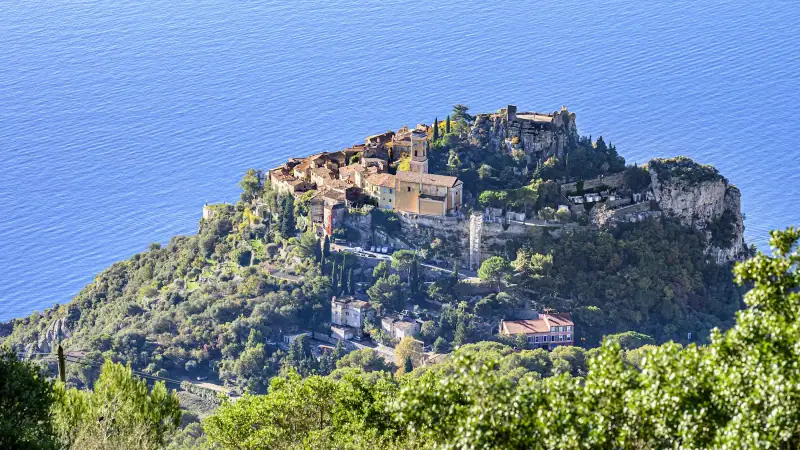
Between Nice and Monaco, Èze clings to a rocky spur that overlooks the Mediterranean by several hundred meters. The medieval village, entirely pedestrian, can be walked in an hour or two: stone lanes, vaulted passages, small squares and craft shops. Its Exotic Garden, at the top, offers a spectacular view of the coast and Cap Ferrat.
To go back down to the sea, the Nietzsche Path follows the trail the philosopher is said to have taken during his stays. It is steep and stony in places: walking shoes and water are essential, and it is better to avoid the hottest hours. The trail ends at Èze-sur-Mer, where you find the station, a beach and the way back to Nice. Our complete guide to visiting Èze gives the route and the alternatives for getting up to the village.
Guided tours and excursions on the Riviera
Day excursion, boat ride along the coast, guided village tour: compare the activities offered and book ahead in high season.
Monaco, a half-day or full-day detour
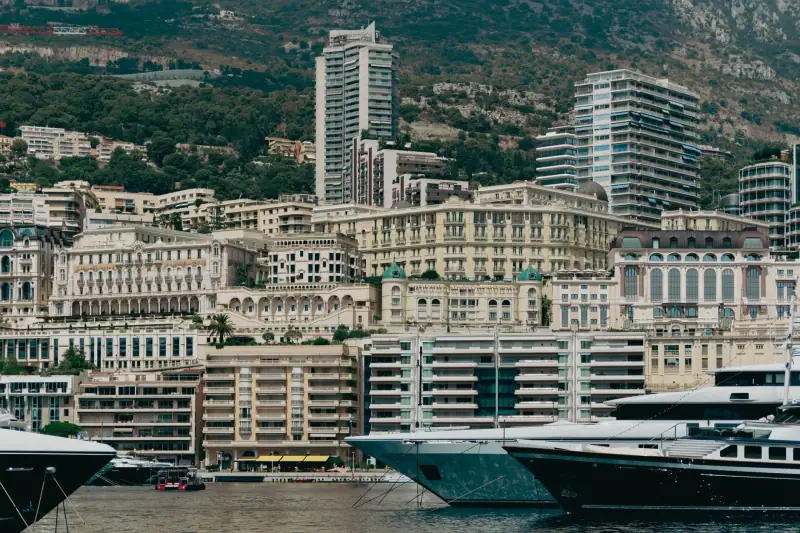
Monaco is not in France but sits in the middle of the Riviera, about twenty minutes by train from Nice. This tiny state is very dense: you visit the Rock, the historic district with the princely palace, the cathedral and the oceanographic museum, then go down to Port Hercule and the Monte-Carlo district, known for its casino.
As the principality is small, half a day is enough to see the essentials on foot, and a full day if you add a museum and a lunch. Prices are high: a picnic or a meal in the neighboring towns eases the budget. We do not detail here the hours of the palace or the museums, which vary: check the official websites.
Roquebrune-Cap-Martin, Le Corbusier and the medieval village
Between Monaco and Menton, Roquebrune-Cap-Martin combines two faces. The village of Roquebrune, perched on the hill, has a medieval castle and vaulted lanes full of charm, with a magnificent view over the bay of Monaco. Below, Cap Martin is a residential peninsula, bordered by a coastal path.
This is where the architect Le Corbusier spent long summers and designed his famous Cabanon, a small wooden cabin by the sea. The coastal path from Cap Martin toward Monaco is a pleasure for walkers: it runs along the villas and the sea with fine views of the coast. If you are interested in architecture, find out ahead about the Cabanon visit arrangements, generally by reservation: our guide to visiting Villa E-1027 and the Cabanon details tickets, season and access.
Menton, the lemon town
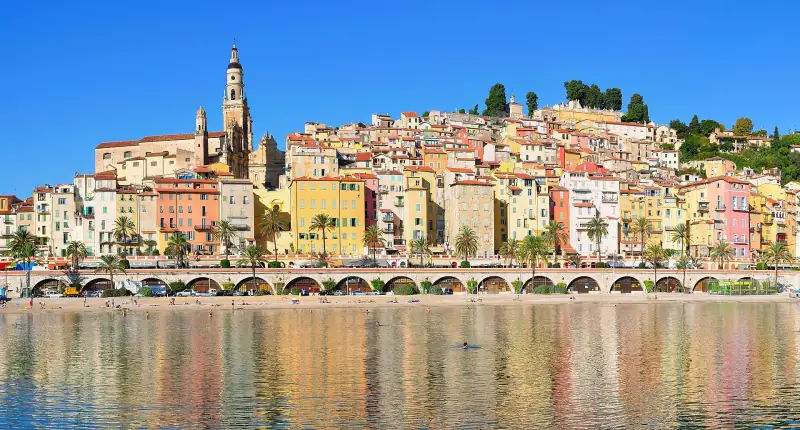
On the Italian border, Menton enjoys a particularly mild microclimate that lets lemon trees thrive. The town celebrates its citrus every winter with the Lemon Festival, which fills the gardens with large citrus sculptures. Day to day, people come for the old town with its baroque facades, its colorful stairs leading to the Saint-Michel basilica, its covered market and its gardens.
The town also has a museum devoted to Jean Cocteau, who loved it, and several botanical gardens: enough to fill a whole day. The beaches are pebble, with a pleasant promenade along the seafront. So you miss nothing, our guide to visiting Menton offers a detailed itinerary.
How to link the stops
The regional train is the backbone of the Riviera: it links Nice to Menton, stopping in most of the towns in this guide. It is fast, economical and free of parking worries, which makes it the best option in summer. For hilltop sites (Èze village, Roquebrune village) or on a cape, add buses or walking.
A car remains handy if you want to chain several sites in a day, notably outside high season. It becomes a headache in summer because of traffic on the Corniches and limited parking. If you rent, favor a small vehicle and plan your stops ahead.
Rent a car for the Corniches
Useful out of season for chaining hilltop villages and capes. Compare rental companies and book ahead in summer.
What program for how long you stay
Depending on the time you have, here are realistic programs, designed around the train:
- 1 day: Nice (Old Nice, Castle Hill, Promenade des Anglais) with lunch at the port.
- 2 days: day 1 in Nice; day 2 in Villefranche-sur-Mer, Cap Ferrat and Èze.
- 3 days: add a day for Monaco, Roquebrune-Cap-Martin and Menton.
- 5 days: take time for the beaches, museums, a walk on a trail and a rest day.
Our itinerary 3 days on the French Riviera from Nice, by train offers a detailed sequence. To compare seasons, see when to go to the French Riviera, and to calibrate your spending, our French Riviera budget.
Practical tips for your visit
A few habits simplify the stay:
- Travel early: the hilltop villages are more pleasant in the morning, before the groups.
- Check hours: villas, gardens and museums have closing days that vary by season.
- Comfortable shoes: stairs, cobbles and trails are everywhere.
- Water and sun protection: essential on exposed trails.
- Book ahead in July and August, for accommodation and for the most popular sites.
- Stay flexible: if the weather is unpredictable, swap a beach day for a museum day.
Insurance. If you travel from far away or with young children, travel insurance with assistance can be reassuring.
In short: making the most of the Nice Riviera
The Nice Riviera suits every pace. You can spend a day or a month here, anchored in Nice or changing base from village to village. Remember the essentials:
- Make Nice your base for transport and accommodation.
- Use the train to link the stops and avoid the car in summer.
- Combine Villefranche, Cap Ferrat and Èze on the same day.
- Keep Menton for the end, with Roquebrune and Monaco on the way.
- Check hours and fares before each visit.
With a bit of organization, this small stretch of coast offers a concentrate of what people love about the French Riviera: sea, villages, gardens and a light that belongs only to it.
Frequently asked questions
Which towns does the Nice Riviera include?
The term designates the coast around Nice, from the west of the city to the Italian border: Nice, Villefranche-sur-Mer, Cap Ferrat, Beaulieu-sur-Mer, Èze, Cap-d'Ail, Roquebrune-Cap-Martin and Menton, with the Principality of Monaco set in the middle.
How many days do you need to see the Nice Riviera?
Three days cover the essentials: one day for Nice, one day for Villefranche, Cap Ferrat and Èze, one day for Menton and Roquebrune. With five days, you can add Monaco, beaches and walks without rushing.
Can you visit the Nice Riviera without a car?
Yes. The coastal train line serves Nice, Villefranche-sur-Mer, Beaulieu-sur-Mer, Èze-sur-Mer, Cap-d'Ail, Monaco, Roquebrune-Cap-Martin and Menton. Buses complete the network to climb to the village of Èze or reach Cap Ferrat.
What is the best time to visit the Nice Riviera?
Spring and early fall offer a good compromise between mild weather, light and moderate crowds. Summer is ideal for swimming but busier and more expensive. Winter stays mild, with the Nice Carnival and the Lemon Festival in Menton.
Do you need a passport to go to Monaco?
There is no systematic border control between Monaco and France, and you get there in a few minutes by train from Nice. Carry ID anyway, as for any trip. Entry rules for France depend on your passport: check the official travel advice of your government before you book, such as travel.state.gov (US), GOV.UK (UK), travel.gc.ca (Canada) or Smartraveller (Australia) (checked November 2026).
Where should you stay to explore the whole Nice Riviera?
Nice is the best base thanks to its transport and choice of accommodation. Villefranche-sur-Mer or Menton suit you if you prefer a quieter setting and a stay centered on one area.
Is the Nice Riviera suitable for children?
Yes: beaches, little trains, easy coastal walks and gardens. Watch out for the stairs and slopes of the hilltop villages, which are impractical with a stroller.
More French Riviera guides
Keep reading
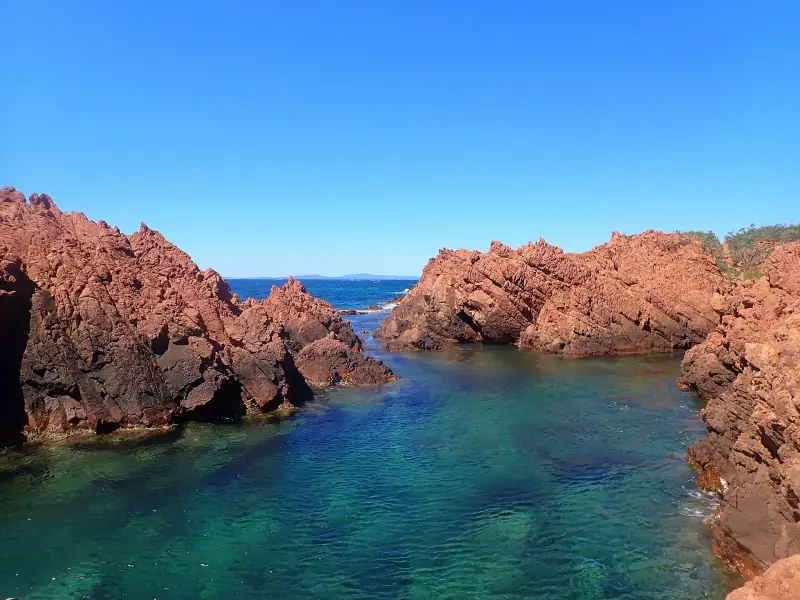
What to see in the Esterel: Corniche d'Or, Agay, Cap Roux and Mont Vinaigre
What to see in the Esterel? Corniche d'Or, Agay bay, Dramont, Cap Roux, Pic de l'Ours and Mont Vinaigre: stops, timing, access rules and tips.
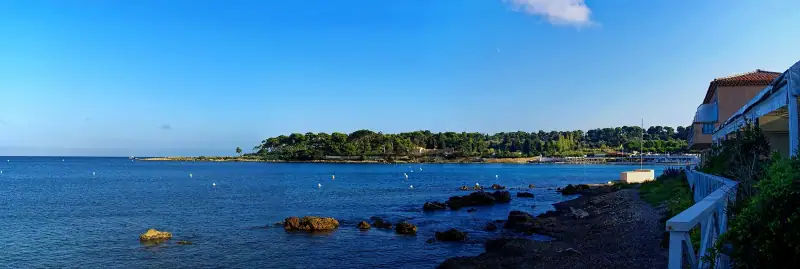
What to see around Cannes and Antibes: Cannes, Antibes, the Lérins Islands and hinterland villages
What to see around Cannes? Cannes, Lérins Islands, Antibes, Juan-les-Pins, Vallauris, Biot and Mougins: the top stops and how to link them.
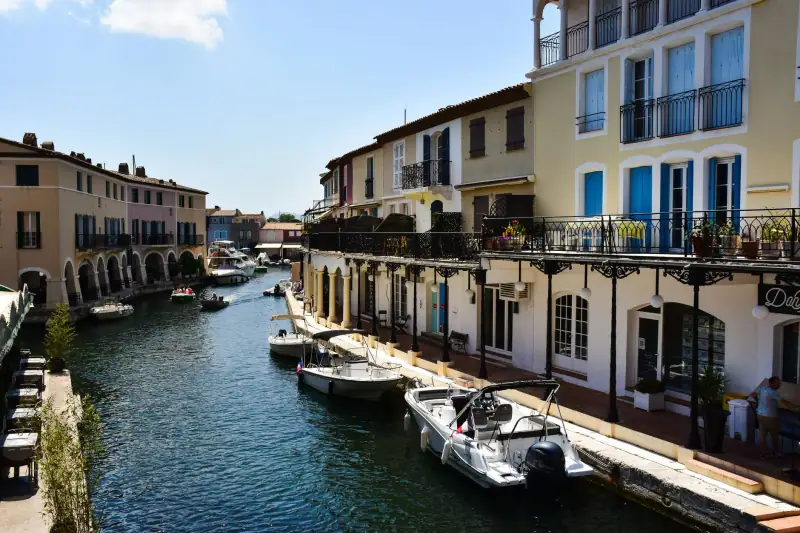
What to see in the Gulf of Saint-Tropez: Ramatuelle, Grimaud, Gassin and Sainte-Maxime
What to see in the Gulf of Saint-Tropez? Ramatuelle, Pampelonne, Gassin, Grimaud, Port Grimaud, Cogolin and Sainte-Maxime: stops, timing and tips.
Ready-made
French Riviera itineraries
4 days
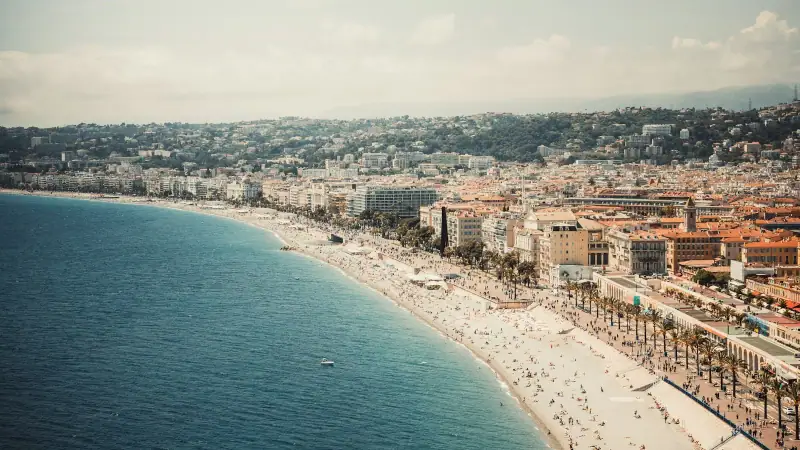
French Riviera in 4 days with kids: stops and pace
The French Riviera with kids in 4 days: a realistic plan from Nice, with travel times in minutes, short days, beaches and breaks, no car required.
Can be adapted in the planner
3 days
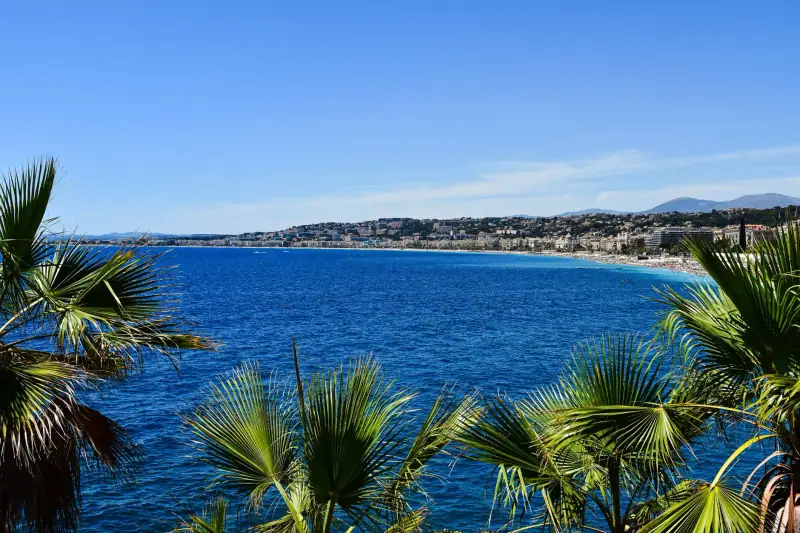
3 days on the French Riviera from Nice: a car-free itinerary by train
Nice, Villefranche, Èze, Menton, Antibes and Cannes in 3 days: a day-by-day itinerary by train and bus, with timing advice and tips to avoid crowds.
5 days
French Riviera road trip in 5 days: from Menton to Saint-Tropez by car
A 5-day road trip between Menton and Saint-Tropez: corniche roads, hilltop villages, the Esterel and parking tips to avoid traffic jams.