Itineraries
France in 14 days: the Riviera and Corsica by car and ferry
We may earn a commission when you book through links on this page, at no extra cost to you. We don't visit or try the places we cover: we summarize published sources. How we work
Day by day
- Days 1-3Nice, Old Nice and train trips along the coast
- Days 4-5Ferry to Bastia, then Cap Corse
- Days 6-7Calvi: citadel, beach and Balagne villages
- Days 8-9Ajaccio: Napoleon museums and market
- Days 10-11Bonifacio: cliffs, sea caves, Lavezzi Islands
- Days 12-13Porto-Vecchio beaches and Bavella
- Day 14Drive to Figari and fly home
Where to sleep
- Nice3 nights
- Bastia2 nights
- Calvi2 nights
- Ajaccio2 nights
- Bonifacio2 nights
- Porto-Vecchio2 nights
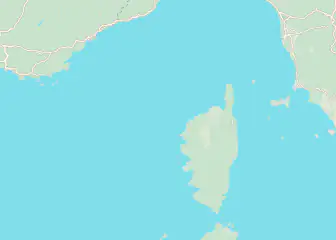
Opens the trip planner with these stops and nights already filled in. Add a stop, drop one or change the nights.
In short
- 14 days, 13 nights, six bases: Nice, then Bastia, Calvi, Ajaccio, Bonifacio and Porto-Vecchio. Fly into Nice (NCE) and out of Figari South Corsica (FSC).
- Day 4 is a ferry, not a road: Nice to Bastia takes about 6 h 30 to 13 h depending on the ship. Check schedules and car rules.
- On the island the longest drive is Calvi to Ajaccio, about 2 h 45, 163 km (101 mi). The other drives are 2 h 10 or less.
- June and September are the best compromise on both the Riviera and Corsica, according to our regional guides.
This trip pairs three days on the French Riviera with eleven days in Corsica. It suits travelers who want one city break, then an island road trip with beaches, citadels and mountain scenery, without changing continents or crossing a land border. You arrive in Nice, take the ferry to Bastia on day 4, drive south and west through five Corsican bases, and fly home from Figari in the far south.
The shape is simple: one hop by sea, then short-to-medium drives. On the island the longest drive is Calvi to Ajaccio, about 2 h 45, 163 km (101 mi). Every other drive is 2 h 10 or less. The ferry is not a road and not a drive: it takes about 6 h 30 to 13 h depending on the ship, so plan day 4 around it.
The route at a glance
| Days | Base | Nights | Drive from previous base |
|---|---|---|---|
| 1-3 | Nice | 3 | From Nice Côte d’Azur Airport (NCE): 10 min, 8 km (5 mi) |
| 4-5 | Bastia | 2 | No drive: ferry Nice to Bastia, about 6 h 30 to 13 h depending on the ship |
| 6-7 | Calvi | 2 | 1 h 45, 92 km (57 mi) |
| 8-9 | Ajaccio | 2 | 2 h 45, 163 km (101 mi) |
| 10-11 | Bonifacio | 2 | 2 h 10, 129 km (80 mi) |
| 12-13 | Porto-Vecchio | 2 | 35 min, 28 km (17 mi) |
| 14 | Figari South Corsica Airport (FSC) | - | 45 min, 27 km (17 mi) from Porto-Vecchio |
Car rental in France
Check that the company allows the car on the Corsica ferry and compare one-way fees; book early in summer.
Day by day
Days 1-3: Nice and the Nice Riviera
From the airport, Nice is a 10-minute drive, 8 km (5 mi). Nice is the capital of the Riviera and, according to our guide, deserves at least two days on its own: the Promenade des Anglais, Old Nice and the cours Saleya market, Castle Hill for the view over the Bay of Angels, and the Matisse and Marc Chagall museums. The beach is pebbly, so bring water shoes.
For the other days, our guide to what to see on the Nice Riviera suggests a loop east: Villefranche-sur-Mer and Cap Ferrat with the Villa Ephrussi de Rothschild, the hilltop village of Èze, then Monaco (about 20 minutes by train from Nice), Roquebrune-Cap-Martin and Menton. The regional train links these stops, and the guides warn that parking and traffic on the Corniches are hard in summer. Our 3-day plan by train from Nice gives the sequence, and the French Riviera road trip guide covers the coast by car if you have more time.
Neighborhoods are compared in where to stay in Nice: Old Nice for atmosphere, the station area for budget and trains. Hotels in Nice are easy to compare by area, and you can browse activities in Nice if you want a guided day.
Days 4-5: the ferry to Bastia, then Cap Corse
Day 4 is the crossing. The ferry from Nice to Bastia is a sea route, run by Corsica Ferries, and it takes about 6 h 30 to 13 h depending on the ship. Our Corsica cost guide, relaying Visit Corsica, says that in 2026 Corsica Ferries was the only operator serving Corsica from Nice, with the Bastia line running all year. Schedules vary with the season and the vessel, so check them before booking, and allow time for check-in at the port. An overnight crossing with a cabin is possible and saves a hotel night, but this itinerary keeps a booked night in Bastia, so choose the sailing that fits your plan and ask your hotel about late arrival.
Take the car with you only if your rental company allows it on the ferry to Corsica. Otherwise, travel on foot and rent a second car in Bastia. This is the one step to settle before anything else.
On day 5, Bastia: the Old Port with its ocher and pink houses, the baroque Saint-Jean-Baptiste church, and the Genoese citadel of Terra Nova, where the Governors’ Palace houses the Bastia Museum. Place Saint-Nicolas has a Sunday morning market. The best excursion is the Cap Corse loop, a full day through Erbalunga, Macinaggio, Centuri and Nonza, returning to Bastia by Saint-Florent. Details are in visiting Bastia, and where to stay in Bastia helps you choose a quarter. Hotels in Bastia are one search away.
Days 6-7: Calvi and Balagne
Drive from Bastia to Calvi: 1 h 45, 92 km (57 mi). Calvi sits at the end of a half-moon bay, with a Genoese citadel on a promontory 80 m (260 ft) above the sea and a fine-sand beach of 4.5 km (2.8 mi). Walk the ramparts (allow at least 45 minutes) and visit Saint-Jean-Baptiste Cathedral, which is free.
On day 7, choose between the beach, the Revellata peninsula for snorkeling and diving, or the “beach train”, the Balagne tram, which runs 21.8 km (13.5 mi) to L’Île-Rousse in 40 to 45 minutes. Perched villages such as Sant’Antonino and Pigna are best done by car over half a day. Read visiting Calvi, the Balagne guide and, for more time in the region, 5 days in Balagne. The guide notes that in July and August prices soar and rooms fill months ahead: check hotels in Calvi early.
Days 8-9: Ajaccio
This is the longest drive of the trip: Calvi to Ajaccio, 2 h 45, 163 km (101 mi). Plan to arrive for a late lunch and keep the afternoon light.
Ajaccio is the birthplace of Napoleon, born here on August 15, 1769. The Maison Bonaparte on Rue Saint-Charles, closed Monday, and the Fesch Museum, with its Italian paintings, take most of a day. Add the covered market on Place César Campinchi (mornings, except Monday for some stalls), the old harbor and the Cannes fishermen’s district. For day 9, drive out to the Pointe de la Parata for sunset over the Sanguinaires Islands, or swim at Marinella or Ricanto. The guide also lists the Calanques de Piana, a UNESCO World Heritage site, as an excursion if you want a longer outing. See visiting Ajaccio and where to stay in Ajaccio, then compare hotels in Ajaccio.
Days 10-11: Bonifacio
Ajaccio to Bonifacio is 2 h 10, 129 km (80 mi). Bonifacio’s Genoese citadel stands on a white limestone promontory 70 m (230 ft) above the sea, with Sardinia 12 km (7.5 mi) across the strait. Enter through the Porte des Gênes, walk the ramparts, and, if the weather allows, go down the 187 steps of the King of Aragon’s staircase (closed in strong wind and after heavy rain; wear closed shoes).
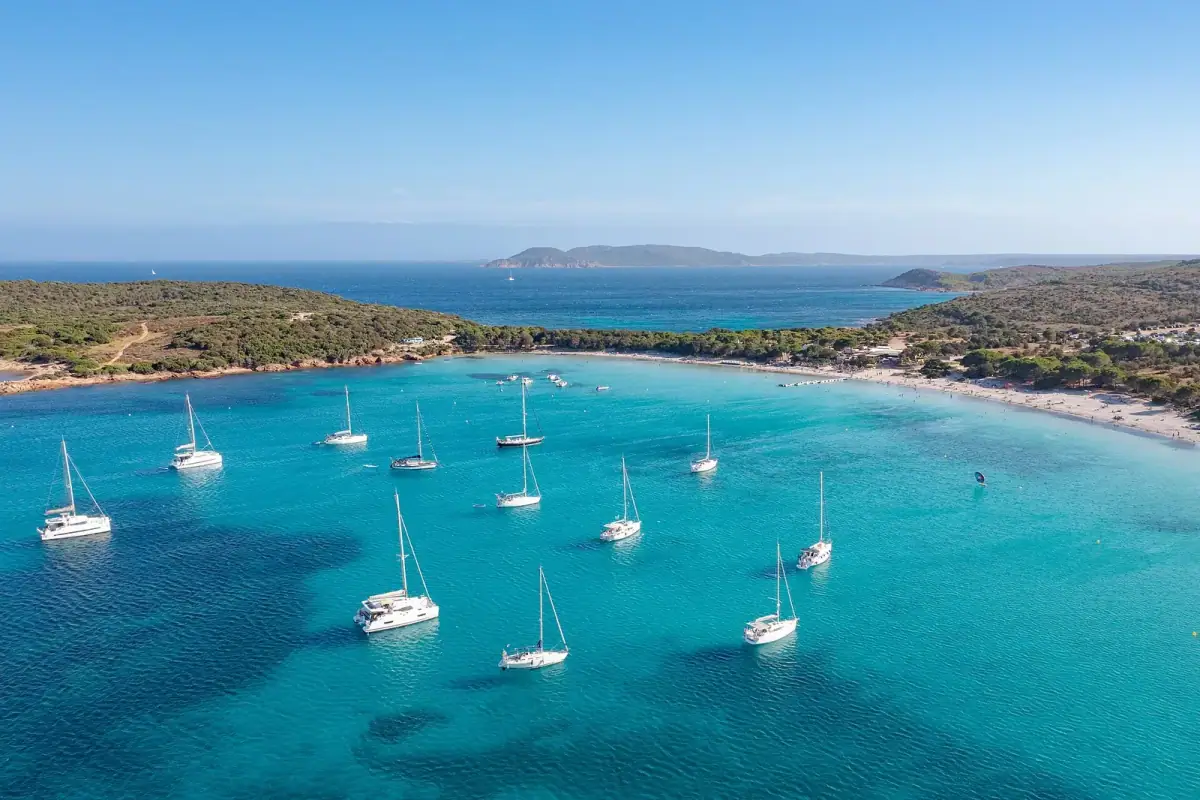
The boat trip is the highlight: tours of 1 h to 1 h 30 along the cliffs and into the sea caves, including the Sdragonato cave, cost about €15-20 (~$17-23) per adult for a basic tour. Packages that include the Lavezzi Islands nature reserve run about €35-40 (~$41-46) and last 3 h to 4 h. The guide says to book ahead in July and August because Lavezzi capacity is limited to 750 people a day, and to leave margin in your schedule because wind can cancel trips. On the other day, go to Rondinara beach (arrive before 9 am or after 5 pm in high season) or Santa Manza. Browse activities in Bonifacio and hotels in Bonifacio; the guide advises booking several months ahead for summer. Full details are in visiting Bonifacio.
Days 12-13: Porto-Vecchio
The drive is short: 35 min, 28 km (17 mi). Porto-Vecchio is described as the seaside capital of Corse-du-Sud, with a Genoese citadel on a rocky promontory and shopping lanes that are pleasant in the evening. The reason to stay is the beaches. Palombaggia, with umbrella pines over golden sand, is often cited among the most beautiful in Europe; in July and August you must arrive before 9 am. Santa Giulia is a shallow lagoon behind a strip of white sand, good for families.
For a change of scene, spend one day inland in the Alta Rocca: Zonza, the Bavella pass at about 1,218 m (3,996 ft) and the Bavella needles. Our Corse-du-Sud guide covers the area, including a 7-day plan and the beaches. Our guides do not include a separate Porto-Vecchio guide, so check hours and conditions locally. Search hotels in Porto-Vecchio.
Day 14: Figari and home
Figari South Corsica Airport (FSC) is 45 min, 27 km (17 mi) from Porto-Vecchio. Leave a comfortable margin to return the rental car before your flight. The Corse-du-Sud guide notes that agencies at Figari are often full from May, which is a reason to book the car and the drop-off early. For the whole island by road, see the Corsica road trip guide and the 10-day Corsica itinerary.
Getting there and away
The usual international gateways for travelers from the US, the UK, Canada and Australia are the large French airports on our list. This trip uses Nice Côte d’Azur (NCE) to arrive and Figari South Corsica (FSC) to leave, near Porto-Vecchio. Check flights and fares for your own departure city, because our guides do not list routes or airlines.
If you pick up the car in Nice and return it at Figari, it is a one-way rental. Rental companies usually charge a one-way (drop-off) fee, and it can be higher when the drop-off is in another country; the amount varies by company, so check it when you compare offers. The ferry adds a second condition: check the company’s rule on taking the car to Corsica, or rent a second car in Bastia. For entry requirements and for whether your driving licence is accepted or an international driving permit is needed, check the official government source of your own country.
When to go
Both regions point to the same shoulder months. On the Riviera, May, June and September are the best balance; in May, big events such as the Cannes Film Festival and the Monaco Grand Prix fill rooms and raise rates. July and August bring the highest prices, crowded beaches and saturated coastal roads.
In Corsica, June and September are the best compromise. The sea reaches 21-22 °C (70-72 °F) at the end of June, and in September it is still 23-25 °C (73-77 °F) with prices down 30 to 50% after about August 20. August is the busiest month, with rooms sometimes two to three times the September price; the guide advises booking at least 6 months ahead. In October, most coastal lodging closes between October 15 and 31. Our guide to the best time to visit Corsica and the Riviera equivalent give month-by-month detail.
Budget
These figures come from our regional budget guides, so they cover each region separately and change with the season.
- Riviera (French Riviera budget guide, 2026 surveys): a comfort profile is about €130 to 190 ($150 to $220) per person per day, for a couple sharing a room. In Nice, the Matisse Museum is about €10 ($12) and a lunch main course about €20 ($23).
- Ferry (Corsica cost guide, indicative): low season, €40-60 (~$46-70) per passenger plus €80-120 (~$93-140) for the car one way; July-August, €70-120 (~$81-140) per passenger plus €150-250 (~$175-290) for the car.
- Corsica per day (Corsica cost guide): about €140 to €235 (~$165 to $275) per person in a 3-star hotel with restaurants.
- Rental car on the island: a small city car is €30-50 (~$35-58) a day off season and €60-100 (~$70-115) in July-August.
- Hotels in high season (city guides): Bastia €80-150 (~$93-175), Ajaccio €80-160 (~$93-185), Calvi €150-250 (~$175-290) in midsummer, Bonifacio €100-200 (~$116-230) a night.
Our Corsica trip cost guide and the French Riviera budget go item by item.
Adapt it
For a shorter trip, drop Porto-Vecchio and fly out of Ajaccio (AJA) instead, which skips the last two drives; or keep Nice and cut the Calvi stop to go straight from Bastia to Ajaccio. For a longer one, add a night in Nice or on the Riviera, or use the other bases of our France planner, such as Antibes or Saint-Tropez on the coast and Corte in the Corsican interior. If you prefer to avoid a long crossing, our guides note that the Nice route changes by season and that Marseille and Toulon also serve the island, so compare options when you book. You can also stay in Corsica only with the 10-day Corsica itinerary.
Frequently asked questions
How do I get from Nice to Corsica with a rental car?
By ferry from Nice to Bastia, about 6 h 30 to 13 h depending on the ship. Check that your rental company allows the car on the ferry to Corsica, or rent a second car in Bastia.
Which airports should I use?
Fly into Nice Côte d'Azur (NCE) and out of Figari South Corsica (FSC), near Porto-Vecchio. Both are usual international gateways, and NCE is 10 min, 8 km (5 mi) from the first base.
Will I pay extra to drop the car at Figari?
Rental companies usually charge a one-way (drop-off) fee when the car is returned somewhere other than where it was picked up. It varies by company, so check it when you compare offers.
What is the longest drive on the island?
Calvi to Ajaccio, about 2 h 45, 163 km (101 mi). Bastia to Calvi is 1 h 45, Ajaccio to Bonifacio 2 h 10, and the last two drives are under 45 min.
When is the best time to go?
Our guides point to late spring and early fall: June and September balance warm sea, crowds and prices in Corsica, and May, June and September suit the Riviera.
Ready-made
France itineraries
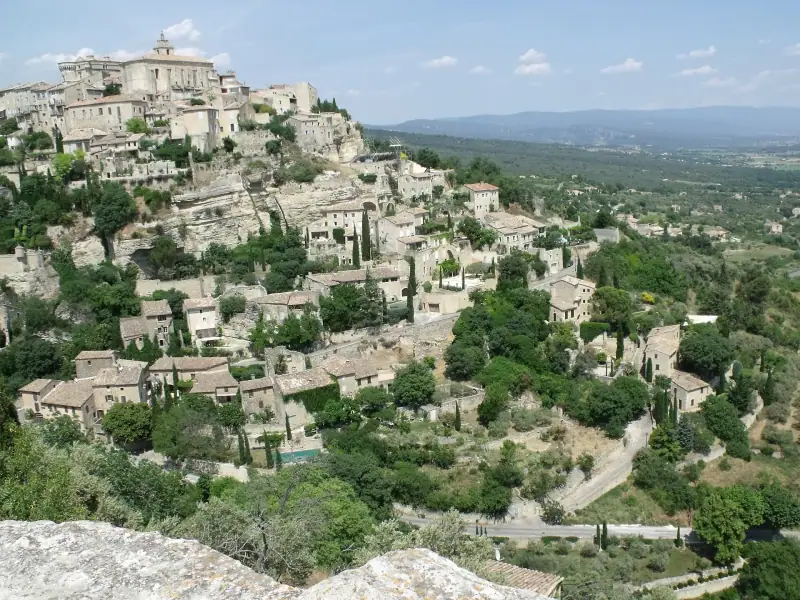
10 days
France in 10 days: Provence and the French Riviera by car
AvignonGordesMoustiers-Sainte-MarieNice
Can be adapted in the planner
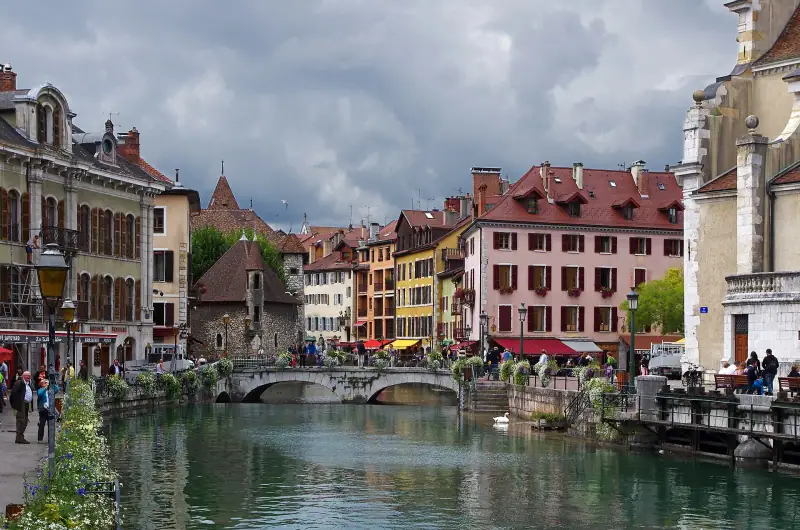
14 days
France in 14 days: from Paris to the Riviera via the Jura and the Alps
ChantillyArboisAnnecyAvignonGordesNice
Can be adapted in the planner
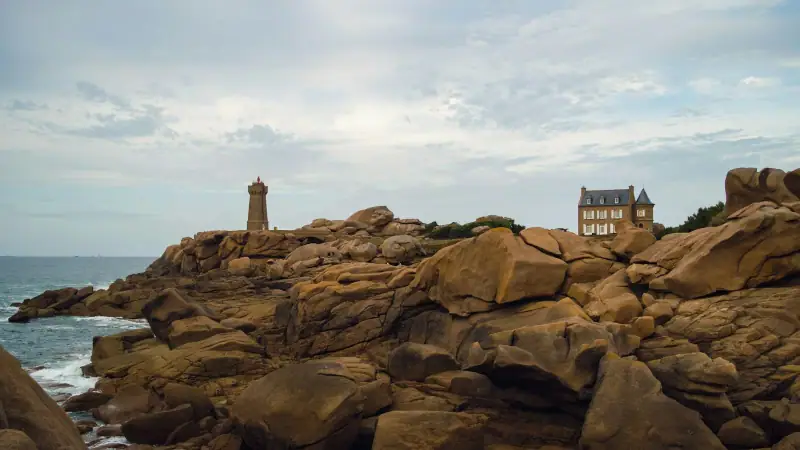
21 days
France in 21 days: the grand tour, from Brittany to the Riviera
ChantillySaint-MaloCarnacSarlat-la-CanédaBiarritzCauteretsAvignonNice
Can be adapted in the planner