What to see
Visiting Domme: What to See and Do in the Hilltop Bastide of the Black Périgord
We may earn a commission when you book through links on this page, at no extra cost to you. We don't visit or try the places we cover: we summarize published sources. How we work
In short
- Allow two to three hours for the lanes, the Barre viewpoint and the Porte des Tours; add the cave and lunch and it becomes half a day.
- Domme is a 13th-century royal bastide on a promontory above the Dordogne, listed among the Most Beautiful Villages of France.
- The cave has about 450 m (1,475 ft) of galleries, a guided visit of about 45 minutes and a panoramic elevator back up to the village.
- Lanes, covered market square and viewpoint are free; the cave, Porte des Tours and tourist train are paid, with combined tickets. Market on Thursday.
Set on a rocky promontory facing a great loop of the Dordogne, the bastide of Domme can be seen from afar. Its golden stone ramparts, fortified gates and viewpoint make it one of the most spectacular villages of the Black Périgord. Founded in the 13th century, it has kept its medieval plan and remains one of the best places in the valley to understand what a bastide was: a new town, fortified and designed to be defended.
This guide helps you prepare your visit: the history of the place in a few lines, the highlights, the cave, the viewpoint, the market, a sample plan and practical tips. Hours, prices and opening days vary by season, so check them with the tourist office before you go.
Domme in brief: a royal bastide above the valley
Domme is a 13th-century royal bastide, built under the reign of Philip III the Bold. Bastides are the new towns created in southwest France in the Middle Ages, often on a regular plan, with a central square, crossing streets and a wall. The one at Domme adapts to the terrain: it occupies a spur that overlooks the valley, giving it an exceptional defensive position.
The village today has fewer than a thousand inhabitants, but welcomes many visitors in season. It is ranked among the Most Beautiful Villages of France. It is visited entirely on foot, and its compact size lets you see everything in half a day without rushing.
To place Domme in your stay, our complete Dordogne guide gives the geographic landmarks: the bastide is in the Black Périgord, south of Sarlat, about fifteen kilometers (9 mi) away, roughly twenty minutes by road.
The Porte des Tours and the Templar graffiti
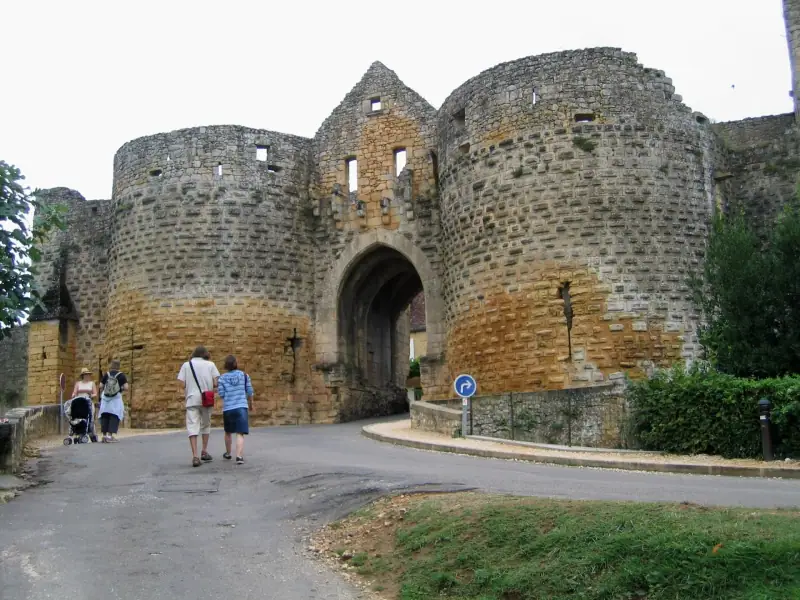
The best-known entrance to the bastide is the Porte des Tours, framed by two old towers that mark the way into the village. These towers served as a guardhouse, then a prison. It is here that one of Domme’s most intriguing secrets lies: graffiti left on the walls by prisoners.
According to the Dordogne tourist office, around seventy Templars were imprisoned there between 1307 and 1318, following the arrest of the order commanded by Philip the Fair. They left inscriptions and drawings in the stone, often religious, which can still be seen. These traces, sometimes fragile and hard to read, are a rare testimony, and the visit is a good moment to share with curious children.
A few tips:
- Ask about guided tours, since they help spot engravings you would not notice alone.
- Bring a flashlight or your phone light if the lighting is low, without touching the walls.
- Do not touch the engravings: they wear away quickly.
The Place de la Halle and the heart of the bastide
The center of the bastide is organized around the Place de la Halle. Here you find the covered market, the town hall that houses the tourist office, and the Governor’s House, dating from the 15th century. It is the ideal place to start the visit: you pick up brochures, ask about combined tickets and treat yourself to a coffee on a terrace.
The square is also the center of local life. On Thursday, a traditional market of Black Périgord products is held there, according to the tourist office. You will find typical regional products: walnuts, seasonal fruit, cheeses, cured meats and preserves. To know what to taste, see our guide to Périgord food specialties.
Around the square, narrow lanes, blond stone houses and small craft shops create a very pleasant atmosphere. Many facades have kept old doors, mullioned windows and carved details. Take time to look up: Domme’s charm often lies in these details.
The Barre viewpoint: the panorama over the valley
This is the big moment of the visit. At the edge of the village, the Barre viewpoint opens onto the Dordogne valley, its meanders, fields and woods. According to the tourist office, you can pick out the Château de Montfort, the village of La Roque-Gageac, Beynac-et-Cazenac and the Marqueyssac gardens, which makes it an excellent orientation point to understand the geography of the valley before exploring.
You reach it by following the rampart walk, a pleasant path along the wall. Morning light and late-afternoon light are particularly beautiful: in the evening the valley takes on golden hues and the site empties a little. Bring your camera and a little patience, since the place is very busy in summer.
Be careful with children: the viewpoint looks onto a drop, and the edges need watching. To see these landscapes from below, our guide to canoeing the Dordogne describes the river descent at the foot of the bastide.
Tours and excursions around Domme
Guided tours, boat rides and excursions in the Black Périgord: compare the activities offered for your dates.
The Domme cave: an underground world beneath the village
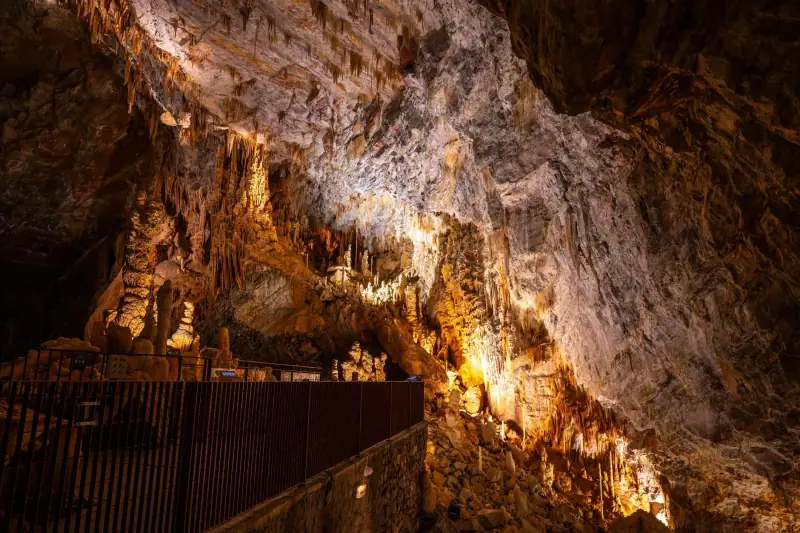
Beneath the lanes hides another Domme. The cave, presented by the tourist office as the largest developed cave of the Black Périgord, runs for about 450 meters (1,475 ft) of galleries. You see stalactites, stalagmites, draperies and water basins, a mineral setting that contrasts with the sunny bastide above.
The visit is guided and lasts about three quarters of an hour according to the available information. It ends with a panoramic elevator built into the cliff, which takes visitors back up to the village with a view of the valley. It is a very welcome detail: you avoid a climb on foot, and the panorama makes a fitting conclusion.
A few practical pointers:
- Bring a jacket: the air in the cavities is cool, even in midsummer.
- Wear shoes with good grip: the floor can be damp and slippery.
- Check opening periods: the cave is generally open from the winter school holidays, with hours that vary by month.
- Think of the combined ticket: the tourist office offers packages grouping the cave, the tourist train and the Porte des Tours.
If prehistoric caves interest you, the Vézère Valley has far more famous ones, detailed in our article on Lascaux and the Vézère Valley.
The ramparts, gates and golden-stone lanes
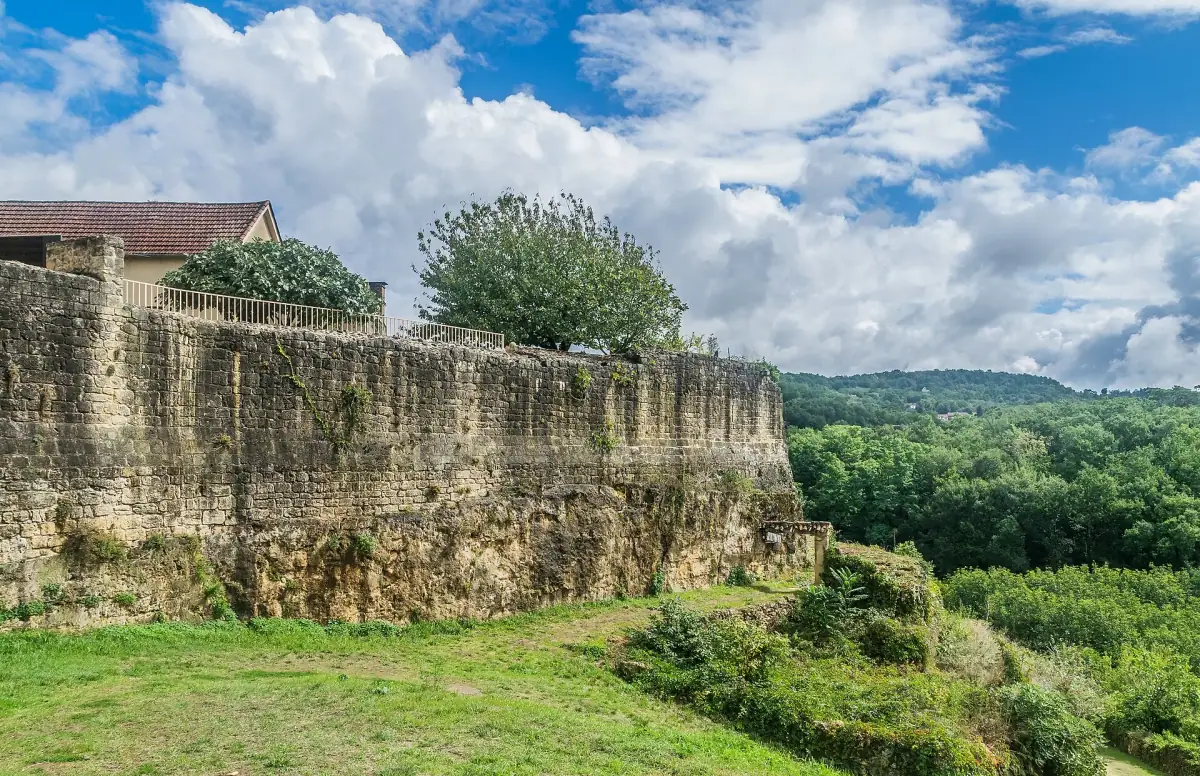
Domme is discovered by wandering the lanes, but a thread helps: the ramparts. The bastide’s wall is punctuated by fortified gates, of which the Porte des Tours is the best known. The Porte del Bos, according to the tourist office, marks the start of a pleasant walk leading along the inside of the ramparts.
Here is a simple route, one to one and a half hours depending on your pace:
- Start at the Place de la Halle, to pick up the map and get a feel for the place.
- Walk up the lanes toward the Porte des Tours, looking at the facades.
- Follow the ramparts to the Barre viewpoint.
- Return by another street to see the houses, courtyards and small gardens.
Slopes are moderate but the cobbles uneven: good shoes are best.
Domme is also a lived-in village. Houses are private, courtyards are sometimes closed, and the evening calm is precious: speak softly, avoid pushing doors open and respect private property.
The little train and other ways to visit
For those who prefer to save their legs, a tourist train, the Domme Express, runs in season in the bastide. It suits families with young children and people who find walking difficult, as it lets you tour the village with commentary. Hours depend on the season; the tourist office offers a combined ticket that includes it.
Other options exist: themed guided tours, sometimes devoted to medieval history or the Templars, summer events and night markets depending on the year. Ask the tourist office for the program during your stay: it changes from season to season.
Where and what to eat in Domme
Domme has restaurants and terraces around the Place de la Halle and in the neighboring lanes. No specific address is given here, since menus and hours change often; the best approach is to look at the posted menus and choose a table according to your tastes. The cooking remains that of the Périgord: duck confit, magret, Périgord salad, porcini in season, walnuts and local pastries.
A few pointers for choosing well:
- Book in the evening and on weekends in summer: tables with a view are in high demand.
- Favor short menus and seasonal products.
- Use the Thursday market to put together a picnic, to enjoy later on the ramparts or in the valley.
- Taste the walnut products: oil, cakes, liqueurs, they are typical of the region.
Stay in Domme and nearby
Hotels, B&Bs and cottages in the bastide or the valley: compare availability to enjoy the village once the groups have left.
What to see around Domme
Domme is ideally placed for a day in the valley. The distances below are approximate:
- La Roque-Gageac, a village strung along the foot of its cliff, only a few kilometers away: see our guide to visiting La Roque-Gageac.
- Castelnaud-la-Chapelle and Beynac-et-Cazenac, two fortresses facing each other, covered in our article on the châteaux of the Dordogne valley.
- The Marqueyssac gardens, for their clipped boxwood and viewpoint.
- Sarlat-la-Canéda, about fifteen kilometers (9 mi) away, for its medieval old town: see our guide to visiting Sarlat-la-Canéda.
To get easily between these stops, read our guide to renting a car in the Dordogne: public transport is rare in this part of the Black Périgord.
A sample plan for half a day to a day
Here is a balanced suggestion, to adapt to the season:
- Morning: arrive before the crowd, park near the center, stop at the tourist office on the Place de la Halle.
- Late morning: Porte des Tours and Templar graffiti, then a walk in the lanes.
- Midday: lunch on a terrace, or a picnic bought at the Thursday market.
- Early afternoon: visit the cave, returning by the panoramic elevator.
- Late afternoon: rampart walk to the Barre viewpoint, at the hour when golden light falls on the valley.
- Evening: dinner there, or back to Sarlat or La Roque-Gageac.
With two days, spend the second on La Roque-Gageac, Castelnaud and Beynac. Our 3-day Dordogne itinerary shows how to fit Domme into a wider stay.
Planning your visit: access, parking, season
Getting there. Domme is south of Sarlat, in the Black Périgord. Allow about twenty minutes by road from Sarlat, outside heavy traffic. The village is perched: the road climbs, and the center is narrow.
Parking. Traffic in the bastide is restricted and spaces run short in high season. Arrive early, use the signed car parks and finish on foot.
Duration. Two to three hours for the essentials, half a day with the cave and lunch.
Shoes and gear. Uneven cobbles, slopes and stairs: bring good shoes, a hat and water.
Season. Spring and early fall are ideal: soft light, pleasant temperatures, fewer people. Our article on when to go to the Dordogne helps you choose.
Budget. The lanes and the viewpoint are free; allow for the cave, the little train, the Porte des Tours and the meal. Our Dordogne budget guide gives pointers.
A longer stay in the Black Périgord
Cottages and holiday homes between Sarlat, Domme and the valley: an ideal base to explore villages, châteaux and the river.
Practical tips for your visit
- Come early or late in the day to avoid the busiest hours.
- Stop at the tourist office first for the map, the day’s hours and combined tickets.
- Book your lodging ahead in summer and during school-holiday periods.
- Respect residents: narrow lanes, private gardens and lived-in houses.
- Watch the weather: rain makes the cobbles slippery, but the cave remains a good option in uncertain weather.
- Keep some time in reserve: Domme invites you to slow down, and people often regret crossing it too fast.
Who Domme suits
Domme appeals to fans of medieval history, panoramas and quiet walks: couples, families, heritage enthusiasts, photographers. It suits less those looking for a big city or lively nightlife: choose Sarlat instead.
In short, two to three hours are enough for the essentials, half a day to really enjoy it. Combined with La Roque-Gageac, Castelnaud and Beynac, it makes up one of the best possible stays in the Dordogne valley.
Frequently asked questions
How long do you need to visit Domme?
Allow two to three hours to stroll the lanes, reach the Barre viewpoint and pass the Porte des Tours. If you add the cave and lunch there, plan on half a day. Domme combines easily with La Roque-Gageac, Beynac or Castelnaud.
Why is Domme famous?
Domme is a 13th-century royal bastide, founded under Philip III the Bold, set on a promontory that overlooks the Dordogne valley. It is known for its viewpoint, ramparts, the Porte des Tours where Templars were imprisoned, and a developed cave under the village. It is one of the Most Beautiful Villages of France.
What should you see first in Domme?
The highlights are the Porte des Tours and its graffiti, the covered market square (Place de la Halle), the rampart walk to the Barre viewpoint, and the cave whose panoramic elevator brings you back to the village. The rest of the visit is getting lost in lanes of golden stone.
Is visiting Domme paid?
Walking the lanes, the Place de la Halle and the viewpoint is free. The cave, the Porte des Tours and the tourist train are paid; the tourist office offers combined tickets. Prices and hours change by season: check before you come.
Where do you park in Domme?
The center of the bastide is narrow and traffic is restricted. The simplest is to leave the car in a signed car park outside or near the center, then do everything on foot. In July and August, arrive in the morning or late afternoon to find a space.
Is there a market in Domme?
Yes, a traditional market of Black Périgord products is held on Thursday near the covered market, according to the Dordogne tourist office. Check the hours, which may vary by season.
Is Domme suitable for children?
Yes: the cave, the Porte des Tours with its graffiti, the rampart walk and the tourist train often interest younger visitors. Stay alert near the viewpoint edges and on the sloping lanes.
More Dordogne guides
Keep reading
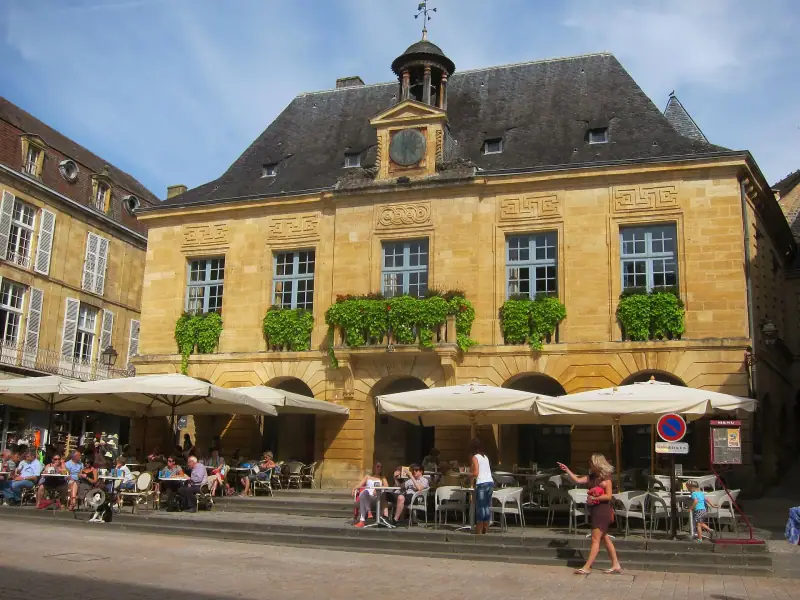
Visiting Sarlat-la-Canéda: What to See and Do in the Medieval Town
Visiting Sarlat-la-Canéda: cathedral, Place des Oies, medieval lanes, markets, Lanterne des Morts and day trips. A guide to plan your visit well.
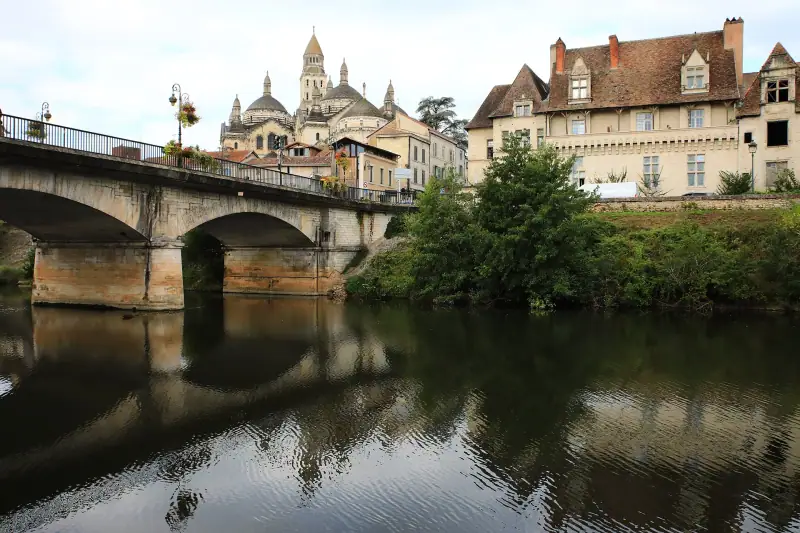
What to See in the White Périgord: Périgueux, the Isle Valley, Truffles and Villages
What to see in the White Périgord: Périgueux, truffles at Sorges, Saint-Astier, Neuvic, Mussidan and Montpon, for a quiet and authentic stay.
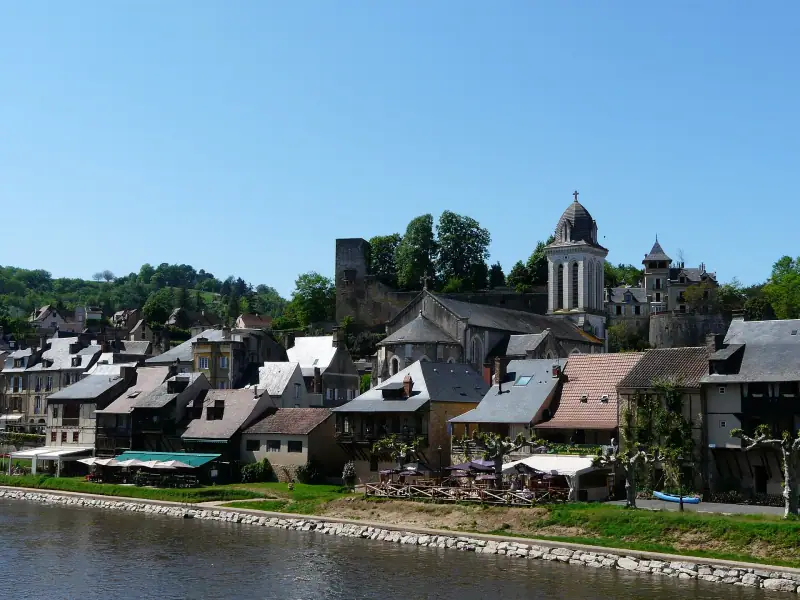
Visiting Montignac-Lascaux: What to See and Do on the Vézère
Visiting Montignac-Lascaux: old town on the Vézère, stilt houses, Lascaux IV, Regourdou, markets and walks. A guide to plan your stay in the Vézère Valley.
Ready-made
Dordogne itineraries
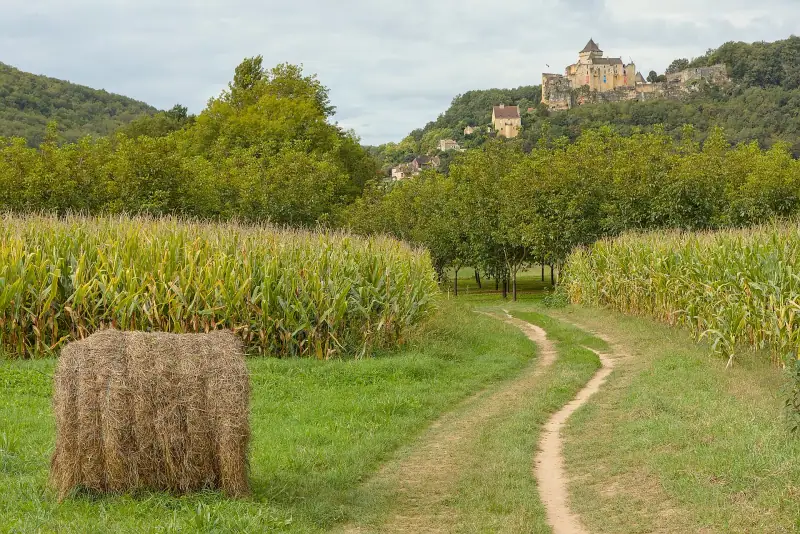
7 days
One Week in the Dordogne: A Day-by-Day Itinerary
Sarlat-la-CanédaBrantômeBergerac
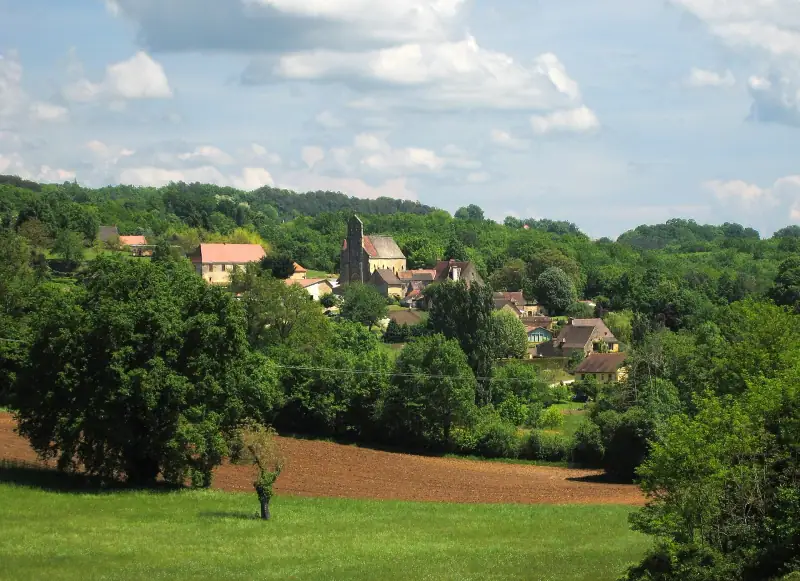
5 days
Dordogne in 5 Days with Kids: Stops, Kilometers and a Realistic Pace
Dordogne in 5 days with kids: an itinerary from Sarlat with distances, drive times, breaks and suitable activities, without overloaded days.
Can be adapted in the planner
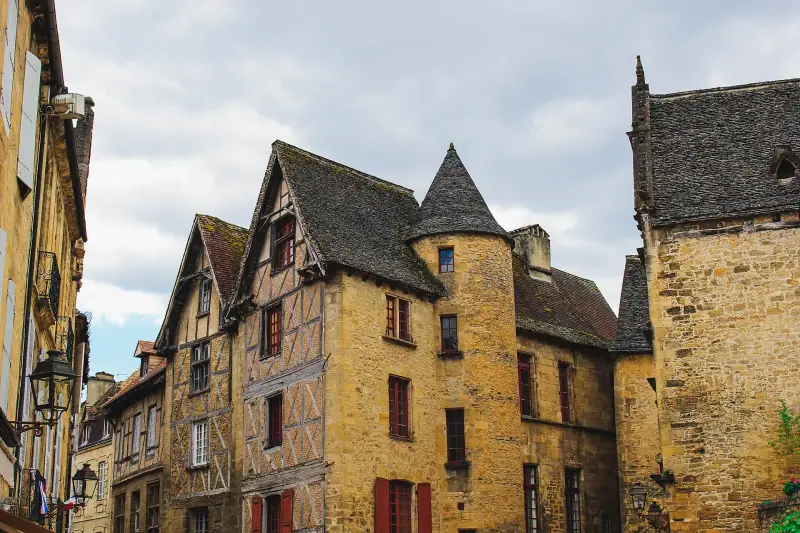
3 days
3-Day Dordogne Itinerary: Sarlat, the Vézère and Châteaux
What to do in 3 days in the Dordogne? A day-by-day itinerary around Sarlat: Lascaux, the Vézère Valley, châteaux, villages and practical tips.
Can be adapted in the planner