Things to do
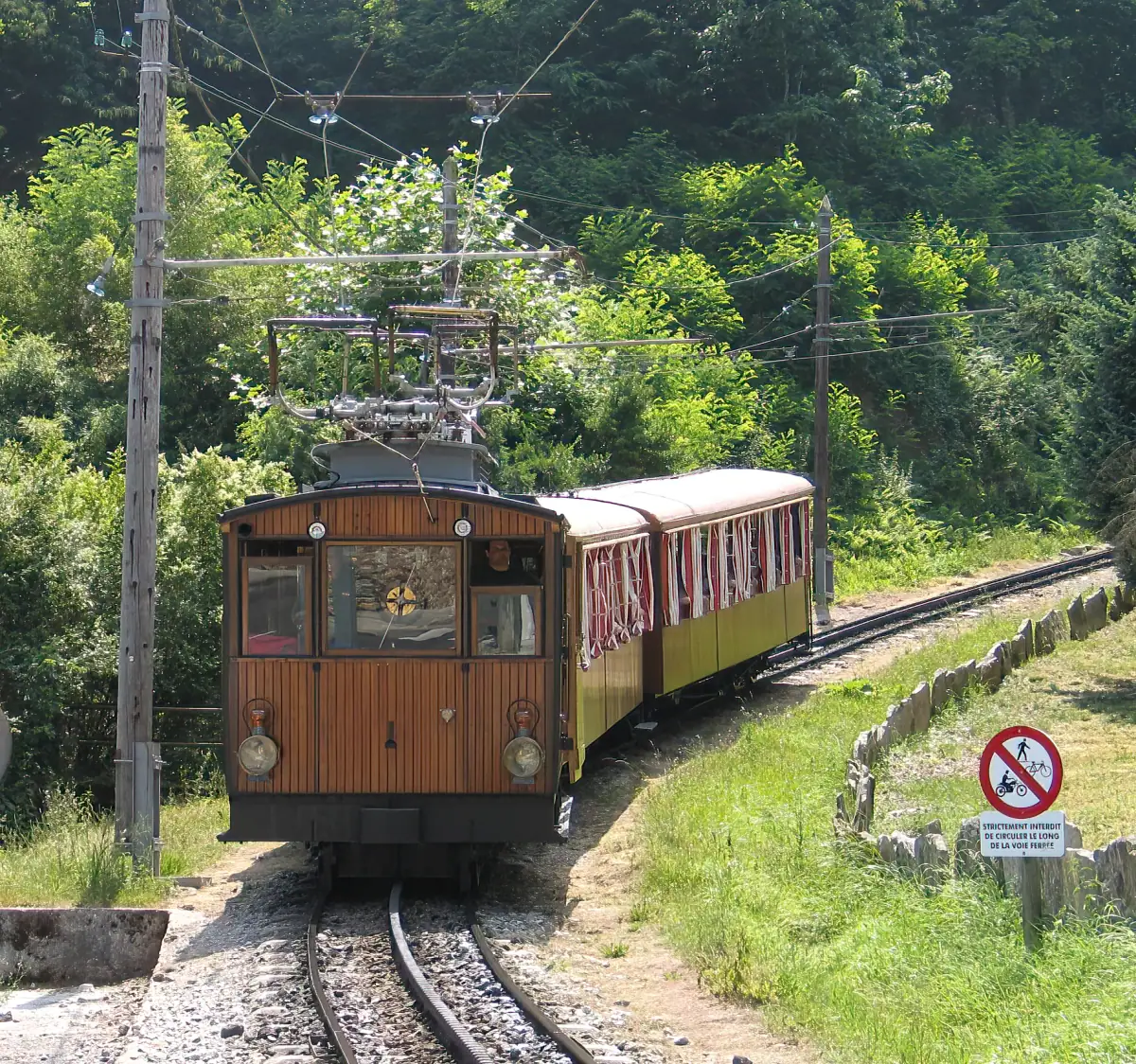
La Rhune cog train: book ahead or on the day? Prices, hours, weather
We may earn a commission when you book through links on this page, at no extra cost to you. We don't visit or try the places we cover: we summarize published sources. How we work
In short
- No need to book weeks ahead: buy online, at the ticket office or on the day, depending on availability; in July and August, book 2 to 3 days ahead.
- Round trip in 2026: €26 (about $30) per adult, €18 (about $21) per child aged 4 to 12, €82 (about $95) for a family of four; the outing takes 2 h 30.
- The train runs daily from March 28 to November 1 (2026 season); rain and clouds do not stop it, but fog hides the view at the top.
- Two car parks at the lower station (Col de Saint-Ignace) fill quickly in school vacation periods: arrive at least 30 minutes before departure.
You do not need to book the La Rhune cog train weeks ahead: you can buy your ticket online, at the ticket office or on the day, depending on available seats. In July and August, it is better to book 2 to 3 days before; the rest of the year, choose your day according to the weather.
The round trip costs €26 (about $30) for an adult in 2026, lasts 2 h 30 and runs every day from late March to early November. Here is how to organize the outing, with fares, hours by season, parking and special cases (children, stroller, dog, fog).
Booking the La Rhune cog train: online or on site?
For individual travelers, three possibilities exist:
- Online, paying by bank card;
- At the station ticket office, a few days before or on the day;
- Not by phone or email: those channels are reserved for groups, for whom booking is mandatory.
The ticket is valid for the departure chosen. It is in principle neither exchangeable nor refundable, but the operator may consider a refund on proof (illness, car breakdown). If a departure is canceled because of extreme weather, a rescheduling or refund is offered.
Booking ahead in summer
In July and August, mid-day departures are the first to sell out. Book 2 to 3 days ahead, online, and preferably choose a morning departure: visibility is often better and the wait is less hot.
Buying at the station off season
From April to June, in September and in October, crowds are lighter. The smartest approach is to check the weather the day before and buy on the day, when the sky is clear over the mountain. Some departures depend on attendance and are not guaranteed: check the day’s timetable before coming.
La Rhune cog train prices in 2026
| Ticket | Round-trip fare |
|---|---|
| Adult (age 12 and over) | €26 (about $30) |
| Child (4 to 12) | €18 (about $21) |
| Family (2 adults + 2 children aged 4 to 12) | €82 (about $95) |
| Child under 4 | Free (a €0 ticket is required) |
| Guided trip | + €5 (about $6) adult, + €4 (about $5) child |
| Descent only (sold at the summit, subject to availability) | €23.50 (about $27) adult, €15 (about $17) child |
| Dog (round trip) | €6.50 (about $8) |
There is no one-way ticket for the ascent: if you want to walk up and come down by train, the descent-only ticket applies, and it is sold only at the summit, subject to seats. To place this expense in a stay, see our Basque Country budget.
Hours: what time to leave?
The train runs every day from March 28 to November 1. Hours vary by month:
| Period | First departure | Last departure |
|---|---|---|
| April to June | 9:30 am | 4:10 pm |
| July and August | 8:20 am (July 27 to August 30) or later | 5:30 pm |
| September | 9:30 am | 4:10 pm |
| October to November | 9:30 am | 3:30 pm |
A simple tip: in summer, take the earliest departure possible, to avoid the crowd and the clouds that often cling to the summit in late morning. Off season, a mid-day departure gives morning fog time to lift.
Weather: going up in overcast conditions, yes or no?
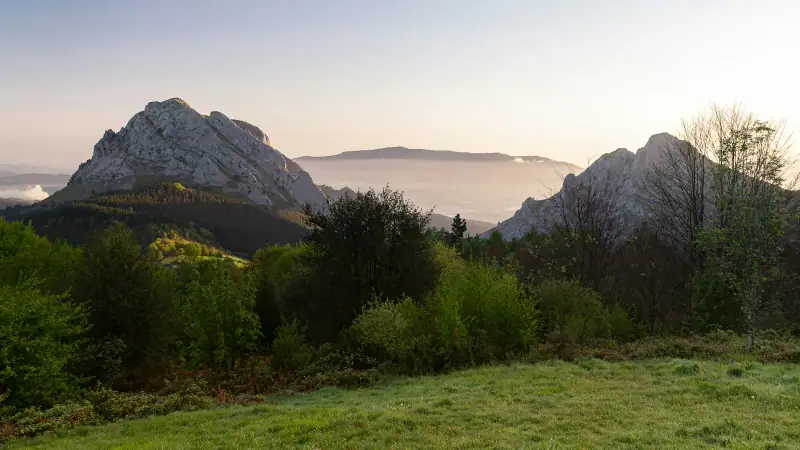
The train runs despite rain and clouds. That does not mean the ride is worth it in any weather. In fog, you will see neither the ocean nor the Pyrenees, and the wind can be cool even when the coast is sunny.
- Check Météo-France the day before and the same morning;
- Look at whether La Rhune is “clear” from the coast or from Sare: if the summit is invisible, the view will be too;
- Bring a windproof layer, even in summer.
Parking and getting to the Col de Saint-Ignace station
The lower station is in Sare, at the Col de Saint-Ignace, between Sare and Ascain. Two car parks are there, but they fill quickly during school vacation periods.
- By car: arrive at least 30 minutes before departure. If the car parks are full, you have to park along the road and finish on foot;
- Chantaco car park in Saint-Jean-de-Luz: free, according to the operator, and usable with bus line 45;
- From Sare or Ascain: you leave the car in the village and take line 45;
- By motorhome: parking is possible for the duration of the excursion, not overnight.
If you do not have a car, read our guide to getting around the Basque Country by train, bus or car and check line 45 timetables before leaving.
Stay in Saint-Jean-de-Luz to leave early
The beach resort is a little under half an hour from the Col de Saint-Ignace: handy for catching the first departure.
With children, a stroller or a dog
Children
Children aged 4 to 12 pay €18 (about $21), and the family option at €82 (about $95) becomes worthwhile as soon as you are two adults and two children. Children under 4 ride free, with a €0 ticket. For other ideas by age and by weather, see our activities with kids in the Basque Country.
Stroller
The operator recommends a baby carrier. A stroller is accepted if it is foldable: it travels in a dedicated compartment. At the summit, the ramp is steep and the path mixes stones and grass, which makes a stroller impractical.
Dog
Dogs are welcome for €6.50 (about $8) round trip. They travel between your legs, under the bench, and must stay on a leash at the summit, where sheep and pottoks live. Do not feed the animals.
Train or hike: which to choose?
On foot, allow about 2 to 2 h 30 up and as much down, for free. The train suits better if you have little time, young children or do not want to walk. A compromise: walk up and come down by train with the descent ticket, sold at the summit subject to availability. Walking routes are detailed in our guide to hiking in the Basque Country.
What to do around the Sare station?
Once back down, inland Labourd offers enough to fill the afternoon: Sare, Ainhoa, Espelette. Our guide to inland Labourd offers a realistic circuit between these villages.
- Sare: a listed village of Labourd, a few minutes from the lower station, with its Labourd houses and quiet lanes, ideal for a coffee break or lunch. If the summit is in the mist, the Sare caves are plan B, by reservation;
- Ainhoa: a street-village along the border road, easy to combine with Sare late in the afternoon;
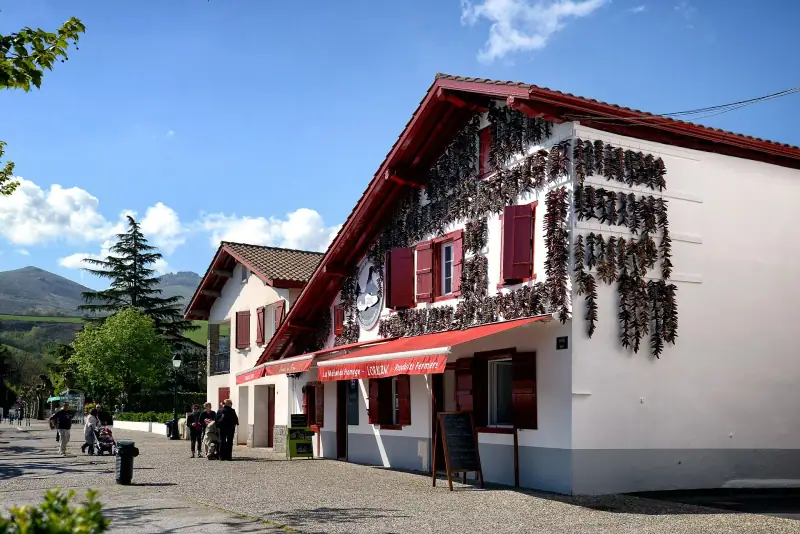
- Espelette: the pepper village, about half an hour by car, for the shops and Basque cake (visiting Espelette).
If you go up in the morning on the first departure, you will be back down before 11:30 am and have the whole day for these stops. With an afternoon departure, keep just one village, leaving time to get back to the coast before dark.
Excursions and activities in the Basque Country
Guided tours, tastings and nature outings to book ahead on GetYourGuide.
The excursion at a glance
| Stage | Duration |
|---|---|
| Cog train ascent | about 35 min |
| Time at the summit | 1 h 20 |
| Descent | about 35 min |
| Total | 2 h 30 |
The time at the summit is fixed, except on a special low-season departure that gives you 2 h 30 up there. So bring something to drink and a small snack before going up.
Sources
Frequently asked questions
Do you need to book the La Rhune cog train in advance?
Not necessarily for individual travelers: you can buy your ticket online, at the ticket office a few days before or on the day, depending on available seats. In July and August, the operator advises booking 2 to 3 days ahead. Off season, it is better to check the weather the day before, or even buy on the day.
How much does the La Rhune cog train cost in 2026?
The standard round trip costs €26 (about $30) for an adult (from age 12), €18 (about $21) for a child aged 4 to 12 and €82 (about $95) for the family option (2 adults and 2 children). Children under 4 travel free but must have a €0 ticket. The guided option costs €5 (about $6) more per adult and €4 (about $5) per child.
How long does the excursion last?
Allow 2 h 30 in total: about 35 minutes up, 1 h 20 at the summit and 35 minutes down. The time at the summit is fixed, except on a special low-season departure that gives you 2 h 30 up there.
Does the train run when it rains or when there are clouds?
Yes, rain and clouds do not stop the train. Only extreme conditions (storm, violent wind, hail) with a decision by the prefecture lead to cancellations, with a rescheduling or refund. The real risk is going up in fog and seeing nothing at the top.
Can you go up with a stroller or a dog?
A baby carrier is preferable: the stroller must be foldable and goes in a dedicated compartment, and the summit has a steep ramp, stones and grass. Dogs are accepted (€6.50 / about $8 round trip), sitting under the bench between your legs, and kept on a leash at the summit where sheep and pottoks roam.
Where do you park to take the cog train?
Two car parks are at the lower station, at the Col de Saint-Ignace, but they fill quickly during school vacation periods: arrive at least 30 minutes before departure. Other options: the free Chantaco car park in Saint-Jean-de-Luz, or park in Sare or Ascain and take bus line 45.
More Basque Country guides
Keep reading
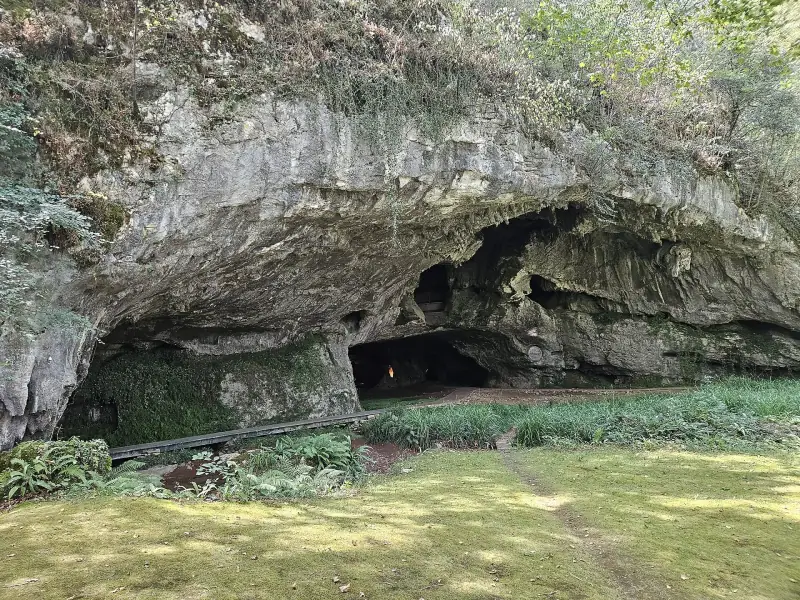
Sare caves: book ahead or on site? Prices, hours, kids
Sare caves: booking required, 2026 fares (€10, about $12), hours by season, kids, strollers, photos and a rainy-day plan.
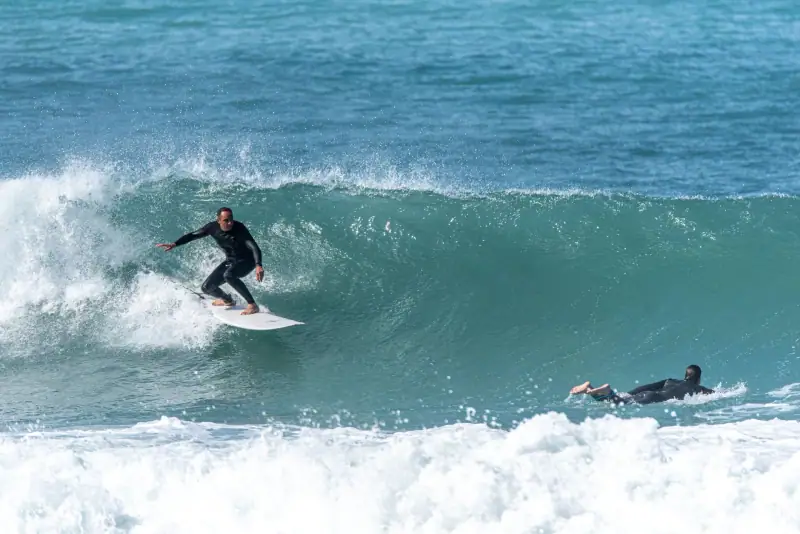
Surfing in Biarritz and on the Basque coast: spots, schools and tips
Learn or progress at surfing in Biarritz, Anglet and Guéthary: spots, tides, gear, schools and beginner mistakes to avoid.

Basque Country budget: what a trip costs (3 priced profiles)
How much does a Basque Country trip cost? Real costs by item, three priced budgets (frugal, comfort, premium) and tips to spend less.
Ready-made
Basque Country itineraries
1 day
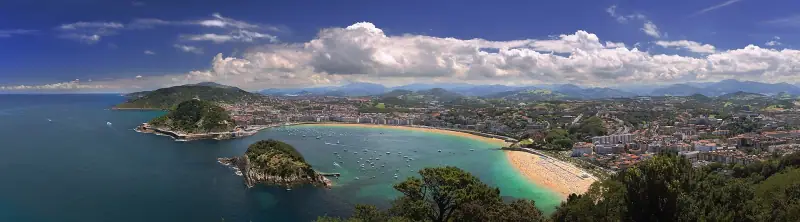
San Sebastián in 1 day from the Basque coast: itinerary and tips
One day in San Sebastián from Biarritz, Saint-Jean-de-Luz or Hendaye: how to get there, what to see and where to taste pintxos.
5 days
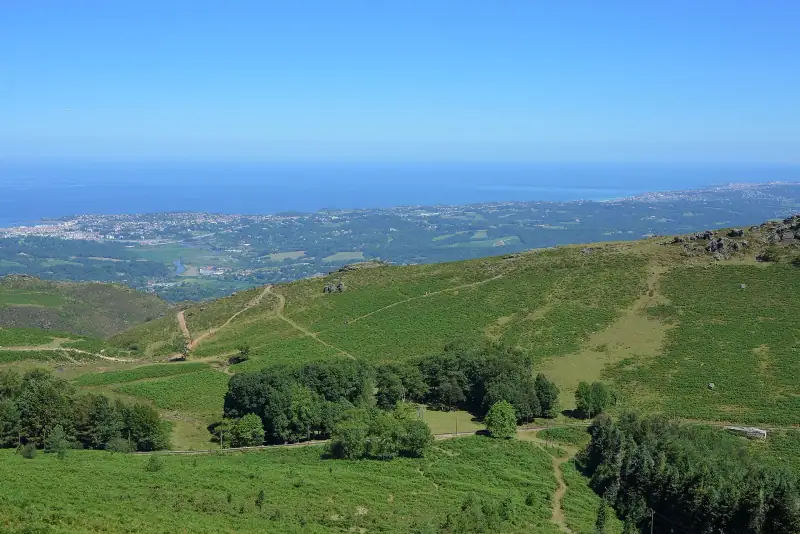
The Basque Country in 5 days with kids: stops and pace
The Basque Country with kids in 5 days: drive times, beaches, La Rhune cog train, Sare caves and a rainy-day plan B, at a child's pace.
3 days
3 days in the Basque Country: coast and inland itinerary
A 3-day Basque Country itinerary: Biarritz, Bayonne, Saint-Jean-de-Luz, Espelette and La Rhune, with distances, tips and good addresses.