Itineraries
France in 10 days: Provence and the French Riviera by car
We may earn a commission when you book through links on this page, at no extra cost to you. We don't visit or try the places we cover: we summarize published sources. How we work
Day by day
- Days 1-3Avignon: Palais des Papes, ramparts, Alpilles day trip
- Days 4-5Gordes, Sénanque Abbey, Roussillon ocher trail
- Day 6Moustiers-Sainte-Marie and the Verdon gateway
- Days 7-9Nice, Villefranche, Èze, Monaco, Menton
- Day 10Short drive to Nice airport
Where to sleep
- Avignon3 nights
- Gordes2 nights
- Moustiers-Sainte-Marie1 night
- Nice3 nights
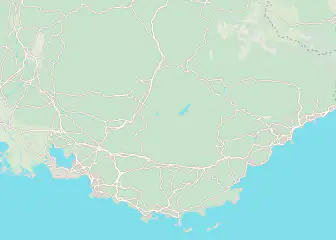
Opens the trip planner with these stops and nights already filled in. Add a stop, drop one or change the nights.
Weather through the year on this route
| Jan | Feb | Mar | Apr | May | Jun | Jul | Aug | Sep | Oct | Nov | Dec | |
|---|---|---|---|---|---|---|---|---|---|---|---|---|
| High °F (°C) | 489 | 5211 | 5714 | 6418 | 7323 | 8228 | 8831 | 8831 | 7725 | 6820 | 5513 | 5010 |
| Low °F (°C) | 341 | 341 | 373 | 436 | 5010 | 5915 | 6317 | 6317 | 5513 | 5010 | 415 | 362 |
Normals 1991–2020 at Avignon and Gordes: averages over 30 years, not a forecast. Source: NASA POWER (MERRA-2), grid of about 50 km. Figures computed by us in November 2026. Rain is shown only where a weather station confirms the figures.
In short
- Fly into Marseille, fly out of Nice: 9 nights in four bases (Avignon, Gordes, Moustiers-Sainte-Marie, Nice) with a rental car for the Provence part.
- The longest drive is 2 h 20 (Moustiers to Nice, 145 km / 90 mi). Every other leg is under 2 hours.
- Late May, June and September suit both regions best. Lavender peaks from late June to early July; July and August are hot and crowded.
- Pick up the car at Marseille Provence Airport and return it in Nice: expect a one-way fee that varies by company.
This route suits travelers who want two very different sides of southern France in one trip: the stone villages and markets of Provence, then the sea, the promenades and the hilltop villages of the French Riviera. You fly into Marseille, drive through the Vaucluse and the Verdon area, and finish in Nice, where you can put the car aside. It works for a first visit to France with a car, as long as you are fine with changing hotels three times.
The shape is simple: four bases, nine nights, and short legs. The longest drive is 2 h 20 (Moustiers-Sainte-Marie to Nice); the others take between 45 minutes and 1 h 55. Driving days are light, which leaves most of each day for walking and sightseeing.
The route at a glance
| Days | Base | Nights | Drive from previous base |
|---|---|---|---|
| 1-3 | Avignon | 3 | From Marseille Provence Airport (MRS): 1 h 10, 84 km (52 mi) |
| 4-5 | Gordes | 2 | From Avignon: 45 min, 39 km (24 mi) |
| 6 | Moustiers-Sainte-Marie | 1 | From Gordes: 1 h 55, 109 km (68 mi) |
| 7-9 | Nice | 3 | From Moustiers-Sainte-Marie: 2 h 20, 145 km (90 mi) |
| 10 | Departure from Nice Côte d’Azur Airport (NCE) | - | From Nice: 15 min, 8 km (5 mi) |
Car rental in France
You pick up in Marseille and drop off in Nice, so compare one-way fees and book early for summer.
Day by day
Days 1-3: Avignon
Day 1. Pick up the car at Marseille Provence Airport and drive to Avignon: 1 h 10, 84 km (52 mi). Leave the car in a lot outside the ramparts, since the center is covered on foot in under half an hour end to end. Use the first evening for a walk along the ramparts, which are especially pleasant late in the day, or an aperitif on Place de l’Horloge.
Day 2: the city. Start at the Palais des Papes at opening time, or late in the day, to limit the wait from June to September. The popes lived here from 1309 to 1376, and the palace remains one of the largest Gothic complexes in Europe. Allow one to two hours. Then climb the Rocher des Doms, a free garden with a view over the Rhône, Pont Saint-Bénézet and, on a clear day, Mont Ventoux. Have lunch at Les Halles, the covered market, or on Rue des Teinturiers, which runs along a canal lined with plane trees. In the afternoon walk out onto the arches of Pont Saint-Bénézet (about an hour) and go back through the lanes. If you prefer museums, the Petit Palais, the Collection Lambert and the Musée Calvet are the options in our Avignon guide. Check opening days, since several close on Monday or Tuesday.
Day 3: a day trip in the Alpilles. Our 5-day Provence itinerary puts the Alpilles about 25 km (16 mi) from Avignon. Spend the morning in Saint-Rémy-de-Provence: the Glanum archaeological site, with a triumphal arch and mausoleum, and the Saint-Paul-de-Mausole monastery, linked to Van Gogh’s stay in 1889-1890. In the afternoon go on to Les Baux-de-Provence, about ten kilometers (6 mi) further, for the ruined fortress and its views over the Alpilles and the Camargue plain. It is very busy, so arrive early or late. If you would rather see Roman monuments, Arles is about 40 km (25 mi) from Avignon, with its amphitheater, ancient theater and the Alyscamps (see visiting Arles). More detail on the area is in what to see in the Alpilles.
Where to sleep: inside the ramparts you walk to everything, but prices are higher and parking is complicated. Villeneuve-lès-Avignon and the districts just outside the walls are often cheaper and easier with a car. Hotels in Avignon. Book several months ahead if your dates fall in July, during the Avignon Festival. You can also compare excursions from Avignon if you do not want to drive on day 3.
Days 4-5: Gordes and the Luberon
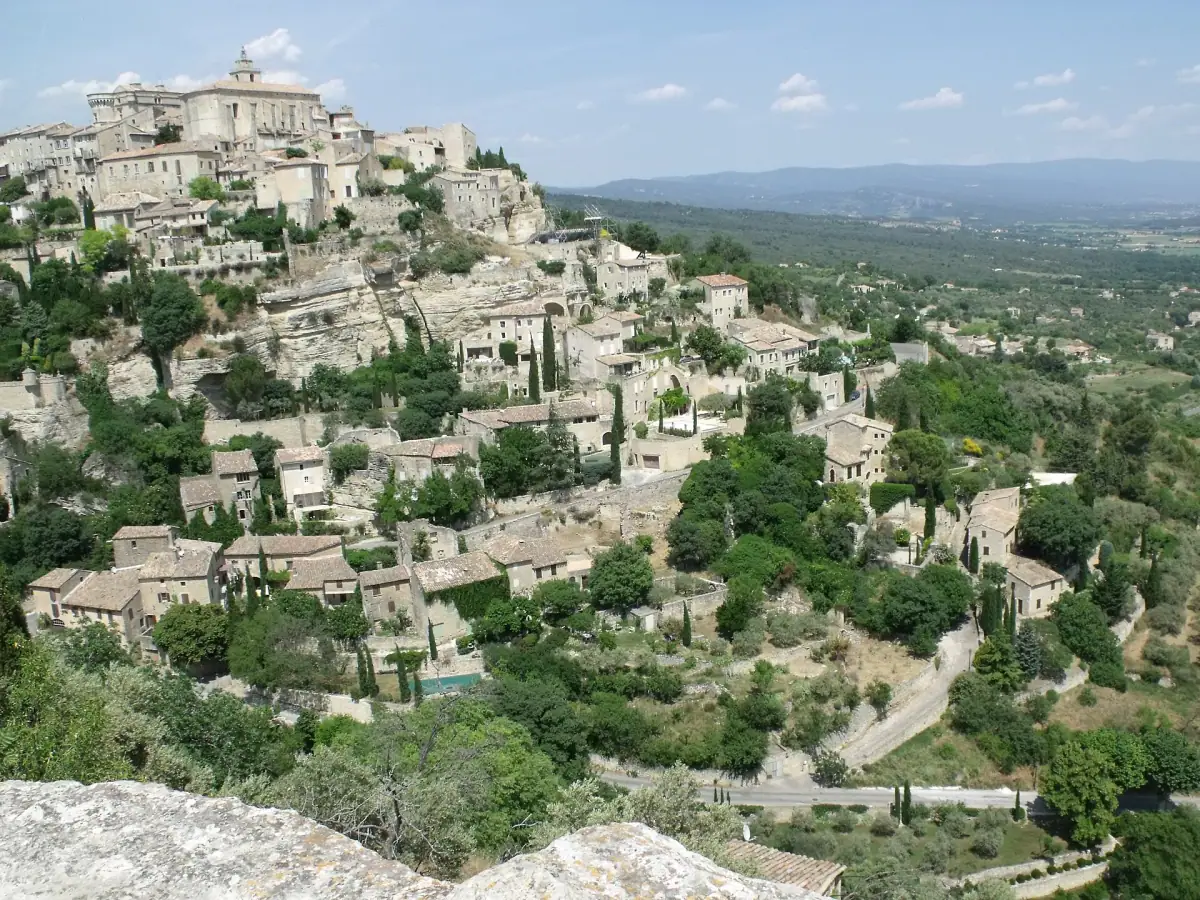
Day 4. Drive to Gordes: 45 min, 39 km (24 mi). Go early. Gordes is stacked on the flank of a hill and is best seen from the viewpoints along the road, especially when you arrive from the south. It is one of the busiest villages in Provence and the narrow streets fill up quickly, so walk up toward the castle and the cobbled lanes before the crowds. In the afternoon visit Sénanque Abbey, a few kilometers away. This Cistercian abbey, founded in the 12th century, is still a working abbey and is visited with a guide. Its lavender fields are among the most photographed images of Provence in June and early July; stay on the paths, because the fields are crops. In July, arrive at opening time and check access and parking.
Day 5: Roussillon and the Ocher Trail. Roussillon is about ten kilometers (6 mi) from Gordes. The village is built on old ocher quarries, and its facades run from yellow to orange and red. The Ocher Trail costs €3.50 (~$4) per adult, is free under 10, and needs no reservation. There are two loops, about 30 and 50 minutes, with more than 350 steps in all. Paid parking runs €4 (~$5) a day, and the Stade and Sage lots are free. Wear shoes you do not mind staining. The trail is open from mid-February to late December and its hours change with the season, so check them. Roussillon combines easily with Bonnieux in a Luberon day; spend the rest of the afternoon in whichever village you liked.
Where to sleep: Hotels in Gordes. Places go fast from June to September, so book early. Sleeping in the Luberon lets you reach the Ocher Trail at opening time and avoid both the heat and the crowds.
Day 6: Moustiers-Sainte-Marie
Drive to Moustiers-Sainte-Marie: 1 h 55, 109 km (68 mi). The road between the Luberon and the Verdon area is not covered by our guides. Moustiers is listed among the Most Beautiful Villages of France. It clings to a cliff split by a star hung between two rock faces, is known for its faience pottery and is the gateway to the Verdon Gorge. Spend the afternoon on foot in the village, among the faience workshops and small shops.
With one night you will not do the gorge in depth, but you can get a taste of it. Lake Sainte-Croix and the Pont du Galetas, the entrance to the south rim, are a few minutes away by car. Several companies rent kayaks, canoes and pedal boats near the Pont du Galetas, by the hour or half day, with no experience required. Life jackets are mandatory, and sun protection is essential. For the Route des Crêtes loop on the north rim or the full Blanc-Martel hike, you would need more nights (La Palud-sur-Verdon, the hikers’ base, is about an hour from Moustiers by road). Our guide to activities in the Verdon Gorge sorts the options, and Moustiers or La Palud-sur-Verdon compares the bases.
If you travel in late June or early July, the same region is lavender country: see what to see on the Valensole plateau and the 3-day lavender route. Plateau roads are slow, so keep the detour short.
Where to sleep: Hotels in Moustiers-Sainte-Marie. The village is very busy in summer and parking in the center is complicated, so choose a place on the outskirts with private parking. Book four to six months ahead for lavender season.
Days 7-9: Nice and the Riviera
Day 7. Drive to Nice: 2 h 20, 145 km (90 mi). This stretch also leaves the areas our guides cover. Check in, leave the car in the hotel garage and spend the afternoon on foot. Nice is the fifth-largest city in France and is worth at least two days. Walk Old Nice, with its ocher and baroque lanes and the cours Saleya market, climb Castle Hill (no castle left, but the best panorama over the Bay of Angels and the port), then walk the Promenade des Anglais. The beach is pebbly, so bring water shoes if your feet are tender. Our guide to what to see on the Nice Riviera covers the city and the coast.
Day 8: Villefranche, Cap Ferrat and Èze. The guide groups these three on one day. Villefranche-sur-Mer sits on one of the deepest bays in the Mediterranean and needs about half a day: the old town, the vaulted rue Obscure and the Saint-Pierre Chapel decorated by Jean Cocteau. Cap Ferrat has the Villa Ephrussi de Rothschild, a pink palace with themed gardens, and an easy coastal path. Èze is a medieval, pedestrian village on a rocky spur: allow an hour or two, plus its Exotic Garden at the top. If you drive, park in the lot below the village and walk up, and arrive early in summer because parking is limited and paid. You can also use the regional train. For walks, see coastal hikes on the French Riviera.
Day 9: Monaco, Roquebrune and Menton. Leave the car and take the regional train east. Monaco is about 20 minutes from Nice. Half a day covers the Rock, the princely palace, the cathedral and the oceanographic museum, then Port Hercule and Monte-Carlo. Prices there are high, so picnic or eat in the neighboring towns. Roquebrune-Cap-Martin has a medieval village and the coastal path where Le Corbusier designed his Cabanon (reservation is usually required; see Villa E-1027 and the Cabanon). Menton, the lemon town on the Italian border, has a baroque old town, its colorful stairs up to the Saint-Michel basilica and a Jean Cocteau museum. If you prefer to stay on the train for the whole coast, the 3-day itinerary by train from Nice gives a sequence. For a longer drive along the coast, the Riviera guides offer a 5-day road trip.
Where to sleep: Old Nice and the area between place Masséna and the Promenade des Anglais are the most practical for a first stay; near the station prices are often lower and the trains are at your door. Hotels in Nice, ideally with parking: downtown parking is expensive and limited. Our guide to where to stay in Nice compares the neighborhoods. For boat trips and tours, compare activities in Nice.
Day 10: departure
Return the car and drive to Nice Côte d’Azur Airport (NCE): 15 min, 8 km (5 mi). The tram also serves the airport if you return the car in town.
Getting there and away
You arrive at Marseille Provence Airport (MRS) and leave from Nice Côte d’Azur Airport (NCE). Paris Charles de Gaulle (CDG) is the largest international gateway to France for travelers from the US, Canada, Australia and the UK, and Lyon-Saint-Exupéry (LYS) and Geneva (GVA) are other big gateways. Whether you reach Marseille or Nice nonstop or via a connection depends on your home airport, so compare itineraries when you book. Ask for an open-jaw (multi-city) ticket into MRS and out of NCE, so you do not drive back to your starting point.
Because you pick up the car in Marseille and drop it in Nice, rental companies usually charge a one-way (drop-off) fee, more if the drop-off is in another country. It varies by company, so check it when you compare offers. For entry rules, visas and whether you need an international driving permit with your own licence, check the official government source of your own country.
When to go
May, June and September are the best compromise in both regions: pleasant temperatures, long days or a still-warm sea, and moderate crowds. In Provence, May is a very good month to walk the Luberon villages. For lavender, aim for late June and early July; it blooms from mid-June to late July (early August on higher ground), and harvests often begin around mid-July.
July and August are hot and dry in Provence, with villages such as Gordes and Moustiers very busy and prices at their peak. On the Riviera, the sea is often 23 to 25 °C (73 to 77 °F), but accommodation is at its most expensive and parking is hard. In May, events such as the Cannes Film Festival and the Monaco Grand Prix fill rooms across the Riviera. Details are in when to go to Provence and when to go to the French Riviera. The mistral, a strong dry wind in the Rhône valley, can make ramparts and terraces less pleasant in spring and the shoulder seasons.
Budget
We have no Provence budget guide, so the figures below come from our French Riviera budget guide and apply to the Nice part of the trip (2026 estimates, per person per day, for a couple sharing the room):
- Tight: about €75 to 95 ($87 to $110).
- Comfort: about €130 to 190 ($150 to $220).
- Premium: over €300 (about $350).
In Nice, a bus or tram ride costs €1.70 (~$2), and the Matisse and Marc Chagall museums charge about €10 ($12) each. A slice of socca runs €3 to 4 ($3.50 to $4.50). Accommodation is the main cost and varies most with the season. In Provence, the guides give only small costs: the Roussillon Ocher Trail at €3.50 (~$4) and €4 (~$5) for parking. Car rental, fuel and tolls are not covered by the guides, so price them separately. Our full French Riviera budget has the details. Prices change, so check before you book.
Adapt it
For a shorter trip, drop Gordes and spend days 4-5 as day trips from Avignon (the Luberon is one of the day trips our Avignon guide lists), or cut a night in Avignon. For a longer one, add Arles or Aix-en-Provence after Avignon, or Marseille at the start, and use Antibes or Saint-Tropez to extend the Riviera end of the route. If the Verdon is the point of your trip, give Moustiers two nights instead of one so that you can add a day for the gorge.
Frequently asked questions
Is 10 days enough for Provence and the French Riviera?
Yes, if you accept four bases and no more. Three nights in Avignon, two in Gordes, one in Moustiers-Sainte-Marie and three in Nice leave full days for sightseeing, and the longest drive is 2 h 20.
Do you need a car for this itinerary?
In Provence, yes: the Luberon villages and the Verdon area are poorly served by public transport. In Nice you can leave the car in a hotel garage, since the city and the coast are easy by tram and regional train.
Can you fly into Marseille and out of Nice?
Yes, this route is built that way: arrive at Marseille Provence Airport (MRS) and leave from Nice Côte d'Azur Airport (NCE). Book an open-jaw or multi-city ticket and expect a one-way fee on the car.
When is the best time for this trip?
May, June and September are the best compromise in both regions. For lavender, aim for late June and early July. July and August are hot, crowded and the most expensive.
How much does it cost?
Our only budget guide covers the Riviera: about €75 to 95 ($87 to $110) per person per day on a tight budget and €130 to 190 ($150 to $220) at comfort level. Car rental, fuel and tolls come on top.
Ready-made
France itineraries
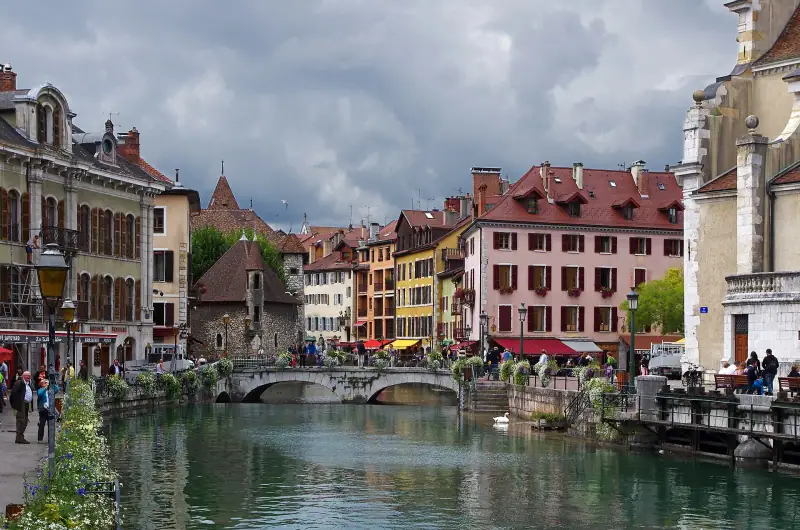
14 days
France in 14 days: from Paris to the Riviera via the Jura and the Alps
ChantillyArboisAnnecyAvignonGordesNice
Can be adapted in the planner
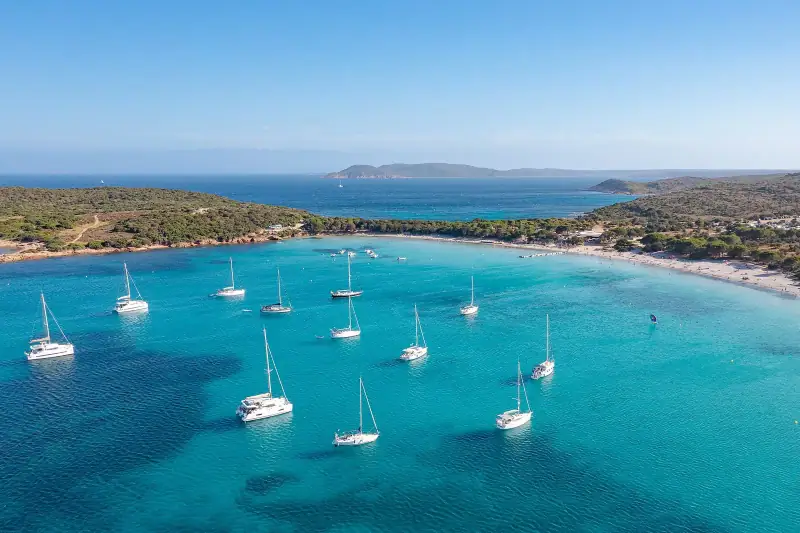
14 days
France in 14 days: the Riviera and Corsica by car and ferry
NiceBastiaCalviAjaccioBonifacioPorto-Vecchio
Can be adapted in the planner
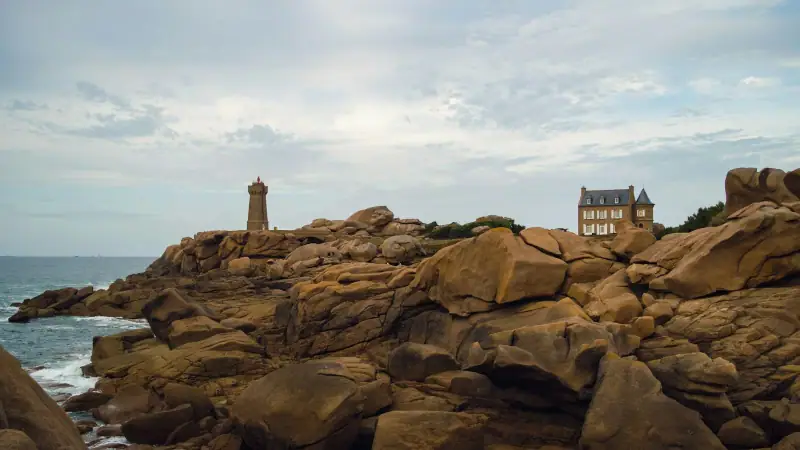
21 days
France in 21 days: the grand tour, from Brittany to the Riviera
ChantillySaint-MaloCarnacSarlat-la-CanédaBiarritzCauteretsAvignonNice
Can be adapted in the planner