Things to do
Châteaux of the Dordogne Valley: Beynac, Castelnaud, Marqueyssac and More
We may earn a commission when you book through links on this page, at no extra cost to you. We don't visit or try the places we cover: we summarize published sources. How we work
In short
- Two château visits a day is a good maximum: climbs, queues in season and winding valley roads take longer than the map suggests.
- Choose Beynac for the cliffside site and view, Castelnaud for the medieval warfare museum and demonstrations (good with kids), Les Milandes for the Renaissance style and Joséphine Baker.
- The Marqueyssac gardens, with thousands of clipped boxwoods and a belvedere, sit next to Beynac and combine well with it.
- A car is by far the most practical way to get around; book ahead in July-August and check hours on each official site.
It is often said that the Dordogne is the French département with the most châteaux, and you only need to go up the valley between Sarlat and Domme to understand why. Perched on top of limestone cliffs, facing the river, the valley’s châteaux tell eight centuries of rivalry, war and lords who watched each other from one bank to the other. They also make up one of the most beautiful landscapes in France, which you can explore on foot, by car, or from the water.
This guide helps you choose: which châteaux to visit, how to string them together without exhausting yourself, what to plan by season and how to combine history, gardens and golden-stone villages in one day.
Why so many châteaux in the Dordogne valley?
The answer is one word: the frontier. During the Hundred Years’ War, the Dordogne valley served as a dividing line between French and English territories, and its fortresses changed hands several times. Neighboring lords faced each other across the river, and châteaux were built high up, at strategic spots, to watch the valley and the river crossings.
Add the geography: limestone cliffs offer natural promontories, the river serves as a traffic axis, and the local golden-hued stone gave villages and homes their instantly recognizable color. Later, in the Renaissance, some lords built more comfortable, less defensive homes. Hence the variety you find today: medieval fortresses, manors, pleasure châteaux, gardens.
The heart of this concentration is in the Black Périgord, around Sarlat-la-Canéda. It is also the most touristy sector, which calls for good organization.
The major châteaux to know
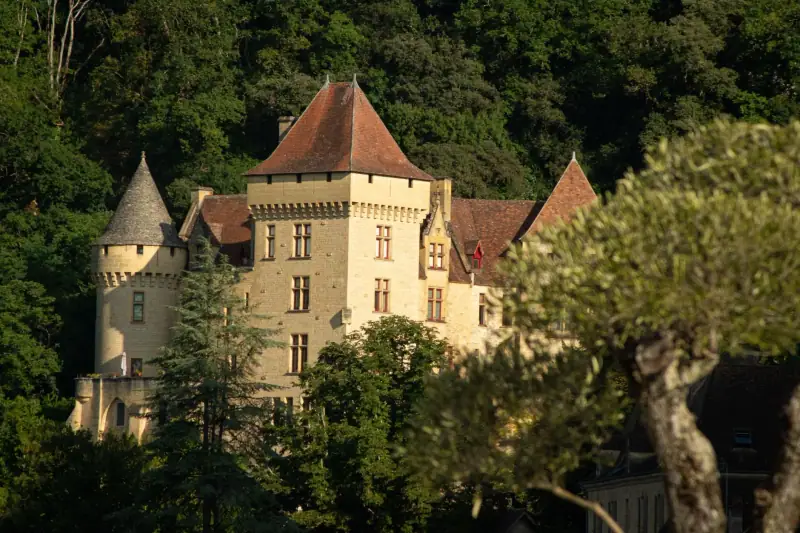
Beynac: the cliffside fortress
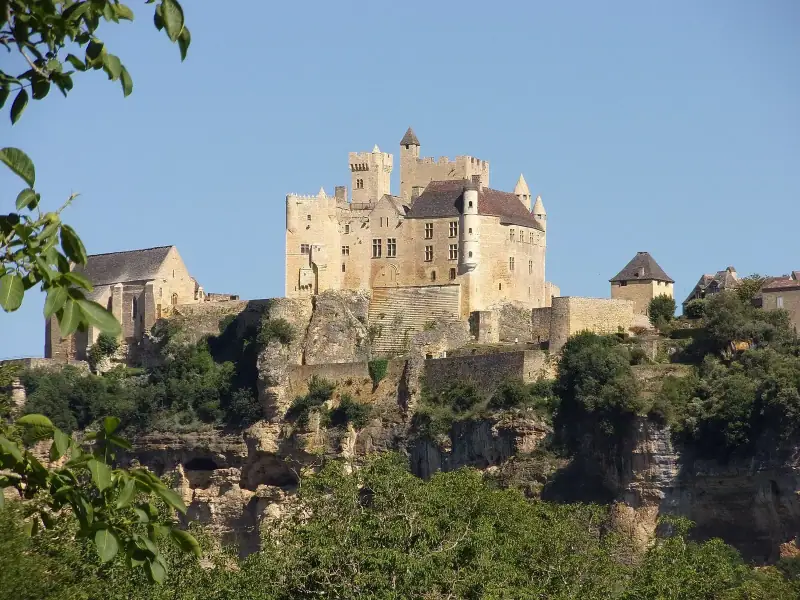
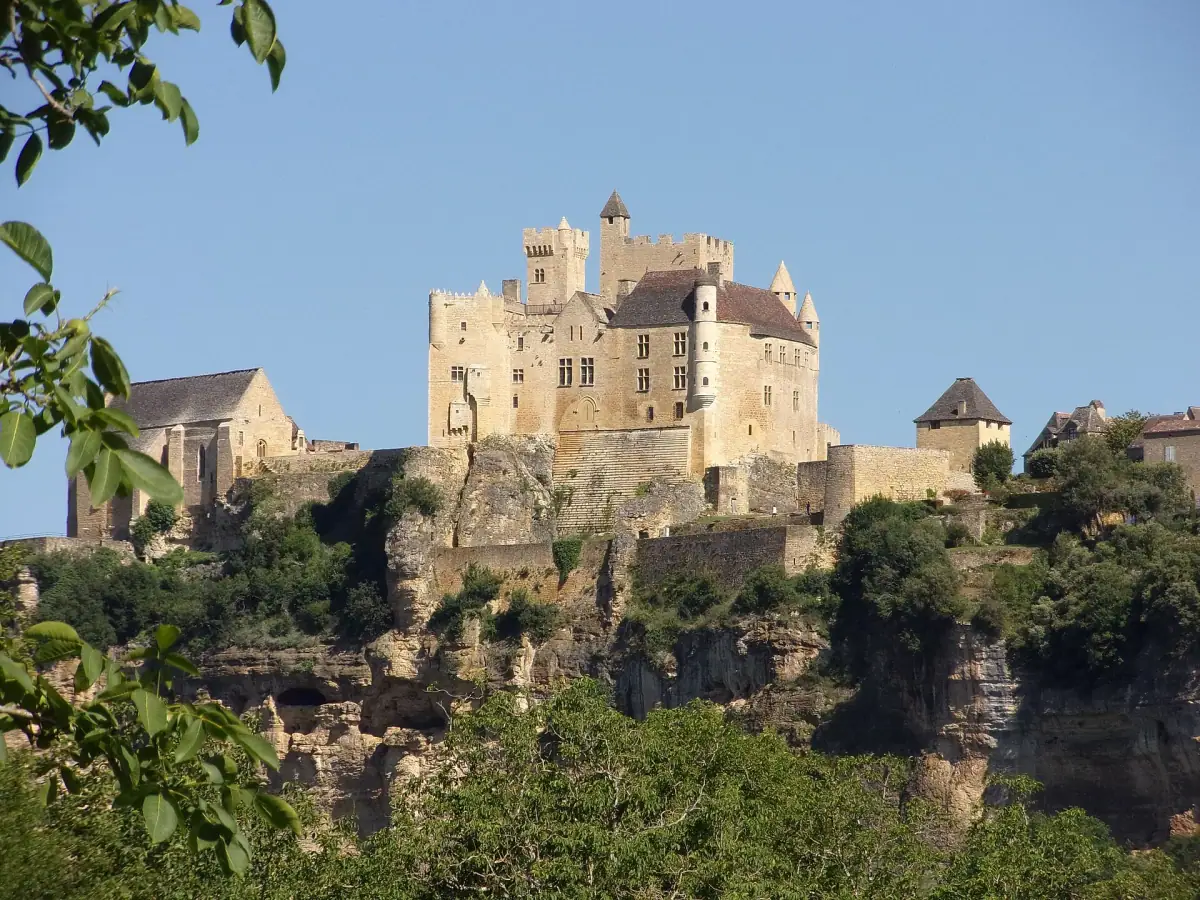
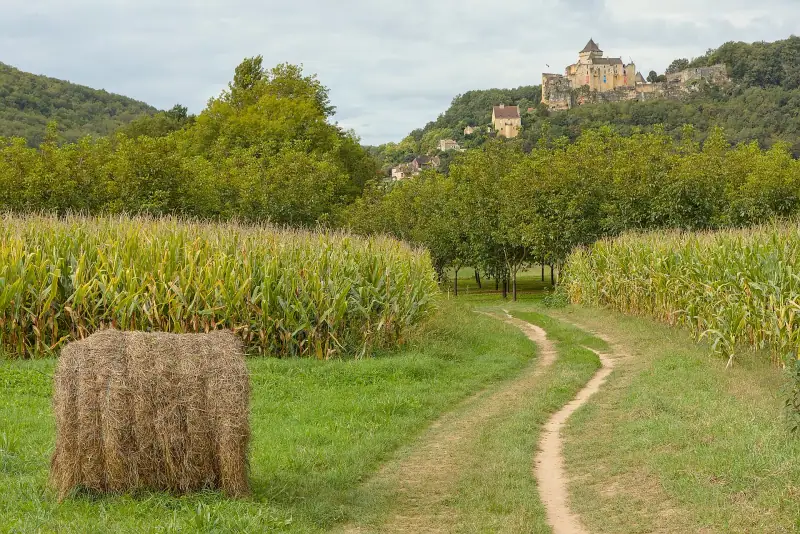
The Château de Beynac is probably the best-known image of the valley. It overlooks the village of Beynac-et-Cazenac from a rocky spur, and the view from the top takes in the river and its meanders, with several other châteaux visible in clear weather.
You approach it by a walk up from the village, sometimes steep, on cobbled streets. Bring comfortable shoes. The visit lets you understand the organization of a medieval fortress, its defenses and living quarters, and enjoy a panorama that justifies the effort on its own.
The village below also deserves a lingering visit: stone lanes, golden houses, waterside terraces. The best approach is to combine the château visit with a walk in the village, rather than leaving right away.
Castelnaud: the château of medieval warfare
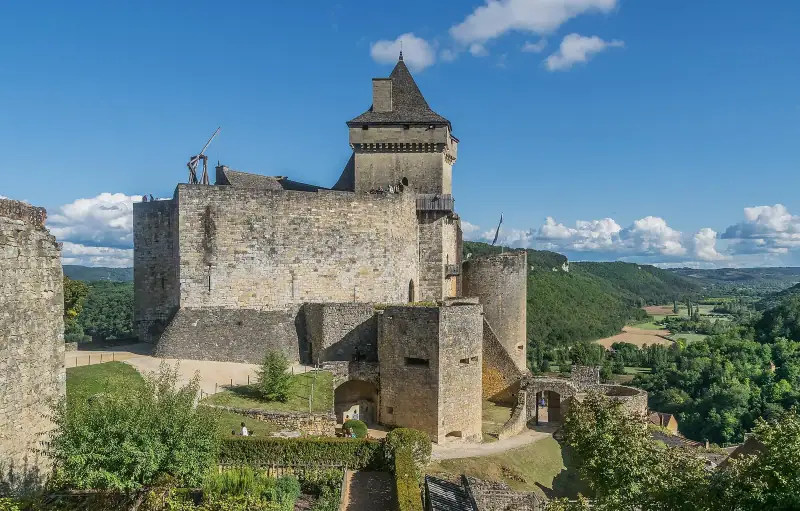
Facing Beynac, across the river, stands the Château de Castelnaud. The two fortresses have watched each other for centuries, and this face-off is what makes the area so telling: you understand there the importance of the river as a frontier.
Castelnaud is now known for its museum devoted to medieval warfare, with collections of weapons and armor and reconstructions of siege engines. Events and demonstrations are offered at certain times, which makes it a visit especially popular with families and children. Check the official site for the up-to-date program for your visit.
Here again, the climb to the entrance is on foot along a sloping path: allow a little time and breath, especially in summer.
Les Milandes: Joséphine Baker’s château
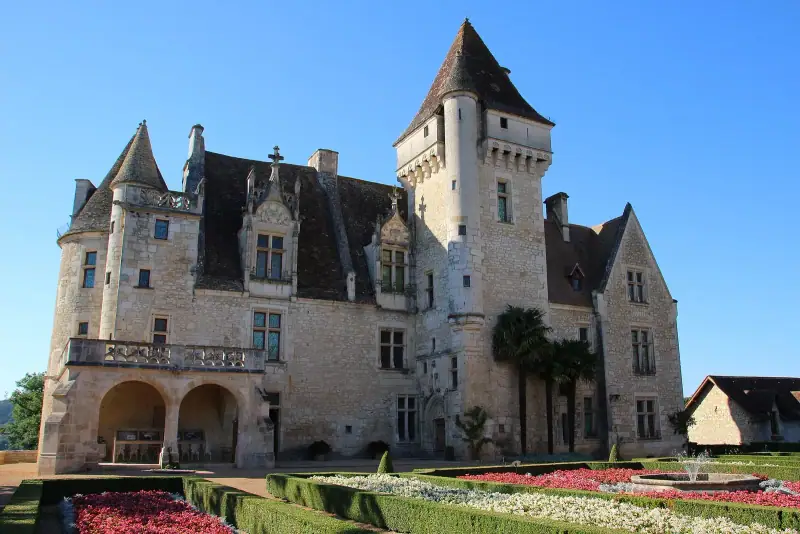
A little apart, in the commune of Castelnaud-la-Chapelle, the Château des Milandes is Renaissance in style, far more elegant and less defensive than its neighbors. It is best known as the home of Joséphine Baker, the famous performer, who lived there and ran a family and humanitarian project. The visit evokes her life, and bird-of-prey events are offered in season according to the program.
It is a good option if 20th-century history interests you as much as the Middle Ages, or if you are looking for a place less somber than the fortresses. Check the hours before you come.
Fénelon, a château in the countryside
The Château de Fénelon, at Sainte-Mondane, is another site in the region, closer to Sarlat. This fortress, surrounded by gardens, is visited with furnished rooms and offers another image: that of a château lived in through the centuries. Here again, it is best to check its opening periods before going.
Visit the châteaux with a guide
Guided visits, excursions and tours in the Dordogne valley: compare the activities offered from Sarlat.
The Marqueyssac gardens: the valley’s belvedere
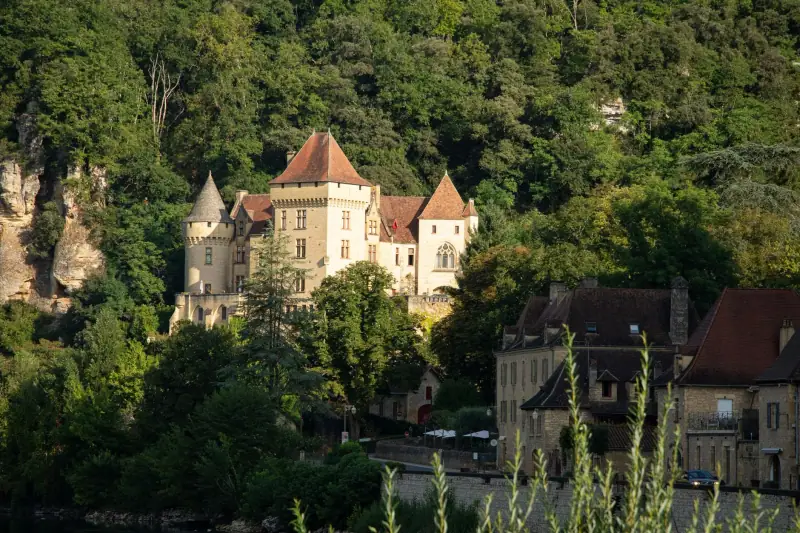
The Marqueyssac gardens, at Vézac, are one of the most visited sites in the valley, and worth a detour even if you are not passionate about gardens. Their special feature: thousands of boxwoods clipped into balls, drawing green waves along the paths, and a belvedere from which the view over the Dordogne valley is remarkable, with Beynac and Castelnaud in your sights.
It is above all a place for walking. You stroll shaded paths, stop at viewpoints, sit on a bench to contemplate the landscape. Children enjoy the playful side of the route. The site sometimes offers special evenings in summer: check the program and hours on the official site.
Marqueyssac combines very well with Beynac, since the two sites are neighbors: you can visit the château in the morning, lunch in the village, then stroll the gardens in the afternoon, when the light is softer.
Valley villages not to miss
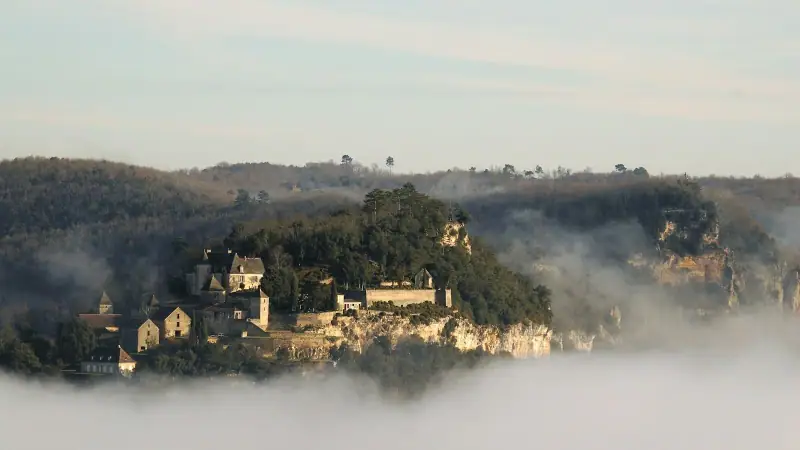
The châteaux are only part of the valley’s charm: the villages around them deserve as much attention.
La Roque-Gageac
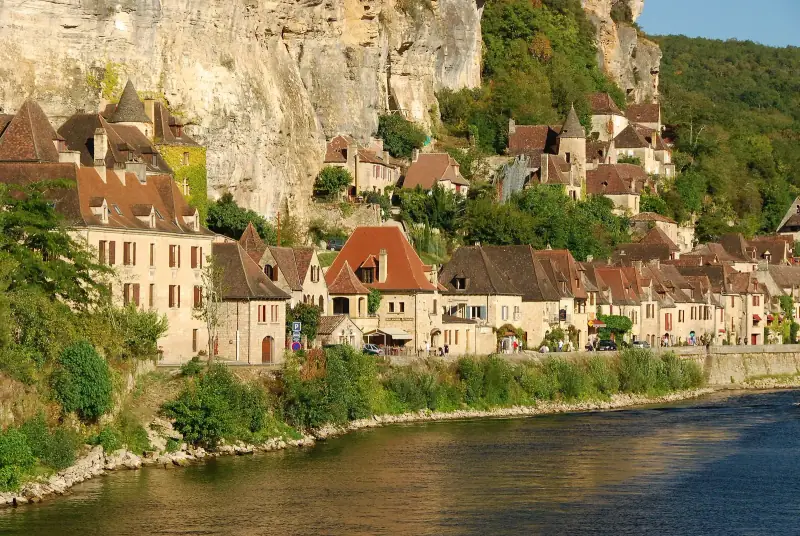
Clinging to the cliff, facing the river, La Roque-Gageac is often cited among the most beautiful villages of France. Its golden stone houses are tiered between river and rock, and the walk along the bank offers superb viewpoints. It is also a starting point for traditional boat rides on the Dordogne, whose gabarres reproduce the old cargo boats.
Domme
Perched on a promontory, the bastide of Domme offers a belvedere over the valley and is visited on foot in its medieval lanes. You reach it by road, with a car park near the center. It is a pleasant stop in late afternoon, when terraces come alive.
Sarlat-la-Canéda
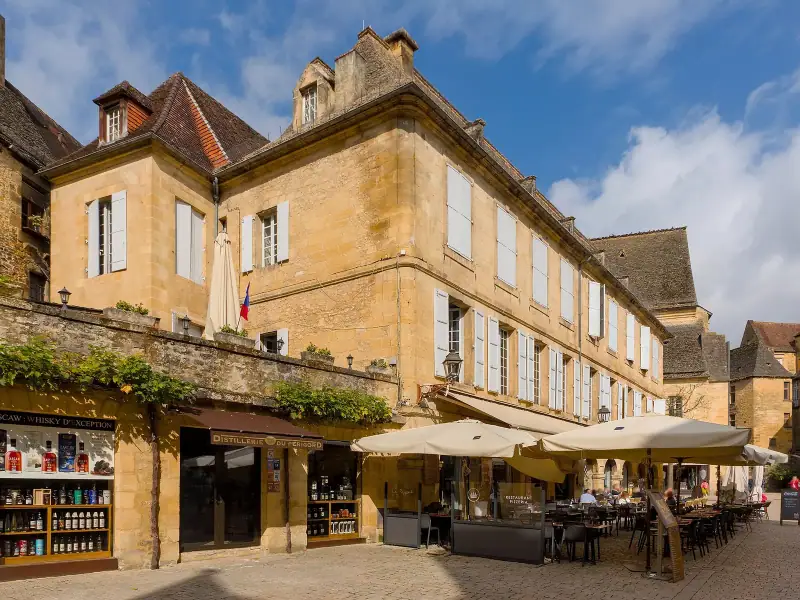
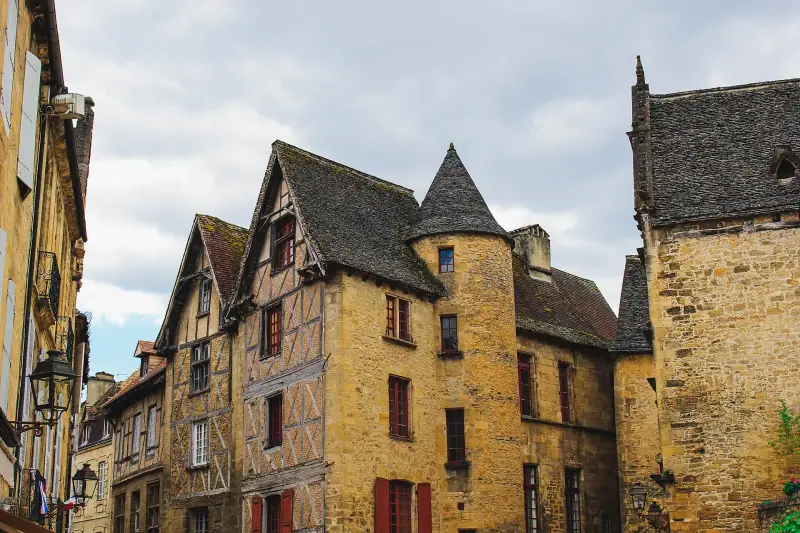
A short distance from the valley, Sarlat is the ideal base for exploring the area: its golden-stone medieval center, markets and restaurants make it a natural home base. If you are looking for where to stay, our guide to where to stay in Sarlat-la-Canéda covers the neighborhoods and types of lodging.
How to organize your visits: three options
The key to enjoying the châteaux is not doing too much. A visit takes time, access is sloping, and drives between sites, on winding valley roads, are longer than the distance on the map suggests.
Option “one day in the valley”
- Morning: Château de Beynac, early, before the crowd and heat. Stroll in the village.
- Lunch: in a village restaurant or a picnic by the river.
- Afternoon: Château de Castelnaud, or the Marqueyssac gardens depending on your wishes.
- End of day: stop at La Roque-Gageac or Domme to enjoy the golden light.
It is a dense day, but quite doable, since the sites are close to one another. Distances remain short, on the order of a few kilometers between Beynac, Castelnaud and Marqueyssac, but check the route on your navigation app before leaving.
Option “two days, at your own pace”
- Day 1: Beynac, Marqueyssac and an evening at La Roque-Gageac.
- Day 2: Castelnaud, Les Milandes and Domme.
This pace is more pleasant: you have time to stop, have a coffee, enjoy a belvedere without watching the clock.
Option “with the family”
With children, favor Castelnaud for its medieval events, Marqueyssac for the walk, and limit yourself to two visits a day. Plan breaks, water, sunscreen in summer and good shoes. Children remember a visit they had time to savor better than an overloaded program.
To fit these visits into a full stay, see our 3-day Dordogne itinerary.
Seeing the châteaux from the river
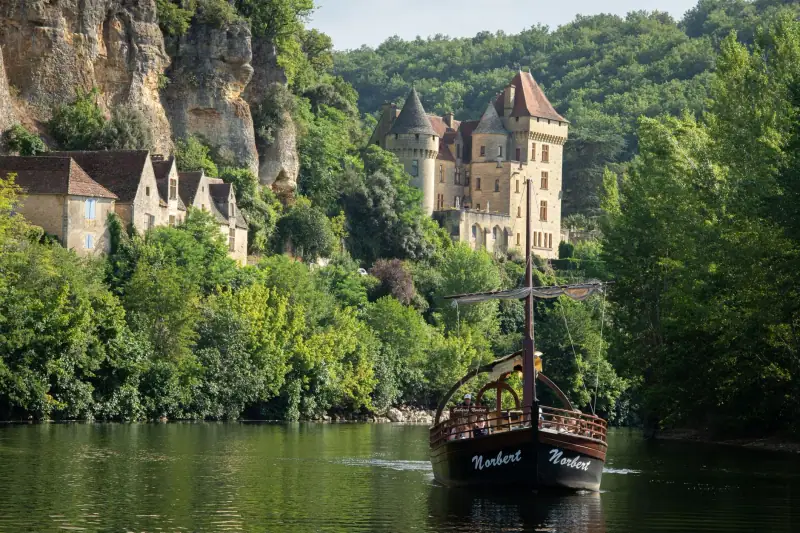
Another way to discover the châteaux is to look at them from the water. By canoe, the descent of the Dordogne between La Roque-Gageac and Beynac passes under the cliffs and offers views of several fortresses, from a perspective you do not get from the road. Our guide to canoeing the Dordogne explains how to choose your route and organize, including the return.
If you prefer a less strenuous activity, gabarre rides, on these traditional flat-bottomed boats, let you enjoy the landscape seated, with commentary on the valley’s history. It is a pleasant option for families and people with reduced mobility.
Stay near the châteaux
B&Bs, boutique hotels and cottages in Sarlat and the valley: compare lodgings in the Dordogne for your dates.
Practical tips to prepare your visits
When to come
Spring and early fall are often the most pleasant: mild temperatures, soft light for photos, fewer visitors. Summer is high season, with long days but also many people and heat on exposed paths. In winter, some sites close or reduce hours, so check ahead.
Booking and hours
Hours and prices change by season, and there can be weekly or annual closures. Always check each château’s or garden’s official website before leaving. In summer, guided-tour or event slots can fill: booking online ahead is prudent.
What to bring
- Good shoes: access to the châteaux is sloping, with cobbles and stairs.
- Water and a hat in summer, since climbs are exposed.
- A light layer even in summer: the inside of the stone fortresses is cool.
- A camera or charged phone: there are many panoramas.
Getting around
The valley’s châteaux are scattered and poorly served by public transport: a car is by far the most practical solution. Our guide to renting a car in the Dordogne covers the distances to plan, parking in the touristy villages and car-free alternatives.
In the villages, parking is often limited in season: park in the car parks on the edge and finish on foot, rather than forcing your way into narrow lanes.
Accessibility
Many of these sites were built on rocky promontories and are visited by sloping access, with steps. This does not always suit strollers, wheelchairs or people who find walking difficult. Ask each site directly: some offer adapted routes or a partial visit.
Pairing visits and food
A day of châteaux ends well at the table. The Black Périgord is the land of foie gras, truffles, walnuts and porcini, and the valley’s villages have many restaurants and producers. To build your food stops, see our guide to Périgord food specialties, and to extend the tasting with a glass, our guide to Bergerac, Monbazillac and Pécharmant wines.
A tip: if you plan a tasting, designate a driver. Valley roads are narrow and winding, and caution is needed.
A little history to understand better
A few landmarks help make sense of the visits. In the Middle Ages, the Périgord is a disputed territory: the kings of France and England pass it back and forth for generations, with the Hundred Years’ War as the most notable episode. Local lords choose sides, sometimes several times, and their fortresses serve to control the river, then an essential trade route. Salt, wine, wood and other goods go down the Dordogne on flat-bottomed boats.
Over time, the defensive role recedes. In the Renaissance, more open homes are built, designed for comfort, with large windows and gardens. Later, some châteaux are abandoned or partly destroyed, then restored in the 20th century thanks to enthusiasts and preservation initiatives. This layered history is what you read as you tour the valley: the same landscape, but very different faces depending on the château.
Reading a few panels before the visit, or taking a guided tour, changes the experience: you no longer just look at beautiful stones, you understand why they are there.
A few ideas for good photos
- Beynac from the opposite bank: the view of the château hanging on its cliff, with the village at its feet, is the most famous.
- The Marqueyssac belvedere: a wide panorama over the valley, with the meanders of the Dordogne. Late-afternoon light is the most flattering.
- La Roque-Gageac from the bank: the cliff and golden houses reflect in the water in calm weather.
- Early morning: mist over the river, sometimes present in fall, gives the châteaux a special touch.
Respect site rules: drones, for example, are often subject to strict rules and are not always allowed near monuments.
A ride on the Dordogne
Gabarre, canoe, guided visits: book an activity to see the châteaux from the river.
Tips for successful visits
- Leave early. You will enjoy calmer sites and better light, and avoid summer heat.
- Limit yourself to two visits a day. Between climbs, queues and the road, time flies.
- Alternate history and relaxation. After a château, a walk in a garden or a break by the water balances the day.
- Book in high season. Tickets, guided tours and lodging fill quickly in July and August.
- Check hours. Closing days, seasonal hours and events change: always check the official sites.
- Choose a central base. Sarlat lets you range out to all the valley’s sites with reasonable drive times.
In short
The Dordogne valley offers one of the finest concentrations of châteaux in France, and the key is to choose rather than try to see everything. Beynac for the spectacular site, Castelnaud for military history and events, Les Milandes for the Renaissance mood and the memory of Joséphine Baker, Marqueyssac for the walk and panorama. Add La Roque-Gageac and Domme for the charm of the villages, and a ride on the water to change your viewpoint. With a reasonable pace, good shoes and a little planning, you will keep an unforgettable memory of this valley. To structure your whole stay, see our 3-day Dordogne itinerary.
Frequently asked questions
How many châteaux can you visit in a day in the Dordogne valley?
Two château visits a day is a good maximum if you want to enjoy them. Beynac and Castelnaud each take one to two hours, but the walking climbs, queues in season and drives take longer than you think. Adding a garden or a village late in the afternoon is enough to fill the day.
Which château should you choose if you only visit one?
It depends on your tastes. Castelnaud charms with its collections and demonstrations on medieval warfare, much appreciated by families. Beynac charms with its spectacular cliffside site and view over the valley. Les Milandes suits better if you are interested in the story of Joséphine Baker, who lived there.
Do you need to book tickets in advance?
It is not always essential, but it is prudent in July-August and during school-holiday periods, especially for guided-tour or event slots. Check each site's official website for current arrangements, as they change.
Are the Dordogne valley châteaux suitable for children?
Yes, particularly Castelnaud, whose content and events are very visual. You do need suitable shoes: access is sloping, with cobbles and stairs, and does not always suit strollers or people with reduced mobility. Ask each site about accessibility.
What is the best time to visit them?
Spring and early fall offer a good balance of pleasant light, mild temperatures and more moderate crowds. In July and August, arrive at opening time to avoid the heat and the crowd. In winter, some sites reduce hours or close: check before you go.
Can you visit the châteaux without a car?
It is difficult, since the sites are scattered along the valley and poorly served by public transport. A car, an electric-assist bike or an organized excursion from Sarlat are the simplest solutions. Our guide to renting a car in the Dordogne covers the options.
Are the Marqueyssac gardens worth the visit?
Yes, especially if you like walks and panoramas. This garden, famous for its thousands of boxwoods clipped into balls, has a belvedere with a wide view over the Dordogne valley. It combines very well with a visit to Beynac, as the two sites are neighbors.
More Dordogne guides
Keep reading
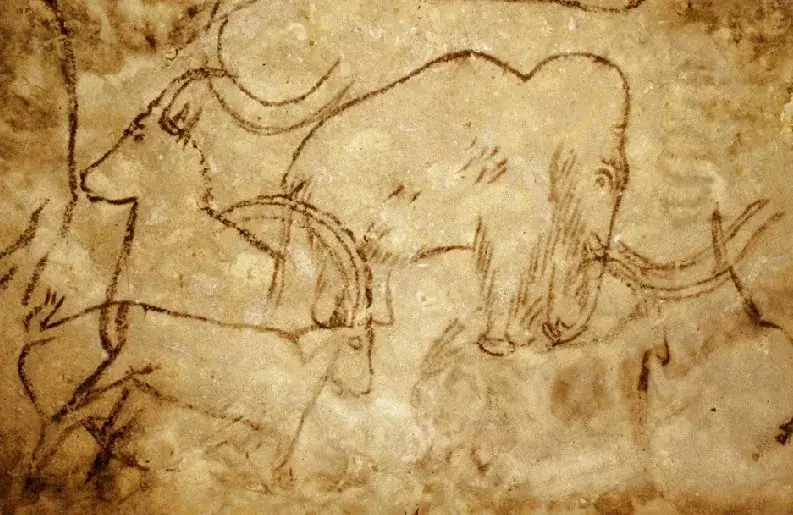
Rouffignac Cave: Train Visit, Prices, Booking and Opening Dates
Rouffignac Cave: prices, hours, booking (5 weeks ahead), length of the electric train ride and closure until March 28, 2027. Tips for families.
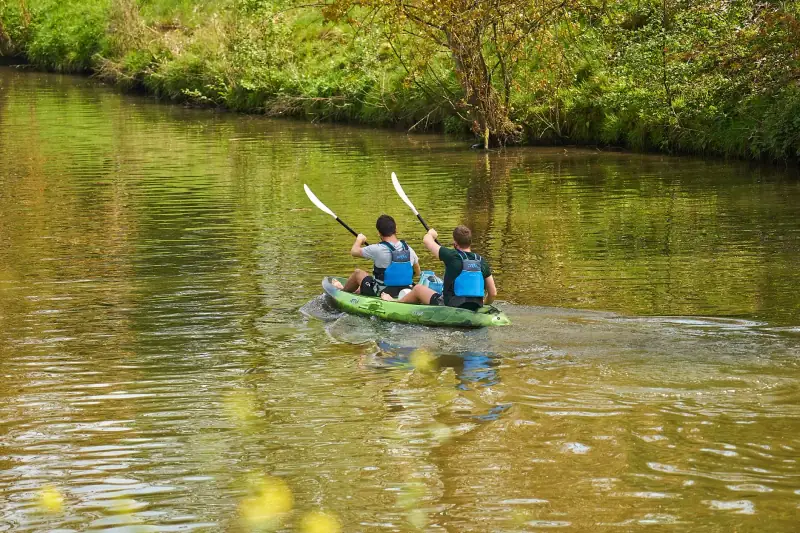
Canoeing the Dordogne: A Guide to Paddling the River
Canoeing in the Dordogne: routes between Beynac, Castelnaud and La Roque-Gageac, best season, level needed, safety, budget and tips for a good descent.
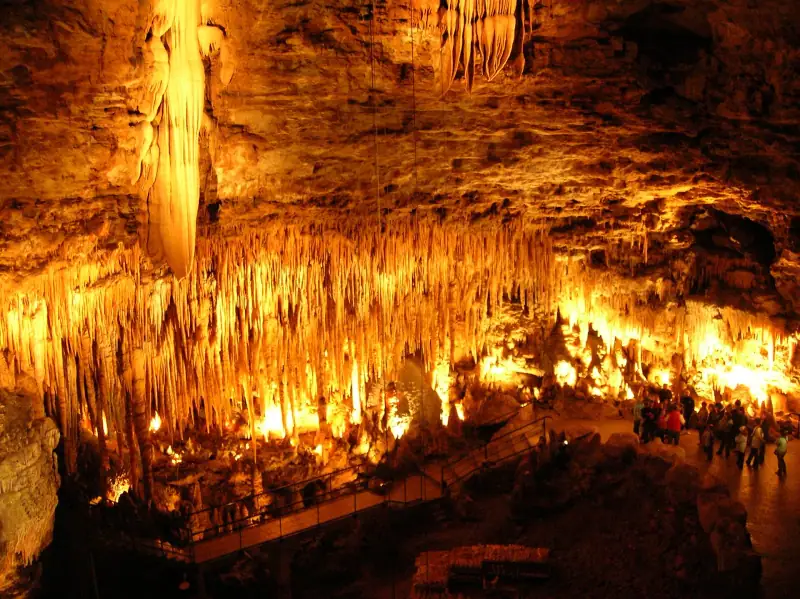
Proumeyssac Chasm: Prices, Hours, Booking and the Gondola Descent
Proumeyssac Chasm at Audrix: 2026 prices, hours by season, booking, gondola, strollers, dogs and tips for visiting without a wait.
Ready-made
Dordogne itineraries
7 days
One Week in the Dordogne: A Day-by-Day Itinerary
Sarlat-la-CanédaBrantômeBergerac
5 days
Dordogne in 5 Days with Kids: Stops, Kilometers and a Realistic Pace
Dordogne in 5 days with kids: an itinerary from Sarlat with distances, drive times, breaks and suitable activities, without overloaded days.
Can be adapted in the planner
3 days
3-Day Dordogne Itinerary: Sarlat, the Vézère and Châteaux
What to do in 3 days in the Dordogne? A day-by-day itinerary around Sarlat: Lascaux, the Vézère Valley, châteaux, villages and practical tips.
Can be adapted in the planner