Itineraries
3 days in the Basque Country: coast and inland itinerary
We may earn a commission when you book through links on this page, at no extra cost to you. We don't visit or try the places we cover: we summarize published sources. How we work
Day by day
- Day 1Biarritz walk, then Bayonne: cathedral, Petit Bayonne, chocolate
- Day 2Saint-Jean-de-Luz, Ciboure, corniche road, Hendaye
- Day 3Espelette, Ainhoa, then La Rhune
Weather through the year on this route
| Jan | Feb | Mar | Apr | May | Jun | Jul | Aug | Sep | Oct | Nov | Dec | |
|---|---|---|---|---|---|---|---|---|---|---|---|---|
| High °F (°C) | 5111 | 5211 | 5614 | 6016 | 6619 | 7122 | 7625 | 7826 | 7323 | 6720 | 5714 | 5312 |
| Low °F (°C) | 426 | 426 | 468 | 489 | 5412 | 5915 | 6317 | 6418 | 6116 | 5513 | 4910 | 447 |
Normals 1991–2020 at Biarritz and Saint-Jean-de-Luz: averages over 30 years, not a forecast. Source: NASA POWER (MERRA-2), grid of about 50 km. Figures computed by us in November 2026. Rain is shown only where a weather station confirms the figures.
In short
- Three days cover Biarritz and Bayonne (day 1), Saint-Jean-de-Luz, Ciboure and Hendaye (day 2), then Espelette, Ainhoa and La Rhune (day 3).
- Distances are short: Biarritz is about 8 km (5 mi) from Bayonne and 25 km (16 mi) from Espelette; no more than about an hour at the wheel per day.
- A car is recommended, above all for day 3; the first two days can be done largely by train and bus.
- May, June, September and early October offer the best balance; July and August are busy and pricier.
The Basque Country fits in a pocket handkerchief, and that is its strength: in a few kilometers, you go from Atlantic waves to green hills dotted with white farmhouses with red shutters. This three-day itinerary is designed for a first stay. It alternates art towns, seafront, villages with character and a fine mountain, without ever imposing long hours on the road.
Overview of the itinerary
The program is organized around three complementary days:
- Day 1: Biarritz and Bayonne. The elegant seaside resort in the morning, the city of art and food in the afternoon.
- Day 2: Saint-Jean-de-Luz, Ciboure and Hendaye. The fishing port, the shopping lanes and the Basque corniche.
- Day 3: Espelette, Ainhoa and La Rhune. Inland Labourd, its typical villages and a mountain panorama.
Distances remain modest. Biarritz and Bayonne are about 8 km (5 mi) apart, Biarritz and Saint-Jean-de-Luz about 15 km (9 mi), Saint-Jean-de-Luz and Hendaye also about 15 km (9 mi). Espelette is about 25 km (16 mi) from Biarritz. So you will never spend more than about an hour a day at the wheel.
Good to know. This itinerary focuses on the French Basque Country, and more precisely on the Basque Coast and inland Labourd. If you have more time, Lower Navarre with Saint-Jean-Pied-de-Port, Soule and the Spanish Basque Country make a second getaway.
Day 1 morning: Biarritz, between belle époque and surf
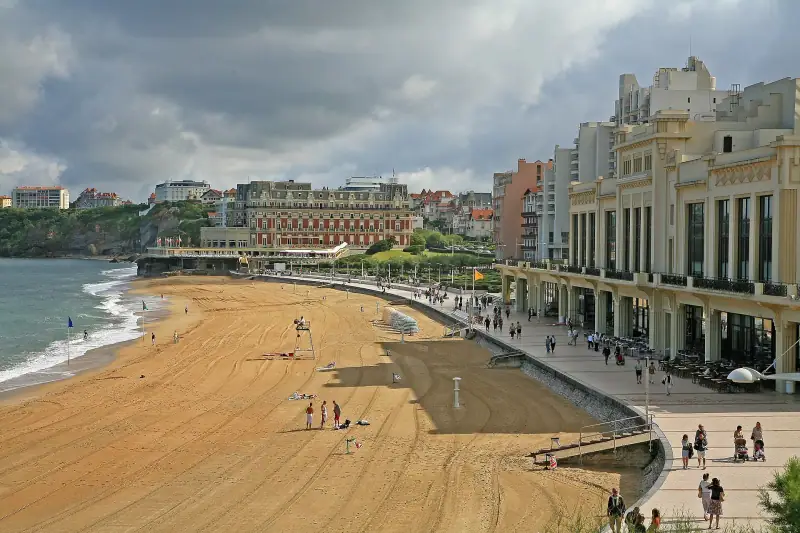
Start your stay in Biarritz, the best-known resort on the coast. It owes its fame to the 19th century, when Empress Eugénie and Napoleon III made it their summer retreat. What remains is an architecture of villas, palace hotels and promenades facing the ocean, and an atmosphere that mixes the elegance of another era with relaxed surf culture.
Here is a walking route of about two to three hours:
- The Grande Plage, a vast sandy beach lined with a promenade, the natural starting point of the walk.
- The Rocher de la Vierge, a rock linked to the mainland by a footbridge, with a fine view of the coast. On swell days, waves crash spectacularly against the rocks.
- The fishermen’s port (Port des Pêcheurs), a picturesque little port nestled below, with its colorful cottages.
- The Côte des Basques, the historic surf beach, south of the town. Even if you do not surf, watching the surfers at work is a pleasure.
- The Cité de l’Océan, a museum devoted to the ocean, useful in rainy weather.
If you feel like trying surfing, Biarritz is the ideal place: many schools offer introductory lessons for beginners. Find out about sea conditions and favor a recognized school.
For lunch, try a restaurant in the town center or at the Port des Pêcheurs. Grilled fish, chipirons à la plancha (grilled baby squid) and piperade are among the classics. Prefer short menus that state where the products come from.
Where to stay in Biarritz
Compare Biarritz hotels, from the seaside resort to more affordable places near the station, before locking in your three days.
Day 1 afternoon: Bayonne, the city of art and chocolate
Head to Bayonne, about 8 km (5 mi) from Biarritz, or some twenty minutes by car or bus depending on traffic. The city is built around two rivers, the Nive and the Adour, which divide it into districts with distinct atmospheres.
Grand Bayonne is the historic heart, on the left bank of the Nive. You can admire Sainte-Marie Cathedral, a Gothic building listed as UNESCO World Heritage as part of the Routes of Santiago de Compostela, with its cloister. The narrow streets with colorful facades shelter shops and chocolate makers.
Petit Bayonne, on the other side of the Nive, is the student and cultural district, more bohemian, with its bars, terraces and museums. The quays are pleasant late in the afternoon.
Bayonne is also a city of treats. You will find:
- Chocolate, an old tradition in the city, which you can taste as a bar or as hot chocolate in a tearoom.
- Bayonne ham, produced in the southwest and sold in many shops.
- The covered market (Les Halles), for a lively and colorful visit, especially in the morning.
For a precise idea of what you can taste or bring back, see our guide to Espelette pepper AOP, which will help you choose local products and avoid imitations.
End the day with dinner in Bayonne or go back to Biarritz. If you stayed in Biarritz, allow about twenty minutes for the return.
Day 2 morning: Saint-Jean-de-Luz and its port
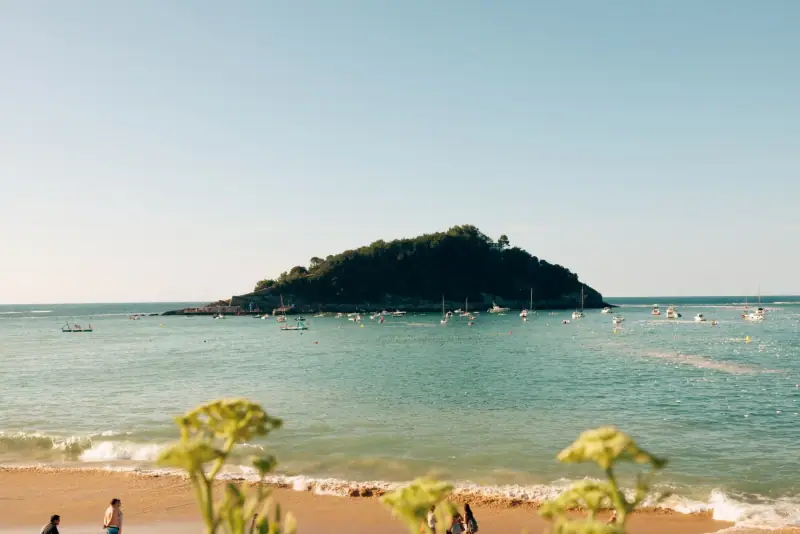
The second day takes you south, to Saint-Jean-de-Luz, about 15 km (9 mi) from Biarritz. The town is a former city of fishermen and privateers, now a quiet seaside resort. It keeps an authentic charm and a less hectic atmosphere than Biarritz.
Highlights:
- The bay, a fine crescent-shaped beach protected by breakwaters, very popular with families because the sea is calm there.
- The port, still active, where fishing boats come back with the day’s catch. Ciboure, its neighbor, lies on the other side of the Nivelle.
- Saint-Jean-Baptiste church, where King Louis XIV married the Infanta Maria Theresa of Spain in 1660. Its interior is decorated with a gilded altarpiece and wooden galleries typical of the Basque Country.
- Rue Gambetta, the main pedestrian shopping street, with its shops of Basque linen, specialties and macarons.
- The Maison de l’Infante, a brick-and-stone residence by the water, associated with the history of this royal wedding.
For lunch, the restaurants on the port often offer fresh fish. Book in high season, as good tables fill up fast.
A local specialty: the Saint-Jean-de-Luz macaron, a traditional pastry that differs from Parisian macarons, softer and more rustic. You will find it at several pastry shops in town.
Day 2 afternoon: Ciboure, the corniche and Hendaye
In the afternoon, continue south along the Basque corniche road, which follows the cliffs between Saint-Jean-de-Luz and Hendaye. It is one of the most beautiful stretches of the coast, with viewpoints over the ocean and the cliffs. The trip to Hendaye is about 15 km (9 mi), but allow far more time for photo stops and short walks on the coastal paths.
Ciboure is worth a detour: its narrow lanes, its colorful half-timbered houses and its church with a distinctive bell tower offer a more intimate atmosphere than its big neighbor.
Hendaye, at the very south of the coast, is the last French town before the Spanish border, marked by the Bidasoa. Its long sandy beach is one of the finest in the region, lined with a lively promenade. You can walk there, swim in summer or simply enjoy the sunset over Txingudi bay.
Option: a getaway to the Spanish side. From Hendaye, San Sebastián is about 25 km (16 mi) away. If you have energy, you can go late in the afternoon to taste pintxos, the small bites served in the bars of the old town. Check traffic conditions and parking in advance, and plan a return without rushing.
Excursions and activities in the Basque Country
Surf, boat rides, guided tours of Bayonne or San Sebastián: compare the activities offered in the region.
Day 3 morning: Espelette and Ainhoa
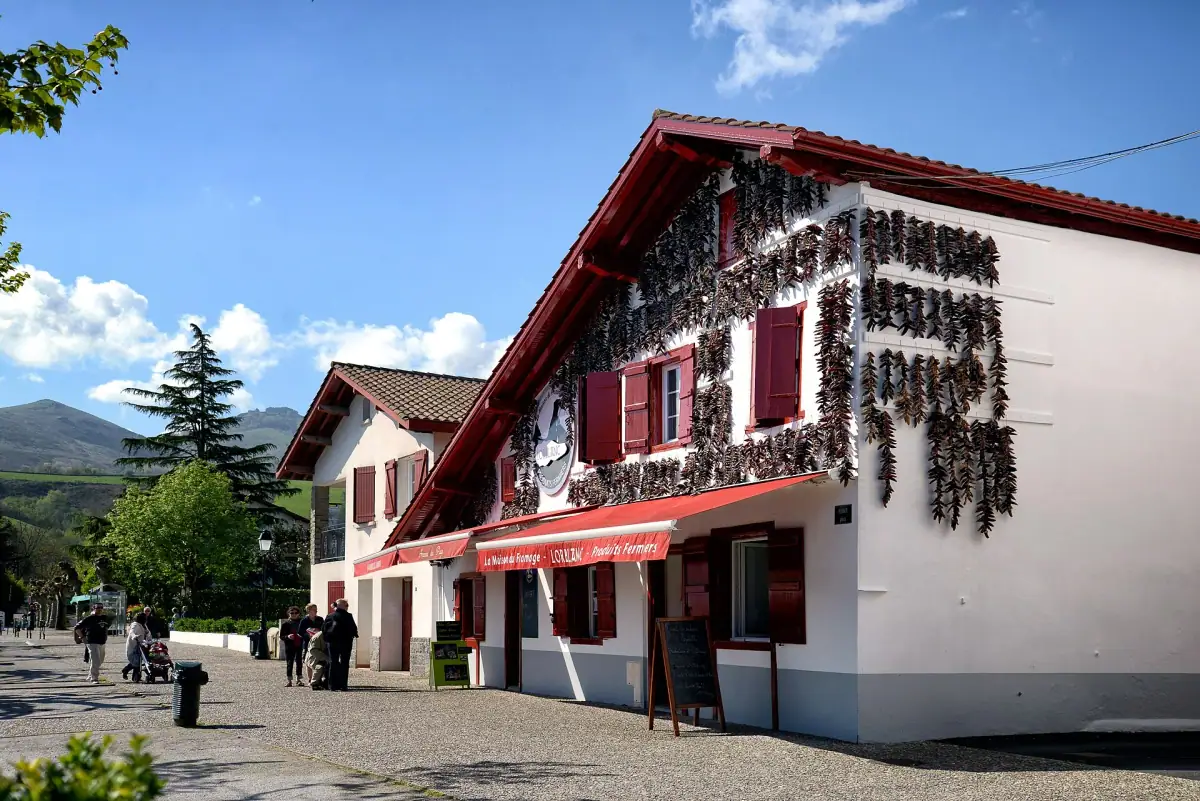
The third day is devoted to inland Labourd. Leave early from Biarritz or Saint-Jean-de-Luz to reach Espelette, about 25 km (16 mi) from Biarritz, or three quarters of an hour’s drive at most. The village is known worldwide for its chili pepper, whose red garlands decorate the white facades, especially in late summer and fall.
Wander the streets, step into a producer’s shop to taste the powder, the jelly or the pepper chocolate. To learn how to recognize a genuine AOP pepper, reread our article on Espelette pepper, which details what to check on the label.
Then continue to Ainhoa, a neighboring village, only a few kilometers away. Its main street lined with Labourd houses with red or green half-timbering is an excellent example of traditional architecture. The village is located near the Spanish border and long served as a stopover for pilgrims and smugglers.
Lunch can be taken in Espelette or Ainhoa. Look for a restaurant serving homemade Basque cooking: piperade, veal axoa, Basque chicken, Basque cake. Off season, some establishments close one or two days a week: check hours before traveling.
Day 3 afternoon: La Rhune, the iconic mountain
To finish in style, go up La Rhune, the iconic mountain of the Basque Country, which peaks at about 900 m (2,950 ft). In clear weather, the panorama stretches over the ocean, the coast, the Pyrenees and the Spanish Basque Country. Weather changes quickly there: mist can hide the view entirely, so check the forecasts and visibility before deciding.
Two main options are open to you:
- The cog train, which leaves from the Col de Saint-Ignace, on the Sare side. It is the simplest solution for families and people who do not like walking. Hours and fares vary by season: check the official website before coming.
- Hiking on foot. Several trails let you climb the mountain from neighboring villages. Bring good shoes, water and a jacket, as it is noticeably cooler and windier at the top than below.
On the flanks of La Rhune, you may meet pottoks, the small semi-wild Basque horses, as well as sheep and cows roaming free. Respect them: do not feed them and keep your distance.
Come back down late in the afternoon and return to the coast for a last dinner. A good way to close the trip is to enjoy a Basque cake, filled with pastry cream or black cherry, on a terrace.
A base in Saint-Jean-de-Luz
Ideal for fanning out between the coast and the inland area, the town offers charming hotels and more family-oriented places.
Getting around during these three days
A car is by far the most flexible option, notably for the third day. Inland villages are poorly served by public transport, and La Rhune is hard to reach without a vehicle.
A few practical tips:
- Parking. In the centers of Biarritz, Saint-Jean-de-Luz and Espelette, parking is often paid or limited, especially in summer. Use car parks on the outskirts and finish on foot.
- Traffic. Coastal roads are busy in July and August, notably late in the day. Leave early in the morning to avoid jams.
- Without a car. The first two days are feasible with the train and bus between Bayonne, Biarritz, Saint-Jean-de-Luz and Hendaye. For day 3, you will need a taxi, an organized excursion or a rental.
Remember to compare car rental offers before you arrive.
Where to stay for this itinerary
The choice of base depends on your travel style:
- Biarritz: the liveliest, with the biggest choice of restaurants and nightlife. Prices there are higher in summer.
- Saint-Jean-de-Luz: calmer, ideal for families and for those seeking a fishing-port atmosphere. It is located halfway between Bayonne and Hendaye, and handy for reaching Espelette.
- Bayonne: generally cheaper, with rich heritage and urban life all year.
In every case, book early for July, August and festival weekends, as demand is strong and the best options go fast.
Budget and good practice
The Basque Country is not the cheapest destination in France, especially on the coast in summer. Here are some general pointers to control your budget:
- Accommodation. It is the first expense item. Sleeping in Bayonne or a little set back from the coast often saves money.
- Eating out. Lunch menus are generally more affordable than dinners. Markets and covered halls let you put together a picnic with local products.
- Activities. Most walks, beaches and strolls in town are free. Allow a budget for La Rhune by train and for any surf lessons.
- Season. Outside July and August, prices drop and sites are more pleasant.
Remember also to bring rain gear: the Atlantic offers fine days, but showers are frequent, even in summer. The oceanic climate also explains the characteristic greenery of the Basque Country.
Adapting the itinerary to your stay
This itinerary adapts easily to your wishes and length of stay.
With children. Favor the bay of Saint-Jean-de-Luz for swimming, the Cité de l’Océan in Biarritz and the La Rhune cog train. Keep margins in the schedule for breaks.
As a couple. Plan a sunset at the Rocher de la Vierge, a dinner in Saint-Jean-de-Luz and a night in an inland guesthouse.
For food lovers. Add a visit to the Bayonne covered market, a chocolate workshop and a tasting at an Espelette producer. The Irouléguy wines, produced in Lower Navarre, are fine finds to bring back.
For active travelers. Replace part of day 2 with a surf lesson in Biarritz and add a hike on the corniche paths or a walk up La Rhune.
With one more day. Devote it to Saint-Jean-Pied-de-Port, in Lower Navarre, a famous stage of the Camino de Santiago, about 55 km (34 mi) from Biarritz, or to San Sebastián on the Spanish side.
Key takeaways
- Three days are enough for a first immersion: Biarritz and Bayonne, then Saint-Jean-de-Luz and Hendaye, finally Espelette, Ainhoa and La Rhune.
- Distances are short, but a car greatly eases the third day.
- The best periods are May-June and September-early October, for calm and red peppers on the facades.
- Book your accommodation early and check the weather before going up La Rhune.
Sources
- Train de la Rhune: figures checked November 2026
Frequently asked questions
Are three days enough to visit the Basque Country?
Three days let you discover the essentials of the French Basque Country: the coast, a large historic city and an inland village. You will not see everything, but you will leave with a balanced view of ocean and mountain. To go further (Lower Navarre, Soule, the Spanish side), plan on a week.
Do you need a car to follow this itinerary?
A car is recommended, especially for the third day (Espelette, Ainhoa, La Rhune). The first two days can be done largely by public transport between Biarritz, Bayonne and Saint-Jean-de-Luz, but timetables should be checked before leaving.
Where should you stay for a 3-day trip?
Biarritz, Bayonne and Saint-Jean-de-Luz are all good bases: they are close to one another, a few dozen minutes by road. Biarritz is the liveliest, Saint-Jean-de-Luz the quietest and most family-friendly, Bayonne the cheapest and most urban.
What is the best time to do this itinerary?
May, June, September and early October offer a good compromise: pleasant weather, fewer people than in midsummer, and red peppers on Espelette's facades in fall. In July and August, the coast is very busy and prices rise.
What if it rains?
The Atlantic climate is changeable. In rainy weather, favor museums and covered visits in Biarritz and Bayonne, the covered markets, chocolate makers and restaurants. Avoid going up La Rhune if the summit is in the clouds: the view is then nonexistent.
Can you add San Sebastián to this program?
Yes, by replacing day 2 or 3 with an excursion on the Spanish side. San Sebastián is about 50 km (31 mi) from Biarritz, a little under an hour's drive without traffic. Remember to check traffic and parking conditions before leaving.
How many kilometers do you cover over these three days?
Distances are short: the coast between Biarritz and Hendaye is about 30 km (19 mi), and Espelette is about 25 km (16 mi) from Biarritz. Each day stays well under 100 km (62 mi) by car, which leaves time to wander.
More Basque Country guides
Keep reading
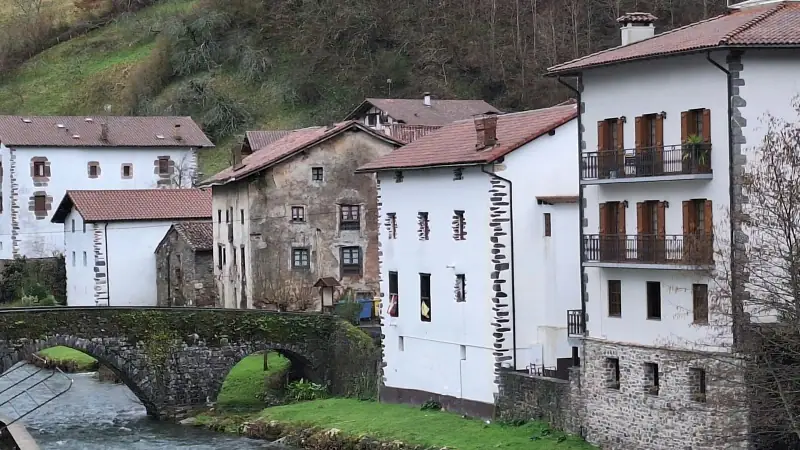
Basque Country budget: what a trip costs (3 priced profiles)
How much does a Basque Country trip cost? Real costs by item, three priced budgets (frugal, comfort, premium) and tips to spend less.
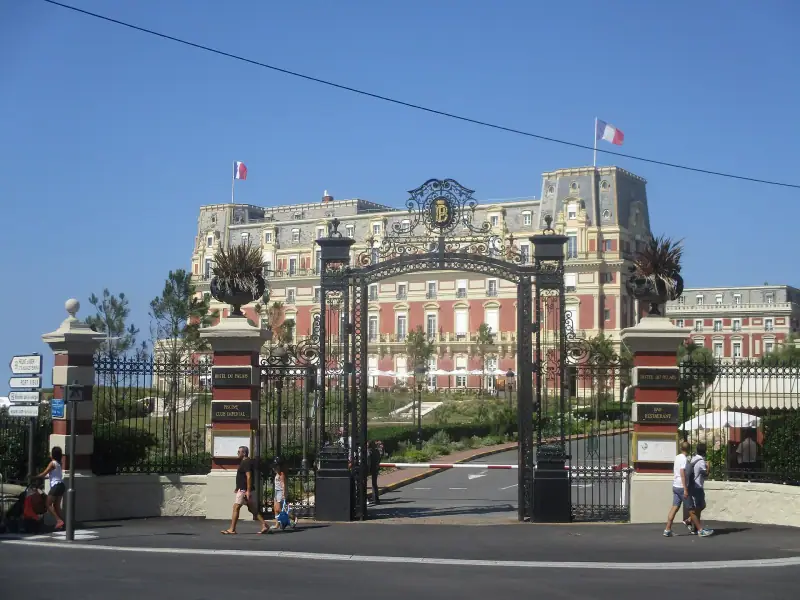
Where to stay in Biarritz: districts and types of accommodation for your trip
Palace, boutique hotel, apartment, guesthouse, campground or hostel: compare lodging types and districts to choose where to stay in Biarritz.
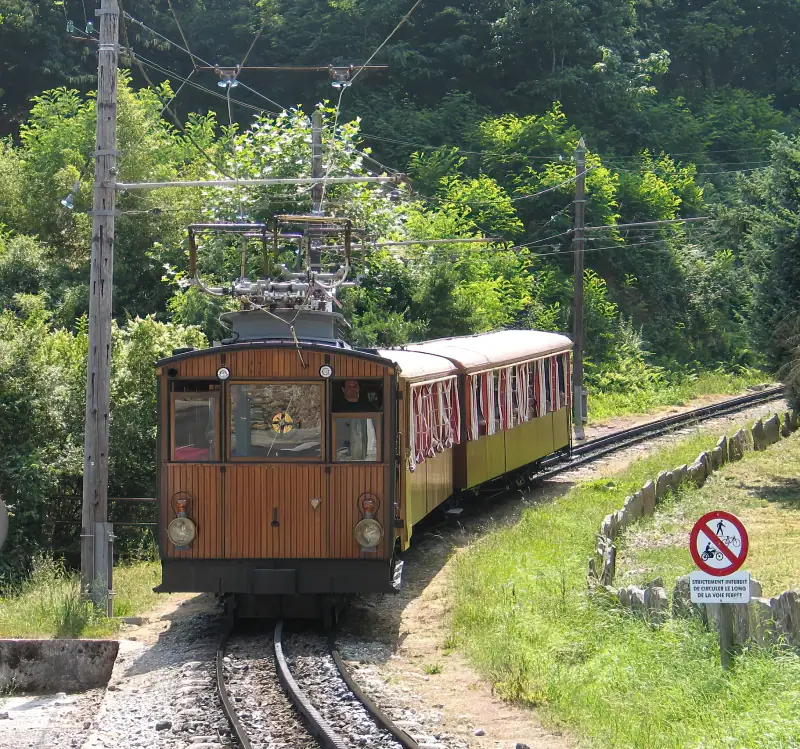
La Rhune cog train: book ahead or on the day? Prices, hours, weather
La Rhune cog train: do you need to book? 2026 fares, hours by season, parking, strollers, dogs and weather for the ride up from Sare.
Ready-made
Basque Country itineraries
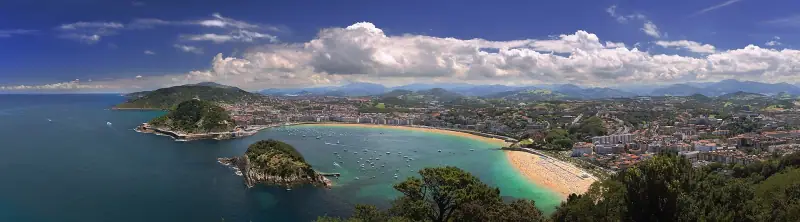
1 day
San Sebastián in 1 day from the Basque coast: itinerary and tips
One day in San Sebastián from Biarritz, Saint-Jean-de-Luz or Hendaye: how to get there, what to see and where to taste pintxos.
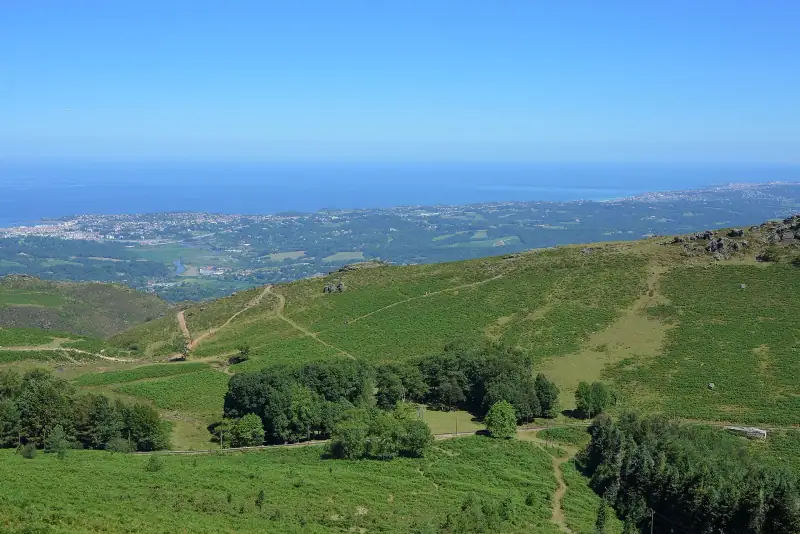
5 days
The Basque Country in 5 days with kids: stops and pace
The Basque Country with kids in 5 days: drive times, beaches, La Rhune cog train, Sare caves and a rainy-day plan B, at a child's pace.