Things to do
The best hikes in the Pyrenees: walks and outings by massif
We may earn a commission when you book through links on this page, at no extra cost to you. We don't visit or try the places we cover: we summarize published sources. How we work
In short
- The easiest classic is the walk to the Cirque de Gavarnie: about an hour and a half each way on a wide path with no technical difficulty.
- High-altitude trails are generally clear from June, sometimes July; June and September avoid the crowds.
- Elevation gain, not distance, is what tires: expect roughly 300 to 400 m (985 to 1,300 ft) of climb per hour for an average walker.
- Set out early, check the mountain weather, tell someone your route, and call 112 in an emergency.
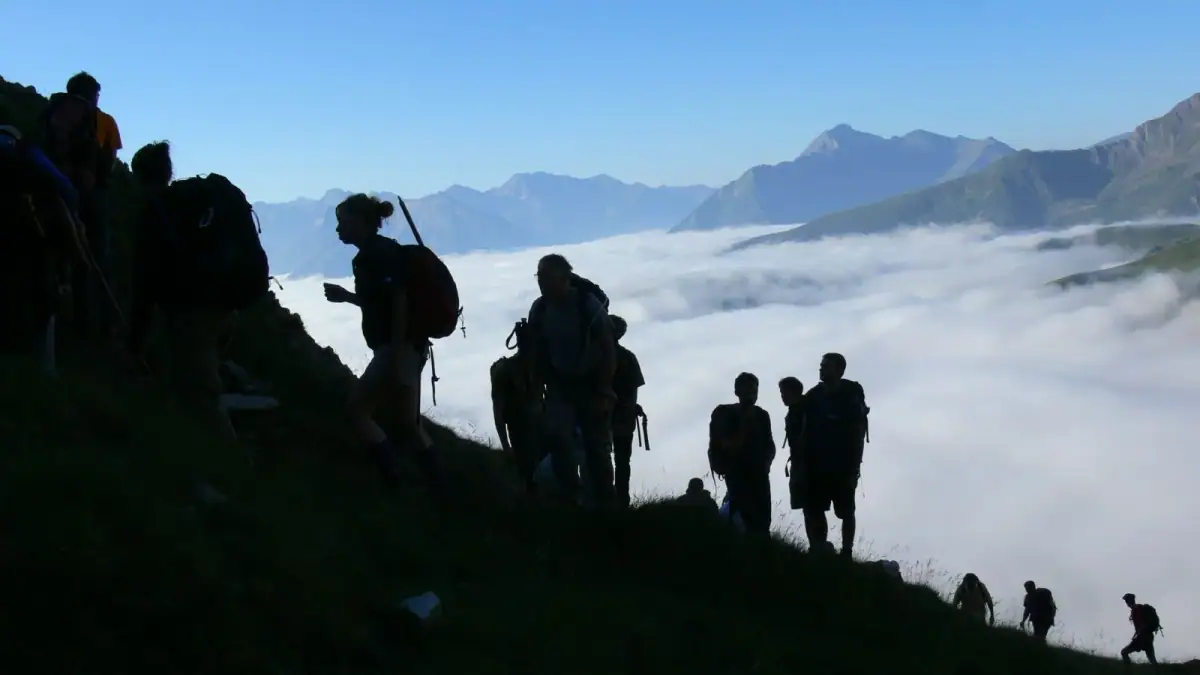
The Pyrenees are one of Western Europe’s great hiking grounds. Over more than 400 kilometers (250 mi), the range lines up glacial cirques, high lakes, waterfalls, pastoral valleys and summits above 3,000 meters (9,840 ft). It is all accessible at every level: you can take a one-hour family stroll just as well as a multi-day athletic ascent.
This guide presents the most emblematic hikes on the French side, grouped by massif: Hautes-Pyrénées, Aure valley, Luchonnais, Ariège and Catalan Pyrenees. For each, you will find the profile of the route, what you see there and practical tips. Durations and distances are deliberately rounded: they vary with your pace, the weather and the starting point chosen. Always check field information with a tourist office or a guides’ office before you set out.
Choosing your Pyrenees hike well
Before heading onto a trail, three questions are enough to avoid most unpleasant surprises.
What is my physical condition? In the mountains, it is not distance that tires, but elevation gain. An 8 km (5 mi) loop with 800 m (2,625 ft) of climbing is far more demanding than a 12 km (7.5 mi) flat walk. Expect an average of 300 to 400 m (985 to 1,300 ft) of positive elevation gain per hour for a typical walker, and add breaks.
Which season? High-altitude trails are generally clear only from June, even July depending on snow cover. If you hesitate over your dates, see the guide when to go to the Pyrenees to settle your stay.
What kind of experience? Spectacular waterfalls and cirques, lakes for picnics, panoramic ridges, villages of character, wildlife: each massif has its specialty. The list below gives a first overview.
- Families and first walks: Gavarnie, Lac de Gaube, valleys around Luchon.
- High lakes: Néouvielle, Lac d’Oô, lakes around Cauterets.
- Heritage and gentle hiking: Ariège, Montségur, Foix.
- Summits and thrills: Canigó, Brèche de Roland, upper valleys of the Hautes-Pyrénées.
Cirque de Gavarnie: the unmissable classic
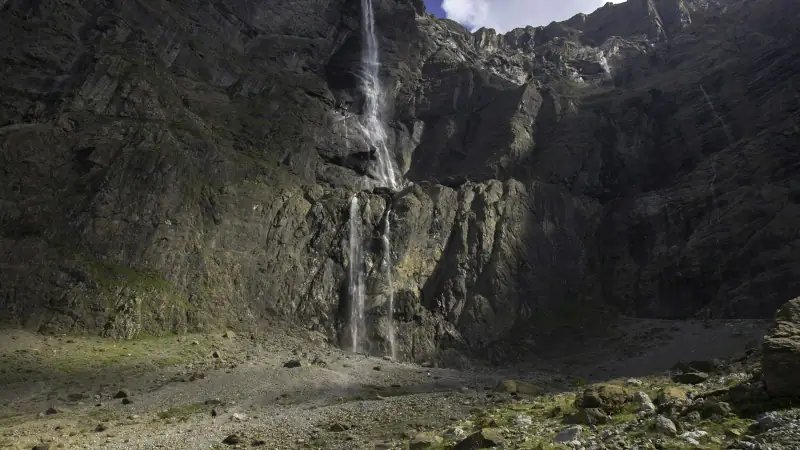
The Cirque de Gavarnie is probably the range’s most famous site. This immense natural half-circle wall, a UNESCO World Heritage Site, is home to the Gavarnie Falls, whose drop exceeds 400 m (1,310 ft), one of the highest in Europe.
The classic walk starts from the village of Gavarnie and follows a wide, well-marked path along the stream, through meadows where herds graze. It leads to the foot of the cirque in about an hour and a half of walking each way, with a moderate elevation gain. The path has no technical difficulty: that is what makes it the ideal outing for families and beginners. At the end, you can continue to the approach of the waterfall, depending on the state of the path and the snow.
Tips:
- Set out early: in July and August, the path is very busy in the middle of the day.
- Bring something to cover up: the cirque is a cool funnel, even in midsummer.
- Check the state of the path and any remaining snow in spring and early summer.
- Follow the national park rules: no wild bivouac or fire, and dogs are forbidden.
More experienced hikers can aim, from around Gavarnie, for high-altitude routes such as the Brèche de Roland, a famous notch in the border ridge with Spain. This outing is much longer and more committing: it requires good physical condition, clear trails and stable weather. Find out precisely about the state of the route before setting out, or go with a guide.
Sleeping near Gavarnie and Luz-Saint-Sauveur
Gîtes, hotels and chalets for an early start on the trails.
Cauterets and the Pont d’Espagne: waterfalls and lakes
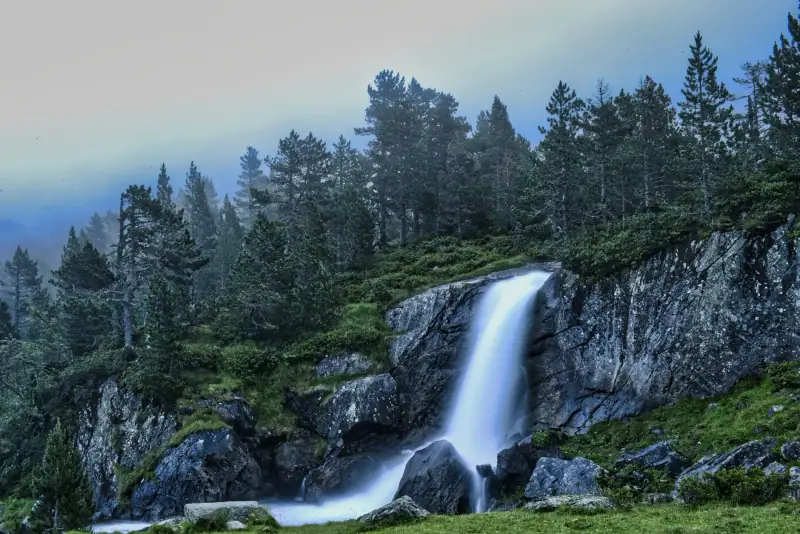
Above the spa town of Cauterets, the road climbs to the Pont d’Espagne, the starting point of many hikes inside the Pyrenees National Park. The site is known for its waterfalls tumbling down the stream, its conifer forests and its views of the peaks.
Lac de Gaube is the area’s flagship outing. The path climbs through forest, along the river, to a deep blue lake overlooked by the Vignemale massif, the highest French summit of the Pyrenees. The climb takes about an hour to an hour and a half for an ordinary walker, with a noticeable but steady elevation gain. A summer chairlift can also shorten part of the trip, depending on opening periods.
To go further, several trails lead to other lakes and high-mountain huts. These routes are longer, sometimes exposed to thunderstorms, and require being comfortable with map reading. Early in the season, some may still hold snow.
Cauterets is also a good base for a stay: the town offers varied lodging, restaurants and spas to recover after walking.
Néouvielle and the Aure valley: the kingdom of lakes
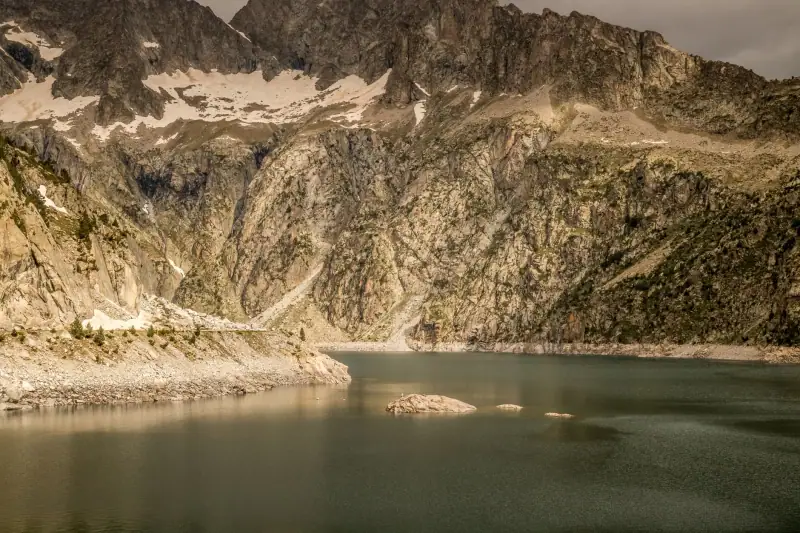
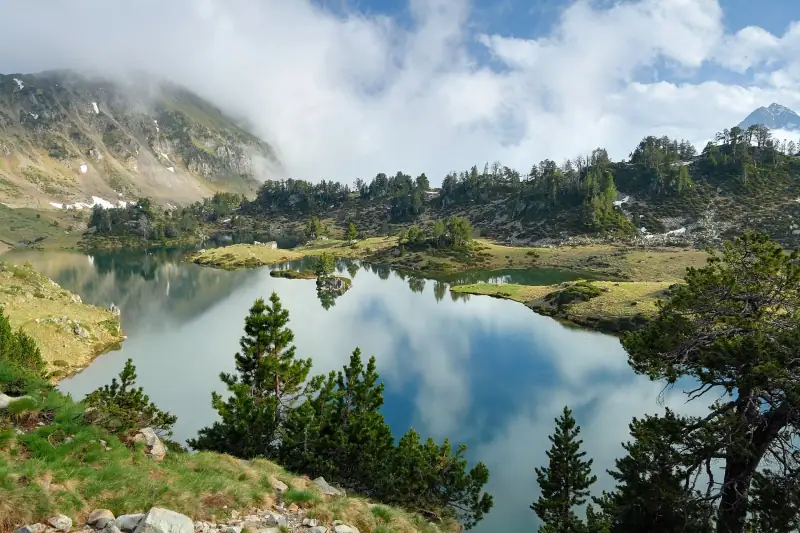
The Néouvielle national nature reserve is a paradise for anyone who loves high lakes. In a granite landscape dotted with mountain pines, dozens of bodies of water are grouped in a small area, which allows varied loops depending on your level: from circling a single lake to circuits of several hours linking several basins.
The area is accessible from the Aure valley, whose resort of Saint-Lary is the main town, and from the neighboring Barèges valley. Road access to some starting points may be regulated in high season (limited parking, shuttles): ask the tourist office before you go.
What you do there:
- easy walks around lakes reachable from high-altitude parking lots;
- day loops linking several lakes;
- hikes to the surrounding summits for seasoned hikers;
- wildlife watching, with a bit of patience and discretion.
The rules are strict, as in any nature reserve: no wild bivouac outside the authorized framework, no fire, trash taken back down, dogs not allowed. These rules protect a fragile environment.
Guided hikes in the Pyrenees
To discover the lakes and summits safely with a professional.
Luchonnais: green valleys and glacial lakes
Around Bagnères-de-Luchon, the mountains are greener, more wooded and often less crowded than in the Hautes-Pyrénées. It is an excellent choice for anyone who wants to hike in a more serene atmosphere.
Lac d’Oô is the area’s most famous outing. From the parking lot, the path climbs in about an hour to an hour and a half to a large glacial lake, fed by a waterfall falling from a rock wall, one of the highest in the range. The route is accessible to most walkers in good shape and very photogenic. It can also serve as a starting point for longer routes to lakes and huts higher up.
The Lys valley, the Larboust valley and the surroundings of the Superbagnères resort offer other walks, from forest strolls to ridge routes with fine views of the great summits. Luchon is also a spa town of character, perfect for ending the day in a hot bath or around a table.
Good to know: in this area as elsewhere, set out early. In summer, thunderstorms often form in early afternoon on the ridges, and a superb lake at 9 am can become less welcoming at 3 pm.
Ariège: hiking among mountains, caves and castles
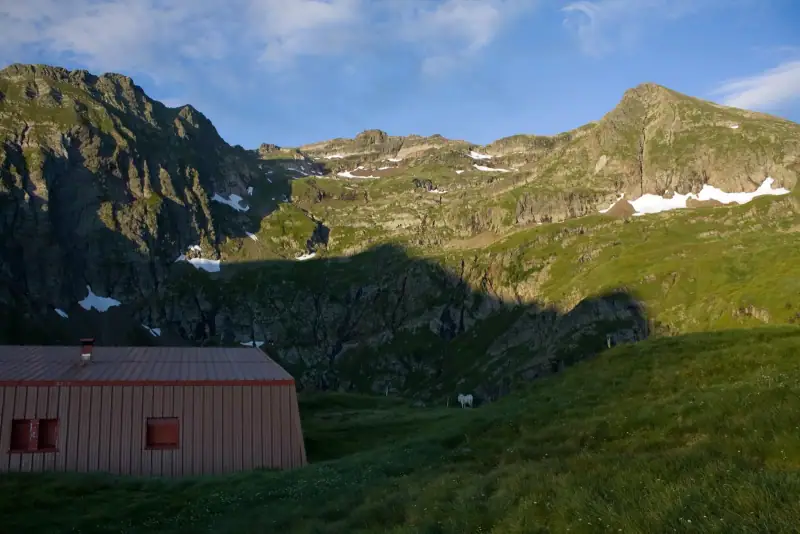
Ariège charms with another face of the Pyrenees: gentler mountains, deep valleys, stone villages and historic sites. Hikes there combine particularly well with heritage visits.
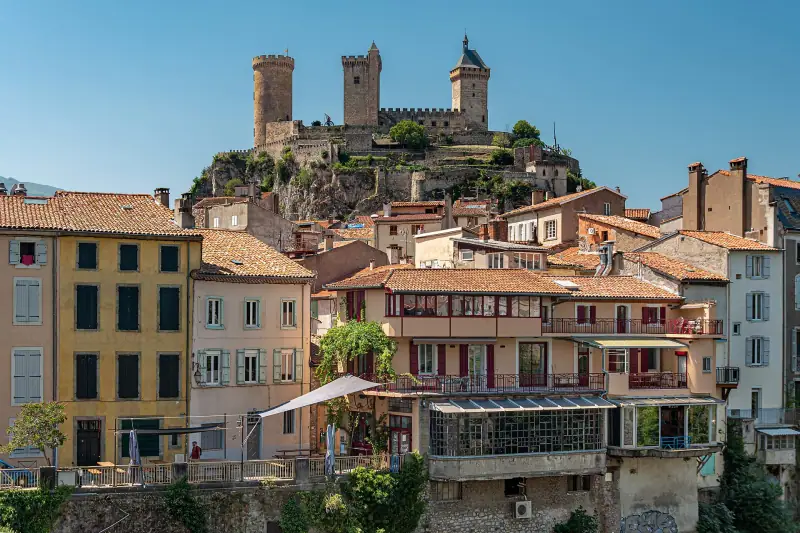
Around Foix, the medieval castle that overlooks the town is the ideal starting point for day walks in the surrounding hills. History fans can continue to Montségur, the famous Cathar site: the climb on foot to the ruins of the perched castle is short but sustained, with a magnificent view of the surrounding mountains.
Around Ax-les-Thermes, the upper Ariège valley gives access to mid- and high-mountain trails, with lakes and summer pasture plateaus. After walking, the town’s thermal baths are a welcome reward.
Ariège suits travelers who want to alternate hiking, heritage and food, and those who prefer to avoid the busiest sites. It is also pleasant in spring and autumn, when the high mountains are not yet or no longer accessible.
Visits and outings around Foix and Ariège
Castles, caves and nature outings to book ahead.
Catalan Pyrenees: Cerdagne, Capcir and Canigó
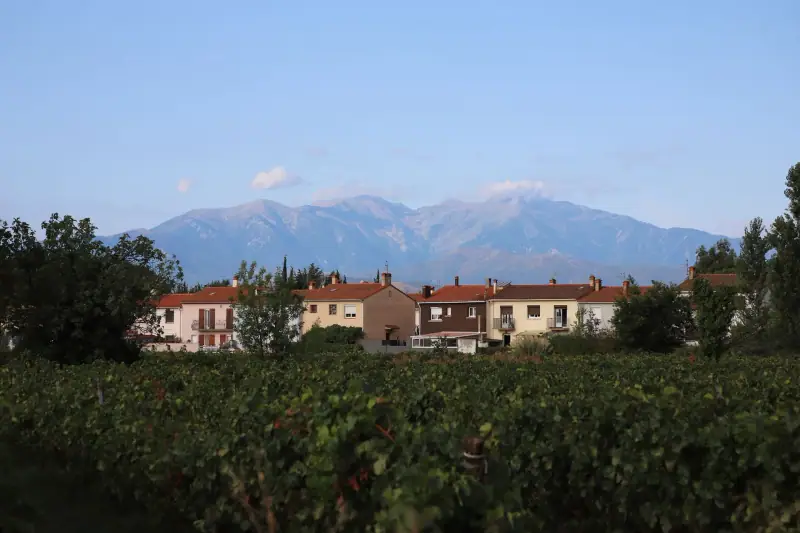
At the eastern end of the range, the Pyrénées-Orientales offer a sunnier climate and landscapes of plateaus and valleys, with the Mediterranean as a backdrop.
The Canigó, an emblematic summit of about 2,780 m (9,120 ft), is the Catalans’ sacred mountain. Its ascent is a great classic: you generally start from a hut or a high-altitude starting point for an athletic day, with a spectacular view in clear weather. It requires good physical condition, an early start and favorable weather.
The Cerdagne and the Capcir, with Font-Romeu as the central resort, offer walks on vast plateaus, around lakes and pine forests. Elevation gains there are often gentler than in the Hautes-Pyrénées, which makes it a pleasant terrain for families and walkers who prefer wide horizons to steep climbs. The region’s generous sunshine also allows hiking for much of the year.
The long crossings: GR10 and the Haute Randonnée Pyrénéenne
For lovers of long distances, the Pyrenees offer two legendary routes. The GR10 links the Atlantic to the Mediterranean on the French side, crossing the range lengthwise over about 900 kilometers (560 mi). It runs at mid-altitude, with stages in gîtes and huts, and is most often walked over several weeks.
The Haute Randonnée Pyrénéenne (HRP) follows a higher, wilder line, often off marked trails, and is aimed at very experienced hikers.
It is not necessary to do the whole crossing: many hikers walk sections of a few days, relying on huts and valleys. It is an excellent way to taste long-distance hiking without too heavy a commitment.
Wildlife and flora: what you may meet
Hiking in the Pyrenees is also observing remarkable wildlife. With a little patience and discretion, you may spot:
- marmots, very present in the high pastures, which you hear whistling before you see them;
- izards, the Pyrenean chamois, often on grassy and rocky slopes;
- birds of prey, like the griffon vulture, which soars in large numbers over the valleys, and sometimes the bearded vulture, spectacular for its wingspan;
- herds of cows, sheep and horses on summer pasture, which share the meadows with hikers.
On the flora side, spring and early summer are the season of flowering meadows and rhododendrons. Keep your distance from wildlife, never feed it and keep your dogs away from herds. Some herds are protected by guard dogs: if you meet any, go around them calmly, with no sudden movements.
Equipment and safety: the essentials before setting out
The mountains forgive little improvisation. Here is the basis of a well-prepared pack.
Basic equipment:
- hiking shoes with a lugged sole, well broken in;
- three layers of clothing (breathable, warm, waterproof and windproof), even in summer;
- enough water, and energy snacks;
- sun protection: sunscreen, sunglasses, hat, as radiation is strong at altitude;
- a map, a mapping app usable offline, and a power bank;
- a first aid kit and a headlamp, useful if the day lasts longer than planned;
- trekking poles, valuable for relieving the knees on descents.
Safety rules:
- Check the mountain weather the day before and the same morning. A clear sky at 8 am guarantees nothing for the afternoon.
- Set out early and set yourself a turnaround time, whatever the distance covered.
- Tell someone your itinerary and expected return time.
- Stay on marked trails and turn back at a steep snowfield, dense fog or a threatening thunderstorm.
- In an emergency, call 112. Mountain rescue is organized, but areas without coverage exist: let someone know in advance.
Finally, respect the environment: take all your trash back, do not pick flowers, do not disturb wildlife and find out about the regulations of the national park or nature reserve you are crossing.
Accommodation in Cauterets, Luchon and Font-Romeu
Compare gîtes, hotels and chalets in the heart of the massifs.
How to organize your hiking stay
Where to stay. The most practical is to choose a valley base for several days, rather than changing hotels every evening. Cauterets, Luz-Saint-Sauveur or Gavarnie suit the Hautes-Pyrénées, Luchon the Luchonnais, Foix or Ax-les-Thermes Ariège, Font-Romeu the Catalan Pyrenees. Mountain huts are an option for multi-day routes: book ahead in summer.
Getting around. Many trailheads are far from towns and poorly served by public transport. A car remains the most flexible way. Allow a buffer: mountain roads are winding and average speeds are low. Some high roads are closed in winter.
Combining hiking and relaxation. After a day of walking, the thermal centers of Cauterets, Luchon or Ax-les-Thermes are a well-deserved reward.
Selection by profile
- First time in the mountains: Cirque de Gavarnie, Lac de Gaube, walks around Luchon.
- Lake lover: Néouvielle, Lac d’Oô, around Cauterets.
- With family and children: short valley trails, Cerdagne plateaus, walks to waterfalls.
- Experienced hiker: Brèche de Roland, Canigó, sections of the GR10.
- History fan: Foix, Montségur, Ariège villages.
Whatever you choose, the rule remains the same: adapt the goal to your fitness, the weather and the season. A successful hike is above all one that leaves you wanting to go again. The Pyrenees will be waiting for you.
Frequently asked questions
What is the most beautiful Pyrenees hike for beginners?
The walk to the Cirque de Gavarnie is the great classic: a wide path with no major technical difficulty, starting from the village, leading to the foot of a UNESCO-listed glacial cirque. The shores of Lac de Gaube, starting from the Pont d'Espagne in Cauterets, are also very accessible.
Do you need a guide to hike in the Pyrenees?
Not for marked valley and mid-mountain trails in the good season. A high-mountain guide is, however, recommended for unmarked routes, lingering snowfields, exposed sections, glaciers and any winter outing away from resorts.
What is the best time to hike?
From mid-June to mid-September for the high mountains, with a preference for June and September if you want to avoid crowds. Valleys and mid-mountain are pleasant from spring through October. The guide to the seasons details each period.
Can you hike with children in the Pyrenees?
Yes. Many valley trails and walks to waterfalls or lakes reachable in little time suit children. Choose short routes, plan breaks and set out early to avoid afternoon thunderstorms. Some summer lifts also shorten the approaches.
Are dogs allowed on the trails?
In the Pyrenees National Park, dogs are forbidden, even on a leash, across the whole park territory. Outside the park, they are generally accepted on a leash, notably because of herds and wildlife. Ask the local tourist office before you go.
What should you do in a thunderstorm or fog in the mountains?
Avoid ridges, isolated summits and bodies of water in a thunderstorm, stay away from metal objects and come back down as soon as possible. In fog, stay on the marked trail, use a map or an offline mapping app and turn back if you lose the trail. In an emergency, call 112.
Do you need to book to hike in the Pyrenees?
For a simple day hike, no. However, if you sleep in a mountain hut or a gîte d'étape, book ahead in July and August. Some very busy sites may also impose access or parking rules in high season.
More Pyrenees guides
Keep reading
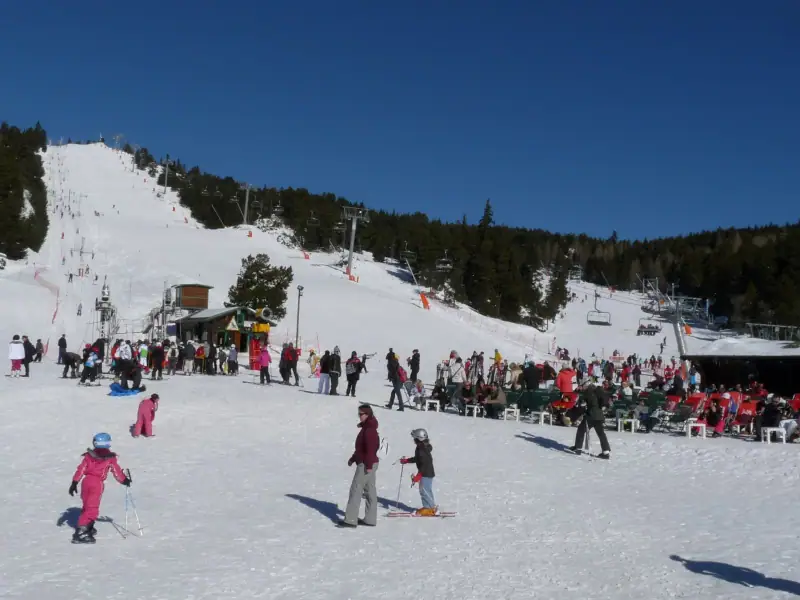
Skiing on a budget in the Pyrenees: lift passes, rentals and smart places to stay
Skiing cheaply in the Pyrenees: presale lift passes, Early Ski, family offers, equipment rental and smart accommodation for the 2026-2027 season.
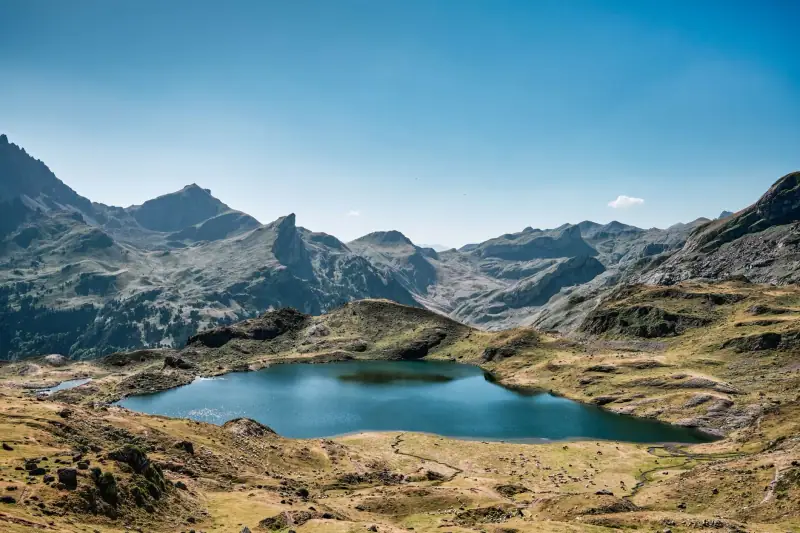
The Pyrenees with kids: stay ideas and activities by age and massif
Wildlife park, caves, easy walks, pools and the Yellow Train: activity ideas with children in the Pyrenees, sorted by age, massif and weather.
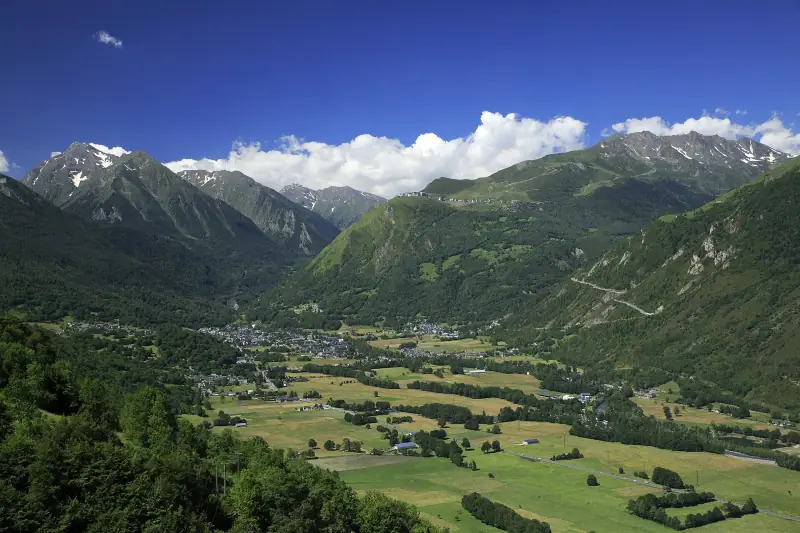
What to see in the Aure valley: Saint-Lary, Néouvielle, Arreau and villages of character
What to see in the Aure valley (Hautes-Pyrénées): Saint-Lary-Soulan, Néouvielle reserve, Arreau, Sarrancolin, Aragnouet and passes.
Ready-made
Pyrenees itineraries
7 days
Hautes-Pyrénées and Ariège in one week by car: is the itinerary doable?
CauteretsBagnères-de-LuchonFoix
Can be adapted in the planner

5 days
5 days in the Hautes-Pyrénées: an itinerary through Lourdes, Cauterets and Gavarnie
CauteretsLuz-Saint-Sauveur
Can be adapted in the planner
4 days
4-day road trip in Ariège and the Cerdagne: Foix, Montségur, Ax-les-Thermes, Font-Romeu
FoixAx-les-ThermesFont-Romeu
Can be adapted in the planner