Itineraries
3 days in Saint-Malo, Cancale and Dinan: an Emerald Coast itinerary
We may earn a commission when you book through links on this page, at no extra cost to you. We don't visit or try the places we cover: we summarize published sources. How we work
Day by day
- Day 1Saint-Malo: ramparts, old town, Grand Bé, sunset
- Day 2Cancale: Port de la Houle oysters, Pointe du Grouin path
- Day 3Dinan: old town, rue du Jerzual, port; return via Dinard
Weather through the year on this route
| Jan | Feb | Mar | Apr | May | Jun | Jul | Aug | Sep | Oct | Nov | Dec | |
|---|---|---|---|---|---|---|---|---|---|---|---|---|
| High °F (°C) | 489 | 4910 | 5211 | 5513 | 5915 | 6418 | 6720 | 6820 | 6519 | 6016 | 5513 | 5010 |
| Low °F (°C) | 426 | 426 | 436 | 468 | 5010 | 5513 | 5815 | 5915 | 5614 | 5312 | 489 | 447 |
Normals 1991–2020 at Saint-Malo and Perros-Guirec: averages over 30 years, not a forecast. Source: NASA POWER (MERRA-2), grid of about 50 km. Figures computed by us in November 2026. Rain is shown only where a weather station confirms the figures.
In short
- Three days cover Saint-Malo (ramparts, old town, beaches), Cancale (oysters, customs officers' path) and Dinan (medieval town, rue du Jerzual).
- Distances are short: Cancale is about 15 km (9 mi) and Dinan about 30 km (19 mi) from Saint-Malo, so the circuit works by car or by train and bus.
- Check tide times every day: they decide access to the Grand Bé, Fort National, beaches and oyster beds.
- The ramparts, beaches, Dinan's old town and the coastal path are free; only some monuments and guided visits charge admission.
Saint-Malo, Cancale and Dinan form a compact triangle on the Emerald Coast, in northern Brittany. In a few dozen kilometers you go from a walled corsair city to an oyster port facing Mont-Saint-Michel Bay, then to a medieval town perched above the Rance. For a first stay, or a long weekend, it is one of the simplest and most rewarding circuits in the region.
This three-day itinerary is designed to be comfortable: one main stop a day, little driving, time for lunch and walking. You will find a plan for each day, the pitfalls to avoid (tides, parking, crowds), budget markers and tips to adapt the program to the weather, the season or your preferences. To choose your dates, see also the guide on when to go to Brittany.
Overview: the itinerary at a glance
Here is the logic of the circuit:
- Day 1: Saint-Malo. Ramparts, old town, beaches and islets, sunset over the sea.
- Day 2: Cancale and the bay. Port de la Houle, oyster tasting, customs officers’ path, Pointe du Grouin.
- Day 3: Dinan and the Rance. Medieval town, rue du Jerzual, river port, return along the Rance valley or via Dinard.
To choose between sleeping in Saint-Malo or Cancale, read the comparison Cancale or Saint-Malo: where to stay. Distances are short: Saint-Malo is about 15 km (9 mi) from Cancale and about 30 km (19 mi) from Dinan. You spend very little time behind the wheel, and the circuit works equally well by car or by combining train and bus.
How to get there
Saint-Malo is served by the TGV from Paris, a trip of about 2 h 15 to 3 h depending on the train. Rennes, about an hour from Saint-Malo by train, is the other classic gateway. If you arrive by car, allow a little over four hours from Paris. The area can also be reached via Rennes or Dinard airports, or through the port of Saint-Malo for travelers from the United Kingdom and the Channel Islands.
Where to stay in Saint-Malo
Hotels inside the walls, guesthouses and apartments near the beaches: compare offers, especially in summer and on long weekends.
Day 1: Saint-Malo, the corsair city
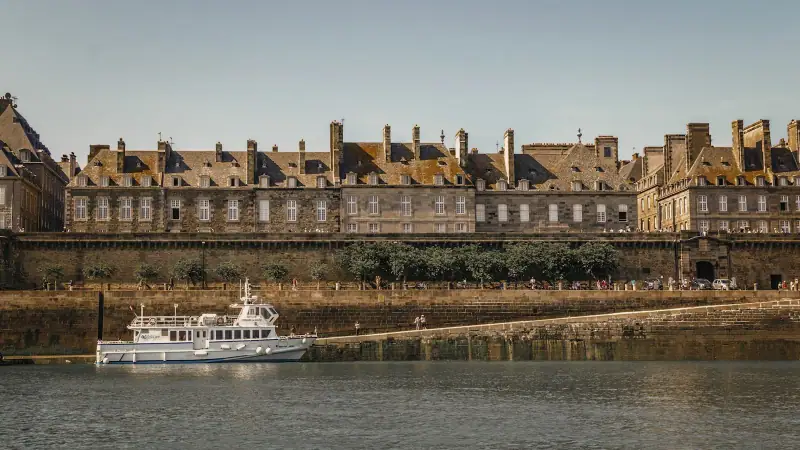
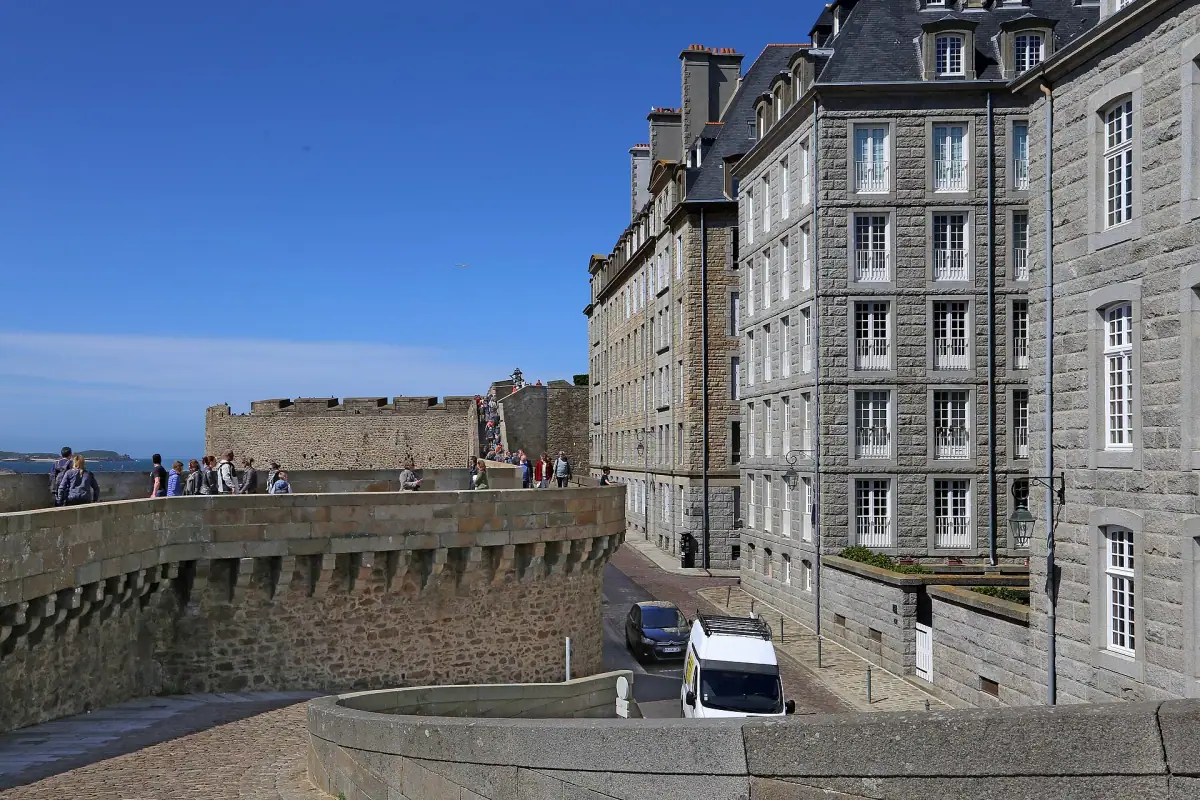
Saint-Malo is the most visited town on the circuit, and for good reasons. Its historic center, the walled town (intra-muros), is ringed by ramparts overlooking both the sea and the slate roofs. Rebuilt after the destruction of 1944, it has regained its original look: gray granite, tall façades, narrow lanes and lively squares.
Morning: the rampart walk
Start early, before the groups arrive. The ramparts form a walk of about 1.8 km (1.1 mi) that takes about an hour at an easy pace. They are free and reached by several staircases. From them you look down in turn on the port, the beaches, the Rance estuary and the islets dotting the bay.
A few tips for the walk:
- Walk in whichever direction you like, but keep the sea in view: the morning light is superb on the east side.
- Bring a windbreaker: the wind is often present on the ramparts, even in summer.
- Watch the tide: at high tide, waves hit the walls, and at low tide a huge stretch of sand appears.
Late morning: the old town
Then go down into the streets inside the walls. You will find shops selling Breton products, biscuit makers, salted-butter caramels, canneries and many tea rooms. Follow your fancy, but keep in mind that the streets nearest the main gates are the busiest. A few steps into the quieter lanes is enough to find a more authentic atmosphere.
Saint-Vincent Cathedral is worth a visit: a mix of Romanesque, Gothic and modern architecture, it holds remarkable contemporary stained glass. Entry is free.
Lunch: crêpes or seafood
For lunch, two very Breton options: a crêperie, or a seafood platter. You will find both in the old town. To choose well between galettes and crêpes, the guide to crêpes and galettes in Brittany explains what makes a good crêperie and how to compose your meal. One general tip: favor restaurants with a short menu that highlights the produce, rather than those displaying photos of the dishes.
Afternoon: beaches, islets and fort
In the afternoon, head down to the beaches. The Sillon beach, several kilometers long, borders the town to the northeast. Bon-Secours beach, at the foot of the ramparts, is more intimate.
At low tide, two classic walks are possible:
- The Grand Bé, a rocky islet reached on foot by a natural causeway. The writer François-René de Chateaubriand, born in Saint-Malo, is buried there. The view of the town is superb.
- Fort National, which can also be reached at low tide across the foreshore. The visit is usually with a guide, according to seasonal hours.
Be careful: the tide comes back fast and the sea surrounds the islets in a short time. Check the times posted at the tourist office or at the beach access points, and come back well before the water returns. If you are short of time or the tide is high, you can settle for a walk along the Sillon.
Evening: sunset on the ramparts
End the day on the ramparts, facing west. The evening light gilds the granite and colors the bay. It is the most photogenic moment in town and one of the most pleasant: the crowd thins, the terraces come alive and the sea takes on coppery shades.
Excursions around Saint-Malo
Guided visits, boat trips and excursions to Mont-Saint-Michel Bay: compare offers and book ahead in high season.
Day 2: Cancale, oysters and the bay
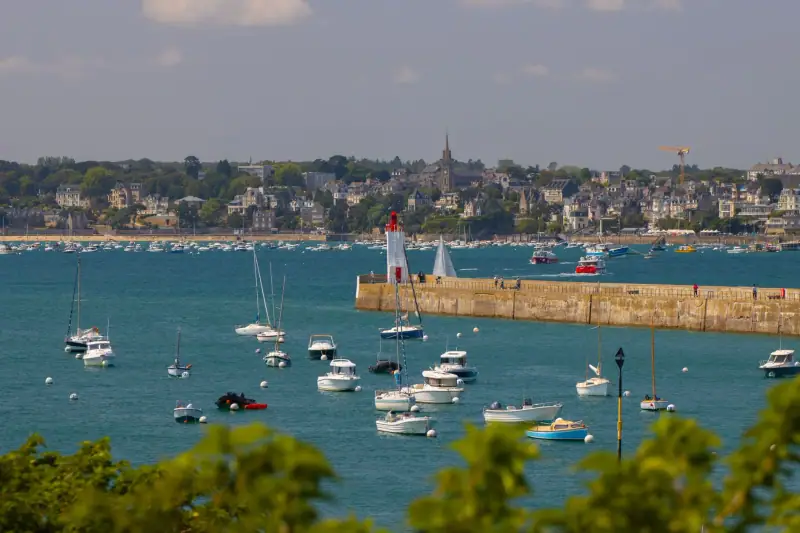
Cancale is a small coastal town about 15 km (9 mi) east of Saint-Malo, known across France for its oysters. It has two parts: the upper town around the church, and the Port de la Houle at the foot of the cliff, where the restaurants, stalls and boats are concentrated.
How to get there
By car, allow about 25 minutes from Saint-Malo outside peak times. Buses also link the two towns, with frequencies that vary by season: check the timetable before you go. In summer, allow more time because of traffic and parking, often full near the port.
Morning: Port de la Houle and the oyster beds
Arrive in late morning if you want to see the oyster market: vendors set up facing the sea offer oysters to eat on the spot, opened to order, often with lemon and sometimes a glass of white wine. It is a simple, local experience, cheap compared with a restaurant.
At low tide, the oyster beds are revealed in the bay. You will see long rows of metal tables stretching across the foreshore. It is an astonishing sight, all the more so as oyster farming is the great local business. Some companies offer guided visits where you discover the trade, oyster farming and a tasting. Ask the tourist office to find a visit suited to your date.
Lunch facing the sea
Cancale is a good place for a seafood lunch: oysters, mussels, shrimp, fish. The restaurants on the port often have a fine view of the bay. Prices vary a lot by type of venue: a seafood platter costs more than a few oysters eaten on the quay. As everywhere, book ahead in summer and on weekends.
If you do not like oysters, don’t worry: the area also offers bouchot mussels, grilled fish, galettes and crêpes.
Afternoon: the customs officers’ path and Pointe du Grouin
To walk off lunch, nothing beats a stroll on the customs officers’ path, which runs along the coast above the sea. From the Port de la Houle, you can follow the coastal path toward Pointe du Grouin, about 5 km (3 mi) from town. The walk offers views of the bay, of Île des Landes and, in clear weather, of Mont-Saint-Michel.
If you prefer not to walk that far, you can drive to the point and settle for a short stroll there. Pointe du Grouin is a protected site and a seabird observation spot: follow the posted instructions and stay on the marked paths.
Variation: a day at Mont-Saint-Michel
If you have a vehicle and a taste for big sights, you can replace this day with an excursion to Mont-Saint-Michel Bay, about an hour’s drive from Saint-Malo. The day is fuller: leave early, check access and visiting hours, and allow walking time on the causeway and in the village. A compromise is to spend the morning in Cancale, then reach the Mont in early afternoon.
Evening: back to Saint-Malo or a night in Cancale
Depending on your accommodation, you can return to Saint-Malo for dinner or stay in Cancale. Sleeping there lets you enjoy the port in peace once the day-trippers have left, and see the evening light on the bay. For dinner, a crêperie or fish restaurant in the upper town makes a change from the Port de la Houle, often livelier.
Day 3: Dinan, the medieval town on the Rance
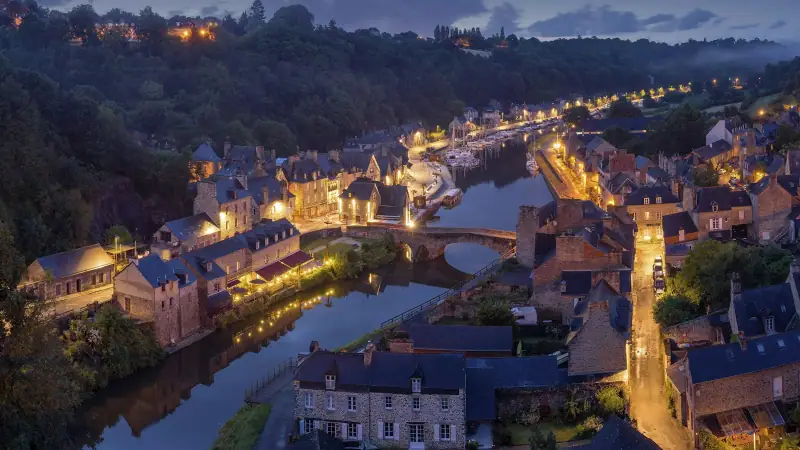
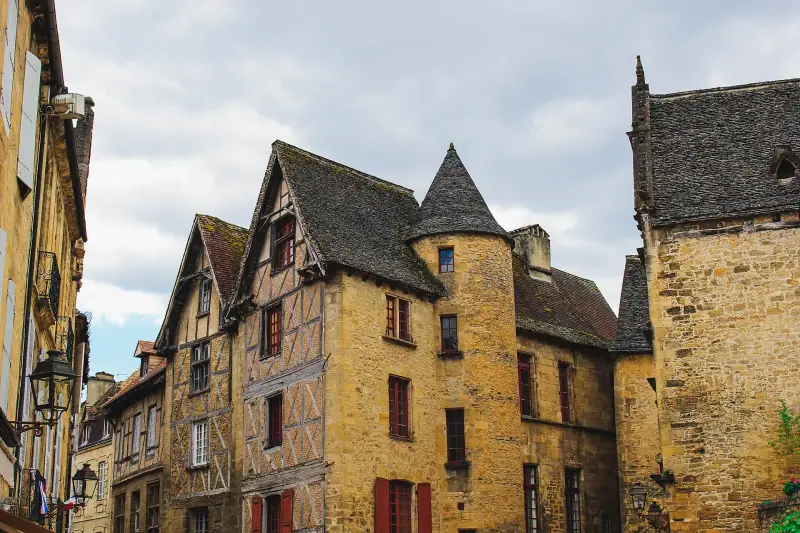
For the third day, change scenery: head for Dinan, about 30 km (19 mi) south of Saint-Malo, roughly 40 minutes by car. Perched on a promontory above the Rance, Dinan is one of the best-preserved medieval towns in Brittany. Half-timbered houses, cobbled lanes, ramparts and an atmosphere from another age: the contrast with the maritime city of the day before is total.
Morning: the old town and the ramparts
Park outside the historic center, in one of the car parks near the ramparts, and walk in. Start with Place des Merciers and Place des Cordeliers, surrounded by half-timbered houses. Then continue to the Basilica of Saint-Sauveur and its gardens, with a fine view of the Rance valley.
Dinan’s ramparts stretch for several kilometers around the center: you can walk part of them, with viewpoints over the valley. The castle, with its keep, houses a museum whose hours vary by season: check the tourist office website before you come.
Rue du Jerzual and the port
Then go down rue du Jerzual, a sloping cobbled street lined with old houses where craftspeople, gallery owners and shops have set up. The descent is easy, the climb back more physical: bring good shoes. At the bottom of the street you reach the river port on the Rance, where the mood changes: barges, terraces and a walk along the water.
Lunch and afternoon
You can have lunch at the port, by the water, or go back up to town for a crêperie or a traditional restaurant. In the afternoon, two options:
- A walk on the Rance towpath, quiet and flat, ideal for extending the day with no effort.
- A return to Saint-Malo via Dinard, the seaside resort on the west bank of the estuary, known for its Belle Époque villas and its Clair de Lune promenade. From Dinard, you can reach Saint-Malo by boat crossing, depending on the season, which gives a fine last view of the ramparts from the sea.
Extra idea: Cap Fréhel
If you are ahead of schedule and have a vehicle, Cap Fréhel is a classic excursion on the coast, about an hour’s drive from Saint-Malo. Its pink sandstone cliffs, rising some 70 m (about 230 ft) above the sea, and its lighthouse make it a spectacular site, especially at sunset. Do not overload the day, though: it is better to make it a separate half day than to squeeze it into the Dinan program.
A night in a medieval town
Sleeping in Dinan lets you enjoy the lanes in peace once the day visitors have left.
Getting around: car, train or bus
This circuit is one of the easiest to do without a car, provided you plan ahead.
- Saint-Malo is visited on foot. The station is about a fifteen-minute walk from the old town.
- Cancale is linked to Saint-Malo by buses whose frequency depends on the season. Check the timetables, especially on Sundays and off peak.
- Dinan is reached by train from Rennes and by bus from Saint-Malo. The station is in the upper town, a short distance from the historic center.
A car gives more freedom for Pointe du Grouin, Cap Fréhel or Mont-Saint-Michel Bay. In summer, plan for parking: favor the large car parks around Saint-Malo’s ramparts, then walk or take a shuttle depending on what is offered. In Dinan, large car parks are found around the historic center.
Budget: what to plan for 3 days
Prices vary a lot with the season, the type of accommodation and your dining preferences. In general:
- Accommodation: this is the biggest and most variable item. Nights inside Saint-Malo’s walls are on average more expensive than in Dinan or on the outskirts. Book early in summer.
- Dining: a galette and a crêpe at a crêperie, or a few oysters on the quay in Cancale, remain affordable options. A seafood restaurant costs noticeably more.
- Transport: train and bus cost little; fuel and parking depend on how you travel.
- Visits: Saint-Malo’s ramparts, the beaches, Dinan’s old town and the customs officers’ path are free. Only some monuments (Dinan castle, Fort National, guided visits) charge admission.
To save money, travel midweek, off peak, and favor lunchtime menus, often better value than dinner.
Practical tips for your stay
- Check the tides every day. They decide access to the Grand Bé, Fort National, the beaches and the oyster beds.
- Pack layers. The weather changes fast, and wind is frequent, even in summer.
- Wear good shoes. Cobblestones in Dinan, ramparts, the customs officers’ path: comfort comes before elegance.
- Book accommodation and restaurants ahead, especially in summer, on weekends and on long weekends.
- Keep a rainy-day plan B: museums, the cathedral, Dinan’s galleries, crêperies and tea rooms are plentiful.
- Respect nature: at Pointe du Grouin and Cap Fréhel, stay on the paths to protect the birds and vegetation.
Adapting the itinerary to your wishes
- With kids: add more beach breaks, swap the long Pointe du Grouin walk for a shorter stroll and choose a boat trip on the Rance.
- As a couple: sleep in Cancale or Dinan for a more intimate setting, and keep time for a sunset over the bay.
- For walkers: lengthen the walk on the customs officers’ path between Cancale and Pointe du Grouin, or plan a half day at Cap Fréhel.
- In bad weather: spend more time in museums, Saint-Malo’s cathedral, Dinan’s shops and crêperies. Drizzle often gives the granite lanes a special charm.
- In winter: enjoy the big tides and storms at Saint-Malo, with nearly empty ramparts. Check opening days, as some businesses close or cut their hours.
In short
In three days, this circuit offers a concentrate of Brittany: the maritime grandeur of Saint-Malo, the gourmet simplicity of Cancale, the medieval beauty of Dinan. It is done without stress, with little driving and plenty of time to walk, taste and look. Choose the right season, book ahead, watch the tide, and you will have every ingredient for a successful stay on the Emerald Coast.
Sources
- Saint-Malo Tourist Office: figures checked November 2026
Frequently asked questions
Are three days enough to see Saint-Malo, Cancale and Dinan?
Yes, it is an ideal length. The three places are close to each other, a few dozen kilometers at most. One day per site lets you visit without rushing, with time for lunch, a walk on the ramparts or the coastal path, and the end of the day.
Do you need a car for this circuit?
It is not essential but it is more flexible. Saint-Malo has a TGV station, Dinan also has a station, and buses link Saint-Malo to Cancale and Dinan. A car mostly simplifies Pointe du Grouin and coastal excursions, but in summer parking inside Saint-Malo's walls is difficult: use the car parks around the ramparts.
Where is the best place to sleep: Saint-Malo, Cancale or Dinan?
Saint-Malo is the most practical base, with the widest choice and the best connections. Cancale suits those who like quiet and seafood, Dinan those who want to sleep in a medieval setting. In all three cases, book early in summer and on long weekends.
How do you make the most of the tides during this stay?
In Saint-Malo, low tide lets you walk to some islets such as the Grand Bé, while high tide gives the spectacle of waves against the ramparts during big tides. Always check the official times for the day and follow the safety instructions: the sea comes back fast.
What is the best time of year for this circuit?
May to September for mild weather and long days, with a preference for May, June and September to avoid the crowds. The itinerary is still very pleasant off season, especially in autumn and winter, for the storms, big tides and lower prices.
Can you add Mont-Saint-Michel to this itinerary?
Yes, by replacing or extending the day devoted to Cancale: Mont-Saint-Michel Bay is about an hour's drive from Saint-Malo. It makes for a denser day, so leave early and check access and visiting hours before you book.
Is this circuit suitable for children?
Very much so. The ramparts, beaches, supervised shore fishing, boats on the Rance and Dinan's lanes appeal to children. Bring shoes suited to cobblestones and keep an eye on the tide on the beaches and ramparts.
More Brittany guides
Keep reading
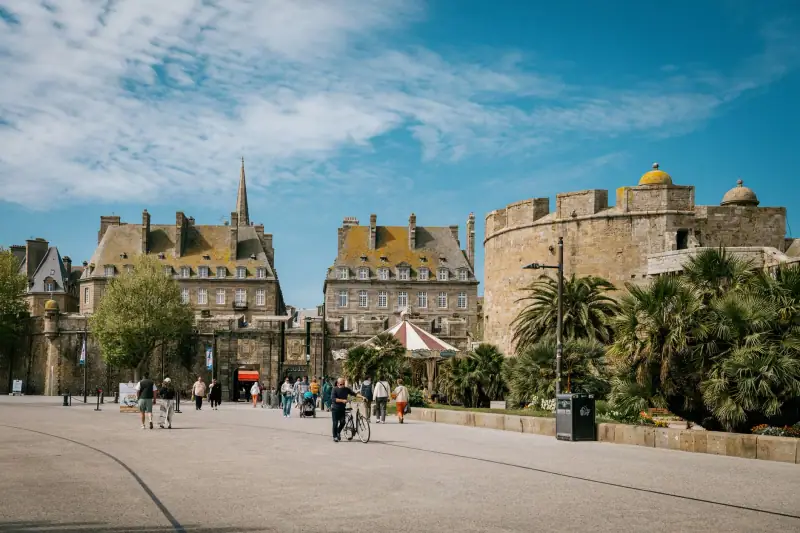
Where to stay in Saint-Malo: neighborhoods and types of accommodation
Where to stay in Saint-Malo? Intra-muros, Sillon, Paramé, Saint-Servan, Rothéneuf: compare areas and types of lodging for your budget and stay.
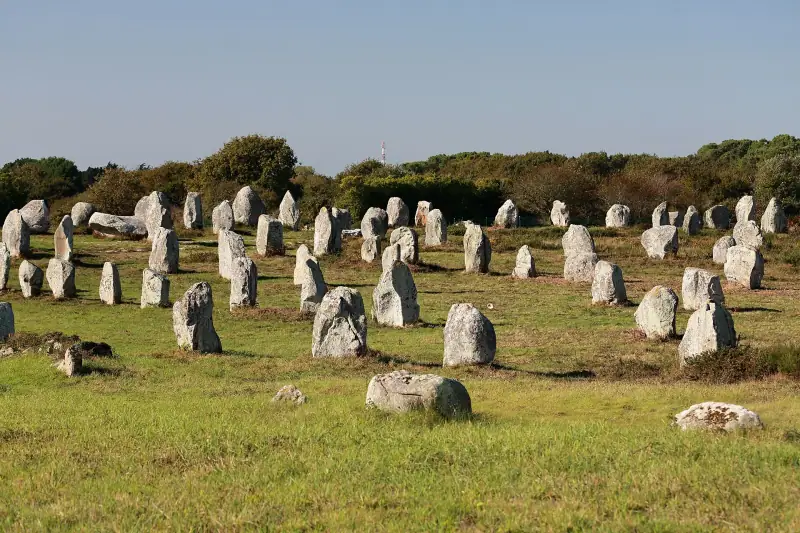
Carnac alignments: can you walk among the standing stones, and at what price?
Carnac alignments: free access October to March, €13 guided visit the rest of the year, rules, parking and dogs. What to know before you go.
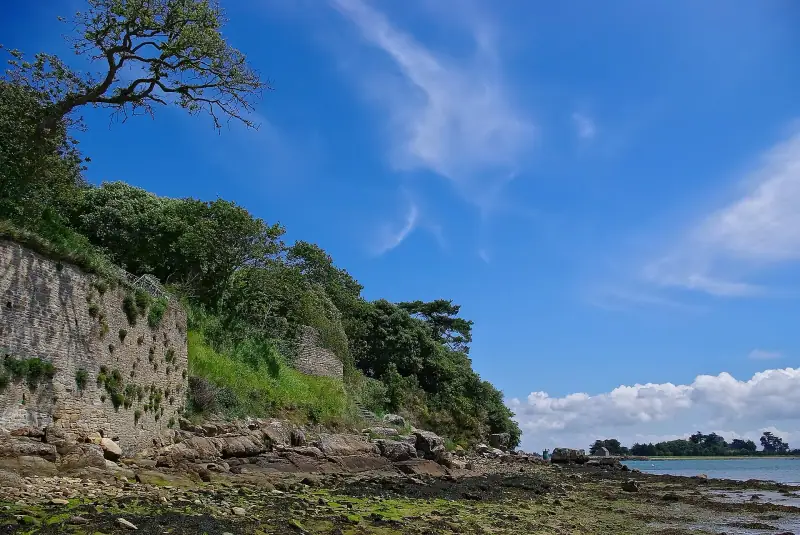
What to see in Morbihan: 12 highlights between gulf, megaliths and islands
What to see in Morbihan? The gulf, Carnac's alignments, Belle-Île, Quiberon, Josselin, Rochefort-en-Terre: the highlights and a plan to link them.
Ready-made
Brittany itineraries

7 days
One week in Brittany without a car: a day-by-day itinerary by train and bus
RennesSaint-MaloQuimperVannes
7 days
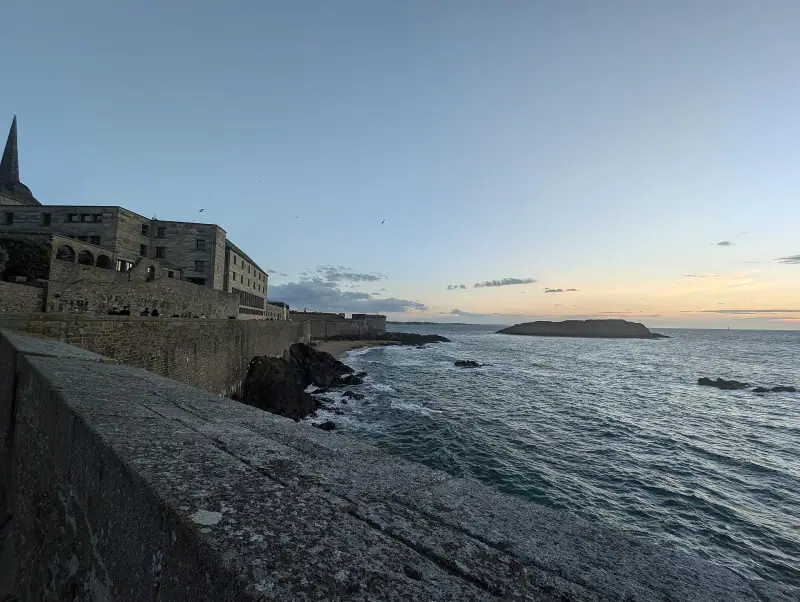
Brittany road trip in 7 days: from Saint-Malo to the Gulf of Morbihan
A 7-day coastal road trip in Brittany: Saint-Malo, Pink Granite Coast, Crozon peninsula, Quimper, Carnac and Vannes. Stops, distances, budget and tips.