What to see
Visiting Montignac-Lascaux: What to See and Do on the Vézère
We may earn a commission when you book through links on this page, at no extra cost to you. We don't visit or try the places we cover: we summarize published sources. How we work
In short
- The original Lascaux cave is closed to the public; you visit Lascaux IV, the full replica that opened in December 2016. Book ahead in summer and school-holiday periods.
- Allow half a day for the old town, quays and bridge, and half a day more for Lascaux IV; two days if you add the Regourdou, Losse château or a canoe trip.
- Markets of Périgord products take place on Wednesday and Saturday mornings, according to the tourist office.
- Montignac is about 26 km (16 mi) by road north of Sarlat; a car is the simplest way to get there and around the valley.
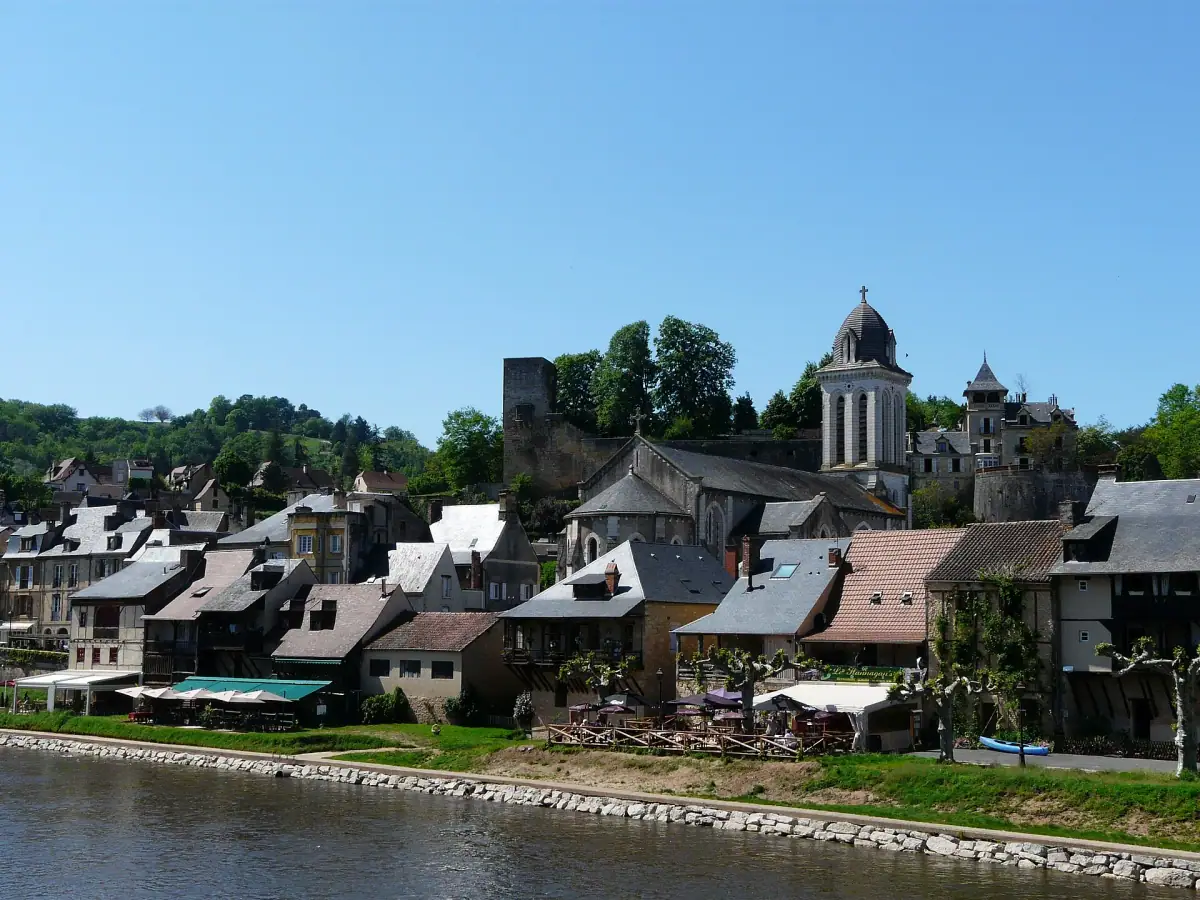
Many visitors come to Montignac-Lascaux for one reason: to see Lascaux. They park the car, visit the replica cave and leave without setting foot in the town. That is a pity. Tucked along the Vézère, Montignac-Lascaux has an appealing medieval center, stilt and half-timbered houses, an old stone bridge, lively markets and trails that climb into the neighboring hills. It is also an excellent base for exploring the Vézère Valley, in the heart of the Black Périgord.
This guide focuses on the town and its immediate surroundings: what to see, what to do, how to organize a day or two. For the wider prehistoric context, with Les Eyzies and the authentic decorated caves, our article on Lascaux and the Vézère Valley is the ideal complement. Hours, prices and opening days change with the seasons: check them with the tourist office or the sites before you go.
Montignac-Lascaux in brief: a small town on the Vézère
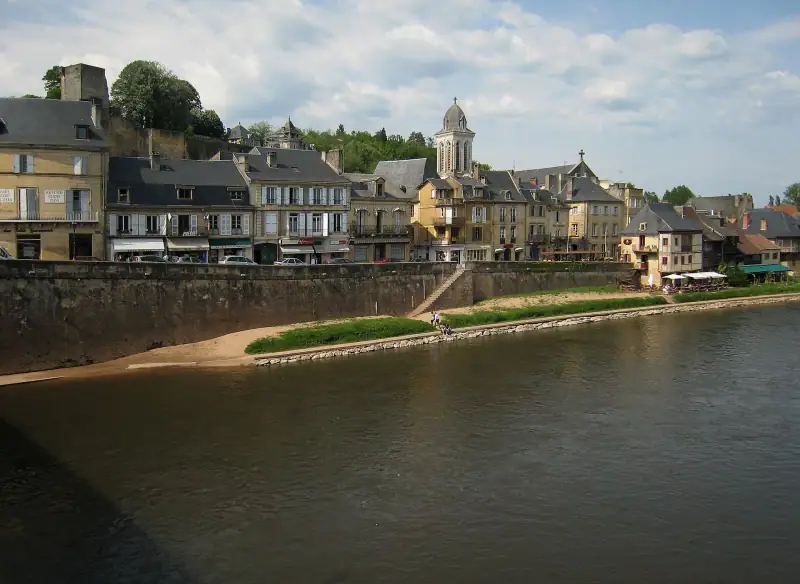
Montignac-Lascaux has a little under 3,000 inhabitants. It stretches along both banks of the Vézère, north of Sarlat-la-Canéda (about 19 km / 12 mi as the crow flies, twenty to thirty minutes by road). Once simply called Montignac, the town added Lascaux to its name to assert its link with the famous cave, discovered on its territory in September 1940.
The town is modest, calm, and can be visited without stress. It lacks Sarlat’s crowds, which makes it a welcome stop for those who like to take their time. Its charm lies in its relationship with the river: the quays, the bridge and the facades reflected in the water make a very photogenic picture, especially at the start or end of the day.
To place the town in the whole department, our complete Dordogne guide gives the geographic landmarks of the four Périgords.
The old bridge and the Vézère quays
The best starting point is the bridge over the Vézère, which dates from 1766-1767 according to historical sources. From its approaches you take in the river, the houses lining it and the bell tower above the roofs in a single glance. It is the town’s most famous view, the one on postcards.
On either side of the bridge, the quays can be walked. You stroll at the pace of the water, between stone facades, small gardens and terraces. It is a pleasant place for a coffee break or a midday picnic, especially after a stop at the market. The banks are also a good spot to watch river wildlife: ducks, herons and fish are often surprised by patient walkers.
A few tips for enjoying the quays:
- Come early in the morning: the light is soft, the town is calm and the reflections in the water are superb.
- Wear good shoes: the cobbles are sometimes uneven and slippery in wet weather.
- Bring a camera: the bridge and the riverside houses are the town’s classic shots.
The medieval center: stilts, half-timbering and lanes
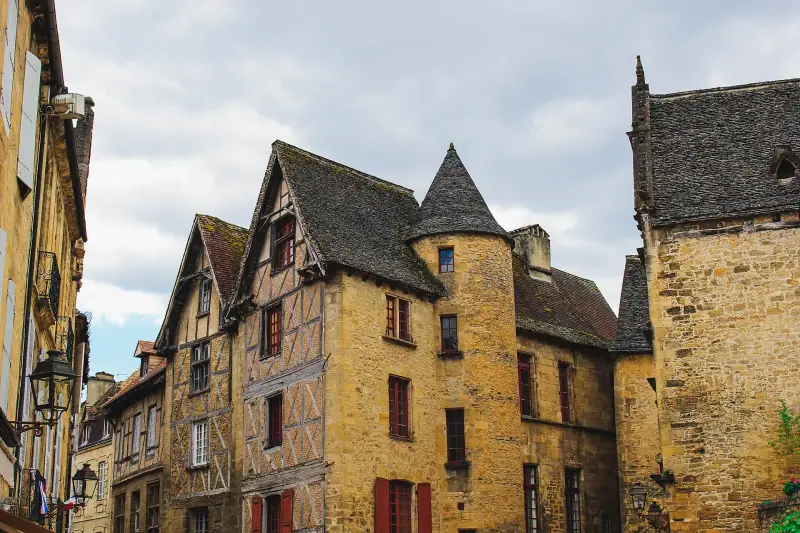
Behind the quays opens a maze of small streets. According to the tourist office, you find fine houses of the 14th, 15th and 16th centuries, half-timbered houses and houses on stilts, as well as fountains and wash houses around the bends of the lanes. The stilt houses, whose projecting upper floors overhang the river, are Montignac’s best-known image.
The old town is small: an hour of strolling is enough to go around it. But it is precisely its scale that appeals. You walk without a map, look up at the beams, the overhangs and the mullioned windows, follow a lane that opens onto a wash house. There is no big monument to tick off, just the atmosphere of a riverside town that has kept its old fabric.
The Château de Montignac, former fief of the counts of Périgord, was destroyed in the 19th century: only one tower remains, a reminder of the town’s strategic role in the Middle Ages. It still overlooks the center and helps explain the town’s position between river and hillside.
The Saint-Pierre-ès-Liens church also deserves a look. Its bell tower has been listed as a historic monument since 1942, and the building holds a painting by the Spanish painter Juan Sánchez Cotán. A discreet entry, but a nice moment of calm in the middle of the visit.
The tourist office is on Place Bertran de Born, in the former 14th-century Saint-Jean hospital: it is a good habit to stop there first for the map, the day’s hours and walk ideas.
Stay in Montignac-Lascaux
Hotels, B&Bs and cottages in town or in the Vézère Valley: compare availability for your dates.
Lascaux IV: the essential visit
This is the reason for most stays in Montignac-Lascaux. The original cave was discovered in September 1940 by a group of young people, including Marcel Ravidat. Opened to the public in 1948, it was closed in 1963: the visitor numbers and the alterations they caused threatened the paintings. Since then the cave has been strictly protected.
Several reproductions have followed one another. Lascaux IV, the International Center for Cave Art, opened in December 2016. It reproduces the cave and its paintings in a complete and immersive way, paintings more than 17,000 years old according to the tourist office (some recent studies suggest slightly older dates). You see aurochs, horses, deer, ibex and bison, among a set of nearly 1,900 painted and engraved depictions.
What strikes you is the precision: the walls, the relief and the coolness of the hall have been carefully reconstructed. The visit comes with exhibition spaces that explain how prehistoric artists worked, with what pigments and tools, and what researchers know today about their intentions.
To prepare this stop well:
- Book ahead in high season, since slots go quickly.
- Allow about half a day, counting the route and the exhibition.
- Dress accordingly: the temperature is cool in the replica of the cave.
- Check hours and prices on the official site before you come.
The details of the discovery, the cave’s history and the other decorated sites of the valley are in our guide to Lascaux and the Vézère.
The Regourdou: Neanderthals and brown bears
Near Lascaux, the Regourdou site offers a more intimate visit. Listed as a historic monument since 1959, it is associated with Neanderthal prehistory. The tourist office also presents it for its brown bears, which live in semi-freedom in the site’s enclosure. It is an original complement to Lascaux IV: more modest, less sophisticated, but very popular with families and prehistory buffs.
The visit combines two worlds: the deposit and its history, and watching the bears. It suits children well, who find a living counterpoint to the silent world of caves. Ask about opening periods, since they depend on the season.
The Regourdou is a few minutes from the center. Even if you are not passionate about prehistory, this stop adds variety to the day and shows that Montignac is not just one cave.
Tours and excursions around Lascaux
Guided tours, excursions in the Vézère Valley and activities in the Black Périgord: compare the offers for your dates.
The Vézère: canoe, swimming and walks along the water
The river is not just scenery. Montignac is one of the possible starting points for a canoe descent of the Vézère, a very popular summer activity. The Vézère is a peaceful river, suited to families and beginners, winding between cliffs, meadows and forests. Depending on the route chosen, the descent shows landscapes the road does not, and you glimpse rock shelters and stone villages along the way.
The tourist office also points out developed swimming areas for the warm days. Ask locally about the state of the river and the safety instructions before getting in the water: level and current vary with the seasons and the weather.
If you are hesitating between several rivers, our guide to canoeing the Dordogne compares the descents and gives preparation tips. Book in summer: operators are in high demand in July and August.
Hiking around Montignac
For those who prefer to walk, the hills around the town offer several loops. The Saladie loop, listed by the departmental tourism board, covers about 14.8 km (9.2 mi), counting 4 h 30 of walking, at a medium level. It goes around the Lascaux hill, passes a few hundred meters from Lascaux IV and near the Regourdou, then climbs to a viewpoint over Montignac and the Vézère Valley.
It is a different way to discover the area: you understand the topography, the oak and chestnut forest, and the contrast between wooded hills and valley floor. The trail is open to hikers, mountain bikers and riders, and dogs are allowed on a leash.
A few tips if you set out walking:
- Take water and a snack: there are few supply points on the loop.
- Start in the morning in summer, to avoid the heat.
- Ask the tourist office for the route sheet, which gives the waymarking and variants.
- Wear walking shoes: paths can be damp and stony.
The Château de Losse and the surroundings
A few minutes from Montignac, in the commune of Thonac, the Château de Losse is a fine 16th-century Renaissance château overlooking the Vézère, surrounded by gardens. It is an excellent stop for half a day, to combine with the town. You see the architecture of a Périgord manor and a fine view of the river.
Other tourist office addresses are worth a detour for those who like local products, such as a family distillery that makes gin and pastis from regional plants. An original way to bring back a souvenir of the region.
Beyond Montignac, the Vézère Valley concentrates villages and major sites. Les Eyzies, the “world capital of prehistory,” is about half an hour by road and has a chapter in our guide to Lascaux and the Vézère. Sarlat-la-Canéda, about 26 km (16 mi) by road, is the big medieval town of the area: our guide to visiting Sarlat-la-Canéda helps you organize that stop.
Markets, festivals and local life
Montignac is a living town, not a stage set. According to the tourist office, markets of Périgord products are held on Wednesday and Saturday mornings. You will find walnuts, seasonal fruit, cheeses, cured meats and preserves. It is the best place to put together a picnic or bring back a few specialties.
The town also hosts several cultural events through the year, such as the Cliclac photography festival, the Cultures aux cœurs festival in late July and early August, and Documen’Terre in November. Dates and programs change from one edition to the next: check the tourist office calendar before planning your stay.
Montignac finally has a feature that will delight drawing fans: a manufacturer of soft pastels, presented as the oldest soft pastel brand in the world. A good pretext for an original souvenir, tied to art and prehistory.
What to eat in Montignac-Lascaux
The table in Montignac is that of the Black Périgord: duck confit, magret, Périgord salad, porcini in season, walnuts and walnut pastries. No specific address is given here, since menus and hours change often. The simplest is to compare the menus posted in the streets of the center and favor short menus, which generally signal seasonal products.
A few pointers for eating better:
- Book in the evening in summer and on weekends, especially for terraces with a river view.
- Make use of the markets for a quick lunch by the Vézère.
- Taste the walnut products: oil, cakes, liqueurs.
- Ask for the dishes of the day: they are often truer to local cooking.
To know what to taste and how to choose, our guide to Périgord food specialties covers the dishes, products and good habits.
A longer stay in the Black Périgord
Cottages and holiday homes between the Vézère and Sarlat: a comfortable base to explore villages, caves and châteaux.
A sample plan for one day in Montignac
Here is a balanced suggestion, to adapt to the season and your pace:
- Early morning: stop at the tourist office, then walk the quays and the bridge, before the bulk of visitors arrive.
- Late morning: explore the medieval center, stilt houses, wash houses and the church. If it is a Wednesday or Saturday, go through the market.
- Midday: lunch on a terrace or a picnic by the Vézère.
- Early afternoon: visit Lascaux IV, on a slot booked in advance.
- Late afternoon: depending on your wishes, the Regourdou for families, or a short walking loop to overlook the town.
- Evening: dinner in town, or back to Sarlat.
With two days, spend the second on Losse château, a canoe descent or a trip to Les Eyzies. Our 3-day Dordogne itinerary shows how to fit this stop into a wider stay.
Planning your visit: access, parking, season
Getting there. Montignac-Lascaux is in the Black Périgord, north of Sarlat, about 26 km (16 mi) by road. A car is the most practical way, especially since the valley’s sites are scattered. Our guide to renting a car in the Dordogne covers the options.
Parking. In high season, spaces near the center fill up fast. Arrive early, use the signed car parks and finish on foot: the town is small and easy to walk.
Duration. Half a day for the town, a day with Lascaux IV, two days for the valley.
Season. Spring and early fall are the most pleasant periods: mild temperatures, golden light, fewer people. Summer is lively but very busy. Our article on when to go to the Dordogne helps you choose your dates.
Lodging. Montignac lets you sleep in a quiet spot close to Lascaux. To compare with the big town of the area, see our guide to where to stay in Sarlat-la-Canéda.
Budget. The town and quays are free; allow for the Lascaux IV ticket, other visits, meals and canoe rental. Our Dordogne budget guide gives pointers.
Practical tips for your stay
- Book Lascaux IV ahead to avoid bad surprises in high season.
- Do not limit the visit to the cave: the town deserves at least a few hours.
- Stop at the tourist office for the map, hours and walk ideas.
- Bring a jacket: the replica cave is cool, even in midsummer.
- Plan for the weather: in rain, favor Lascaux IV, the Regourdou and museums; the quays and trails are nicer in dry weather.
- Respect residents: the medieval lanes are lived in, speak softly in the evening.
Who Montignac-Lascaux suits
Montignac-Lascaux appeals to prehistory enthusiasts, families, lovers of small towns with character and those who prefer a quiet stay to Sarlat’s bustle. It suits less those looking for lively nightlife or grand monuments: the town is worth it for its atmosphere, its river and its position.
In short, do not rush through. Half a day in town, Lascaux IV, a detour to the Regourdou or the Château de Losse: that makes a complete stay, a short distance from the biggest sites of the Vézère Valley.
Frequently asked questions
How long do you need to visit Montignac-Lascaux?
Allow half a day for the old town, quays and bridge, and half a day more for Lascaux IV. To add the Regourdou, Losse château or a canoe trip, plan two days in all. The tourist office recommends a full day for Lascaux and the town, and two to three days for the valley.
Can you visit the real Lascaux cave at Montignac?
No. The original cave is closed to the public for its conservation. You visit Lascaux IV, a complete facsimile opened in 2016, which reproduces the cave and its paintings. The experience is very faithful and comes with an interpretation center on cave art.
Where is Montignac-Lascaux and how do you get there?
The town is in the Vézère Valley, in the Black Périgord, north of Sarlat-la-Canéda (about 19 km / 12 mi as the crow flies, twenty to thirty minutes by road). A car is the simplest way to get there and then to get around the valley, where public transport is rare.
What day is the Montignac market?
According to the tourist office, markets of Périgord products are held on Wednesday and Saturday mornings. Days and hours may change with the season: check before you come.
What is there to do in Montignac-Lascaux besides Lascaux?
Stroll the medieval center and the quays of the Vézère, spot the stilt and half-timbered houses, discover the prehistoric Regourdou site, visit Losse château at Thonac, walk the trails around the town or canoe down the Vézère.
Is Montignac-Lascaux suitable for children?
Yes. Lascaux IV offers a route designed for all audiences, the Regourdou site interests younger visitors with its brown bears, and the Vézère lends itself to walks by the water. Check access conditions and recommended ages on the official sites.
Do you need to book Lascaux IV in advance?
It is strongly advised in summer and during school-holiday periods, since slots fill up. Book your ticket on the official site and check prices and hours, which change by season.
More Dordogne guides
Keep reading
Visiting Sarlat-la-Canéda: What to See and Do in the Medieval Town
Visiting Sarlat-la-Canéda: cathedral, Place des Oies, medieval lanes, markets, Lanterne des Morts and day trips. A guide to plan your visit well.
What to See in the White Périgord: Périgueux, the Isle Valley, Truffles and Villages
What to see in the White Périgord: Périgueux, truffles at Sorges, Saint-Astier, Neuvic, Mussidan and Montpon, for a quiet and authentic stay.
Visiting Domme: What to See and Do in the Hilltop Bastide of the Black Périgord
Visiting Domme: Porte des Tours, Templar graffiti, cave, Barre viewpoint, covered market and Thursday market. A guide to plan your Black Périgord visit.
Ready-made
Dordogne itineraries
7 days
One Week in the Dordogne: A Day-by-Day Itinerary
Sarlat-la-CanédaBrantômeBergerac
5 days
Dordogne in 5 Days with Kids: Stops, Kilometers and a Realistic Pace
Dordogne in 5 days with kids: an itinerary from Sarlat with distances, drive times, breaks and suitable activities, without overloaded days.
Can be adapted in the planner
3 days
3-Day Dordogne Itinerary: Sarlat, the Vézère and Châteaux
What to do in 3 days in the Dordogne? A day-by-day itinerary around Sarlat: Lascaux, the Vézère Valley, châteaux, villages and practical tips.
Can be adapted in the planner