Itineraries
Basque coast, Douro and Porto in 14 days: a loop from Bilbao
We may earn a commission when you book through links on this page, at no extra cost to you. We don't visit or try the places we cover: we summarize published sources. How we work
Day by day
- Days 1-2San Sebastián: old town, La Concha bay, pintxos
- Days 3-4Biarritz, Bayonne, Espelette and La Rhune
- Day 5Back into Spain, Burgos cathedral
- Days 6-7Long drive to Portugal, Pinhão and the Douro
- Days 8-10Porto: Ribeira, cellars, Foz do Douro
- Days 11-12Back into Spain, Salamanca
- Days 13-14Bilbao and Guggenheim, fly from BIO
Where to sleep
- San Sebastián2 nights
- Biarritz2 nights
- Burgos1 night
- Pinhão2 nights
- Porto3 nights
- Salamanca2 nights
- Bilbao1 night
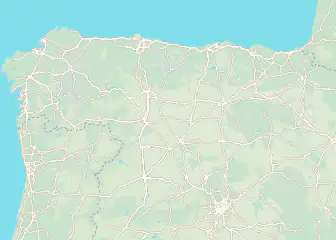
Opens the trip planner with these stops and nights already filled in. Add a stop, drop one or change the nights.
Weather through the year on this route
| Jan | Feb | Mar | Apr | May | Jun | Jul | Aug | Sep | Oct | Nov | Dec | |
|---|---|---|---|---|---|---|---|---|---|---|---|---|
| High °F (°C) | 5010 | 5211 | 5714 | 6016 | 6619 | 7323 | 7926 | 8027 | 7423 | 6619 | 5714 | 5211 |
| Low °F (°C) | 394 | 394 | 426 | 457 | 5110 | 5613 | 6015 | 6116 | 5814 | 5211 | 457 | 415 |
Normals 1991–2020 at San Sebastián, Biarritz, Burgos, Pinhão, Porto, Salamanca and Bilbao: averages over 30 years, not a forecast. Source: NASA POWER (MERRA-2), grid of about 50 km. Figures computed by us in November 2026. Rain is shown only where a weather station confirms the figures.
In short
- A 14-day loop from and back to Bilbao Airport (BIO): San Sebastián, Biarritz, Burgos, Pinhão, Porto, Salamanca and Bilbao. Three countries, four border crossings, no one-way fee.
- Longest drive: Burgos to Pinhão, 5 h 05, 442 km (275 mi), on day 6. Next: Salamanca to Bilbao, 4 h 25, and Porto to Salamanca, 3 h 55.
- Tell the rental company about Spain, France and Portugal before you book. Portugal's electronic tolls need a plan if the car is rented in Spain.
- Sixt Spain lists a €950 (~$1,102) one-way fee for a car returned in Portugal; the loop avoids it.
This 14-day loop starts and ends at Bilbao Airport (BIO) and runs through three countries: Spain, France and Portugal. It suits travelers who want the Basque coast on both sides of the border, then a long drive west to the Douro vineyards and Porto, and a return through Castile. You pick up one rental car and keep it throughout, which is the main reason the loop is built this way.
The driving is uneven. Most of the first week is short hops of under 1 h 15, then day 6 is a long one: Burgos to Pinhão takes about 5 h 05 (442 km / 275 mi). Two more days run close to four hours. Plan those days with early starts and keep the afternoons light.
The route at a glance
| Days | Base | Nights | Drive from previous base |
|---|---|---|---|
| 1-2 | San Sebastián | 2 | From Bilbao Airport (BIO): about 1 h 15, 99 km (62 mi) |
| 3-4 | Biarritz (France) | 2 | About 40 min, 50 km (31 mi) |
| 5 | Burgos | 1 | About 2 h 55, 260 km (162 mi) |
| 6-7 | Pinhão (Portugal) | 2 | About 5 h 05, 442 km (275 mi) |
| 8-10 | Porto | 3 | About 1 h 35, 124 km (77 mi) |
| 11-12 | Salamanca (Spain) | 2 | About 3 h 55, 352 km (219 mi) |
| 13 | Bilbao | 1 | About 4 h 25, 396 km (246 mi) |
| 14 | Bilbao Airport (BIO) | - | About 10 min, 8 km (5 mi) |
Compare rental companies in Bilbao
When you compare, tick or ask for the cross-border option and list all three countries: Spain, France and Portugal.
Day by day
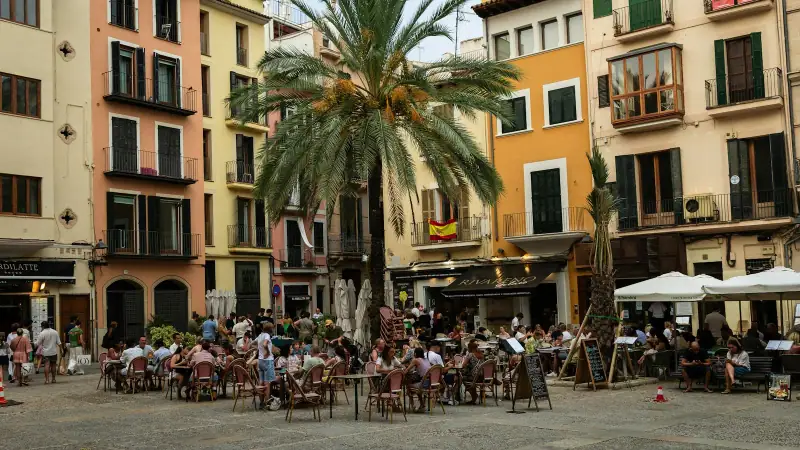
Days 1-2: San Sebastián
Pick up the car at Bilbao Airport and drive east to San Sebastián, about 1 h 15 (99 km / 62 mi). Parking in the center is limited, regulated and paid, so use an underground public car park near the old town or the beach and leave the car there.
On day 1 or 2, spend a morning in the Parte Vieja, the old town at the foot of Mount Urgull: the Plaza de la Constitución, the Basilica of Santa Maria del Coro and the fishing port. Climb Mount Urgull in late morning for the view over the bay. At midday, go bar to bar for pintxos, tasting one or two at each stop and asking how payment works. In the afternoon, walk the white-balustrade promenade of La Concha bay, or take the funicular up Mount Igueldo. End the day in Gros, near Zurriola beach and the Kursaal. Our San Sebastián in one day guide has the full plan. Meal times are later in Spain: lunch around 2 pm, dinner from 9 pm.
For a different day, the guide to the Spanish Basque Country describes Getaria and Zarautz, both less than 30 km (19 mi) from the city. Hotels in San Sebastián.
Days 3-4: Biarritz and the French Basque Country
On day 3, drive to Biarritz, about 40 min (50 km / 31 mi). You cross from Spain into France at Irun and Hendaye, over the Bidasoa. The A63 between Biarritz and the Spanish border is a toll motorway with barriers.
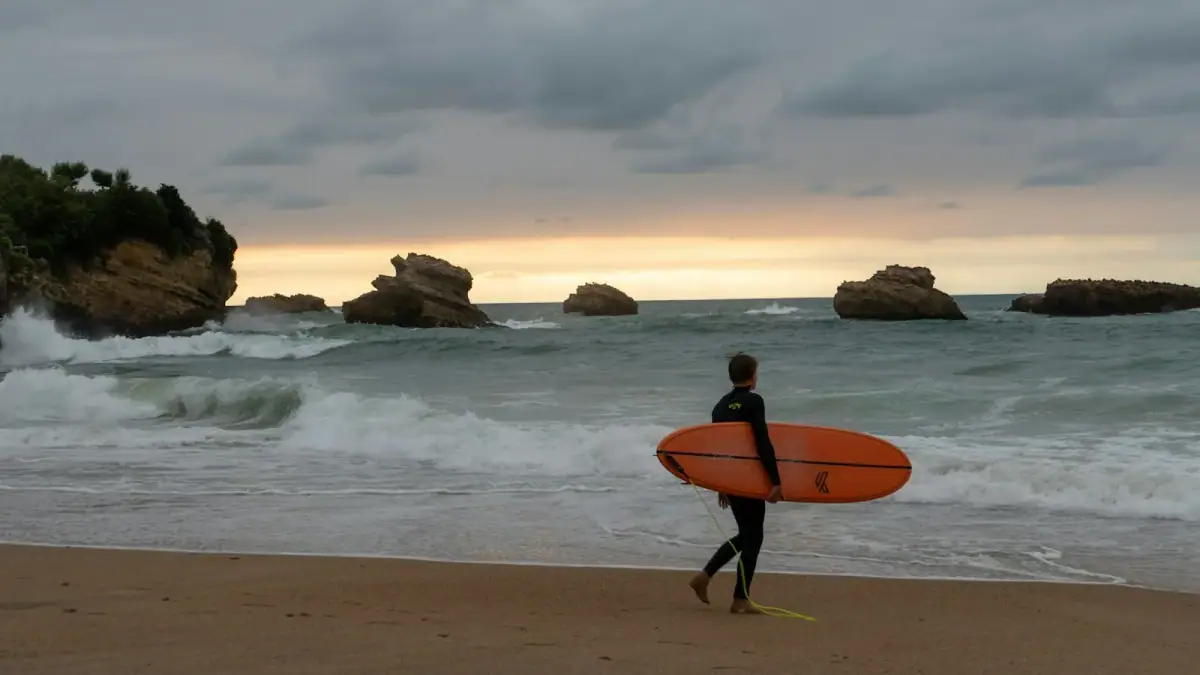
Biarritz is compact. Start at the Grande Plage, cross the footbridge to the Rocher de la Vierge, walk the Atalaye plateau and the Port-Vieux, then finish at the Côte des Basques for sunset. Check the tide times: the beach is much narrower at high tide. Our Biarritz guide gives a one- and two-day schedule, and surfing in Biarritz covers schools for beginners. The Cité de l’Océan is the rainy-day option.
Day 4 can go inland or to the nearby towns. Bayonne is about 8 km (5 mi) away, with Sainte-Marie Cathedral, Petit Bayonne and chocolate (visit Bayonne). Espelette is about 25 km (16 mi) from Biarritz, and La Rhune, at about 900 m (2,950 ft), can be reached by cog train from the Col de Saint-Ignace; skip it if the summit is in cloud. See La Rhune by cog train and the 3 days in the Basque Country itinerary. Hotels in Biarritz.
Day 5: Burgos
Drive back across the border to Burgos, about 2 h 55 (260 km / 162 mi). The A63 toll applies again on the French side. Burgos is known for its Gothic cathedral, a UNESCO World Heritage Site with openwork spires and richly decorated chapels. The city is tied to the legend of El Cid and is a major stage on the Camino de Santiago, so you will see walkers with pilgrim shells. Walk by the Arlanzón river and through the pedestrian streets lined with tapas bars. Burgos sits at altitude and can be cold in winter (Madrid and Castile guide). Keep the evening easy: tomorrow is the longest drive. Hotels in Burgos.
Days 6-7: Pinhão and the Douro Valley
Day 6 is the long one: Burgos to Pinhão, about 5 h 05 (442 km / 275 mi), crossing from Spain into Portugal along the way. Leave early and plan a lunch stop. Our guides do not cover the road between Burgos and the Douro, so we describe no stops on it.
Pinhão is the heart of the vineyard: a small riverside town with a bridge, terraces and a small port where boats leave. Its station has blue and white azulejo panels showing harvest scenes, free to see. Book early for September and October, when quinta lodging fills with the harvest.
On day 7, visit a wine estate (a quinta) for a tour and tasting, and book ahead. The valley roads are narrow, winding and steep, so choose a designated driver who will not taste, or keep to small tastings. In the afternoon, take a Douro cruise from Pinhão or Régua, from about one hour to half a day. Peso da Régua, about 30 km (19 mi) away, has the Museu do Douro, and the São Leonardo de Galafura viewpoint is about half an hour from Régua. Details are in the 2-day Douro guide. Hotels in Pinhão.
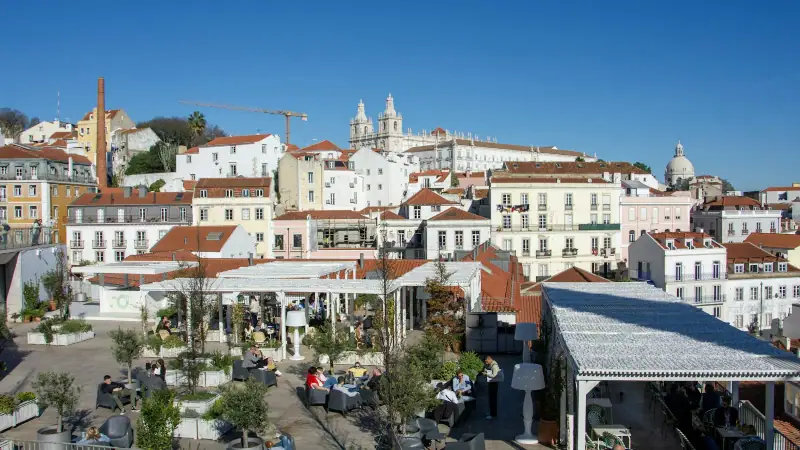
Days 8-10: Porto
Drive to Porto, about 1 h 35 (124 km / 77 mi). The city is hilly and parking is complicated, so our guide advises against driving in town; leave the car at the hotel or in a car park and walk, or use the metro, tram or funicular.
Day 8: São Bento station and its azulejo hall, the Sé cathedral, the Ribeira and the Dom Luís I Bridge late in the day. Day 9: the Clérigos Tower, Livraria Lello (arrive at opening or book ahead), the Palácio da Bolsa (guided time slots), then the port cellars in Vila Nova de Gaia. Day 10 can be slower: Foz do Douro at the river mouth, with its promenade, lighthouse and fort, and dinner in Matosinhos, known for grilled fish. If you want a longer drive, Guimarães is about 55 km (34 mi) away and Braga about 50 km (31 mi) (Porto and the Douro guide). The full plan is in Porto in 3 days. Hotels in Porto and activities in Porto.
Days 11-12: Salamanca
Drive from Porto to Salamanca, about 3 h 55 (352 km / 219 mi), crossing from Portugal back into Spain. Salamanca is a golden-stone university city with a UNESCO-listed center. Its Baroque Plaza Mayor is often cited among the most harmonious in Spain. The university facade carries fine carvings, including a small frog that visitors look for, and the old and new cathedrals are joined and visited together. The city is lively in the evening thanks to its students. Our guides describe nothing else around it, so use the second day to see the sights at a slow pace. Summers are very hot on the plateau. See Madrid and Castile. Hotels in Salamanca.
Day 13: Bilbao
Salamanca to Bilbao is about 4 h 25 (396 km / 246 mi). Bilbao reinvented itself after the Guggenheim Museum opened in 1997; the Frank Gehry building and the outdoor works in front of it can be seen even without going in. Visit the Casco Viejo (the Siete Calles), with Santiago Cathedral, the Plaza Nueva and many pintxos bars. Other options are the Fine Arts Museum, the Vizcaya Bridge (a UNESCO site) and the Artxanda funicular for a view of the city. Check the museum’s website for hours and fares. See northern Spain. Hotels in Bilbao.
Day 14: Bilbao Airport
The airport is about 10 min (8 km / 5 mi) from Bilbao. Return the car and fly home.
Crossing the borders
The loop has four crossings, all inside the Schengen area. Day 3: Spain to France at Irun and Hendaye. Day 5: France back to Spain, the same crossing. Day 6: Spain to Portugal on the Burgos to Pinhão drive. Day 11: Portugal to Spain on the way to Salamanca. Spain-France and Spain-Portugal are internal Schengen borders: no routine checks, you just drive across. Spain, Portugal and France all use the euro. They are EU countries, so no Green Card and no border insurance is needed on this route. The rental company’s cross-border permission is what counts.
Tell the rental company about all three countries before you leave and buy its cross-border option. Published examples: Enterprise Spain allows Spain, Portugal and France for a €55 (~$64) surcharge per rental; Sixt Spain’s cross-border fee is €7.99 (~$9) a day for days 1-6, capped at €38.99 (~$45) for 28 days; Europcar Portugal (terms of June 2024) charges €12 (~$14) a day, up to €156 (~$181) per rental. An undeclared crossing is penalized: Sixt Spain has a €150 (~$174) contractual penalty for a banned country. Some car categories may be barred from leaving Spain. Fees change, so check at booking. More detail is in the border section of the tour page.
No country on this route uses a vignette. In France, the A63 toll motorway is paid at barriers. In Spain, some motorways charge per section at booths; the official 2026 list includes the AP-68 Bilbao to Zaragoza, and many former toll motorways are now free. Portugal is the one to prepare: several motorways are electronic-only, with no booth. A car rented in Spain needs its own way to pay, such as the rental company’s device or EasyToll, a card linked to the plate, valid 30 days, set up at Welcome Points near the borders, for about €0.32 (~$0.37) per trip plus a small set-up fee. An unpaid toll is fined at least five times the toll, never under €25 (~$29). The official site is pttolls.com/en (2026).
A one-way rental ending in another country is often refused or costs a lot. Sixt Spain’s published fee for a car returned in Portugal is €950 (~$1,102), plus the cross-border fee; for France it is €1,000 (~$1,160), or €683 (~$792) for the Basque Country and Pyrenees regions. A one-way inside Spain costs €45 to €110 (~$52 to $128) at Sixt. Hertz Portugal allows one-way rentals only to some Spanish cities, with the fee shown at booking. The loop avoids all this, and only the cross-border fee is added. For visas, entry rules and licence or IDP requirements, check your own government’s advice: travel.state.gov (US), gov.uk/foreign-travel-advice (UK), travel.gc.ca/destinations (Canada), smartraveller.gov.au (Australia).
Getting there and away
Bilbao Airport (BIO) is the arrival and departure airport. It is one of the Spanish airports where the EU Entry/Exit System (EES) applies if you land from outside the Schengen area; the land borders on this route are not covered by it. ETIAS is not in operation as of November 2026: check travel-europe.europa.eu/etias_en. Madrid-Barajas (MAD), Porto (OPO) and Lisbon (LIS) are the other usual international gateways of the country planner. We do not describe flight routes: check which airlines fly to Bilbao from your city.
Pick up and drop off at BIO, which keeps the rental a loop. Biarritz Pays Basque Airport (BIQ) is next to the French base but would mean a different drop-off country, so it does not suit this plan.
When to go
May, June and September are the most pleasant months on the Basque coast. July and August are crowded and expensive, parking is hard in Biarritz and San Sebastián, and the Fêtes de Bayonne in late July or early August fill the area. Rain is possible in every season on the Atlantic side, so pack a waterproof jacket. In Portugal, spring and early fall suit most itineraries. The Douro vines are green in spring and golden and red in fall, and the harvest usually runs September to October, when lodging needs booking ahead. The valley can be oppressive in midsummer. Porto has rain risk from October to March. Castile, including Burgos and Salamanca, is very hot in summer, and winters are cold at Burgos. If you can pick one window, aim for May or September (Basque Country, Portugal, Spain).
Budget
Figures come from our regional budget guides and are estimates. In the Basque Country, a Biarritz hotel night in high season averages about €107 (~$124) budget, €139 (~$161) mid-range and over €400 (~$465) luxury (2026 listings), and a comfort traveler spends about €150 to €190 (~$175 to $220) a day. Pintxos usually cost €2 to €4 (~$2 to $5) each. In Spain, the menú del día averages about €14 (~$16), and a mid-range day runs about €120 to €140 (~$140 to $165). In Portugal, mid-range is about €90 to €130 (~$105 to $150) a day, a set lunch is about €8 to €12 (~$9 to $14), and the Portugal guide notes that Porto’s tourist tax is €3 (~$3.50) per person per night for up to 7 nights. Add the rental, the cross-border fee, fuel and tolls: the Basque Country, Spain and Portugal budget guides give details.
Adapt it
For a shorter trip, drop Burgos, Pinhão or Salamanca, or skip Portugal and loop through Biarritz, Burgos and Bilbao. For a longer one, the planner’s other stops include Madrid, Toledo, Segovia and Ávila; Saint-Jean-de-Luz sits next to Biarritz on the French coast; Coimbra, Óbidos, Lisbon and Sintra continue south of Porto; and Évora, Lagos, Tavira and Carvoeiro lead toward the Algarve. Keep the loop back to Bilbao in mind: ending in Lisbon or Faro means a one-way rental in another country, with the fees above.
Frequently asked questions
Can you take a Spanish rental car to France and Portugal?
Only if the rental company authorizes each country. Tell it before you leave and buy its cross-border option. Published examples: Enterprise Spain allows Spain, Portugal and France for a €55 (~$64) surcharge per rental; Sixt Spain charges €7.99 (~$9) a day for days 1-6, capped at €38.99 (~$45) for 28 days. Fees change, so check at booking.
Do you need a Green Card on this route?
No. Spain, Portugal and France are EU countries, so no Green Card and no border insurance are needed on this route. What counts is the rental company's cross-border permission.
Are there border checks between Spain, France and Portugal?
No routine checks. Spain-France and Spain-Portugal are internal Schengen borders, so you drive across. For visas and entry rules, check your own government's advice. ETIAS is not in operation as of November 2026.
How do you pay Portugal's electronic tolls with a Spanish rental car?
Several Portuguese motorways have no booth. A car rented in Spain needs its own way to pay: the rental company's device, or EasyToll, a card linked to the plate, valid 30 days, set up at Welcome Points near the borders. Check pttolls.com/en before you go (2026).
Why loop back to Bilbao instead of ending in Porto?
Sixt Spain's published international one-way fee for a car returned in Portugal is €950 (~$1,102), plus the cross-border fee. A loop back to the pick-up country only adds the cross-border fee.
Ready-made
Iberia road trip itineraries
14 days
Spain and Portugal in 14 days: a loop from Madrid to Lisbon and Porto
ToledoÉvoraLisbonCoimbraPortoSalamancaSegoviaMadrid
Can be adapted in the planner
21 days
Iberia in 21 days: Toledo, the Algarve, Lisbon, Porto and Castile by car
ToledoÉvoraTaviraLagosLisbonÓbidosPortoSalamancaSegovia
Can be adapted in the planner