Itineraries
Porto in 3 days: a day-by-day itinerary
We may earn a commission when you book through links on this page, at no extra cost to you. We don't visit or try the places we cover: we summarize published sources. How we work
Day by day
- Day 1São Bento station, cathedral, Ribeira, Dom Luís I Bridge
- Day 2Clérigos, Lello bookshop, Bolsa Palace, Vila Nova de Gaia cellars
- Day 3Douro Valley excursion around Pinhão
Estimated budget
$130 – $210 per person (€120 – €200)
For 2 travelers sharing a double room, with mid-range lodging.
| Item | Per person |
|---|---|
| Lodging | $76 – $120 |
| Paid visits | $56 – $99 |
Not included: international flights, meals, local transport and insurance.
Weather through the year on this route
| Jan | Feb | Mar | Apr | May | Jun | Jul | Aug | Sep | Oct | Nov | Dec | |
|---|---|---|---|---|---|---|---|---|---|---|---|---|
| High °F (°C) | 5714 | 5815 | 6217 | 6418 | 6720 | 7323 | 7524 | 7725 | 7424 | 6921 | 6317 | 5815 |
| Low °F (°C) | 479 | 479 | 4910 | 5312 | 5513 | 6016 | 6217 | 6317 | 6217 | 5815 | 5312 | 4910 |
Normals 1991–2020 at Porto and Sintra: averages over 30 years, not a forecast. Source: NASA POWER (MERRA-2), grid of about 50 km. Figures computed by us in November 2026. Rain is shown only where a weather station confirms the figures.
In short
- Day 1: São Bento, cathedral, Ribeira. Day 2: Clérigos, Lello, Bolsa, Gaia cellars. Day 3: a Douro Valley excursion.
- The Douro Valley is about two hours by road from Porto, around Pinhão, so the day trip is full but doable.
- You do not need a car in Porto; it only makes sense for the Douro Valley or the north of the country.
- Livraria Lello sells paid tickets and can sell out in high season; book port cellars and Douro cruises ahead from May to October.
Porto is well suited to three days: enough to feel the atmosphere of its steep lanes, taste its namesake wine and take a breath facing the Atlantic, without wearing yourself out. The city is compact but very hilly, so the order of the visits matters as much as the choice.
This itinerary groups the sights by neighborhood to limit back-and-forth. It deliberately leaves free time: a terrace on the Douro is sometimes worth more than one more monument. To choose the best season, see our guide to when to go to Portugal, and for the specialties to taste, what to eat in Portugal.
Day 1: the historic center, from São Bento to the Ribeira
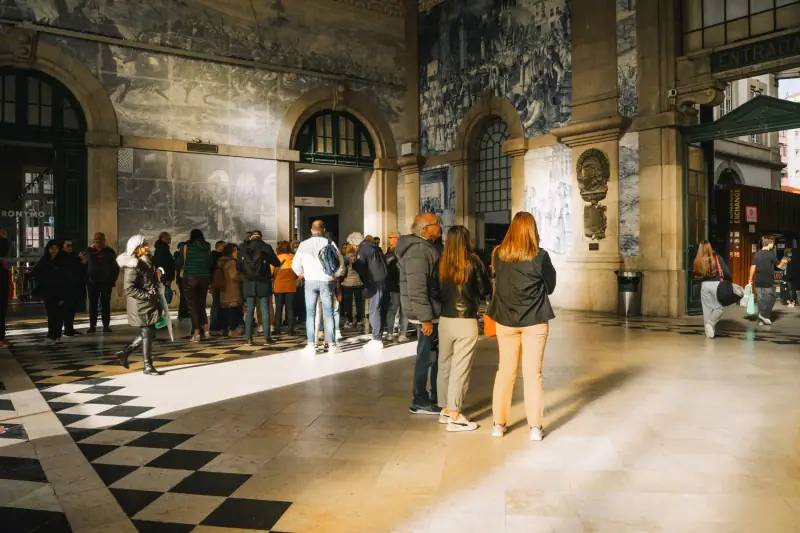
Start at São Bento station. Its hall is decorated with large blue and white azulejo panels that tell scenes from the country’s history: entry is free, and it is best to come early in the morning, before the crowds. From there, it is a few minutes’ walk to the cathedral (the Sé), perched on a hill. From its forecourt, the view over the red tile roofs and the river sets the tone right away.
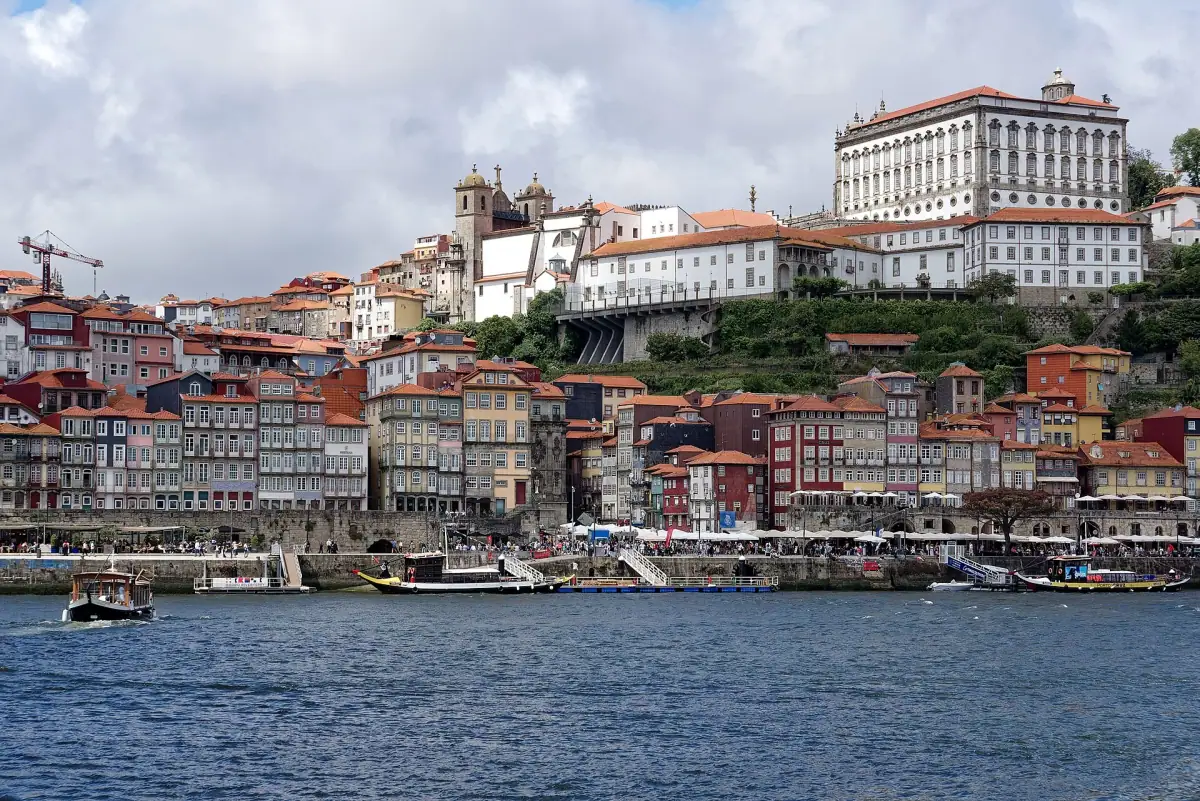
Then walk back down through the lanes to the Ribeira, the listed district that borders the Douro. Colorful facades, laundry at the windows, terraces facing the river: this is the postcard-perfect Porto. Have lunch at one of the small places in the side lanes rather than on the quay, where prices are generally higher.
In the afternoon, head up to the Dom Luís I Bridge, the two-deck iron structure that links Porto to Vila Nova de Gaia. The upper deck offers a remarkable panorama, but it is exposed to wind and sun: save it for the end of the day, when the light turns the river golden. To reach the top without effort you can take the Guindais funicular; otherwise, wear comfortable shoes, as the cobblestones are slippery after rain.
Where to stay in central Porto
To do everything on foot, choose lodging near São Bento or the Ribeira. Compare by dates.
Day 2: Clérigos, Lello, Bolsa and the Vila Nova de Gaia cellars
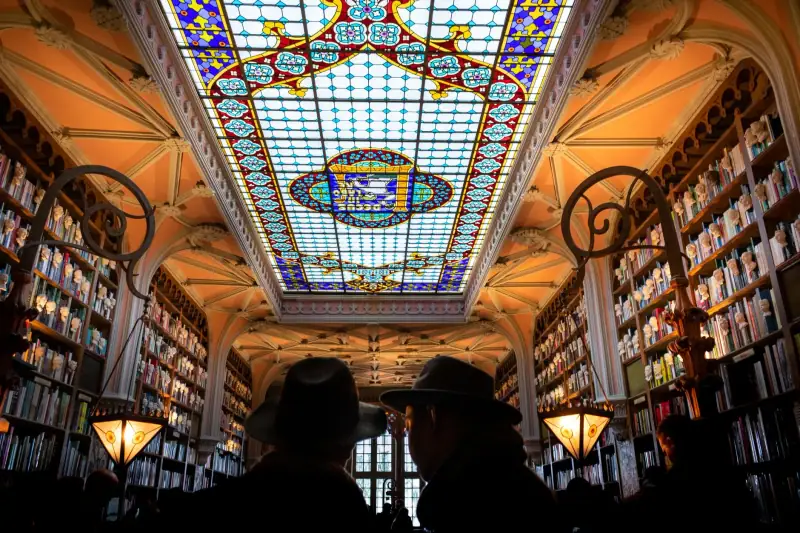
Spend the morning in the Clérigos district. The Clérigos Tower, visible from afar, can be climbed for a 360° view of the city. Nearby, the Livraria Lello, often cited among the most beautiful bookshops in the world, can be visited with a paid entry ticket: in high season, arrive at opening time or book ahead. Note that the neo-Gothic staircase is heavily photographed, and just as heavily visited.
Then walk back down to the Palácio da Bolsa, the former stock exchange palace, which you visit with a guide. Its Arabian Room, with gilded ornaments, is the highlight. The visit runs in time slots: check there or online to avoid waiting.
In the afternoon, cross the Douro on foot by the lower deck of the Dom Luís I Bridge to reach Vila Nova de Gaia. This is the bank where port wines age, in the cellars of the big houses. Most offer a visit with a tasting of several ports (white, tawny, ruby); the length and price vary by house and package. Finish by walking up the Gaia quay at sunset: the view of the illuminated Ribeira is one of the finest in the city.
Port tastings and guided tours
Cellar visits, Douro cruises, guided walking tours: compare the activities available in Porto.
Day 3: a Douro Valley excursion
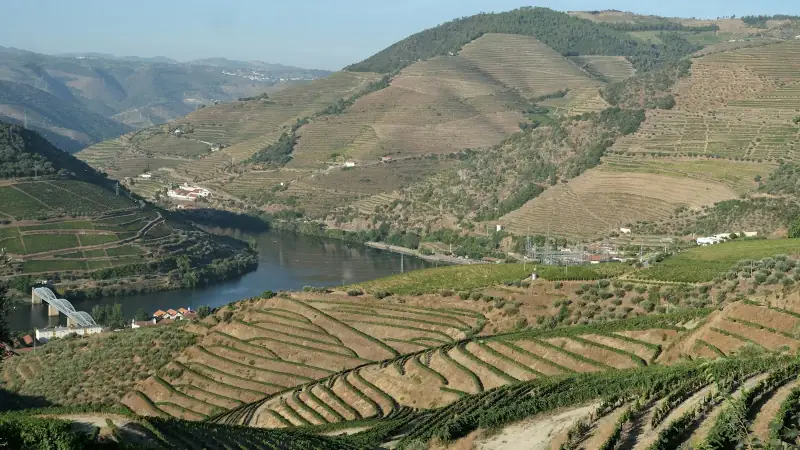
For your last day, leave the city and head up the river. The Douro Valley, with vineyards planted in terraces on the slopes, is a UNESCO World Heritage site and one of the most spectacular wine landscapes in Europe. Allow about two hours of driving to reach the heart of the region, around Pinhão: the day is full, but doable.
You have three options. An organized excursion by minibus or boat is the simplest: transport, a quinta visit and the tasting are handled for you, and nobody drives after tasting. Renting a car gives more freedom to stop at viewpoints, but requires a sober designated driver. Finally, the train follows the river for part of the route, which is slow but picturesque.
If you prefer to stay in town, there is an alternative: the walk to the mouth of the Douro, described below, or a visit to the Bolhão market followed by a leisurely afternoon. Still, the Douro remains the best way to understand where the wine you tasted the day before comes from. For the harvest season (generally September-October) and other periods, see our guide to the best time to go.
Douro Valley excursion
A day with transport, a quinta and a tasting, or a river cruise: choose the option that suits you.
Foz do Douro and the ocean: a break facing the Atlantic
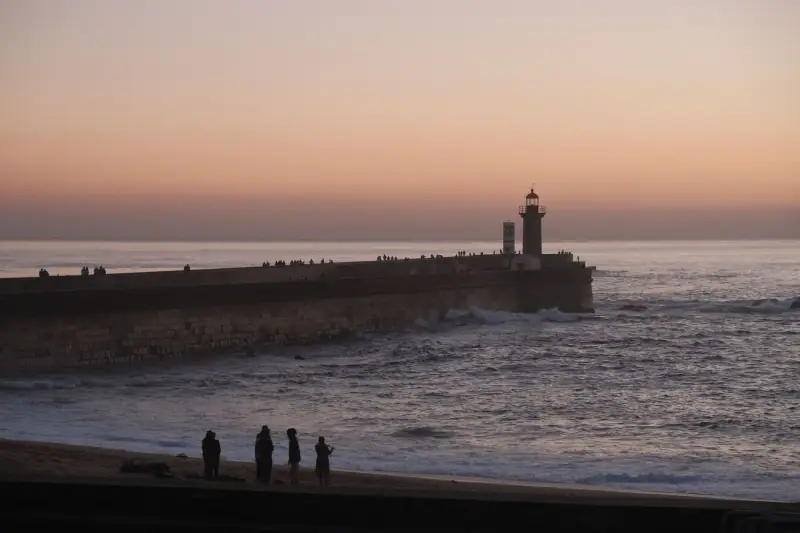
Foz do Douro, at the mouth of the river, is Porto’s seaside district. You get there by historic tram or by bus from the center, and the seafront promenade, between lighthouse, fort and beaches, contrasts with the bustle of the quays. It is a great place for a half day of rest, for example if your legs are tired after two days of cobblestones.
The Atlantic stays cool there for much of the year, and swimming is mostly a summer activity. But even off season, the evening light on the ocean, with a terrace and a coffee, is worth the trip. A little further north, Matosinhos is known for its grilled fish restaurants; it is a good choice for a dinner to close the stay.
Practical tips for organizing your stay
Getting around. The center is walkable, but the slopes are steep: alternate walking with the metro, tram or funicular. Avoid the car in the city: complicated parking, narrow streets, one-way systems.
Which neighborhood to choose. The historic center is the most practical for a short stay. If you prefer calm, neighborhoods a little further out are still well connected by metro. Our guide to where to stay in Lisbon explains the neighborhood logic in the capital, useful for comparing atmospheres if you combine the two cities.
Eating. In Porto, try the francesinha, a hearty sandwich topped with melted cheese and served with a spicy sauce, as well as small dishes of cod and grilled fish. The specialties are detailed in our article what to eat in Portugal, and the best addresses are in our guide where to eat a francesinha in Porto.
Travel insurance. For a stay abroad, insurance covering medical costs and cancellation is recommended.
Going further. After Porto, many travelers continue to Coimbra, Aveiro or Lisbon.
Frequently asked questions
Are three days enough to visit Porto?
Yes. Three days let you see the historic center, the Vila Nova de Gaia bank, the Foz seafront and treat yourself to an excursion into the Douro Valley, without rushing from one sight to the next.
Do you need to rent a car in Porto?
Not for the city: the center is covered on foot, by metro and by tram, and parking is complicated. A car only makes sense to explore the Douro Valley or the north of the country at your own pace.
Which neighborhood should you stay in for 3 days?
The historic center (around the Ribeira, São Bento and Clérigos) lets you do everything on foot. The streets are steep: choose lodging close to São Bento station or to the nearest metro station.
Which visits should you book in advance?
Livraria Lello works with a paid entry ticket and can sell out in high season. For the Gaia port cellars and Douro cruises, booking ahead is advised from May to October.
Can you do the Douro Valley in one day from Porto?
Yes, on an organized excursion or by car. Allow about two hours of driving to reach the heart of the wine region, so it makes for a full day. To go deeper, a night in the valley is more comfortable.
More Portugal guides
Keep reading
Portugal trip budget: real costs and 3 priced profiles
How much does a trip to Portugal cost? Lodging, transport, meals, activities: prices item by item, three sample budgets and tips to spend less.
What to see in the Alentejo: white villages, cork oaks and starry skies
What to see in the Alentejo: Évora, Monsaraz, Marvão, Elvas, Estremoz, Mértola, Alqueva and the wild coast. Route tips, transport and stay ideas.
Portugal with kids: trip ideas and family activities
What to do in Portugal with children? Aquarium, zoo, parks, beaches, villages and Madeira: activity ideas by age, recommended pace and practical tips.
Ready-made
Portugal itineraries
3 days
Lisbon in 3 days: day-by-day itinerary, neighborhoods and tips
What to do in Lisbon in 3 days: Baixa, Alfama, Belém, miradouros, Bairro Alto, pastéis de nata and transport tips for a relaxed stay.
1 day
Sintra in a day from Lisbon: itinerary and tips
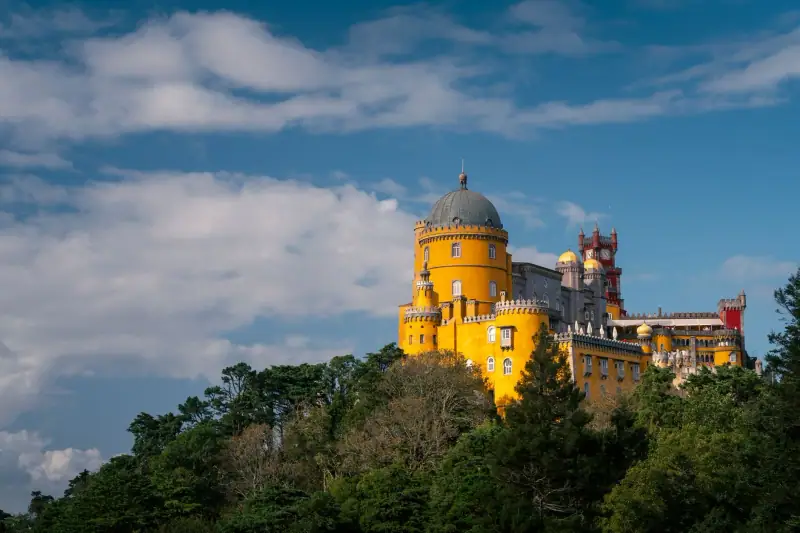
Sintra in one day from Lisbon: train, Pena Palace, Quinta da Regaleira, Moorish Castle and old town. A realistic itinerary and tips to avoid the crowds.