Itineraries
San Sebastián in 1 day from the Basque coast: itinerary and tips
We may earn a commission when you book through links on this page, at no extra cost to you. We don't visit or try the places we cover: we summarize published sources. How we work
Day by day: One-day trip from the Basque coast
- Day 1Parte Vieja, Mount Urgull, pintxos, La Concha bay, Gros and Kursaal
Weather through the year on this route
| Jan | Feb | Mar | Apr | May | Jun | Jul | Aug | Sep | Oct | Nov | Dec | |
|---|---|---|---|---|---|---|---|---|---|---|---|---|
| High °F (°C) | 5111 | 5211 | 5614 | 6016 | 6619 | 7122 | 7625 | 7826 | 7323 | 6720 | 5714 | 5312 |
| Low °F (°C) | 426 | 426 | 468 | 489 | 5412 | 5915 | 6317 | 6418 | 6116 | 5513 | 4910 | 447 |
Normals 1991–2020 at Biarritz and Saint-Jean-de-Luz: averages over 30 years, not a forecast. Source: NASA POWER (MERRA-2), grid of about 50 km. Figures computed by us in November 2026. Rain is shown only where a weather station confirms the figures.
In short
- San Sebastián is a day trip from Hendaye, Saint-Jean-de-Luz or Biarritz: under an hour by train from Hendaye, or 45 minutes to an hour by car from Biarritz without traffic.
- The train from Hendaye is the simplest way to avoid parking in San Sebastián, which is limited, regulated and paid.
- Day plan: Parte Vieja and Mount Urgull in the morning, pintxos at midday, La Concha bay in the afternoon, Gros and the Kursaal at the end of the day.
- Spanish meal times are later: lunch around 2 pm, dinner from 9 pm; pintxos are eaten bar to bar.
If you are staying in Biarritz, Saint-Jean-de-Luz or Hendaye, San Sebastián (Donostia in Basque) is a constant temptation. The city lies across the border, in the Spanish Basque Country, at a distance that lets you consider it as a simple day trip. It brings together a shell-shaped bay, a lively old town and a food reputation that goes well beyond its borders.
This guide offers a realistic one-day itinerary, with the different ways to get there, the districts worth seeing, a few tips for tasting pintxos without mistakes, and the errors to avoid to make the most of your time there.
How to get to San Sebastián from the Basque coast
The choice of transport conditions the rest of the day. Three main options are open to you, depending on your starting point and your desire for freedom.
From Hendaye: the simplest solution
Hendaye is the last French town before the border, and the best starting point for an excursion without a car. A regional train line on the Spanish Basque side links Hendaye station to San Sebastián, with frequent services during the day and a trip of under an hour. The trains leave near the SNCF station: a short walk is enough to change networks. Timetables and fares change: check the operators’ websites before leaving. All the details (station, price, last return) are in our guide to the Hendaye – San Sebastián train (Topo).
The advantage is obvious: no parking to manage, no traffic at the entrance to the city, and the chance to enjoy a glass of wine in the evening without wondering who is driving.
From Biarritz, Bayonne or Saint-Jean-de-Luz
If you stay farther north, several possibilities exist: the car, an intercity bus from Biarritz or Bayonne, or the combination of train to Hendaye then a local connection. The car takes about 45 minutes to an hour from Biarritz without traffic, via the motorway, but traffic can be heavy in summer and on weekends. To compare the options, our guide to getting around the Basque Country by train, bus or car details each solution.
If you take the car
In central San Sebastián, street parking is limited and regulated. The simplest is to use an underground public car park near the old town or the beach, or to park on the outskirts and finish on foot or by city transport. Budget for parking and check the fares in force there.
Morning: the old town (Parte Vieja) and its lanes
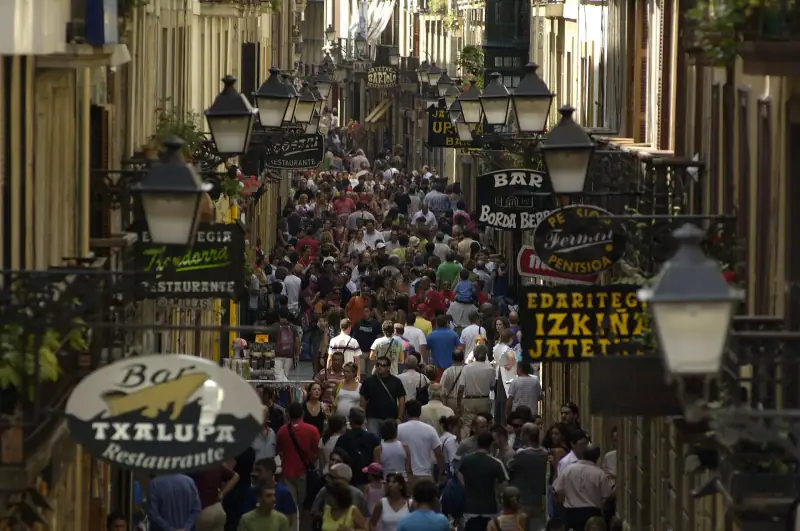
Arrive early if possible. The streets of the old town, the Parte Vieja, are at their most pleasant before the midday crowd. This compact district, at the foot of Mount Urgull, is one of the liveliest in the city. You get around on foot, between narrow lanes, squares and colorful facades.
Start with a walk without a precise goal: you will inevitably pass the Plaza de la Constitución, the city’s former public square, lined with numbered balconies that were once used to watch shows and bullfights. Then continue to the Basilica of Santa Maria del Coro, one of the most visited churches in the district, and to the fishing port, where there are also museums devoted to the sea.
Morning is also the right time to spot the covered markets and the stalls of local products. Even if you do not cook, the visit gives a precise idea of the richness of the region’s products: fish, cheese, charcuterie, vegetables and seasonal fruit.
Mount Urgull: the view over the city
Mount Urgull overlooks the old town and the port. A network of shaded paths lets you climb it on foot from the district, a short walk accessible to most visitors, even if the elevation gain is felt in hot weather. At the top are the remains of fortifications, and above all panoramas over the bay, the city and the ocean.
This stop is ideal in late morning: the climb is more pleasant before the hot hours, and you enjoy often clearer light. Bring water and good shoes, as some paths are steep and can be slippery after rain.
If you prefer to avoid the climb, you can simply walk along the foot of the hill and enjoy the seaside promenade, which also offers fine views of the city.
Guided tours and tastings in San Sebastián
Walking tour of the old town, food circuit or organized excursion: compare the activities available for your dates.
Midday: pintxos, how it works
Pintxos are the great specialty of San Sebastián. They are small bites, often served on a slice of bread and held by a pick, eaten at the counter with a drink. Some are cold and displayed on the bar, others are prepared to order and served hot.
How to go about it without mistakes.
- Do not settle in a single bar. The tradition is to move from one establishment to another, tasting one or two specialties at each stop.
- Watch what the regulars eat: what is ordered from the slate is often better than what has been sitting on the counter for a long time.
- Ask how payment works. Depending on the bar, you pay at the end, at each round, or they count your picks. A simple “la cuenta, por favor” is enough.
- Pair them with a local drink: a small glass of light white wine from the region, a glass of Basque cider or a beer. Our article on Basque specialties and what to eat in the Basque Country gives you other ideas for dishes to spot.
- Plan generously. Tasting across several bars quickly adds up to a full meal, especially if you pile up specialties. Still, keep room for the rest of the day.
Look for bars in the lanes of the old town, but do not hesitate to move a little away from the most touristy arteries: the atmosphere there is often more local. For specific places, rely on food guides and recent reviews rather than a fixed recommendation.
Afternoon: La Concha bay and its promenade
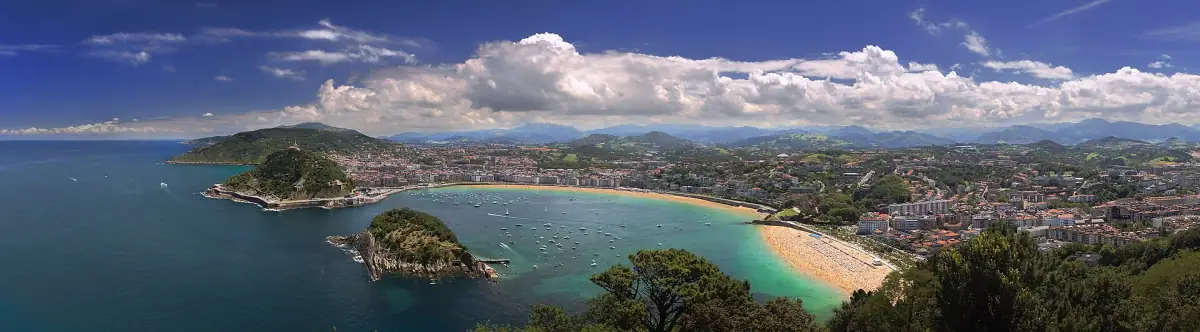
La Concha bay is the image everyone remembers of San Sebastián. Its arc of sand, protected by two hills and a small island in the middle, makes it one of the most beautiful urban beaches in Europe. The bayside promenade, with its white balustrade, is ideal for a pleasant, effortless stroll on foot.
For the afternoon, several options are open to you:
- Swimming or lazing on the beach, if weather and season allow. Remember to check the flag and the supervised areas.
- A walk from end to end of the bay, to the foot of Mount Igueldo, at the other end.
- Coffee or a terrace facing the bay, for a break with no program.
If you like panoramas, Mount Igueldo offers one of the best viewpoints over the bay. You can go up by funicular from the foot of the hill, which makes it a fun outing for families. At the top, an amusement park with a retro feel completes the visit. Check operating hours before going, as they vary by season.
End of the day: Gros, the Kursaal and the waves
On the other side of the Urumea river, the Gros district offers a more relaxed, more local atmosphere, more oriented toward surfing. There you find Zurriola beach, appreciated by surfers, and the Kursaal congress center, recognizable by its two large translucent volumes that light up at nightfall.
It is a good place to end the day: you watch the surfers, have a drink on a terrace and enjoy a more relaxed atmosphere than in the old town. If you like surfing, our guide to surfing in Biarritz and on the Basque coast also gives you pointers to compare the atmospheres on each side of the border.
The Gros district is also a good place to spot pintxos bars more oriented toward residents than toward passing visitors.
Want to stay longer?
A night in San Sebastián lets you enjoy the city without the stress of the trip back: compare hotels for your dates.
Sample itinerary for the day
Here is a typical outline, to adapt to your arrival times and pace. It is designed for an early start from the French Basque coast.
| Time | Stop |
|---|---|
| Early morning | Arrival, first walk in the old town |
| Late morning | Plaza de la Constitución, basilica, port, then climb Mount Urgull |
| Midday | Pintxos round in the Parte Vieja |
| Early afternoon | Beach break or walk along La Concha |
| Late afternoon | Mount Igueldo funicular or a walk in Gros |
| Early evening | Drink facing the Kursaal, return to the Basque coast |
This program is deliberately flexible: it is better to do a little less and enjoy it than to rush from one viewpoint to the next. If your time is limited, drop Mount Igueldo or Urgull: the old town, the bay and the pintxos are enough for a fine day.
When to go and what to expect
The Cantabrian coast is known for its changeable weather, and rain can come in any season. Always bring a light waterproof jacket, even if the sky is clear in the morning. To compare seasons on the French side, our guide to choosing the best time in the Basque Country gives useful pointers, also valid on the Spanish side.
- Summer. Fine weather, swimming and a festive atmosphere, but a very busy city. Arrive early and book your transport or parking ahead if you can.
- Spring and fall. Often a good compromise between weather and crowds, with pleasant terraces and a calmer city.
- Winter. More rain, but a more authentic city and less crowded pintxos bars.
On days of big events or festivals, the city is much livelier: find out before going, as prices and crowds can change noticeably.
Budget and practical tips
Money. Spain uses the euro. Bank cards are accepted almost everywhere, but keep a little cash for small bars and markets.
Hours. The Spanish rhythm is later than in many places: lunch is around 2 pm, dinner around 9 pm. On the other hand, many pintxos bars serve continuously, which gives you flexibility.
Languages. Basque and Spanish are the official languages. A few words of politeness (“egun on” for good morning in Basque, “gracias” for thank you) are always appreciated, even though many shopkeepers in the center understand a little French or English.
Documents. Entry rules depend on your passport. Check the official travel advice of your government before you book: travel.state.gov (US), GOV.UK (UK), travel.gc.ca (Canada), Smartraveller (Australia) (checked November 2026). Keep your ID or passport on you: there is no systematic control at the border, but spot checks are possible.
Shoes. The city is discovered on foot: wear comfortable shoes, especially as the old town streets are cobbled and the climbs to the hills are sometimes steep.
Reservations. For a sit-down restaurant rather than pintxos, a reservation is advised, especially on weekends and in high season.
Mistakes to avoid
- Arriving too late. Leaving Biarritz at noon makes you lose the best light and plunges you into traffic and crowds.
- Trying to do everything. San Sebastián is not just a succession of viewpoints: the best moment is often when you sit down with no goal.
- Parking anywhere. Fines are frequent in regulated zones. Choose an official car park.
- Eating in the first bar you find. Take ten minutes to compare, look at who goes in and what leaves the kitchen.
- Forgetting the weather. A clear sky can turn quickly on the Cantabrian coast.
- Underestimating the return. Check the last train or bus times before starting a long aperitif.
To go further
If a day leaves you wanting more, consider spending a night in San Sebastián, or combining the excursion with other stops on the Basque coast. Our 3-day itinerary between coast and inland shows how to split your stay on the French side, and you can add a Spanish day depending on your pace.
Key takeaways
- San Sebastián works as a day trip from Hendaye, Saint-Jean-de-Luz or Biarritz.
- The train from Hendaye is the simplest solution to avoid parking.
- Leave early to enjoy the old town before the crowd.
- Combine old town, viewpoint, pintxos, beach and the Gros district.
- Keep an ID document, a waterproof jacket and some flexibility in your program.
Frequently asked questions
Can you visit San Sebastián in a single day from the French Basque coast?
Yes. The city is less than an hour's drive from Biarritz and much closer still from Hendaye. One day is enough to see the old town, La Concha bay, a viewpoint from above and taste pintxos. To wander without rushing or explore the more outlying districts, a night there is a big plus.
Do you need a passport to go to San Sebastián?
France and Spain are both in the Schengen area, and there is no systematic control at the border. Entry rules still depend on your passport: check the official travel advice of your government before you book: travel.state.gov (US), GOV.UK (UK), travel.gc.ca (Canada), Smartraveller (Australia) (checked November 2026). Carrying your ID or passport is advisable, as spot checks are possible.
Is it better to go by car, train or bus?
The train from Hendaye is the simplest: you avoid parking, which is often complicated and paid in central San Sebastián. Bus links from Biarritz or Bayonne are also an option. A car gives freedom of schedule, but it is better to park in a public car park or at the edge of town. As timetables change, check the operators' websites.
When do people eat in Spain: are the hours different?
Yes, meal times are later than in many countries. Lunch is generally around 2 pm and dinner from 9 pm. Pintxos, for their part, are eaten rather in late morning, at aperitif time and in the early evening. If you are hungry at noon, spot the bars where the counter display is already stocked.
How does pintxos tasting work?
In most bars, you help yourself at the counter or order from the slate, then pay at the end or at each round depending on the establishment. Regulars hop from bar to bar, taking one or two specialties at each with a glass of wine or cider. If in doubt, ask the staff how they prefer you to proceed.
What is the best time to go?
From late spring to early fall, swimming and terraces are pleasant, but the city is very busy in July-August. May-June and September are often more balanced. Rain is frequent all year on the Cantabrian coast: bring a waterproof jacket in any season.
Can you do the excursion with children?
Yes. La Concha beach, the seafront and the bayside promenade suit families. Plan regular breaks and do not plan too many visits: the day can be long. The funicular to one of the viewpoints is often a highlight for the youngest.
More Basque Country guides
Keep reading
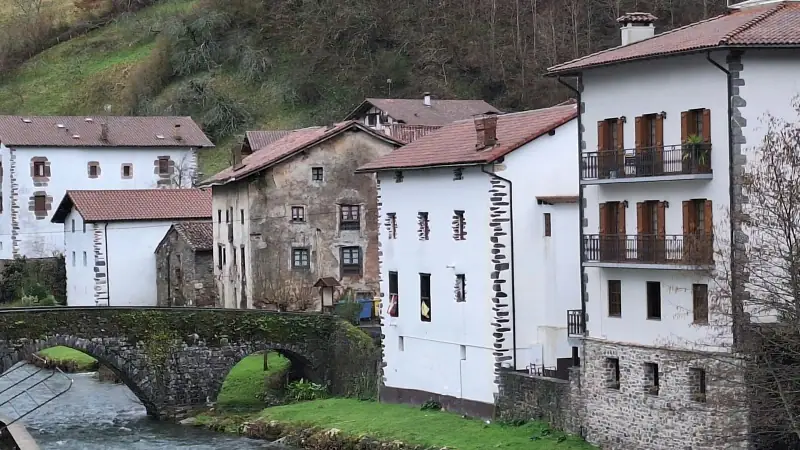
Basque Country budget: what a trip costs (3 priced profiles)
How much does a Basque Country trip cost? Real costs by item, three priced budgets (frugal, comfort, premium) and tips to spend less.
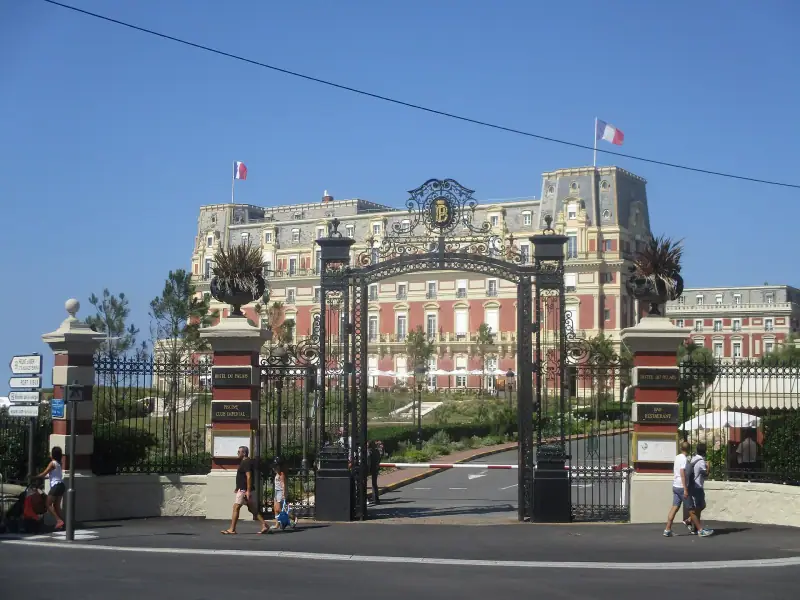
Where to stay in Biarritz: districts and types of accommodation for your trip
Palace, boutique hotel, apartment, guesthouse, campground or hostel: compare lodging types and districts to choose where to stay in Biarritz.
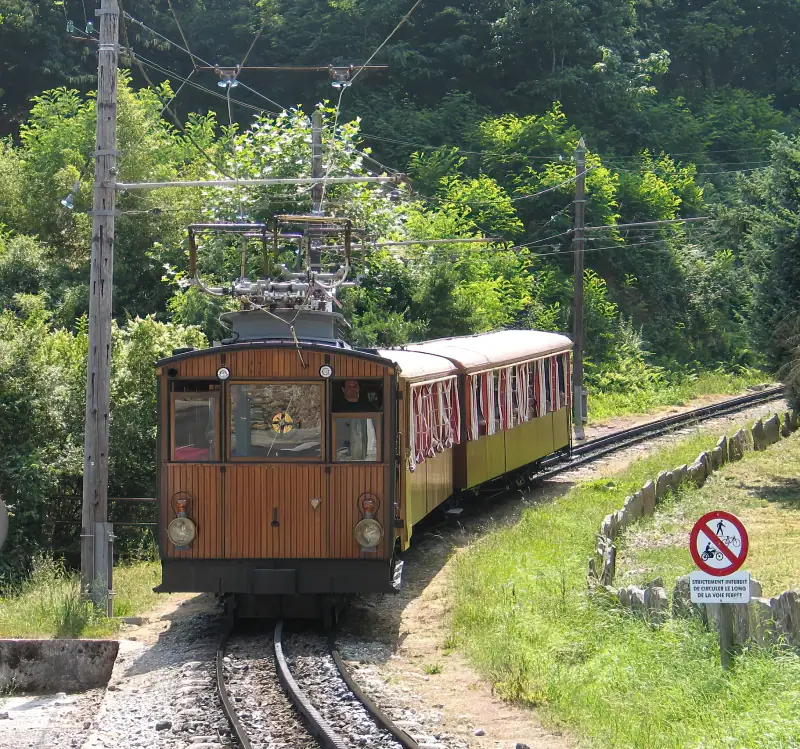
La Rhune cog train: book ahead or on the day? Prices, hours, weather
La Rhune cog train: do you need to book? 2026 fares, hours by season, parking, strollers, dogs and weather for the ride up from Sare.
Ready-made
Basque Country itineraries
5 days
The Basque Country in 5 days with kids: stops and pace
The Basque Country with kids in 5 days: drive times, beaches, La Rhune cog train, Sare caves and a rainy-day plan B, at a child's pace.
3 days
3 days in the Basque Country: coast and inland itinerary
A 3-day Basque Country itinerary: Biarritz, Bayonne, Saint-Jean-de-Luz, Espelette and La Rhune, with distances, tips and good addresses.