What to see
What to see in the Porto and Douro region: towns, vineyards and valleys
We may earn a commission when you book through links on this page, at no extra cost to you. We don't visit or try the places we cover: we summarize published sources. How we work
In short
- Four to five days cover Porto, Guimarães or Braga and part of the Douro Valley; a week adds Amarante, Viana do Castelo and a night in the vineyards.
- Trains from Porto serve Guimarães, Braga, Viana do Castelo and the Douro Valley; a car helps for chaining quintas and reaching isolated villages.
- Porto is the best base for a first stay; one or two nights in the valley, around Pinhão or Peso da Régua, change the experience.
- September and October bring the harvest and fall colors; book cruises and valley lodging ahead for those months.
Northern Portugal is often summed up as Porto, its cellars and a cruise on the Douro. That is a fine introduction, but the region offers much more: historic towns less than an hour from the coast, monasteries, Baroque sanctuaries, quiet rivers and one of the oldest wine landscapes in the world. All of it can be visited without long hours on the road, which makes it an ideal destination for a stay of four to seven days.
This guide does not replace our detailed articles: it helps you choose and combine the stops. For the big city, see our 3-day Porto itinerary. For the vineyards, we have a 2-day route in the Douro Valley. Here we step back to see the big picture.
How to organize your trip in the Porto and Douro region
The region splits into three large groups that are useful to tell apart before booking anything:
- Porto and the coast: the city, Vila Nova de Gaia opposite, and the Atlantic beaches.
- The Minho, to the north: Guimarães, Braga, Viana do Castelo, a green and hilly region.
- The Douro Valley, to the east: Peso da Régua, Pinhão and the terraced vineyards.
Porto plays the role of natural base, as São Bento and Campanhã stations link the city to most of the stops. Regional trains are cheap and practical for a day, but their schedules are less frequent in the evening and on Sundays: check them before leaving. A car offers more freedom in the Douro, where the valley roads are beautiful but winding. Always allow more time than the displayed distance suggests.
To choose the best period, see our guide to when to go to Portugal. To estimate your spending, our article on the budget for Portugal gives an overview.
Choosing a base for exploring around Porto
Sleeping in Porto makes trains to Guimarães, Braga and the Douro easy. Compare lodging by dates.
Porto and Vila Nova de Gaia: the starting point
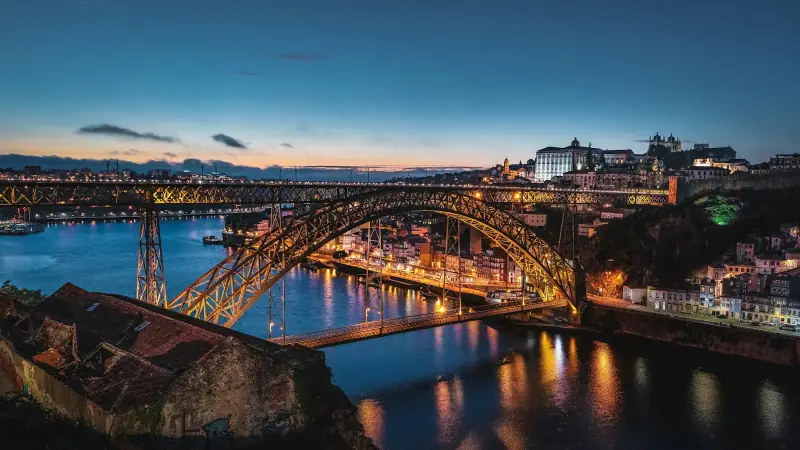
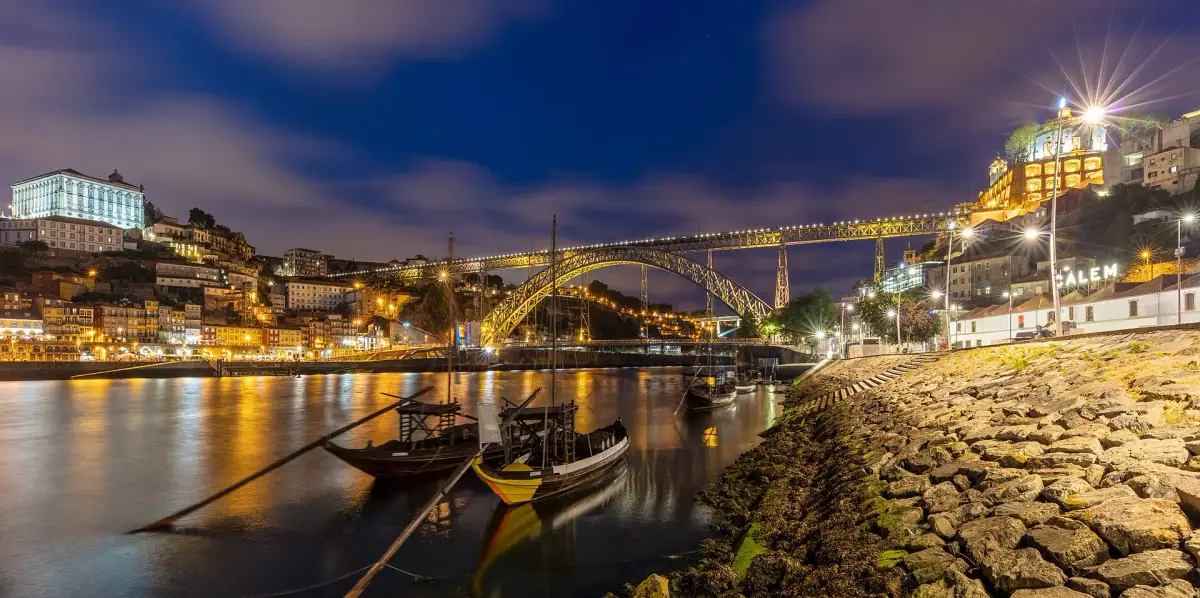
Porto’s historic center has been a UNESCO World Heritage site since 1996. It climbs the hills overlooking the Douro, with its azulejo facades, Baroque churches and lanes running down to the Ribeira. São Bento station, with its large blue azulejo panels, deserves a detour on its own, even if you do not take a train there.
Opposite, on the south bank, Vila Nova de Gaia is home to the cellars where port wine ages. Crossing the Dom Luís I Bridge on foot, by the upper or lower deck, offers one of the best views of the city. The cellars offer visits with tastings: choose one or two rather than chaining five, as ports are sweet and strong wines.
If you leave Porto for several days, keep at least one day for the city itself. Our guide where to stay in Porto helps you choose the best-placed area depending on whether you favor the station, the Ribeira or calm.
Guimarães: the birthplace of Portugal
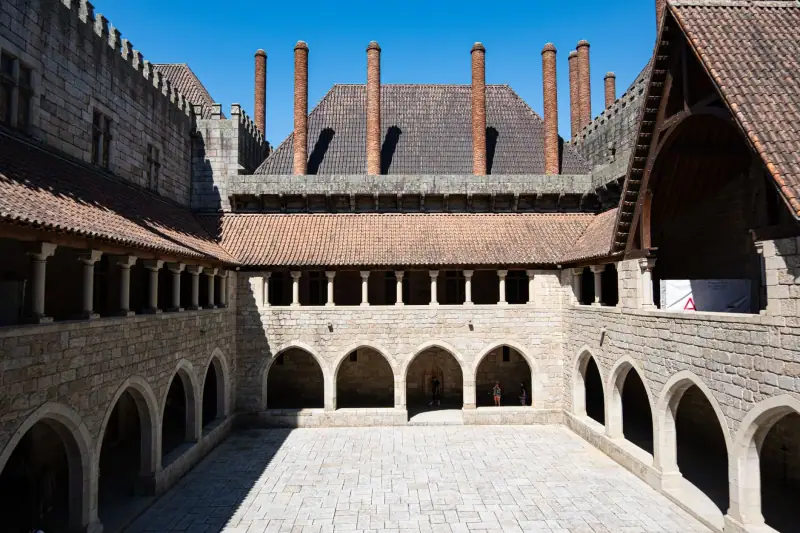
Guimarães is the most obvious stop for a first excursion outside Porto. Located about 55 km (34 mi) to the northeast, it is often presented as the cradle of the nation, because it is from there that the first struggles for the country’s independence began in the 12th century. Its historic center has been listed by UNESCO since 2001.
The town is visited on foot in half a day. The castle, massive and austere, overlooks the center and offers an overview of the rooftops. Nearby, the Palace of the Dukes of Braganza surprises with its many brick chimneys. The medieval heart, around Largo da Oliveira and Praça de São Tiago, is lined with houses with balconies and terraces that are pleasant at the end of the day.
A cable car links the town to the Penha hill, covered in forest, which makes for a cool break in summer. Allow a full day if you want to go up the hill and wander the streets without rushing. The town is linked to Porto by train, and the trip remains simple for a day excursion.
Braga: churches, gardens and a great sanctuary
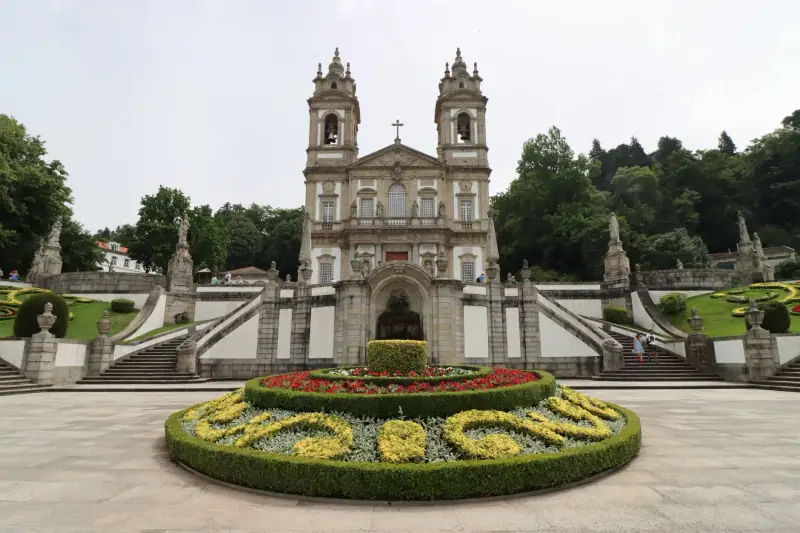
About fifty kilometers (31 mi) from Porto, Braga is one of the oldest towns in the country and an important religious center. It gives off a livelier atmosphere than Guimarães, with wide avenues, terraces and a visible student life.
The big highlight is the Bom Jesus do Monte sanctuary, on the heights of the town. You reach it by an immense zigzag Baroque staircase, which you climb on foot or avoid thanks to a historic funicular. The site has been listed by UNESCO since 2019. Below, the cathedral (Sé) is one of the oldest in the country and mixes several styles over the centuries. The pedestrian center is visited at a relaxed pace, with its gardens, squares and pastry shops.
Guimarães and Braga are close enough to be combined in a single day, as long as you travel by car. If you are by train, choose one or the other: you will enjoy each more.
Day trips from Porto
Guimarães, Braga, Douro: compare guided tours and options with transport.
Amarante: a small town on the Tâmega
Amarante is a pretty stop for those looking for a quieter setting. The town stretches on both sides of the Tâmega River, about an hour’s drive from Porto, with its colorful houses with wrought-iron balconies. The São Gonçalo Bridge and the church of the neighboring convent form a photogenic ensemble, especially at the end of the day.
The town is known for its convent pastries, often based on eggs and sugar, to be tasted in the small tea rooms of the center. A sit-down break on a riverside terrace is enough to justify the stop. Amarante is also an excellent gateway to the Douro: you can combine it with Peso da Régua in a single day by car. For the dishes that will accompany your stay, our guide to what to eat in Portugal covers the specialties to try.
Viana do Castelo: the coast and the Minho
If you want to combine town and ocean, Viana do Castelo is a good option, about 75 km (47 mi) north of Porto. Located at the mouth of the Lima River, it combines a pleasant historic center, a harbor and large sandy beaches.
The highlight is the Santa Luzia church, on the hill overlooking the town, which you reach by funicular or on foot. From there, the view over the estuary and the sea is one of the finest in the north of the country. Below, the center is covered quickly: cobbled squares, manor houses and pedestrian lanes, with a museum ship moored in the harbor.
Viana suits travelers who want a lighter day after the monumental visits of Guimarães or Braga. In summer, the neighboring beaches are busy, but the Atlantic stays cool: bring something warm for the evening.
The Douro Valley: a landscape shaped by the vine
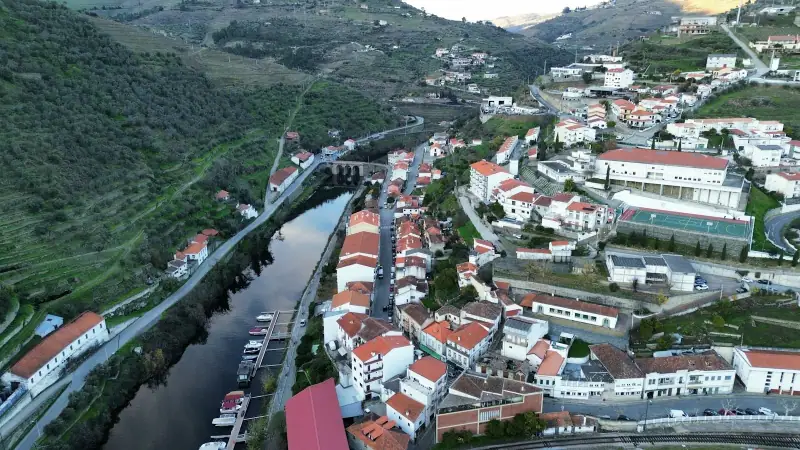
To the east, the Douro Valley belongs to another world. The Upper Douro wine region has been listed by UNESCO since 2001, and for good reasons: the slopes of the river are covered with vine terraces built by hand over the centuries, drawing regular lines to the top of the hills.
Two towns serve as landmarks. Peso da Régua, about a hundred kilometers (62 mi) from Porto, is the gateway to the valley, with a small museum devoted to wine. Further on, Pinhão is the heart of the vineyard: its station is decorated with azulejo panels illustrating vineyard work, and the village serves as a base for many quintas, the wine estates that offer visits, tastings and sometimes guest rooms.
There are three classic ways to discover the valley:
- The train: the Douro line follows the river and offers superb views from the window, without driving. It is the cheapest choice.
- The cruise: boats offer outings of a few hours to a full day from Régua or Pinhão. Book ahead in September and October.
- The car: essential for chaining quintas and finding viewpoints. The roads are winding, and driving takes attention, especially after a tasting. Choose a designated driver who does not taste.
For the detail of a two-day route, see our article on the Douro Valley from Porto. If you can, spend a night in the valley: the quiet evenings and the sunrise over the vines are well worth it.
Peneda-Gerês and the nature of the north
For lovers of wide open spaces, the Peneda-Gerês National Park, in the north of the Minho on the Spanish border, is the country’s only national park. You find granite valleys, waterfalls, stone villages and wild horses roaming free. It is farther from Porto, around two hours by road depending on the entrance chosen, and takes a full day, even a night there.
It is not a stop to slip into a busy program. If you are by car and like hiking, give it a full day, with good shoes and water. In summer, some trails are very busy, and the heat can be intense: leave early in the morning.
Four ways to combine these stops
Here are four ideas for days, to adapt to your wishes. Each stays well under 200 km (124 mi) of driving.
Option 1: the “birthplace of the country” day
Morning in Guimarães for the castle and the medieval center, lunch there, then afternoon in Braga for Bom Jesus do Monte. This option is simpler by car; by train, prefer a single town.
Option 2: the “vineyard” day
Early departure from Porto toward Peso da Régua, then drive to Pinhão for a quinta visit with a tasting. Return by train or with a driver if you have tasted several wines.
Option 3: the “river and pastries” day
Morning in Amarante, a walk along the Tâmega, lunch, then drive to Régua for a first glimpse of the valley. It is a good compromise for those who do not want to get up too early.
Option 4: the “ocean” day
Train to Viana do Castelo, climb to Santa Luzia, fish lunch and beach at the end of the day. Ideal with family or after several days of sightseeing.
Where to sleep, depending on your program?
The choice of base depends on what you want to favor.
- Porto is the best base for a first stay: trains to Guimarães, Braga, Viana and the Douro, many restaurants and a wide choice of lodging.
- Guimarães or Braga suit you if you want to enjoy the towns in the evening, once the day-trippers have left. The atmosphere there is calmer than in Porto.
- Pinhão or Peso da Régua are the ones to favor for immersion in the vineyards, with sometimes guest rooms in quintas.
To stay flexible, split your stay: three nights in Porto, then one or two in the valley. This avoids long daily trips and gives the trip another rhythm. If you continue south, Aveiro and Coimbra are two natural stops on the way to Lisbon.
Rent a car to explore the north
Douro, Minho, Peneda-Gerês: compare rental companies for a few days or more.
Budget and practical tips for the region
Excursions around Porto stay cheap if you favor regional trains. The main expenses are lodging, meals, monument entries, tastings and, possibly, the car. Cruises and quinta visits are the items that make the bill vary most: compare the options before booking.
A few useful habits:
- Check train schedules the day before: frequencies drop in the evening and at the end of the week.
- If you drive in the Douro, allow more time than planned and avoid scheduling everything in the same day.
- Book cruises and valley rooms ahead in September and October.
- Bring a waterproof jacket: the Minho is one of the rainiest regions of the country, even in spring.
- Wear good shoes: slippery cobblestones, stairs and slopes are frequent in the historic centers.
- Taste the local specialties, and keep in mind the starters served at the table, which are charged if eaten: our article on the cover charge at restaurants explains the principle.
Our recommendation for planning the region
If you are still hesitating, here is a simple rule. For three or four days, concentrate on Porto, an excursion in the Minho (Guimarães or Braga) and a day in the Douro. For a week, add Amarante, Viana do Castelo and a night in the valley. Beyond that, you will have time to head for Peneda-Gerês or continue south.
The Porto and Douro region rewards those who take their time: a castle in the morning, a waterside terrace at noon, a glass of wine facing the vines at sunset. Do not try to tick everything off, and leave room for the unexpected, which is often where the best memories hide.
Frequently asked questions
How many days should you plan for the Porto and Douro region?
Four to five days let you see Porto, one Minho town (Guimarães or Braga) and part of the Douro Valley. With a week, you add Amarante, Viana do Castelo and a night in the vineyards, which gives a much more comfortable pace.
Can you visit the region without a car?
Largely, yes. Trains from Porto serve Guimarães, Braga, Viana do Castelo and the Douro Valley. A car becomes useful to chain several quintas or to reach isolated villages. Check the schedules on the rail company's website before you leave.
Do you have to choose between Guimarães and Braga?
If you only have one day, choose according to your tastes: Guimarães charms with its compact medieval center and its castle, Braga with its churches and its large Baroque sanctuary. The two towns are close to each other and can be combined into one long day by car.
What is the best season for the Douro?
Spring for green landscapes, and above all September and October for the harvest and fall colors. Summer is very hot in the valley, with temperatures that rise quickly in the afternoon. Our guide to the best time to go to Portugal covers the climate.
Where should you sleep to explore the region?
Porto remains the best base for a first stay, thanks to its rail and road links. To enjoy the vineyards in peace, one or two nights in the valley, for example around Pinhão or Peso da Régua, completely change the experience.
Are the excursions suitable for children?
Yes, if chosen well. The ramparts and castle of Guimarães, the funicular or cable car, the beaches of Viana do Castelo and boat rides on the river appeal to the youngest. Avoid long tasting days and keep regular breaks.
Do you need to book in advance?
For cruises, quinta visits and lodging in the valley, yes, especially in September and October. For the Minho towns, a reservation is generally not needed, except for weekend lodging or during a local festival.
More Portugal guides
Keep reading
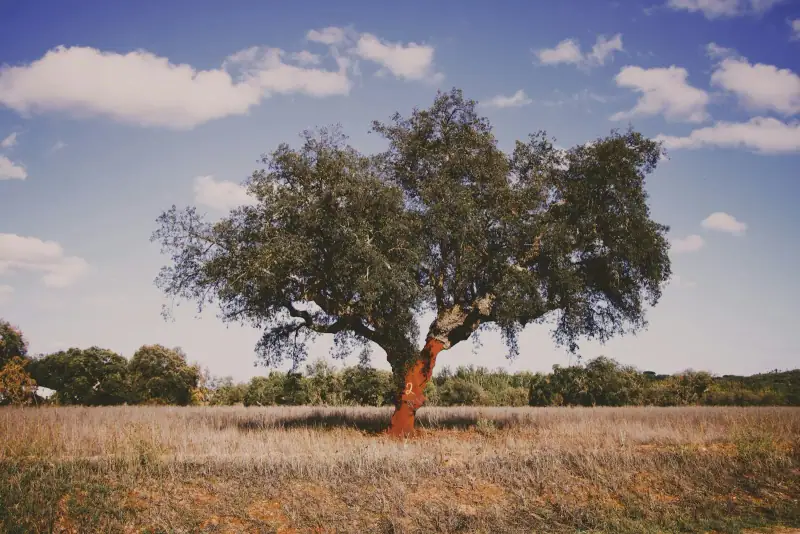
What to see in the Alentejo: white villages, cork oaks and starry skies
What to see in the Alentejo: Évora, Monsaraz, Marvão, Elvas, Estremoz, Mértola, Alqueva and the wild coast. Route tips, transport and stay ideas.
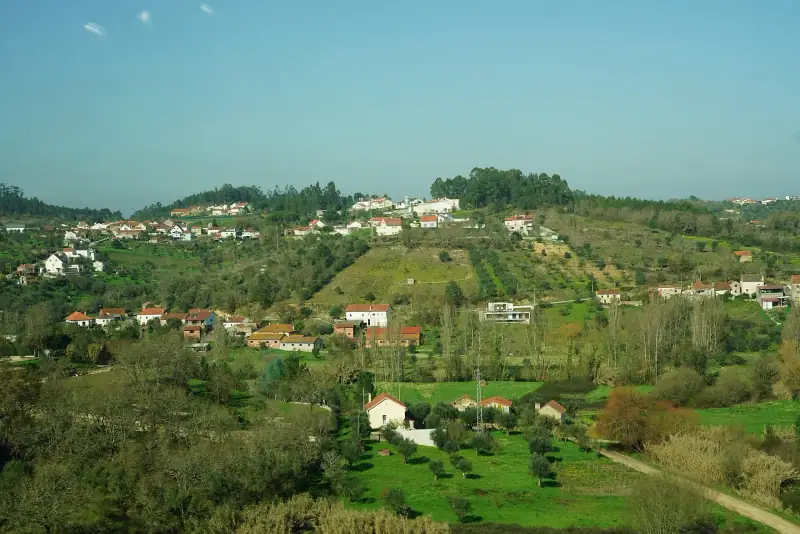
What to see in Central Portugal: monasteries, schist villages and coast
What to see in central Portugal: Coimbra, Aveiro, Nazaré, Tomar, Batalha, Alcobaça, Serra da Estrela and schist villages. Distances and route ideas.
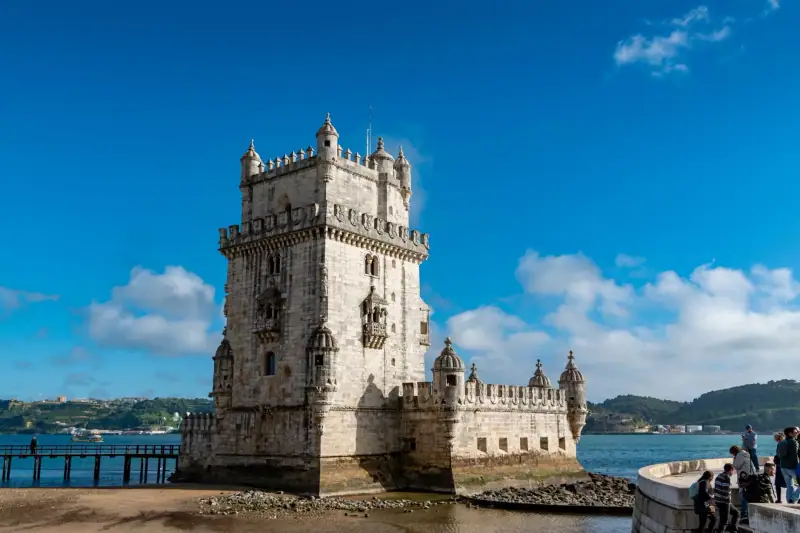
What to see around Lisbon: Belém, Cascais, Mafra and Cabo da Roca
What to see around Lisbon and Sintra: Belém, Queluz, Mafra, Cabo da Roca, Cascais and Estoril. Transport, durations and ideas for combining stops.
Ready-made
Portugal itineraries
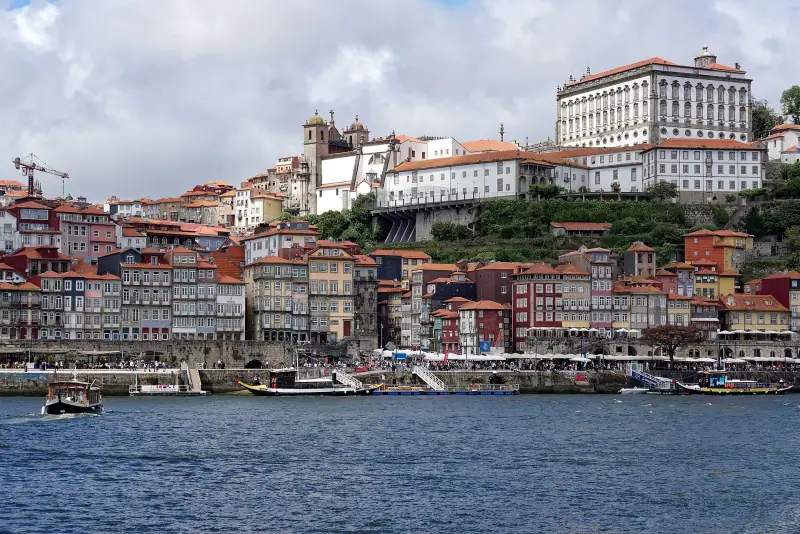
3 days
Porto in 3 days: a day-by-day itinerary
What to do in Porto in 3 days: Ribeira, São Bento azulejos, Gaia port cellars, Foz and a Douro Valley excursion. A relaxed day-by-day plan.
3 days
Lisbon in 3 days: day-by-day itinerary, neighborhoods and tips
What to do in Lisbon in 3 days: Baixa, Alfama, Belém, miradouros, Bairro Alto, pastéis de nata and transport tips for a relaxed stay.

1 day
Sintra in a day from Lisbon: itinerary and tips
Sintra in one day from Lisbon: train, Pena Palace, Quinta da Regaleira, Moorish Castle and old town. A realistic itinerary and tips to avoid the crowds.