Plan your trip
Portugal trip budget: real costs and 3 priced profiles
We may earn a commission when you book through links on this page, at no extra cost to you. We don't visit or try the places we cover: we summarize published sources. How we work
In short
- Per person per day, excluding flights: €45 to €60 (~$52 to $70) on a budget, €90 to €130 (~$105 to $150) mid-range, €200 (~$230) or more high end.
- Lodging is the biggest item; Lisbon charges €4 (~$5) per person per night in tourist tax and Porto €3 (~$3.50), both capped at 7 nights.
- A prato do dia (set lunch) is usually €8 to €12 (~$9 to $14); bread and olives placed on your table are charged if you touch them.
- Between Lisbon, Porto and Coimbra the train is simple and cheap; a car mainly makes sense for the Alentejo, the Douro or the central villages.
Portugal keeps a reputation as an affordable destination, and it is still largely deserved: a coffee often costs less than a euro, a set lunch can be found for about ten euros and the train links the big cities at a reasonable price. But the reality of 2026 is more nuanced. In Lisbon and Porto, lodging has become clearly more expensive, the tourist tax has gone up and the most famous sites charge entry tickets that add up fast.
This guide details costs item by item (lodging, transport, meals, activities), then offers three priced sample budgets and a series of tips for spending less without sacrificing the essentials. The amounts come from price checks consulted online in October 2026: they are given as orders of magnitude, since rates change with the season, the day of the week and the time of booking. Always check the final price before paying.
The budget at a glance
For one person, excluding the international flight, here are the daily ranges to keep in mind:
- Budget: about €45 to €60 (~$52 to $70) per day (hostel or simple room, set lunches, public transport, at most one paid visit a day).
- Mid-range: about €90 to €130 (~$105 to $150) per day (3-star hotel or double room shared by two, regular restaurants, a few visits and excursions).
- High end: €200 (~$230) per day and more (boutique or 4-5 star hotels, gourmet tables, a car, private excursions).
Over a week, a traveler who organizes alone and takes reasonable flights can expect a range of about €660 to €1,090 (~$765 to $1,265) per person, flights included, according to the budget comparison sites consulted. You will find the detail of these profiles below.
Lodging: the first spending item
This is where the budget is decided. Prices vary mostly by city, season and distance from the historic center. Here are the orders of magnitude found:
- Hostels: about €20 to €30 (~$23 to $35) per person in a dorm, more in summer and in the best-located places.
- Guesthouses: about €50 to €75 (~$58 to $87) a night in mid-sized towns. In Lisbon and Porto, guesthouses show higher averages, around €130 to €150 (~$150 to $175) according to the checks, with a very wide range (from under €70, ~$81, to over €300, ~$350).
- 3-star hotels: from €85 to €95 (~$99 to $110) in secondary towns, and over €150 (~$175) on average in Lisbon in season according to some checks.
- Short-term rentals: from about forty euros (~$46) a night for a small place outside the very center.
By season, August is the most expensive period for hotels and November one of the cheapest, with an average around €100 (~$116) a night in the checks consulted. Weekends cost more than midweek, and lodging near the busiest streets is expensive.
Do not forget the tourist tax: €4 (~$5) per person per night in Lisbon (up to 7 nights) and €3 (~$3.50) per person per night in Porto (up to 7 nights). For a couple staying five nights in Lisbon, that is €40 (~$46), often paid at the property.
To choose the right area of the capital, see our guide to where to stay in Lisbon, neighborhood by neighborhood: lodging a little off-center but near the metro often saves money without losing time.
Compare places to stay in Portugal
Hostels, guesthouses and hotels: filter by price and free cancellation to keep your budget under control.
Transport: train, metro, bus or car

City transport
In Lisbon as in Porto, the metro, bus and tram are enough for most trips. A single metro or bus ticket costs around €1.60 to €1.90 (~$1.85 to $2.20) with a rechargeable card (the occasional Navegante card, which replaced the old Viva Viagem, costs €0.50, ~$0.58). A tram ride paid to the driver costs about €3.30 (~$3.85), against about €1.90 (~$2.20) with the card: the gap is large, especially if you often take Lisbon’s trams.
The 24-hour pass on the Carris and metro network is listed at about €7.25 (~$8.40) in the checks consulted; a daily city transport pass is between €6.50 and €7.25 (~$7.55 to $8.40) depending on the city and the moment. It pays off from four trips in the day. For a short stay, ask yourself whether you will walk enough to recoup a pass: in the center, many visitors do without.
Between cities: the train
The train is the simplest solution between Lisbon, Coimbra and Porto. For 2026, a Lisbon-Porto ticket costs about €35.70 (~$41) on the Alfa Pendular (a trip of nearly 2 h 50) and about €28.05 (~$33) on the Intercidades in 2nd class (about 3 h 15). Limited promotional fares start around €17 (~$20) on the Intercidades and €21.50 (~$25) on the Alfa Pendular, but they are not available on every departure: book early. The national company’s fares rose about 2% on January 1, 2026.
To structure a sequence of cities, see our itineraries 3 days in Lisbon and 3 days in Porto.
The car: useful but costly
Outside high season, rental rates can look very low (around €10 to €20, ~$12 to $23, a day for a small car according to comparison sites), but they climb clearly in summer. Add fuel, whose price runs around €2 a liter (~$2.30 a liter) according to recent data, tolls and parking. The A1 motorway between Lisbon and Porto costs about €25 (~$29) in class 1. Electronic tolls work with a device (Via Verde type) that rental companies generally charge a few euros a day for, with a cap. The detail is in our guide to tolls in Portugal with a rental car.
A car makes sense for the Alentejo, the Douro or the central villages. In town, it becomes a burden: narrow streets and scarce parking.
Meals: the item where Portugal stays generous
You eat very well for little money, as long as you avoid the terraces of the most touristy squares. Benchmarks:
- Breakfast or a snack: an espresso (bica in Lisbon, cimbalino in Porto) generally costs less than a euro (under ~$1.15) in a neighborhood café; a pastel de nata is around €1.20 to €1.80 (~$1.40 to $2.10).
- Set lunch (prato do dia): about €8 to €12 (~$9 to $14) in many neighborhood restaurants, often with a drink. The full lunch menu (soup, main, coffee, drink) is more like €10 to €15 (~$12 to $17).
- Regular restaurant: about €15 to €25 (~$17 to $29) per person for a simple meal, more for fresh fish or in busy districts.
- Fast food: about €6 (~$7) for a menu.
Lunch is the right time to eat well and cheaply: many places offer their deal only at midday. In the evening, the menu is pricier. To know what to order, our guide to specialties to taste in Portugal lists the must-try dishes and the ones that cost little.
Watch the couvert: bread, butter, olives and cheese placed on the table by default are charged if you touch them. You can politely decline them.
Tastings and food tours in Lisbon
A guided food tour lets you taste several specialties for a single price known in advance.
Activities and visits: choosing your priorities
The most famous monuments each cost between €8 and €20 (~$9 to $23) or so, and rates tend to rise. Benchmarks found for 2026:
- Pena Palace (Sintra): about €20 (~$23) for the palace and park, about €12 (~$14) for the park alone, free for under-6s.
- Jerónimos Monastery (Lisbon): about €18 (~$21) for the cloister; the church is free to enter.
- Belém Tower: about €8 (~$9). The monument is undergoing restoration work, with occasional closures possible: check that it is open before going.
- Lisboa Card: about €21 (~$24) for 24 h, €35 (~$41) for 48 h or €44 (~$51) for 72 h, transport included. It is only worth it if you chain several paid museums and use transport a lot; calculate before buying.
Many Portuguese pleasures cost nothing: strolling the Alfama, watching the sunset from a miradouro, walking along the Douro, wandering the streets of Coimbra or swimming at an Atlantic beach. Our sample days in Sintra or Coimbra show how to build a full program without multiplying tickets.
If you head to Madeira, hiking along the levadas costs almost nothing apart from transport, which makes it one of the best-value activities (see our levada guide).
Excursions from Lisbon
Sintra, Cascais, Arrábida: compare day excursions and their rates before renting a car.
Three priced sample budgets
The three profiles below rest on the previous ranges. They are calculated per person, for a one-week stay (7 days, 6 nights) in town, excluding flights. They serve as a basis for thinking, not as a quote.
Profile 1: the budget traveler (about €320 to €420 a week, ~$370 to $490)
Dorm or simple room (€25 to €35, ~$29 to $41, a night, so €150 to €210, ~$175 to $245; tourist tax of €4, ~$5, a night in Lisbon in addition), set lunches at €8-12 (~$9 to $14) at midday and groceries or snacks in the evening (€15 to €20, ~$17 to $23, a day), city transport and a round trip by train Lisbon-Porto at a promotional fare, one or two paid visits. This gives about €45 to €60 (~$52 to $70) a day.
Profile 2: the mid-range traveler (about €650 to €900 a week, ~$755 to $1,045)
Double room shared by two or a 3-star hotel (about €70 to €100, ~$81 to $116, per person per night if you share the room), restaurants at €15-25 (~$17 to $29) per main meal, transport passes, a train between two cities, three or four paid visits and an excursion. This comes to €90 to €130 (~$105 to $150) a day.
Profile 3: the high-end traveler (€1,400 a week and more, ~$1,625)
Boutique or 4-5 star hotels, gourmet tables, car rental with a driver or a higher-category car, private excursions or Douro cruises. The budget then easily exceeds €200 (~$230) a day per person.
For a couple, split the lodging and car items by two: it is the most effective way to lower the individual cost. Finally, add the flight, whose price varies enormously with the season, the departure airport and how early you book.
Compare flights to Portugal
Try several dates and arrival airports (Lisbon, Porto): the price gap can be large.
12 tips to spend less
- Go off season. Avoid August; May, June, September and October are a good compromise, and winter is the cheapest. Our guide to when to go to Portugal details the seasons.
- Eat big at midday. The prato do dia is the best value in the country.
- Avoid the most touristy streets for lunch: two streets over, prices often drop by half.
- Refuse the couvert you did not ask for.
- Get a rechargeable card rather than paying each tram ride to the driver.
- Book the train early to aim for promotional fares.
- Stay near a metro station rather than in the heart of the Alfama or the Bairro Alto.
- Favor equipped kitchens (apartment, hostel) for breakfast and a few dinners.
- Prioritize your visits: choose two or three paid monuments, the rest of the town is free.
- Book tickets online when it avoids the line and sometimes a surcharge: check the official rate.
- Get around on foot in the centers: it is the best way to discover the neighborhoods.
- Compare before renting a car: if you stay between Lisbon, Coimbra and Porto, the train will almost always be cheaper.
Money, bank cards and hidden fees
Bank cards are widely accepted in the towns; keep a small amount of cash for markets, neighborhood cafés and tips. A tip is not mandatory: rounding up the bill or leaving a few coins is enough. Withdraw money from a bank’s ATM rather than an independent machine, which can apply high fees, and decline the conversion into your home currency that some terminals offer.
As for hidden fees, think of the tourist tax, the baggage surcharge of low-cost airlines, tolls and parking if you rent a car, and travel insurance. For the latter, compare policies before departure, notably to cover cancellation and medical costs.
Conclusion: a manageable budget with a few simple choices
Portugal remains a destination where you can travel comfortably at a reasonable cost, as long as you choose your season well, eat like the locals and book the big-ticket items (lodging, train, flight) in advance. For a one-week stay, expect about €320 to €420 (~$370 to $490) on a budget, €650 to €900 (~$755 to $1,045) at mid-range and more than €1,400 (~$1,625) at the high end, excluding flights. Then check these figures against your dates, your departure city and your wishes: a budget is only useful if it matches the way you travel.
Sources
- Câmara Municipal do Porto: prices checked November 2026
- Carris: prices checked November 2026
- CP – Comboios de Portugal: prices checked November 2026
Frequently asked questions
What daily budget should you plan in Portugal?
Allow about €45 to €60 (~$52 to $70) per day per person for budget travel (hostel, set lunches, public transport), €90 to €130 (~$105 to $150) at mid-range (3-star hotel or a good double room shared, restaurants, a few visits) and €200 (~$230) or more at the high end. These are orders of magnitude, excluding flights, that vary by season and city.
Is Portugal cheap?
Overall it is affordable, especially for meals, coffee and transport. The gap narrows in Lisbon and Porto in high season, where lodging has risen sharply.
How much does a restaurant meal cost in Portugal?
A prato do dia (set lunch) is generally found between €8 and €12 (~$9 to $14), drink included in many places. A full meal in a regular restaurant costs more like €15 to €25 (~$17 to $29) per person, more in tourist districts or for fresh fish.
Is there a tourist tax in Portugal?
Yes, in several municipalities. In Lisbon it is €4 (~$5) per person per night, limited to 7 nights per stay, and in Porto €3 (~$3.50) per person per night, with the same 7-night cap. It is most often paid to the host; check it before comparing prices.
Is it better to rent a car or take the train?
Between Lisbon, Porto and Coimbra, the train is simple and cheap, and a car is a hindrance in city centers. A car becomes useful for the Alentejo, the Douro Valley or the central villages. Then plan for the rental, fuel, tolls (the A1 Lisbon-Porto costs about €25, ~$29, in class 1) and parking.
What is the cheapest period to go?
Winter, outside the year-end holidays, is generally the best for flights and city hotels. Hotels are on average the most expensive in August and among the cheapest in November. Spring and early fall offer a good compromise between price and weather.
Can you pay by card everywhere?
Bank cards are accepted in the vast majority of restaurants, hotels and shops in the towns. Keep a little cash for small cafés, markets, tips or tram tickets paid to the driver.
More Portugal guides
Keep reading
When to go to Portugal: weather, seasons and festivals by region
Spring, summer or fall? Choose the best time for Portugal by region: Lisbon, Porto, Douro, Alentejo, Madeira, heat and crowds.

What to see in the Alentejo: white villages, cork oaks and starry skies
What to see in the Alentejo: Évora, Monsaraz, Marvão, Elvas, Estremoz, Mértola, Alqueva and the wild coast. Route tips, transport and stay ideas.
Portugal with kids: trip ideas and family activities
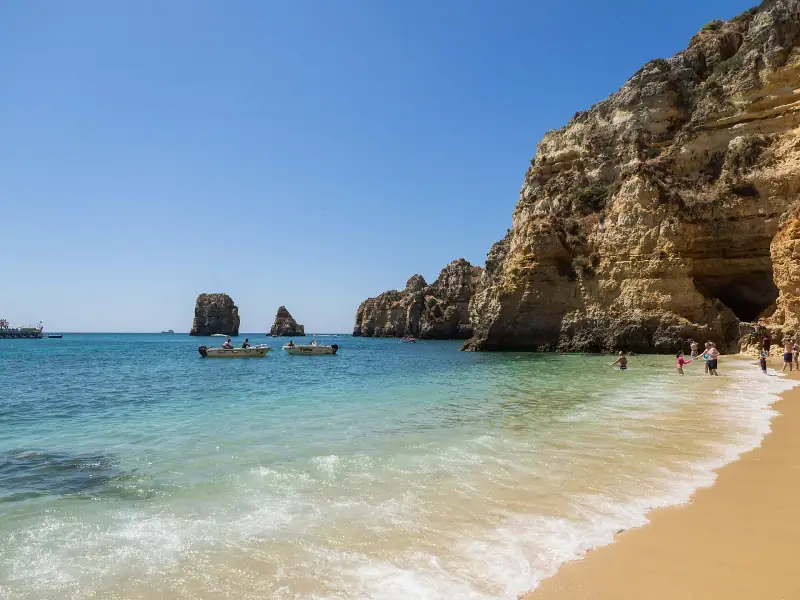
What to do in Portugal with children? Aquarium, zoo, parks, beaches, villages and Madeira: activity ideas by age, recommended pace and practical tips.
Ready-made
Portugal itineraries
3 days
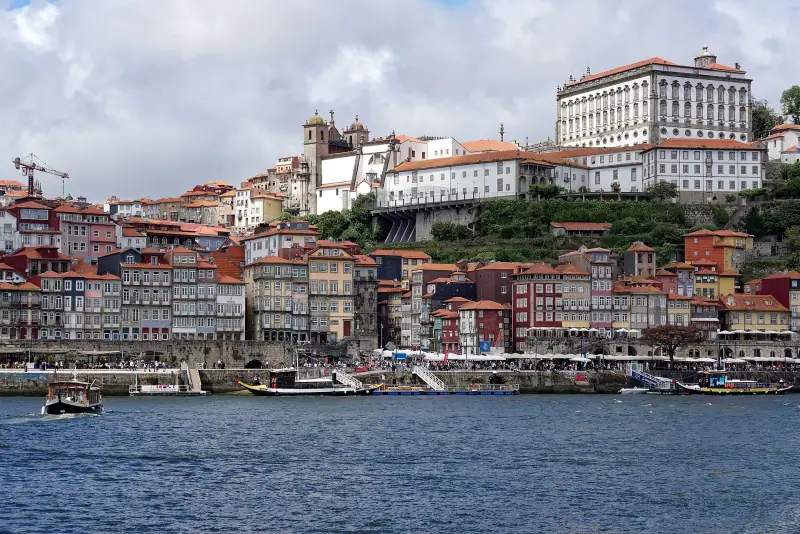
Porto in 3 days: a day-by-day itinerary
What to do in Porto in 3 days: Ribeira, São Bento azulejos, Gaia port cellars, Foz and a Douro Valley excursion. A relaxed day-by-day plan.
3 days
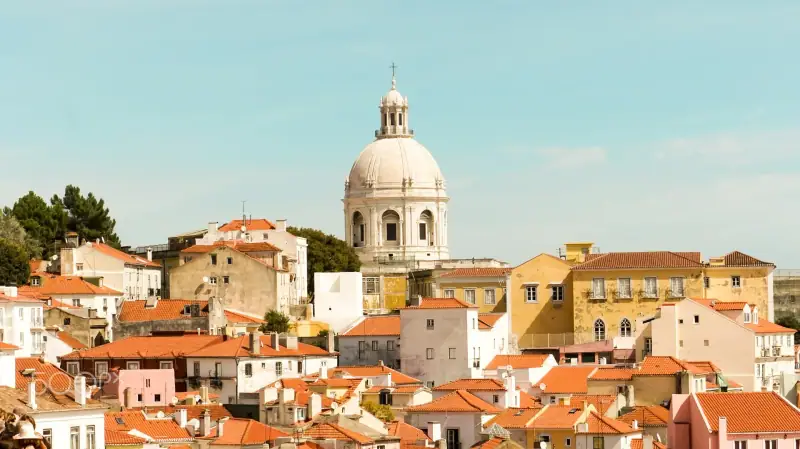
Lisbon in 3 days: day-by-day itinerary, neighborhoods and tips
What to do in Lisbon in 3 days: Baixa, Alfama, Belém, miradouros, Bairro Alto, pastéis de nata and transport tips for a relaxed stay.

1 day
Sintra in a day from Lisbon: itinerary and tips
Sintra in one day from Lisbon: train, Pena Palace, Quinta da Regaleira, Moorish Castle and old town. A realistic itinerary and tips to avoid the crowds.