Itineraries
The Alps in 14 days: Switzerland, the Italian Lakes and the Dolomites, a loop from Zurich
We may earn a commission when you book through links on this page, at no extra cost to you. We don't visit or try the places we cover: we summarize published sources. How we work
Day by day
- Days 1-2Lucerne: old town, lake, Pilatus or Rigi
- Days 3-4Interlaken: Harder Kulm, lakes, Jungfrau region
- Days 5-6Zermatt: car-free village, Matterhorn, Gornergrat
- Day 7Cross into Italy, Stresa, Borromean Islands
- Days 8-9Bellagio, Lake Como villas, ferry to Varenna
- Days 10-12Ortisei: Seceda, Alpe di Siusi, Dolomite passes
- Day 13Brenner into Austria, Innsbruck
- Day 14Back into Switzerland, fly from Zurich
Where to sleep
- Lucerne2 nights
- Interlaken2 nights
- Zermatt2 nights
- Stresa1 night
- Bellagio2 nights
- Ortisei (Val Gardena)3 nights
- Innsbruck1 night
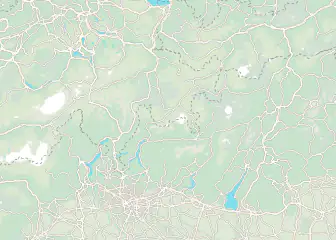
Opens the trip planner with these stops and nights already filled in. Add a stop, drop one or change the nights.
In short
- A 14-day loop from and back to Zurich Airport (ZRH): Lucerne, Interlaken, Zermatt, Stresa, Bellagio, Ortisei and Innsbruck. Three countries, three borders, no one-way fee.
- Longest drives: Bellagio to Ortisei (4 h 15, 325 km / 202 mi) on day 10 and Innsbruck to Zurich (3 h 30, 290 km / 180 mi) on day 14.
- A Swiss rental normally carries the Swiss vignette. Buy the Austrian one (10 days, €12.80 in 2026, valid at once) before day 13, and ask the rental company to authorize Italy and Austria.
- Zermatt is car-free, and the Dolomites and Jungfrau excursions depend on the weather: keep a spare day in each region.
This loop suits drivers who want the three faces of the Alps in two weeks: the Swiss lakes and peaks, the Italian lakes and the Dolomites, with a last night in Tyrol. You pick up the car at Zurich Airport (ZRH), sleep in seven bases and return the same car to the same airport. The route crosses three borders (Switzerland to Italy, Italy to Austria, Austria back to Switzerland), so the practical sections on permits and motorway fees matter as much as the sights.
Driving is moderate for most of the trip: six of the eight drives are under three hours. The two long days are day 10 (Bellagio to Ortisei, 4 h 15) and day 14 (Innsbruck to Zurich, 3 h 30), so start both early. Several mountain excursions depend on the weather, so each region below includes a fallback.
The route at a glance
| Days | Base | Nights | Drive from previous base |
|---|---|---|---|
| 1-2 | Lucerne | 2 | 55 min, 66 km (41 mi) from Zurich Airport |
| 3-4 | Interlaken | 2 | 1 h 05, 69 km (43 mi) |
| 5-6 | Zermatt | 2 | 2 h 50, 157 km (97 mi) |
| 7 | Stresa | 1 | 2 h 30, 148 km (92 mi) |
| 8-9 | Bellagio | 2 | 1 h 45, 118 km (73 mi) |
| 10-12 | Ortisei (Val Gardena) | 3 | 4 h 15, 325 km (202 mi) |
| 13 | Innsbruck | 1 | 1 h 30, 110 km (68 mi) |
| 14 | Zurich Airport (departure) | - | 3 h 30, 290 km (180 mi) from Innsbruck |
Compare rental companies in Zurich
When you compare, tick or ask for the cross-border option and list Italy and Austria as the countries you will drive into.
Day by day
Days 1-2: Lucerne
From Zurich Airport the drive to Lucerne takes 55 min (66 km / 41 mi), so you arrive early even after a transatlantic flight. The old town is compact and walkable. Start with the covered Chapel Bridge, best early in the morning or at the end of the day when the groups thin out, then cross to the quieter Spreuer Bridge. The Lion Monument, carved into a sandstone wall about ten minutes’ walk from the station, takes only a few minutes to see.
On day 2, choose one mountain. Pilatus (about 2,100 m / 6,890 ft) has the steepest cog railway in the world, with a gradient of up to 48%, and runs generally from late spring to autumn. Rigi (about 1,800 m / 5,905 ft) is gentler and grassier, with a wide panorama over the lakes. If clouds sit low, a cruise on Lake Lucerne or the Swiss Museum of Transport (Verkehrshaus) works as a fallback. Details are in our guide to Lucerne, Pilatus and Rigi; to choose a neighborhood, see where to stay in Lucerne.
Sleep in Lucerne: Hotels in Lucerne. For boat trips and summit tickets, see activities in Lucerne.
Days 3-4: Interlaken and the Jungfrau region
Interlaken is 1 h 05 from Lucerne (69 km / 43 mi). The town sits between Lake Thun and Lake Brienz and has two stations: Ost for the mountain trains to Lauterbrunnen and Grindelwald, West for Lake Thun. A car is not needed inside the Interlaken area, so park it at the hotel and use trains, boats and funiculars.
On day 3, ride the funicular up the Harder Kulm (a little over 1,300 m / 4,265 ft, about ten minutes) for a view of both lakes, then walk the Höhematte meadow and the Höheweg promenade. If the weather is clear in the morning, keep day 4 for the high mountains. Otherwise swap: a boat on Lake Brienz to the Giessbach waterfalls or on Lake Thun to the St. Beatus Caves works in any weather.
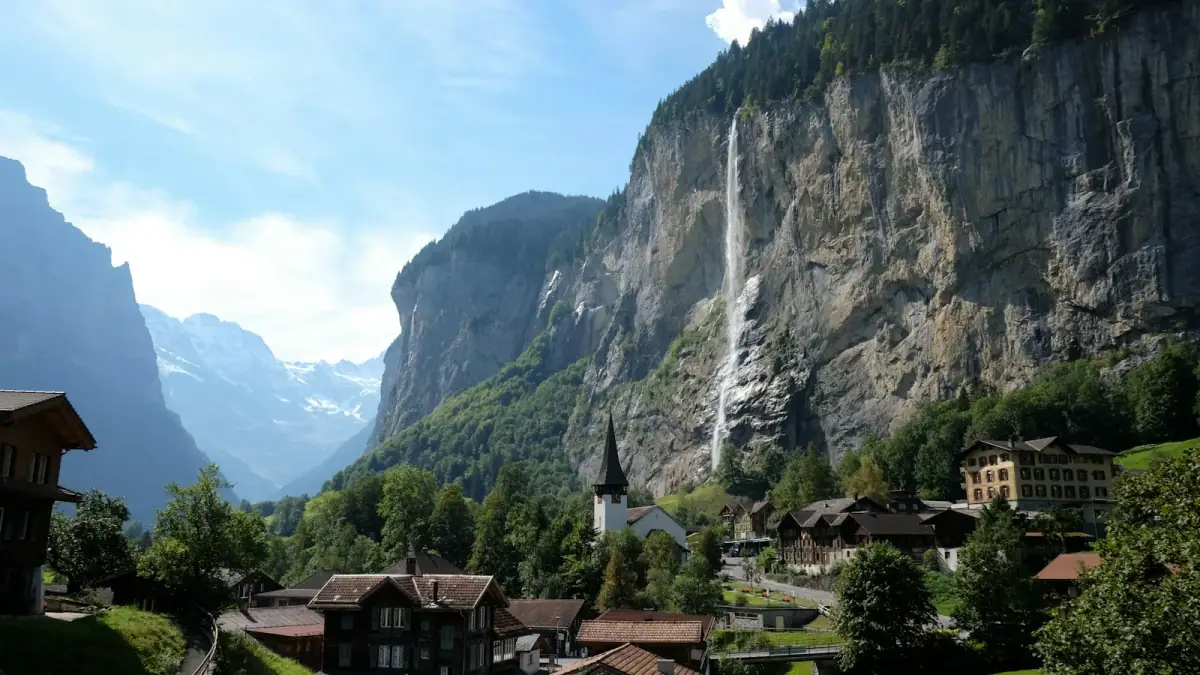
Day 4 is the Jungfrau region. The Jungfraujoch (about 3,450 m / 11,320 ft) requires a seat reservation from May 1 to October 31, 2026, according to the Jungfrau Railways, and the fare is one of the highest of the trip, so look at the summit webcam first. Cheaper alternatives are the Schilthorn above Mürren, First above Grindelwald, and the Trümmelbach Falls in the Lauterbrunnen Valley, which generally open from spring to autumn. Read what to do in the Jungfrau region, Jungfraujoch tickets and visiting Interlaken before choosing.
Sleep in Interlaken: Hotels in Interlaken.
Days 5-6: Zermatt and the Matterhorn
The drive to Zermatt takes 2 h 50 (157 km / 97 mi). Zermatt is car-free: only small electric vehicles run in the village, and our guide describes a mountain train for the last stretch of the rail journey. Ask your hotel how guests arriving by car should handle it before you book, because our guides do not cover parking.
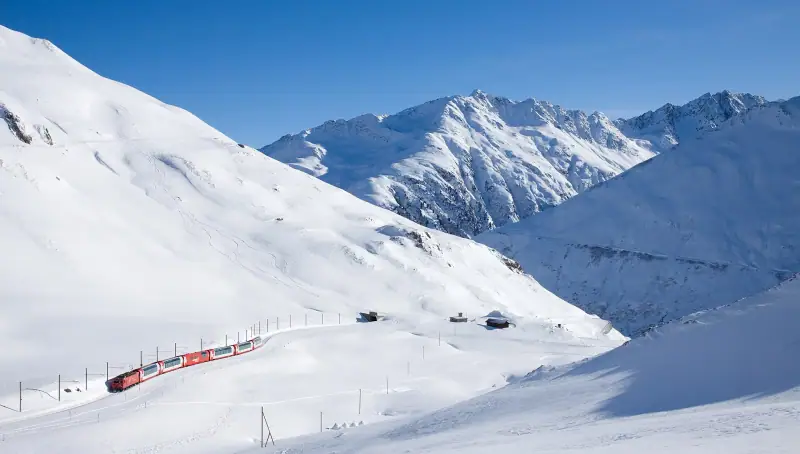
The Matterhorn (about 4,478 m / 14,692 ft) dominates the village and can be seen from its streets. For a closer view, the Gornergrat railway climbs to a balcony facing the Matterhorn and many glaciers. Go early: clouds often rise in late morning, especially in summer. Use day 6 for the Gornergrat if day 5 was spent arriving and walking the village, and have dinner in a traditional inn in the center. The Glacier Express also starts here for the nearly eight-hour trip to St. Moritz, but it does not fit this loop; see Glacier Express or Bernina Express if you want to extend it. For the overall Swiss picture, our 7-day Switzerland itinerary covers Lucerne, Interlaken and Zermatt by train.
Sleep in Zermatt: Hotels in Zermatt.
Day 7: over the Simplon to Stresa
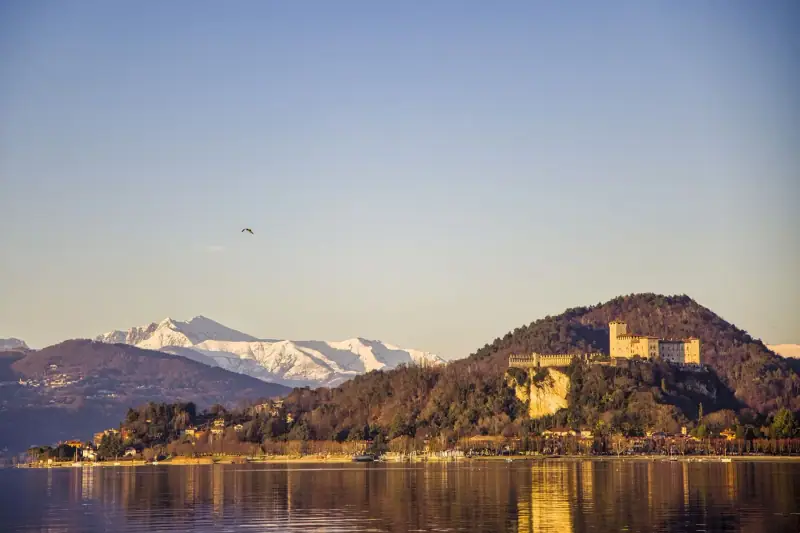
You leave Switzerland for Italy today. The drive to Stresa on Lake Maggiore takes 2 h 30 (148 km / 92 mi) over the Simplon. Stresa is the landing stage for the Borromean Islands, reached only by boat. Isola Bella has the Baroque palace and terraced gardens (about an hour and a half), Isola Madre the botanical garden (one to one and a half hours), and Isola dei Pescatori is the place for a lake-fish lunch. With a half day, choose two islands rather than three, starting with Isola Bella. The islands are closed in winter, so check opening dates. Another option is the Mottarone cable car from Stresa for a panorama in good weather.
See the Borromean Islands for boat options and Villa Taranto if you want a garden on the opposite shore. Sleep in Stresa: Hotels in Stresa.
Days 8-9: Bellagio and Lake Como
Bellagio is 1 h 45 from Stresa (118 km / 73 mi). It has no train station, and parking is limited, so choose lodging near the center or the harbor rather than up the hill, with luggage in mind. On day 8, wander the cobbled lanes and stairways down to the harbor and walk the gardens of Villa Melzi.
On day 9, leave the car and cross by ferry to Varenna, a few dozen minutes away: stroll the lakeside walkway, visit the gardens of Villa Monastero and, if you have the energy, climb to Vezio Castle. The alternative is the west shore by boat: Villa Carlotta at Tremezzo (gardens, best in spring) and Villa del Balbianello at Lenno. Opening days and hours vary with the season. Our guides to the Italian Lakes road trip, Lake Como in 3 days and where to stay on Lake Como give the details.
Sleep in Bellagio: Hotels in Bellagio.
Days 10-12: Ortisei and the Val Gardena
Day 10 is the longest drive of the trip: 4 h 15 and 325 km (202 mi) from Bellagio to Ortisei. Leave in the morning, fill the tank before climbing, and expect to arrive in the evening. The Dolomites are the base for three days, so there is no hurry on the next two.
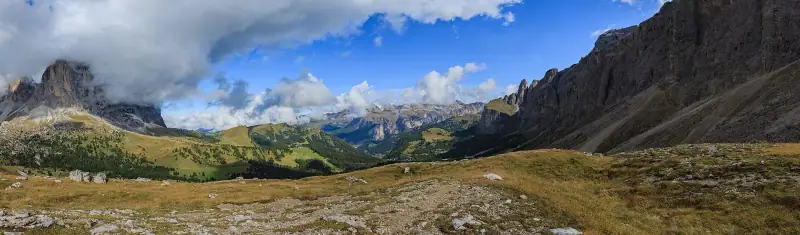
From Ortisei, the Seceda cable car climbs to 2,519 m (8,264 ft). Our hiking guide describes an 8 km (5 mi) loop with about 500 m (1,640 ft) of climbing, around 3 hours of walking from the upper station, with a final climb that needs intermediate hiking skills. The Alpe di Siusi (Seiser Alm), the largest high-altitude pasture in Europe at 56 km² (22 sq mi), is reached by cable car from Ortisei or Castelrotto and has easy loops; its road is closed to cars in high season, so shuttles are required. The Vallunga walk starts from Selva di Val Gardena.
For one driving day, link the passes: Gardena Pass (2,121 m / 6,959 ft) toward Alta Badia, the Sella Pass (2,240 m / 7,349 ft) and the Pordoi Pass (2,239 m / 7,346 ft), the latter open from May to November. The guides give a 70 km/h (43 mph) limit outside built-up areas on secondary roads, and snow chains or winter tires are required from November to April. Start early in July and August, when pass roads fill with cars and cyclists from 9 am. Read the Dolomites road trip, best hikes in the Dolomites and visiting Alta Badia.
Sleep in Ortisei: Hotels in Ortisei.
Day 13: over the Brenner to Innsbruck
The drive from Ortisei to Innsbruck takes 1 h 30 (110 km / 68 mi) via the Brenner, so there is room for a stop in Bressanone (Brixen), on the A22 motorway. The cathedral and Gothic cloister take 1 h to 1 h 15, and the Bishop’s Palace and Diocesan Museum 1 h 30 to 2 h. See visiting Bressanone.
In Innsbruck, walk the old town (the Golden Roof, the Hofburg and the Hofkirche) and take the funicular and cable cars up the Nordkette; go in the morning, because cloud cover removes the view. Our Innsbruck and Tyrol guide and where to stay in Innsbruck cover the town, and the Austria 7-day itinerary shows where else the country leads. Sleep in Innsbruck: Hotels in Innsbruck.
Day 14: back to Zurich
Innsbruck to Zurich Airport is 3 h 30 (290 km / 180 mi). The route re-enters Switzerland, and a Swiss rental car already carries the Swiss vignette. Count back from your check-in time, add a margin for traffic and fuel, and leave early; do not plan a sightseeing stop on this day.
Crossing the borders
All of the countries on this loop are in the Schengen area, Switzerland included, so there are no routine checks at the land borders. Switzerland is outside the EU customs union, so a customs check is possible when you enter or leave it. You cross three borders: Switzerland to Italy on day 7 (Zermatt to Stresa, over the Simplon), Italy to Austria on day 13 (the Brenner, on the way to Innsbruck) and Austria to Switzerland on day 14. Long summer queues are a concern at the external borders of the Schengen area, which this loop does not use. For entry rules and driving licences, check the official advice of your own government: travel.state.gov (US), gov.uk/foreign-travel-advice (UK), travel.gc.ca/destinations (Canada) or smartraveller.gov.au (Australia). ETIAS is not in operation as of November 2026; check travel-europe.europa.eu/etias_en. The EU Entry/Exit System applies when you land at an airport from outside Schengen, not at these land borders. The full list of permits, fees and tolls is on the tour page.
Declare Italy and Austria when you book, and make sure the authorization appears on the rental agreement. Terms differ: Enterprise Switzerland lets Swiss-rented cars go to France, Germany, Italy, Liechtenstein and Austria without any additional charges, while Enterprise France charges €55 (~$64) per rental for the neighboring countries and Avis Austria needs prior approval, with a cross-border fee from €12 (~$14) a day and a maximum of €84 (~$97) per rental (2026). Some categories, such as vans and luxury cars, are restricted. Once the trip is authorized, the rental company’s insurance covers the car in Switzerland, Austria, Italy, France and Germany, and there is no border insurance to buy.
On motorway charges: Switzerland has a vignette of CHF 40 (2026), valid for the calendar year (the 2026 one until 31 January 2027). Swiss rental cars normally carry it. Italy uses distance-based tolls: take a ticket at the entry and pay at the exit. In Austria, the motorway vignette is digital, and the 10-day version for a car costs €12.80 (~$15) in 2026; it is valid at once when bought online, unlike the 2-month and annual versions. Buy it online at oesterreich.gv.at before you enter Austria on day 13, and note that from 1 December 2026 vignettes are digital only. Driving without one risks a fine of €300 to €3,000 (~$350 to $3,480). The Brenner motorway (A13) is not covered by the vignette and costs €12.50 (~$15) per direction (2026). Switzerland uses the Swiss franc; Italy and Austria use the euro.
A one-way rental ending in another country is often refused or charged a high international fee (Avis Austria quotes €100 to €5,000, about $116 to $5,800, for a drop-off in another country, 2026). This loop returns to Zurich, which is usually much cheaper and simpler.
Getting there and away
Zurich Airport (ZRH) is the airport for this trip, for both arrival and departure. Our guides list it among the usual gateways of the Alps for travelers from the US, UK, Canada and Australia, alongside Geneva (GVA) and Munich (MUC). Innsbruck (INN), Milan Malpensa (MXP) and Verona (VRN) are not used here. Because you arrive and leave from the same place, you avoid the one-way drop-off fee. A rental car is useful on this route for the Dolomites and the Italian lakes, less so in Lucerne, Interlaken and Zermatt, where trains, boats and funiculars do the work.
When to go
June to September is the main season for the mountains in all three countries. July and August are the busiest months, and storms often break out on late summer afternoons in the Alps, so go up early. In the Dolomites, huts open gradually from June 15 and the parking lots at Seceda are full by 7:30 am in July and August; June is the month favored by experienced hikers. Many travelers rate September as the best month in Switzerland and the Lakes: trails are still open, the crowds thin and prices drop. In the Italian Lakes, May and September are the most comfortable months, and the islands and some villas are closed in winter. In Switzerland and Austria, some lifts and high-altitude hotels close in spring and from late autumn: check opening dates for the Jungfraujoch, the Gornergrat and the Dolomite cable cars before you book. Our guides give more detail for Switzerland, the Italian Lakes, the Dolomites and Austria.
Budget
Figures come from the regional budget guides and differ by country.
- Switzerland (budget guide, CHF, 2026): about CHF 120 to 200 per person per day for a thrifty traveler and about CHF 250 to 350 for a mid-range one, flights excluded. A 3-star hotel averages about CHF 199 a night in Lucerne, and a lunch dish of the day is CHF 20 to 28.
- Italian Lakes (budget guide): per person per day for a couple sharing a room, about €90 (~$105) thrifty, €190 (~$220) comfort and €380 (~$440) high-end, excluding flights. A tourist tax of up to €5 (~$6) per person per night is paid on the spot.
- Austria (budget guide): about €150 to €210 (~$175 to $245) per person per day at mid-range comfort, plus the vignette above.
Add the rental car, fuel, tolls and the cable cars: mountain lifts are the largest single expense in Switzerland, so choose one or two big excursions rather than one a day.
Adapt it
For a shorter trip, drop Interlaken and go from Lucerne to Zermatt, or skip the Italian Lakes and stay in Switzerland and the Dolomites. For a longer one, the other stops of our Alps planner fit between bases: Lugano, Como or Varenna on the lakes, Bolzano or Cortina d’Ampezzo in the Dolomites, Salzburg or Hallstatt beyond Innsbruck, Munich or Garmisch-Partenkirchen if you want to end in Bavaria. Geneva, Montreux, Zurich and St. Moritz extend the Swiss part. Any longer variant that ends in another country is a one-way rental, so check the drop-off fee first.
Frequently asked questions
Can you drive a Swiss rental car into Italy and Austria?
Yes, if you declare every country when you book and the authorization appears on the rental agreement. As an example, Enterprise Switzerland lets Swiss-rented cars go to Italy and Austria without additional charges, while other companies charge a cross-border fee (published terms, 2026). Fees vary, so compare them.
Do you need to buy a vignette for this loop?
A Swiss rental car normally carries the Swiss motorway vignette (CHF 40 in 2026). Austria requires its own digital vignette: €12.80 for 10 days in 2026, valid at once. Italy has distance-based tolls instead of a vignette, and the Brenner motorway in Austria (A13) costs €12.50 per direction (2026).
Is a one-way rental possible instead of a loop?
A drop-off in another country is often refused or carries a high international one-way fee (Avis Austria quotes €100 to €5,000, 2026). This route returns to Zurich Airport, which is usually much cheaper and simpler.
Can you take the car to Zermatt?
No. Zermatt is a car-free village where only small electric vehicles run. Ask your hotel before you book how it handles guests arriving by car, and plan the two nights there around the Matterhorn viewpoints.
Ready-made
Alps road trip itineraries
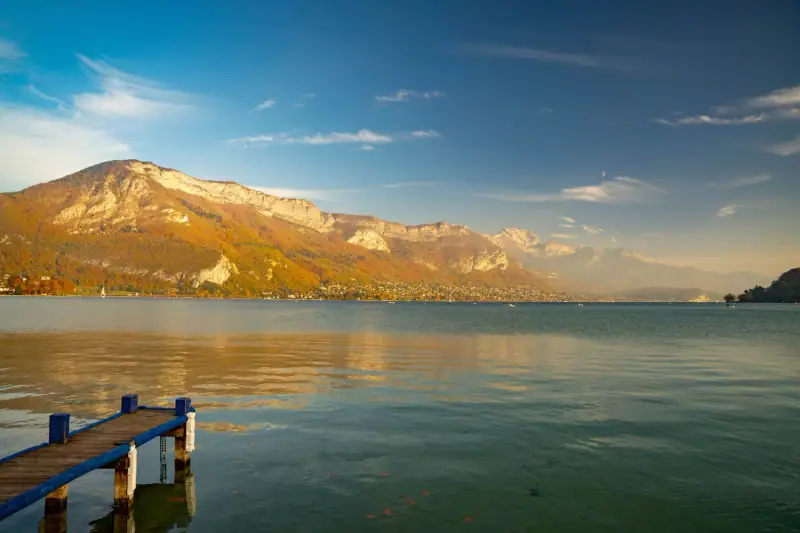
14 days
Mont Blanc and Switzerland in 14 days: a loop from Geneva by car
AnnecyChamonix-Mont-BlancZermattLucerneInterlakenMontreux
Can be adapted in the planner
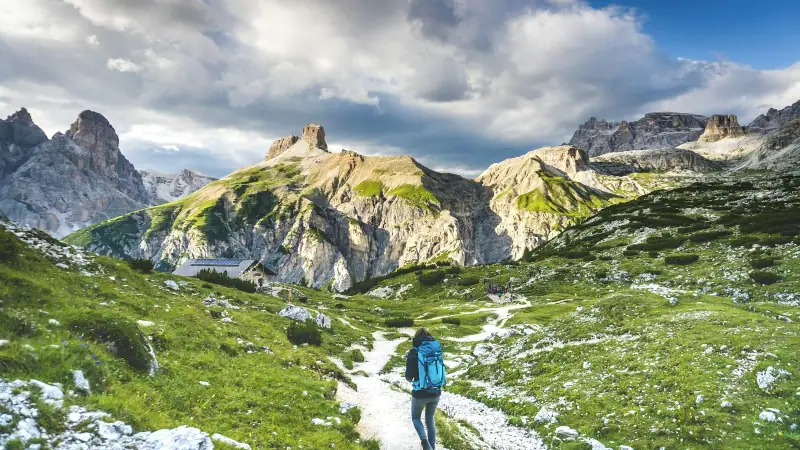
21 days
The Alps in 21 days: a loop from Munich through Germany, Austria, Switzerland and Italy
FüssenLucerneInterlakenZermattStresaBellagioRiva del GardaOrtisei (Val Gardena)Cortina d'AmpezzoInnsbruckBerchtesgaden
Can be adapted in the planner