Itineraries
The Alps in 21 days: a loop from Munich through Germany, Austria, Switzerland and Italy
We may earn a commission when you book through links on this page, at no extra cost to you. We don't visit or try the places we cover: we summarize published sources. How we work
Day by day
- Day 1Drive from Munich Airport to Füssen and Neuschwanstein
- Days 2-3Lucerne: old town, lake cruise, Pilatus or Rigi
- Days 4-5Interlaken: Harder Kulm, lakes, Lauterbrunnen and Grindelwald
- Days 6-7Zermatt: the Matterhorn and the Gornergrat railway
- Day 8Cross into Italy; Stresa on Lake Maggiore
- Days 9-11Bellagio: Lake Como by boat, villas and gardens
- Days 12-13Riva del Garda: northern Lake Garda and Monte Baldo
- Days 14-15Ortisei: Seceda and Alpe di Siusi
- Days 16-17Cortina d'Ampezzo: Tofana, Cinque Torri, Tre Cime
- Day 18Back into Austria: Innsbruck old town and Nordkette
- Days 19-20Berchtesgaden: Königssee and the national park
- Day 21Drive to Munich Airport and fly home
Where to sleep
- Füssen1 night
- Lucerne2 nights
- Interlaken2 nights
- Zermatt2 nights
- Stresa1 night
- Bellagio3 nights
- Riva del Garda2 nights
- Ortisei (Val Gardena)2 nights
- Cortina d'Ampezzo2 nights
- Innsbruck1 night
- Berchtesgaden2 nights
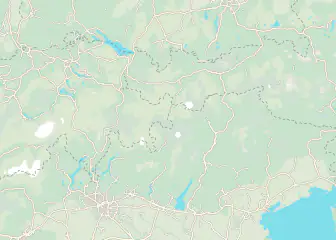
Opens the trip planner with these stops and nights already filled in. Add a stop, drop one or change the nights.
In short
- A 21-day loop from and back to Munich Airport: 11 bases, 20 nights, about 1,920 km (1,190 mi) and about 27 hours of driving in total.
- Four countries by car (Germany, Austria, Switzerland, Italy) with five border crossings; tell the rental company about every country when you book.
- A German rental car needs the Swiss vignette (CHF 40, 2026) and an Austrian digital vignette; Italy charges distance-based tolls.
- Best from mid-June to mid-September, when mountain lifts, huts and passes are open.
This loop suits travelers who want the Alps in one trip: Bavarian castle country, the Swiss lakes and the Matterhorn, three Italian lakes, the Dolomites, the Tyrolean city of Innsbruck and the far southeast corner of Germany. You pick up a car at Munich Airport (MUC), sleep in 11 bases over 20 nights and return the car at the same airport. Most bases get two nights, so you unpack less than the distances suggest.
The driving adds up to about 1,920 km (1,190 mi), or roughly 27 hours spread over 12 drives. Most are between 1 and 2.5 hours; the two longest are Füssen to Lucerne (3 h 35) and Bellagio to Riva del Garda (3 h 15). The route crosses four countries and five borders, so read the border section before you book the car.
The route at a glance
| Days | Base | Nights | Drive from previous base |
|---|---|---|---|
| 1 | Füssen | 1 | 1 h 55, 162 km (101 mi) from Munich Airport |
| 2-3 | Lucerne | 2 | 3 h 35, 287 km (178 mi) |
| 4-5 | Interlaken | 2 | 1 h 05, 69 km (43 mi) |
| 6-7 | Zermatt | 2 | 2 h 50, 157 km (97 mi) |
| 8 | Stresa | 1 | 2 h 30, 148 km (92 mi) |
| 9-11 | Bellagio | 3 | 1 h 45, 118 km (73 mi) |
| 12-13 | Riva del Garda | 2 | 3 h 15, 222 km (138 mi) |
| 14-15 | Ortisei (Val Gardena) | 2 | 1 h 50, 137 km (85 mi) |
| 16-17 | Cortina d’Ampezzo | 2 | 1 h 20, 66 km (41 mi) |
| 18 | Innsbruck | 1 | 2 h 25, 161 km (100 mi) |
| 19-20 | Berchtesgaden | 2 | 2 h 25, 196 km (122 mi) |
| 21 | Munich Airport (MUC) | - | 2 h 05, 195 km (121 mi) |
Compare rental companies in Munich
When you compare, tick or ask for the cross-border option and list Germany, Austria, Switzerland and Italy.
Day by day
Day 1: Munich Airport to Füssen
Drive 1 h 55, 162 km (101 mi). Füssen is a small town in southern Bavaria, a few kilometers from the Austrian border, and the base for Neuschwanstein. The castle can only be visited on a guided tour with a set time slot; the visit lasts about 30 minutes, and between spring and fall the slots are often full, so book on the official site of the Hohenschwangau royal castles. Parking lots at the foot of the castle fill quickly in summer.
For the classic view, walk to the Marienbrücke footbridge above the gorge, then down to the Alpsee. In the evening, the old town and the former St. Mang monastery take an hour or two. Our guide to Neuschwanstein and Füssen has the details, and the Bavaria overview covers the rest of the state. Hotels in Füssen.
Days 2-3: Lucerne
Drive 3 h 35, 287 km (178 mi). This is the first long day, and the road leaves Germany, passes through Austria and enters Switzerland (see the border section). Lucerne’s old town can be walked in a few hours: the Chapel Bridge, the quieter Spreuer Bridge and the Lion Monument, ten minutes from the station. Visit the Chapel Bridge early or late, as groups are large at midday. A boat on the lake from the quays near the station takes one to two hours.
Use day 3 for one mountain. Pilatus (about 2,100 m, 6,890 ft) has the steepest cog railway, with a 48% maximum gradient, running from late spring to autumn. Rigi (about 1,800 m, 5,905 ft) is gentler, with a wide panorama. The guide advises picking one for a short stay. Read Lucerne, Pilatus and Rigi, and see our 7-day Switzerland itinerary for the wider picture. Hotels in Lucerne and activities in Lucerne.
Days 4-5: Interlaken
Drive 1 h 05, 69 km (43 mi). Interlaken sits between Lake Thun and Lake Brienz. On day 4, walk the Höhematte meadow, which looks straight at the Jungfrau, and take the funicular to the Harder Kulm (a little over 1,300 m, 4,265 ft) in about ten minutes; check the closing period in the off-season. Boats on Lake Brienz stop at Giessbach, where waterfalls fall in steps through the forest.
Day 5 is for the Jungfrau region: the Lauterbrunnen Valley with the Staubbach and the Trümmelbach Falls, or Grindelwald and the First Cliff Walk. The Jungfraujoch (about 3,450 m, 11,320 ft) is the priciest excursion: the Switzerland budget guide gives about CHF 235 round trip from Interlaken, and the view depends on visibility, so check the webcams that morning. See Interlaken and what to do in the Jungfrau region. Hotels in Interlaken.
Days 6-7: Zermatt
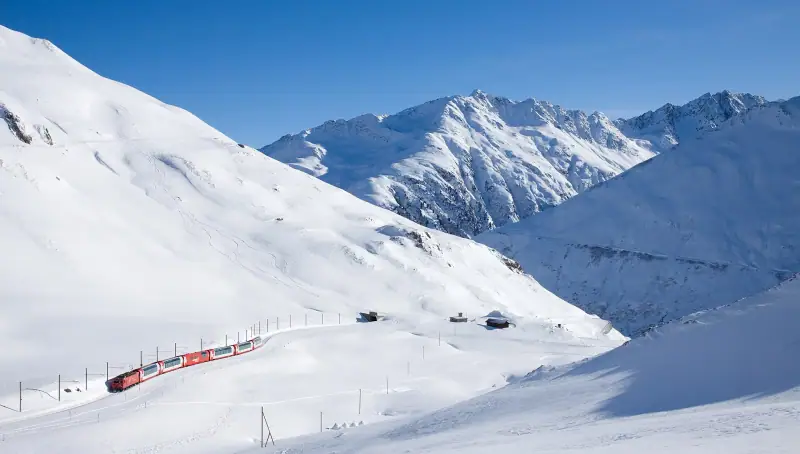
Drive 2 h 50, 157 km (97 mi). Our guides describe Zermatt as car-free, with only small electric vehicles, and the last stretch from the valley is by mountain train. Ask your hotel where to leave the car before you book. The Matterhorn rises to about 4,478 m (14,692 ft) above the village. The Gornergrat railway climbs to a balcony facing the Matterhorn and many glaciers. Rooms are limited and fill quickly in high season; the Switzerland guides advise booking two to three months ahead for July and August.
There is no dedicated Zermatt guide, so keep day 7 flexible: walks near the village, a second mountain-lift day or a rest after the Swiss legs. Check lift opening dates, as some close between seasons. Hotels in Zermatt.
Day 8: Stresa on Lake Maggiore
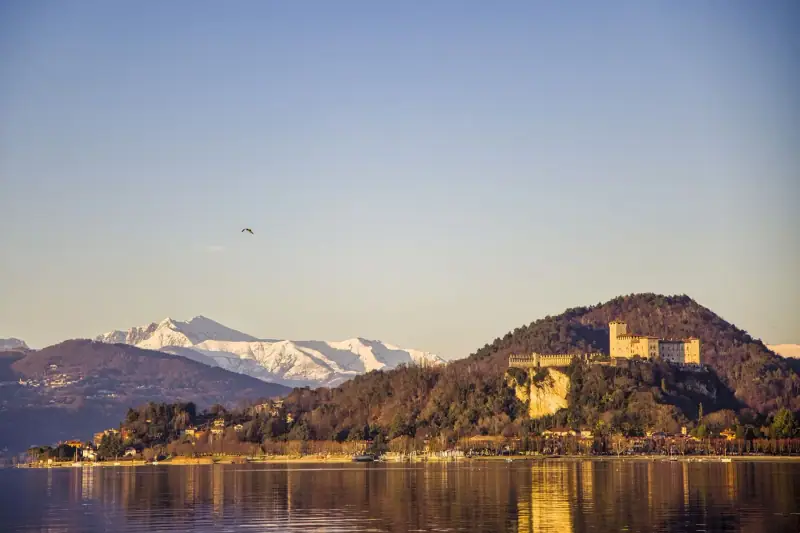
Drive 2 h 30, 148 km (92 mi), crossing from Switzerland into Italy. Stresa is an elegant spa town on the Piedmont shore, lined with 19th-century hotels, and the lakefront looks out on the Borromean Islands. Choose a hotel with parking. If you want one island before leaving, take an early boat to Isola Bella on the morning of day 9 and allow about an hour and a half for the palace and terraced gardens. The guide is Borromean Islands. Hotels in Stresa.
Days 9-11: Bellagio on Lake Como
Drive 1 h 45, 118 km (73 mi). Lake roads are narrow, winding and congested, so park the car and use the ferries. Bellagio sits at the tip of the peninsula between the two southern branches. Spend one day on the west shore: Villa Carlotta at Tremezzo and Villa del Balbianello at Lenno, then a ferry back. Another day, walk the gardens of Villa Melzi in Bellagio, or take the ferry to Varenna and its Villa Monastero. Parking is limited and paid in most villages.
Check villa hours, which vary by season. The Italian Lakes budget guide puts a 3-star hotel in star villages like Bellagio at €135 to €180 (~$155 to $210) a night and more. See the 3-day Lake Como itinerary, the 7-day Italian Lakes road trip and where to stay on Lake Como. Hotels in Bellagio and Lake Como cruises.
Days 12-13: Riva del Garda
Drive 3 h 15, 222 km (138 mi), the longest drive in Italy. Riva sits in the northwest corner of Lake Garda at the foot of steep cliffs, with an old town, a harbor, the Torre Apponale and a lakeside promenade. On day 13, drive the shore road to Torbole, a wind-sport spot where you can watch the sails from a terrace, and on to Malcesine, a medieval village with a castle and the cable car up Monte Baldo. Traffic is heavy in summer, and the road alternates tunnels and viewpoints. Read northern Lake Garda. Hotels in Riva del Garda.
Days 14-15: Ortisei in Val Gardena
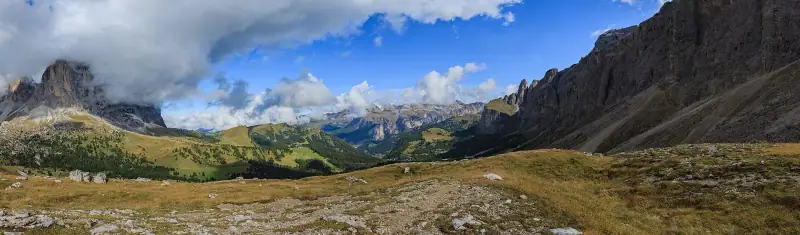
Drive 1 h 50, 137 km (85 mi). Ortisei is the base for Seceda: a cable car reaches 2,519 m (8,264 ft), and the loop from Ortisei is 8 km (5 mi) with a 500 m (1,640 ft) gain. In July and August the parking lots at Seceda are full by 7:30 am, so go early. On day 15, the Alpe di Siusi, the largest high-altitude pasture in Europe (56 km², 22 sq mi), is reached by cable car from Ortisei and offers easy walks at 1,800 to 2,000 m (5,905 to 6,560 ft).
The Dolomites are at their best from June to September. Huts open gradually from June 15. Our guides are Dolomites 7-day itinerary and best hikes in the Dolomites. Hotels in Ortisei.
Days 16-17: Cortina d’Ampezzo
Drive 1 h 20, 66 km (41 mi). Cortina sits at 1,224 m (4,016 ft) and hosted the 1956 Winter Olympics; it co-hosted the 2026 Games. Corso Italia, a 600 m (about 2,000 ft) pedestrian street, and the Baroque bell tower of the basilica are the town’s center. The Freccia nel Cielo cable car climbs in three stages to the Tofana di Mezzo (3,244 m, 10,643 ft). The Cinque Torri are covered in the same guide, Cortina d’Ampezzo top sights.
For the Tre Cime, the toll road from Misurina costs €40 (~$46) per car in 2026, valid for 12 hours, with an online reservation required before you drive up. Parking at the Tre Cime is full by 7:30 am in July and August. See where to stay in Cortina and the Dolomites road trip. Hotels in Cortina d’Ampezzo.
Day 18: Innsbruck
Drive 2 h 25, 161 km (100 mi), from Italy back into Austria. The old town takes half a day on foot: the Golden Roof, the Hofburg and the Hofkirche with the tomb linked to Emperor Maximilian I. Go up the Nordkette in the morning, when visibility is often better, using the funicular from the center and the cable cars above it, and keep the old town for the afternoon if the weather turns. See Innsbruck and Tyrol, where to stay in Innsbruck and the 7-day Austria itinerary. Hotels in Innsbruck.
Days 19-20: Berchtesgaden
Drive 2 h 25, 196 km (122 mi), from Austria into Germany. Berchtesgaden lies in a corner of Bavaria almost surrounded by Austria. The Königssee is a long, narrow lake between rock walls, visited by electric boat; the pilot sometimes stops to make an echo ring against the cliff. On the shore, St. Bartholomew’s chapel with its red domes is one of the best-known images of Bavaria. The area is a national park with trails and alpine pastures.
On the second day, visit the former salt mine in the town, or the documentation center at the Obersalzberg, which presents the Nazi period in a sober and critical way. The Bavaria guide notes that Salzburg lies right next to the region. See what to see in Bavaria. Hotels in Berchtesgaden and activities in Berchtesgaden.
Day 21: back to Munich Airport
Drive 2 h 05, 195 km (121 mi). Allow plenty of time for refueling and returning the car before your flight.
Crossing the borders
The loop has five crossings. Day 2: Germany to Austria and Austria to Switzerland, on the way from Füssen to Lucerne. Day 8: Switzerland to Italy, between Zermatt and Stresa. Day 18: Italy to Austria, between Cortina and Innsbruck. Day 19: Austria to Germany, between Innsbruck and Berchtesgaden. All four countries are in the Schengen area, Switzerland included, so there are no routine checks at these land borders. Switzerland is outside the EU customs union, so a customs check is possible. Queues can be long at the external borders of the EU/Schengen area in summer, but none of these five is one. The EU Entry/Exit System applies when you land from outside Schengen, at the airport; ETIAS is not in operation as of November 2026 (check travel-europe.europa.eu/etias_en). For visas, entry rules and driving licences, see your own government: travel.state.gov (US), gov.uk/foreign-travel-advice (UK), travel.gc.ca/destinations (Canada) or smartraveller.gov.au (Australia). The tour page has a section on crossing borders with a rental car.
Declare every country when you book; the authorisation must appear on the rental agreement. Terms differ: Enterprise Switzerland lets Swiss-rented cars go to France, Germany, Italy, Liechtenstein and Austria without extra charge, Enterprise France charges €55 per rental for neighboring countries, and Avis Austria needs prior approval with a fee from €12 a day, capped at €84 per rental (published terms, 2026). Vans and luxury cars can be restricted. Once the trip is authorised, the rental company’s insurance covers the car in all four countries, and you do not buy border insurance.
Vignettes and tolls matter most. A car rented in Germany needs the Swiss motorway vignette before it uses a Swiss motorway: CHF 40 (2026), valid for the calendar year (the 2026 one until 31 January 2027), with no short-term version; the official e-vignette shop is via.admin.ch/shop. Austria uses a digital vignette (2026, car): 1 day €9.60, 10 days €12.80, 2 months €32.00. Bought online as a consumer, the 2-month vignette becomes valid only on the 18th day, while the 1-day and 10-day ones are valid at once; the fine without one is €300 to €3,000. Austria is crossed on day 2 and again on days 18 and 19. If your route uses the Brenner motorway A13, it costs €12.50 per direction (2026), outside the vignette. Italy charges distance-based tolls (ticket at the entry, pay at the exit). Germany has no car toll.
Germany, Austria and Italy use the euro; Switzerland uses the Swiss franc, and the guides advise paying in francs by bank card. A one-way rental ending in another country is often refused or carries a high fee (Avis Austria lists €100 to €5,000; Sixt shows a fixed fee by car group before you confirm). This loop returns the car to Munich, which is usually much cheaper.
Getting there and away
You fly into and out of Munich Airport (MUC). From the US, UK, Canada and Australia, use whichever international gateway offers a route to Munich. Our guides do not list flights, so check airlines directly. Other airports in the region are Zurich (ZRH), Geneva (GVA), Innsbruck (INN), Salzburg (SZG), Milan Malpensa (MXP), Bergamo (BGY), Verona (VRN) and Venice (VCE). Ending at one of them would mean a one-way rental into another country, with the fee described above, so MUC both ways is the simplest.
When to go
Aim for mid-June to mid-September. The Switzerland guide calls June to August the prime season for alpine landscapes, with open trails and huts, but snowfields can remain on high trails in June and sometimes July, and storms break out in late afternoon. The Dolomites guide says huts open gradually from June 15, and July and August are the busiest months. On the Italian lakes, July and August days reach 28 to 30 °C (82 to 86 °F). The Austria guide calls September for many travelers the best month, and the Germany guide agrees on September and October for fewer crowds.
Budget
Figures come from each region’s budget guide and are benchmarks. Switzerland (2026): about CHF 120 to 200 per person per day thrifty and CHF 250 to 350 mid-range, flights excluded, with a 3-star hotel in Lucerne averaging CHF 199 a night. Italian Lakes: about €90 (~$105), €190 (~$220) or €380 (~$440) per person per day for thrifty, mid-range or high-end, couple sharing a room. Germany: €70 to 90 (about $80 to 105) a day thrifty, €130 to 180 (about $150 to 210) comfort. Austria: a two-star hotel or guesthouse at €85 to €150 (~$99 to $175) a night. These exclude the car, fuel, vignettes and tolls.
Adapt it
For a shorter loop, cut a two-night base such as Riva del Garda or Zermatt and keep the order of the others. For a longer trip, add a night at Como, Sirmione on Lake Garda, Lugano or St. Moritz in the south of Switzerland, Bolzano or Canazei in the Dolomites, Hallstatt or Zell am See in Austria, or Garmisch-Partenkirchen near the Bavarian end of the loop. Any extra base adds a drive that this page does not give, so check it on a map. Munich itself can fill a day before or after the loop.
Frequently asked questions
Do I need a special permit to drive a rental car across these borders?
Declare every country when you book; the authorisation must appear on the rental agreement. Some companies charge a fee (for example €55 per rental at Enterprise France, from €12 a day at Avis Austria in the published terms), others none. Compare fees.
Which vignettes does a German rental car need on this loop?
The Swiss motorway vignette (CHF 40 in 2026) and the Austrian digital vignette (1 day €9.60, 10 days €12.80, 2 months €32.00 in 2026). Germany has no car toll, and Italy charges tolls by distance.
Why does the trip return to Munich instead of ending elsewhere?
A drop-off in another country is often refused or carries a high international one-way fee. Avis Austria, for example, lists €100 to €5,000. A loop back to the pick-up airport is usually much cheaper.
Are there passport checks at the borders?
All four countries are in the Schengen area, so there are no routine checks at these land borders. Switzerland is outside the EU customs union, so a customs check is possible. Check entry rules with your own government.
Ready-made
Alps road trip itineraries
14 days
Mont Blanc and Switzerland in 14 days: a loop from Geneva by car
AnnecyChamonix-Mont-BlancZermattLucerneInterlakenMontreux
Can be adapted in the planner
14 days
The Alps in 14 days: Switzerland, the Italian Lakes and the Dolomites, a loop from Zurich
LucerneInterlakenZermattStresaBellagioOrtisei (Val Gardena)Innsbruck
Can be adapted in the planner