Where to stay
Where to stay in Lucerne: neighborhoods and types of accommodation
We may earn a commission when you book through links on this page, at no extra cost to you. We don't visit or try the places we cover: we summarize published sources. How we work
In short
- For a first stay, the old town and the Reuss banks are the best compromise; the station area is most practical for train travelers on daily excursions.
- Hirschmatt and the Neustadt, a 10 to 15 minute walk away, are usually a little cheaper; lake-view rooms cost the most and go first.
- Two nights cover the city; three or four add a Pilatus or Rigi excursion and a lake cruise.
- Book as early as possible for summer and sunny weekends; a few weeks ahead is generally enough off-season.
Lucerne fits in the palm of your hand: an old town with painted facades, two covered wooden bridges, a river, the Reuss, flowing out of Lake Lucerne, and mountains as a backdrop. This compactness is a boon for travelers, since almost every central district lets you do everything on foot. It still makes the choice of accommodation subtler than it seems: left bank or right bank, lake view or low price, city or neighboring village.
This guide goes through Lucerne’s neighborhoods, then the types of accommodation (hotels, hostels, apartments, campsites), the pitfalls to avoid and tips for cutting the bill. Rates change sharply from one season to the next: check them for your dates. To place Lucerne among the country’s other bases, see our guide where to stay in Switzerland, and to plan your days, our article visiting Lucerne, Pilatus and Rigi.
How Lucerne is laid out
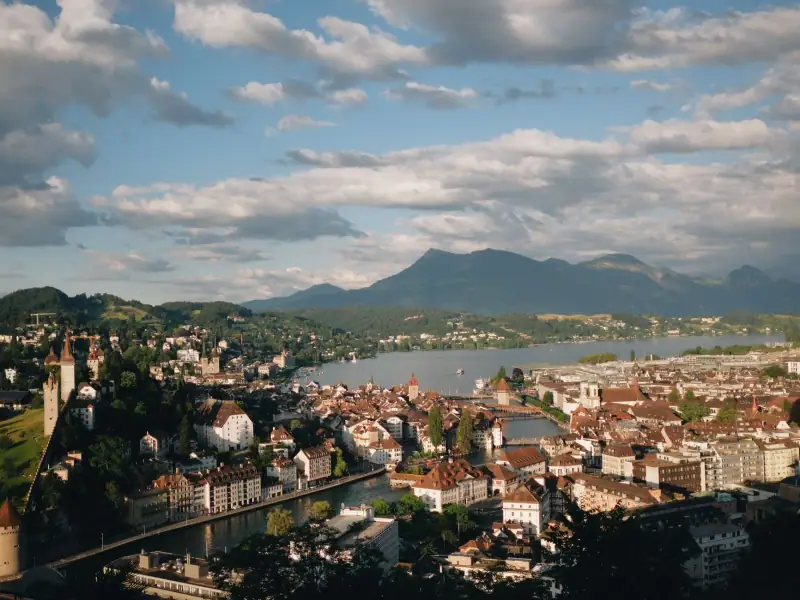
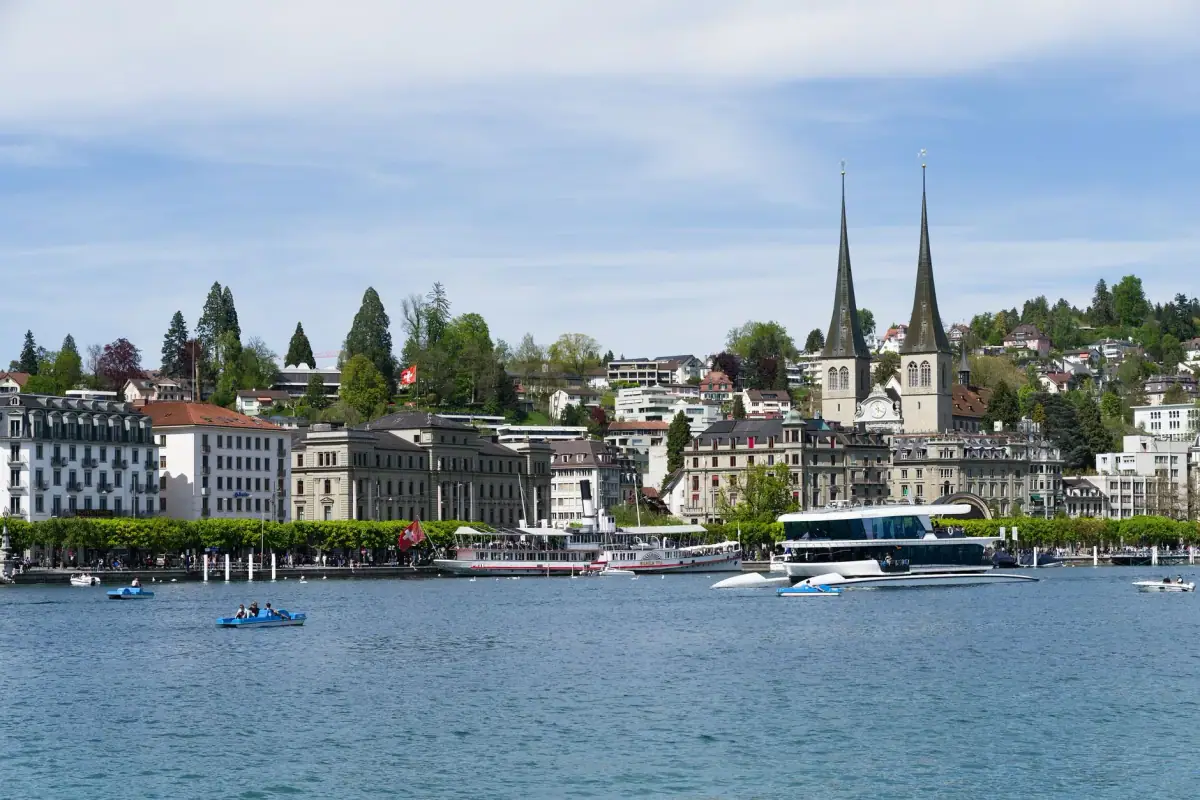
The center is organized around the Reuss, which crosses the city just after leaving the lake. On one side of the river are the station, the waterfront culture and convention center and the quay along the lake; on the other stretches the historic old town, with its squares, fountains and painted houses. The two banks are linked by several bridges, including the famous wooden Chapel Bridge.
The city is small: from the station to most sights in the center, allow five to twenty minutes on foot. Buses and trolleybuses serve the outer districts, and the lake boats are a mode of transport in their own right. This network makes almost every district an easy starting point, provided you check the proximity of a stop. If you stay several days and plan excursions by train, boat and cable car, our article on the Swiss Travel Pass helps you decide whether this pass pays off for your stay.
The old town (Altstadt): charm on foot
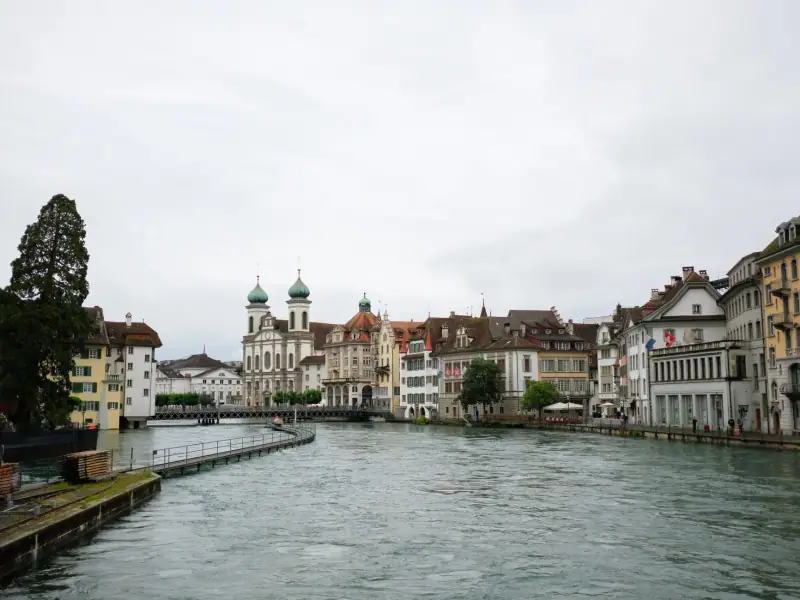
Sleeping in the old town means waking up among painted facades, fountains and bell towers, with the Chapel Bridge, the Water Tower and the banks of the Reuss a few minutes’ walk away. The lanes are partly pedestrian, terraces are plentiful, and you can reach the lake, the station and the quays without taking any transport. Some hotels occupy former guild houses or buildings directly on the river, sometimes with a direct view of the bridges.
Pros:
- Everything is within walking distance, day and night.
- The setting is the most picturesque in the city.
- Restaurants, cafés and shops are within reach.
Cons:
- It is the most expensive area of Lucerne, even for modest hotels.
- The busiest streets can be noisy in the evening, especially in summer: ask for a courtyard-side room.
- Old buildings sometimes have small rooms, narrow stairs and not always an elevator.
It is the right choice for a short stay, a couple’s getaway or a first trip, if your budget allows. If you are a light sleeper, choose side streets over the immediate surroundings of the busiest squares.
The station and lake area: the most practical
Lucerne station sits on the water, at the entrance to the old town, and concentrates many hotels of all categories, from simple hotels to grand lakeside hotels. The appeal is obvious: you arrive by train, drop your bags within minutes and head out on excursions without losing time. The lake boat quays are right next door, which makes cruise days toward Rigi or the lakeshore villages easier.
The area is functional, lively and very well served, but a little less intimate than the old town. At peak hours, traffic in front of the station is heavy. Rooms facing the lake are the most sought-after, and go early in high season.
This district suits travelers linking stops across the country by train, those who arrive late or leave early, and anyone who wants an uncomplicated place to land. To see how Lucerne fits into a circuit, see our 7-day itinerary by train.
🏨 Compare hotels in Lucerne: old town, station or lakefront, compare rates and amenities for your dates and budget.
The lakefront: views and elegance
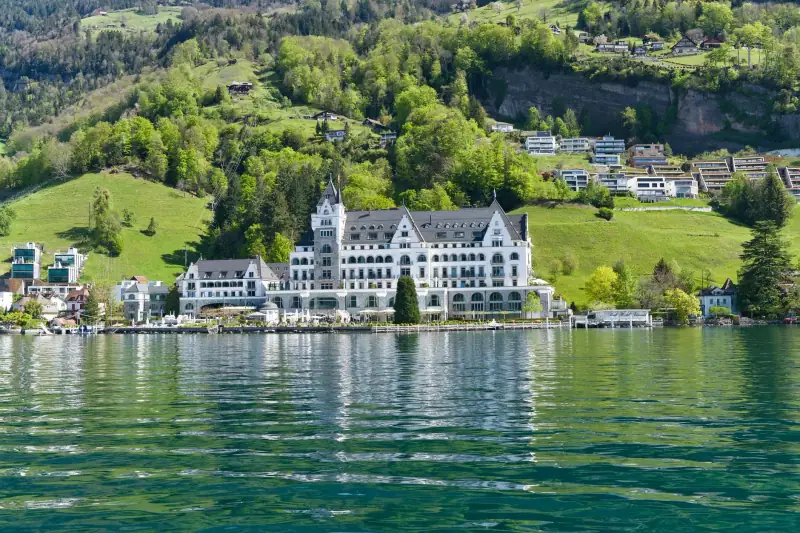
Along the quays, on either side of the Reuss outlet, several grand historic hotels look out over the lake and the mountains. It is the classic address for a romantic getaway or a summer stay, with the waterfront promenade as a natural terrace. In the morning, the light on the lake and Pilatus alone justifies the price supplement.
Expect high rates, especially for rooms with a view. The atmosphere is peaceful and elegant, but neighborhood life is less pronounced than in the old town. To enjoy the view without paying top price, some travelers book a mid-range hotel a few streets from the quay and make the lakeside promenade their living room.
Hirschmatt and the Neustadt: lively and more affordable
Away from the waterfront, behind the station, the Neustadt district and Hirschmatt street form a more urban, everyday area: local shops, bars, small restaurants and mid-range hotels. Travelers generally find rates a little gentler than in the old town, for at most ten to fifteen minutes’ walk.
The atmosphere is that of a lively district, without the postcard backdrop. It suits those who prefer to save on the room and spend more on excursions, and it remains very well linked by bus. As always, look at the map and recent reviews before booking, rather than relying on the district name alone.
Tribschen, Seeburg and the residential shores
Following the lake east or south, you reach quieter residential districts, with parks, public beaches and waterfront walks. Tribschen and Seeburg are the names that come up most often: green and airy, they offer a soothing setting twenty or thirty minutes’ walk from the center, or a few minutes by bus.
These districts suit longer stays, families and summer swimming fans, who enjoy the shores without leaving the city. The choice of accommodation is more limited than in the center, which means booking early in high season. In the evening, there are fewer places to go out: plan your way back if you dine in the old town.
🎟️ Activities and excursions from Lucerne: lake cruises, guided tours of the old town and day trips to the nearby mountains.
Neighboring municipalities: Kriens, Horw and the foot of Pilatus
Southwest of the city, Kriens is the gateway to Pilatus, served from the center by public transport. Horw, on the lake, is more residential. Staying in one of these municipalities can lower the bill, and makes sense if your plans revolve around Pilatus or if you travel by car, since parking is simpler than downtown.
In exchange, you lose the old-town atmosphere and must plan on a daily trip to reach it. Check the last bus times if you plan to dine in town in the evening.
Sleeping by the lake, outside the city
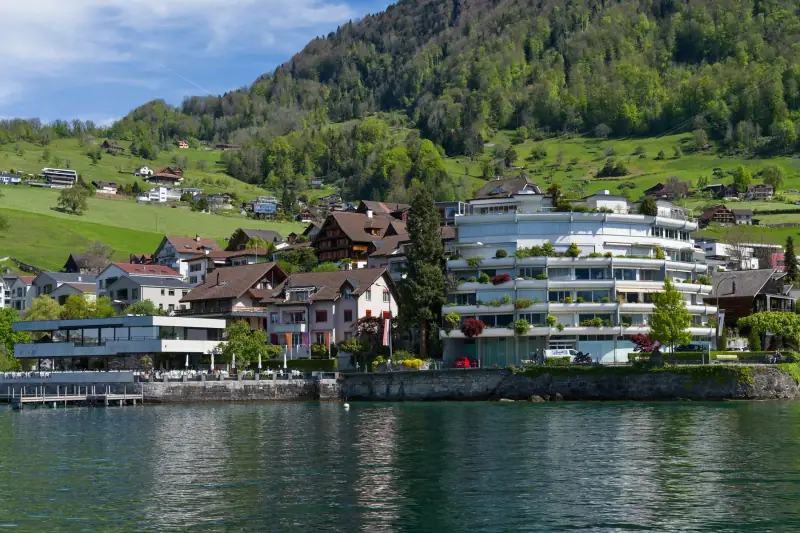
Lake Lucerne is lined with villages whose main draw is the view over the water and the mountains. Weggis and Vitznau, on Rigi’s north shore, are the most cited: regular boats, waterfront walks, a resort-town atmosphere. Some travelers make them their base to combine swimming, walks and access to Rigi, reaching Lucerne by boat or bus for the day.
The main drawback: dependence on boat and bus timetables, and fewer restaurants in the evening and off-season. Many properties have a limited season: check opening dates before booking. This option suits travelers who stay at least three nights and prefer quiet to urban bustle.
Types of accommodation in Lucerne
Hotels
The city offers the whole range, from grand historic lakeside hotels to international chain properties, with small family-run hotels and boutique hotels in the old town in between. There are many mid-range hotels around the station and in the Neustadt. Rooms with a view of the lake or the Reuss cost noticeably more than street-side rooms: decide whether the view is worth the extra.
Hostels and dorms
Lucerne has a hostel and several dorm hotels, a useful way to limit the bill in a city where rooms are expensive. They are often located a little away from the very center, in areas well served by buses. Check the conditions for private rooms, sometimes offered as an extra, as well as any supplements for linen or breakfast.
Apartments and short-term rentals
For three nights or more, an apartment with a kitchen saves money on meals, which are pricey in restaurants. Options are more limited than elsewhere, and cancellation terms, cleaning fees and arrival arrangements vary from one listing to another: read them before paying. For a short stopover, a hotel is often simpler.
Chalets and mountain lodgings
If you want to sleep at altitude, Pilatus and Rigi have hotels at the summit, an unusual stay that lets you see the sunrise over the Alps. Rooms are limited, opening is seasonal and booking ahead is advised: check the conditions on the official sites of the two mountains before deciding.
Camping
Campsites exist around Lucerne and on the lake shores, an economical option for travelers with a van, tent or caravan, mainly in summer. Check the opening dates and the distance to public transport before choosing.
When to book and which pitfalls to avoid
Lucerne is one of the busiest stops in the country: from late spring to early autumn, sunny weekends and school vacation periods push prices up and fill the hotels. December, with its lights, also draws visitors. Spring and autumn, outside events, are gentler on the wallet and quieter. To choose the best period, see our article on when to go to Switzerland.
A few pointers to avoid unpleasant surprises:
- Read the cancellation terms: non-refundable rates are often lower, but risky if your plans depend on mountain weather.
- Look at the real distance to a bus stop or the station, rather than just the distance to the center.
- Check the tourist tax, which is sometimes added to the displayed price, and what your rate includes.
- Ask for a quiet room if you sleep near the busy squares of the old town.
- Check the arrival arrangements if you arrive late: some small properties have no permanent reception.
To estimate all your spending, from accommodation to meals, read our article on the budget for a trip to Switzerland.
Cutting the bill without sacrificing the stay
Lucerne is not a cheap destination, but a few habits help keep the budget in check:
- Sleep a few bus stops away: a hotel outside the very center is often much cheaper, and only a few minutes away.
- Eat breakfast elsewhere: the hotel often charges a lot for it. A neighborhood bakery is a cheaper alternative.
- Opt for a room with a kitchenette if you stay several nights.
- Travel on weekdays or off-season, when rates are lower.
- Compare several districts and several dates before booking.
Many of Lucerne’s pleasures are free: strolling the wooden bridges, walking along the quay, crossing the old town or enjoying the shores in summer. If you want to treat yourself to a guided activity, compare the tours and cruises on offer.
Which neighborhood for your profile?
For a first stay and a short weekend, the old town and the banks of the Reuss remain the simplest choice. For a stopover by train, the station area is unbeatable. For a lake view and a romantic getaway, aim for the quayside hotels. To save money without going far, the Neustadt and Hirschmatt are good compromises. For quiet, swimming and longer stays, turn to Tribschen, Seeburg or a lakeshore village. And if your plans revolve around Pilatus, look at Kriens.
In every case, the network of buses, trains and boats makes each district an easy starting point: do not focus on the distance to the center, but on the proximity of a stop, the quality of reviews and how well the place fits your travel dates.
🏨 A quiet stay near the lake: residential districts, lake shores or neighboring villages, compare accommodation in the region for your dates.
In short
Old town: charm and walking, high rates. Station and lake: practical for trains and boats. Quayside: views and elegance, at a high price. Neustadt and Hirschmatt: lively and more affordable. Tribschen and Seeburg: quiet and swimming. Lake villages: views and tranquility, but watch the timetables. Book early in summer, compare dates and keep an eye on cancellation terms. With the right accommodation, Lucerne is an easy city to enjoy, rewarding walkers and anyone who simply likes watching the boats go by.
Frequently asked questions
What is the best neighborhood to stay in Lucerne?
For a first stay, the old town and the banks of the Reuss offer the best compromise: the Chapel Bridge, the lanes and the lake are all on foot. The nearby station area is the most practical if you travel by train and head out on excursions every day.
Is Lucerne an expensive city to stay in?
Yes, like most Swiss tourist cities, especially in summer and during major events. Rates vary a lot by date: compare several districts and several days before booking.
Is it better to stay in Lucerne or in a lakeside village?
Lucerne suits short stays and travelers without a car, since the station is the departure point for many trains and boats. A village such as Weggis or Vitznau appeals more to those seeking quiet and lake views, at the cost of a boat or bus ride to reach the city.
How many nights should you plan in Lucerne?
Two nights are enough for the city itself. With three or four nights, you can add an excursion to Pilatus or Rigi, a lake cruise and a trip to a lakeshore village.
Do you need a car to stay in Lucerne?
No. The center is pedestrian, and trains, buses and boats serve the city and the lake. Parking downtown is limited and paid: if you have a car, check that your accommodation has parking or a solution nearby.
When should you book accommodation in Lucerne?
As early as possible for summer and sunny weekends, as rooms with lake views go first. Off-season, booking a few weeks ahead is generally enough.
Is there budget accommodation in Lucerne?
Yes: hostels, dorm hotels, simple rooms in districts a little away from the center and campsites in the surroundings. Sleeping a few bus stops from the old town often lowers the bill significantly.
More Switzerland guides
Keep reading
Where to stay in Bern: neighborhoods and types of accommodation
Old town, station, Länggasse, Kirchenfeld, Lorraine or Marzili: compare Bern's neighborhoods, types of accommodation and tips for choosing well.
Where to stay in Interlaken: neighborhoods and types of accommodation
Interlaken West, Ost, Unterseen, Matten or nearby villages: compare Interlaken's areas, types of accommodation and tips for choosing well.
Where to stay in Geneva: neighborhoods and types of accommodation
Pâquis, Carouge, Plainpalais, Old Town or Eaux-Vives: compare Geneva's neighborhoods, types of accommodation and tips for cutting the bill.
Ready-made
Switzerland itineraries
Glacier Express and panoramic trains in winter: routes, prices and reservations
Glacier Express, Bernina Express and GoldenPass in winter: 2026-2027 running dates, reservation prices, recommended routes and tips for seeing the snow.
Glacier Express or Bernina Express: which panoramic train should you choose?
Glacier Express or Bernina Express: duration, scenery, reservations and passes. Compare Switzerland's two panoramic trains and pick the one for your trip.
7 days
7-day Switzerland itinerary by train: Lucerne, Interlaken, Zermatt and Lake Geneva
LucerneInterlakenZermattLausanne