Things to do
What to do in the Jungfrau region: Lauterbrunnen, Grindelwald, Mürren
We may earn a commission when you book through links on this page, at no extra cost to you. We don't visit or try the places we cover: we summarize published sources. How we work
In short
- Three to four days combine one big high-altitude excursion (Jungfraujoch or Schilthorn), a panoramic hike and the Lauterbrunnen Valley; a week leaves margin for weather.
- The Jungfraujoch (about 3,450 m / 11,320 ft) is the priciest outing and entirely visibility-dependent: check webcams and forecasts the day before.
- The Schilthorn (about 2,970 m / 9,745 ft) is a cheaper alternative with a panorama of the Eiger, Mönch and Jungfrau.
- The whole region can be visited without a car; keep one spare day for changeable weather.
Few regions in the world concentrate so much spectacular scenery in such a small radius. In the Bernese Oberland, vertical walls, glaciers, waterfalls and alpine pastures follow one another between the Lauterbrunnen Valley, Grindelwald and the Jungfrau massif. Add cog railways, cable cars and marked trails, and you get a playground accessible even if you are not a mountaineer.
The trap is wanting to do everything. The big excursions are expensive, weather-dependent, and some days look nothing alike depending on visibility. This guide helps you choose what is really worth the detour, organize your days and keep a margin. To choose your base, see our guide where to stay in Switzerland.
The Jungfraujoch: the high-altitude excursion
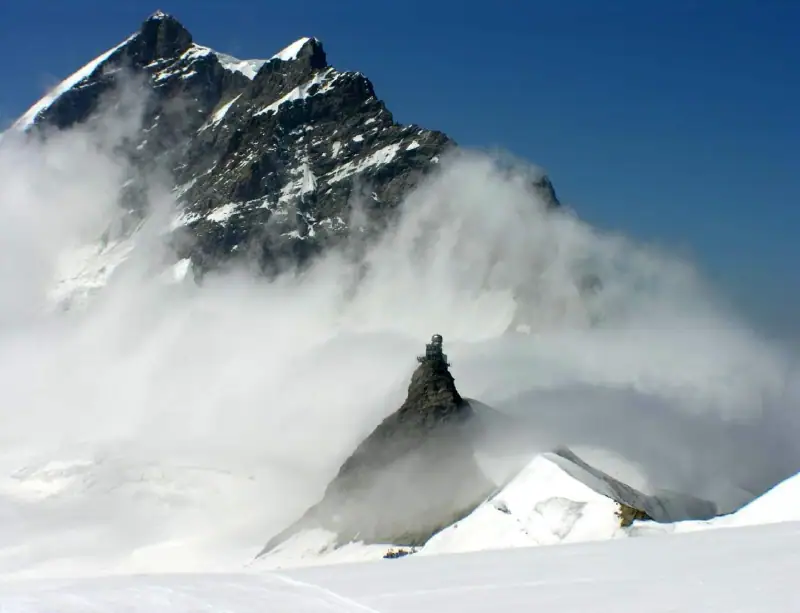
Nicknamed the “Top of Europe,” the Jungfraujoch is a saddle at about 3,450 meters (11,320 ft) between the Jungfrau and the Mönch. You reach it from Kleine Scheidegg on the Jungfrau Railway, much of which runs in a tunnel carved through the mountain. At the top, you discover the Aletsch Glacier, the longest glacier in the Alps, listed with the Jungfrau region as a UNESCO World Heritage site.
It is an impressive experience, but also the priciest in the region. The ticket is a significant budget item, and the altitude can affect some people: ask your doctor or a travel clinic, and see the official travel health pages (CDC in the US, TravelHealthPro in the UK). Dress warmly even in summer. The big draw of the excursion is visibility. With a clear sky, the view is unforgettable; in the clouds, you will see almost nothing. Look at the site’s webcams the day before and decide that same morning.
To reduce the cost, several packages and discounts exist depending on the season, and the Swiss Travel Pass generally entitles you to a discount on this kind of ascent. Check the current conditions before buying.
The Lauterbrunnen Valley: waterfalls and perched villages
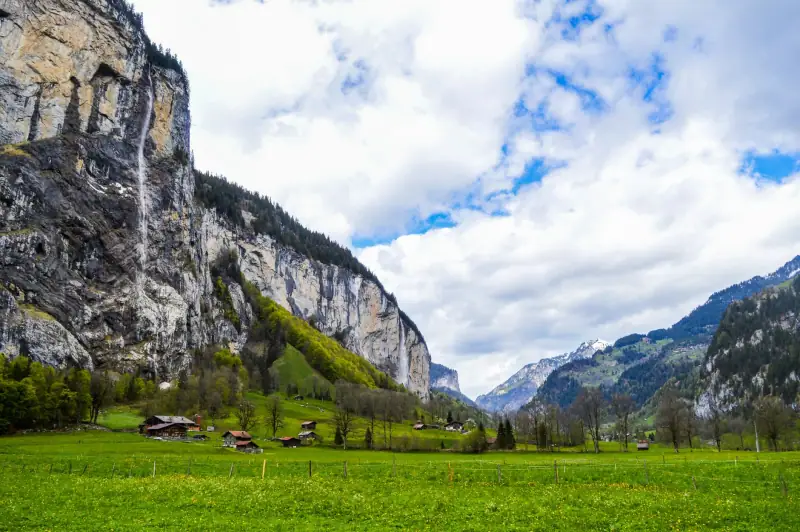
The Lauterbrunnen Valley is a long glacial corridor with almost vertical walls, from which dozens of waterfalls tumble. The Staubbach, visible from the village, falls from a high cliff like a veil of mist. A little farther on, the Trümmelbach Falls are unusual: glacier water pours inside the mountain, and walkways built inside the mountain let you watch it pass. They generally open from spring to autumn; check the dates before coming.
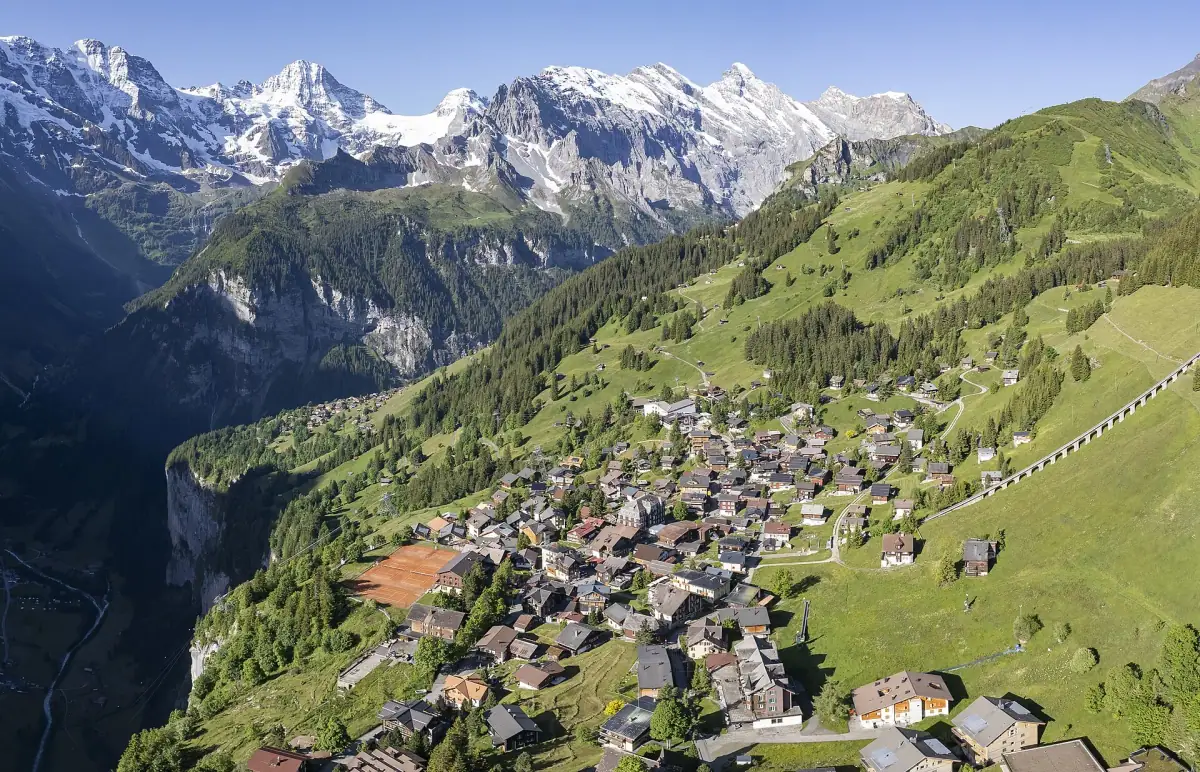
In the valley, a flat walk follows the river between meadows and hamlets and suits all levels. Above the valley floor, the villages of Wengen and Mürren, reached by train or cable car, offer panoramas of the Jungfrau, the Mönch and the Eiger. These villages are quiet, largely without car traffic, and suit those who want to sleep at altitude.
🏨 Where to stay in the Oberland: compare hotels, chalets and apartments in Grindelwald and the region for your dates. In summer, the best places go early.
Grindelwald and First: walks and thrills
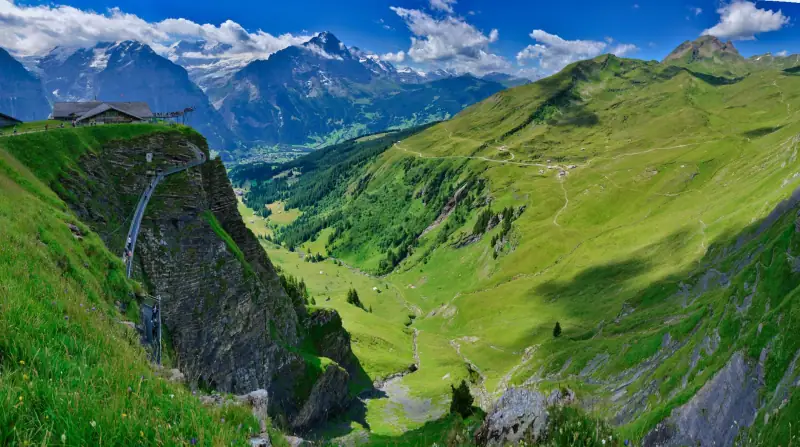
Grindelwald is the liveliest village in the region, at the foot of the Eiger north face. Its main asset is the ride up to First, a viewpoint from which several trails start. The most famous is the First Cliff Walk, a suspended walkway along the cliff, more impressive for the view than for its difficulty. The trail to Lake Bachalpsee, in an alpine pasture setting, is a classic walk in good weather; it gives a reflection of the peaks if the water is calm.
For children and families, the region also offers mountain scooter descents and summer toboggan runs. Thrill seekers will find activities such as ziplining or canyoning in the surrounding gorges, with licensed operators, to be booked in advance in high season.
The Schilthorn and Mürren: a panorama of three great peaks
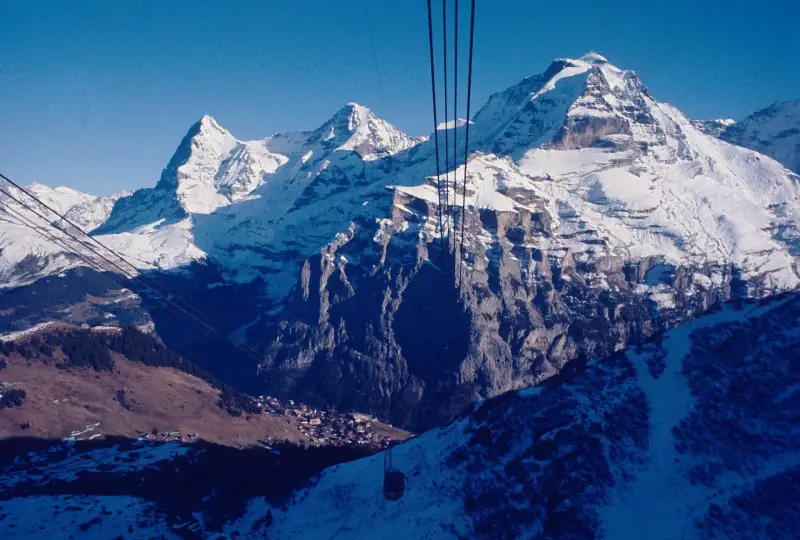
From Mürren, a cable car leads to the Schilthorn, at about 2,970 meters (9,745 ft). The summit has a panoramic platform with a revolving restaurant, made famous by a James Bond film. The panorama covers the Eiger, the Mönch and the Jungfrau, and in clear weather you see well beyond. It is an excellent, less costly alternative to the Jungfraujoch if your budget is tight.
Mürren is also the starting point of fine hikes on the valley’s balconies, such as the walk to Gimmelwald, a preserved village reached on foot or by a small cable car. Check lift timetables before you go, as they change with the season and maintenance work.
🎟️ Excursions in the Oberland: mountain activities, guided tours, outings above the lakes. Compare the offers you can book in advance in Switzerland.
Lake Thun and Lake Brienz from Interlaken
After the summits, the lakes offer a gentler day. Interlaken lies between Lake Thun and Lake Brienz, two turquoise bodies of water served by paddle steamers and motor boats. A cruise on Lake Brienz takes you to the Giessbach Falls, which tumble in several tiers facing the lake. It is a good fallback on rainy days or when clouds are low at altitude.
On the heights, the Schynige Platte, reached by a historic cog railway from Wilderswil, offers a viewpoint over the two lakes and the peaks, with an alpine garden in summer. The Harder Kulm, near Interlaken, offers a viewpoint reached by funicular, useful when the weather is uncertain.
Organizing your days and handling the weather
Weather is factor number one. Plan three types of days: one for high altitude (Jungfraujoch or Schilthorn), to place on the day the sky is clear; one for mid-altitude hiking, such as First or the panorama between Männlichen and Kleine Scheidegg; and one for fallback activities, such as the lakes, the Trümmelbach Falls or a visit to Interlaken.
A few practical pointers:
- Leave early: the first ascents are less crowded, and clouds often rise around midday.
- Bring layers: temperature drops fast at altitude, even in midsummer.
- Wear proper footwear: good walking shoes are essential on alpine pasture trails.
- Keep a day free: it is the best insurance against unpredictable weather.
- Consider travel insurance that covers mountain activities.
To combine the Oberland with other stops, the Glacier Express and the Bernina Express let you continue toward the Valais and Graubünden.
Budget and tips for saving
Lifts are the biggest expense. A few tips lighten the bill: choose a single big paid excursion and complete it with free walks on foot, look at early-morning tickets or seasonal offers, and compare the value of a pass before buying. Rates change from one season to the next: always check them on the official sites.
For meals, high-altitude restaurants are expensive; a picnic bought at a valley supermarket cuts the budget noticeably. A well-prepared stay of three to four days is enough to enjoy the great classics without rushing.
Frequently asked questions
How many days should you plan for the Jungfrau region?
Three to four days let you combine one big high-altitude excursion (Jungfraujoch or Schilthorn), a panoramic hike and the Lauterbrunnen Valley. A week leaves margin for the weather, which often dictates the plan.
Should you go up the Jungfraujoch only in good weather?
It is strongly advised. The excursion is costly and the view depends entirely on visibility. Check the webcams and forecasts the day before, and keep a day of flexibility in your schedule.
Can you visit the region without a car?
Yes. Trains, PostBuses, lifts and boats serve the whole region. Lauterbrunnen, Wengen and Mürren are villages where a car is of almost no use, some even being car-free.
What is the best time to go?
June to September for high-altitude hiking, when trails are clear. Waterfalls are more powerful at snowmelt, and autumn often offers beautiful light with fewer people.
Does the Swiss Travel Pass cover these excursions?
It covers the regular trains to the region, but high-mountain lifts generally get a discount rather than free travel. Compare the total cost of your excursions before buying.
More Switzerland guides
Keep reading
Switzerland's best ski resorts: Zermatt, Verbier, St. Moritz compared, with budgets
Zermatt, Verbier or St. Moritz: ski areas, atmosphere, access, lodging and budget. Compare Switzerland's three big resorts before booking your winter.
Jungfraujoch: book ahead or on the spot? Prices, seats and weather
Jungfraujoch: do you need to book a seat ahead? Mandatory reservation from May to October, prices from, early-bird ticket, weather and money-saving tips.
Switzerland budget: what a trip costs, item by item (2026)
How much to plan for a trip to Switzerland? Real costs by item, three budget profiles in CHF and tips to spend less without giving up the scenery.
Ready-made
Switzerland itineraries
Glacier Express and panoramic trains in winter: routes, prices and reservations
Glacier Express, Bernina Express and GoldenPass in winter: 2026-2027 running dates, reservation prices, recommended routes and tips for seeing the snow.
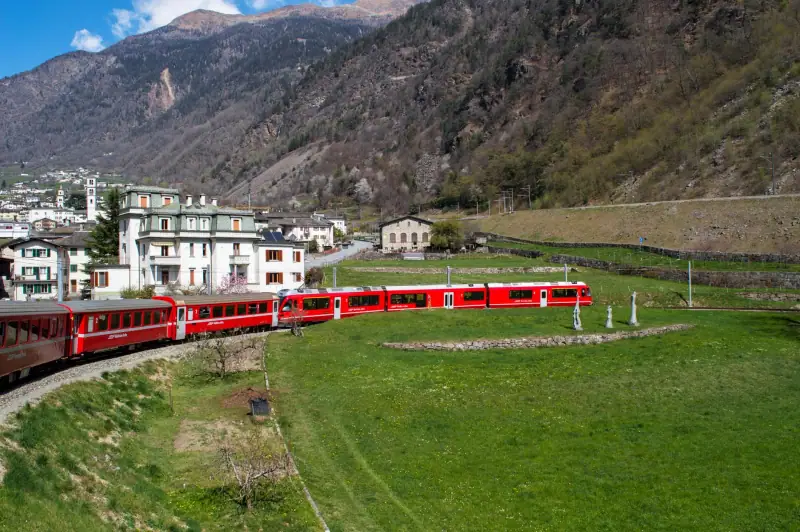
Glacier Express or Bernina Express: which panoramic train should you choose?
Glacier Express or Bernina Express: duration, scenery, reservations and passes. Compare Switzerland's two panoramic trains and pick the one for your trip.
7 days
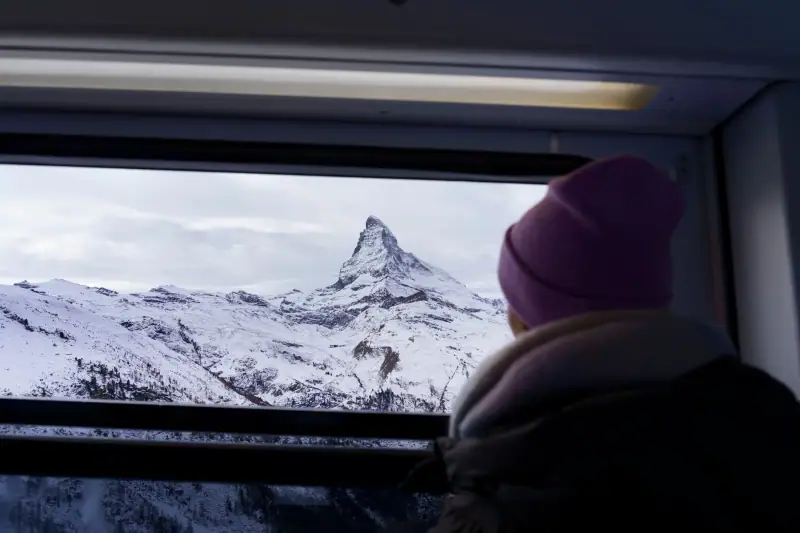
7-day Switzerland itinerary by train: Lucerne, Interlaken, Zermatt and Lake Geneva
LucerneInterlakenZermattLausanne