Where to stay
Where to stay in Innsbruck: neighborhoods and types of accommodation
We may earn a commission when you book through links on this page, at no extra cost to you. We don't visit or try the places we cover: we summarize published sources. How we work
In short
- The old town (Altstadt) is the most practical base for one or two nights: sights, shops and restaurants are on foot, and the Nordkette funicular station is a few minutes away.
- The station area and Wilten are good compromises on price and transit; Saggen and the heights suit quiet, and Igls suits stays of three nights or more.
- Innsbruck is easy without a car: the city is compact and trams, buses and lifts serve it. Check parking cost and availability if you drive.
- Book early for winter (ski season, holiday periods, Christmas markets) and for peak summer hiking, with free cancellation until your transport is confirmed.
Innsbruck is a compact city, but where you stay matters: depending on the neighborhood, you will wake up in a medieval lane, facing a row of colorful houses on the Inn, in a quiet residential suburb or on a balcony looking at the peaks. Since the mountains are visible from almost everywhere, the real selection criteria lie elsewhere: proximity to the station, access to the lifts, quiet, parking and budget.
This guide reviews Innsbruck’s main areas, the types of lodging available and the habits to adopt before booking. It extends the Tyrol section of our guide on where to stay in Austria and complements the city overview in Innsbruck and Tyrol: what to do between city and mountains. Because rates vary strongly with the season, we do not quote prices: compare your exact dates before deciding.
Understanding Innsbruck’s geography before you book
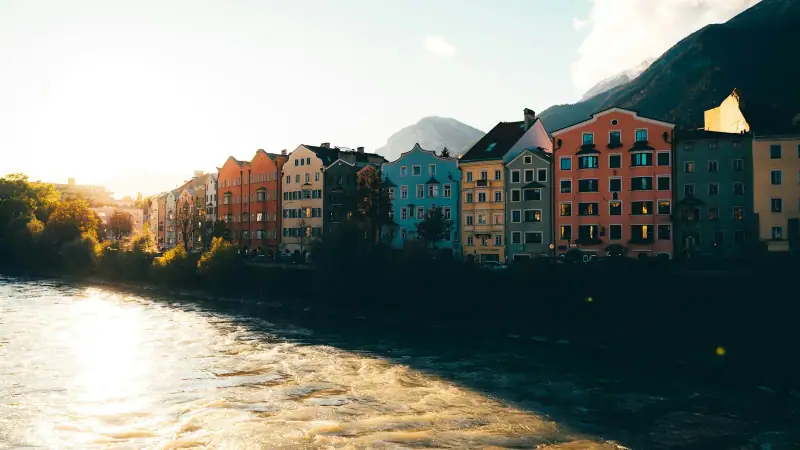
Innsbruck stretches along the Inn valley, where the river flows from west to east. To the north, across the river, the city climbs toward the Nordkette range. To the south, the valley opens onto the slopes of Bergisel and, higher up, onto the plateau where the village of Igls nestles. The old town is on the south bank of the Inn, between the river and the main shopping streets.
The historic center is small: most of it can be covered on foot in under half an hour. The central station is east of the old town, a few hundred meters away, which makes Innsbruck one of the easiest Alpine capitals to reach without a car. The residential districts (Wilten, Saggen, Pradl, Hötting) surround the historic core and are reached in a few minutes on foot, by tram or by bus.
To structure your stay, keep a simple rule in mind: the farther you get from the center, the roomier and quieter the room, but the more you depend on the bus, tram or car, especially in the evening.
The old town (Altstadt): the ideal location for a short stay
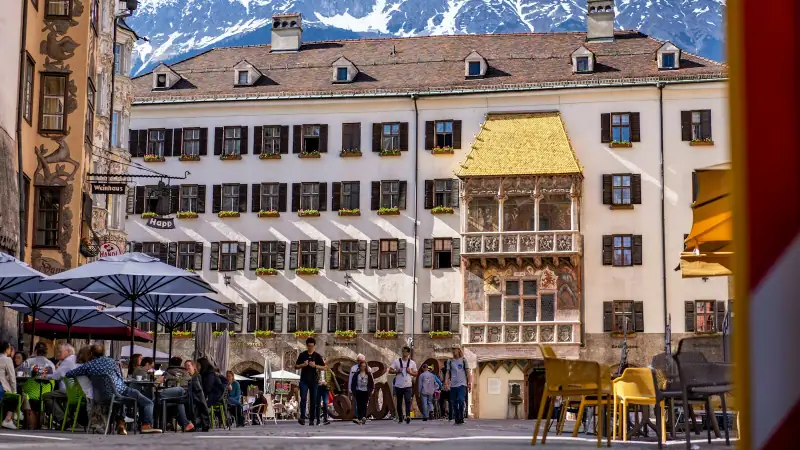
Staying in the Altstadt means being within walking distance of everything: pedestrian streets lined with colorful facades, arcades, cafés, shops and traditional restaurants. In the evening, when tour groups leave, the lanes regain a welcome calm. Many hotels there occupy former bourgeois houses or old inns, with rooms of sometimes unusual proportions.
The drawbacks are the usual ones. Rooms are often smaller, elevators are sometimes missing in old buildings, and car access is limited by the pedestrian zone: you need to park in a nearby public garage. Church bells and terraces can also be heard depending on the street; read recent reviews.
Choose it if: you stay one or two nights, travel without a car and want to do everything on foot.
Around the station and Museumstraße: the practical choice
The central station area concentrates a wide offer of mid-range and budget hotels, as well as hostels. It suits travelers arriving or leaving by train, or planning day trips in Tyrol. The old town is a short walk away, and buses and trams pass nearby.
The atmosphere is less picturesque than in the center: it is a transit district, with modern buildings. Recent reviews help you judge the noise level, which depends on the street and the room’s orientation.
Choose it if: you travel by train, on a limited budget, or for a night between two stops.
Wilten: the Bergisel district, quiet and authentic
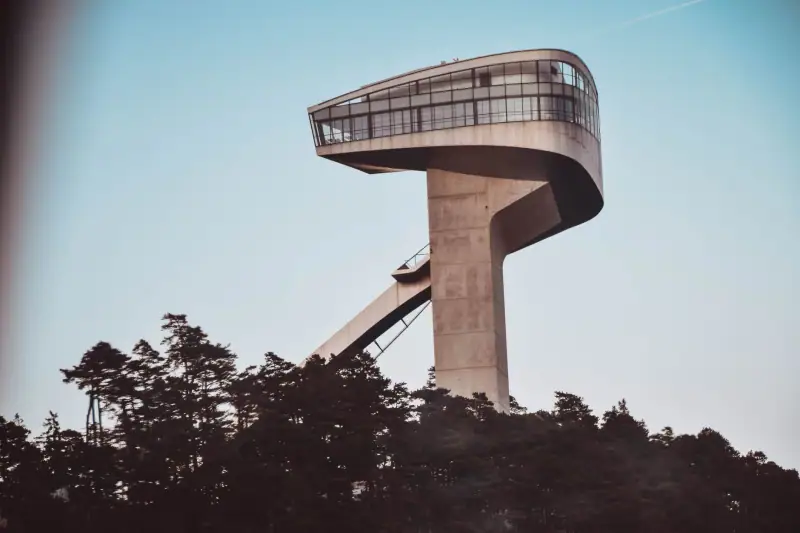
South of the center, Wilten is a former village absorbed by the city, centered on its large abbey and basilica. It offers the atmosphere of a living neighborhood, with local shops, family-run Gasthöfe and apartments, and lies near Bergisel, where the famous ski jump stands.
You gain quiet and often better value than in the historic core, while staying a short distance from the old town by tram, bus or on foot. It is also a good starting point for fans of walks toward the southern heights.
Choose it if: you look for a residential district near the center at lower prices, or travel with children.
Saggen: residential elegance near the Hofgarten
Saggen, northeast of the old town, is a bourgeois district with wide avenues, villas and late 19th-century buildings. It is close to the Hofburg garden and the banks of the Inn. The hotel offer is smaller, with a few boutique places and apartments.
It is a peaceful area, pleasant for morning walks, still a short walk from the center. Eating there is less “touristy” than in the Altstadt, an advantage for those seeking a local atmosphere.
Choose it if: you prioritize quiet and an elegant atmosphere without straying far from the center.
Hötting, St. Nikolaus and Mariahilf: across the Inn
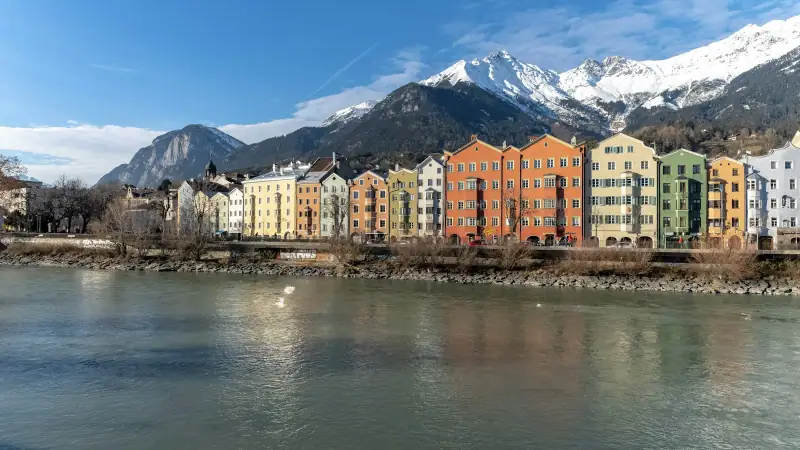
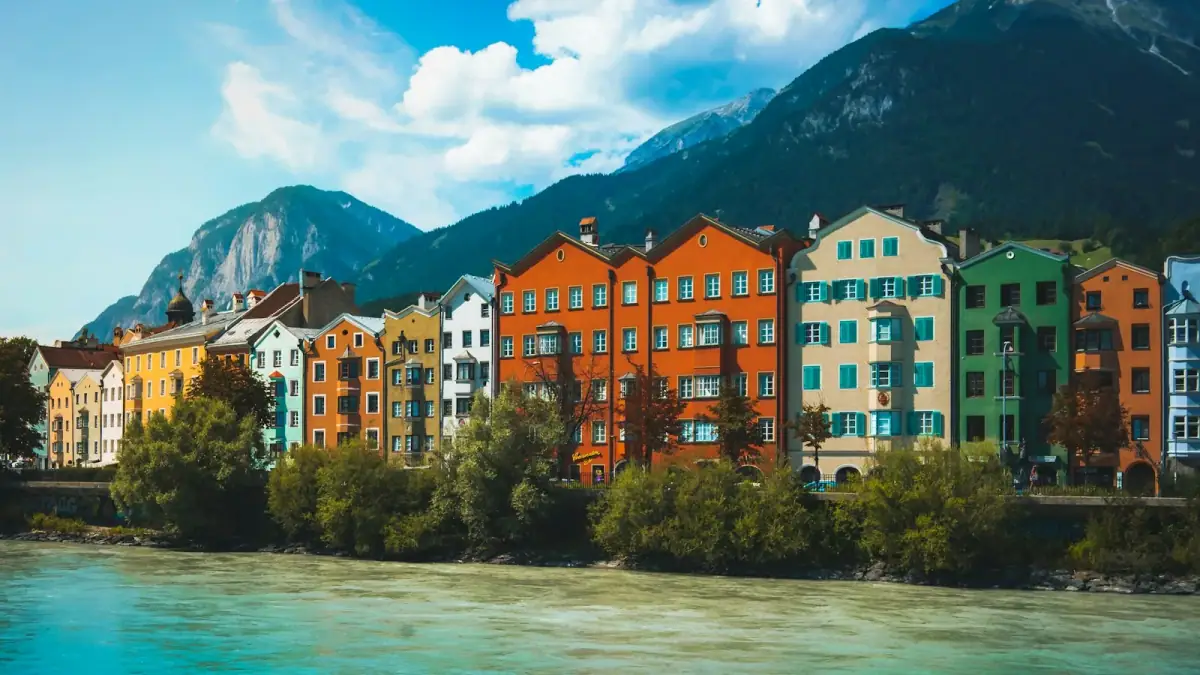
On the north bank of the Inn, the districts of St. Nikolaus and Mariahilf have kept their character as a suburb of craftsmen and boatmen, with the colorful houses that form the classic image of Innsbruck from the bridges. You will find Gasthöfe, guesthouses and cafés, and the view of the old town is one of the area’s charms.
Higher up, Hötting extends the city toward the slopes of the Nordkette. The atmosphere becomes more village-like, with often quieter rooms and clear views. This area is pleasant if your main goal is the mountains: the Hungerburg upper station, from where the ascent continues by cable car toward the Nordkette, is on this side of the city. The funicular, however, starts from the center, on the south side, and crosses the Inn: staying in Hötting is therefore not essential to go up.
Choose it if: you want a picturesque riverside setting, or to be near the Nordkette lifts.
Pradl, Amras and the east: lower rates
East of the station, Pradl is a working-class residential district, dense and well served by transit, whose establishments are often more affordable. Farther out, Amras is home to Ambras Castle, whose visit is detailed in our guide to visiting Innsbruck and Tyrol.
These areas offer functional hotels and apartments with parking, ideal for families and drivers. Allow a few minutes by tram or bus, or even a longer walk, to reach the historic heart.
Choose it if: you want a limited budget, easy parking and accept a short trip to the center.
Igls and the plateau villages: quiet and nature
Above Innsbruck, on a sunny plateau, Igls is a mountain village with a resort feel, linked to the city by a historic tram line and by buses. It offers boutique hotels, wellness establishments, chalets and apartments, with easy walks and access to the lifts of the neighboring mountain, the Patscherkofel.
Staying in Igls means trading urban bustle for an Alpine village setting; on the other hand, getting back in the evening depends on transit schedules or your car. It is a popular option in summer for hiking and in winter for a quieter atmosphere.
Choose it if: you stay three nights or more, prefer nature and accept going down to the city for visits.
Accommodation in Innsbruck: old town, Wilten, Igls... compare the hotels and apartments available for your dates, with free cancellation on some offers.
Types of accommodation in Innsbruck
Historic and boutique hotels
Several hotels occupy former mansions in the historic center, with wood paneling, old staircases and views of the rooftops or mountains. They suit couples and romantic weekends, notably during the Christmas market season.
Modern mid-range hotels
Around the station, Wilten and Pradl, newer hotels offer functional rooms, a buffet breakfast and often parking. It is the simplest choice for two to four nights.
Gasthöfe, guesthouses and private rooms
Typical of Tyrol, these family-run places offer a warm welcome, a generous breakfast and often more moderate rates. Check the elevator, arrival hours and payment method: some small places accept only cash.
Apartments and short-term rentals
Practical for families and groups, they offer a kitchen and more space, notably in Wilten, Pradl or Igls. Check key handover, building rules and the tourist tax, which is sometimes added to the displayed price.
Hostels
Innsbruck has a few hostels, with dorms and private rooms, mostly near the station and in the center. They suit solo travelers, sports fans and small budgets. To split your spending among nights, meals and lifts, see our guide to the budget in Austria.
Farm stays and chalets
On the heights and in neighboring villages, you can stay at farms or in chalets, mainly worthwhile if you have a car or stay a week. Check opening dates and minimum length of stay, which vary with the season.
Choosing by profile
- Couple, romantic stay: the old town, Saggen or a boutique hotel in Igls.
- Family with children: an apartment in Wilten, Pradl or Igls, with parking if you come by car.
- Small budget: a hostel or simple hotel near the station, or a guesthouse in Pradl.
- Train traveler: the station and the old town, for easy connections.
- Skier or hiker: Hötting or Igls, depending on the mountain you are aiming for, or a stay split between city and resort.
- Quiet seeker: Saggen, Wilten or the heights.
Getting around from your lodging
The city is covered on foot, and the bus and tram network serves the outlying districts. Find out about tickets and the city’s visitor cards, which, depending on the option, bundle admissions, lifts and transport; check the make-up of the current offer before buying.
If you want to explore several Tyrolean valleys in complete freedom, a car is useful, especially outside ski season. You can compare rental companies. In winter, check that the vehicle is equipped for road conditions; without a car, trains and buses link several valleys.
Activities in Innsbruck: guided tours, excursions in the Tyrolean Alps, mountain experiences: compare the offers once your lodging is chosen.
When to book and pitfalls to avoid
The busiest periods are winter (ski season, holiday periods, Christmas markets, covered in our article on Christmas markets in Austria) and the peak summer hiking season. In those cases, book several weeks ahead. To choose your dates, see the best time to go to Austria.
Before confirming a booking, build these habits:
- Check car access: pedestrian zone, parking, height limit and rate.
- Look at the floor and the elevator, especially in old buildings.
- Read recent reviews about noise, particularly near the station or busy arteries.
- Check for air conditioning if you come in midsummer: it is not standard.
- Compare equivalent prices: tourist tax, breakfast and parking can be added.
- Prefer free cancellation until your travel is confirmed.
Combining Innsbruck with other stops
Innsbruck fits naturally into an Austrian circuit: it is linked to Salzburg and Vienna by train, and combines well with neighboring Bavaria. To refine your next stop, see where to stay in Salzburg and our 7-day Austria itinerary.
Finally, consider travel insurance, which can cover medical costs, cancellation and mountain activities depending on the coverage.
Choosing your base
In Innsbruck, the best neighborhood depends on your pace. The old town is the pick for a short stay and atmosphere, the station and Wilten offer the best compromise between comfort, price and transit, Saggen and Hötting bring quiet and proximity to nature, while Pradl and Igls suit tight budgets, drivers and longer stays. In all cases, stay within walking distance of a bus or tram stop: it is the criterion that guarantees a smooth stay.
Frequently asked questions
What is the best neighborhood to stay in Innsbruck on a first visit?
The old town (Altstadt) is the most practical: the main monuments, shops and restaurants are on foot, and the Nordkette funicular starting station is a few minutes away. If the budget is tight, the area around the station and the Wilten district offer a good compromise.
Should you stay near Innsbruck's train station?
It is a sound choice if you arrive by train or make many bus and train excursions in Tyrol. The area is functional rather than picturesque, but the old town is about a quarter of an hour away on foot.
Can you stay in Innsbruck without a car?
Yes, it is even recommended. The city is compact, well served by tram and bus, and the lifts start from the city or its edges. Just check parking cost and availability if you come by car.
Is it better to stay in Innsbruck or in a nearby ski resort?
Innsbruck lets you combine city, restaurants and mountains, with several ski areas reachable by public transport. A resort offers slopes at the foot of your lodging, but less urban life in the evening. It all depends on how much skiing is in your stay.
How many nights should you plan in Innsbruck?
Two nights cover the city's essentials and a ride up the Nordkette. Three or four nights let you add a neighboring valley, a hike or a ski day. Our guide to Innsbruck and Tyrol details the visits.
When should you book accommodation in Innsbruck?
Book early for winter (holiday periods, ski season, Christmas markets) and for the peak summer hiking season. In low season, availability is more flexible. Prefer a rate with free cancellation until your transport is confirmed.
More Austria guides
Keep reading
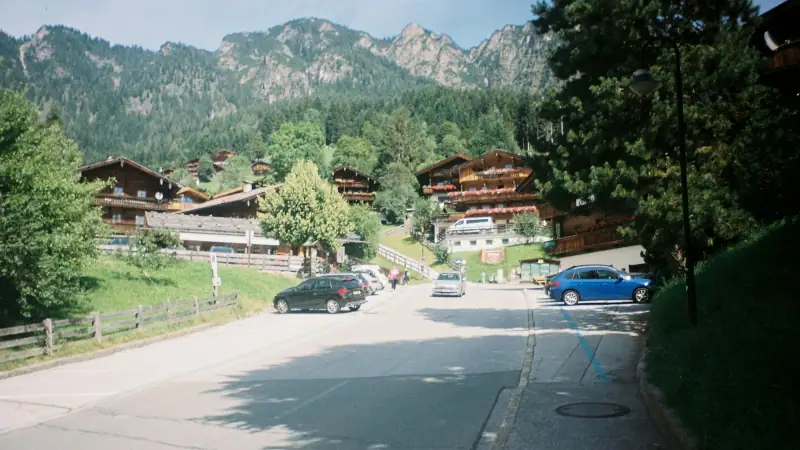
Where to stay in Kitzbühel: neighborhoods and types of accommodation
Where to stay in Kitzbühel? Old town, near the lifts, Aurach, Schwarzsee, Kirchberg or Reith: areas and lodging types compared to choose your base.
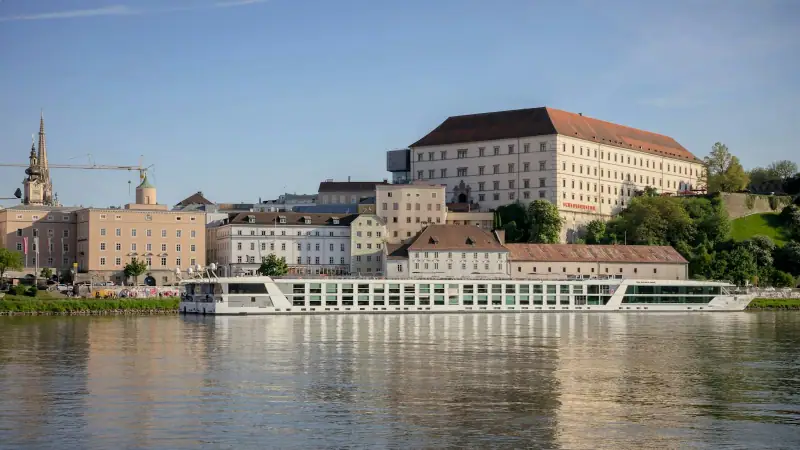
Where to stay in Linz: neighborhoods and types of accommodation
Where to stay in Linz? Old town, Hauptplatz, station district, Urfahr or the outskirts: neighborhoods and lodging types compared for the Danube.
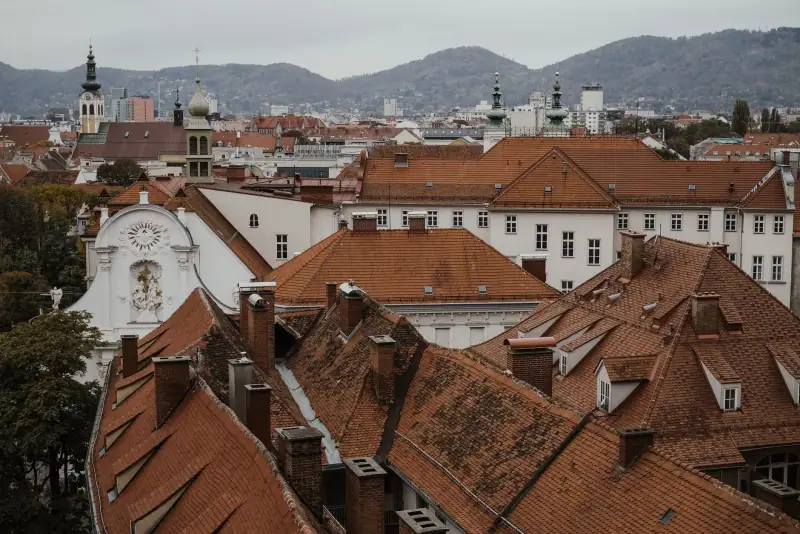
Where to stay in Graz: neighborhoods and types of accommodation
Where to stay in Graz? Old town, Lend, Geidorf, St. Leonhard, Jakomini or Eggenberg: neighborhoods and lodging types compared to pick your base in Styria.
Ready-made
Austria itineraries
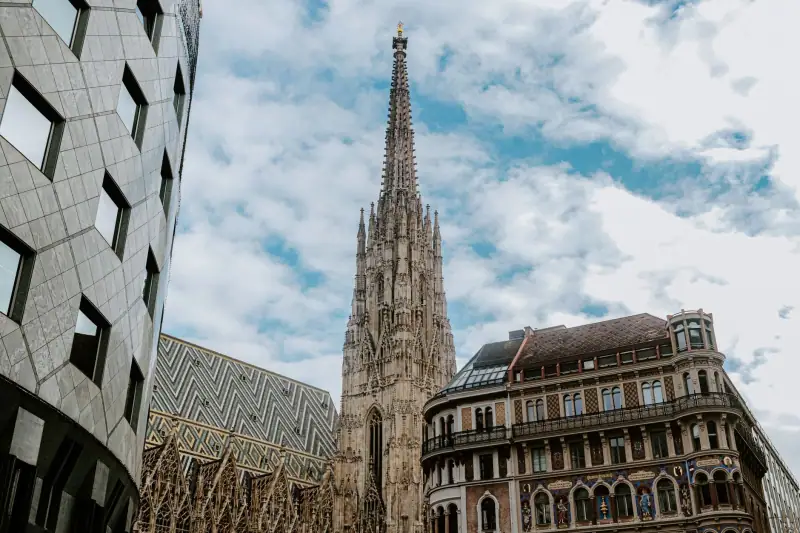
3 days
Vienna in 3 days: a day-by-day itinerary to see it all
What to see in Vienna in 3 days: the Ring, Hofburg, Schönbrunn, Belvedere, Prater and cafés, as a walking and tram itinerary with practical tips.
7 days
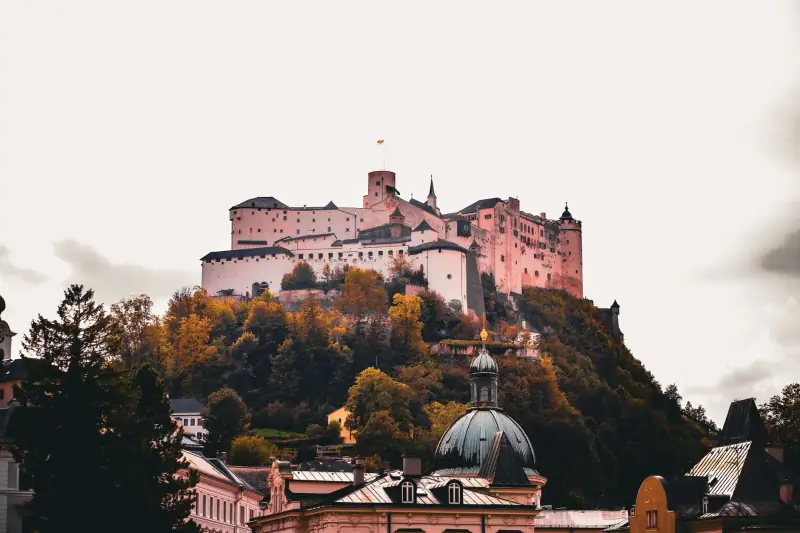
Austria in 7 days: Vienna, the Wachau, Salzburg, Hallstatt and Innsbruck
A one-week itinerary in Austria: Vienna, the Wachau, Salzburg, Hallstatt and Innsbruck, with train journeys, day-by-day stops and tips on where to stay.
2 days
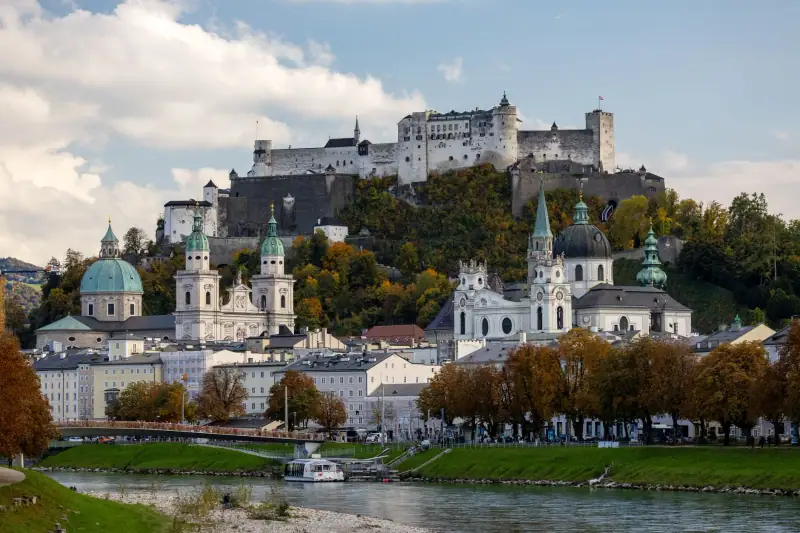
Salzburg in 2 days: an itinerary through Mozart, the fortress and the gardens
What to see in Salzburg in 2 days: old town, Hohensalzburg Fortress, Mozart's birthplace, Mirabell Gardens and Hellbrunn, as a walking itinerary.