What to see
Visiting Lucerne and Lake Lucerne: old town, Pilatus and Rigi
We may earn a commission when you book through links on this page, at no extra cost to you. We don't visit or try the places we cover: we summarize published sources. How we work
In short
- One day covers the old town and the quays; with a mountain excursion (Pilatus or Rigi) and a lake cruise, plan two to three days.
- One summit is enough on a first visit: Pilatus is rockier and more spectacular (about 2,100 m / 6,890 ft), Rigi gentler (about 1,800 m / 5,905 ft).
- Lucerne is easily visited without a car: the station is central and boats, cog railways, cable cars and buses serve the viewpoints.
- The Swiss Travel Pass generally covers Lake Lucerne boats and, per the official conditions, Rigi; Pilatus gets a discount of about 50%. Check current conditions before buying.
Lucerne is one of those Swiss towns where everything fits in the palm of your hand: a pedestrian old town, a river, a lake and, all around, summits reached by train, boat or cable car. Located in central Switzerland, about an hour by train from Zurich, it works as a first stop as well as a base for an extended weekend.
This guide details what to see in town, how to choose between Pilatus and Rigi, how to enjoy Lake Lucerne and how to plan your budget. To place this stop in a longer trip, see our 7-day itinerary by train.
Lucerne’s old town on foot
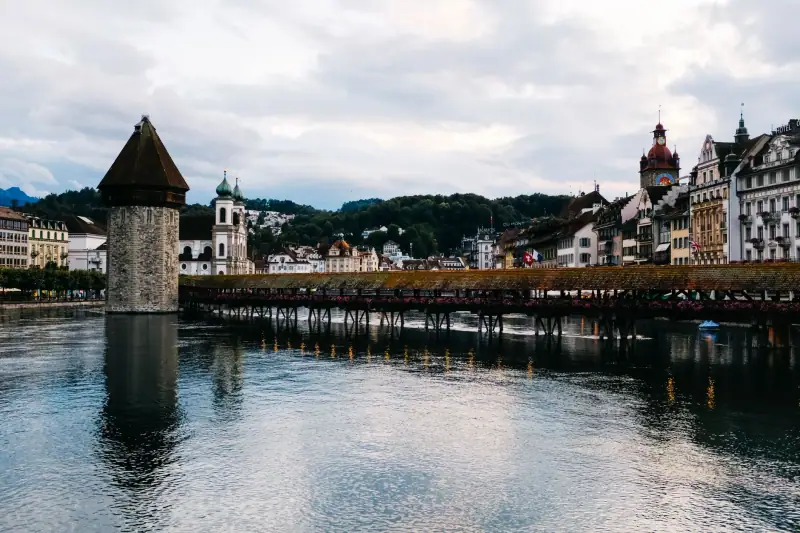
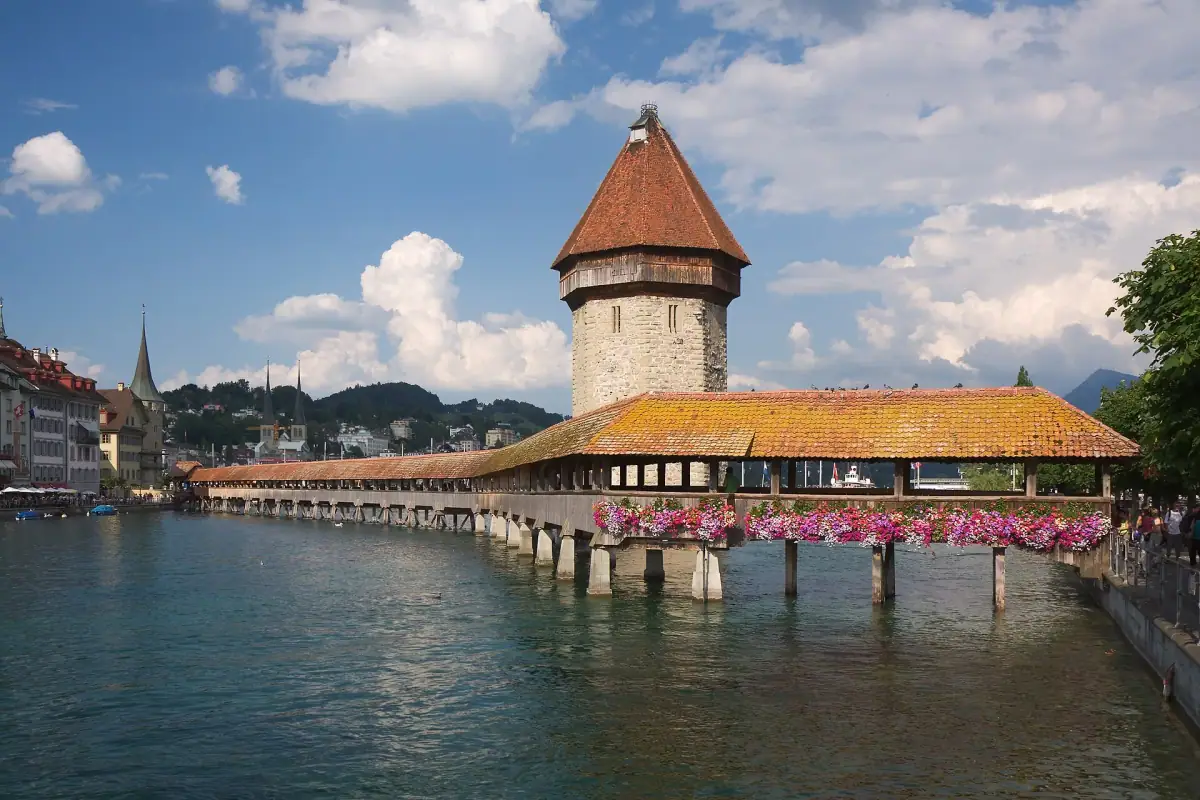
The historic center can be walked in a few hours, on both sides of the Reuss, the river flowing out of the lake. The city’s emblem is the Chapel Bridge (Kapellbrücke), a covered wooden bridge flanked by a stone tower. Part of the structure burned in 1993 and was rebuilt: what you cross today is therefore largely recent, but faithful to the medieval original. Under the roof timbers, paintings illustrate scenes from local history.
A little downstream, the Spreuer Bridge (Spreuerbrücke) is quieter, darker, and often less crowded. The contrast between the two is worth the walk. Then continue into the lanes of the right bank, where painted facades, squares and fountains set the tone. In the evening, the quays come alive and terraces fill from the first sunny days.
A simple tip: visit the Chapel Bridge early in the morning or at the end of the day. In the middle of the day, groups are large and photos are hard to get.
The Lion Monument and the museums
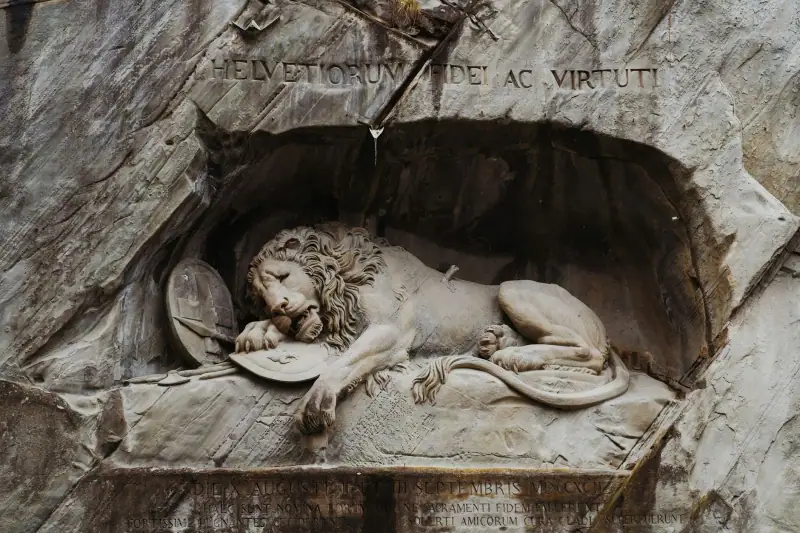
Ten minutes’ walk from the station, the Lion Monument (Löwendenkmal) is carved into a sandstone wall, at the edge of a small pond. It depicts a wounded lion, a spear in its flank, in tribute to the Swiss Guards who died at the Tuileries in Paris in 1792. The monument dates from the 1820s and can be visited freely, generally in a few minutes. The place is calm, almost contemplative, which is not so common for such a well-known site.
If the weather is bad, Lucerne has several good fallback options. The Swiss Museum of Transport (Verkehrshaus), by the lake, is one of the country’s great museums: trains, planes, boats, cars and a planetarium. It suits families very well. The Rosengart Museum, downtown, is devoted to modern art, with works by Picasso and Klee among others. Check hours and closing days on the official sites before going: they vary by season.
🏨 Where to stay in Lucerne: the old town and the station surroundings let you do everything on foot. Rooms with lake views go early in summer. Compare hotels for your dates.
A cruise on Lake Lucerne
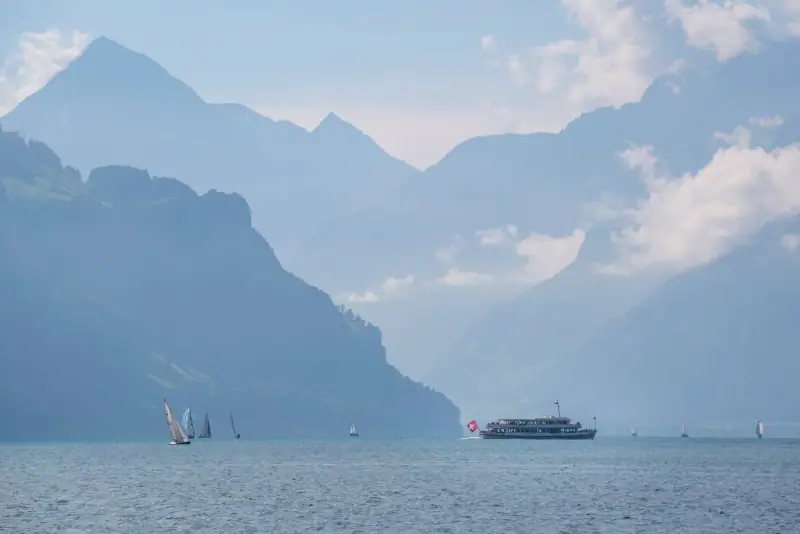
Lake Lucerne (the Lake of the Four Cantons) owes its name to the cantons bordering it: Lucerne, Uri, Schwyz and Nidwalden. Its indented shores, narrow fjords and mountains plunging into the water make it one of the country’s most beautiful lakes. Boats, including several historic paddle steamers, leave from the quays near the station and serve villages such as Weggis, Vitznau or Flüelen.
Several options exist: a simple one-to-two-hour outing, or a crossing to a mountain’s landing stage, which you combine with a cog railway. That is the principle of the classic loops to Pilatus and Rigi. The Swiss Travel Pass generally covers lake boats: see our analysis of the Swiss Travel Pass to know whether it pays off in your case.
Pilatus: the spectacular summit
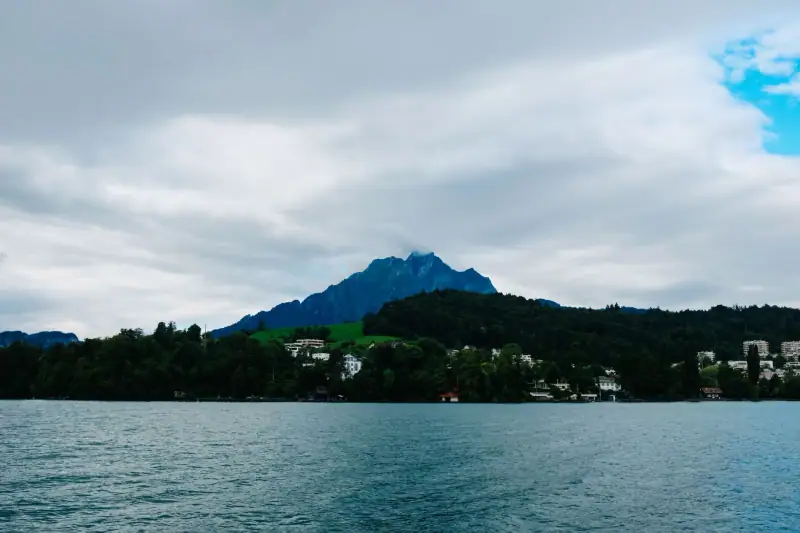
Pilatus overlooks Lucerne and peaks at about 2,100 meters (6,890 ft). Its jagged, rocky silhouette contrasts with the green hills around. Its great feature is its cog railway, presented as the steepest in the world, with a maximum gradient of 48%. It links Alpnachstad to the summit in about thirty minutes, and generally runs from late spring to autumn.
The best-known formula is the “Golden Round Trip”: boat from Lucerne to Alpnachstad, cog railway up, then back down by cable car and gondola to Kriens, from where a bus takes you back to Lucerne. The day is packed but very varied. Once at the top, short trails lead to several viewpoints. Leave early: clouds often form during the day.
Pilatus is the right choice if you like rocky landscapes and the thrill of the ascent. It is less so if the weather is uncertain, since the interest largely lies in the view.
Rigi: the queen of the mountains
Rigi, nicknamed the “queen of the mountains,” is an isolated massif between Lake Lucerne, Lake Zug and Lake Lauerz. It peaks at about 1,800 meters (5,905 ft), noticeably lower than Pilatus, but its isolation offers a very wide panorama over the lakes and, in clear weather, part of the Alps. This is where Europe’s first mountain railway was built in 1871, from Vitznau.
Rigi is gentler, grassier, and suits families or inexperienced hikers well. You can go up from Vitznau and come down via Arth-Goldau (or the reverse), which lets you vary the scenery. Easy trails run along the ridge, and several mountain restaurants dot the route.
To decide: take Pilatus for the drama, Rigi for gentleness and the big panorama. For a short stay, one of the two is enough. If you have more time, other great viewpoints await in the Oberland: see what to do in the Jungfrau region.
🎟️ Excursions around Lucerne: cruises, tickets for the summits, guided tours of the city and activities on the lake. Compare the offers you can book in advance.
Other excursions from Lucerne
If you have an extra day, several options are open to you. Engelberg, at the foot of the Titlis, is reached by train from Lucerne; the Titlis offers a high-altitude glacier area with a rotating cable car. The excursion is pricier and highly weather-dependent. The Bürgenstock, on the heights above the lake, is known for its panoramic balcony path overlooking the water.
You can also simply settle for lakeside villages, such as Weggis or Vitznau, for a summer swim break or a quiet walk. Finally, the Brünig line to Interlaken is a scenic journey in itself; it is described in our 7-day itinerary. To know the best accommodation base depending on the length of your stay, read where to stay in Switzerland.
When to go and budget
High season runs from May to September: lifts and boats run at full service, days are long and terraces open. July and August are the busiest months. Early autumn is often a very good compromise, with soft light and fewer crowds. In winter, the city remains pleasant, but some mountain lines and boats reduce service: check timetables.
Lucerne remains an expensive city, like the rest of Switzerland. Mountain excursions are the biggest expense. To limit the bill: choose only one paid mountain, use the boats if your pass covers them, picnic with supermarket produce and stay a little outside the center. Also consider travel insurance that covers hiking and medical costs.
Rates and timetables change every season: always check the companies’ official sites before booking.
Frequently asked questions
How long do you need to visit Lucerne?
One day is enough for the old town and the quays. With a mountain excursion (Pilatus or Rigi) and a lake cruise, plan two to three days.
Do you have to choose between Pilatus and Rigi?
For a first visit, one summit is enough. Pilatus is more spectacular and rocky, Rigi gentler, with wide panoramas and easy walks. The choice also depends on the day's weather.
Can Lucerne be visited without a car?
Yes, very well. The station is in the center, the boats leave next door, and cog railways, cable cars and buses serve the viewpoints. A car is useless for a classic stay.
What is the best time for Lucerne?
May to September for high-altitude excursions and cruises. September and early October often offer beautiful light with fewer people. Some mountain lines run seasonally: check before you go.
Does the Swiss Travel Pass cover excursions around Lucerne?
It generally covers the Lake Lucerne boats and, according to the official conditions, Rigi, while Pilatus gets rather a discount of about 50%. Check the current conditions before buying.
More Switzerland guides
Keep reading
What to see in Graubünden: Chur, the Engadine, the National Park and UNESCO trains
What to see in Graubünden: Chur, Rhine Gorge, Flims, Engadine, St. Moritz, Swiss National Park, Müstair and UNESCO trains. Itineraries and practical tips.
Visiting Bern: what to see and do in 1 to 2 days
Visit Bern in 1 to 2 days: UNESCO old town, arcades, Zytglogge, Münster, Bear Park, the Aare, Einstein and Paul Klee. Practical tips and budget.
Visiting Interlaken: what to see and do between Lake Thun and Lake Brienz
Interlaken in 1 to 3 days: Harder Kulm, Höhematte, boats on both lakes, caves, paragliding and excursions. Tips to plan your stay and avoid pitfalls.
Ready-made
Switzerland itineraries
Glacier Express and panoramic trains in winter: routes, prices and reservations
Glacier Express, Bernina Express and GoldenPass in winter: 2026-2027 running dates, reservation prices, recommended routes and tips for seeing the snow.
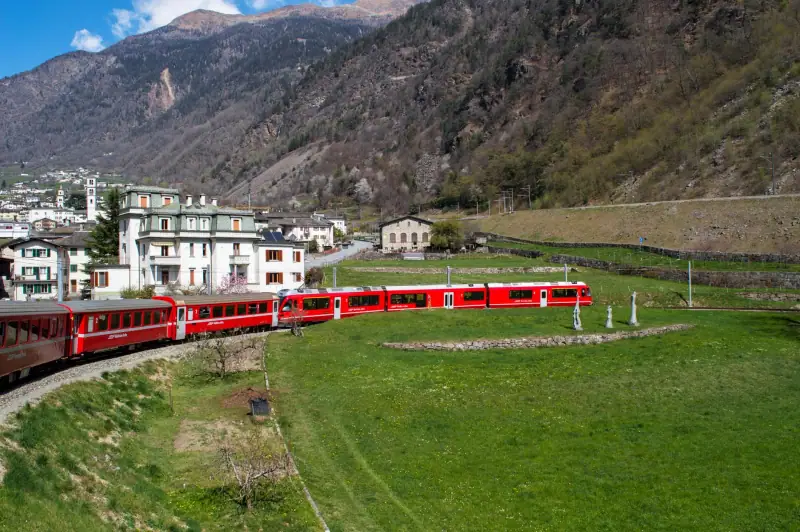
Glacier Express or Bernina Express: which panoramic train should you choose?
Glacier Express or Bernina Express: duration, scenery, reservations and passes. Compare Switzerland's two panoramic trains and pick the one for your trip.
7 days
7-day Switzerland itinerary by train: Lucerne, Interlaken, Zermatt and Lake Geneva
LucerneInterlakenZermattLausanne