What to see
Visiting Bressanone: A Complete Guide to the Pearl of South Tyrol
We may earn a commission when you book through links on this page, at no extra cost to you. We don't visit or try the places we cover: we summarize published sources. How we work
In short
- One to two days cover the cathedral, cloister, Diocesan Museum and arcades; allow 3 days to add the Plose and Novacella Abbey.
- Bressanone is also called Brixen (German). It is about 40 minutes from Bolzano, 30 minutes from Val Gardena and 1 h 30 from Cortina d'Ampezzo by car.
- The Plose cable car costs about €30 (~$35) round trip in summer; the Diocesan Museum about €8 (~$9); the Novacella guided tour about €7 (~$8).
- The Christmas market runs from late November to early January on Piazza del Duomo, with about 45 wooden chalets.
At the confluence of the Isarco and Rienza rivers, where the valley widens and the Dolomite peaks trace their jagged silhouette in the distance, Bressanone has a quiet dignity that its busier neighbors have sometimes lost. An episcopal city since the 10th century and former residence of the prince-bishops who ruled much of medieval Tyrol, Bressanone (Brixen in German) is now a small town of 22,000 people that has kept most of its heritage. A Baroque cathedral that rivals the great churches of Austria, a Gothic cloister with extraordinary frescoes, arcaded medieval lanes, a mountain reached by cable car and a nine-century-old abbey: this is what Bressanone offers the traveler who takes the time to stop.
Too often passed through in a hurry by tourists heading for the Dolomites ski resorts, Bressanone deserves far more than a quick stop. It is one of the most cultured and best-preserved towns in all of Alpine Italy, a discovery that leaves a lasting impression.
Visiting Bressanone in one day: the stops not to miss
To see Bressanone in a day, focus on the pedestrian center: cathedral and cloister in the morning, Bishop’s Palace and arcaded lanes in the afternoon, then a walk at the confluence of the Isarco and Rienza at the end of the day. If you have another half day, add Novacella Abbey or the Plose.
| Stop | Where | Suggested time |
|---|---|---|
| Cathedral and Gothic cloister | Piazza del Duomo | 1 h to 1 h 15 |
| Bishop’s Palace (Hofburg) and Diocesan Museum | Piazza del Palazzo | 1 h 30 to 2 h |
| Arcades (Portici Maggiori and Minori) | Old town | 45 min |
| Eagle Bridge (Adlerbrücke) and Stufels district | Between the old town and Stufels, over the Isarco | 30 min |
| Confluence of the Isarco and Rienza | Rapp gardens | 20 min |
| Pharmacy Museum | Peer House, town center | 30 min |
The Stufels district, the oldest in Bressanone, is now an artists’ quarter: you reach it on foot over the Eagle Bridge, mentioned as early as 1233 and rebuilt in iron in 1883.
Bressanone, Brixen: where is it and what are we talking about?
Bressanone is the Italian name of Brixen, a town in South Tyrol in northern Italy, about 40 minutes from Bolzano. Both names refer to the same town: on signs, maps and booking sites you will see one, the other or both. Search for “Brixen” on German- or English-language sites.
Its position between the Isarco and the Rienza makes it a good starting point for Val Gardena, Val di Funes and the Plose. To compare with the provincial capital, read our guide to visiting Bolzano; to choose a neighborhood or a hotel, see where to stay in Bressanone.
Brixen Südtirol Card: transport, museums and the Plose cable car
According to the Bressanone tourist office, the Brixen Südtirol Card (which replaces the former BrixenCard) is not sold separately: it is given to guests of partner accommodations for the length of their stay, from arrival to departure. It includes in particular:
- use of South Tyrol public transport (regional trains as far as Trento, buses), to be validated before each trip;
- one entry per day to Bressanone’s museums, including the Diocesan Museum, the Pharmacy Museum and Novacella Abbey;
- depending on the 2026 period, one free round trip per day on the Plose cable car;
- entry to the Acquarena swimming pool (3 hours, Monday to Saturday, excluding public holidays and December 24 to January 6).
The price is not given: ask your host before booking whether the card is included. It can save you the Plose ticket (about €30 / $35) and the Diocesan Museum ticket. To get around without a car, see also the Dolomites by bus and train.
The Duomo and the Gothic cloister: the heart of the episcopal city
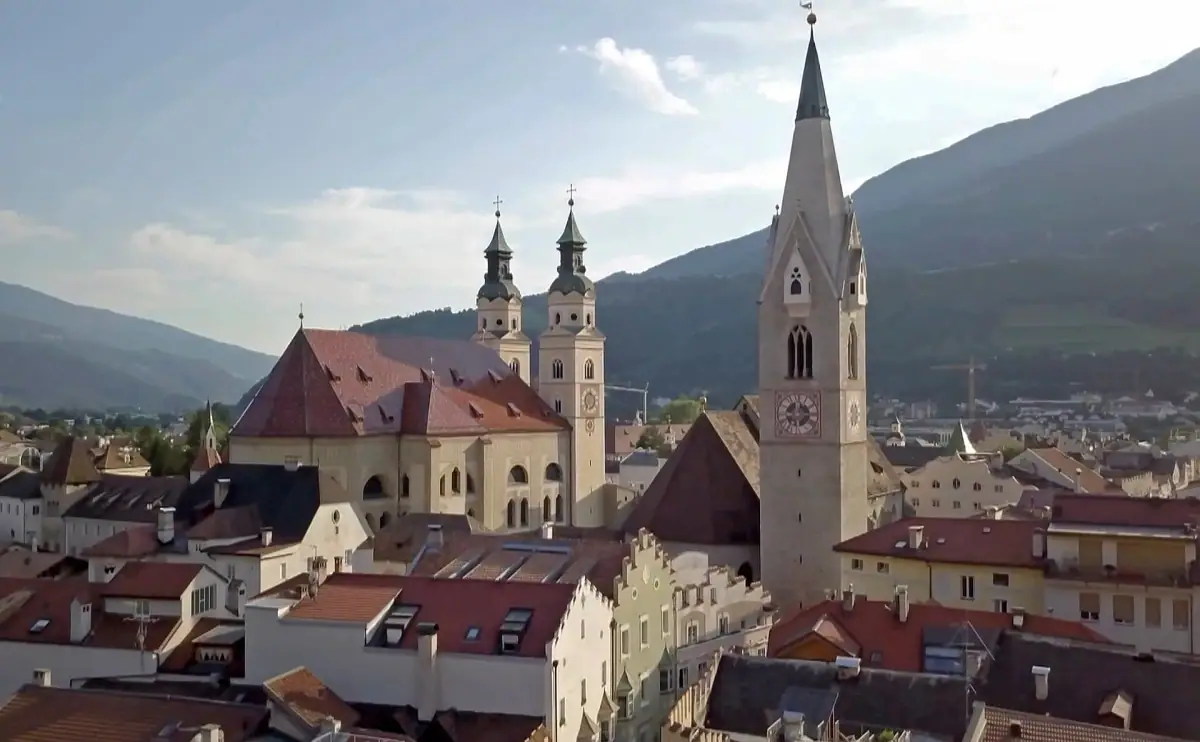
The Bressanone Cathedral (Duomo di Bressanone, or Dom in German) stands out at once on Piazza del Duomo, the large paved square at the center of the old town. The current building is the result of an ambitious 18th-century Baroque reconstruction, carried out between 1745 and 1754 under several architects, together with renowned artists such as Paul Troger. The cathedral was consecrated on September 10, 1758. The white facade framed by its two slender bell towers, the red Verona marble portal and the generously proportioned forecourt make for a theatrical entrance.
The interior is a festival of gilded stucco, trompe-l’œil frescoes and polychrome marble typical of Austrian Counter-Reformation Baroque. The ceiling frescoes, by Paul Troger, show biblical scenes of astonishing virtuosity, and the monumental organ in the gallery still sounds at Friday evening liturgical concerts in summer. But a piece of a very different style is worth the visit on its own: the Madonna by Hans Leinberger (1520), a late Gothic sculpture that arrived in Bressanone in 1952 and is still an object of popular devotion.
The cloister: a museum of frescoes under cover
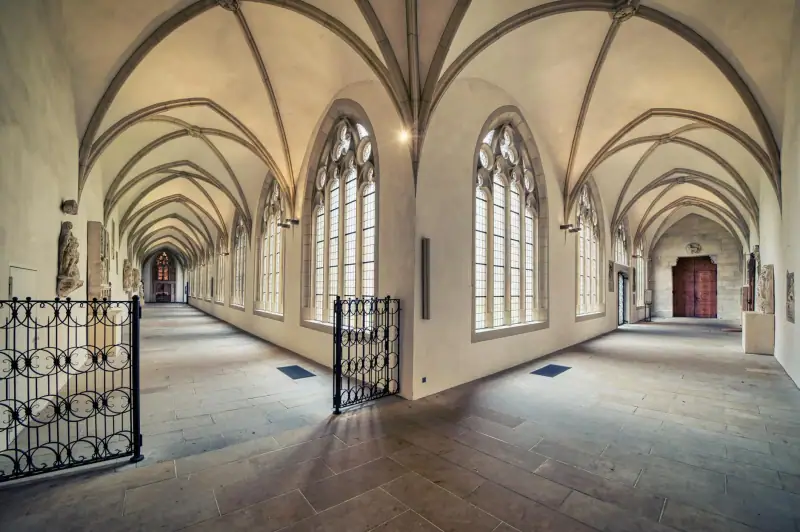
What makes Bressanone Cathedral truly exceptional is its Gothic cloister, reached through a side door. Romanesque in origin (rebuilt after the fire of 1174), it was remodeled in the Gothic style around 1370, with rib vaults, and is organized around a small central garden planted with roses and boxwood. Fifteen of its twenty arcades carry Gothic frescoes of exceptional richness, painted from the late 14th to the early 16th century by different artists, making it one of the best-preserved ensembles of medieval wall paintings in the Alps.
The iconography is both biblical and narrative: scenes from the Old and New Testaments, hagiographic legends, figures of saints, depictions of the Last Judgment and even a few scenes of medieval daily life. The quality of the pigments, protected for centuries by the cloister arcades, is remarkable. Allow at least 45 minutes to walk around and take in the details.
Hotels in Bressanone
From the charm of a family-run guesthouse to hotels with an alpine spa, for every budget.
The Bishop’s Palace and the Diocesan Museum
Next to the cathedral, the Bishop’s Palace (Palazzo Vescovile / Hofburg) is one of the oldest and most important episcopal residences in the Alps. The bishops of Bressanone lived here from the 11th century and exercised temporal power over a vast region until the fall of the Holy Roman Empire. The current building is the result of several centuries of reconstruction, mixing Romanesque, Gothic and Baroque styles.
Today the Palace houses the Diocesan Museum of Bressanone (Diözesanmuseum), which has one of the richest collections of medieval religious art in northern Italy. The highlights of the visit include:
- An exceptional collection of Christmas nativity scenes (Krippen) from the 17th to the 19th century, with about 5,000 figurines for the annual nativity, within a collection of Tyrolean and Italian (Naples, Sicily) nativity scenes.
- Embroidered liturgical vestments from the Middle Ages, and chalices and reliquaries in gold and silver with dazzling metalwork.
- Gothic painted panels of the 15th century, witnesses to the intense artistic activity that accompanied the power of the episcopal principality.
- The reconstructed throne room of the prince-bishops, with its hangings, furniture and view of the palace’s inner courtyard.
Practical information:
- Address: Piazza del Palazzo 2, Bressanone
- Hours: October-May: daily 10 am-5 pm | June-September: daily 10 am-6:30 pm | Closed December 24 and Easter Sunday | A winter closure is possible: check the dates on hofburg.it before you go
- Adult ticket: about €8 (~$9) (confirm at the museum)
- Recommended time: 1 h 30 to 2 h
The old town: arcades, lanes and markets
Like all of South Tyrol’s historic towns, Bressanone has its network of medieval arcaded lanes that once sheltered pedestrians and merchants from rain and snow. The Portici Maggiori and Portici Minori (the large and small arcades) are the two main shopping streets, lined with local craft shops, Tyrolean pastry shops and wood carvers’ workshops.
Piazza del Duomo
The large cathedral square, paved with gray stone and lively with café terraces, is the town’s natural gathering place. In summer it hosts chamber music concerts and cultural festivals. In winter, the legendary Bressanone Christmas market sets up here, one of the oldest and best-preserved in all of Italy (see the section below).
The Orefici (goldsmiths’) district
A little farther north, the historic goldsmiths’ district keeps some of the town’s finest merchant houses, with painted facades, mullioned windows and the coats of arms of medieval guilds. It is a quiet district, away from the tourist flow, ideal for a walk after lunch.
The Seminary garden
Following the Rienza canal northeast, you reach the Major Seminary garden, a public green space little known to visitors but much loved by locals. The old chestnut trees, flower beds and benches facing the mountains make it an ideal spot for a break and to watch local life.
Guided tours of Bressanone
Walking tours of the historic center, cultural visits and excursions to the surrounding Dolomite valleys.
The Plose: Bressanone’s mountain
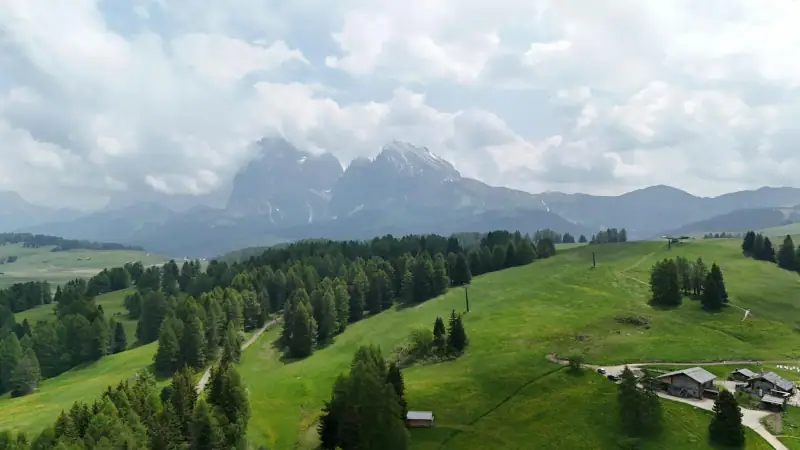
About 7 kilometers (4 mi) from the town center, the village of Sant’Andrea / St. Andrä is the starting point of the cable car up the Plose (summit around 2,500 m / 8,200 ft, upper cable car station at about 2,050 m / 6,725 ft), Bressanone’s emblematic mountain. In winter, the Plose ski area has well-groomed slopes and a panorama that stretches on a clear day to the Tre Cime di Lavaredo in the east and the Ötztal massif in the north. The slopes are less crowded than the big areas of Val Gardena or Cortina, which makes it a favorite of local skiers avoiding the crowds.
The Plose in summer: hiking and paragliding
In summer, the Plose becomes a hikers’ paradise. From the Gasser mountain restaurant, several trails radiate toward the surrounding pastures and summits:
- Plose Cross trail (2 h round trip, easy): The most popular path, leading to the summit cross with a 360° view of the Dolomites and the Tyrolean Alps.
- Plose huts loop (half day, moderate): A circuit linking several Hütten (alpine huts) with tastings of Südtiroler Hausmannskost (local mountain cooking).
- Mountain bike descent: Downhill trails are available for mountain bikers from the upper cable car.
The Plose is also known for paragliding: its regular thermals make it a popular flying site, with tandem introductory flights for beginners.
Plose cable car practical information:
- Departure: village of Sant’Andrea (bus from central Bressanone, line C)
- Round-trip fare (summer): about €30 (~$35) (€33 / ~$38 at the ticket office)
- Day ski pass: about €66-73 (~$77-85) (2026/27 season)
- Summer opening: check the dates on plose.org
Novacella Abbey: nine centuries of spirituality and wine
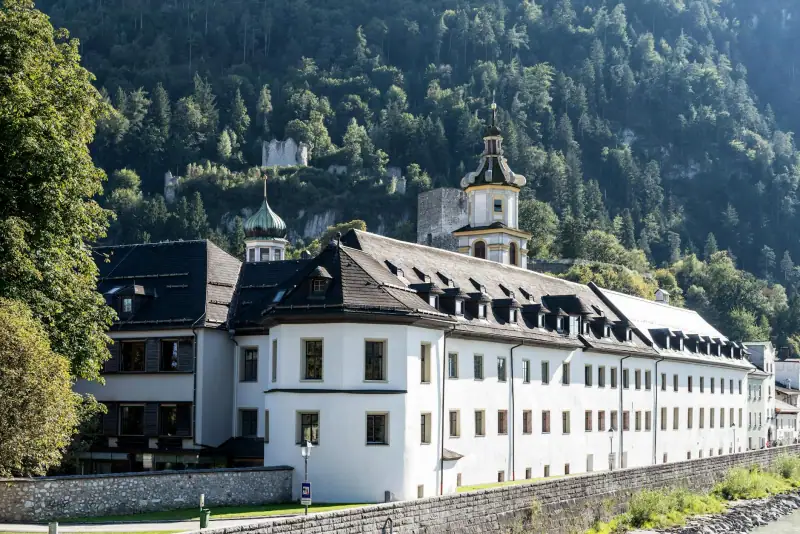
About 3 kilometers (2 mi) north of Bressanone toward Vipiteno, the Augustinian Abbey of Novacella (Stift Neustift) is one of the most beautiful and most active in Europe. Founded in 1142 by the Bishop of Bressanone, Hartmann, it has been continuously inhabited by Augustinian canons ever since and is one of South Tyrol’s most remarkable heritage sites.
The architectural complex
The abbey complex is a living museum of Alpine religious architecture, combining:
- A Baroque church (18th century) with frescoes by Matthäus Günther and dazzling white and gold stucco.
- A Romanesque-Gothic cloister of the 13th century with carved capitals on its columns.
- The round chapel of St. Michael (late 12th century), a jewel of Tyrolean Romanesque art.
- Medieval conventual buildings that now house a library, a school and the monks’ craft workshops.
The abbey’s wine
The Novacella Abbey cellar produces some of the best white wines in South Tyrol. Kerner, a grape variety created in Germany in 1929 and grown here for a long time, makes a floral, fruity white that built the cellar’s international reputation. Novacella’s Sylvaner, Müller-Thurgau and Gewürztraminer are also highly sought after.
The production cellar cannot be visited, but the abbey offers a vineyard tour with tasting (by reservation) and a wine shop open Monday to Saturday. To go deeper, see our guide to South Tyrol wines.
Abbey practical information:
- Hours: museum and tours Monday to Saturday (in summer about 10 am-5 pm, closed Sunday); vineyard tour with tasting Monday to Friday at 4 pm and Saturday at 2:30 pm (reservation required)
- Prices: guided museum tour about €7 (~$8); vineyard tour with tasting about €25 (~$29) (check on kloster-neustift.it)
- Access by bus from Bressanone (line A) or by car
Car rental in Bressanone
Essential for visiting Novacella Abbey, the Plose and the surrounding Dolomite valleys.
The Christmas market: the winter event
If you had to pick a single reason to visit Bressanone in winter, it would be its Christmas market. Set up on Piazza del Duomo from late November until early January, it is regularly ranked among the five best Christmas markets in Europe by the major travel guides.
What sets it apart from the big commercial markets of Nuremberg or Strasbourg is its handcrafted, authentically Tyrolean character. The roughly 45 wooden chalets sell only local products:
- Wood carvings by master craftsmen from Val Gardena (nativity scenes, figurines, nature motifs).
- Handmade Tyrolean embroidery and lace.
- Speck and mountain cheeses for tasting on the spot.
- Mulled wine (Glühwein) with spices and red berries, served in ceramic souvenir mugs.
- Lebkuchen (gingerbread), Zelten (a dried-fruit cake typical of Tyrolean Christmas) and handmade pralines.
It all unfolds under the lights of the cathedral’s illuminated Baroque facade, in a setting that seems to come out of a Zweig novel. Arrive on a weekday to avoid the weekend crowds, and book your lodging several months ahead for early December dates.
Bressanone’s food: Tyrolean with a touch of elegance
Bressanone’s cooking is South Tyrol cuisine in its purest form, perhaps with a slight extra sophistication tied to the historic prestige of the episcopal city. A few places and specialties to remember:
Specialties not to miss
Schlutzkrapfen: Half-moon ravioli filled with ricotta and spinach, covered in brown butter and Parmesan, are the classic dinner at altitude around Bressanone.
Speck and rye bread: Vinschger Paarl, a rye bread with caraway seeds from the Val Venosta, is the ideal companion for the local speck IGP. Enjoy it in any Gasthaus in the center.
Knödel in Brodo: Large bread dumplings with speck or cheese, served in beef broth, are the comfort dish par excellence after a day of skiing or hiking.
Apple and currant strudel: More elaborate than elsewhere, Bressanone’s strudel often includes currants or wild lingonberries from the Plose, which give it a slight, very pleasant tartness.
Where to eat
Restaurant Fink (Via dei Portici Maggiori): The downtown reference for updated takes on traditional Tyrolean cooking. Carved wood setting, exceptional regional wine cellar.
Gasthof Elefant: The oldest hotel-restaurant in Bressanone (founded in 1551, when Elephant, the famous pachyderm given to the Archduke of Austria, stopped here). Austrian home-style cooking, unique historic atmosphere.
Stiftskeller Neustift (at Novacella Abbey): The abbey cellar’s tavern serves its own wines with simple, generous dishes. The ultimate way to enjoy Novacella’s Kerner in its original setting.
Practical information for visiting Bressanone
Getting there
By train: Bressanone is served by the Bolzano-Brenner line (Trenitalia and ÖBB). From Bolzano, allow about 25-30 minutes; from Innsbruck, about 1 h 30. By train from Verona, about 1 h 45. From Milan, allow 3 h with a change in Verona or Bolzano.
By car: The A22 motorway (Autobrennero) serves Bressanone directly with two exits, Centro and Nord. From Milan, 3 h; from Innsbruck, about 1 h 04.
By plane: The nearest airport is Innsbruck (INN, Austria, about 85 km / 53 mi, about 1 h 04 by car) or Verona (VRN, Italy, about 191 km / 119 mi, about 1 h 53 by car). From Innsbruck, regional trains or shuttles that can be booked in advance reach Bressanone. For long-haul connections, Milan-Malpensa (about 3 h 15 to 3 h 30 by road) or Munich (2 h 30) are the options.
Getting around
Bressanone’s historic center is entirely pedestrian and easy to cover on foot in a day. For excursions (Plose, Novacella, Dolomites), a local bus serves the main sites from the Busbahnhof (bus station, behind the train station). Lines C (Plose) and A (Novacella) are the most useful.
To explore the Dolomite valleys and surrounding villages freely, a rental car remains the most flexible solution. Compare prices between the agencies at the station and online agencies before you leave.
Sample budget
| Item | Sample budget |
|---|---|
| Lodging (3-star double room) | €75-120 (~$87-140) / night |
| Dinner in a Gasthaus (per person) | €20-35 (~$23-41) |
| Diocesan Museum | €8 (~$9) |
| Novacella Abbey guided tour | ~€7 (~$8) |
| Plose cable car (round trip) | ~€30 (~$35) |
| Plose ski pass (day) | ~€66-73 (~$77-85) |
Bressanone is noticeably cheaper than Cortina d’Ampezzo or the flagship Dolomites ski resorts, while offering comparable heritage and food. See our Dolomites budget guide to plan your stay as precisely as possible.
When to visit
- Spring (April-May): Mild temperatures (12-18 °C / 54-64 °F), cherry trees in bloom in the seminary gardens, few tourists. Ideal for cultural visits.
- Summer (June-September): Hikes on the Plose, farmers’ markets, music festivals. July and August can be hot in town (25-30 °C / 77-86 °F) but cool at altitude.
- Fall (September-October): Grape harvest at Novacella, golden colors on the Plose pastures, a calm atmosphere. The best season according to locals.
- Winter (November-January): An unmissable Christmas market, skiing on the Plose, snow on the Baroque roofs, a fairy-tale setting.
To choose the right time for your favorite activities, see our guide to the best time to visit the Dolomites.
Suggested itinerary for 2 days in Bressanone
Day 1: The historic heart
- Morning (9 am-12 pm): Stroll through the arcaded old town (Portici Maggiori, Piazza del Duomo), visit the cathedral and the Gothic cloister (45 min). Coffee and strudel in a historic café on the square.
- Afternoon (2 pm-6 pm): Diocesan Museum and Bishop’s Palace (1 h 30-2 h). Linger over the nativity scene collection and the medieval liturgical vestments. Walk through the goldsmiths’ district and along the banks of the Rienza.
- Evening: Dinner at Restaurant Fink or Gasthof Elefant, with Schlutzkrapfen and Novacella wine.
Day 2: Mountain and abbey
- Morning (9 am-12 pm): Bus or car to Sant’Andrea, cable car up the Plose (upper station at about 2,050 m / 6,725 ft), hike to the summit cross (2 h, panoramic view of the Dolomites). Lunch in a mountain hut.
- Afternoon (2 pm-6 pm): Back down, drive to Novacella Abbey (20 min). Guided tour (1 h), tasting of Kerner and Sylvaner at the cellar.
- Evening: A simple dinner at the abbey’s Stiftskeller, or back in town for a last Tyrolean meal.
Bressanone is one of those towns that does not try too hard. No tourist staging, no overrated folklore, just a town that keeps living the way it always has, between its two cultures, its Baroque bell towers and its mountains. It is precisely this naturalness that makes it one of South Tyrol’s best surprises.
To plan your trip in the region, see our complete guide to the Dolomites or discover the Tyrolean culture that gives this Alpine area its originality.
Flights to the Dolomites
Compare flights to Verona, Innsbruck or Milan to reach Bressanone at the best price.
Sources
Frequently asked questions
How long do you need to visit Bressanone?
One to two days are enough to explore the historic center, the cathedral, the cloister, the Diocesan Museum and the main districts. Allow 3 days if you want to add a trip up the Plose and an excursion to Novacella Abbey.
How do you get to Bressanone?
The nearest airports are Innsbruck (INN, about 1 h by car) and Verona (VRN, about 2 h). By train, Bressanone is on the Bolzano-Brenner line: about 25-30 minutes from Bolzano, 1 h 30 from Innsbruck and 1 h 45 from Verona. By car, the A22 motorway serves Bressanone directly; allow 3 h from Milan.
Is Bressanone a good base for the Dolomites?
Yes, Bressanone is ideally placed in the Isarco valley. It puts Val Gardena within 30 minutes, Bolzano within 40 minutes and Cortina d'Ampezzo within 1 h 30 by car. It is a cheaper and more authentic base than the Alpine ski resorts.
Is the Bressanone Christmas market really exceptional?
It is often cited among the most beautiful Christmas markets in the Alps. It runs from late November to early January on Piazza del Duomo, surrounded by the illuminated Baroque cathedral. Local artisans, Tyrolean specialties and a medieval atmosphere make it a highlight of the season.
What language is spoken in Bressanone?
Bressanone (Brixen in German) is an officially bilingual Italian-German city in South Tyrol. German is even more dominant here than in Bolzano: the great majority of the population is German-speaking.
What is there to do in Bressanone outside the historic center?
Two excursions stand out: Plose mountain (summit around 2,500 m / 8,200 ft), reached by cable car from the village of Sant'Andrea (the upper station is at about 2,050 m / 6,725 ft), with magnificent views of the Dolomites; and the Augustinian abbey of Novacella (Stift Neustift, about 3 km / 2 mi to the north), active since 1142, with its renowned vineyards (the production cellar cannot be visited, but a vineyard tour with tasting is offered) and its Baroque church.
What is the best time to visit Bressanone?
Every season has its charms. Spring (April-May) is mild and flowery. Summer (June-September) is for hiking on the Plose. Fall (September-October) is the season of the grape harvest and the colors. Winter (November-January) is magical thanks to the Christmas market and skiing on the Plose.
Are Bressanone and Brixen the same city?
Yes. Bressanone is the Italian name and Brixen the German name of the same South Tyrol city. Both appear on road signs and booking sites.
What should you see in Bressanone in one day?
The cathedral and its Gothic cloister, the Bishop's Palace with the Diocesan Museum, the old town arcades, the Eagle Bridge and the confluence of the Isarco and Rienza rivers. Allow 5 to 6 hours in total.
More Dolomites guides
Keep reading
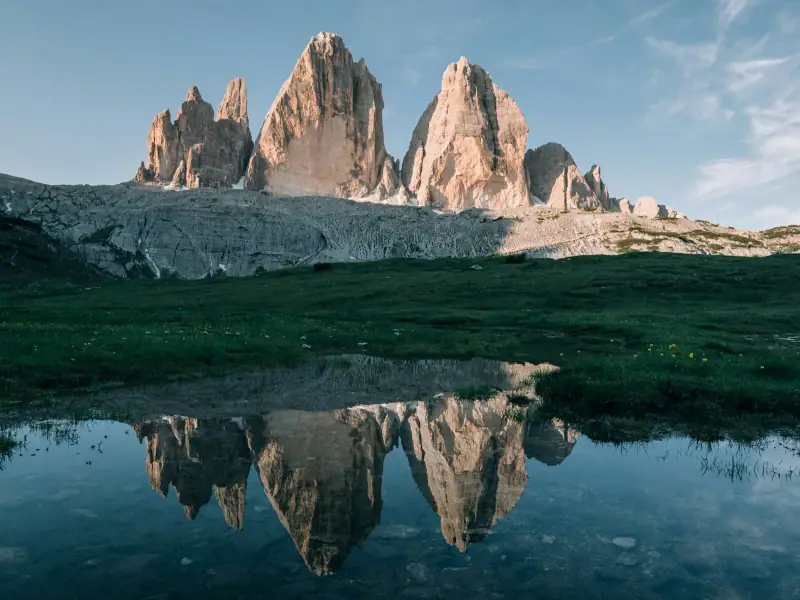
Tre Cime di Lavaredo: The Ultimate Guide to the Symbol of the Dolomites
Everything you need to visit the Tre Cime di Lavaredo: access, parking, hikes, best time of day and tips for avoiding the crowds.
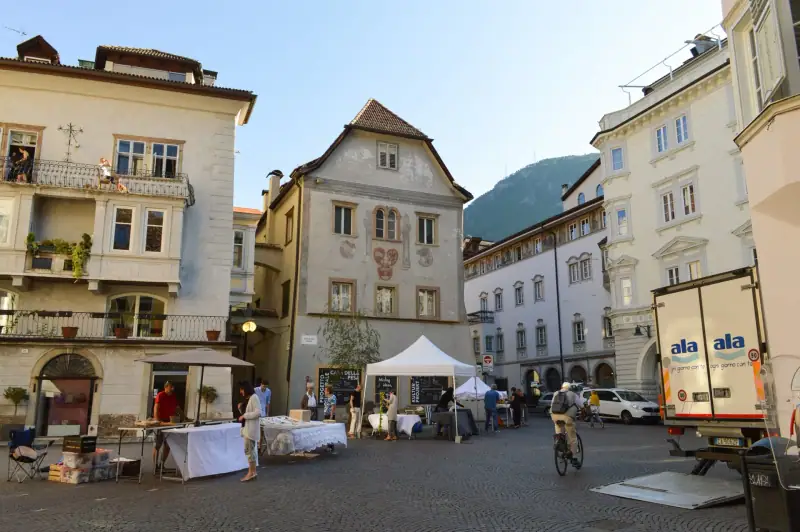
Visiting Bolzano: A Complete Guide to the Capital of South Tyrol
Visiting Bolzano: arcaded old town, Ötzi museum, Runkelstein Castle, Tyrolean food and Dolomites day trips. A complete practical guide.
Visiting Alta Badia: A Complete Guide to the Ladin Valley of the Dolomites
Alta Badia: Sellaronda skiing, high-altitude hikes, Michelin-starred dining and Ladin culture. Guide to Corvara, Colfosco and San Cassiano.
Ready-made
Dolomites itineraries
5 days
Dolomites with Kids: 5-Day Family Itinerary
Ortisei (Val Gardena)Cortina d'Ampezzo
5 days
Dolomites road trip in October: 5-day itinerary and passable roads
OrtiseiCanazeiCortina d'Ampezzo
3 days
Dolomites Weekend: A 3-Day Itinerary
A 3-day Dolomites weekend: Val Gardena, Tre Cime di Lavaredo and Alta Badia. Itinerary, lodging, budget and practical tips.