Plan your trip
Switzerland budget: what a trip costs, item by item (2026)
We may earn a commission when you book through links on this page, at no extra cost to you. We don't visit or try the places we cover: we summarize published sources. How we work
In short
- 2026 travel sources put a thrifty traveler's daily budget at around CHF 120 to 200 per person and a mid-range traveler's at around CHF 250 to 350, flights excluded.
- Two items concentrate most of the spending: accommodation (often 35 to 45% of the budget) and big mountain excursions.
- A 3-day Swiss Travel Pass in 2nd class costs CHF 254 consecutive; the Swiss Half Fare Card costs CHF 150 for a month.
- Making lunch your main meal, shopping at supermarkets and refilling your bottle at fountains are the most profitable savings.
Everyone will tell you: Switzerland is expensive. But “expensive” does not mean “out of reach.” With a little method, you can choose where to put your money and where to save it. A traveler who sleeps in a hostel and picnics in the mountains does not spend the same amount as a couple in a comfortable hotel taking every cable car at full price, and the gap can easily be threefold.
This guide breaks the budget down item by item (accommodation, transport, meals, activities), then offers three costed profiles and a series of tips for spending less. Amounts are given in Swiss francs (CHF) and are based on the published 2026 rates. They move from one season to the next: treat them as benchmarks, and check exact prices when you book.
The budget at a glance
Before going into detail, here are the benchmarks noted for 2026:
- Thrifty daily budget: about CHF 120 to 200 per person, flights excluded.
- Mid-range daily budget: about CHF 250 to 350 per person, flights excluded.
- 3-star hotel: about CHF 199 a night on average in Lucerne, CHF 156 in Lausanne, CHF 174 in Montreux. These averages cover large gaps depending on dates.
- Restaurant lunch: generally CHF 20 to 28 for a dish of the day.
- Swiss Travel Pass 3 days, 2nd class: CHF 254 consecutive, CHF 289 in the Flex version.
- Swiss Half Fare Card: CHF 150 for one month since January 1, 2026 (versus CHF 120 before).
- Jungfraujoch, round trip: about CHF 205 from Grindelwald, CHF 218 from Wengen and CHF 235 from Interlaken.
Keep these figures in mind: they show that two items concentrate most of the spending, accommodation and big mountain excursions.
Accommodation: the first expense
On most trips, sleeping represents 35 to 45% of the budget. Prices depend on the city, the season and the day of the week. Well-known resorts (Zermatt, Grindelwald, Lucerne in summer) show noticeably higher rates than mid-size towns.
Hostels and simple rooms
This is the economical solution. The 2026 figures for a hostel room for two adults give averages between about CHF 110 (Cointrin, near Geneva) and about CHF 177 (Frutigen, gateway to the Bernese Oberland), with minimums around CHF 80 to 110 depending on the town. Dorm beds are cheaper than these private rooms, but rates vary a lot from one property to another: compare offers for your dates.
3-star hotels
Expect to pay around CHF 150 to 210 a night on average for a double room in a city: CHF 156 in Lausanne, CHF 174 in Montreux, CHF 199 in Lucerne. The range is wide: in Lucerne, the figures run from about CHF 89 to over CHF 550 depending on the date. Booking early and avoiding summer weekends lowers the bill.
Upscale hotels
Above CHF 250 to 300 a night, you enter the range of 4- and 5-star hotels or resort hotels with views of the Matterhorn or the Eiger. Since the gaps are very large, we give no average: look directly at offers for your dates. To choose a district or a base, our guide where to stay in Switzerland compares the main destinations.
🏨 Compare accommodation: prices vary a lot by date and district. Compare the hotels and hostels available for your dates before fixing your budget.
Transport: choosing your ticket well
The Swiss rail network is dense and punctual, and a car is not necessary for a classic stay. On the other hand, full-fare tickets are expensive, so it pays to do the math.
Swiss Travel Pass or half fare
The Swiss Travel Pass in 2nd class costs CHF 254 for 3 consecutive days, or CHF 289 for 3 days of your choice within the month (Flex). It gives unlimited travel by train, PostBus and boat, plus entry to many museums. The Swiss Half Fare Card, at CHF 150, makes nothing free but roughly halves the price of each ticket for a month.
The calculation is simple: add up your journeys at full fare on the Swiss Federal Railways site, then compare with the pass and with the half-fare card. Our article Swiss Travel Pass: is it worth it? details the method, as well as the reservation supplements to expect for panoramic trains.
City transport and boats
In cities, a single tram or bus ticket costs a few francs, and many hotels hand out a card giving free access to local transport during the stay. Ask for it when you book: it is an effortless saving.
What about a car?
It is only useful for regions with poor public transport. Between fuel, city parking and the highway vignette, it weighs heavily on a budget. For an itinerary by train, our 7-day itinerary by train shows what you can do without driving.
Meals: the item where you can play the most
Eating out every evening pushes the bill up, but dining remains the easiest item to control.
What a meal costs
The 2026 figures show a dish of the day at CHF 20 to 28 at lunch in cities, with maximums around CHF 40. Melted cheese in a pot, the fondue, runs around CHF 28 per person. For coffee, expect CHF 3.50 to 4.50 for an espresso and CHF 4.80 to 6.50 for a cappuccino. For a quick bite, a grilled sausage such as a bratwurst is found around CHF 8 to 12.
The lunch habit
Many restaurants offer lunch menus 20 to 30% cheaper than at dinner. So make lunch your main meal and go for a light dinner: a sandwich, a salad or a picnic bought at the supermarket. It is the most profitable tip in this guide.
Supermarkets and tap water
The big supermarket chains, present in almost every town, sell ready meals, salads, bread and cheese at prices well below restaurants. Tap water is drinkable everywhere, and many public fountains let you fill your bottle: no need to buy bottled water. To find the dishes worth trying, read our article on the specialties to taste in Switzerland.
Activities: choosing your big days
The landscapes are free: lakeside walks, villages, low-altitude trails. It is the lifts and classic excursions that cost a lot.
High-mountain excursions
The Jungfraujoch, the “Top of Europe,” illustrates the scale well: in 2026, the adult round trip costs about CHF 205 from Grindelwald (via the Eiger Express), CHF 218 from Wengen and CHF 235 from Interlaken. From May to October, a mandatory seat reservation of CHF 10 is added. Swiss Travel Pass holders get a 25% discount, and children aged 6 to 15 pay half fare. Summer tickets are also about 10 to 15% pricier than winter ones. If you come for skiing, our guide to skiing in Switzerland without breaking the bank details passes, subscriptions and affordable resorts.
A single excursion of this kind can therefore cost as much as a hotel night for two. Choose one or two per stay rather than one every day, and choose them by weather: going up in overcast conditions is the worst way to spend CHF 200. Our guide to the Jungfrau region and the Oberland suggests cheaper alternatives, such as panoramic trails and villages.
Visits, cruises and museums
Lake cruises, museums and guided tours are paid individually or covered by a pass. Museums that are free with the Swiss Travel Pass offset part of the price if you like visiting them, so it pays to list your visits before buying.
🎟️ Excursions and visits: cruises, guided tours and mountain outings can be compared and booked online before departure.
Three costed budget profiles
Here are three profiles for one week (7 nights) for one person, sharing a double room with another person where one applies. These are estimates built from the benchmarks above, international flights excluded. They do not replace a quote: adjust them to your dates.
Profile 1: the thrifty traveler (about CHF 1,000 to 1,300)
- Accommodation: hostel or simple room shared by two, about CHF 55 to 90 per person per night, so about CHF 400 to 600.
- Transport: Swiss Half Fare Card (CHF 150) and half-price tickets, about CHF 250 to 300 in total.
- Meals: breakfasts and dinners from the supermarket, a dish of the day at lunch, about CHF 35 to 45 a day, so about CHF 250 to 300.
- Activities: free walks, one or two museums, a single mountain excursion at a reduced rate, about CHF 100 to 150.
This corresponds to about CHF 150 to 190 a day, within the CHF 120 to 200 range of the 2026 figures.
Profile 2: the mid-range traveler (about CHF 1,900 to 2,400)
- Accommodation: 3-star hotel in a double room, so about CHF 80 to 105 per person per night at the average rate of CHF 156 to 210 a room, about CHF 600 to 750.
- Transport: 3-day Swiss Travel Pass (CHF 254) combined with single tickets, or half fare, about CHF 350 to 450.
- Meals: restaurant lunch, a simple dinner or an occasional fondue, about CHF 70 to 90 a day, so about CHF 500 to 650.
- Activities: one big mountain excursion, a cruise and a few visits, about CHF 300 to 400.
That comes to about CHF 270 to 340 a day, which matches the CHF 250 to 350 range noted for this type of traveler.
Profile 3: the comfort traveler (about CHF 3,000 and more)
- Accommodation: 4-star or resort hotel with a view, from about CHF 150 to 200 per person per night, so at least CHF 1,050 to 1,400 and more in the resorts.
- Transport: Swiss Travel Pass in 1st class or 1st-class tickets, panoramic train reservations included, about CHF 500 to 700.
- Meals: restaurants at lunch and dinner, about CHF 110 to 150 a day, so about CHF 800 to 1,000.
- Activities: multiple excursions, including the Jungfraujoch, and a few guided experiences, about CHF 400 to 600.
In this profile, accommodation and excursions weigh nearly three quarters of the spending: that is where the room to maneuver lies.
12 tips to spend less
- Travel off-season. Spring and autumn, outside school-holiday periods, offer gentler hotel rates than high summer.
- Stay in a well-served town rather than in a resort with a direct view of the Matterhorn or the Eiger: rates there are often lower and the train takes you to the mountains in the morning.
- Avoid summer weekends for booking: hotel prices are highest then.
- Make lunch your main meal, with the daily menu cheaper than dinner.
- Buy at the supermarket breakfast, picnic and a light dinner (see eating cheap in Switzerland with Migros, Coop and the daily menu).
- Fill your bottle at fountains: tap water is drinkable.
- Calculate Swiss Travel Pass, half fare or single tickets before buying. A mistake here quickly costs several hundred francs.
- Check your accommodation’s guest card: it often gives access to local transport.
- Choose your lifts: one or two well-chosen big days in good weather are worth more than five average days.
- Book panoramic trains early to avoid paying for pricier alternatives when seats run out.
- Pay in Swiss francs by card, without accepting the terminal’s conversion into euros, which is generally less advantageous.
- Take out travel insurance: canceling an expensive trip or paying for medical care in Switzerland can cost a lot. Compare offers from insurers.
The costs people forget
A few expenses often go under the radar: mandatory reservations on panoramic trains, the tourist tax charged by some accommodations, luggage storage at stations, parking if you rent a car, or café stops on terraces, which add up fast. Plan a margin of about 10% on the total for these unexpected items.
Our advice
First list your three priorities: comfortable accommodation, big excursions, or simply the freedom to move. The budget that follows will be more realistic than an average figure. Spend where you really want to, and save methodically on the rest: you can perfectly well see Switzerland, its lakes, its villages and its glaciers, without leaving a month’s salary behind.
Sources
- SBB: prices checked November 2026
- Switzerland Travel System: prices checked November 2026
- Jungfrau Railways (jungfrau.ch): prices checked November 2026
Frequently asked questions
What daily budget should you plan in Switzerland?
2026 travel sources put a thrifty traveler's daily budget at around CHF 120 to 200 per person, and a mid-range traveler's at around CHF 250 to 350, flights excluded. Your total depends mostly on accommodation and lifts.
Is Switzerland really the most expensive country in Europe?
It is among the most expensive destinations in Europe, especially for accommodation, dining and lifts. In return, local wages are high, services are reliable and tap water is free and drinkable.
Should you pay in Swiss francs or euros?
The official currency is the Swiss franc (CHF). Some shops in tourist areas accept euros, but at an often unfavorable exchange rate. Pay in francs, by bank card, and refuse the conversion offered by the terminal.
Does the Swiss Travel Pass save money?
It depends on your pace. The 3-day pass in 2nd class costs CHF 254 in the consecutive version. It pays off if you link long journeys, less so if you stay in one region. The Swiss Half Fare Card, at CHF 150 for one month, suits more relaxed stays.
What is the best period for paying less?
Slow periods, such as spring and autumn outside school-holiday periods, generally offer cheaper accommodation than summer and ski weeks. For the mountains, some high-altitude tickets are also a little cheaper in winter than in summer.
Can you travel in Switzerland on a small budget?
Yes, by staying in a hostel or a well-served town, buying meals at the supermarket, making lunch the main meal and choosing free activities such as lakeside walks and low-altitude trails.
More Switzerland guides
Keep reading
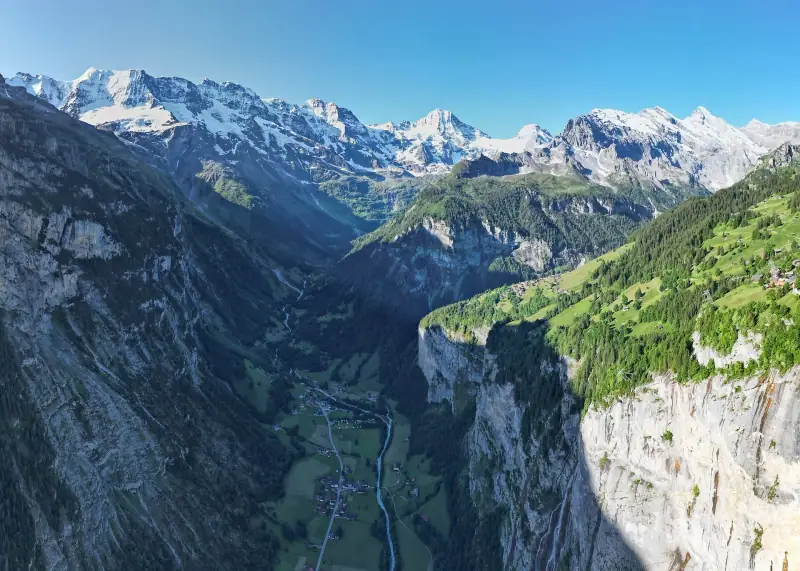
Best time to visit Switzerland: climate, seasons and events
When to go to Switzerland? Month-by-month climate, crowds, hiking and ski seasons, events and tips by trip type: mountains, cities, lakes or Ticino.
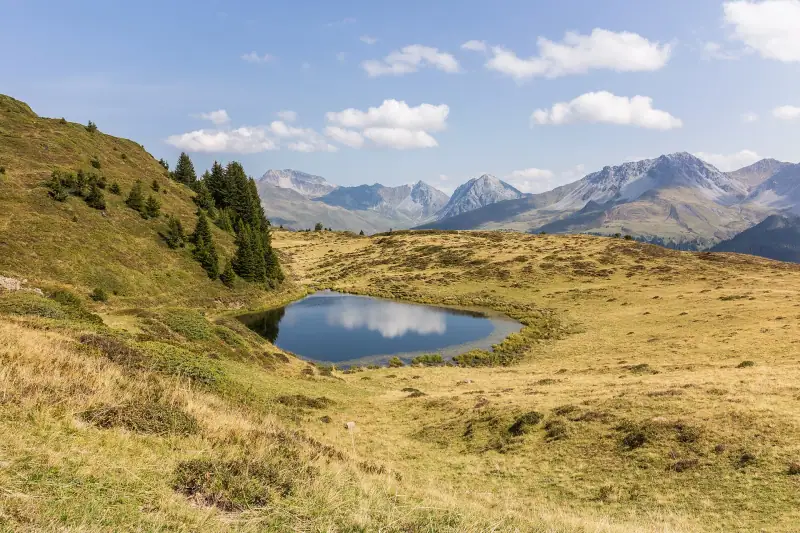
What to see in Graubünden: Chur, the Engadine, the National Park and UNESCO trains
What to see in Graubünden: Chur, Rhine Gorge, Flims, Engadine, St. Moritz, Swiss National Park, Müstair and UNESCO trains. Itineraries and practical tips.
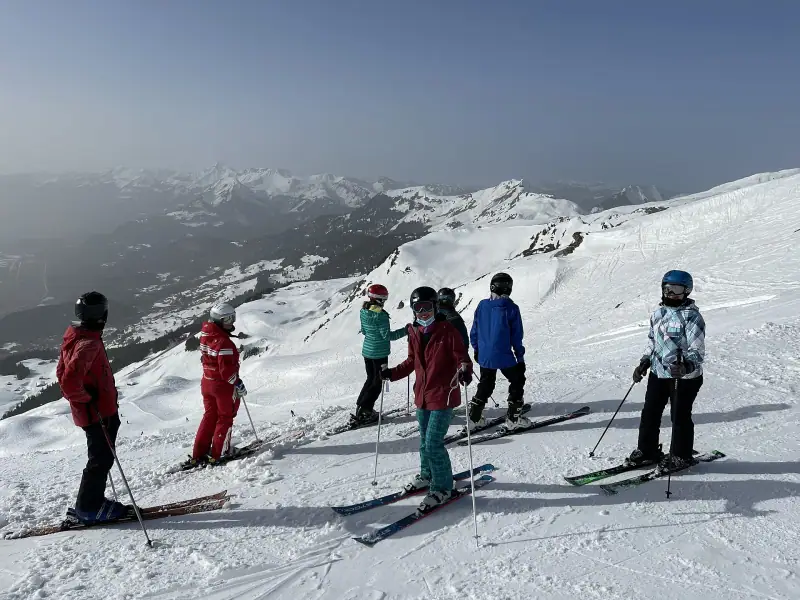
Switzerland's best ski resorts: Zermatt, Verbier, St. Moritz compared, with budgets
Zermatt, Verbier or St. Moritz: ski areas, atmosphere, access, lodging and budget. Compare Switzerland's three big resorts before booking your winter.
Ready-made
Switzerland itineraries
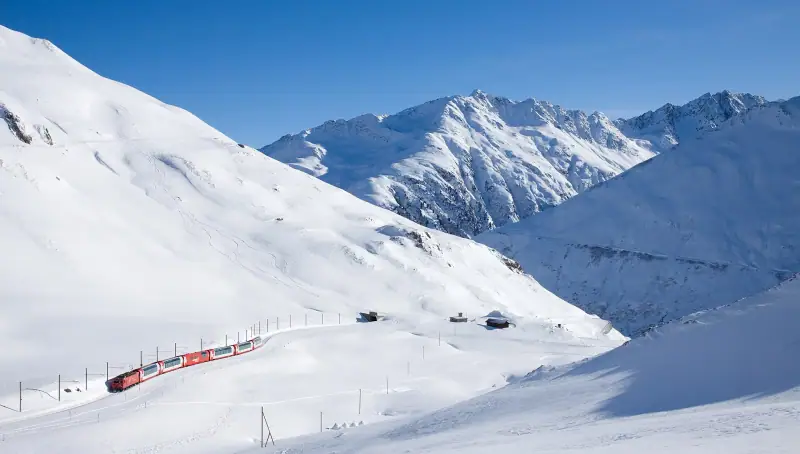
Glacier Express and panoramic trains in winter: routes, prices and reservations
Glacier Express, Bernina Express and GoldenPass in winter: 2026-2027 running dates, reservation prices, recommended routes and tips for seeing the snow.
Glacier Express or Bernina Express: which panoramic train should you choose?
Glacier Express or Bernina Express: duration, scenery, reservations and passes. Compare Switzerland's two panoramic trains and pick the one for your trip.
7 days
7-day Switzerland itinerary by train: Lucerne, Interlaken, Zermatt and Lake Geneva
LucerneInterlakenZermattLausanne