Plan your trip
Austria travel budget: real costs and 3 priced profiles
We may earn a commission when you book through links on this page, at no extra cost to you. We don't visit or try the places we cover: we summarize published sources. How we work
In short
- Plan roughly €60 to €85 (~$70 to $99) per person per day on a very frugal trip, €150 to €210 (~$175 to $245) at mid-range comfort, and €350 (~$405) or more at the high end.
- Lodging is the most variable item: a dorm bed runs €25 to €55 (~$29 to $64), a two-star room €85 to €150 (~$99 to $175) a night for two.
- The motorway vignette is mandatory: in 2026, €9.60 (~$11) for 1 day, €12.80 (~$15) for 10 days, €32 (~$37) for 2 months.
- Cheaper periods are November, April and May; early train booking (Sparschiene, Westbahn) and a lunch menu help keep costs down.
Austria has a reputation for being expensive, and that is partly true: restaurant meals, hotel rooms in heavily visited places and ski passes quickly weigh on the budget. But the country also offers real ways to save: a dense rail network, well-run hostels, markets, daily specials at low prices and many free sites.
This guide breaks down expenses item by item, then offers three priced budget profiles for one person. The prices cited come from research done in October 2026 on travel sources and official sites; they change from one year to the next, and from one season to the next, so treat them as benchmarks and check rates when you book.
Lodging: the most variable item
This is where the gap between two trips is greatest. According to the comparisons consulted, a dorm bed in Vienna costs between €25 and €55 (~$29 to $64) a night, and between €25 and €45 (~$29 to $52) in the rest of the country. A room in a two-star hotel or guesthouse sits more between €85 and €150 (~$99 to $175) a night for two people, and a well-located three-star between €130 and €220 (~$150 to $255).
These ranges climb sharply in high season: summer on the Salzkammergut lakes, December for the Christmas markets and peak ski season in Tyrol. They drop in spring and in November. To choose the right neighborhood or city, see our article where to stay in Austria.
Two points to check before booking:
- The tourist tax: it is often collected locally and can be added to the displayed price, depending on the municipality.
- Breakfast: frequently included in guesthouses and hotels, it is then worth a meal saved. Compare prices with all options included.
Compare lodging in Austria: filter by price, breakfast included and free cancellation to keep control of your budget.
Transport: train, cities and car
Between cities
The train is the most practical way to link Vienna, Salzburg, Innsbruck or Graz. ÖBB offers Sparschiene tickets, tied to a specific train and in limited numbers: the operator advertises them from €9.90 (~$11) in 2nd class, which is a national floor price, not a guaranteed price on every route. Between Vienna and Salzburg, tickets at about €19.90 (~$23) exist if you book at least a week ahead, and the private company Westbahn advertises a starting fare of €13.99 (~$16). These seats go fast around public holidays and big festivals, so book early.
In cities
In Vienna, the fare grid changed on January 1, 2026: a single trip costs €3 (~$3) as a digital ticket (€3.20 (~$4) on paper), the 24-hour ticket €9.70 (~$11) and the 7-day ticket €25.20 (~$29). The old 48- and 72-hour tickets have disappeared. For a three-day stay in the capital, two 24-hour tickets or one 7-day ticket depending on your trips may be enough, but the center is very walkable. Our 3-day program in Vienna shows how to limit travel.
The Klimaticket Österreich, the national pass, saw its price rise in 2025: it now exceeds several hundred euros a year and is only justified for very long stays or residents.
By car
If you rent a car, add the mandatory motorway vignette. In 2026, it costs €9.60 (~$11) for one day, €12.80 (~$15) for ten days, €32 (~$37) for two months. Also factor in fuel, parking in cities (often paid and limited in the center) and any special tolls on some mountain roads. A car is mostly justified for the Wachau, the Salzkammergut or isolated valleys, as in the 7-day itinerary.
Meals: from the Würstelstand to the restaurant

Dining is an easy item to steer. According to the sources consulted in 2026:
- a cheese sausage (Käsekrainer) with bread and mustard at a kiosk: about €5 (~$6);
- a Melange-type coffee in a Viennese café: about €5 to €7 (~$6 to $8);
- half a liter of beer: €4.50 to €6 (~$5 to $7);
- a Wiener Schnitzel in a restaurant: from €18 to €28 (~$21 to $32) depending on the place, rather €22 to €28 (~$26 to $32) in the city center;
- an inexpensive meal: about €8 (~$9); a mid-range restaurant: about €25 (~$29) per person; a gourmet table: from €40 (~$46).
The Viennese café is a special case: you pay for the time spent at the table as much as for the drink. A coffee and a pastry easily come to ten euros (~$12), but nobody rushes you to leave. To discover typical dishes without mistakes, read our guide to Austrian culinary specialties.
Supermarkets (with built-in bakeries and ready-meal aisles) are a reliable solution for a picnic, especially if you hike. Lunch menus, often more affordable than the evening menu, are another good option.
Taste local food without breaking the bank: tastings, food tours and cooking classes are worth comparing online before you leave.
Activities and visits: what costs, what is free
The big monuments are paid. For Schönbrunn Palace in Vienna, adult rates vary with the visit chosen (imperial apartments tour or full tour) and with the season, with gaps between sources: expect something like twenty to forty euros (~$23 to $46), and check the exact price on the palace’s official site before coming.
City cards can pay off if you visit a lot. The Salzburg Card, for example, costs in high season (April 1 to October 31, 2026) €38 (~$44) for 24 hours, €45 (~$52) for 48 hours and €49 (~$57) for 72 hours; in low season, €35 (~$41), €41 (~$48) and €44 (~$51) for the same durations. The Vienna City Card, centered on transport and discounts, has rates recorded differently depending on the source: check the official site before buying. Always do the math with your planned visits.
Conversely, many pleasures are free or nearly so:
- wandering the historic centers of Vienna, Salzburg and Innsbruck;
- entering churches and the courtyards of former palaces;
- walking along the Danube, the lakes or on mid-mountain trails;
- enjoying the Christmas markets by paying only for what you consume, as described in our article on Christmas markets in Austria.
For more organized excursions (Danube cruise, salt mine, guided hike), book online to compare prices.
Excursions and guided tours: compare rates, durations and cancellation conditions before booking.
Three priced budget profiles
Here are three scenarios for one person, excluding flights. They draw on the ranges cited above, with detailed assumptions, so you can adjust them.
Profile 1: frugal traveler, about €60 to €85 (~$70 to $99) per day
- Lodging: dorm bed or shared room, €25 to €45 (~$29 to $52);
- Meals: hostel breakfast, supermarket and takeout, €15 to €25 (~$17 to $29);
- Transport: urban transit tickets, train booked early, €5 to €12 (~$6 to $14);
- Visits: a paid monument every two days, €5 to €10 (~$6 to $12).
Over 7 days, that comes to about €420 to €600 (~$485 to $695) in total.
Profile 2: mid-range comfort, about €150 to €210 (~$175 to $245) per day
- Lodging: half of a double room in a two- or three-star hotel, €45 to €90 (~$52 to $105) per person;
- Meals: one restaurant a day (about €25 (~$29)) and Viennese café, €40 to €60 (~$46 to $70);
- Transport: trains and urban transit, €15 to €30 (~$17 to $35);
- Visits: two paid visits per day of stay, €20 to €30 (~$23 to $35).
Over 7 days: about €1,050 to €1,470 (~$1,220 to $1,705).
Profile 3: high end, €350 (~$405) per day and more
- Lodging: four- or five-star hotel, €150 to €300 (~$175 to $350) per person;
- Meals: gourmet table (from €40 (~$46) a cover);
- Transport: first class or car with driver;
- Visits: private tours and concerts.
Over 7 days: from €2,450 (~$2,840). A budget comparison published online for a two-week trip for two estimates the total at about €2,675 (~$3,105) (low budget), €4,918 (~$5,705) (mid) and €6,570 (~$7,620) (high): these orders of magnitude agree with the profiles above.
Tips to spend less
- Choose the right season. May, early June, September and November are cheaper than July-August or December. See our guide when to go to Austria.
- Book the train early. Sparschiene or Westbahn fares go fast; at least a week ahead is a good habit.
- Stay on the outskirts. A room a few tram or S-Bahn stops from the center is often cheaper than in the very center.
- Choose the lunch menu. Restaurants often offer a more affordable set menu than dinner.
- Take a hearty included breakfast to lighten lunch.
- Drink tap water. In Austria it is of very good quality, notably in Vienna where it comes from Alpine springs.
- Do the math before buying a city card. List the paid visits and compare with the card’s price.
- Travel as a pair or a group. Double rooms and the car are shared, which divides the cost per person.
- Factor the vignette into the car’s cost. It adds to the rental cost and fuel.
- Keep a little cash for markets, huts and small establishments that do not always accept cards (see card or cash in Austria).
Insurance and the unexpected
Plan a 10% margin for the unexpected. If you head to the mountains, or go skiing in winter, insurance that covers rescue and repatriation costs is useful: search and evacuation costs can be high and are not always covered by standard health coverage.
Example budget for a week for two
For a couple following our 7-day itinerary at mid-range comfort, the estimate based on profile 2 gives about €2,100 to €2,900 (~$2,435 to $3,365) for two (lodging, meals, local transport, visits), excluding flights. If you take a car for the Wachau or the Salzkammergut, add the rental, fuel, vignette and parking. If you stick to Vienna and Salzburg by train, the budget shrinks noticeably.
Keep in mind that these figures are averages: a summer weekend in Hallstatt can cost much more than a spring week in Graz. The most effective approach is to first set an overall ceiling, then split it among lodging (about half), meals, transport and visits.
Sources
- ASFINAG: prices checked November 2026
- Salzburg Tourism (salzburg.info): prices checked November 2026
- Vienna Tourist Board (vienna.info): prices checked November 2026
- ÖBB: prices checked November 2026
- Westbahn: prices checked November 2026
Frequently asked questions
What daily budget should you plan in Austria?
Plan roughly €60 to €85 (~$70 to $99) per day per person on a very frugal trip (dorm, groceries, public transport), €150 to €210 (~$175 to $245) at mid-range comfort and €350 (~$405) or more at the high end. These are orders of magnitude: Vienna is a bit cheaper than ski resorts or Hallstatt in high season.
Is Austria an expensive country?
It is pricier than Eastern or Southern Europe, and comparable to Germany or France for meals. Lodging is the item that varies most, notably in tourist areas and in high season.
Do you need to buy the vignette to drive in Austria?
Yes, the vignette is mandatory on motorways and expressways. In 2026, the 10-day version for a car costs €12.80 (~$15), the 1-day version €9.60 (~$11) and the 2-month version €32 (~$37). It can be bought online or at the border, in gas stations and tobacco shops.
How can you travel cheaply between cities?
The train remains the simplest. ÖBB's reduced-price tickets (Sparschiene) and offers from the Westbahn company let you travel between Vienna and Salzburg for around €20 (~$23) if you book early, but discounted seats are limited.
Are city cards worth it?
Only if you string together paid visits. Do the math with the admissions you really plan to make: for a stay centered on walks, cafés and free churches, a transit ticket is often enough.
Can you pay by card everywhere in Austria?
Cards are widely accepted, but some small restaurants, huts, markets and country Gasthäuser still prefer or require cash. Keep a little cash, especially in the mountains.
What is the cheapest period?
Off-peak periods, such as November, April and May, offer the best lodging prices. Our guide "when to go to Austria" details the seasons.
More Austria guides
Keep reading
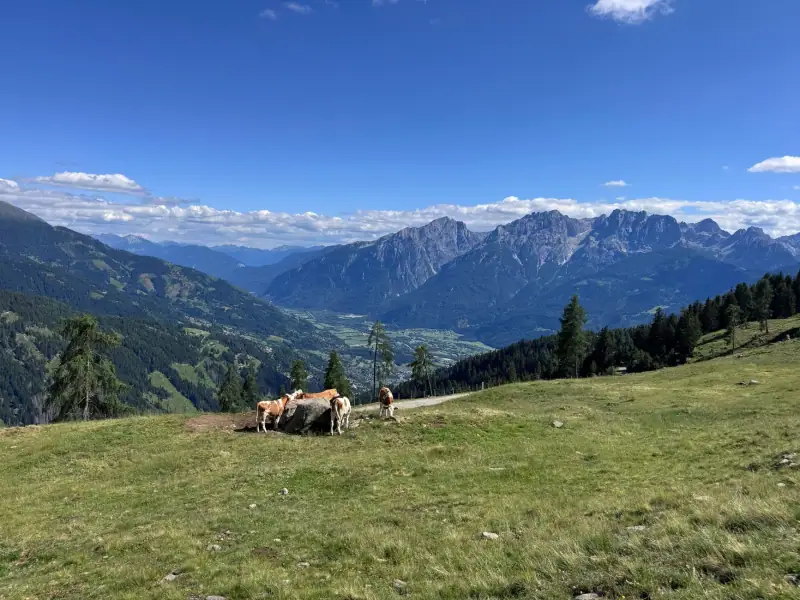
When to go to Austria: seasons, weather and the best times
When to go to Austria? Compare the seasons: lakes and hiking in summer, Christmas markets in December, skiing in winter, vineyards in fall.
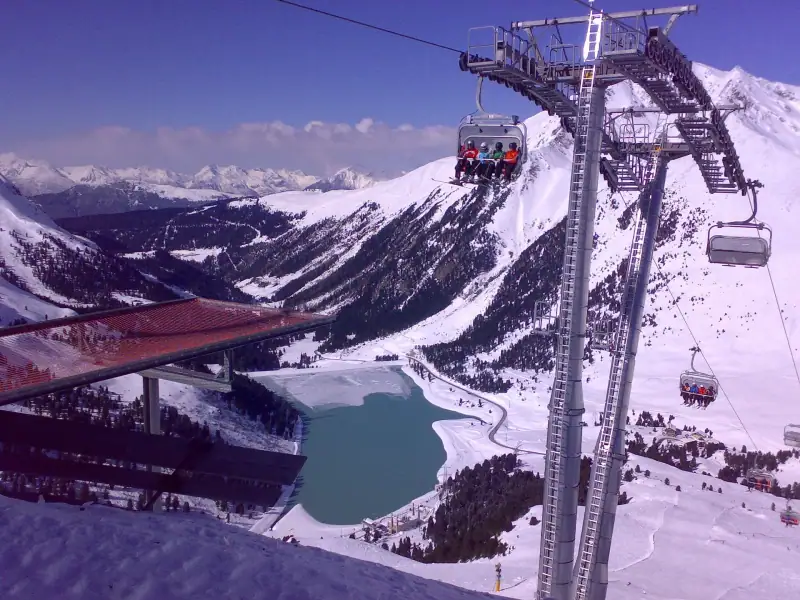
The best ski resorts in Austria: Tyrol, Salzburg and Vorarlberg compared
Which ski resort to choose in Austria? Sölden, St. Anton, Lech, Kitzbühel, Mayrhofen, Saalbach, Kaprun and Montafon compared: areas, seasons, profiles.
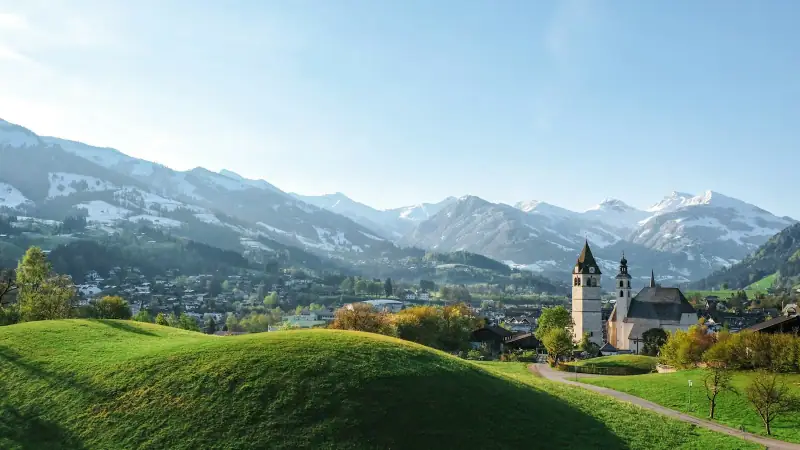
Visiting Kitzbühel: what to see and do in the heart of Tyrol
What to see in Kitzbühel? Old town, Kitzbüheler Horn, Schwarzsee, the Streif and Hahnenkamm: a guide to plan your stay in Tyrol's famous resort.
Ready-made
Austria itineraries
3 days
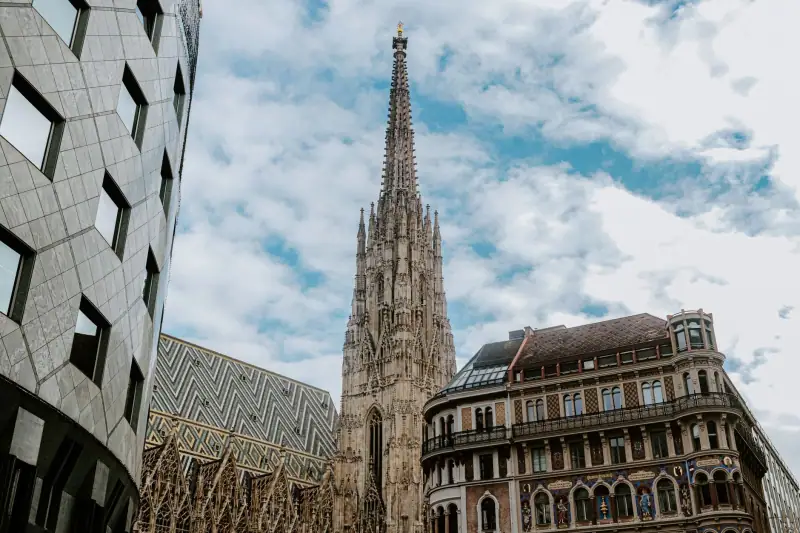
Vienna in 3 days: a day-by-day itinerary to see it all
What to see in Vienna in 3 days: the Ring, Hofburg, Schönbrunn, Belvedere, Prater and cafés, as a walking and tram itinerary with practical tips.
7 days
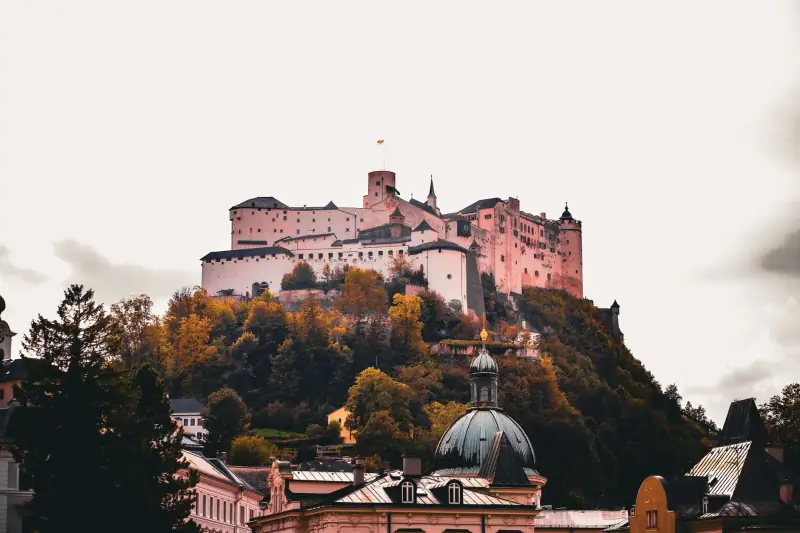
Austria in 7 days: Vienna, the Wachau, Salzburg, Hallstatt and Innsbruck
A one-week itinerary in Austria: Vienna, the Wachau, Salzburg, Hallstatt and Innsbruck, with train journeys, day-by-day stops and tips on where to stay.
2 days
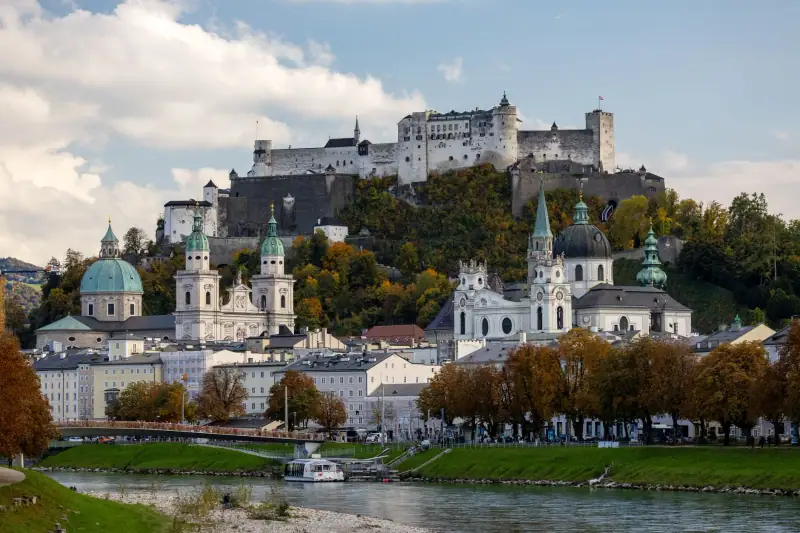
Salzburg in 2 days: an itinerary through Mozart, the fortress and the gardens
What to see in Salzburg in 2 days: old town, Hohensalzburg Fortress, Mozart's birthplace, Mirabell Gardens and Hellbrunn, as a walking itinerary.