Itineraries
Portugal in 14 days: Porto, the Douro, Lisbon, the Alentejo and the Algarve
We may earn a commission when you book through links on this page, at no extra cost to you. We don't visit or try the places we cover: we summarize published sources. How we work
Day by day
- Days 1-3Porto: azulejos, the Ribeira and the port cellars
- Days 4-5Pinhão: terraced vineyards, a quinta and a river cruise
- Day 6Coimbra: the university and an evening in the old town
- Day 7Óbidos: ramparts and quiet lanes after the day visitors leave
- Days 8-10Lisbon: Baixa, Alfama, Belém, with Sintra as an option
- Day 11Évora: Roman temple, Chapel of Bones, optional megaliths
- Days 12-13Lagos: Ponta da Piedade, beaches and the old town
- Day 14Short drive to Faro Airport and fly home
Where to sleep
- Porto3 nights
- Pinhão2 nights
- Coimbra1 night
- Óbidos1 night
- Lisbon3 nights
- Évora1 night
- Lagos2 nights
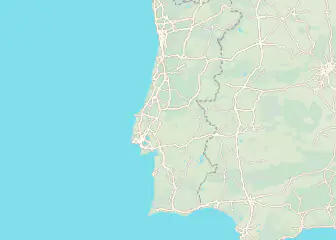
Opens the trip planner with these stops and nights already filled in. Add a stop, drop one or change the nights.
In short
- Fly into Porto, out of Faro, with seven bases: Porto, Pinhão, Coimbra, Óbidos, Lisbon, Évora and Lagos.
- The longest drives are Évora to Lagos (3 h 10, 245 km / 152 mi) and Pinhão to Coimbra (2 h 15).
- Best in spring or September to October; the Alentejo and the Douro get very hot in July and August.
- A one-way rental from Porto to Faro usually adds a drop-off fee; compare it between companies.
This route suits travelers who want one trip that runs the length of the country, from the Atlantic city of Porto to the beaches of the Algarve. You fly into Porto, drive south through the Douro Valley, Coimbra, Óbidos, Lisbon and Évora, and leave from Faro. It means seven bases in 13 nights, so it fits people who are happy to unpack often and spend most of their time on foot once they arrive.
The driving is manageable on most days. Four transfers are 1 h 35 or less, and two are longer: Pinhão to Coimbra (about 2 h 15) and Évora to Lagos (about 3 h 10). Plan those two as travel days with a stop or a late lunch, and do not stack big sightseeing on them.
The route at a glance
| Days | Base | Nights | Drive from previous base |
|---|---|---|---|
| 1-3 | Porto | 3 | From Porto Francisco Sá Carneiro Airport (OPO): about 20 min, 17 km (10 mi) |
| 4-5 | Pinhão | 2 | From Porto: about 1 h 35, 124 km (77 mi) |
| 6 | Coimbra | 1 | From Pinhão: about 2 h 15, 178 km (110 mi) |
| 7 | Óbidos | 1 | From Coimbra: about 1 h 35, 136 km (85 mi) |
| 8-10 | Lisbon | 3 | From Óbidos: about 1 h 05, 87 km (54 mi) |
| 11 | Évora | 1 | From Lisbon: about 1 h 40, 134 km (84 mi) |
| 12-13 | Lagos | 2 | From Évora: about 3 h 10, 245 km (152 mi) |
| 14 | Faro Airport (FAO) | - | From Lagos: about 1 h 05, 85 km (53 mi) |
Car rental in Portugal
Picking up in Porto and dropping off in Faro is a one-way rental: compare the drop-off fee, and book early for July and August.
Day by day
Days 1-3: Porto
From the airport, the drive to the city is about 20 min (17 km / 10 mi). Our guide to the city advises against the car in Porto: parking is complicated, and the streets are narrow with one-way systems. Ask your hotel about parking, or look at picking the car up on day 4 when you compare offers.
Spend day 1 on the historic center. Start in the hall of São Bento station, with its blue and white azulejo panels (entry is free; go early). Walk to the cathedral, down to the Ribeira, and finish on the Dom Luís I Bridge at the end of the day, when the light turns the river golden. The upper deck is exposed to wind and sun.
Day 2 covers the Clérigos Tower (a 360° view), the Livraria Lello (paid entry; arrive at opening or book ahead in high season) and the Palácio da Bolsa, visited with a guide in time slots. In the afternoon, cross the lower deck of the bridge to Vila Nova de Gaia for a port cellar visit. Choose one or two rather than chaining five, as ports are sweet and strong.
Day 3 is yours. Foz do Douro, the seaside district at the mouth of the river, is a good half-day rest for tired legs, and Matosinhos is known for grilled fish. The Douro excursion is saved for days 4-5. The full plan is in our 3-day Porto itinerary, and the wider region is in what to see in Porto and the Douro.
Days 4-5: Pinhão and the Douro Valley
Drive east, about 1 h 35 (124 km / 77 mi). The Douro wine region has been a UNESCO World Heritage site since 2001. The valley roads are winding, so allow more time than the distance suggests.
On the way, Peso da Régua is the gateway to the Upper Douro. The Museu do Douro explains the terraces and the role of the river in carrying the barrels. In the afternoon, the São Leonardo de Galafura viewpoint, about half an hour by road from Régua, is considered one of the best in the valley, especially in late light. Then settle in Pinhão, built around an easy riverside walk. Its station is covered in azulejo panels of harvests and vineyard work, and entry is free.
On day 5, visit a quinta around Pinhão for a tour and a tasting. Formats, durations and prices vary, so book before you come. Whoever drives should not taste: choose a designated driver or keep to small tastings. In the afternoon, take a river cruise from Pinhão or Régua, from about an hour to half a day. In September and October, which is harvest time, book both cruises and rooms ahead. Details are in our Douro Valley guide.
Hotels in Pinhão · Douro cruises
Day 6: Coimbra
This is a travel day: about 2 h 15 (178 km / 110 mi). Coimbra climbs a hill above the Mondego and was a medieval capital of the kingdom. The university, with its Baroque library, its chapel and its large courtyard, has been UNESCO-listed since 2013. At the top you also find the Romanesque Sé Velha; at the bottom, the Baixa has pastry shops and small restaurants.
Coimbra is at its best in the evening, when day-trippers leave and students fill the lanes. Coimbra fado is more restrained and intimate than Lisbon’s. For a night, our guide favors the Baixa for its flat ground and walkability. The Alta is steep and cobbled, with no place for cars, so it is hard with luggage. The Santa Clara district, across the river, tends to have easier parking if you arrive by car. See where to stay in Coimbra.
If you leave early on day 7, Conímbriga, a Roman site about 15 km (9 mi) southwest of Coimbra with mosaics and baths, takes about two hours. See what to see in central Portugal.
Day 7: Óbidos
Drive about 1 h 35 (136 km / 85 mi) to Óbidos, a small medieval town inside white ramparts, with lanes edged in blue and yellow and a castle at the top. It is very busy by day and calms down in the evening, so the overnight stay is the point. Walk Rua Direita and the ramparts early or late. The local specialty is ginja, a sour cherry liqueur, traditionally sipped from a small chocolate cup.
Traffic inside the walls is restricted, so choose lodging with parking or just outside the ramparts, where hotels offer more space. The castle houses a pousada if you want a more singular night. See where to stay in Óbidos. The central Portugal guide also describes the monasteries of Alcobaça and Batalha; adding one makes this a longer day than the drive alone suggests.
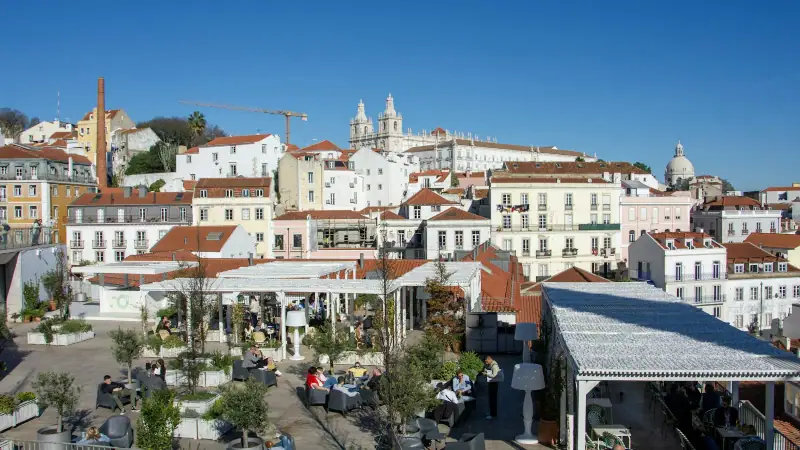
Days 8-10: Lisbon
The drive from Óbidos is about 1 h 05 (87 km / 54 mi). Lisbon is a walking city on seven hills, served by metro, trams and funiculars. Parking at Belém and Sintra is complicated, and the car will mostly wait, so pick a hotel with parking and check the cost. Baixa and Chiado suit most first stays; the Baixa is flat, which helps with luggage. See where to stay in Lisbon.
- Day 8, afternoon: the Baixa grid rebuilt after the 1755 earthquake, Praça do Comércio and the Chiado. In the evening, a fado house if you like; compare packages and avoid the most touristy places.
- Day 9: the Alfama, the cathedral and São Jorge Castle (one to two hours), then the miradouros of Santa Luzia and Nossa Senhora do Monte. Tram 28 is often packed and a target for pickpockets; ride early or late, or just watch it pass.
- Day 10: Belém for the Jerónimos Monastery, the Belém Tower and the Pastéis de Belém, about ten minutes by train from Cais do Sodré. Or take the train from Rossio to Sintra (about 40 to 50 minutes) for Pena Palace, the Moorish Castle and Quinta da Regaleira; book Pena ahead and go early.
The details are in our 3-day Lisbon itinerary, the Sintra day trip and what to see around Lisbon.
Day 11: Évora
Drive about 1 h 40 (134 km / 84 mi) into the Alentejo. Évora’s walled historic center is UNESCO-listed and best on foot: the Roman temple, often called the Temple of Diana, the cathedral, the Chapel of Bones and the streets around Praça do Giraldo. Stay inside the walls so you can walk out of your door into the visit. A courtyard room helps with evening noise near the square.
If you have time, the Almendres Cromlech, a group of granite menhirs about 12 km (7 mi) west of Évora near Guadalupe, is among the most important in the Iberian Peninsula. The final access is by dirt tracks, so check conditions first. In July and August, temperatures in Évora regularly pass 30 °C (86 °F), so keep the hot hours for indoor stops. More in what to see in the Alentejo and where to stay in Évora.
Days 12-13: Lagos
Day 12 is the longest drive: about 3 h 10 (245 km / 152 mi). The Alentejo guide warns that roads cross long empty spaces and gas stations are rarer inland, so fill up before you go. In the Algarve, the A22 motorway uses electronic tolls only, with no cash payment: ask the rental company how to pay. Lagos has a walled old town, a marina and, nearby, a coast of ocher cliffs. Spend the evening in the old town: Praça Infante Dom Henrique, Santo António Church and the Ponta da Bandeira fort.
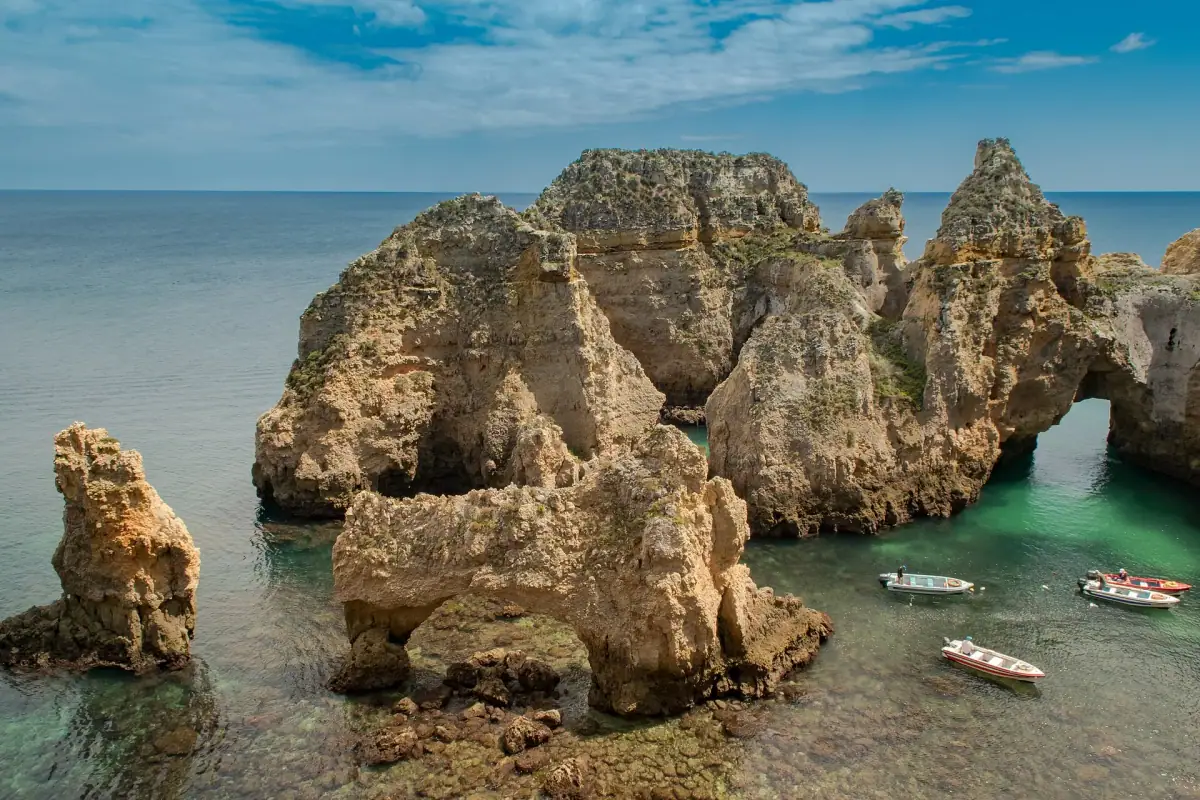
On day 13, go to Ponta da Piedade, a headland of golden cliffs cut into arches and rock stacks. Go in the morning, when the sea is calmer and the site quieter, or in the evening for the light. A one- to two-hour boat, kayak or paddleboard trip enters the caves when conditions allow. Then swim at Dona Ana or Meia Praia, which absorbs crowds better. If you prefer, Sagres and Cape St. Vincent are about 35 km (22 mi) west, a good half hour by road. Parking in the center is complicated in summer, so choose lodging with a space or near a car park. Read visiting Lagos, where to stay in Lagos and the 7-day Algarve road trip.
Hotels in Lagos · Activities in Lagos
Day 14: Faro Airport
The drive from Lagos is about 1 h 05 (85 km / 53 mi). For a flight in the early afternoon, our Algarve guide suggests leaving Lagos at the latest four hours before, to keep a margin for fueling up and returning the car. For an early flight, see sleeping near Faro Airport.
Getting there and away
You fly into Porto Francisco Sá Carneiro Airport (OPO) and out of Faro Airport (FAO). Lisbon Humberto Delgado Airport (LIS) is the third main gateway of the country, but it is not on this route. Check which airlines serve each airport from your home city: our guides do not list flight routes.
Entry rules, visas and the need for an international driving permit depend on your passport and your driving licence. Check the official government source of your own country before you book.
Because you collect the car in Porto and return it in Faro, this is a one-way rental. Rental companies usually charge a one-way (drop-off) fee, more if the drop-off is in another country. It varies by company, so check it when you compare offers. Portugal’s budget guide notes that electronic tolls work with a Via Verde-type device, which rental companies generally charge a few euros a day for, with a cap.
When to go
Spring (March to May) is the best compromise for a circuit that combines towns, vineyards and villages. If you have only one window, aim for May, June or September. The shoulder season of September and October is often the best in the Algarve, but it is also the Douro harvest: book valley rooms early.
July and August are hot inland. Lisbon afternoons often reach 28 to 30 °C (82 to 86 °F), and Évora regularly passes 30 °C (86 °F). Porto and the north have the most rain, especially from October to March. The June festivals (Lisbon around June 12-13, Porto on the night of June 23-24) are lively but raise prices. In July and August, book the car and the Algarve well ahead. See when to go to Portugal and the best time for the Algarve.
Budget
From the Portugal budget guide, per person per day: about €45 to €60 (~$52 to $70) on a budget, €90 to €130 (~$105 to $150) mid-range, and €200 (~$230) and more at the high end. Guesthouses in mid-sized towns run about €50 to €75 (~$58 to $87) a night, but in Lisbon and Porto the averages are higher, around €130 to €150 (~$150 to $175). A tourist tax of €4 (~$5) per person per night applies in Lisbon and €3 (~$3.50) in Porto, for up to 7 nights.
For the car, the same guide quotes small-car rentals of around €10 to €20 (~$12 to $23) a day outside high season, climbing in summer, and fuel at about €2 a liter (~$2.30). Pena Palace is about €14 (~$16), and the Jerónimos Monastery about €18 (~$21).
For the Algarve, its budget guide gives about €105 to €150 (~$120 to $175) a day for a mid-range traveler, with a double room around €80 to €120 (~$95 to $140). A boat trip to the caves costs about €15 to €25 (~$17 to $29) for a classic trip. See the Portugal budget and the Algarve budget.
Adapt it
For a shorter trip, drop Coimbra and Óbidos and go straight from the Douro to Lisbon, or remove the Douro and keep Porto for three nights. For a longer one, add a night in Sintra, which lies about 25 km (16 mi) northwest of Lisbon; Monsaraz, a medieval village above Lake Alqueva in the eastern Alentejo; or Aveiro, a canal town between Porto and Coimbra (visiting Aveiro). In the Algarve, Sagres and Carvoeiro are within reach of Lagos, and Tavira and the Ria Formosa suit a calmer east (visiting Tavira). Faro, with its walled old town, makes a simple last night before the flight. For all of these, check the extra drive time yourself, since only the legs in the table above are measured here.
Frequently asked questions
Is 14 days enough to see Portugal by car?
It is enough for the main line from north to south: Porto, the Douro, Coimbra, Óbidos, Lisbon, Évora and Lagos. Most stops last one night, so this is a trip for travelers who like to move on.
What is the longest drive on this route?
Évora to Lagos on day 12, about 3 h 10 and 245 km (152 mi). The second longest is Pinhão to Coimbra, about 2 h 15 and 178 km (110 mi).
Do I need to rent a car for the whole trip?
A car is useful in the Douro, the Alentejo and the central villages, but it is a burden in Porto and Lisbon, where streets are narrow and parking is scarce. Check hotel parking in both cities.
Which airports should I use?
Fly into Porto (OPO) and out of Faro (FAO). Lisbon (LIS) is the third main airport of the country but is not on this route. Expect a one-way drop-off fee on the rental.
When is the best time for this itinerary?
Spring is the best compromise for towns, vineyards and villages. September to October is also good, but the Douro harvest fills lodging. July and August are hot inland.
Ready-made
Portugal itineraries
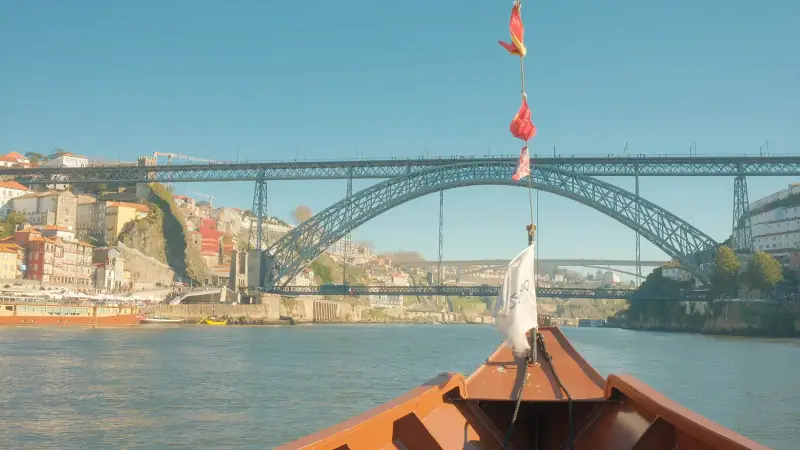
10 days
Portugal in 10 days: from Porto to the Algarve by car
PortoCoimbraLisbonLagos
Can be adapted in the planner
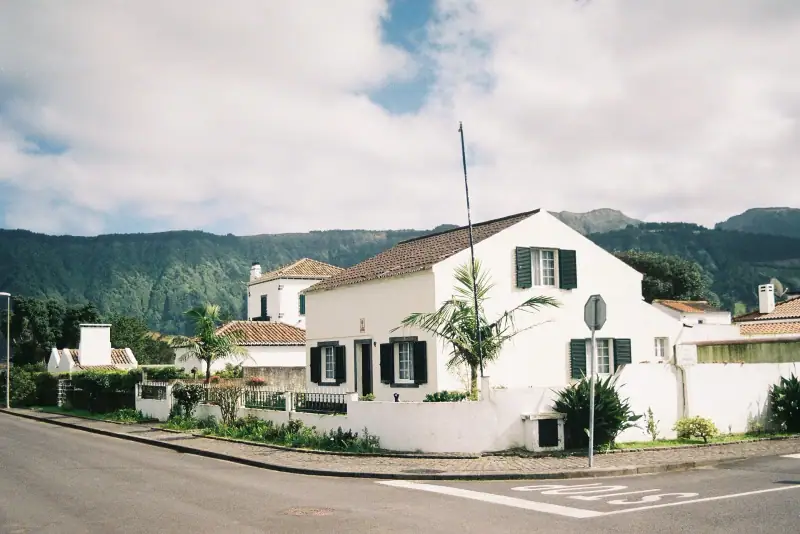
14 days
Portugal in 14 days: Lisbon, Óbidos, Évora and São Miguel in the Azores
LisbonÓbidosÉvoraPonta Delgada (São Miguel)Furnas (São Miguel)