What to see
Visiting Aveiro: what to see and do in the "Venice of Portugal"
We may earn a commission when you book through links on this page, at no extra cost to you. We don't visit or try the places we cover: we summarize published sources. How we work
In short
- One day covers the essentials: a moliceiro ride (about 45 minutes), the Art Nouveau district, the museum and ovos moles; add half a day for Costa Nova.
- By train, Aveiro is about 70 km (43 mi) and roughly an hour from Porto, and a little over two hours from Lisbon by fast train.
- The station is about 15 minutes' walk from the center; the town is flat, and the beaches are on the ocean side, reached by bus, bike, taxi or car.
- Ovos moles have had protected geographical indication status since 2009; bread and olives brought to your table are charged if you touch them.
Set on the edge of a saltwater lagoon, Aveiro is one of the most pleasant stops in central Portugal. With about 80,000 inhabitants, it is a human-scale town, crossed by canals where colorful boats glide, bordered by salt pans and adorned with Art Nouveau facades. It is sometimes nicknamed the “Venice of Portugal”, a slightly exaggerated phrase but one that gives a good idea of the atmosphere: water everywhere, bridges, quays and a quiet pace.
Aveiro lies between Porto and Coimbra, which makes it an ideal stop on a circuit along the Atlantic coast. Many travelers discover it on a day trip from Porto, but it deserves more than a simple pass-through: in the evening, when the groups have left, the town regains a discreet charm.
In short: the morning on the canals and at the museum, lunch around the local specialties, the afternoon in the Art Nouveau district, then, if time allows, a detour to Costa Nova to see its striped houses and the ocean.
Aveiro at a glance: a town born of the lagoon
To understand Aveiro well, you have to look at the ria. This coastal lagoon is separated from the ocean by a long strip of sand about 45 km (28 mi) long. It created the town’s wealth: fishing, salt, seaweed gathered to enrich farmland. At the end of the Middle Ages, Aveiro was an active fishing port, particularly focused on cod.
History was then less kind. A storm in 1575 closed the opening to the sea, which choked the port and led to a long decline. It was only at the start of the 19th century, in 1808, that a new channel to the ocean was opened, allowing the town to be reborn. Aveiro then developed thanks to ceramics, porcelain and trade, before also becoming a university town, with a university founded in 1973 that gives the town a young population.
Today, the town lives on tourism, services, industry and the port. This heritage explains what you will see: boats that look like old working boats, piles of white salt, early 20th-century facades built by an enriched bourgeoisie.
How to get to and around Aveiro
Aveiro is a rail junction: it lies on the main line linking Porto to Lisbon via Coimbra. From Porto, the town is about 70 km (43 mi) away, roughly an hour by train depending on the service chosen. From Coimbra, allow half an hour to an hour depending on the trains. From Lisbon, it takes a little over two hours by fast train. For precise prices and schedules, see the website of the national rail company, as they vary by type of train and time.
The station is about fifteen minutes’ walk from the center, along a wide avenue. Once in town, everything is on foot: distances are short and the terrain is flat. Cycling is also a good way to get around, notably to reach the banks of the ria.
For Costa Nova and the beaches, several options exist: bus, bike along the ria, taxi or car. A car is useful if you want to explore the surroundings, but not essential for the town itself, where parking can be complicated in high season.
The canals and the moliceiros: the postcard image
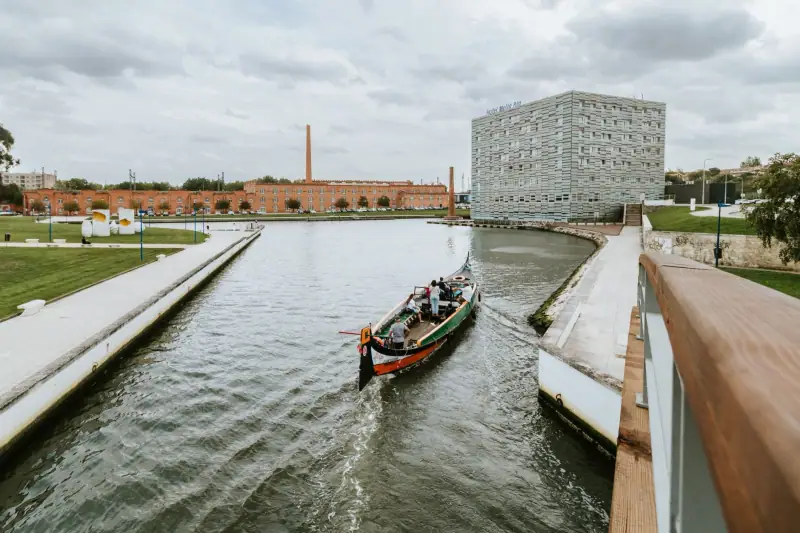
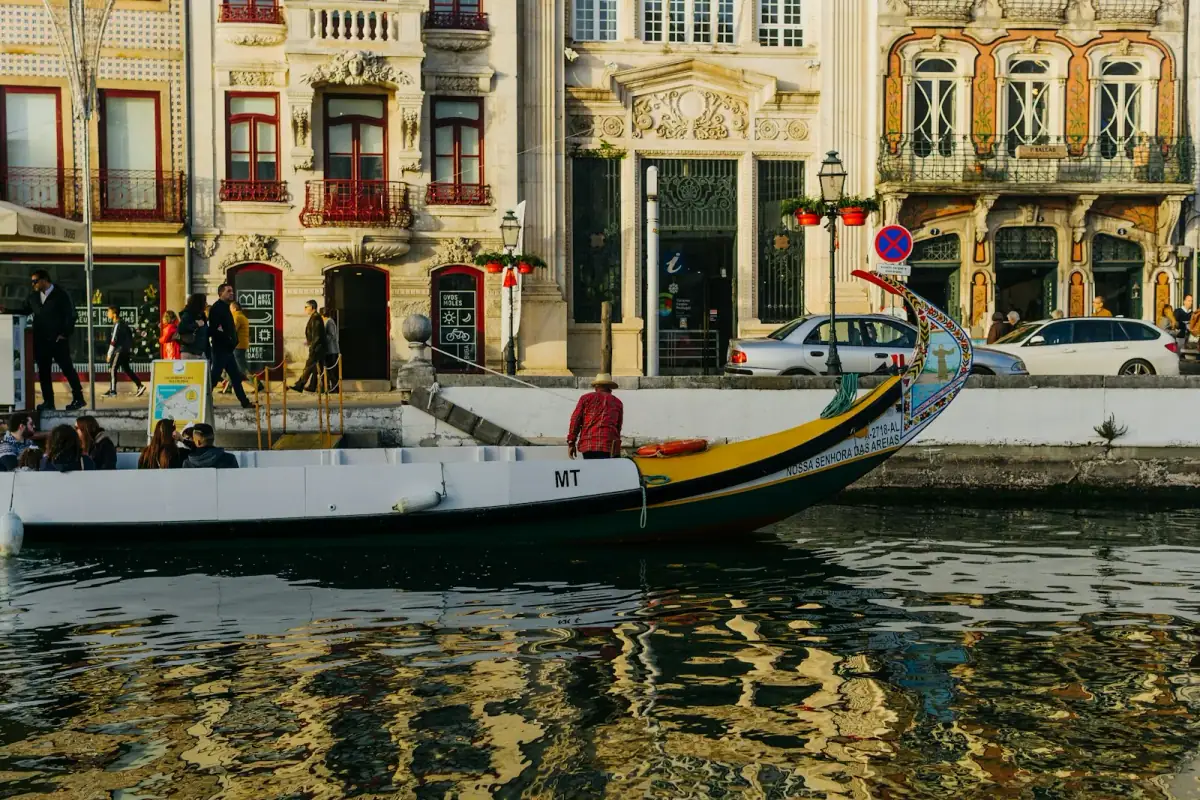
The canals of the center are the tourist heart of Aveiro. The large central canal is lined with quays, bridges and terraces. This is where the moliceiros moor, those long, narrow boats with raised prows, whose hulls are decorated with colorful and often humorous paintings. Originally, they were used to gather moliço, the seaweed of the ria, used as fertilizer in the neighboring fields. Today’s boats are adapted for carrying passengers.
The moliceiro ride is the most classic activity. It lasts about 45 minutes and lets you see the town from the water, pass under the bridges and follow Art Nouveau facades. Rates generally run around €15 (~$17), but they vary by season and operator. Choose a departure early in the morning or at the end of the day to avoid the crowd and enjoy better light.
A tip: look at the paintings on the prows. They once illustrated scenes of daily life, sayings or caricatures, sometimes a bit risqué. Each boat has its own motif, and guides gladly comment on them.
Boat rides and tours in Aveiro
Moliceiro ride, guided walking tour or excursion in the region: compare the activities available in Aveiro by dates.
The Art Nouveau district and the historic center
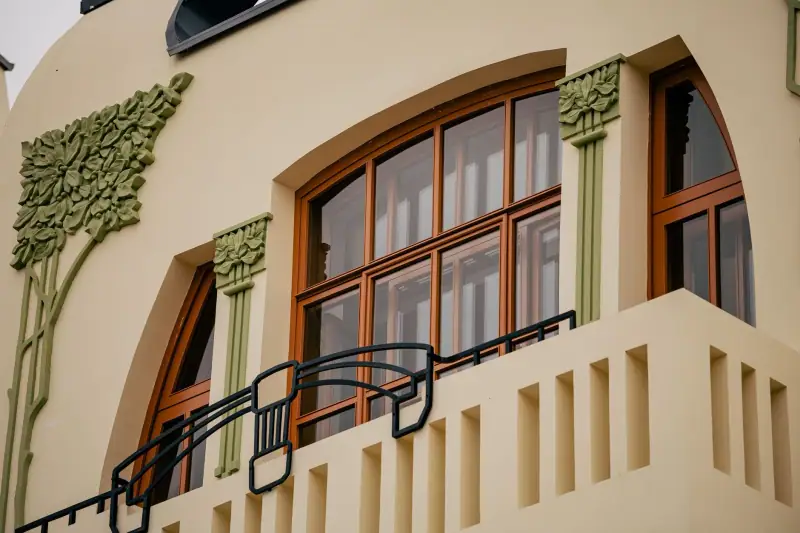
Aveiro has one of the most remarkable Art Nouveau ensembles in Portugal. In the early 20th century, families enriched by trade and industry had houses built with facades adorned with floral motifs, ironwork, carved balconies and ceramics. Most are concentrated near the main canal and in the neighboring streets.
The simplest is to stroll with no set aim, looking up. You will spot delicate details: window frames, friezes, railings with plant-like curves. Some buildings are occupied by shops, cafés or services, others house a small museum devoted to this style: check there for hours and rates, which change with the season.
The historic center is then covered around the squares and lanes that surround the canal. You will find ceramics shops, pastry shops and small cafés. The cathedral, consecrated in the 15th century, and the Gothic church of Nossa Senhora da Apresentação are reminders that the town existed well before its 20th-century boom. The station facades, decorated with azulejos, are also worth a look on arrival or departure.
The Aveiro Museum and the Convent of Jesus
If the weather is bad or you like history, the Aveiro Museum is a good option. It is set in a former 15th-century convent, the Convent of Jesus, where Princess Joana, daughter of King Afonso V, spent her retreat from the world. Her tomb, in polychrome marble, is one of the key pieces of the place.
The adjoining church is known for its carved and gilded woodwork, a typical example of Portuguese Baroque. The rooms also hold paintings, sculptures and religious objects. Allow about an hour for the visit. Hours and closing days change by period: check them before coming rather than relying on general information.
This visit combines well with lunch in the center, as the museum is not far from the lively streets of the old town.
Ovos moles and Aveiro’s food
You cannot come to Aveiro without tasting ovos moles. These sweets, made of egg yolks and sugar, are enclosed in a thin wafer shell that takes the shape of seashells, fish or other marine motifs. They have a melting, very sweet texture, and are sold individually or in small painted wooden barrels. They have had protected geographical indication status since 2009. Their origin is tied to the region’s convents, where egg yolks were used in large quantities.
On the savory side, the proximity of the ria and the ocean shows on the plate: grilled fish, seafood, lagoon eels in some local recipes, cod in a thousand forms. For an overview of the country’s cooking, read our guide to Portuguese culinary specialties. The region is also known for its Bairrada gastronomy, notably roast suckling pig, which you will find in several restaurants in the area.
In Portuguese restaurants, you will often be brought bread, butter and olives before the meal: they are charged if you touch them. Our article on the cover charge at restaurants explains how this works to avoid unpleasant surprises.
Costa Nova and its striped palheiros
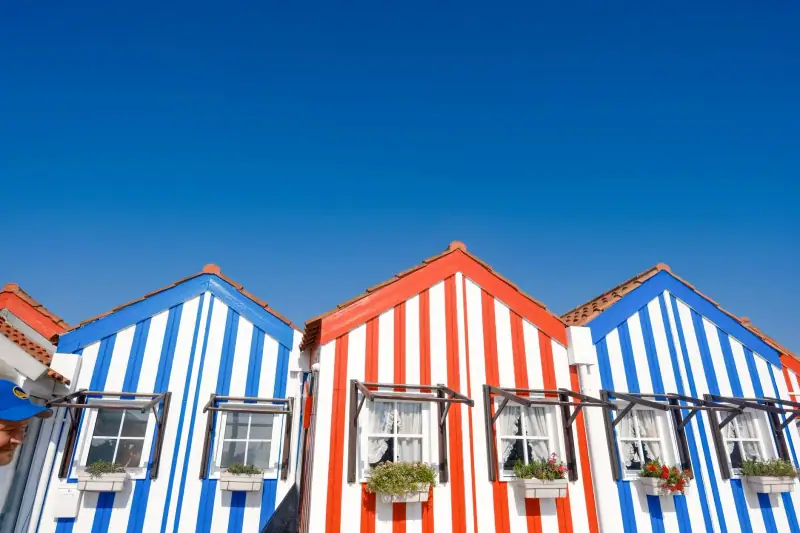
About ten kilometers (6 mi) from the center of Aveiro, Costa Nova is a seaside hamlet set on the strip of sand that separates the ria from the ocean. It is famous for its palheiros, wooden houses painted with bright red, blue, green or yellow stripes, lined up along the ria. Originally, these buildings served as shelters for fishermen and as storage for their gear. Today they are residences, shops and restaurants.
There, you can stroll along the ria, have lunch at a fish restaurant, then reach the beach on the ocean side. The beach is very long and wide, with fine sand. As along the whole Atlantic coast of Portugal, the water is cool and the waves sometimes strong: watch the flags and swim where lifeguards are present.
Nearby, to the north, Praia da Barra has an imposing lighthouse, one of the tallest in the country. It is a clearly visible landmark and a popular walking destination. The trip from town is by bus, by car or by bike along the paths built along the ria, if you are in good shape.
Rent a car to explore the coast
To link Aveiro, Costa Nova and the neighboring towns at your own pace, compare rental companies.
The ria, the salt pans and nature

Beyond the town’s canals, the Aveiro ria is a vast natural area. It holds salt pans, where salt is still harvested in the traditional way, and wetlands frequented by many birds. Depending on the season, you can watch waders and waterfowl.
The salt pans are particularly beautiful at the end of the day, when the low light colors the salt piles and basins. If the subject interests you, some places offer visits or explanations of the salt harvest. Check the hours, which depend on the season and the weather: activity stops when it rains.
To explore the ria, you can opt for a longer boat excursion than the simple canal ride, a bike outing along the banks or a quiet hike. Bring sunscreen, a hat and a windbreaker: the wind can rise quickly.
A one-day itinerary in Aveiro
Here is a realistic plan for a day without rushing:
- 9:00 am: arrival by train, walk to the center along the main avenue.
- 9:30 am: moliceiro ride, more pleasant in the morning before the crowds.
- 10:30 am: stroll through the Art Nouveau district and the lanes of the center.
- 11:30 am: visit to the Aveiro Museum and the Convent of Jesus church.
- 1:00 pm: lunch at a traditional restaurant in the center.
- 2:30 pm: bus or taxi to Costa Nova, walk in front of the palheiros.
- 4:30 pm: free time on the beach or along the ria.
- 6:00 pm: back to the center, buy ovos moles for the road, dinner, then the evening train.
With a night in town, you can reverse the order: Costa Nova in the morning, the town in the afternoon, then a quiet dinner by the canal. The town is calmer after the museums close and the groups leave.
Where to stay in Aveiro
Spending a night in town lets you enjoy the canals in the evening, without the crowd of day-trippers. Compare lodging by dates.
Aveiro on a coastal circuit
Aveiro fits naturally into a wider trip. From Porto, it is an easy day excursion: our 3-day Porto itinerary can be completed with a day here. To the south, Coimbra is a short distance by train or car, and its university old town is presented in our guide to visiting Coimbra in a day.
A classic sequence is to sleep in Porto, spend a day in Aveiro, then continue to Coimbra before reaching Lisbon. This lets you enjoy three very different atmospheres: the big river city, the small lagoon town, the university town on its hill.
When to come to Aveiro
The town can be visited year-round. Spring and early fall are particularly pleasant: mild temperatures, clear light, fewer people than in midsummer. July and August are the busiest months, notably at Costa Nova where families come to enjoy the beach. Winter is wetter and windier, but the town remains pleasant, with fewer visitors.
To choose your period, see our guide to when to go to Portugal. If you want to swim in the ocean, aim for the end of summer, when the water is least cold.
Budget and practical tips
- Budget: Aveiro is an affordable town. To gauge your overall spending, see our article on the budget for a trip to Portugal.
- Shoes: the streets are cobbled and sometimes slippery when it rains. Bring comfortable shoes.
- Booking: in high season, book your boat ride and lodging ahead.
- Ovos moles: buy them at a specialist pastry shop rather than a souvenir shop, and eat them quickly.
- Weather: the wind from the ocean can cool the day. Bring a light jacket, even in summer.
- Travel insurance: for a stay abroad, insurance covering medical costs and unforeseen events is recommended.
Why stop in Aveiro
Aveiro does not have the grandeur of Lisbon or the theatrical setting of Sintra. Its strength lies elsewhere: a pleasant, accessible town, rich in details, where water structures everything. One day is enough to grasp its spirit, two let you really settle in. For travelers who like human-scale towns and lagoon landscapes, it is a stop that leaves a good memory, between canals, colorful facades and sugary treats.
Frequently asked questions
How long does it take to visit Aveiro?
One day is enough for the essentials: a moliceiro ride, the canal district, the Art Nouveau center and a tasting of ovos moles. Add half a day if you want to go to Costa Nova beach or explore the ria in more detail.
How do you get to Aveiro from Porto or Lisbon?
The train is the simplest. From Porto, the town is about 70 km (43 mi) away and the trip takes roughly an hour depending on the type of train. From Lisbon, allow a little over two hours by fast train. Check the schedules of the rail company CP before you leave.
Why is Aveiro called the "Venice of Portugal"?
Because the town is crossed by canals and bordered by the ria, a coastal lagoon, on which traditional boats, the moliceiros, sail. The nickname is a nod: the atmosphere is much calmer than that of Venice.
What are Aveiro's ovos moles?
They are confections made of egg yolks and sugar, enclosed in a thin wafer shell, sometimes shaped like seashells or presented in small wooden barrels. They have had protected geographical indication status since 2009.
Can you swim in Aveiro?
The town itself is on the ria, but the beaches are on the ocean side, notably at Costa Nova and Praia da Barra. You get there by car, bus or bike. The Atlantic there is cool and often rough: respect the flags.
Is Aveiro suitable for a visit with children?
Yes. The town is flat, boat rides appeal to children and the beach is close. The cobblestones of the center are, however, tiring with a stroller.
More Portugal guides
Keep reading

What to see in the Alentejo: white villages, cork oaks and starry skies
What to see in the Alentejo: Évora, Monsaraz, Marvão, Elvas, Estremoz, Mértola, Alqueva and the wild coast. Route tips, transport and stay ideas.
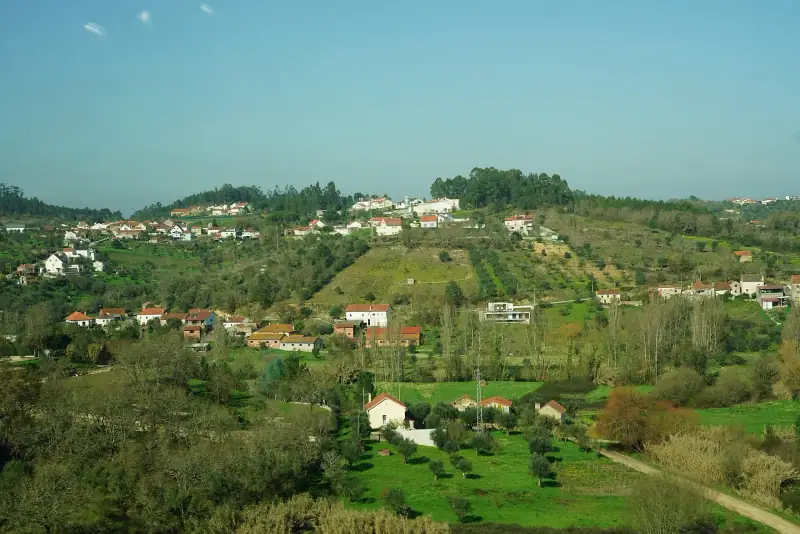
What to see in Central Portugal: monasteries, schist villages and coast
What to see in central Portugal: Coimbra, Aveiro, Nazaré, Tomar, Batalha, Alcobaça, Serra da Estrela and schist villages. Distances and route ideas.

What to see around Lisbon: Belém, Cascais, Mafra and Cabo da Roca
What to see around Lisbon and Sintra: Belém, Queluz, Mafra, Cabo da Roca, Cascais and Estoril. Transport, durations and ideas for combining stops.
Ready-made
Portugal itineraries
3 days
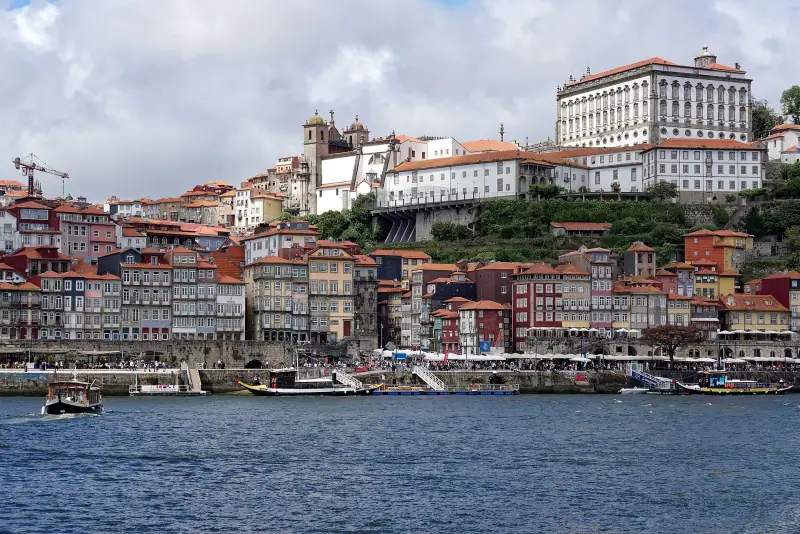
Porto in 3 days: a day-by-day itinerary
What to do in Porto in 3 days: Ribeira, São Bento azulejos, Gaia port cellars, Foz and a Douro Valley excursion. A relaxed day-by-day plan.
3 days
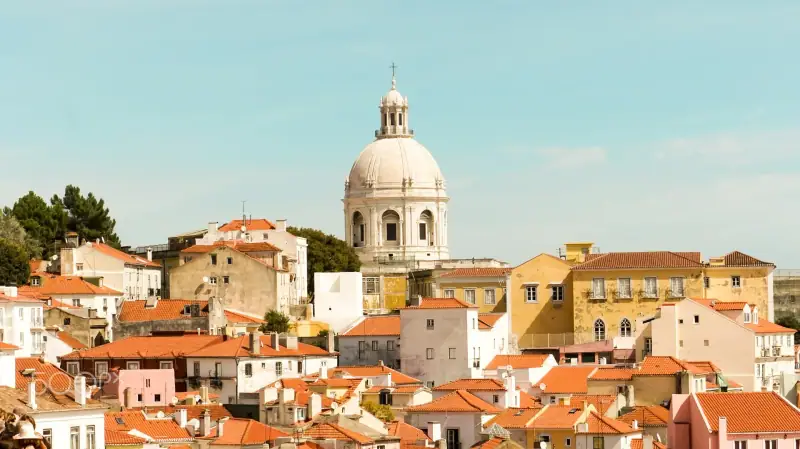
Lisbon in 3 days: day-by-day itinerary, neighborhoods and tips
What to do in Lisbon in 3 days: Baixa, Alfama, Belém, miradouros, Bairro Alto, pastéis de nata and transport tips for a relaxed stay.

1 day
Sintra in a day from Lisbon: itinerary and tips
Sintra in one day from Lisbon: train, Pena Palace, Quinta da Regaleira, Moorish Castle and old town. A realistic itinerary and tips to avoid the crowds.