What to see
What to see around Lisbon: Belém, Cascais, Mafra and Cabo da Roca
We may earn a commission when you book through links on this page, at no extra cost to you. We don't visit or try the places we cover: we summarize published sources. How we work
In short
- Allow at least four to five days: two in Lisbon, one in Sintra, one on the Cascais coast and, if time allows, half a day at Mafra or Queluz.
- Suburban trains serve Belém, Cascais, Queluz and Sintra from Lisbon; Cabo da Roca and Mafra need a bus, an organized excursion or a car.
- Lisbon remains the best base for a first stay; sleeping in Sintra or Cascais suits quieter evenings but has fewer transport links.
- Spring and early fall combine mild temperatures and moderate crowds; book Sintra monument slots online and start early.
Many travelers reduce the Lisbon region to the capital and a day trip to Sintra. That is a pity, because within a radius of about an hour’s travel there are royal palaces, listed monasteries, cliffs facing the Atlantic and seaside resorts that have kept their old-time charm. The region forms a coherent whole: the Tagus estuary, the Sintra hills and the coast running west.
This guide does not detail each town in depth: it helps you choose and combine the stops according to your time. For the capital itself, see our 3-day Lisbon itinerary. For the Sintra hills, we already have a one-day Sintra itinerary. Here we step back to see the big picture.
How to organize your trip around Lisbon and Sintra
The region is compact, but the transport options are not alike. The three main axes to remember:
- The Cascais line follows the estuary and then the coast from Cais do Sodré station. It serves Belém, Estoril and Cascais.
- The Sintra line leaves from Rossio station and serves Queluz-Belas, among others, before arriving at Sintra.
- Buses and excursions take over for Cabo da Roca and Mafra, less well linked by rail.
On paper, everything can be done without a car. In practice, a car offers freedom to chain several stops in the same day, but it complicates parking in Sintra and Belém. If you hesitate, a good compromise is to use trains for the main stops and rent a car for a single day for the western loop (Sintra, Cabo da Roca, Cascais).
One last habit: always check opening hours and rates on the monuments’ official sites, as they change with the season and on public holidays. To choose the best period, our guide to when to go to Portugal details the climate month by month.
Choosing a base for exploring around Lisbon
Sleeping in Lisbon makes trains to Belém, Sintra and Cascais easy. Compare lodging by dates.
Belém: the district of the great discoveries
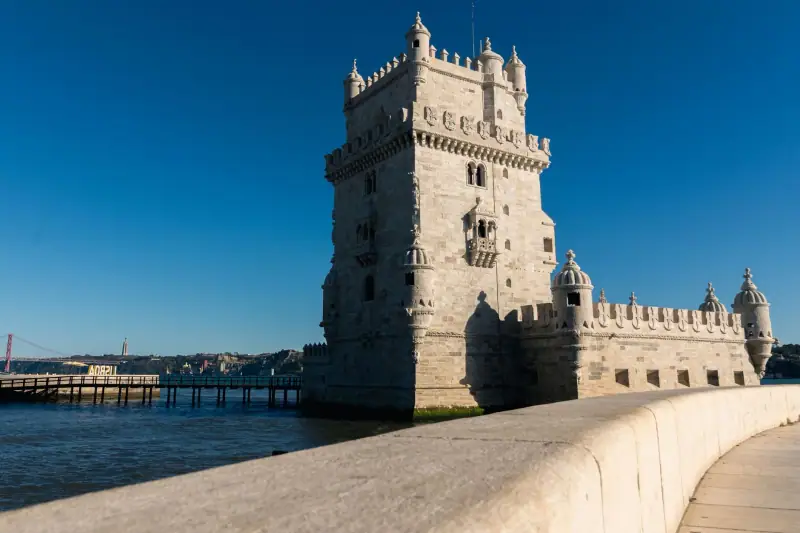
Belém is the closest to Lisbon, a few kilometers from the center on the Tagus. It is sometimes visited in half a day, but the district deserves more, as it concentrates a good part of the heritage tied to the Age of Discovery.
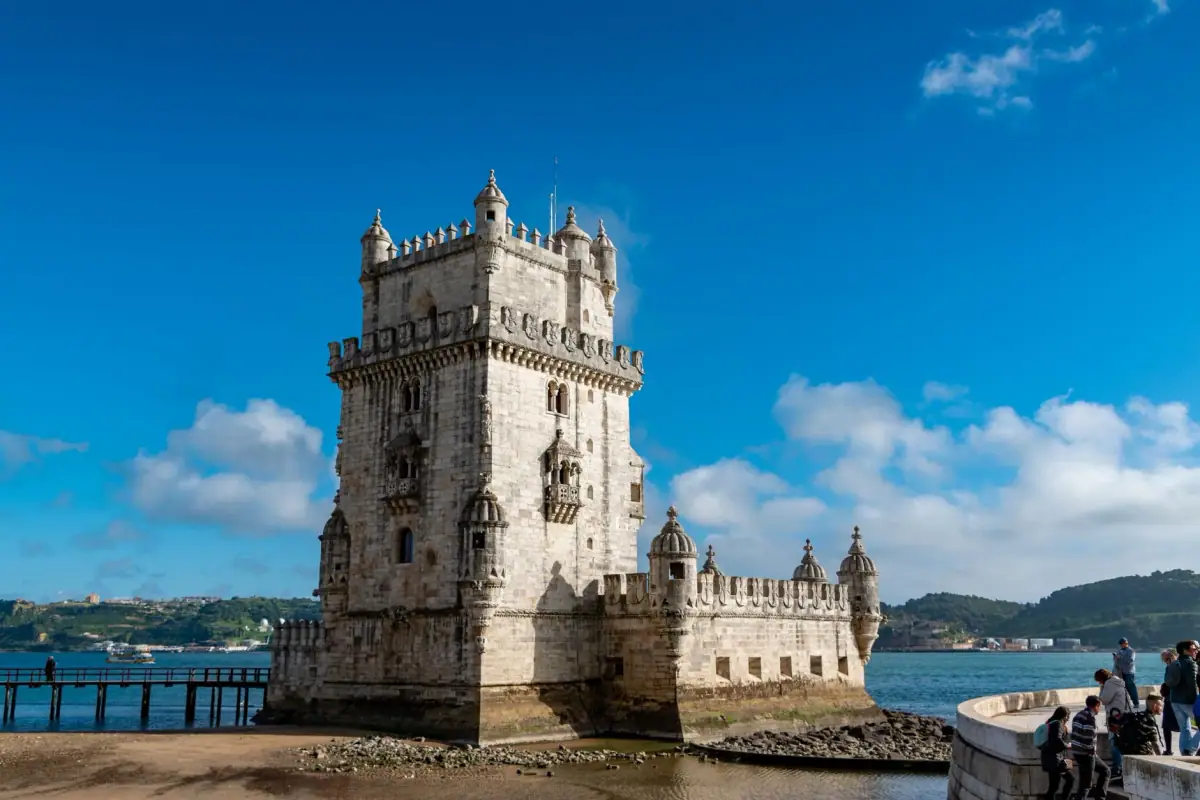
Three monuments dominate. The Jerónimos Monastery (Mosteiro dos Jerónimos), a masterpiece of the Manueline style, is a UNESCO World Heritage site. Its cloister with finely carved arcades is one of the most beautiful in the country. The Belém Tower, set at the river’s edge, is also listed and remains the emblematic image of the city. Finally, the Padrão dos Descobrimentos (Monument to the Discoveries), shaped like the prow of a caravel, pays tribute to the Portuguese navigators.
For a sweet break, the Pastéis de Belém pastry shop is an institution: the little custard tarts have been made there since the 19th century. Expect a line in high season, but service moves fast, and you can also sit in the rooms at the back. Other pastry shops in the district also offer good pastéis de nata if the line is too long.
To get there, the Cascais line train from Cais do Sodré takes about ten minutes. Tram 15 is a slower but more picturesque alternative. To avoid the crowd, arrive as soon as it opens, or at the end of the day, when the groups have left.
Queluz: Portugal’s “little Versailles”
On the Sintra line, about fifteen kilometers (9 mi) from central Lisbon, the Queluz National Palace is an ideal stop for those who want to see a palace without the crowds of Pena. Built in the 18th century in a Rococo style, it is often compared to Versailles for its French-style gardens, fountains and refined salons.
Its great quality is its tranquility. Where Sintra draws endless lines, Queluz stays comfortable to visit, even in season. Allow an hour and a half to two hours between the rooms and the gardens. It combines easily with Sintra: get off at Queluz-Belas station on the way out or back, and you add a second palace to your day with no effort.
If you like architecture and gardens, Queluz is therefore a very good complement. If your time is limited, prefer Sintra and keep Queluz for a longer stay.
Sintra: three monuments for a first visit
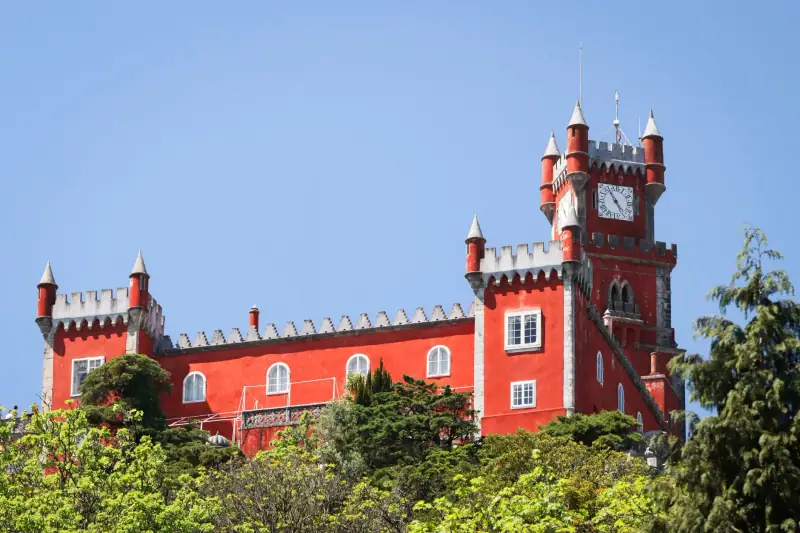
Sintra is the must-see stop of the region, and its hills are listed as a World Heritage cultural landscape. We devoted a full article to its one-day itinerary, but here is the essential to decide.
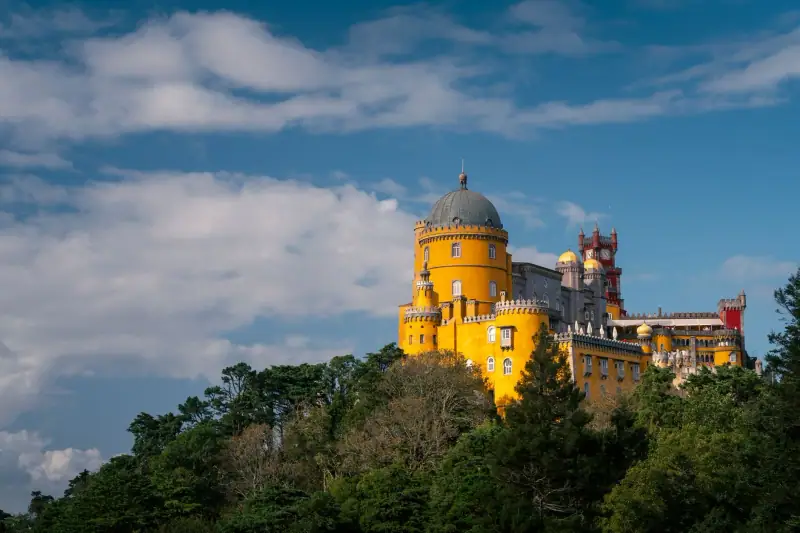
Pena Palace, with its bright yellow and red facades, is the star of the hill. Quinta da Regaleira, with its initiation well and gardens full of grottoes, is a big hit with families. The Moorish Castle offers nice walks on the ramparts and open views in clear weather. The historic center, with its National Palace recognizable by its two large conical chimneys, is visited on foot.
A simple rule: do not try to see everything. Choose two main sites plus the old town, book the Pena tickets online and leave early. If you want to stay overnight in Sintra to enjoy the hills in the morning before the groups, see our guide where to stay in Sintra.
Day trips from Lisbon
Sintra, Cascais, Cabo da Roca: compare guided tours and options with transport.
Mafra Palace: an exceptional Baroque monument

About forty kilometers (25 mi) northwest of Lisbon, the small town of Mafra is home to one of the largest monuments in the country: the Mafra Palace-Convent. Built in the 18th century under the reign of John V, it combines a royal palace, a convent and a basilica in one monumental complex. It was listed as a UNESCO World Heritage site in 2019.
The element that most impresses visitors is the library, a long Baroque hall with richly decorated shelves, which holds tens of thousands of old books. It is often said that bats protect the works there by eating insects. The story is widespread, and you can ask a guide what the truth is once you are there.
Mafra is less visited than Sintra, which makes it an excellent plan B when the crowds are too dense. Allow about two to three hours for a relaxed visit. Access is by bus from Lisbon, or by car, which remains the simplest if you combine Mafra with another site on the coast. Check the weekly closing days in advance, which vary by period.
Cabo da Roca: the end of the continent
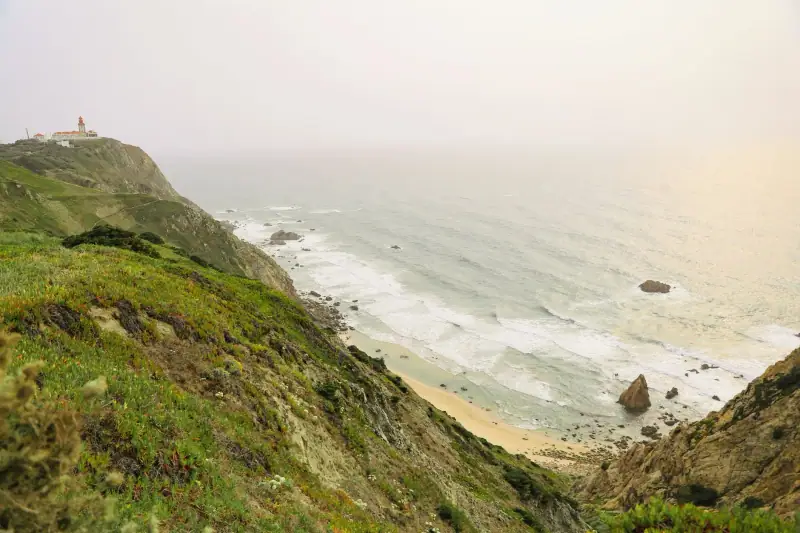
West of Sintra, Cabo da Roca marks the westernmost point of mainland Europe. The setting is simple, raw and spectacular: cliffs plunging into the Atlantic from a height of about 140 m (460 ft), a white lighthouse and an almost constant wind.
It is not a site to “visit” at length. You come for the view, the photo and the atmosphere of the end of the world. An hour is enough, possibly a bit more if you walk along the cliff trails. Bring a windbreaker even in summer, and keep away from the edge: not all the cliffs are protected and gusts can surprise you.
Access is the main challenge. Buses link the cape to Sintra and Cascais, but frequencies are limited and vary by season: check the schedules before leaving. Many travelers combine the cape with Sintra and Cascais on an organized excursion or by car, which simplifies the day.
Cascais and Estoril: Lisbon’s elegant coast
At the end of the train line that follows the estuary, Cascais is a former fishing town turned elegant seaside resort. It takes about half an hour to forty minutes by train from Cais do Sodré to reach its center. The atmosphere is more relaxed than in the capital.
On the program: the old town and its pedestrian lanes, the fishing harbor, small sandy beaches between the rocks and the seaside promenade. Toward the west, the Boca do Inferno is a rocky chasm where waves rush into the cliff. On days of heavy swell, the show is impressive, but stay behind the barriers.
Estoril, its neighbor, has a calmer atmosphere: a seafront lined with gardens, an emblematic casino and a long beach. You can link Estoril to Cascais on foot along the sea in a leisurely hour’s walk, with the ocean on the left and the villas on the right. It is a pretty way to end a day of excursions.
On the plate, the coast is known for its grilled fish and seafood. Move a little away from the seafront to find better prices, and see our guide to what to eat in Portugal to spot the typical dishes.
Rent a car for the western loop
Sintra, Cabo da Roca, Cascais: compare rental companies for a day or more.
Three ways to combine these stops
Here are three ideas for days, to adapt to your wishes. Each stays well under 200 km (124 mi) of driving and can be done largely by public transport.
Option 1: the “palaces” day
Morning at Queluz, then train to Sintra for Pena Palace and the old town. This option shows two very different styles, Rococo and Romantic, with a single trip. It suits architecture fans.
Option 2: the “end of the world” day
Morning in Sintra (one monument and the old town), then drive to Cabo da Roca in the early afternoon, and end the day in Cascais with a fish dinner. It is the most classic circuit, and it is simpler by car or on an organized excursion.
Option 3: the “history and sea” day
Morning in Belém for the Jerónimos, the tower and a pastéis break, then train to Cascais for the afternoon and a walk to Estoril. Everything is done on the same train line, with no car and no stress.
And Mafra?
Mafra lends itself well to a half day, either alone or combined with a stop on the northwest coast. If you travel with family, it is a good plan to avoid the Sintra crowds.
Where to sleep, depending on your program?
The choice of base depends on what you want to favor.
- Lisbon remains the best base for a first stay: trains to Belém, Cascais and Sintra, many restaurants and wide lodging options. Our guide where to stay in Lisbon details the neighborhoods.
- Sintra suits you if you want to enjoy the hills in the morning and evening, when the groups have left. The setting is more romantic, but restaurants and transport are more limited.
- Cascais is ideal for sea lovers and coastal walks, with a seaside-resort atmosphere. It is linked to Lisbon by train.
To stay flexible, some travelers split their stay: a few nights in Lisbon, then one or two nights in Sintra or Cascais. This avoids daily commutes and gives a different rhythm.
Budget and practical tips for the region
Excursions around Lisbon stay cheap if you favor trains and buses. The main expenses are monument entries, meals and, possibly, the car. For an overview of costs, see our guide to the budget for Portugal.
A few useful habits:
- Book online the slots for the busiest monuments, particularly in Sintra.
- Check closing days: several monuments close one day a week or on certain public holidays.
- Leave early: the light is nicer and the crowd thinner.
- Bring water, sunscreen and a windbreaker, as the climate changes quickly between the coast and the hills.
- Keep a time margin for return trains, often crowded at the end of the day.
- Wear good shoes: slippery cobblestones, stairs and steep paths are frequent.
Our recommendation for planning the region
If you are still hesitating, here is a simple rule. For a stay of three or four days, concentrate on Lisbon, Belém and Sintra. For five to seven days, add the Cascais coast, then Queluz or Mafra as you like. Beyond that, you will have time to go further, toward Óbidos or the north of the country.
The Lisbon and Sintra region rewards those who take their time: a palace in the morning, a beach in the afternoon, a pastry on the way. Do not try to tick everything off, and leave room for the unexpected, which is often where the best memories hide.
Frequently asked questions
How many days should you plan for the Lisbon and Sintra region?
Allow at least four to five days to combine the capital and its surroundings: two days in Lisbon, one day in Sintra, one day on the Cascais coast and, if time allows, half a day at Mafra or Queluz. With a week, the pace becomes more comfortable.
Can you see everything without a car?
Almost. Suburban trains serve Belém, Cascais, Queluz and Sintra from Lisbon. For Cabo da Roca and Mafra, you need a bus, an organized excursion or a car. Check the lines and schedules on the operators' websites before you leave.
Should you sleep in Lisbon or in Sintra?
Lisbon has the most connections and restaurants, and remains the best base for a first stay. Sleeping in Sintra or Cascais suits you if you want to enjoy the calm in the evening and avoid early commutes, but transport options there are more limited.
What is the best season to visit the region?
Spring and early fall combine mild temperatures and moderate crowds. In summer, the coast is very busy and the beaches are packed on weekends; in winter, Sintra's mist and the wind at Cabo da Roca can spoil the panoramas.
Is Cabo da Roca worth the detour?
Yes if you like end-of-the-world landscapes: it is the westernmost point of mainland Europe, with cliffs facing the Atlantic. Bring a windbreaker, as the wind is frequent, and do not expect to spend more than an hour there.
Where should you eat during these excursions?
On the coast, favor fish and seafood in small restaurants set back a little from the seafront, often cheaper. In Sintra, try travesseiros and queijadas at a pastry shop. Our guide to Portuguese specialties covers the dishes to try.
Is the region suitable for children?
Yes. The gardens of Sintra, Mafra Palace, the beaches of the Cascais coast and the promenades of Belém suit families well. Plan regular breaks and keep a time margin for transport.
More Portugal guides
Keep reading

What to see in the Alentejo: white villages, cork oaks and starry skies
What to see in the Alentejo: Évora, Monsaraz, Marvão, Elvas, Estremoz, Mértola, Alqueva and the wild coast. Route tips, transport and stay ideas.
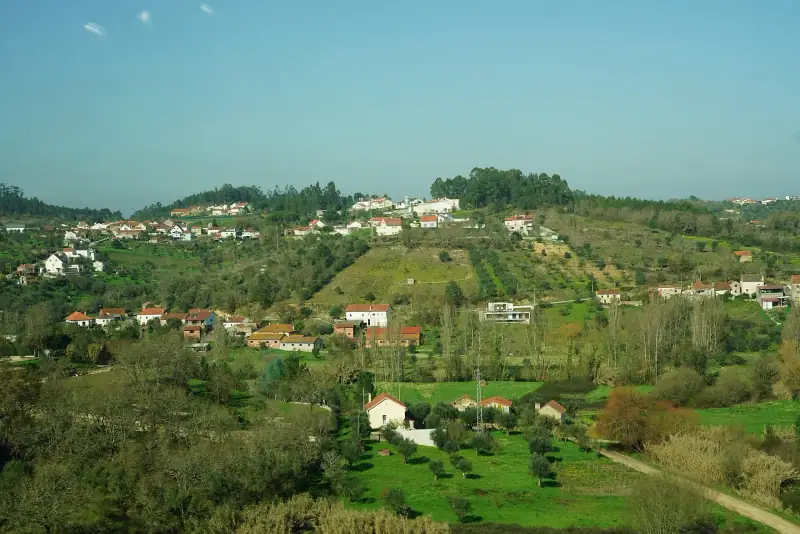
What to see in Central Portugal: monasteries, schist villages and coast
What to see in central Portugal: Coimbra, Aveiro, Nazaré, Tomar, Batalha, Alcobaça, Serra da Estrela and schist villages. Distances and route ideas.
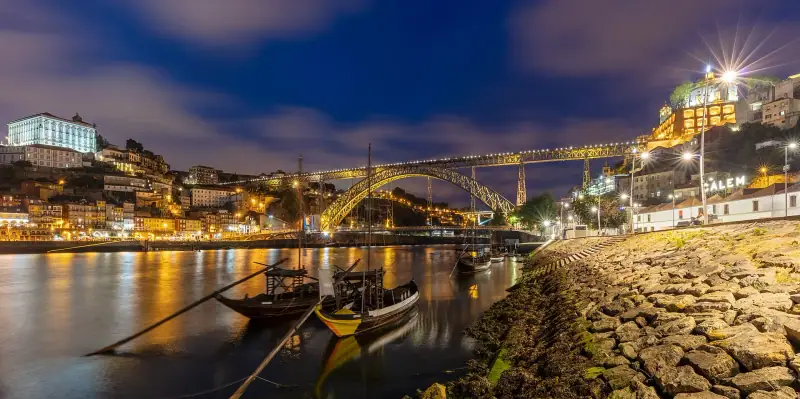
What to see in the Porto and Douro region: towns, vineyards and valleys
What to see around Porto and in the Douro Valley: Guimarães, Braga, Amarante, Viana do Castelo, Pinhão. Distances, transport and ideas for combining stops.
Ready-made
Portugal itineraries
3 days
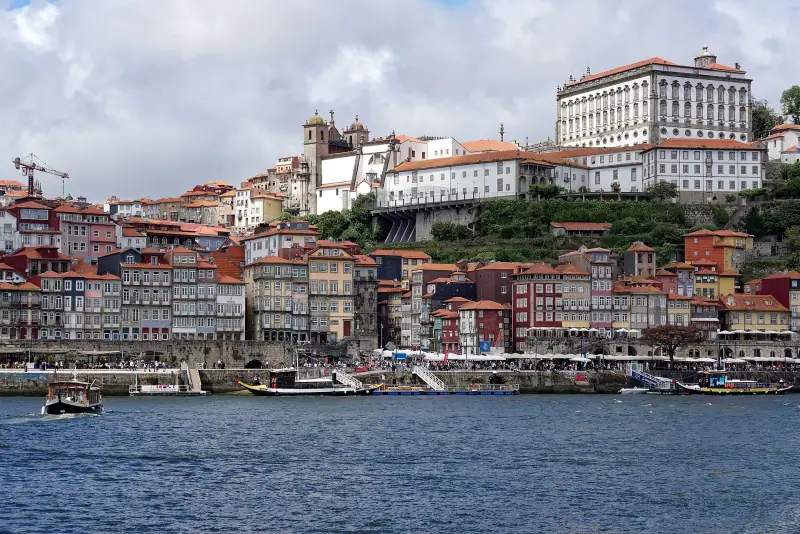
Porto in 3 days: a day-by-day itinerary
What to do in Porto in 3 days: Ribeira, São Bento azulejos, Gaia port cellars, Foz and a Douro Valley excursion. A relaxed day-by-day plan.
3 days
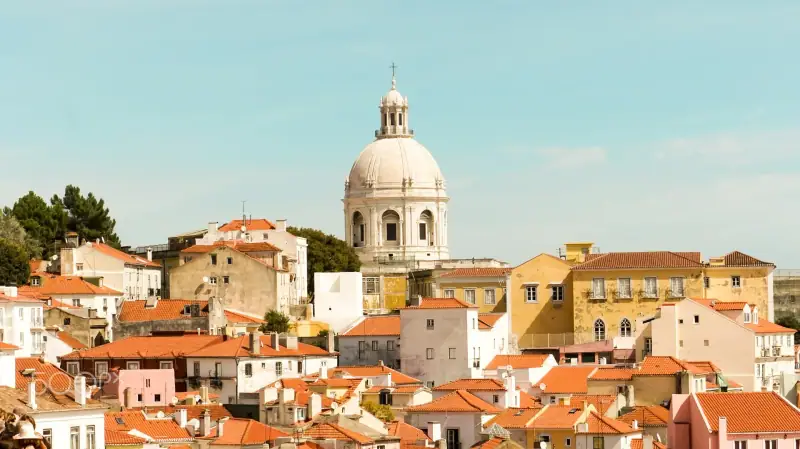
Lisbon in 3 days: day-by-day itinerary, neighborhoods and tips
What to do in Lisbon in 3 days: Baixa, Alfama, Belém, miradouros, Bairro Alto, pastéis de nata and transport tips for a relaxed stay.
1 day
Sintra in a day from Lisbon: itinerary and tips
Sintra in one day from Lisbon: train, Pena Palace, Quinta da Regaleira, Moorish Castle and old town. A realistic itinerary and tips to avoid the crowds.