Where to stay
Where to stay in Évora: neighborhoods and types of lodging
We may earn a commission when you book through links on this page, at no extra cost to you. We don't visit or try the places we cover: we summarize published sources. How we work
In short
- The historic center inside the walls is the best choice for a first stay: monuments, restaurants and terraces are all on foot.
- Outside the ramparts and near the station, rates are often lower and parking simpler; quintas in the countryside need a car.
- Alentejo summers are very hot, with temperatures that can clearly exceed 35 °C (95 °F): filter for air conditioning from June to September.
- One night covers the essentials; two nights add the nearby megaliths and a relaxed evening. Book a few weeks ahead for weekends, spring and fall.
Évora is one of the most pleasant towns to explore on foot in Portugal. Surrounded by ramparts and listed as a UNESCO World Heritage site, it packs into a few streets a Roman temple, a cathedral, squares lined with white facades and lanes where you gladly get lost. It is also the gateway to the Alentejo, that large region of plains, cork oaks and vineyards, very different from the coast. Many visitors come for the day from Lisbon, then leave at the end of the afternoon. It is possible, but also a pity: in the evening, the town empties of its groups, the light turns golden on the stones and the terraces take on a more local atmosphere.
Staying overnight is therefore the best way to enjoy Évora. You still have to choose where. The town is small, but the area you stay in determines your comfort: noise, parking, distance from the station, ease of reaching restaurants. This guide compares the main areas and types of lodging, from the small boutique hotel inside the walls to the isolated quinta in the Alentejo countryside. In short: the historic center suits almost every traveler, the area outside the ramparts suits tighter budgets or drivers, and the countryside suits those who want calm and have a car.
How to choose where to stay in Évora
Three questions are enough to sort it out. First, how long are you staying? For one night, the simplest is to stay in the old center, so you can do everything on foot without losing time. For two or three nights, you can consider a more remote address, with a garden or pool, especially in summer. Next, are you traveling with or without a car? Without a car, stay inside the walls or very close. With a car, ease of parking becomes a real criterion, because the heart of town is narrow and access is sometimes restricted. Finally, what season are you coming in? The Alentejo summer is very hot, which makes air conditioning and a shaded courtyard almost essential.
Before booking, it helps to note what you want to see: our guide to visiting Évora, what to see and do covers the monuments and the surroundings. It helps you place your lodging in relation to the sights you will visit.
The historic center inside the walls: the most obvious choice
Évora’s historic center is the area inside the old ramparts. It holds the cathedral, the Roman temple, the university, Praça do Giraldo and most of the restaurants and shops. It is by far the area with the most to see, and the most practical for a short stay: you step out of your door and you are already in the visit.
Lodging here mostly takes the form of small hotels set in old mansions, guesthouses, family-run guesthouses and short-term apartments. Many occupy renovated historic buildings, with inner courtyards, high ceilings and thick walls that keep the coolness. The charm is real. In return, rooms are sometimes small, some have no elevator, and the cobbled streets are rough on wheeled suitcases.
The only real drawback of the center is noise at certain hours. The surroundings of Praça do Giraldo and the pedestrian streets, lively in the evening in season, can be louder than the lanes leading away from them. A courtyard room generally solves the problem.
It is the best choice for a first stay, for one or two nights and for anyone without a car.
Where to stay in Évora
Compare the hotels, guesthouses and apartments of the historic center by dates and budget.
Around Praça do Giraldo and the shopping streets
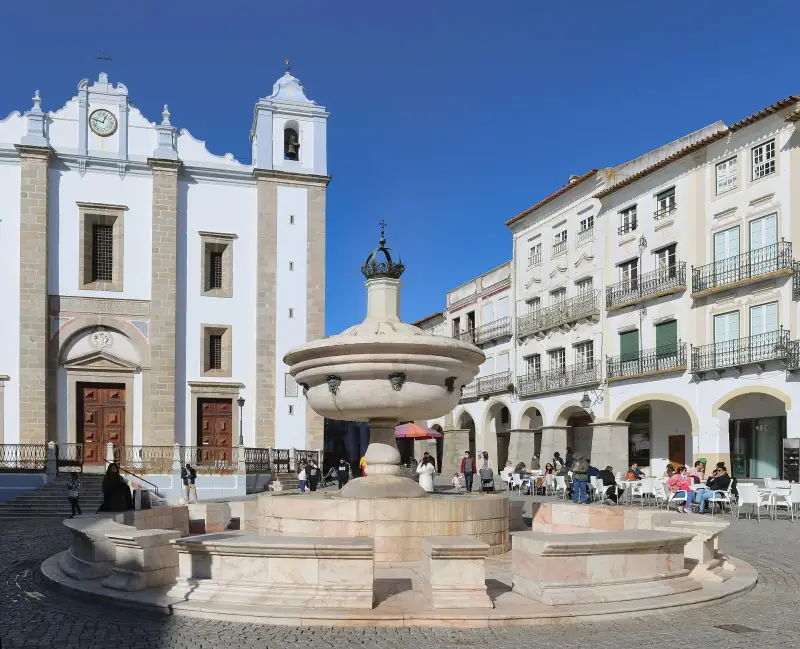
Praça do Giraldo is the social heart of the town: cafés, terraces, shops, a crossing point for residents and visitors alike. Staying right next to it offers maximum convenience. You are a few minutes’ walk from almost everything, you can go back to rest in the middle of the day in summer and head out again in the evening without effort.
This position has a price: rates are generally higher than in the rest of the center, and the evening bustle can be felt, especially in the warm season. If you are a light sleeper, look carefully at recent reviews, check the room’s orientation and ask for a quiet room when booking.
This area suits short stays, travelers who like to be in the middle of the action and those who plan to dine in town several evenings in a row. To plan your meals, our article on Portuguese specialties to taste gives benchmarks on the country’s cuisine, including that of the Alentejo.
Near the cathedral and the Roman temple: the monumental district
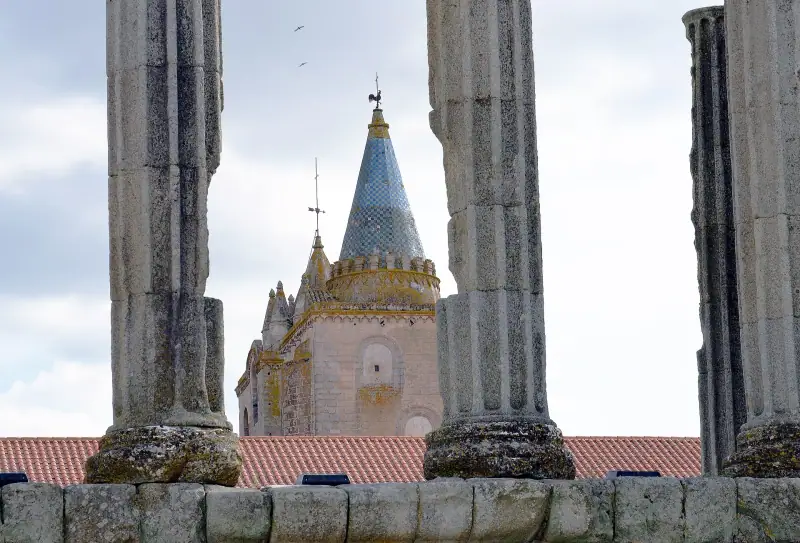
Around the cathedral and the Roman temple, the streets are calmer and quieter in the evening. This monumental district is the most photogenic: white facades, cobblestones, perspectives onto towers and roofs. Staying here gives the feeling of being in the heart of the heritage, with the chance to visit the sights early in the morning, before the groups arrive.
Properties are mostly small guesthouses and boutique hotels, sometimes set in former mansions. There are fewer shops in the immediate vicinity, but the Giraldo remains a short walk away. Rates are generally in a mid-to-high range, with prices depending on season and standard.
It is a good choice for a romantic getaway, for two nights or more, and for travelers who prefer a calm setting to bustle.
The university district and the east of the old town
The eastern part of the old center, around the university, has a more student and everyday atmosphere. You find cafés frequented by locals, restaurants cheaper than on the big squares and lodging at lower rates than in the monumental area. The charm is less staged, but the old town remains within walking distance.
Outside the university holidays, some streets are lively in the evening. If calm is a priority, favor a courtyard or upper-floor room. This district suits travelers looking for good value while staying inside the walls, as well as those who like a slightly more authentic setting.
Tours and activities around Évora
Guided tours, Alentejo wine tastings and excursions in the region.
Outside the ramparts and near the station: practical and cheaper
Just outside the ramparts, several districts offer newer hotels, simple guesthouses and apartments, with rates often lower than in the center. The station is on the edge of the center, a few minutes’ walk from the ramparts depending on the spot: staying on this side simplifies late arrivals and early departures, notably if you are continuing by train to Lisbon.
The assets are concrete: parking generally simpler, rooms often more spacious, elevators and air conditioning more common than in old buildings. The trade-off is that you lose the atmosphere of the old center: in the evening you need a few minutes’ walk to reach the restaurants, and the district is more functional than picturesque.
It is an interesting option for tight budgets, travelers with a car, families who want space and people who insist on modern lodging.
The countryside around Évora: quintas, estates and turismo rural

For those who want to taste the Alentejo rather than only visit a town, sleeping outside the walls is an excellent idea. Around Évora, the countryside offers quintas, wine estates, rural houses and boutique hotels surrounded by cork oaks and olive trees. Most offer calm, a pool, a garden, sometimes home-cooked meals or wine tastings.
A car is essential, because these addresses are remote and public transport is infrequent. Plan the trip to town in the evening and back, and check the real distance before booking. This option particularly suits stays of two nights or more, couples seeking tranquility, families with children and those planning to explore the megaliths and villages of the region.
To estimate the trip from Lisbon or organize a stop by car, renting is the simplest solution.
Rent a car to explore the Alentejo
Essential for staying in the countryside or reaching the megaliths and wine estates. Compare rental companies before booking.
Which type of lodging to choose in Évora?
The choice of neighborhood goes hand in hand with the type of lodging. Here are the main options.
Boutique hotels and small hotels: set in old mansions in the center, they offer a front desk, breakfast and often a courtyard or terrace. They are perfect for a short stay, with the convenience of luggage storage when you arrive before check-in time.
More conventional hotels and properties on the outskirts: newer, they generally have an elevator, air conditioning and parking. They suit families and travelers with a car, without the character of the center.
Guesthouses: very common, they offer personal service in old buildings. The number of rooms is small, which means booking early, especially in high season.
Apartments and short-term rentals: practical for families or stays of more than three nights, with a kitchen and more space. Check access (steps, floor), key handover and recent reviews, and choose a properly registered property, as the rules are changing in Portugal.
Hostels: a few places offer dorms and private rooms at budget rates, with friendly common areas. It is an option suited to solo travelers or small groups.
Quintas and turismo rural: country houses, wine estates and rooms in private homes in the Alentejo countryside. They offer calm, nature and often good food, at the cost of needing a car.
Budget: what to expect by season
Évora is generally more affordable than Lisbon, but rates vary strongly with the season, the type of lodging and the location. Boutique hotels in the monumental district and high-end country estates are at the top of the range. Guesthouses, apartments and hotels outside the ramparts are in a middle range. Hostels and the simplest addresses are the cheapest.
Spring and fall, the most pleasant seasons for visiting, are also the most in demand, as are weekends. Summer is very hot in the Alentejo: some travelers avoid it, which can lower prices, but the heat makes daytime visits exhausting. Winter is quiet, often cheaper. To choose your dates, see our guide to when to go to Portugal, and to estimate the overall cost of your trip, our article on the budget for Portugal gives benchmarks.
Remember to compare the total cost rather than the room price alone: a cheap address on the outskirts can cost more in taxis or parking than a central hotel.
Évora as a stop from Lisbon: how many nights to plan?
Located about 140 km (87 mi) east of Lisbon, Évora fits easily into a stay in the capital or a circuit in the south. A single night is enough to see the main monuments and enjoy an evening. Two nights allow a more relaxed visit, adding a wine tasting, an outing to the megaliths of the surroundings and tasting Alentejo cuisine without hurrying. Beyond that, Évora can serve as a base for exploring the region, with a car.
If you are combining several stops, compare with our guide to where to stay in Lisbon. Évora offers a calmer, slower and often cheaper setting than the capital, which makes it a restful stop in a busier trip.
Practical tips before booking
Read recent reviews, focusing on four points: noise, access (steps, floor, elevator), air conditioning in summer and the real distance to the station or the center. Check the exact position on the map rather than the neighborhood name, as some lodgings advertised “in Évora” are actually several kilometers away. If you arrive by train with a suitcase, favor the center or the immediate surroundings of the ramparts, or plan a taxi for the cobbled streets.
Prefer a free-cancellation rate, especially if you book far ahead, and remember to ask about possible arrival times: some small properties have no permanent front desk. Entry rules depend on your passport. Check the official travel advice of your government before you book: travel.state.gov (US), GOV.UK (UK), travel.gc.ca (Canada), Smartraveller (Australia) (checked November 2026). Finally, travel insurance can cover cancellation and medical costs; compare policies before departure.
Frequently asked questions
What is the best place to stay in Évora?
For a first stay, the historic center inside the walls is the best choice: all the monuments, restaurants and terraces are reached on foot. You save time, especially if you stay one or two nights, and you enjoy the lanes once the groups of day-trippers have left.
How many nights should you plan in Évora?
One night is enough to see the essentials of the historic center, but two nights let you visit without rushing, add the megaliths of the surroundings and enjoy the town in the evening. Many travelers come only for the day from Lisbon, which leaves little time to wander.
Do you need a car if you stay in Évora?
No, not to visit the town: the historic center is compact and covered on foot. A car becomes useful to reach the megaliths, the wine estates or the villages of the region. If you stay in the old center, check how and where to park, as the streets are narrow and access is sometimes restricted.
Does lodging in Évora have air conditioning?
Many places do, but not all, particularly in old buildings. The Alentejo summer is very hot, with temperatures that can clearly exceed 35 °C (95 °F): if you come between June and September, filter offers on this criterion and read recent reviews.
Is Évora station close to the center?
The station is on the edge of the center, a few minutes' walk from the ramparts depending on where you stay. With a wheeled suitcase the trip is reasonable, but the cobbled streets of the old center are less comfortable. A short taxi ride is a simple solution if your lodging is far.
When should you book lodging in Évora?
The historic center has a limited number of rooms, so weekends, spring, fall and holiday periods fill up fast. Book a few weeks ahead, with a free-cancellation option if possible, then compare again before the deadline.
Is it noisy to sleep in the middle of Évora?
The center is generally quiet at night, but the surroundings of Praça do Giraldo and the shopping streets can be livelier in the evening, especially in summer with the terraces. Ask for a courtyard or upper-floor room, and look at recent reviews that mention noise.
More Portugal guides
Keep reading
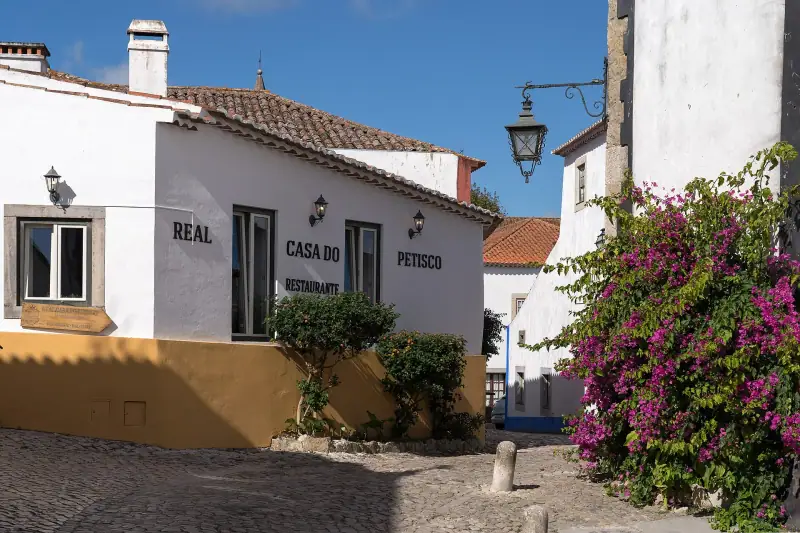
Where to stay in Óbidos: areas and types of lodging
Inside the walls, outskirts, lagoon or Oeste countryside: compare Óbidos areas and types of lodging to choose where to sleep for your stay and budget.
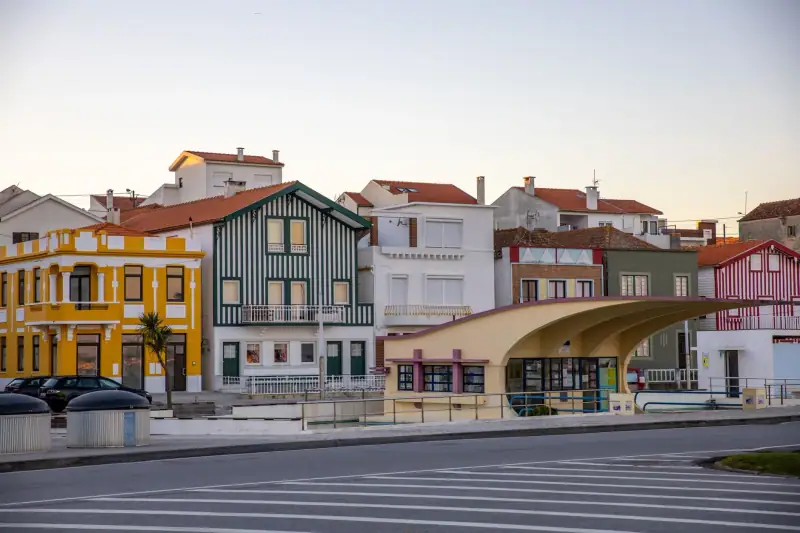
Where to stay in Aveiro: neighborhoods and types of lodging
Canal center, Beira-Mar, the station area, Costa Nova or the campus: compare Aveiro's neighborhoods and types of lodging to choose where to sleep.
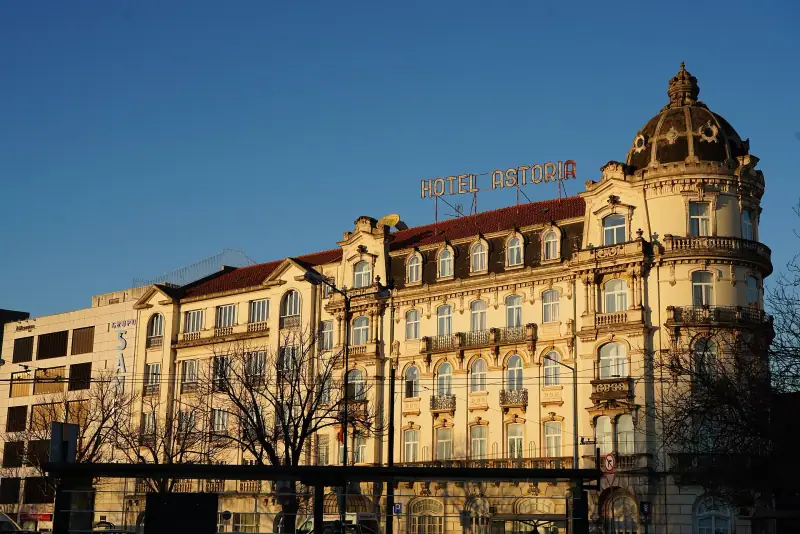
Where to stay in Coimbra: neighborhoods and types of lodging
University Alta, Baixa, Santa Clara or quiet districts: compare Coimbra's areas and types of lodging to choose where to sleep for your stay.
Ready-made
Portugal itineraries
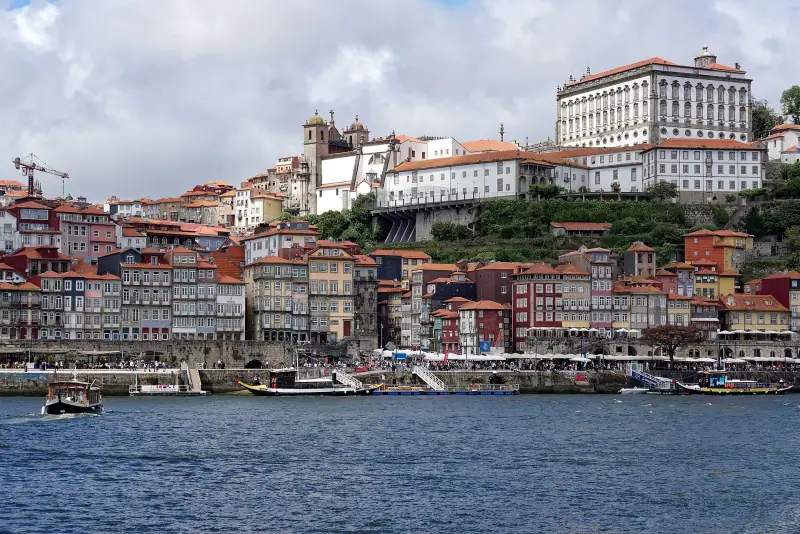
3 days
Porto in 3 days: a day-by-day itinerary
What to do in Porto in 3 days: Ribeira, São Bento azulejos, Gaia port cellars, Foz and a Douro Valley excursion. A relaxed day-by-day plan.
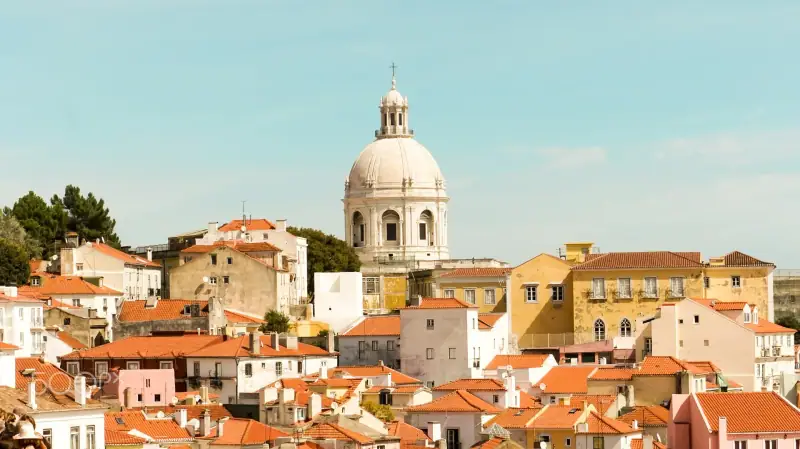
3 days
Lisbon in 3 days: day-by-day itinerary, neighborhoods and tips
What to do in Lisbon in 3 days: Baixa, Alfama, Belém, miradouros, Bairro Alto, pastéis de nata and transport tips for a relaxed stay.
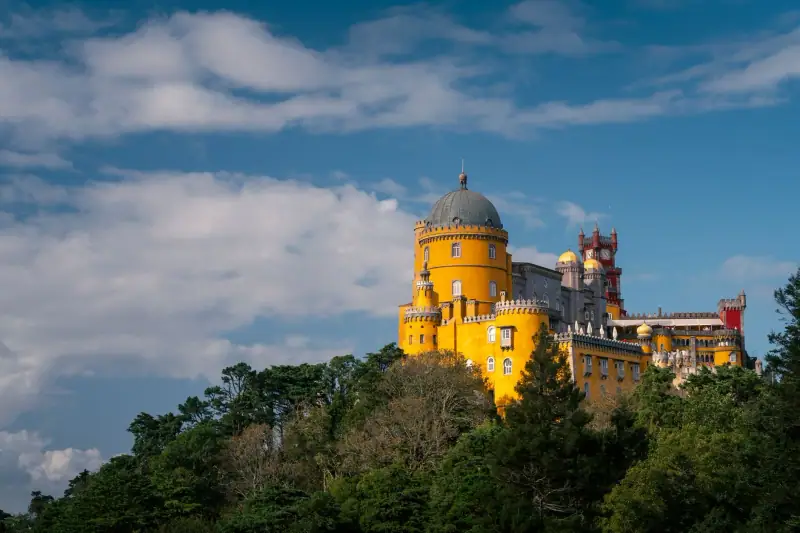
1 day
Sintra in a day from Lisbon: itinerary and tips
Sintra in one day from Lisbon: train, Pena Palace, Quinta da Regaleira, Moorish Castle and old town. A realistic itinerary and tips to avoid the crowds.