Where to stay
Where to Stay in Lagos: Which Area to Choose for Your Trip
We may earn a commission when you book through links on this page, at no extra cost to you. We don't visit or try the places we cover: we summarize published sources. How we work
In short
- For a first stay without a car, the historic center is the most practical: restaurants, beaches near the old town and boat departures within walking distance.
- For quiet or a big beach, choose Meia Praia or Praia da Luz; the marina suits families wanting a comfortable apartment near the train station.
- In July and August, book several months ahead, especially in the historic center; spring and fall have more availability and lower rates.
- From Faro Airport, allow about 1 h to 1 h 30 by car to Lagos.
Lagos is one of the most popular bases in the Algarve, but the town is more than its old town. Between the historic center, the marina, the long beach of Meia Praia and the villages further west, the atmosphere changes noticeably from one area to the next, as do prices, noise levels and how easy it is to get around. This guide details the main areas to stay in Lagos to help you choose according to your budget, season and travel style. To compare Lagos with the other towns of the region, start with our guide where to stay in the Algarve.
The bases to know before you book
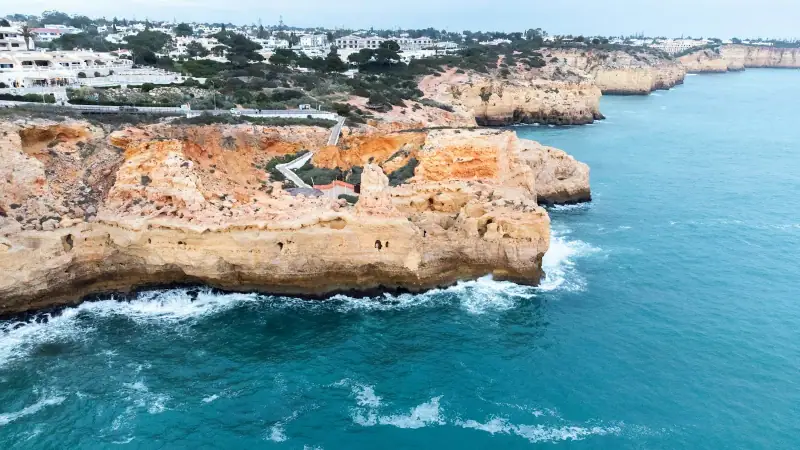
Lagos is in the Barlavento, the western part of the Algarve. The historic center, partly enclosed by walls, lies near the Bensafrim River and the marina. To the east, the big beach of Meia Praia stretches for several kilometers. To the south, the cliffs of Ponta da Piedade border sheltered coves, which we describe in our article on Lagos and Ponta da Piedade. To the west, villages such as Luz, Burgau and Salema offer a quieter setting.
Before choosing, ask yourself three simple questions:
- Will you have a car? Without a car, favor the center or the marina, where everything is close. With a car, you can stay further out, as long as you check the parking.
- Do you want activity or rest? The streets of the center stay lively late in the season, while residential areas are much quieter.
- Which season are you aiming for? In summer, being near the beach comes first; in spring and fall, being near restaurants and coastal trails matters more.
The historic center: to do everything on foot
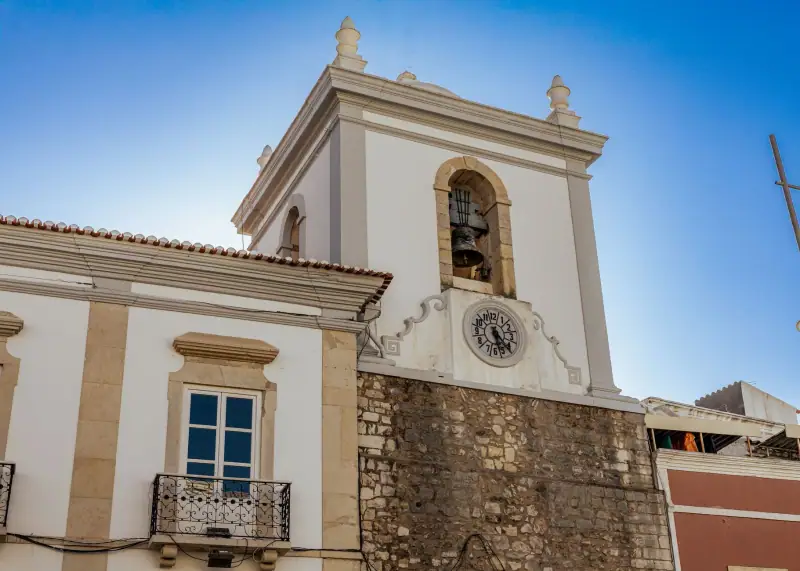
This is the most sought-after area, and for good reason. Cobbled lanes, small squares, churches and restaurants are a few minutes’ walk from each other. Several beaches near the old town can be reached on foot, which is valuable if you have no car. It is also where many boat and kayak trips leave for the nearby caves and cliffs.
Pros: atmosphere, choice of restaurants, easy access to excursions, many guesthouses and small boutique hotels in old houses.
Cons: noise in high season, higher rates than elsewhere, narrow streets that are awkward for cars and often complicated parking. If you arrive by car, check with your host where to park, as some lanes are pedestrian-only or have restricted access.
Our advice: aim for a street slightly set back from the busiest thoroughfares, and read carefully the reviews that mention night noise. A room facing an inner courtyard is often more peaceful than a room on the street.
Places to stay in Lagos
Compare guesthouses, hotels and apartments in Lagos for your dates and budget.
The marina and the area around the train station: practical and functional
Across the river from the old town, Lagos marina concentrates apartments, residences and more modern hotels. The railway station is nearby, which makes this a handy area if you arrive by train from Faro or Tavira, as the Algarve line ends at Lagos. A footbridge lets you reach the historic center on foot in a few minutes.
This area suits families and travelers who want comfortable accommodation, often with a kitchen or balcony, without paying the price of the heart of the old town. There are plenty of restaurants and terraces along the marina front, and the waterfront promenade is pleasant at the end of the day.
The flip side: the atmosphere is less authentic than in the center, and some buildings have aged. Look at recent traveler photos and the date of the last renovation before booking.
Meia Praia: the big beach to the east
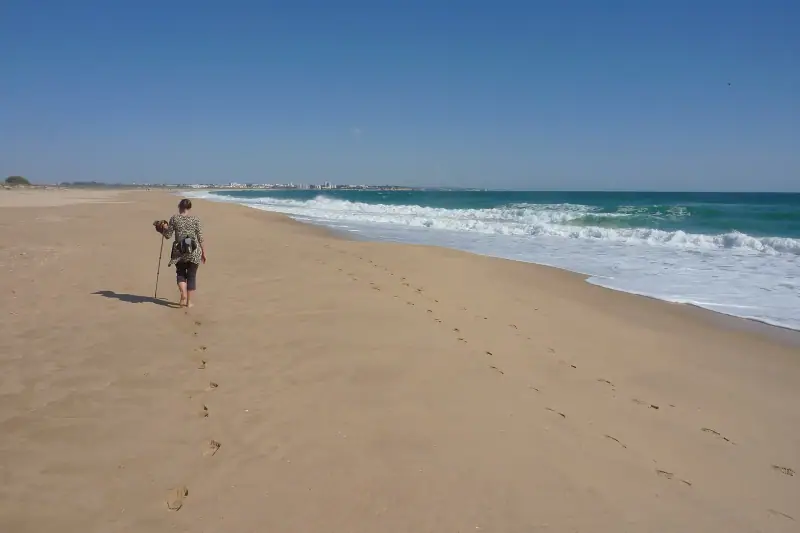
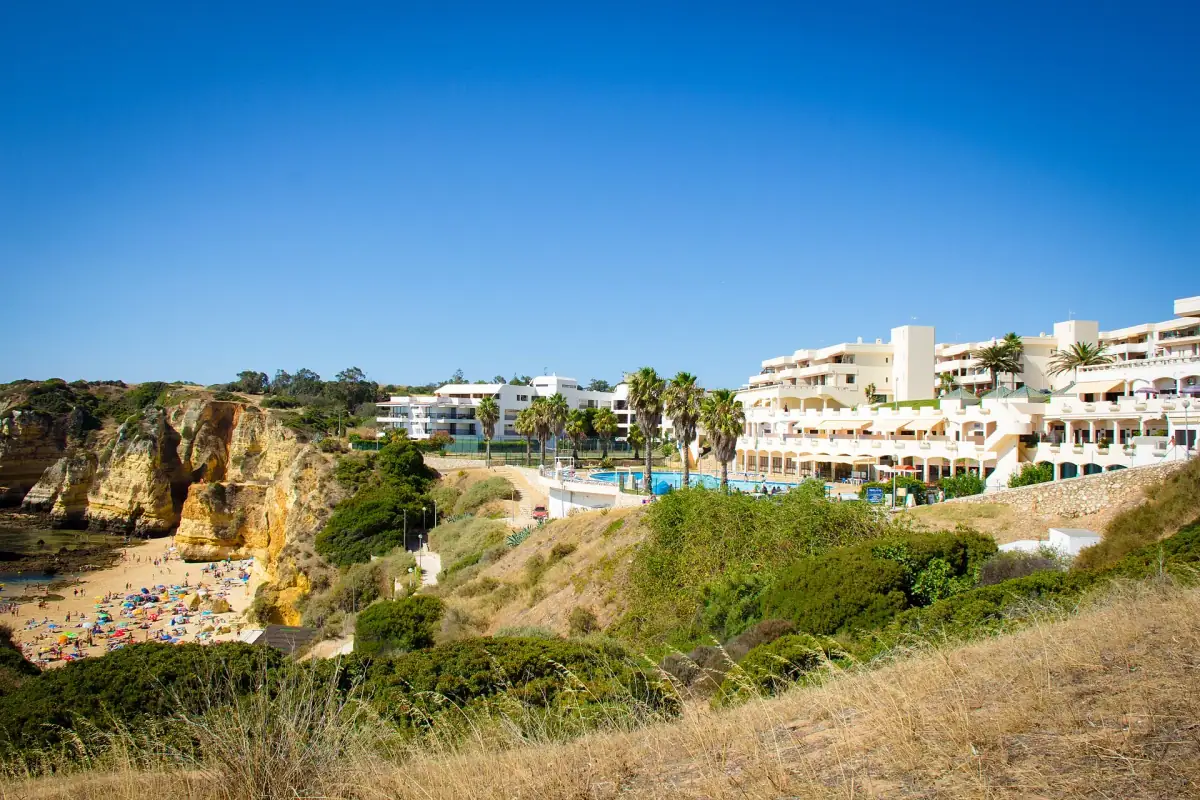
Meia Praia is a long stretch of golden sand east of town, far larger than the small coves between the cliffs. Even in summer, it is easier to find room to lay your towel, which appeals to families and fans of long walks along the water. The sand, wide and gently sloping, suits children, but the sea can be rougher than in the sheltered coves: watch the flags and the lifeguards’ instructions.
You stay in residences, apartments and beachfront hotels. Quiet is guaranteed, but the historic center is not close: plan on a taxi, a bike or some walking, depending on exactly where you sleep. Check the real distance on your booking platform’s map, because addresses “in Lagos” can be quite far from the center.
Praia da Luz, Burgau and Salema: quiet in the west
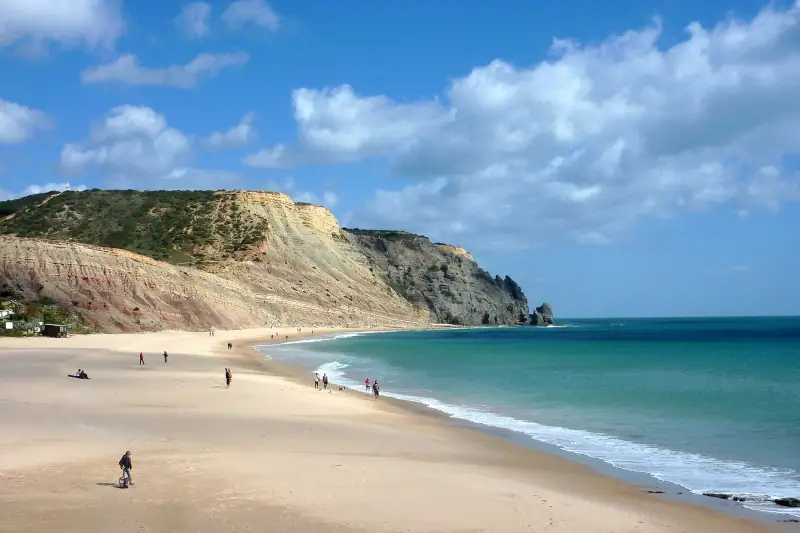
West of Lagos, the coast gets quieter. Praia da Luz is a seaside village a few kilometers from the center, with a beach framed by rocks, seafront restaurants and a family-friendly feel. Further on, Burgau and Salema have kept the character of fishing villages, with quiet streets and more modest beaches.
These bases suit travelers who prefer tranquility and have a car, or who accept relying on buses and taxis to reach Lagos. They are also well placed to explore the wild coast toward Sagres: our guide to Sagres and Cape St. Vincent will help you organize a day in that direction.
Accommodation is mostly apartments, villas and small residences. In low season, some restaurants and shops run at a reduced pace: if you travel in winter, check what stays open before choosing an isolated village.
The cliffs of Ponta da Piedade and the heights: views and slopes
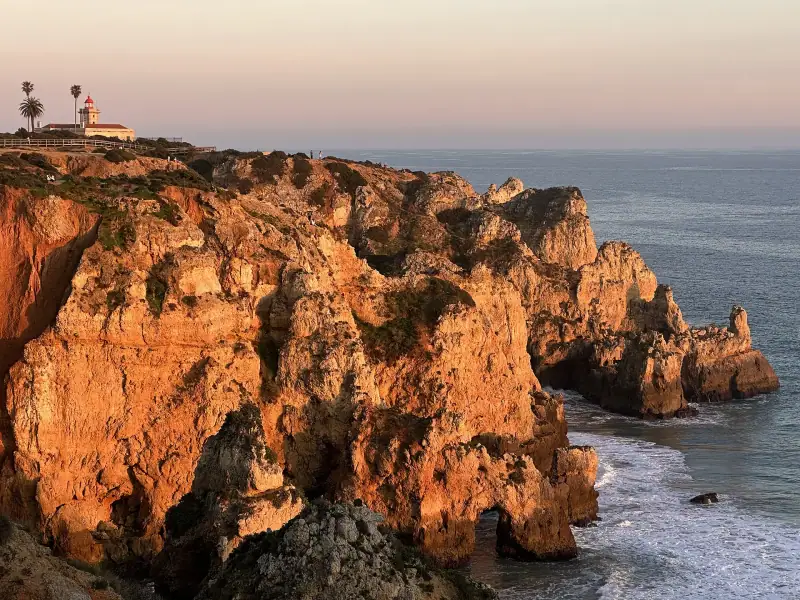
Accommodation near Ponta da Piedade offers impressive views of the cliffs and the sea. It is ideal for sunrises and walks on the coastal trails, but it is a little away from the center: allow a few kilometers, so a car, a taxi or a good walk. The many trails of the area are presented in our guide to hiking in the Algarve.
Watch out for slopes and stairs: some perched accommodations are not suited to people with reduced mobility or to travelers with big suitcases. This point is rarely highlighted in listings, so do not hesitate to ask the host.
Which type of accommodation to choose in Lagos?
The town offers several options, each with its strengths.
- Guesthouses and small boutique hotels: ideal in the historic center for a local feel, often with breakfast.
- Apartments: handy for families and week-long stays, especially near the marina or Meia Praia, with the option to cook.
- Hostels: a budget option for solo travelers or small budgets, especially in the center.
- Residences and beach hotels: comfortable and quiet, often with a pool, but further from restaurants.
- Villas: relevant for groups, especially toward Luz, Burgau or the nearby inland area.
To estimate what each option means for your overall budget, see our article on the Algarve budget: rates vary strongly between high and low season.
Which season, which area?
The right area also depends on the time of year.
In summer (July-August): the town is lively and prices rise. The center is vibrant but noisy, and air conditioning becomes an important criterion. Beaches near your accommodation are worth more than any other argument. Book very far ahead.
In spring and fall: this is an excellent time to stay in the center, with often pleasant weather, fewer people and lower rates. It is also the right time to walk the coastal trails. Our guide when to go to the Algarve details the seasons.
In winter: the town stays open, but some seasonal businesses close. It is better to stay in the center, where more restaurants stay open, rather than in an isolated village. Also check the heating, as not all accommodations have it.
Getting around from Lagos
Lagos is an excellent starting point to explore the west of the region. Eastward, you reach Portimão, then Carvoeiro and Benagil Cave; our article on Benagil Cave explains how to organize it from Lagos. Westward, the wild coast leads to Sagres.
Trains on the Algarve line link Lagos to the other coastal towns, but they do not serve the beaches. A car gives real freedom for the coves, the inland area and the villages; to rent one, compare the offers by rental company.
If you arrive by air, Faro Airport is the most convenient. Allow about an hour to an hour and a half by road to Lagos. Travelers who go through Lisbon or Porto first should plan an extra leg to reach the Algarve.
Tips for booking your accommodation in Lagos
A few simple habits avoid most disappointments:
- Check the exact location on the map. A listing “in Lagos” can be several kilometers from the center.
- Read recent reviews, especially about noise, cleanliness and air conditioning.
- Find out about parking if you have a car: it is sometimes paid or limited in the center.
- Look at the cancellation terms: a flexible booking lets you adjust if the weather forecast or your plans change.
- Factor in the tourist tax, sometimes not included in the displayed price, depending on the property.
- Think about accessibility: stairs, elevator, walking distance from the car park or the station.
Also consider travel insurance suited to your trip.
Making Lagos your excursion base
Once settled, you will have plenty to choose from: boat trips along the cliffs, kayaking, stand-up paddleboarding, walks on the coastal trails, visits to nearby towns such as Silves, which we cover in our article on Silves and the inland Algarve. Guided excursions are handy if you do not want to drive.
Activities and excursions in Lagos
Boat trips, kayaking and guided tours from Lagos.
In short: which area for which traveler?
- First stay, no car: the historic center.
- Family with children: marina or Meia Praia, with equipped accommodation.
- Couple looking for quiet: Praia da Luz or Burgau.
- Hikers and view lovers: the area around Ponta da Piedade.
- Small budget: hostels or simple guesthouses, preferably outside high season.
Whatever you choose, Lagos remains a flexible base, well placed between Benagil Cave and Cape St. Vincent. Book early in summer, take the time to compare locations, and you will make the most of this part of the Algarve.
Frequently asked questions
What is the best area to stay in Lagos?
For a first stay without a car, the historic center is the most practical: restaurants, beaches near the old town and boat departures within walking distance. If you want quiet or a big beach, Meia Praia or Praia da Luz are better options.
Can you do without a car if you stay in Lagos?
Yes, if you stay in Lagos itself: the center, the marina and several beaches can be reached on foot or by taxi. A car becomes useful for the more distant coves, the west coast and Benagil Cave, although boat trips also let you see it.
Is the center of Lagos noisy at night?
Some streets near bars and restaurants stay lively late in high season. Ask for a room on the courtyard side or on a street slightly away from the action, and read the reviews that mention noise.
Should you stay in Lagos or Portimão?
Lagos has a more charming and more compact historic center. Portimão generally offers more large hotels and a very busy city beach, with a less authentic feel.
When should you book accommodation in Lagos?
In July and August, book several months ahead, especially for the historic center. In spring and fall, it is easier to find availability and lower rates.
How do you get from Faro Airport to Lagos?
By car on the motorway, allow about an hour to an hour and a half depending on traffic. There are also bus and train connections from Faro, usually with a change or a longer trip: check the schedules before you go.
More Algarve guides
Keep reading
Sleeping Near Faro Airport: Options, Areas and Prices
Late arrival or dawn flight? Compare hotels near Faro Airport, the city center and Olhão: distances, transfers, budget and booking tips.
Where to Stay in Tavira and the Sotavento: Which Base to Choose
Where to stay in Tavira and the Sotavento? Historic center, Santa Luzia, Cabanas, Cacela Velha or Olhão: bases compared, seasons and booking tips.
Where to Stay in the Algarve: Which Town to Choose for Your Trip
Where to stay in the Algarve? Lagos, Albufeira, Tavira, Faro, Carvoeiro or Sagres: bases compared by interests, budget and travel style.
Ready-made
Algarve itineraries
3 days
4 days
7 days
Algarve Road Trip: A 7-Day Itinerary from East to West
A 7-day Algarve road trip from Faro to Sagres: stops, distances, beaches, white villages and tips for driving and sleeping along the coast.