What to see
What to see in Central Portugal: monasteries, schist villages and coast
We may earn a commission when you book through links on this page, at no extra cost to you. We don't visit or try the places we cover: we summarize published sources. How we work
In short
- Five to seven days cover the essentials: Coimbra, Aveiro, the Batalha and Alcobaça monasteries, Tomar and Nazaré; a full week adds the Serra da Estrela or a schist village.
- Coimbra and Aveiro are served by train, and several buses link Alcobaça, Batalha, Nazaré and Tomar; a car is almost essential for the Serra da Estrela and the schist villages.
- Coimbra is the most balanced base: well linked by train, close to the mountain villages and halfway between Lisbon and Porto.
- Spring and early fall are the most pleasant; the very big waves at Nazaré come mostly in fall and winter and cannot be predicted.
Between Lisbon and Porto, central Portugal is the region you often cross by car or train without really stopping. That is a pity: it holds a centuries-old university, a lagoon lined with colorful boats, three major monasteries, a fishing village made famous by its giant waves, the highest mountain of mainland Portugal and villages of dark stone clinging to the hills. All of it is covered with short drives, rarely more than an hour and a half between two stops.
This guide does not replace our detailed articles by town: it helps you choose and combine. For the towns, see our guides to Coimbra in a day, Aveiro and Óbidos. Here we step back to see the big picture and build a coherent trip.
How to organize your trip in central Portugal
The region is large and is easier to understand when split into four groups:
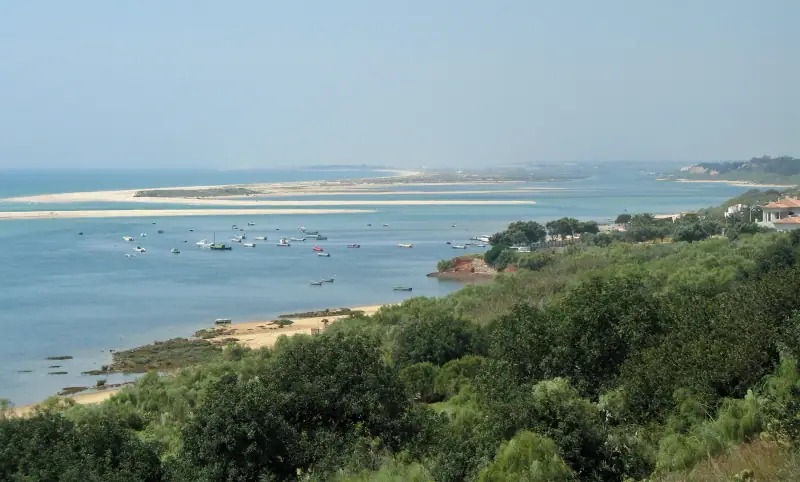
- The northern coast, around Aveiro: a lagoon, canals, long beaches and fishing villages.
- Coimbra and its surroundings: the big university town, Roman ruins and an ancient forest.
- The monastery route and the Oeste coast: Alcobaça, Batalha, Nazaré, Tomar and, a bit further south, Óbidos.
- The mountainous interior: the Serra da Estrela, the Serra da Lousã, the Serra do Açor and their schist villages.
The first two groups are very easy to visit by train. The last two need more flexibility: while the monasteries are reachable by bus from several towns, the mountains are much better discovered by car. Always allow more time than the distance suggests, as mountain roads are winding and the villages often perched.
To choose your dates, see our guide to when to go to Portugal. To estimate your spending, our article on the budget for Portugal gives an overview.
Choosing a base in central Portugal
Coimbra, well placed between Lisbon and Porto, makes excursions by train and car easy. Compare lodging by dates.
Coimbra: the student town
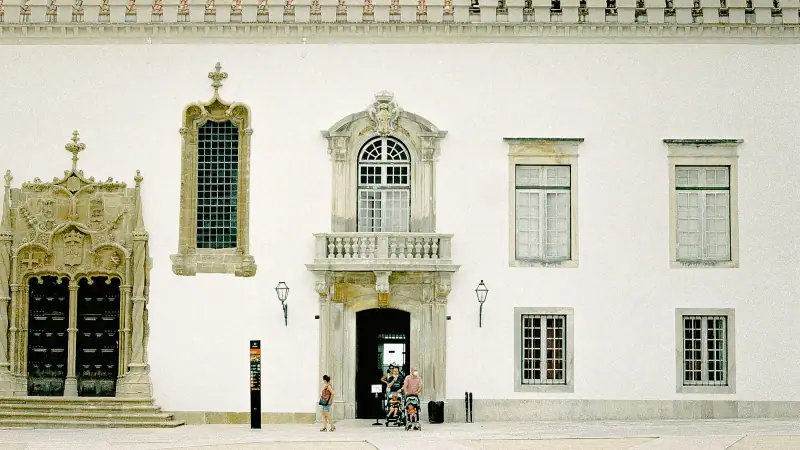
Coimbra climbs a hill above the Mondego River. A former capital of the kingdom in the Middle Ages, it is home to one of the oldest universities in Europe, set on the heights. The university complex, with its Baroque library, its chapel and its large courtyard, has been a UNESCO World Heritage site since 2013.
The visit is on foot, going up and down sometimes steep stairs. At the top, the university and the old Romanesque cathedral (Sé Velha) overlook the town. At the bottom, the lanes of the Baixa are full of shops, pastry shops and small restaurants. In the evening the town comes alive: the students, who still wear the traditional black cape on certain occasions, give Coimbra an atmosphere unique in the country. You can also hear Coimbra fado there, more restrained and more intimate than that of Lisbon.
For all the detail, our guide visiting Coimbra in a day offers a route, and the article where to stay in Coimbra helps you choose an area. If you only have a few days, Coimbra deserves at least one night: the town is far more pleasant in the evening, when the groups of day-trippers have left.
At the gates of Coimbra: Conímbriga and Buçaco forest
About fifteen kilometers (9 mi) southwest of Coimbra, Conímbriga is one of the best-preserved Roman sites in the country. You discover mosaics, baths and the remains of wealthy houses, along with a small museum. The visit takes about two hours and combines easily with Coimbra.
A little further north, the Buçaco National Forest is another contrast: a large wooded park with trees from all over the world, crossed by trails, fountains and chapels. A neo-Manueline palace stands there, now turned into a hotel. Even if you do not stay overnight, a half-day walk in the forest is a change from urban visits. The site is reachable by car from Coimbra in about three quarters of an hour to an hour.
Aveiro and the coast: colorful boats and huge beaches
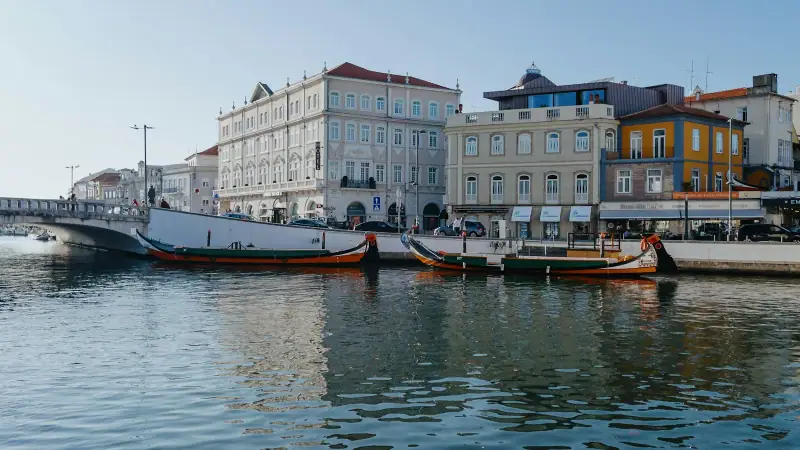
About an hour by road or train from Porto, Aveiro is often nicknamed the “Venice of Portugal”, a somewhat forced comparison, but one explained by its canals. The moliceiros, traditional boats with prows painted in bright motifs, glide through the center, in a setting of Art Nouveau facades. You can visit the town in a few hours, but it is better savored with a night in town, to enjoy the evening light.
The neighboring coast also deserves a detour. At Costa Nova, small houses striped in bright colors line the beach and make the village one of the most photographed in the region. Large sandy beaches, sometimes swept by wind, stretch on either side. The Atlantic is cool even in summer, and currents can be strong: respect the supervised swimming areas. Our guide visiting Aveiro covers the addresses and visits, and where to stay in Aveiro helps you choose an area.
As for food, Aveiro is known for its ovos moles, a confection of egg yolks and sugar, served in small shell-shaped wafers. Worth trying at least once.
The monastery trio: Alcobaça, Batalha and Tomar
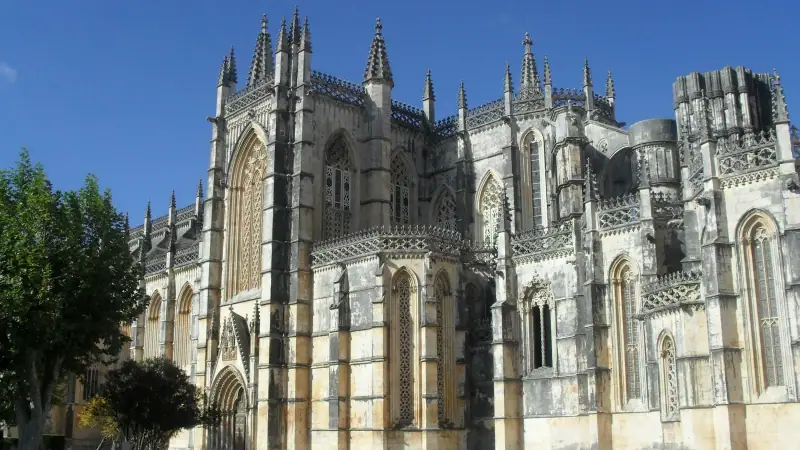
This is probably the cultural heart of the region. Three major monuments, all UNESCO-listed, lie less than an hour from each other.
Alcobaça: the Cistercian monastery
Founded in the 12th century, the Alcobaça Monastery is one of the largest Cistercian monasteries in Europe and one of the best preserved. Its Gothic nave, remarkably sober, contrasts with the more ornate decors often seen in Portugal. Inside, the tombs of Peter I and Inês de Castro, carved in stone, tell one of the country’s most famous tragic love stories. Allow about an hour and a half for the visit.
The small town of Alcobaça is also known for its convent pastries and its fruit. It suits a lunch break well before heading to Batalha.
Batalha: a vow in stone
About twenty kilometers (12 mi) from Alcobaça, the Batalha Monastery is a masterpiece of late Gothic and Manueline style. Its construction began after the Battle of Aljubarrota, in 1385, which secured the kingdom’s independence from Castile: the king had promised to build a monastery in case of victory. The cloisters with stone lacework and the chapter house with its bold vault are among the most beautiful in the country. Allow one to two hours.
Tomar: the Templar castle
A little further east, Tomar is tied to the Knights Templar, who set up their seat there in the 12th century. The Convent of Christ, overlooked by a fortified castle, houses the famous Templar rotunda (charola) and a spectacular Manueline window. The lower town, crossed by the Nabão River, is pleasant to walk, with its squares, bridges and riverside park. Allow half a day to a full day for Tomar.
If you have little time, the most practical approach is to link Alcobaça and Batalha in one day, then keep Tomar for another time or combine it with Coimbra. An organized excursion can suit you if you do not drive.
Excursions to the monasteries of central Portugal
Alcobaça, Batalha, Tomar: compare guided day tours, with or without transport.
Fátima: a worldwide pilgrimage site
Near Batalha and Tomar, Fátima is one of the most important Catholic shrines in the world. It is tied to the Marian apparitions of 1917, and crowds of pilgrims gather there, notably on May 13 and October 13. Whether or not you are a believer, the vast esplanade and the basilica deserve a look, with a very particular atmosphere of reverence.
If you want to go, avoid the dates of the big pilgrimages if you dislike crowds, and expect full lodging around those dates. A visit of an hour or two is enough for most travelers, fitting naturally between Batalha and Tomar.
Nazaré, Óbidos and the Oeste coast
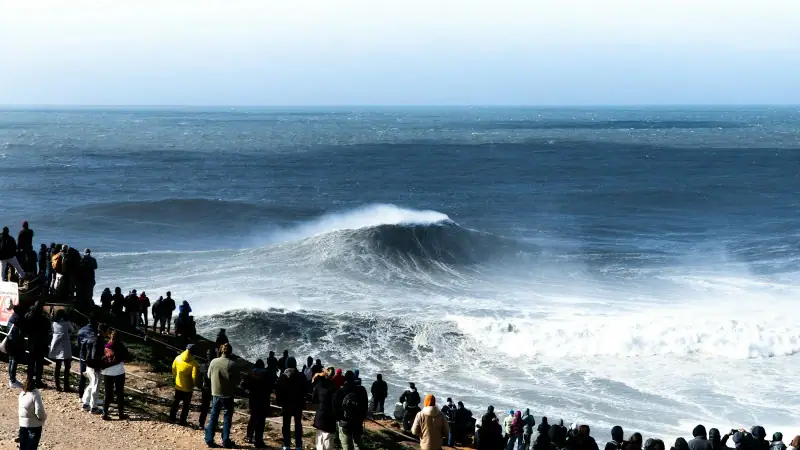
On the Atlantic, Nazaré is a fishing village made famous by its giant waves. The town is split in two: the beach below, with its terraces and grilled fish, and the Sítio district, perched on a cliff, reached by a funicular. From there the view spreads over the bay. Near the São Miguel Arcanjo fort, on a headland, people come to watch the waves on days of heavy swell, especially in fall and winter. Outside big-wave season, Nazaré remains a pleasant seaside village, more authentic than the resorts of the south.
Further south, Óbidos is a small medieval town surrounded by ramparts, with white lanes flowered with bougainvillea. It is very busy by day, but regains a quiet charm in the evening. For the addresses and lanes worth seeking out, see our guide visiting Óbidos and the article where to stay in Óbidos. Its specialty, ginja, a sour cherry liqueur, is traditionally sipped from a small chocolate cup.
If you like the sea, the region has other fine stops: the big beach of Figueira da Foz south of Aveiro, or the Peniche peninsula, from which boats leave for the Berlengas archipelago in the good season. Check crossing conditions in advance, which depend on the weather.
The Serra da Estrela: mountains and cheese
Inland, the Serra da Estrela is the highest massif of mainland Portugal, with a summit close to 2,000 m (6,560 ft). You find granite landscapes, glacial lakes, U-shaped valleys and high meadows where sheep graze. It is also the only region of the country where it snows regularly in winter, which attracts visitors for walks in the snow or sledding.
The mountain is best known for its Serra da Estrela cheese, a soft and creamy sheep’s-milk cheese eaten with a spoon. You taste it in villages such as Manteigas, very well placed for hiking. The Serra da Estrela natural park offers many trails, from the easiest to the most demanding.
A car is almost essential, and the mountain roads demand attention, especially in winter or in fog. Allow about two hours of driving from Coimbra to the villages of the serra. Dress warmly, even in summer: altitude changes the weather quickly.
Rent a car for the mountains and villages
Serra da Estrela, schist villages, monasteries: compare rental companies by dates.
The schist villages: the Portugal of the hills
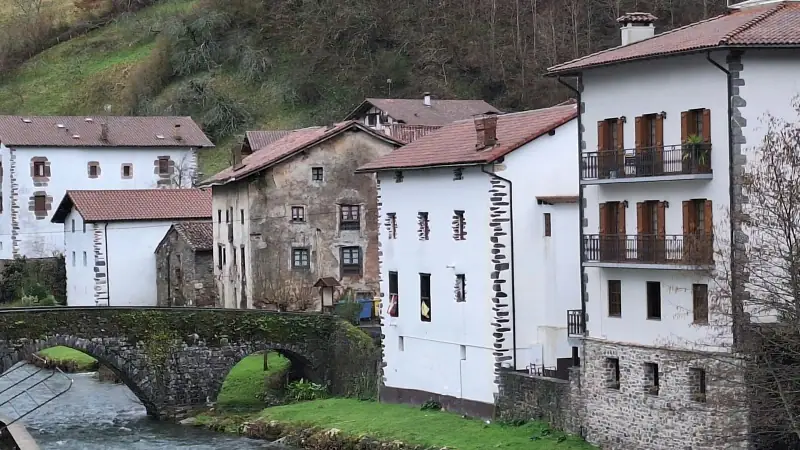
Between the Serra da Lousã and the Serra do Açor, a network of schist villages (Aldeias do Xisto) groups about twenty mountain hamlets, built with the country’s dark stone. Their houses, cobbled lanes and schist roofs blend into the forest. Several villages have been restored and offer guesthouses, simple restaurants and marked hiking trails.
Among the best known, Talasnal, in the Lousã hills, makes a pretty stop. Piódão, in the Serra do Açor, is often presented as the most photogenic: its houses in an amphitheater, with doors and windows painted blue, make a striking picture. It is more isolated, with narrow roads: allow about two hours from Coimbra and do not rush.
These villages are to be savored slowly. A night there lets you enjoy the calm and the stars, and hike in the morning before visitors arrive. Bring walking shoes, water and a little cash, as small shops do not always accept cards.
What to eat in central Portugal
The region is also a fine food stop. In the Bairrada, south of Aveiro, roast suckling pig (leitão) is the emblematic specialty, often served with potatoes and local wine. Near Coimbra and in the mountains, chanfana, a goat or mutton stew simmered in wine, is a traditional dish. For sweets, you find convent pastries based on eggs, Aveiro’s ovos moles and the regional small cakes served with coffee.
To spot the dishes to try, see our guide to what to eat in Portugal. Also keep in mind the small starters placed on the table at restaurants: you are charged for them if you eat them, as our article on the cover charge at restaurants explains.
Three ways to combine these stops
Here are three routes to adapt to your length of stay and your means of transport. Each stays well under 200 km (124 mi) of driving per day.
Option 1: five “towns and monasteries” days
A day in Aveiro and on the coast, two days in Coimbra with Conímbriga or Buçaco, then a day devoted to Alcobaça and Batalha before reaching Lisbon. It is the simplest option, doable by train and bus.
Option 2: seven “history and mountains” days
Take the previous program, then add Tomar and a night in a schist village or in the Serra da Estrela. A car is recommended here, as public transport is rare. A spare day avoids rushing.
Option 3: four “sea and heritage” days
For a more seaside stay, leave Lisbon, stop at Óbidos, sleep in Nazaré, visit Alcobaça and Batalha, then finish in Coimbra. The drives are short and the pace stays relaxed.
Where to sleep, depending on your program?
The choice of base depends on what you want to favor:
- Coimbra is the best general base: frequent trains, many lodgings and easy access to the mountain villages by car.
- Aveiro suits lagoon and beach lovers, with quick access to Porto.
- Nazaré or Óbidos are ideal for the monasteries and the coast, with a more relaxed atmosphere.
- A schist village or Manteigas for one or two nights of mountain immersion.
If you continue north, our guide to the Porto and Douro region naturally extends this route; to the south, the one on the Lisbon, Sintra, Cascais and Mafra region awaits you.
A night in Aveiro or Óbidos
Staying overnight lets you enjoy the towns once the day-trippers have left.
Budget and practical tips
Central Portugal is generally more affordable than Lisbon or Porto, especially for lodging and dining outside tourist centers. The main expenses are nights, meals, monument entries and, possibly, the car. The monasteries charge admission, sometimes with reduced rates by age: check their official sites before you go.
A few useful habits:
- Check train and bus schedules the day before: frequencies drop on weekends and in the evening.
- If you drive in the mountains, expect longer trips than planned and fill up before climbing.
- Book ahead in summer and during the big Fátima pilgrimages.
- Bring a jacket: the coast is windy and the mountains cool, even in summer.
- Wear good shoes: slippery cobblestones, stairs and slopes are frequent.
- Keep a little cash for isolated villages.
Our recommendation for planning the region
If you are still hesitating, here is a simple rule. For four or five days, concentrate on Coimbra, Aveiro and the Alcobaça-Batalha pair. For a week, add Tomar and a night in the mountains. Beyond that, you will have time to extend toward the schist villages or continue to Porto or Lisbon.
Central Portugal rewards those who slow down: a Gothic cloister in the morning, a suckling pig lunch at midday, a sunset over the Atlantic or a quiet evening in a stone village. Do not try to tick everything off, and leave room for the unexpected.
Sources
Frequently asked questions
How many days should you plan to visit Central Portugal?
Five to seven days let you see the essentials: Coimbra, Aveiro, the Batalha and Alcobaça monasteries, Tomar and Nazaré. With a full week, you add the Serra da Estrela or a schist village, which changes the pace and the landscapes. In three days, you have to choose one axis, for example the monasteries or the coast.
Do you need a car to visit central Portugal?
For the main towns, no: Coimbra and Aveiro are served by train, and several buses link Alcobaça, Batalha, Nazaré or Tomar. However, a car becomes almost essential for the Serra da Estrela and the schist villages, where public transport is rare. Check schedules before you leave.
What is the best base for exploring the region?
Coimbra is the most balanced base: it is well linked by train, close to the mountain villages and halfway between Lisbon and Porto. For the monasteries and the coast, Nazaré or Óbidos are good places to land. Aveiro suits you well if you want to stay near the lagoon and beaches.
Can you see Tomar, Batalha and Alcobaça in one day?
It is possible by car or on an organized excursion, but very dense. It is better to reserve one day for Batalha and Alcobaça, which are close to each other, and half a day to a day for Tomar. The monasteries each need one to two hours of visiting if you want to enjoy them.
What is the best time to visit central Portugal?
Spring and early fall are the most pleasant: mild temperatures, passable trails and moderate crowds. Summer is hot inland, but the coast stays cooler. In winter, the Serra da Estrela can be snowy and some mountain roads are tricky. Our guide to the ideal time to go to Portugal covers the climate.
Is the region suitable for children?
Yes. The beaches, Aveiro's colorful boats, the ramparts of Óbidos, Tomar castle and walks in the schist villages appeal to children. Avoid chaining three monuments in the same day and plan breaks outdoors.
Can you see the big waves at Nazaré all year?
No. The very big waves occur mostly in fall and winter, during strong Atlantic swells, and they cannot be predicted in advance. In summer, Nazaré beach is calm and suitable for swimming, with an ocean that is always cool.
More Portugal guides
Keep reading
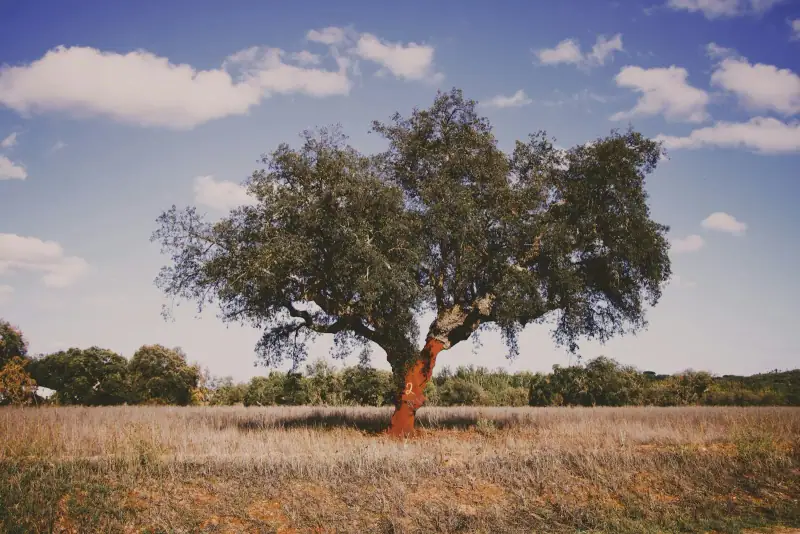
What to see in the Alentejo: white villages, cork oaks and starry skies
What to see in the Alentejo: Évora, Monsaraz, Marvão, Elvas, Estremoz, Mértola, Alqueva and the wild coast. Route tips, transport and stay ideas.
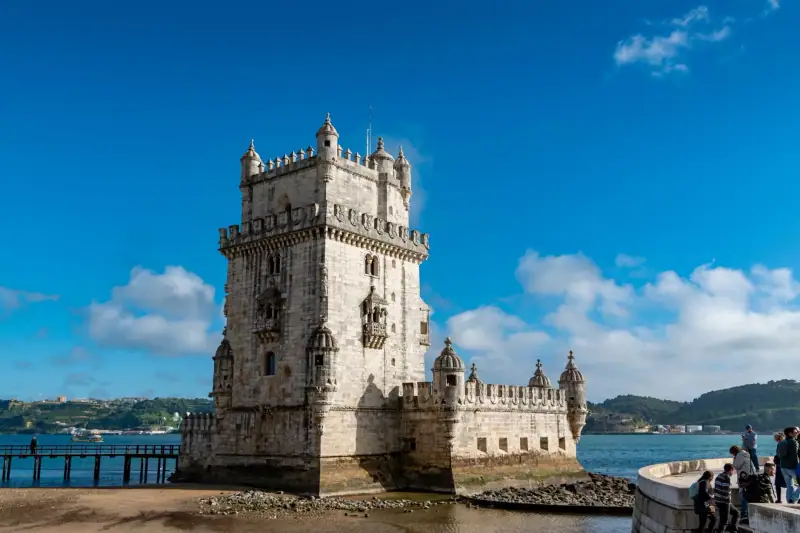
What to see around Lisbon: Belém, Cascais, Mafra and Cabo da Roca
What to see around Lisbon and Sintra: Belém, Queluz, Mafra, Cabo da Roca, Cascais and Estoril. Transport, durations and ideas for combining stops.
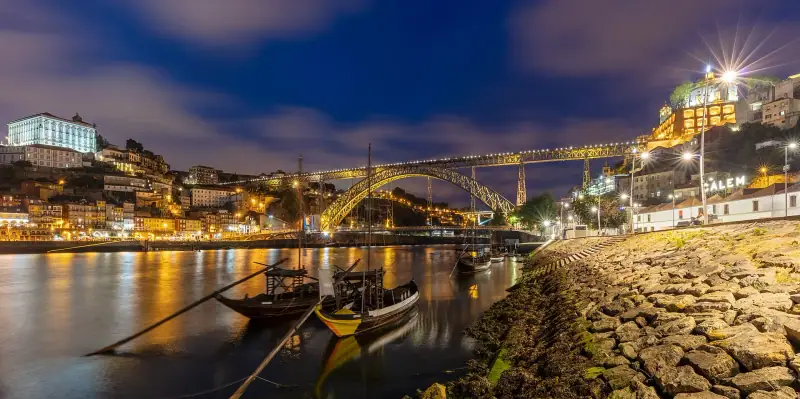
What to see in the Porto and Douro region: towns, vineyards and valleys
What to see around Porto and in the Douro Valley: Guimarães, Braga, Amarante, Viana do Castelo, Pinhão. Distances, transport and ideas for combining stops.
Ready-made
Portugal itineraries
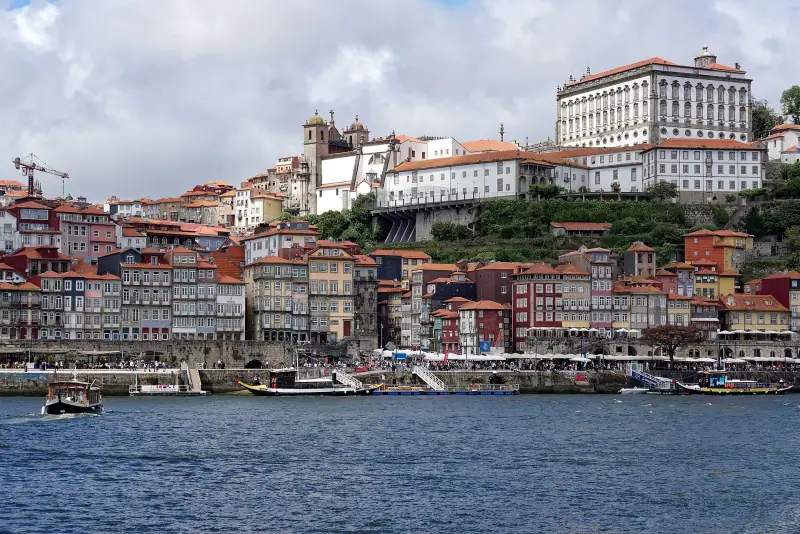
3 days
Porto in 3 days: a day-by-day itinerary
What to do in Porto in 3 days: Ribeira, São Bento azulejos, Gaia port cellars, Foz and a Douro Valley excursion. A relaxed day-by-day plan.
3 days
Lisbon in 3 days: day-by-day itinerary, neighborhoods and tips
What to do in Lisbon in 3 days: Baixa, Alfama, Belém, miradouros, Bairro Alto, pastéis de nata and transport tips for a relaxed stay.
1 day
Sintra in a day from Lisbon: itinerary and tips
Sintra in one day from Lisbon: train, Pena Palace, Quinta da Regaleira, Moorish Castle and old town. A realistic itinerary and tips to avoid the crowds.