What to see
What to see in the Alentejo: white villages, cork oaks and starry skies
We may earn a commission when you book through links on this page, at no extra cost to you. We don't visit or try the places we cover: we summarize published sources. How we work
In short
- Four to five days cover the essentials: Évora, Monsaraz, Estremoz or Vila Viçosa and a stop in Marvão. With a week, add Elvas, Mértola or the wild coast.
- A car is strongly recommended: Évora is well linked to Lisbon, but the hilltop villages, wine estates and coast are poorly served by public transport.
- Spring and fall are the most pleasant; summer is very hot inland, often above 35 °C (95 °F).
- The Alqueva lake area, around Monsaraz, has one of the darkest night skies in Europe and holds the Starlight Tourism Destination certification.
One or two hours from Lisbon, the Alentejo covers nearly a third of mainland Portugal and yet remains one of the least visited regions. There are no crowds here: large rolling plains covered with cork oaks and olive trees, white villages edged with a blue or yellow line, border fortresses, vineyards, an immense artificial lake and, to the west, a wild coast pounded by the Atlantic. The pace is slower, the table generous and the distances sometimes long.
This guide does not replace our detailed articles: it helps you choose and combine the stops. For the regional capital, see our guide to visiting Évora. Here we step back to build a coherent trip, distinguishing the must-sees from the more discreet getaways.
How to organize your Alentejo trip
The region is easier to understand when split into four large groups:
- Évora and its surroundings: the big heritage town, megalithic sites and wine estates.
- The eastern Alentejo and the border: Monsaraz, Lake Alqueva, Estremoz, Vila Viçosa, Elvas.
- The north, in the São Mamede hills: Marvão and Castelo de Vide, mountain villages with greener landscapes.
- The south and west: Mértola in the Guadiana valley, then the wild coast, from Comporta to Vila Nova de Milfontes.
Distances are bigger than you imagine, and the roads, often straight, cross long empty spaces. Always allow more time than your GPS shows for photo stops and lunches. To choose your dates, see our guide to when to go to Portugal, and to estimate your spending, the article on the budget for Portugal. If you rent a car, also read how to pay electronic tolls in Portugal.
Choosing a base in the Alentejo
Évora, well placed in the center of the region, makes excursions by car easy. Compare lodging by dates.
Évora: the museum-town of the Alentejo
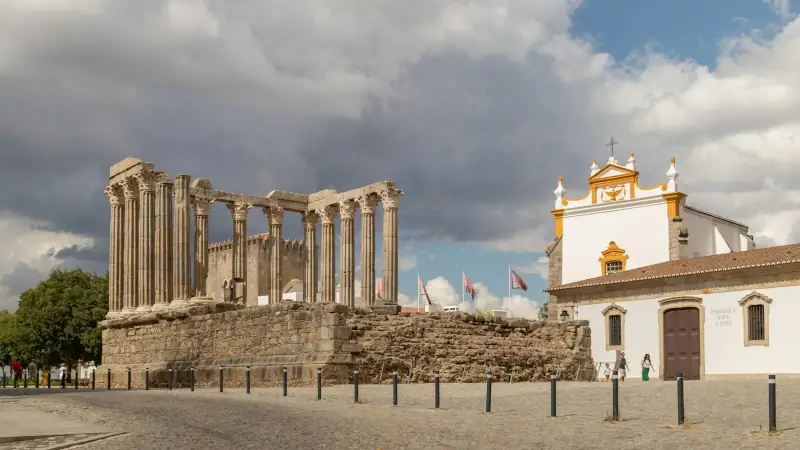
Évora’s historic center is a UNESCO World Heritage site. Surrounded by ramparts, it packs remains from every era into a few streets: the Roman temple, often called the Temple of Diana, the medieval cathedral, convents, shaded squares and white facades. The town is best explored on foot, which is a real pleasure, and it lends itself well to a quiet evening once the day-trippers have left.
Among the most striking visits, the Chapel of Bones (Capela dos Ossos), lined with human bones, impresses as much as it intrigues. The streets around Praça do Giraldo are ideal for lunch and for tasting the first specialties of the region.
Our article visiting Évora offers a detailed route, and the guide where to stay in Évora helps you choose an area. Plan at least one night in town, two if you want to branch out into the surroundings.
The megaliths around Évora
About twelve kilometers (7 mi) west of Évora, near the village of Guadalupe, the Almendres Cromlech is a large group of granite menhirs, considered one of the most important in the Iberian Peninsula. The stones, raised several millennia ago, form alignments in a setting of cork oaks. An isolated menhir stands not far away, a little over a kilometer (about 0.6 mi) off. The final access is by dirt tracks: check the condition of the tracks before you leave, especially after rain.
Monsaraz and Lake Alqueva
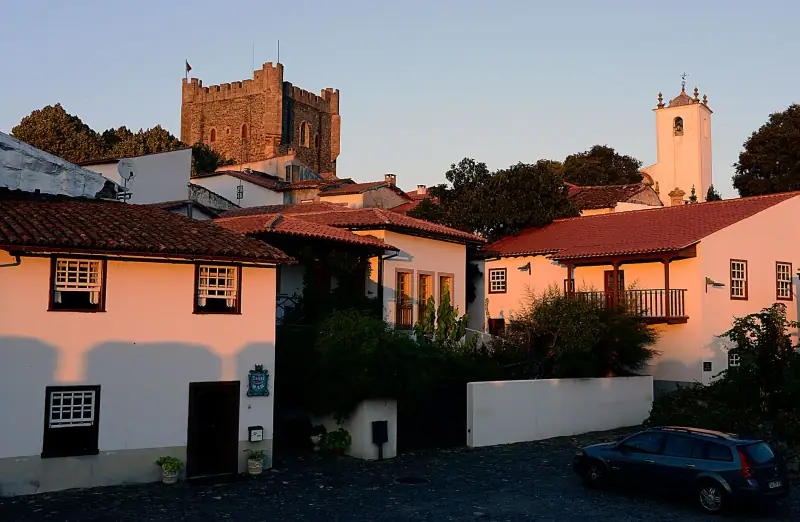
Perched on a hill above the lake, Monsaraz is a small medieval village of lime-whitewashed houses, enclosed in its ramparts. You enter through a fortified gate, stroll in tiny cobbled lanes and climb to the castle to take in the plains and the lake. The village is tiny but very photogenic: one to three hours are enough to walk it, more if you have lunch there.
Lake Alqueva, created by a large dam on the Guadiana River, is the largest artificial lake in western Europe. You discover it by boat, by kayak or simply from its shores. In summer it is a popular swimming spot, with developed river beaches in some areas. Sunset cruises are very popular.
One of the darkest skies in Europe
The Alqueva region is recognized for the quality of its night sky: it is part of a dark-sky reserve and has obtained the Starlight Tourism Destination certification. Operators offer observation evenings with telescopes and guides, sometimes at the Cumeada observatory, near Reguengos de Monsaraz. To enjoy it, choose a moonless night and book ahead. Dress warmly: even in summer, evenings can be cool in the countryside.
Estremoz and Vila Viçosa: the marble route
Northeast of Évora, Estremoz overlooks the plain from its high fortified town. The local marble, of a dazzling white, adorns the streets, fountains and facades. The town is best known for its big Saturday market, held on the vast Rossio square and mixing farm produce, crafts and flea-market goods. It is an excellent occasion to taste the region’s cheeses and cured meats.
About twenty minutes by road, Vila Viçosa was the seat of the House of Braganza. Its imposing ducal palace overlooks the main square, and the marble quarries in the surroundings explain the presence of the material everywhere: sidewalks, thresholds, benches. You can cover the small town at a calm pace in half a day. The two stops combine easily into one day, with lunch in one or the other.
Elvas: a listed border fortress
Near the Spanish border, Elvas is a garrison town whose fortification system has been a UNESCO World Heritage site since 2012. Its star-shaped ramparts, dry moats, forts and long Amoreira Aqueduct tell of centuries of conflict between Portugal and its neighbor. You can walk on the ramparts, climb toward the forts that overlook the town and get lost in the historic center, livelier than you might imagine.
Allow half a day to a day. Elvas is roughly an hour’s drive from Évora: a logical stop if you enter or leave the country via Spain.
Excursions and tastings in the Alentejo
Guided tours, wine estates, stargazing: compare the activities offered in the region.
Marvão and Castelo de Vide: the Alentejo mountains
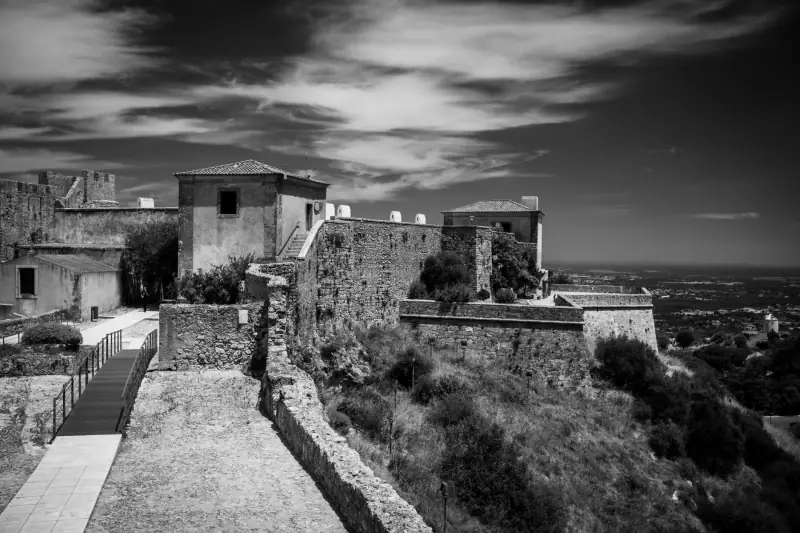
In the north of the region, the Serra de São Mamede natural park changes the scenery radically: wooded hills, chestnut trees, oaks and very open views. Marvão, perched at about 860 m (2,820 ft) near the border, is one of the most spectacular fortified villages in the country. Its white houses cling to a rocky spur, and the castle offers a panorama over the Portuguese and Spanish plains. The village is calm, except at midday in high season.
About twenty minutes by road, Castelo de Vide charms with its old Jewish quarter, the Judiaria, its white lanes and fountains. The small town is known for its cool spring water and its gardens. Together, these two villages deserve a full day, and a night there lets you enjoy the cool evenings at altitude.
Mountain roads are winding and the streets of these villages narrow: park at the entrance and finish on foot.
Mértola: the village on the Guadiana
In the south, on the banks of the Guadiana, Mértola is a small town with an exceptional past. A major river port in Roman and then Muslim times, it keeps from that period a mosque turned into a church, archaeological remains and a museum spread over several sites. Perched on its hill, with its castle and white lanes, it offers a very quiet setting.
It lies in the Guadiana Valley natural park, a wild and sparsely populated region, ideal for nature lovers and birdwatchers. The remoteness is real: allow several hours of driving from Lisbon, and plan to stay overnight so you do not have to leave too quickly. It is a great stop for those who like out-of-the-way places.
The Alentejo coast: wild beaches and cliffs
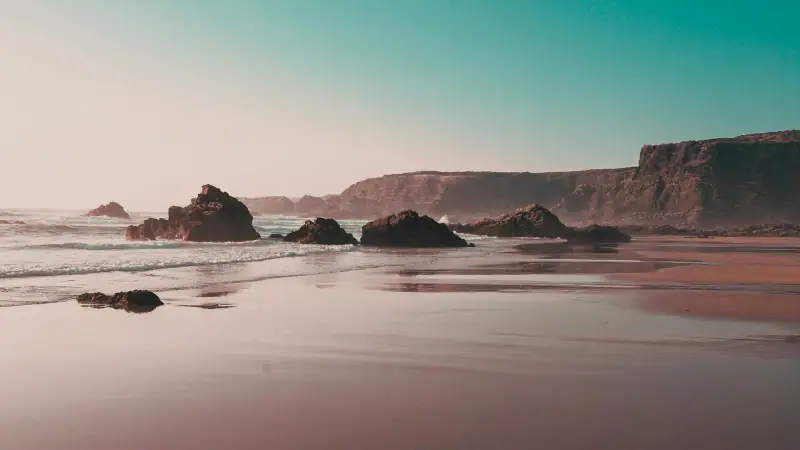
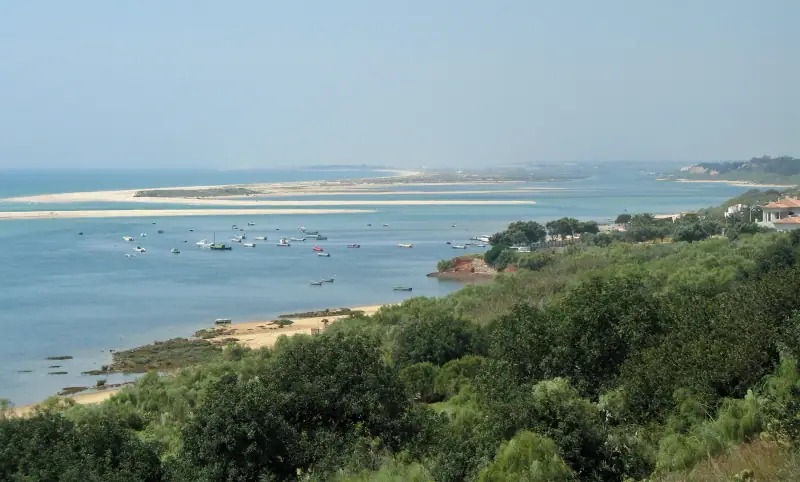
South of the Tróia peninsula, the Alentejo coast is much wilder than that of its neighbors. In the Comporta area, long beaches of pale sand lined with dunes and rice fields alternate with pine groves. The atmosphere is chic and relaxed, with beach restaurants and boutique lodgings, often more expensive than in the rest of the region.
Further south, the Southwest Alentejo and Vicentine Coast Natural Park protects high cliffs, wild coves and fishing villages such as Vila Nova de Milfontes, set at the mouth of the Mira River. The Rota Vicentina trail network follows the coast and allows fine day hikes. Be careful with the Atlantic: the water stays cool all year, currents can be strong, and waves can surprise you. Respect the supervised swimming areas.
Rent a car to crisscross the Alentejo
Hilltop villages, estates and wild coast: compare rental companies by dates.
Wine, cork and food
The Alentejo is one of Portugal’s great wine regions, with generous reds and increasingly refined whites. Many estates welcome visitors for tastings, sometimes with lunch. Book ahead, especially in season, and choose a designated driver: country roads are long and poorly lit.
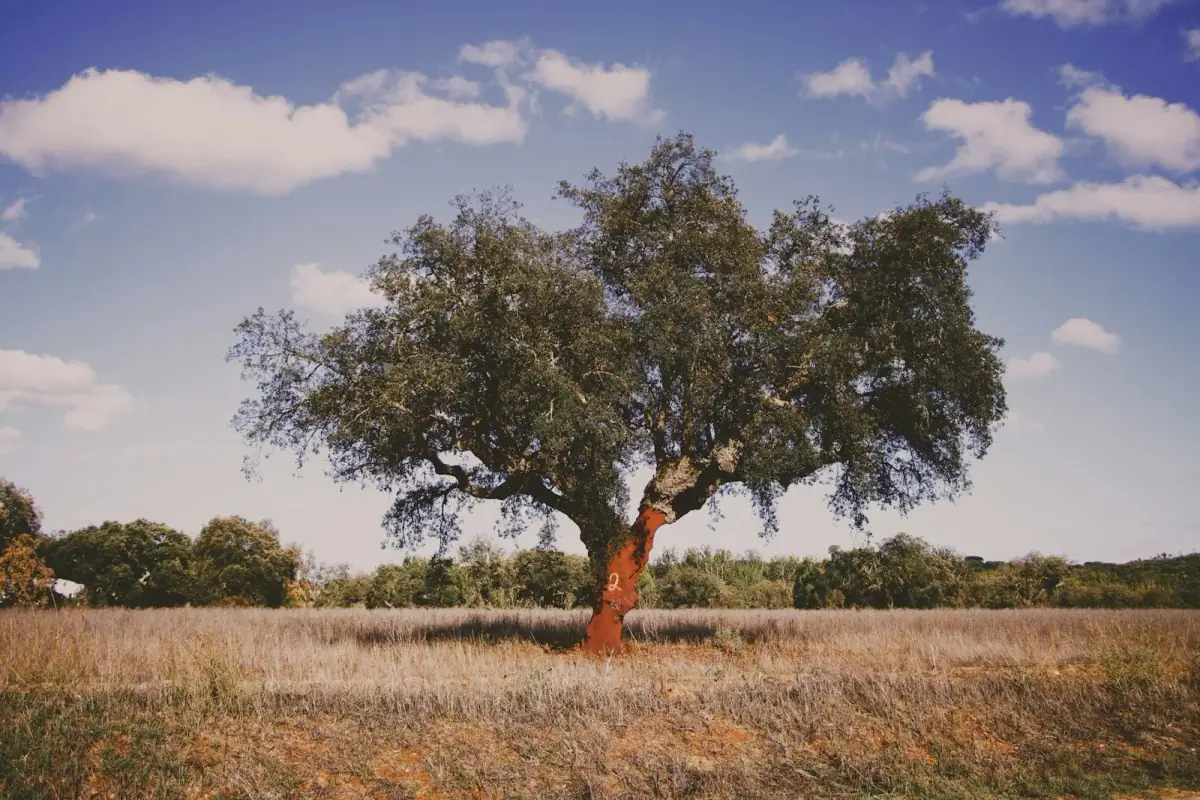
Another symbol of the landscape, the cork oak: Portugal is one of the world’s leading cork producers, and the open woodlands of the Alentejo (the montado) are among the best places to see it. The bark is harvested by hand, on a cycle of several years, and freshly stripped trunks take on an orange tint very visible in the countryside.
At the table, the cooking is rustic and generous. You find in particular:
- Black pork (porco preto): free-range pork, often grilled or cured.
- Açorda: a soup of bread, garlic and cilantro, sometimes topped with a poached egg.
- Sheep’s cheeses: creamy or dry, often served with bread and olives.
- Convent pastries: eggs, sugar and almonds, to enjoy with a coffee.
To spot the dishes better, see our guide to what to eat in Portugal. Also keep in mind the small starters placed on the table: you are charged for them if you eat them, as our article on the cover charge at restaurants explains.
Three ways to combine these stops
Here are three routes to adapt to your length of stay. Each stays well under 200 km (124 mi) of driving per day, but you need a car.
Option 1: three “essentials” days
A day and a half in Évora with the megaliths, then Monsaraz and Lake Alqueva with a night of stargazing if the sky allows. It is the simplest option from Lisbon.
Option 2: five “villages and fortresses” days
Take the previous program and add Estremoz and Vila Viçosa, then Elvas. Finish with a night in Marvão or Castelo de Vide before heading north or reaching the Spanish border. The drives are short and the pace stays relaxed.
Option 3: seven days “from the heart of the plain to the sea”
Complete with a stop in Mértola, then reach the Vicentine Coast for two days of beaches and hiking. It is the best way to feel the diversity of the region. A spare day avoids rushing.
If you want to extend the trip north, our guide to the Central region of Portugal naturally continues this route, as does the one on the Lisbon, Sintra, Cascais and Mafra region for arriving via the capital.
Budget and practical tips
The Alentejo is generally more affordable than Lisbon, especially for lodging and dining outside tourist centers. The main expenses are nights, meals, the car and a few monument entries. Sites charge admission, sometimes with reduced rates: check their official sites before you go.
A few useful habits:
- Avoid the height of summer if you fear the heat: visit early in the morning and keep the hot hours for swimming or a nap.
- Fill up before heading onto the long country roads: gas stations are rarer inland.
- Book ahead for boutique lodging and tastings, especially in spring and fall.
- Bring water and a hat: shade is rare on the plains.
- Keep a little cash for small village shops, which do not always accept cards.
- Check opening hours: many restaurants close one day a week or between services, and small museums have short hours.
Our recommendation for planning the region
If you are still hesitating, here is a simple rule. For three or four days, concentrate on Évora, Monsaraz and Lake Alqueva. For a week, add the northern villages, Elvas or Mértola, and finish with the coast. Beyond that, you will have time to extend toward central Portugal or continue south.
The Alentejo rewards those who slow down: lunch in the shade of a cork oak, an evening watching the stars, a glass of local wine in front of a white village at sunset. Do not try to tick everything off, and leave room for the unexpected.
Sources
Frequently asked questions
How many days should you plan to visit the Alentejo?
Four to five days let you see the essentials: Évora, Monsaraz, Estremoz or Vila Viçosa and a stop in Marvão. With a week, you add Elvas, Mértola or the wild coast without rushing. In two days, concentrate on Évora and a village like Monsaraz.
Do you need a car to visit the Alentejo?
Yes, it is strongly recommended. Évora is well linked to Lisbon by train and bus, but the hilltop villages, wine estates and the coast are poorly served by public transport. With a car, you gain freedom and time.
What is the best time to visit the Alentejo?
Spring and fall are the most pleasant: mild temperatures, green countryside in spring, harvest and golden light in fall. Summer is very hot inland, with temperatures often above 35 °C (95 °F). Our guide to the ideal time to go to Portugal covers the climate.
Can you visit the Alentejo from Lisbon in one day?
It is possible for Évora, reachable in about an hour and a half by road from the capital, but the day will be short. It is better to stay overnight in Évora to enjoy the town in the evening and branch out to a village the next day.
Where can you stargaze in the Alentejo?
The Alqueva lake region, around Monsaraz, enjoys one of the darkest skies in Europe and has received the Starlight Tourism Destination certification. Observation activities are offered by local operators. Check schedules and book ahead, especially in summer.
Is the Alentejo suitable for children?
Yes, as long as you do not pile up visits. Castles, ramparts, coastal beaches and boat rides on the lake appeal to children. Plan breaks and water, as the heat can be intense in summer.
Is the Alentejo cheaper than Lisbon?
In general, yes, especially for dining and lodging outside the most touristy centers. Set-menu lunches in village restaurants remain affordable. Our article on the budget for Portugal gives an overview of expenses.
More Portugal guides
Keep reading
What to see in Central Portugal: monasteries, schist villages and coast
What to see in central Portugal: Coimbra, Aveiro, Nazaré, Tomar, Batalha, Alcobaça, Serra da Estrela and schist villages. Distances and route ideas.
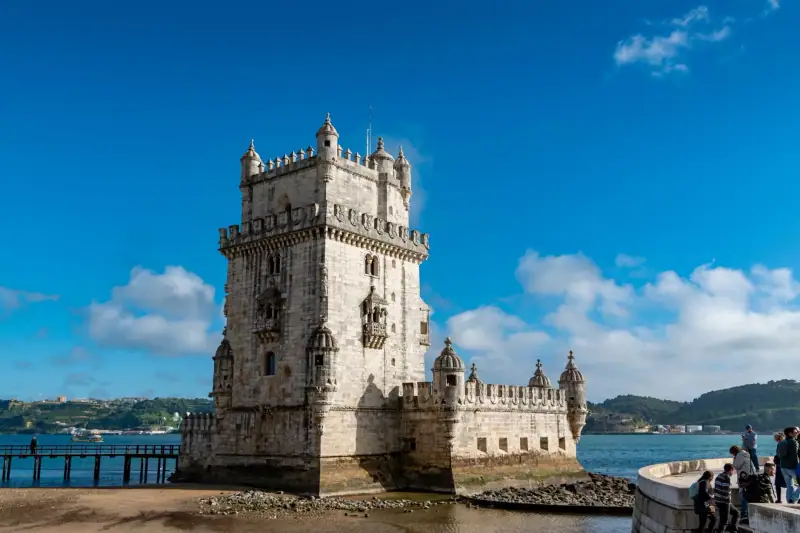
What to see around Lisbon: Belém, Cascais, Mafra and Cabo da Roca
What to see around Lisbon and Sintra: Belém, Queluz, Mafra, Cabo da Roca, Cascais and Estoril. Transport, durations and ideas for combining stops.
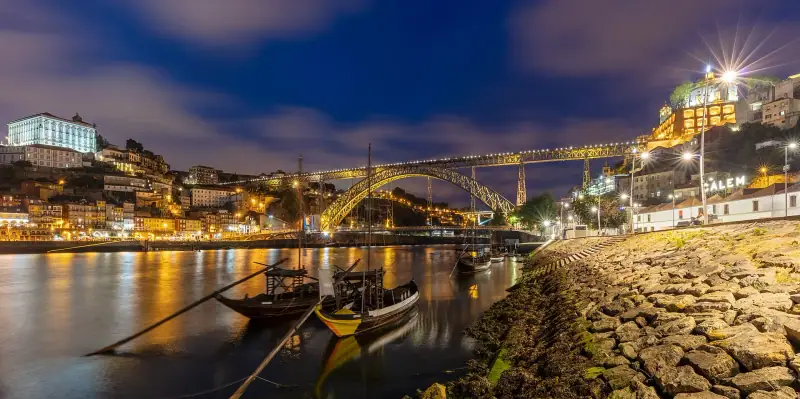
What to see in the Porto and Douro region: towns, vineyards and valleys
What to see around Porto and in the Douro Valley: Guimarães, Braga, Amarante, Viana do Castelo, Pinhão. Distances, transport and ideas for combining stops.
Ready-made
Portugal itineraries
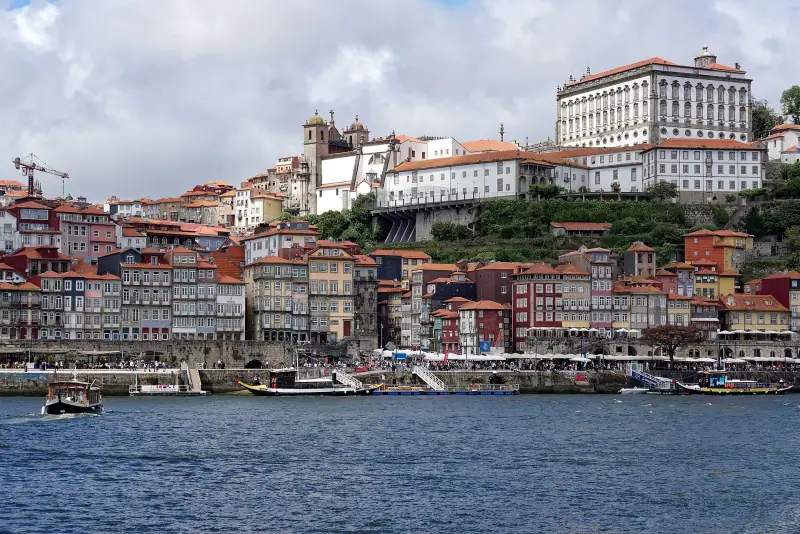
3 days
Porto in 3 days: a day-by-day itinerary
What to do in Porto in 3 days: Ribeira, São Bento azulejos, Gaia port cellars, Foz and a Douro Valley excursion. A relaxed day-by-day plan.
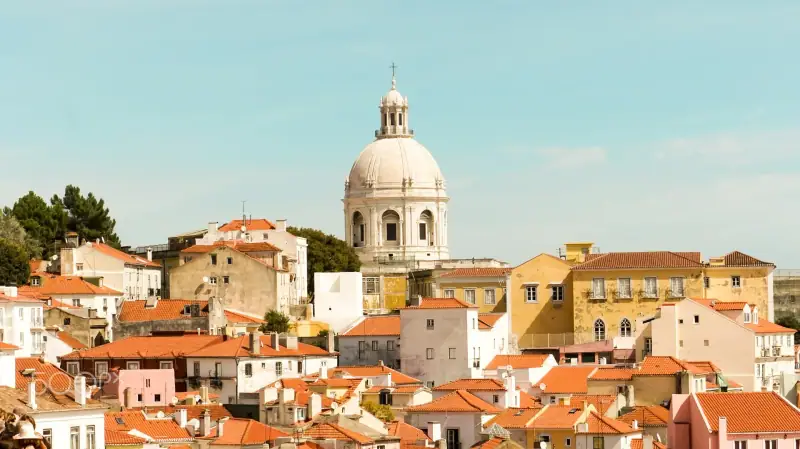
3 days
Lisbon in 3 days: day-by-day itinerary, neighborhoods and tips
What to do in Lisbon in 3 days: Baixa, Alfama, Belém, miradouros, Bairro Alto, pastéis de nata and transport tips for a relaxed stay.
1 day
Sintra in a day from Lisbon: itinerary and tips
Sintra in one day from Lisbon: train, Pena Palace, Quinta da Regaleira, Moorish Castle and old town. A realistic itinerary and tips to avoid the crowds.