Itineraries
Algarve Road Trip: A 7-Day Itinerary from East to West
We may earn a commission when you book through links on this page, at no extra cost to you. We don't visit or try the places we cover: we summarize published sources. How we work
Day by day
- Day 1Faro old town and the Ria Formosa
- Day 2Tavira, Tavira Island and Cacela Velha
- Day 3Albufeira, then Carvoeiro and its cliff trails
- Day 4Benagil Cave and the Barlavento cliffs, optional Silves
- Day 5Lagos old town and Ponta da Piedade
- Day 6Sagres fortress and Cape St. Vincent
- Day 7Drive back to Faro Airport
Estimated budget
$350 – $570 per person (€320 – €520)
For 2 travelers sharing a double room and a rental car, with mid-range lodging. Total without car rental, fuel and tolls: no checked price yet.
| Item | Per person |
|---|---|
| Lodging | $220 – $340 |
| Paid visits | $130 – $230 |
Not included: international flights, meals and insurance.
Weather through the year on this route
| Jan | Feb | Mar | Apr | May | Jun | Jul | Aug | Sep | Oct | Nov | Dec | |
|---|---|---|---|---|---|---|---|---|---|---|---|---|
| High °F (°C) | 5915 | 6116 | 6317 | 6619 | 7222 | 7725 | 8228 | 8228 | 7725 | 7222 | 6619 | 6116 |
| Low °F (°C) | 5211 | 5211 | 5412 | 5513 | 5915 | 6418 | 6619 | 6820 | 6619 | 6317 | 5714 | 5412 |
| Rain in (mm) | 2.255 | 2.050 | 2.460 | 2.255 | 1.435 | 0.25 | 0.00 | 0.25 | 0.820 | 2.665 | 3.385 | 3.385 |
Normals 1991–2020 at Faro: averages over 30 years, not a forecast. Source: NASA POWER (MERRA-2), grid of about 50 km. Figures computed by us in November 2026.
In short
- Seven days cover the whole coast from east to west, Faro to Sagres, with about 150 km (93 mi) of coastline and no day over roughly 100 km (62 mi).
- The itinerary uses only a few overnight bases (Tavira, Carvoeiro or Lagos, then Sagres) so you do not repack every morning.
- A small rental car is enough; the A22 motorway links east and west, and its electronic toll should be checked when you pick up the car.
- Sagres to Faro Airport takes about 1 h 30 to 2 h on the last day: leave a comfortable margin before your flight.
The Algarve is ideal for a road trip: about 150 km (93 mi) of coast, a motorway running through it, and a succession of very different landscapes, from the barrier islands of the east to the cliffs of the west. In a week, you can travel its whole length without spending your days at the wheel. This 7-day itinerary goes from Faro to Sagres, with short stages, days that leave time for swimming, and only a few overnight bases so you do not repack every morning.
Distances remain modest: no day exceeds about 100 km (62 mi), which leaves room for photo stops, relaxed meals and detours.
Before you go: organization and driving conditions
Faro Airport is the natural gateway to the route. If you arrive via Lisbon or Porto, allow several hours by road or train to reach the coast: it is then better to plan an extra transit day.
Flights to the Algarve
Compare flights to Faro, the starting point of this itinerary.
A few practical benchmarks:
- Car: a small city car is enough. The roads along the cliffs and in the villages are sometimes narrow, and parking is easier with a compact vehicle.
- Motorway: the A22 links the east and west of the region. When you pick up the vehicle, check how the electronic toll works, as it is paid differently from classic tolls.
- Parking: in summer, arrive early at popular beaches or choose those with a large car park.
- Overnight bases: Tavira, Carvoeiro or Lagos, then Sagres. To compare the areas, see our guide where to stay in the Algarve.
Book the rental car at the same time as your flight, especially in high season.
Day 1: Faro and the Ria Formosa
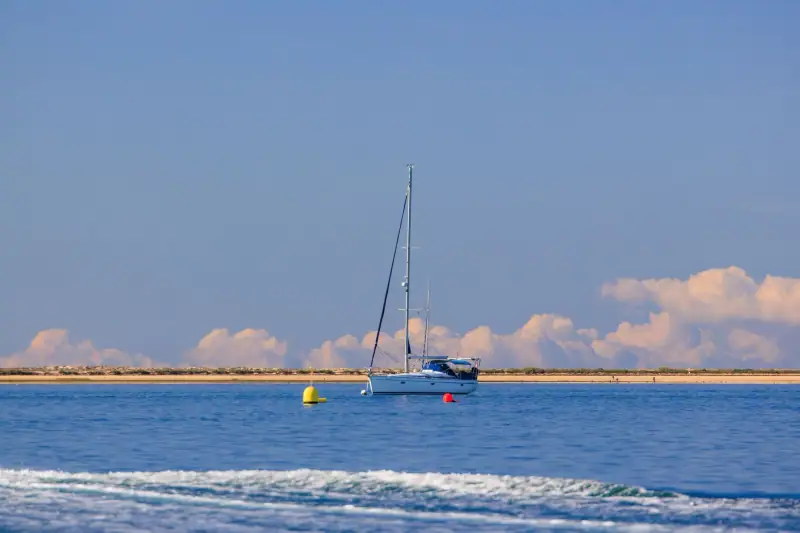
After picking up your car at the airport, take time for a quiet first day in Faro. The walled old town can be visited on foot in a few hours: cobbled lanes, small squares, the cathedral and a view over the lagoon. It is a good way to settle into the rhythm before hitting the road.
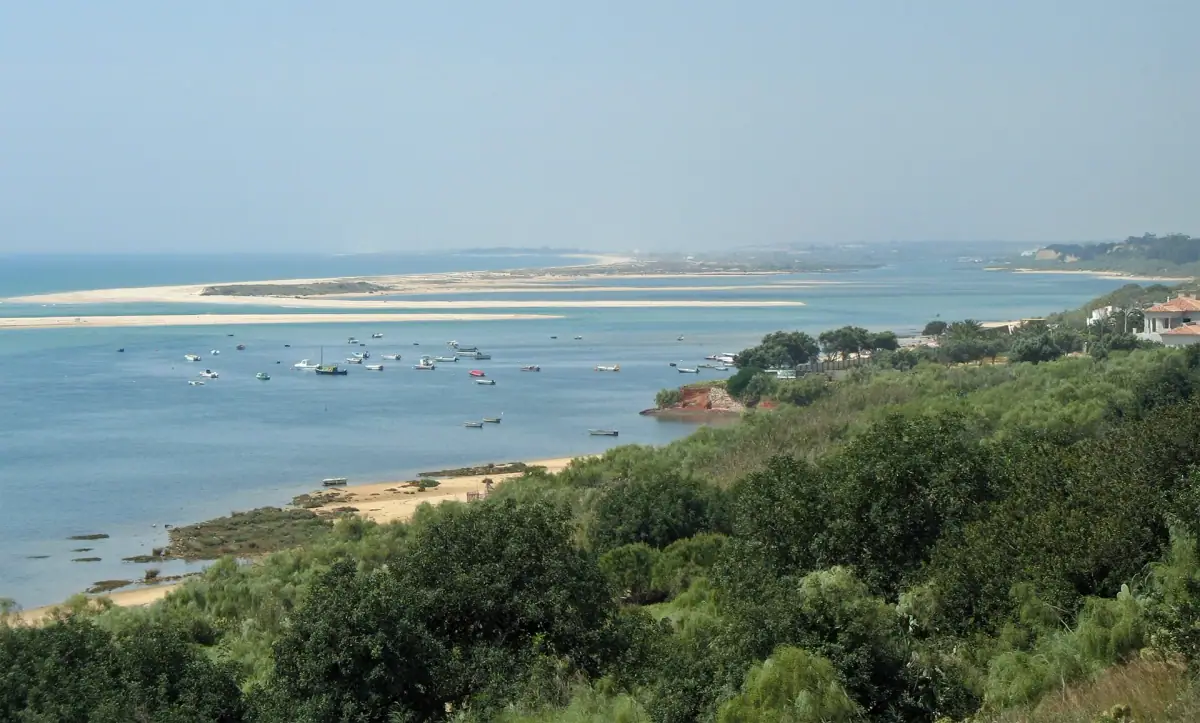
The Ria Formosa, the protected lagoon that borders this whole part of the coast, begins at the edge of town. Shuttle boats serve the sandy barrier islands, ideal for a first swim in late afternoon if your flight schedule allows. If you land late, settle for an evening stroll and dinner in the center.
For this first night, two options: sleep in Faro itself, handy if you arrive late, or go straight to Tavira, about 30 km (19 mi) east, to get into the Sotavento mood right away.
Day 2: Tavira, Cacela Velha and Tavira Island
The second day is devoted to the east of the region, the quietest. Tavira is often cited among the prettiest towns in the Algarve: white lanes, tiled roofs, the Gilão River crossed by a Roman-style bridge, and many churches. Allow a morning to wander the center.
In the afternoon, take a shuttle boat to Tavira Island, a long strip of sand facing the lagoon, or continue by car to Cacela Velha, a small white village perched above the Ria Formosa, a few kilometers east of Tavira. This area is detailed in our guide to visiting Tavira and the Ria Formosa.
Places to stay in Tavira
Guesthouses, apartments and boutique hotels: compare for your dates.
If you want to go further, a second night in Tavira lets you spend the next day at the beach without getting back in the car. Otherwise, leave the next morning for the west.
Day 3: Albufeira and the central coast to Carvoeiro
The road between Tavira and Carvoeiro is about 100 km (62 mi), a little over an hour of driving without stops, but it is better done with stops. Albufeira is roughly halfway: its old town and its beaches at the foot of the cliffs deserve a break, even if the resort’s liveliness will not please everyone. A walk and a lunch are enough to get an idea.
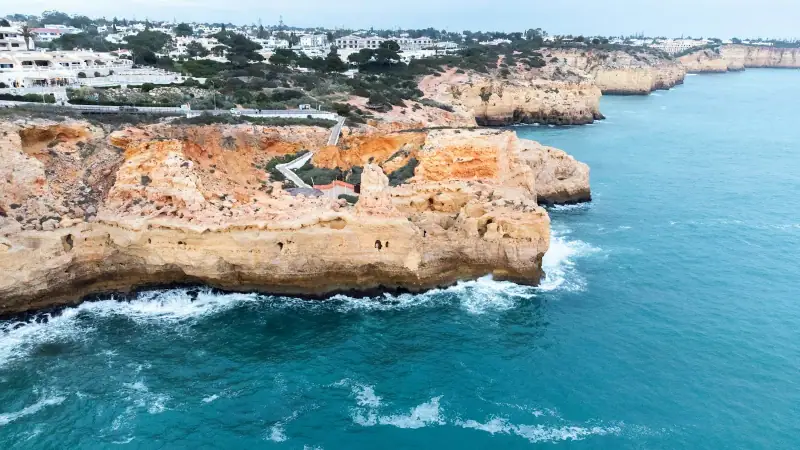
Then continue to Carvoeiro, a small, low-key resort about 25 km (16 mi) from Albufeira. Its beach tucked between cliffs is one of the most photographed in the region. Settle in, then enjoy the end of the afternoon walking along the coast: cliff trails let you discover coves and rock formations around the town.
Carvoeiro will be your base for the next two nights. It is a good compromise: quiet in the evening, close to the best-known sights, and about thirty kilometers (19 mi) from Lagos.
Day 4: Benagil and the cliffs of the Barlavento
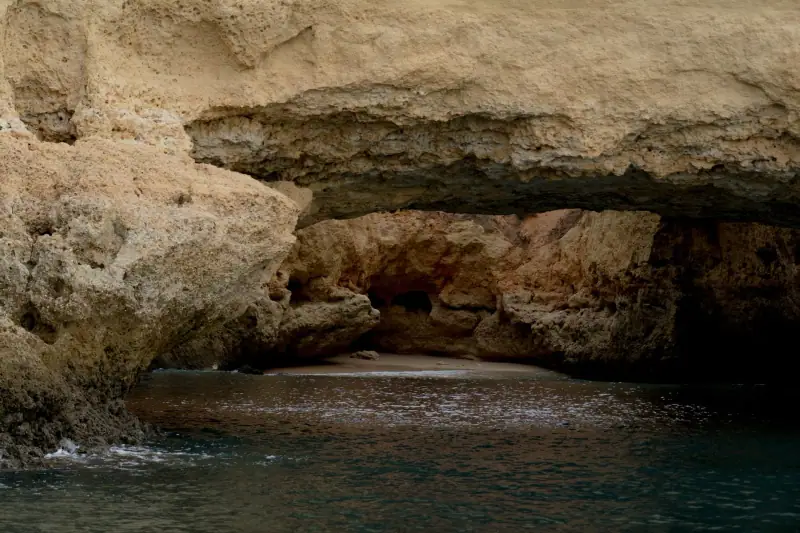
The fourth day is the day of the cliffs. Benagil Cave is the most famous site on the coast, with its vault open to the sky. You reach it by boat, kayak or paddleboard from several neighboring beaches, depending on your preferences and the weather. Sea conditions decide everything: see the detail of access, rules and options in our guide to visiting Benagil Cave.
Ideally, book a trip early in the morning: the sea is calmer and the site less crowded.
Boat trips to Benagil
Compare boat and kayak trips along the cliffs of the Algarve.
In the afternoon, stay in the area: Carvoeiro’s beaches, small neighboring coves or, if you feel like a bit of history, a visit to Silves, the former capital of the region in Moorish times, inland about twenty kilometers (12 mi) away. Its red sandstone castle overlooks the town and can be seen from afar. Allow two to three hours for the visit.
Day 5: Lagos, Ponta da Piedade and its coves
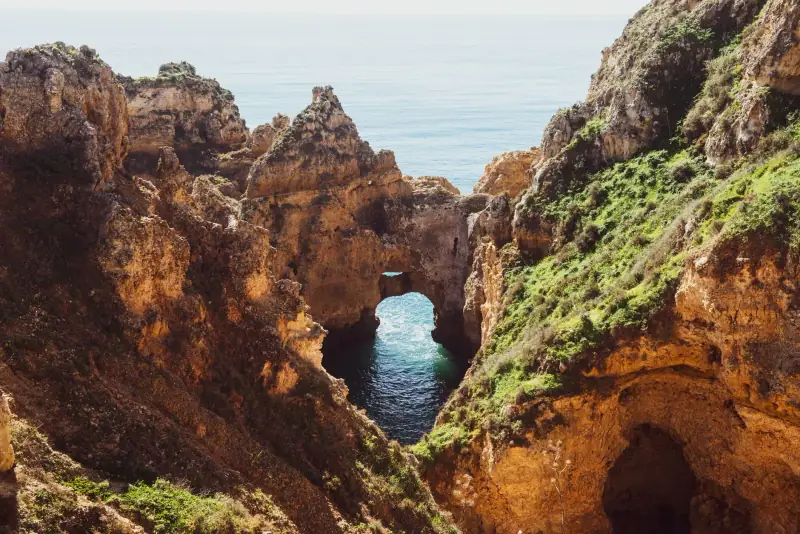
Between Carvoeiro and Lagos, allow about 35 km (22 mi). The center of Lagos, partly surrounded by walls, deserves a morning: pedestrian streets, small squares, churches and a seaside-town atmosphere. The afternoon is devoted to Ponta da Piedade, south of town: a set of cliffs, arches and rocks sculpted by the sea, discovered on foot from the viewpoints or by boat from the harbor.
The beaches of Lagos have a reputation for being among the most spectacular in the Algarve, with coves framed by ocher cliffs. For a detailed selection, see our article on the most beautiful beaches in the Algarve.
For the night, two choices: stay in Carvoeiro and make the round trip, or change base and sleep in Lagos, which offers more places and livelier nightlife. If you stay in Lagos, you will save time the next day, since Sagres is only about 35 km (22 mi) away.
Day 6: Sagres, Cape St. Vincent and the wild coast
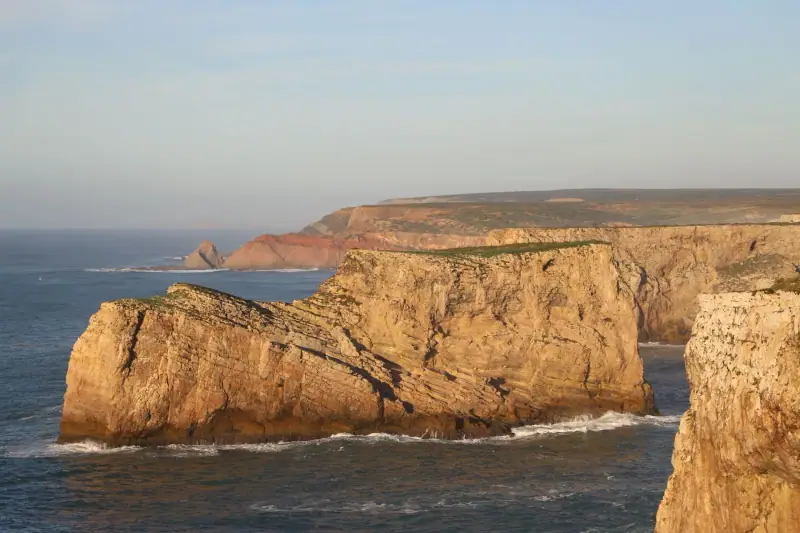
The road between Lagos and Sagres crosses a landscape that changes gradually: the coast becomes more open, windier, and the scenery wilder. Sagres is a small village at the end of mainland Portugal, known to surfers and hikers. Its fortress, set on a headland facing the ocean, can be visited and offers a wide view over the Atlantic.
A few kilometers further, Cape St. Vincent, with its lighthouse, is the south-western tip of mainland Europe. The sunset draws crowds there in season: arrive early to find a spot and bring a windbreaker, as wind is frequent and the temperature cooler than on the south coast.
Places to stay in Sagres
Hostels, guesthouses and small hotels near Cape St. Vincent.
If you like hiking, the Costa Vicentina, which extends the coast to the north, offers spectacular cliff trails. A single day is not enough to discover it: if time is short, settle for a short walk around Sagres and keep the rest for another trip.
Day 7: back to Faro
The last day is the return. Allow about 1 h 30 to 2 h of driving between Sagres and Faro Airport, depending on traffic and any stop. Plan a comfortable margin before your flight, especially in high season, when roads are busier and returning the car can take time.
If your flight is late in the day, you can treat yourself to a last swim or a lunch in Lagos or Portimão, on the way. Otherwise, leave early to avoid stress.
Adapting the itinerary to your stay
This itinerary adapts easily.
- 5 days: drop day 1 by sleeping directly in Tavira, and merge days 4 and 5 into a single day around Lagos and Benagil.
- 10 days: add a beach day in Tavira, an extra night in Lagos, and an excursion inland, for example to Silves or the Monchique area.
- With family: favor sandy beaches with calm water, like those of the Sotavento, and limit stops to one a day.
- On a small budget: aim for spring or fall, choose apartments with a kitchen and eat in small neighborhood restaurants. Our guide to eating in the Algarve details the specialties to try along the way.
Tips for a successful road trip
- Book your accommodation in advance, especially from June to September: the good places go fast.
- Avoid late starts: in summer, beaches fill up quickly and parking is difficult.
- Keep some margin: a road trip day is not a race. An unplanned detour is often worth more than an overloaded schedule.
- Respect the cliffs: stay on marked trails, especially near the edges, which can be unstable.
- Mind the sun and wind: sunscreen, water and a windbreaker remain useful all year.
Frequently asked questions
How many days do you need for an Algarve road trip?
Seven days let you travel the whole coast from east to west without rushing, with time for the beach. With five days, you have to skip the inland area or a stop; with ten days, you can add the Costa Vicentina and rest days.
Which direction should you drive the Algarve?
East to west is a good choice: you arrive in Faro, start with the quiet Sotavento, then build up to the cliffs of Lagos and the end of the world at Sagres. The reverse also works if you land in Faro and want to reach the west first.
Do you need to change hotels every night?
No, and it is not recommended. The Algarve is compact: two or three bases are enough, for example Tavira, Carvoeiro or Lagos, then possibly Sagres. This avoids repacking every morning.
Are the roads of the Algarve easy to drive?
Yes, on the whole. The A22 motorway runs along the coast and the national roads are in good condition. Access to the coves is sometimes by dirt tracks or narrow roads, and parking is difficult in summer near the best-known beaches.
Can you do this route without a car?
Only in part. The train serves several coastal towns, but not the coves or the isolated villages. For this road trip, a rental car remains by far the most practical solution.
What is the best time for this road trip?
Spring and fall are the most pleasant: mild temperatures, fewer people and cheaper accommodation. In July and August, the coast is very busy and you need to book far in advance.
More Algarve guides
Keep reading
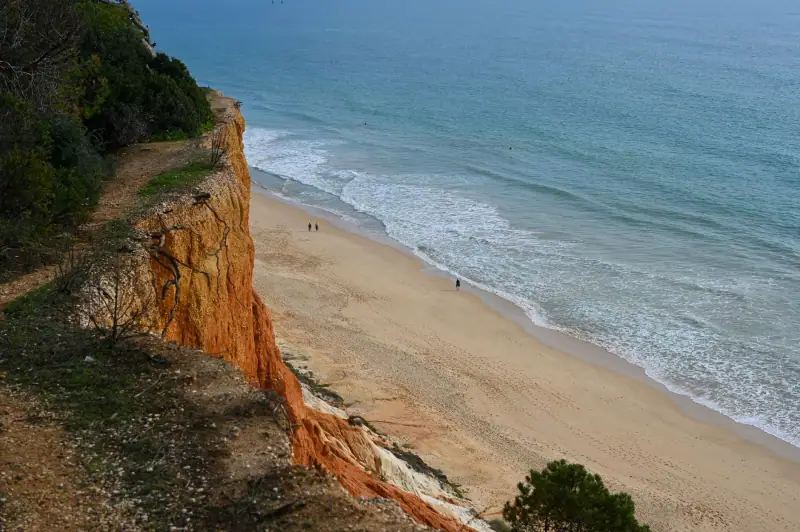
Algarve Trip Budget: Real Costs and 3 Priced Traveler Profiles
What budget for the Algarve? Real costs by item (stay, transport, meals, activities), three priced profiles and tips to spend less.
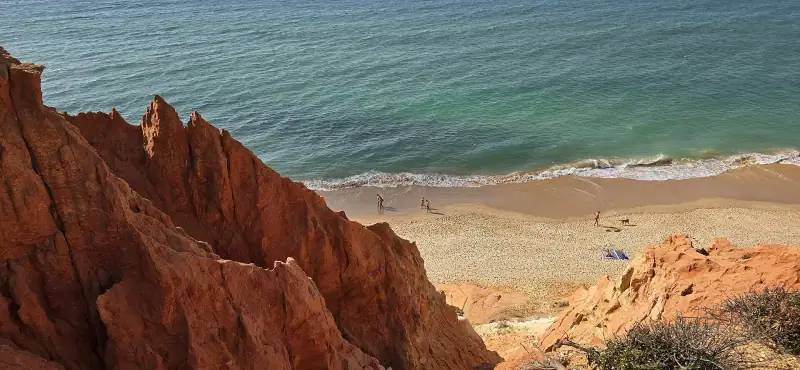
The Most Beautiful Beaches in the Algarve: A Selection by Area
The best beaches in the Algarve: Lagos coves, Carvoeiro cliffs, Ria Formosa islands and the wild west coast. Where to go depending on what you want.
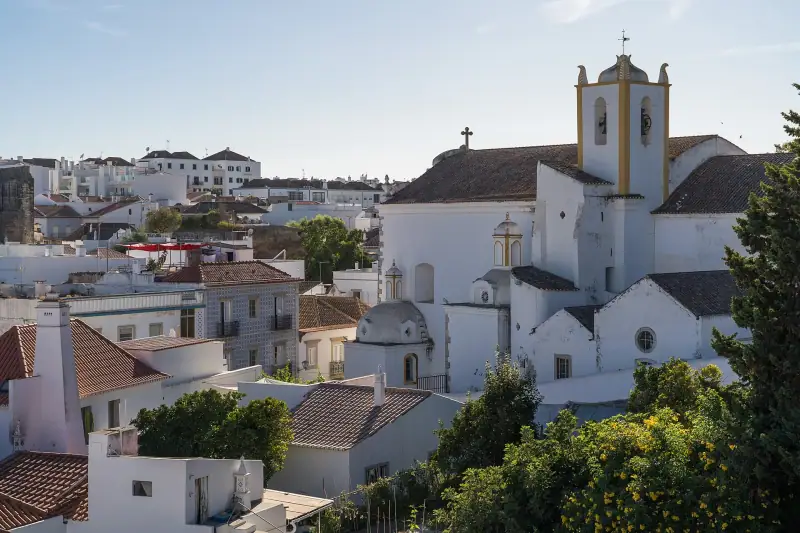
Visiting Tavira and the Ria Formosa: What to See and Do in 2 Days
What to see in Tavira and the Ria Formosa? Historic center, bridge, barrier islands, Cacela Velha and practical tips to plan your visit in the Algarve.
Ready-made
Algarve itineraries
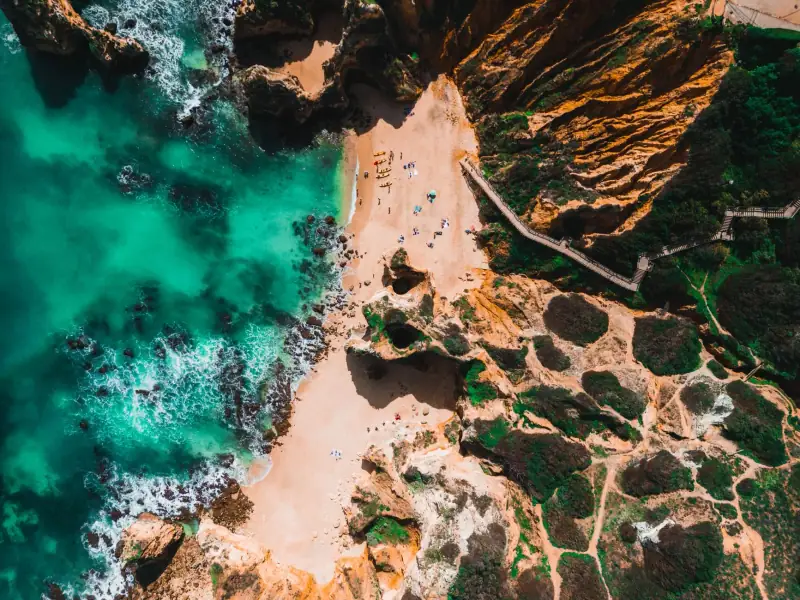
3 days
4 days