What to see
Visiting Tavira and the Ria Formosa: What to See and Do in 2 Days
We may earn a commission when you book through links on this page, at no extra cost to you. We don't visit or try the places we cover: we summarize published sources. How we work
In short
- Half a day is enough for Tavira's historic center; a full day adds Tavira Island, and two days add a Ria Formosa boat trip and Cacela Velha.
- Tavira is about 30 km (19 mi) east of Faro, reached by train, bus or car in roughly 30 to 45 minutes.
- Tavira Island is reached only by boat, with shuttles from the Quatro Águas area and Santa Luzia; always check the time of the last return.
- Spring and early fall are pleasant with milder temperatures and fewer people; summer is better for swimming but busier.
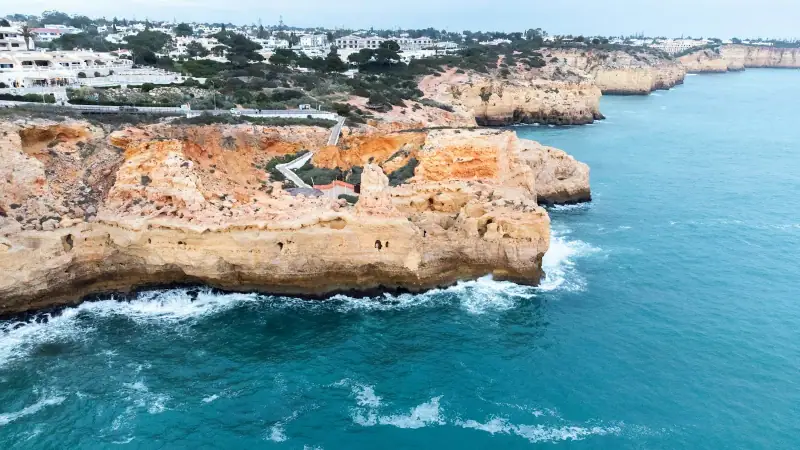
In the east of the Algarve, the scenery changes. The ocher cliffs and coves of the west give way to a lagoon, sand islands and a small white town spread on both sides of a river. Tavira, in the Sotavento, is often cited among the prettiest towns in the region. It remains quieter than the big seaside resorts, and that is precisely what people like. This guide helps you plan a visit to Tavira and the Ria Formosa: what to see, how to reach the islands, and how to combine it all over one or two days.
Tavira: what to see in the historic center
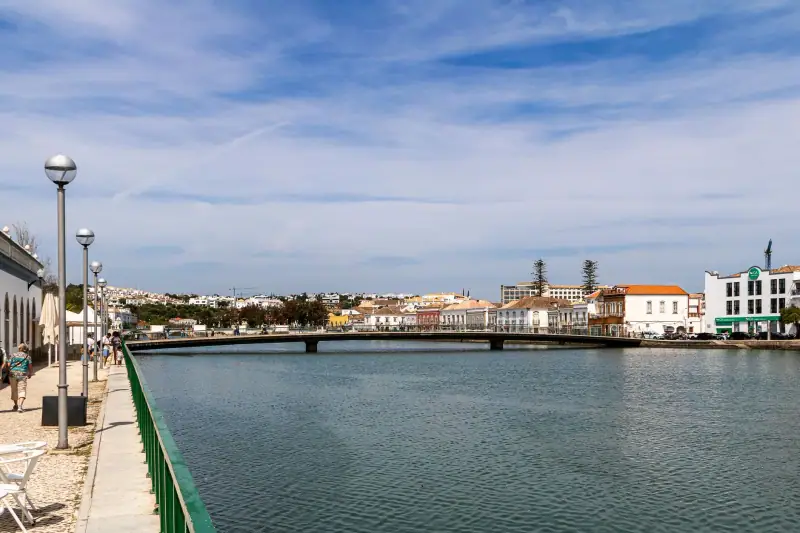
Tavira is discovered on foot. The Gilão River crosses the town and splits it into two banks linked by an old pedestrian bridge, commonly called the “Roman bridge”. Its name recalls its ancient origins, even though the structure has been reworked over the centuries. It is one of the most photographed spots in town, especially late in the day, when the light turns the facades golden.
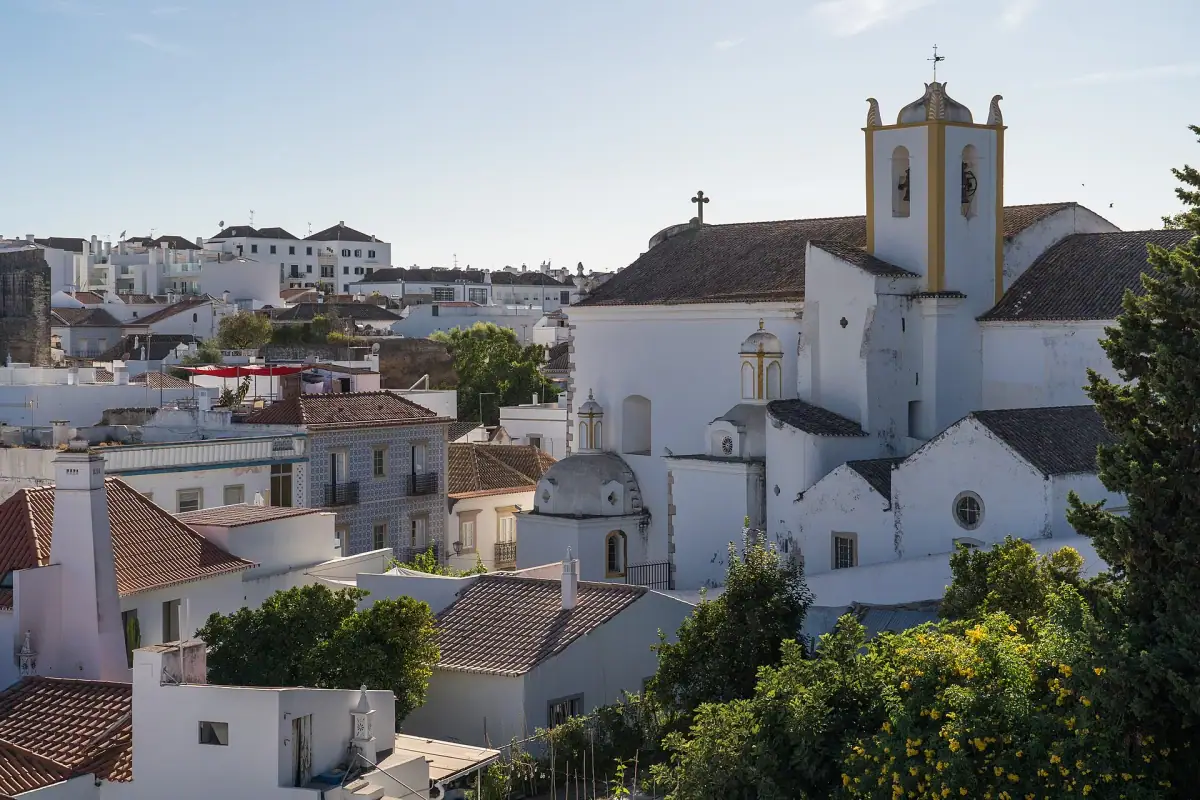
The cobbled lanes, whitewashed facades and typical roofs make up a very harmonious whole. Take the time to get lost in the small streets: the town has many churches, often modest outside, sometimes highly ornate inside. Santa Maria do Castelo Church, in the upper part, is near the remains of the castle.
Tavira Castle, or more precisely its walls and garden, offers one of the best viewpoints over the rooftops of the old town. Access is generally simple and the visit quick: a short hour is enough to climb up, walk around the ramparts and enjoy the panorama.
The riverbanks are pleasant too, with terraces, promenades and shaded squares. For a quick bite or to watch local life, the covered market near the river is a good address in the morning. Hours vary by season: check when you get there.
The Ria Formosa: a protected lagoon between land and sea
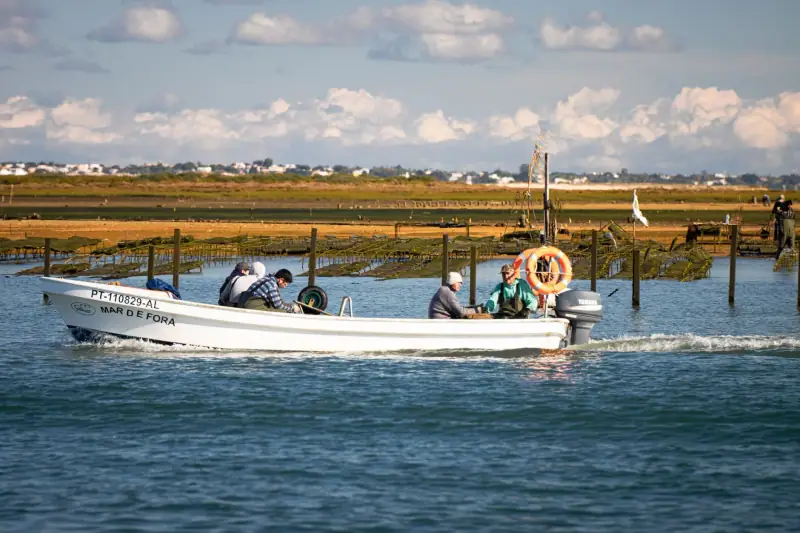
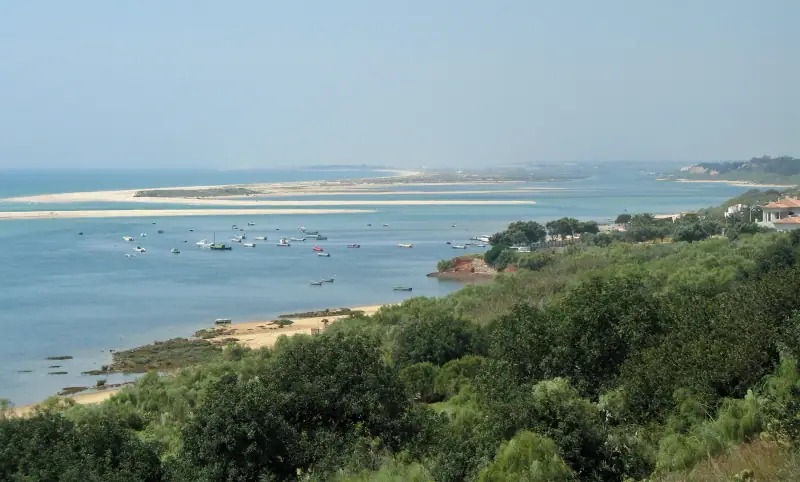
The Ria Formosa is a natural park stretching about sixty kilometers (37 mi) along the coast, east of Faro. It combines lagoons, channels, salt pans, mudflats and sandy barrier islands. This area is precious for birds, which find resting, feeding and breeding grounds there.
For travelers, it is above all a place for outings: boat trips, kayaking, walks on the banks, bird watching. The salt pans, which still produce salt in some areas, add a peaceful note to the region. Tides play an important role: at low tide, the lagoon reveals wide expanses of mud where birds feed, while at high tide the channels are easier to travel by boat.
If you travel with binoculars, bring them. Spring and fall are good seasons for watching, and outings led by local guides let you learn more about the species present and the management of the site.
Discover the Ria Formosa by boat
Guided trips in the lagoon and to the barrier islands, to compare for your dates.
Tavira Island: the sandy beach a few minutes away by boat
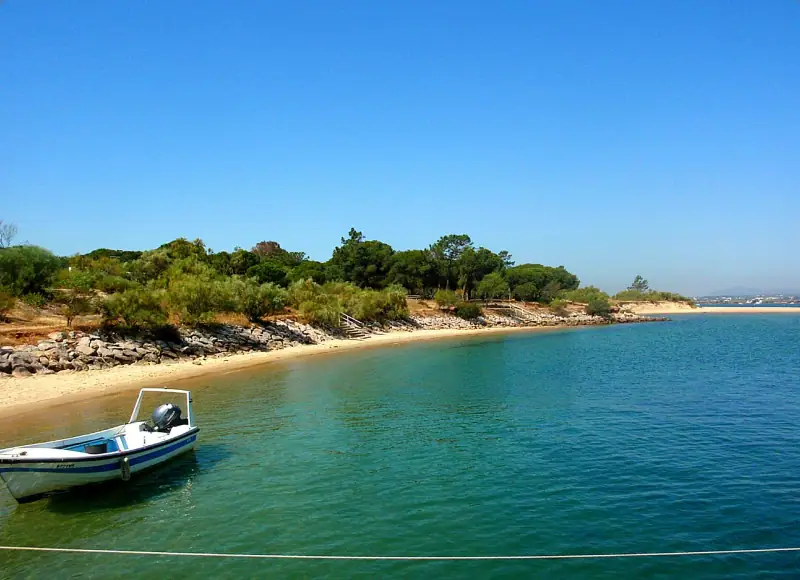
Tavira Island is one of the barrier islands of the Ria Formosa. It has long beaches of pale sand, a sea that is generally calmer than on the Atlantic coast of the west, and an atmosphere far more peaceful than in the big resorts. It makes an ideal beach outing for a relaxing day. Further west, Armona, Culatra and Deserta are reached from Olhão: see our guide to choosing between the islands of the Ria Formosa.
There is no bridge: access is by boat only. Shuttles leave from the Quatro Águas area, very close to Tavira, and from the village of Santa Luzia, as well as other nearby landing stages. The crossing is short. Depending on the season, departures are more or less frequent: always check the time of the last return before settling on the beach.
As for equipment, bring water, sunscreen and a hat, as shade is rare on the sand. A few restaurants and snack bars are near the busiest areas, but the choice shrinks outside summer. The further you go from the access points, the calmer the beach gets.
In the eastern part of the island, you can also walk to an unusual site: a line of old anchors, a reminder of the time when tuna fishing marked local activity. The place is easy to spot there and makes a nice walking goal late in the day.
Santa Luzia and Cabanas: two fishing villages on the lagoon
A few kilometers from Tavira, Santa Luzia is a small fishing village built on the edge of the lagoon. It is known for its octopus tradition, which you find on the menu of several restaurants. A walk along the lagoon front lets you watch the colorful boats and the fishing installations.
Further east, Cabanas de Tavira offers a similar feel, with a quiet promenade and landing stages to reach the island. These villages are good additions if you want to taste fresh fish and seafood in a simple setting, away from the big tourist avenues.
Do not expect great monuments: the interest of these villages lies in the atmosphere, the light on the water and the slower pace of life. They suit a lunch break well before heading back to the beach or the town.
Cacela Velha: a white village facing the lagoon
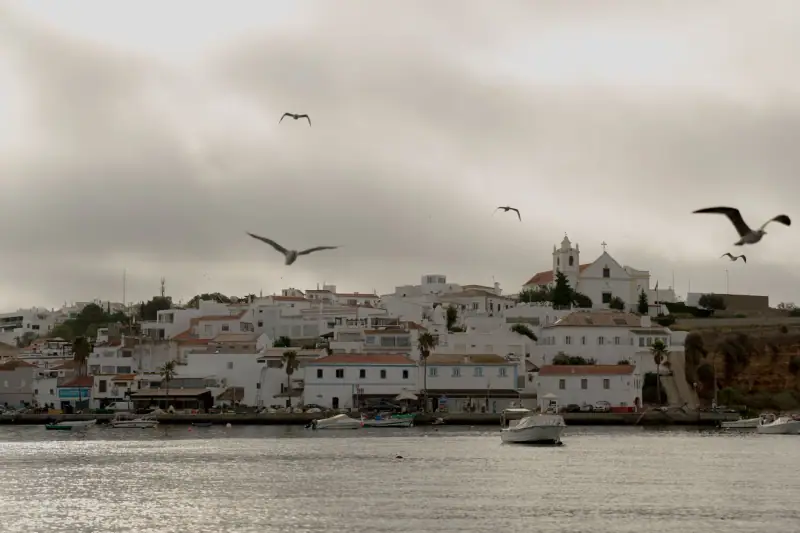
Cacela Velha is a tiny village perched on a slight rise overlooking the Ria Formosa, east of Tavira. A few white lanes, a small church and a little fort make up most of the ensemble. The view over the lagoon and the sandbanks is one of the finest in the region.
The village is visited quickly, but it is savored above all for its atmosphere. From the viewpoint, you can see the channels, the sand spits and the fishing boats. You walk down to the beach at the foot of the village, and the tide strongly influences the landscape.
To get there without a car, it is better to find out about local buses and taxis. With a car, it is an easy stop to fit into the morning or late afternoon, before or after the beach.
Planning your visit: a 1- or 2-day program
For a single day, start the morning with the center: bridge, streets of old Tavira, castle and garden, then lunch near the river. In the afternoon, take the shuttle to Tavira Island, enjoy the beach and come back before the last departure.
With two days, devote the first to the town and the island. The second can combine a guided trip on the Ria Formosa, lunch in Santa Luzia or Cabanas, then late afternoon in Cacela Velha. This pace avoids rushing and leaves time for swimming.
A few practical benchmarks:
- From Faro: Tavira is about thirty kilometers (19 mi) to the east, served by train and buses.
- In town: the center is covered on foot. The surrounding villages need a little transport.
- Season: in spring and fall, temperatures are mild and crowds more moderate. Summer is ideal for the beach but livelier.
- Combining with the west: to pair Tavira with the cliffs of Lagos and Benagil Cave, read our Benagil Cave guide, and our selection of the most beautiful beaches in the Algarve.
Note that the Spanish border is not far to the east: an excursion across is possible, but it means allowing a little extra time.
Places to stay in Tavira
Compare hotels, guesthouses and apartments in Tavira for your dates.
Where to stay to visit Tavira and the Ria Formosa
Staying in Tavira itself is the most practical choice: you can explore the old town on foot, reach the station easily and enjoy the terraces in the evening. The small guesthouses of the center have a lot of charm, while accommodation further out often offers more space and better value.
If you prefer to be near the shore, Santa Luzia and Cabanas de Tavira are quieter options. They suit travelers with a car who want a calm base near the lagoon. To compare these options with the other areas of the coast, see our guide where to stay in the Algarve.
In high season, book ahead: the small properties of the old town fill up fast. Outside summer, there is more choice and prices are lower.
Practical tips before you go
Comfortable shoes, as the cobbled streets are sometimes slippery. Sunscreen, a hat and water, especially for the island. A light mosquito repellent can be useful in the evening near the lagoon.
Respect the nature of the Ria Formosa: stay on the paths, do not trample the dune areas, take your trash with you and keep your distance from the birds. These environments are fragile, and their beauty depends on everyone’s actions.
Finally, if you arrive by air, Faro Airport is the closest. Lisbon and Porto can also serve as arrival points, but they add a long extra trip to the Algarve. As for renting a car, a vehicle is mostly useful to link the lagoon villages and to combine Tavira with the rest of the region.
Tastings and food tours in the Algarve
Food tours, wine tastings and cooking classes to book in advance.
Tavira does not try to impress: it charms with the gentleness of its pace, its well-kept architecture and its lagoon. If you like small-scale towns, sandy beaches and open landscapes, this part of the Algarve deserves a place in your itinerary.
Frequently asked questions
How long do you need to visit Tavira?
Half a day is enough for the historic center, but a full day lets you add Tavira Island. With two days, you can also explore the Ria Formosa by boat and the village of Cacela Velha.
How do you get from Faro to Tavira?
Tavira is about thirty kilometers east of Faro. You get there by train or bus from the center of Faro, or by car on the A22 motorway or the national road. Allow about half an hour to 45 minutes depending on the mode of transport.
How do you reach Tavira Island?
The island is reachable only by boat. Shuttles leave from the Quatro Águas area, near Tavira, and from the village of Santa Luzia, in season. Check the time of the last return there.
Do you need a car to visit Tavira?
No, the center is visited on foot and the station is close. A car becomes useful if you want to add Cacela Velha, the beaches of the east or other towns of the Algarve in the same day.
What is the best time to visit the Ria Formosa?
Spring and early fall are pleasant: mild temperatures, fewer people and good bird watching. Summer suits swimming, but shuttles and beaches are busier.
Tavira or Lagos: which should you choose?
Lagos charms with its cliffs, coves and boat trips; Tavira with its quiet atmosphere, its sandy beaches on the islands and its elegant center. Our guide to choosing where to stay in the Algarve details the comparison.
More Algarve guides
Keep reading
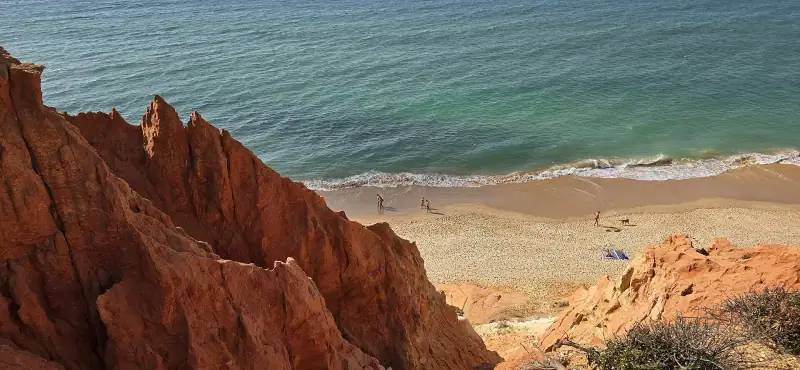
The Most Beautiful Beaches in the Algarve: A Selection by Area
The best beaches in the Algarve: Lagos coves, Carvoeiro cliffs, Ria Formosa islands and the wild west coast. Where to go depending on what you want.
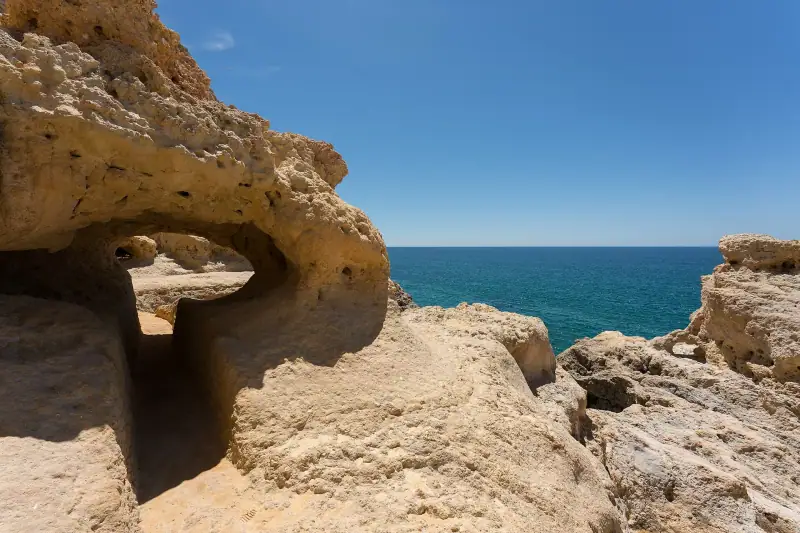
Algarve Travel Guide: Regions, Highlights, Budget and Tips
Visiting the Algarve: regions and towns, highlights, best time to go, getting around, where to stay and budget. The main guide to plan your trip.
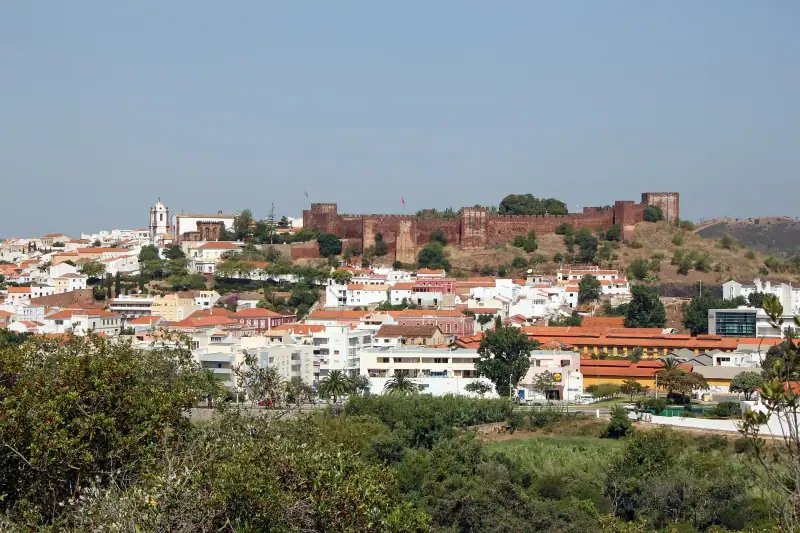
Silves, Monchique and the Inland Algarve: What to See
Away from the beaches, the inland Algarve: Silves Castle, Serra de Monchique, Alte and Loulé. What to see, how to get there and how to plan the day.
Ready-made
Algarve itineraries
3 days
4 days
7 days
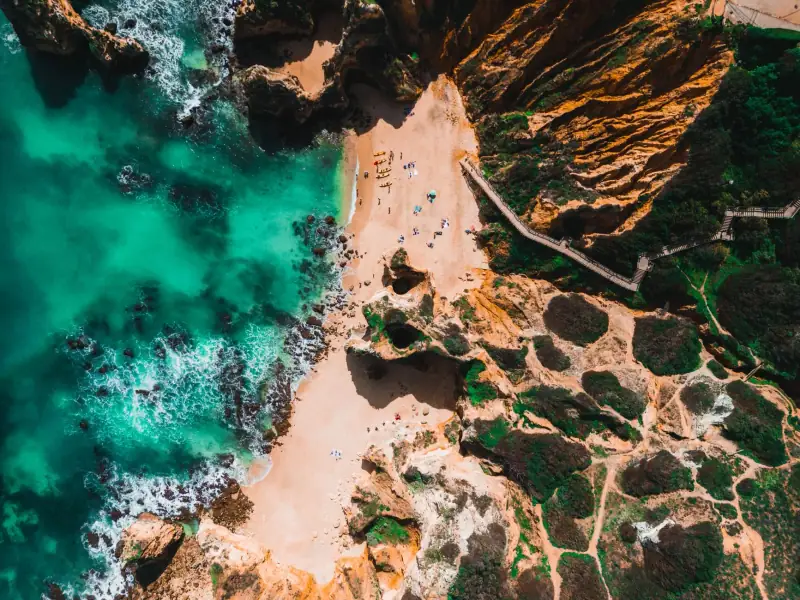
Algarve Road Trip: A 7-Day Itinerary from East to West
A 7-day Algarve road trip from Faro to Sagres: stops, distances, beaches, white villages and tips for driving and sleeping along the coast.