What to see
Visiting Arles: what to see and do in 1 to 3 days
We may earn a commission when you book through links on this page, at no extra cost to you. We don't visit or try the places we cover: we summarize published sources. How we work
In short
- One day covers the amphitheater, ancient theater, Saint-Trophime cloister, Place du Forum and the Rhône quays. Two days add the Alyscamps, the antique museum, Van Gogh sites and Fondation Luma.
- The compact historic center is covered entirely on foot. A car only becomes useful for the Camargue, the Alpilles or Saintes-Maries-de-la-Mer.
- The market is generally held Wednesday and Saturday mornings; the Saturday one is the largest.
- Spring and early fall offer the best light. Big events (the feria, the photography festival) fill hotels and raise prices.
A Roman arena still in use, an ancient theater whose columns rise above the rooftops, a Romanesque cloister, ocher lanes and the banks of the Rhône that inspired Vincent van Gogh: Arles brings together two thousand years of history in a few streets. A Roman colony that became one of the great cities of Gaul, it now holds UNESCO-listed heritage and a cultural scene that is surprisingly lively for a town of this size, and it stands at the gates of the Camargue.
This guide helps you decide what to see in Arles, in what order, and how to spread your visits over one, two or three days. You will also find advice on the season, transport, lodging and excursions around the town. Opening hours and prices change: check them on official sites before you go.
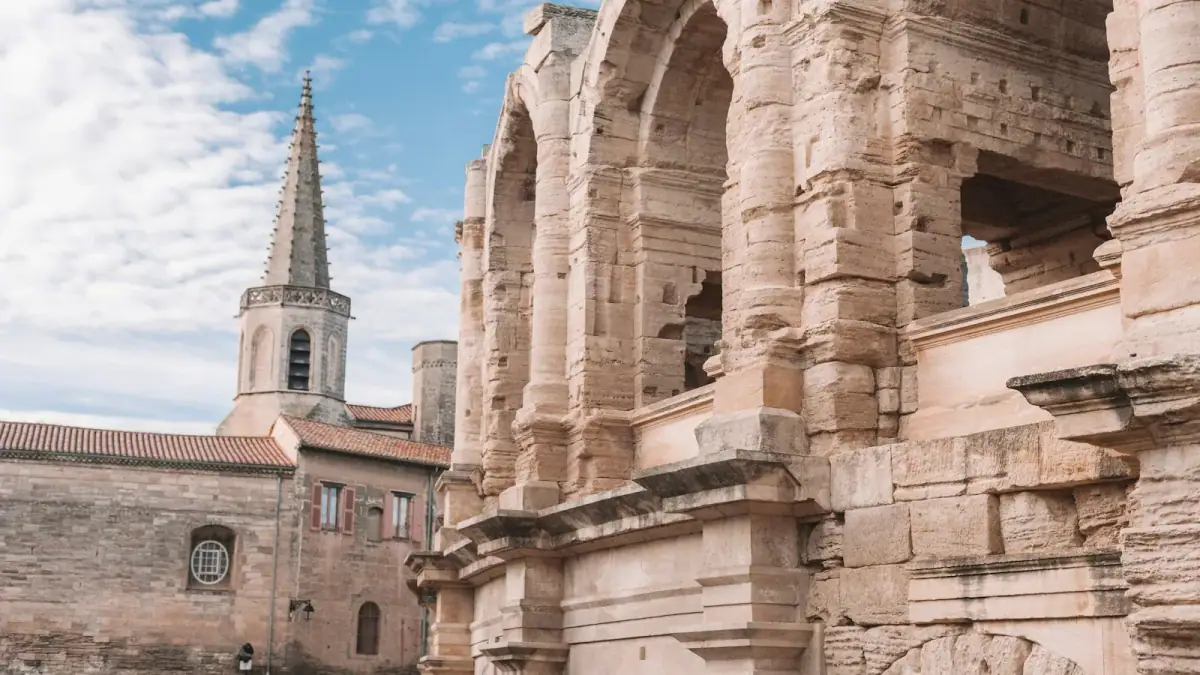
The Arles amphitheater, symbol of the town
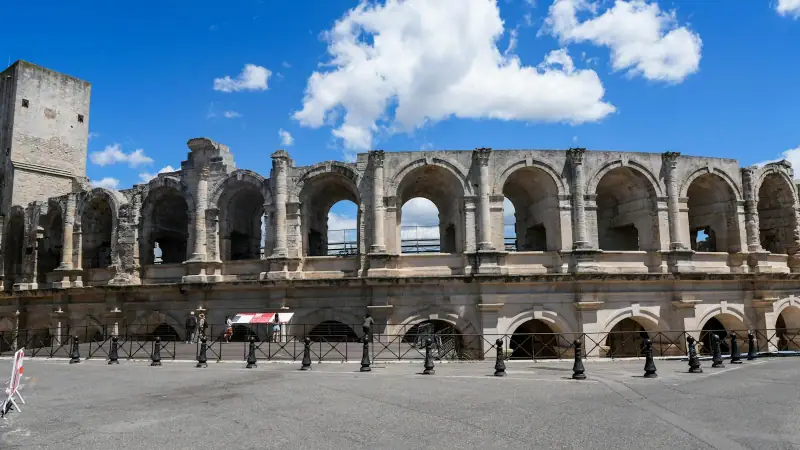
You can’t miss the Roman amphitheater, which dominates the town center. Built at the end of the 1st century, it once hosted gladiator fights and shows before tens of thousands of people. Its two well-preserved tiers of arcades make it one of the most evocative Roman amphitheaters in France. In the Middle Ages, it was even turned into a fortified district, with houses inside the walls: the towers crowning the building date from that time.
Today the arena is still in use. You can attend Camargue bullfights (courses camarguaises), corridas during the big ferias, and concerts or shows throughout the year. For the visit, climb into the stands and up one of the towers: the view over the tiled roofs, the Rhône and, on a clear day, the Camargue plain justifies the ticket on its own. Allow about an hour there.
A practical tip: if an event is scheduled, access to the monument may be limited or closed. Check the calendar before you come. For a photo without crowds, arrive at opening time or late in the day.
The ancient theater, steps from the amphitheater
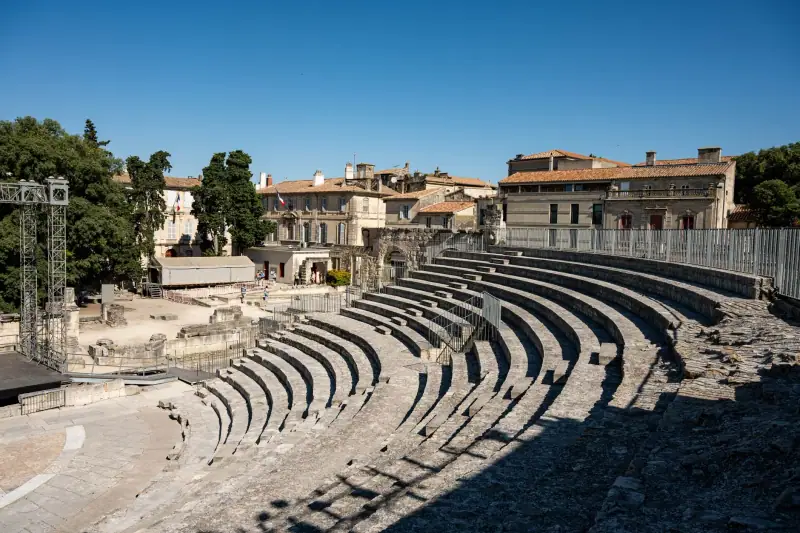
Less imposing than the amphitheater but just as moving, Arles’s ancient theater also dates from the time of Augustus. It was largely dismantled over the centuries: its stones were used for other buildings. Two isolated columns remain, now among the most photographed motifs in town, and part of the stands, restored to host shows in summer.
The site can be visited quickly, in half an hour to an hour. Sit on the stands to imagine the stage as it was: the place has kept a particular acoustic and atmosphere, especially in the early evening. If you like history, the explanations at the site help you understand how the Romans organized their leisure in a town of this importance.
Place de la République, Saint-Trophime and the cloister
Place de la République, bordered by the town hall and dominated by an obelisk dating from Roman times, is the monumental heart of the town. On one side stands the church of Saint-Trophime, whose carved portal is one of the masterpieces of Romanesque art in Provence. Take time to look up: the Last Judgment, the apostles and the saints decorating the facade read like a book in stone.
The adjoining cloister, mixing Romanesque and Gothic galleries, is a haven of calm. The carved capitals tell biblical scenes, and you often meet few people there outside peak times. Allow an hour for the church and cloister, a little more if you like carved details.
Place du Forum and the cryptoporticus
A few streets further, Place du Forum, shaded by plane trees and lined with terraces, is a good place to sit. It occupies the site of the Roman forum: two ancient columns are still visible, set into the facade of a hotel. Under the square, the cryptoporticus, vaulted underground galleries from Roman times, offers a welcome contrast in summer thanks to its coolness. Historians debate its exact function, which adds to its mystery.
Baths of Constantine and the banks of the Rhône
By the river, the Baths of Constantine are the remains of a large complex of public baths from late antiquity. You can see rooms with hypocausts, the underfloor heating systems. The visit is short, often counted at about twenty minutes, which makes it easy to fit between two stops.
Then continue toward the Rhône: the quays offer a pleasant walk, with fine views of the river and the opposite bank. It was also from these banks that Van Gogh painted one of his most famous night compositions: the starry night over the Rhône. Toward the end of the afternoon, the light on the water gives an idea of what inspired him.
Stay in Arles
Compare hotels and B&Bs in the historic center or nearby, and book early for high season and big events.
In the footsteps of Van Gogh in Arles
Van Gogh lived in Arles from February 1888 to May 1889, a period of exceptional creative intensity: he painted several hundred works there, including sunflowers, cafés, landscapes and portraits. Don’t expect to see his famous paintings there: most are held in museums around the world. What the town offers is the chance to walk through the settings that inspired him.
Several places evoke that stay. The Espace Van Gogh, the former hospital where the artist was treated, is a building with a flowered inner courtyard, recognizable from the paintings that depict it. The Vincent van Gogh Foundation Arles organizes exhibitions that put his work in dialogue with that of contemporary artists. Finally, several signs scattered around town mark the locations shown in his paintings: Place du Forum and its café, the bridge, the quays. A walking route links them, and the tourist office can tell you about the routes on offer.
Allow half a day for a Van Gogh route, combining a walk with one or two visits. If you travel as a family, the signs comparing the painting and the present-day place make a pleasant game for the younger ones.
The Alyscamps, a walk out of time
Slightly outside the town center, the Alyscamps are one of the most famous necropolises of late antiquity and the Middle Ages. A long avenue lined with trees and stone sarcophagi leads to a partly ruined Romanesque church. The silent, shaded atmosphere contrasts with the bustle of the center. Van Gogh and Gauguin painted scenes of golden avenues there in the fall of 1888.
Allow half an hour to an hour there. The site is particularly beautiful in fall, when the foliage takes on warm colors, and late in the day, when low light lengthens the shadows. From Place de la République, it can be reached on foot in a few minutes by crossing part of the town.
The Arles antique museum
To understand the town’s Roman past, head to the Musée départemental Arles antique, on the edge of the Rhône. The museum presents models, mosaics, sarcophagi and sculptures from the region’s excavations. It also holds the remains of a large Roman barge found in the river, a rare testimony to ancient river navigation.
It is the ideal visit to give meaning to the monuments you have seen in town: models of the Roman circus, theater and amphitheater help you imagine the city at its height. Allow one to two hours, more if you are passionate about archaeology. The museum is a little way from the center: a fifteen-minute walk or a short bike ride is enough to reach it.
Fondation Luma and the Parc des Ateliers
The shimmering metallic silhouette of the tower designed by architect Frank Gehry stands out in the Arles landscape, and that is precisely what makes it a highlight for contemporary art lovers. The tower rises in the middle of the Parc des Ateliers, a former railway site converted into a cultural center, with exhibitions, installations and a landscaped park. Even if you are not a specialist, the walk through the park is pleasant and the architecture is worth a detour.
Arles is also known for photography: each summer, the Rencontres d’Arles turn the town into a vast gallery, with exhibitions set in chapels, former workshops and unusual venues. If you like photography, this period is exceptional, but it is also busier: book your accommodation well in advance.
Markets, cooking and flavors of Arles
The Arles market is one of the town’s major events: it is generally held on Wednesday and Saturday mornings, with stalls of fruit, vegetables, cheese, spices, olives and regional products. The Saturday market, the largest, stretches along one of the town’s big boulevards; check locations and hours before you come, as they can change. Our guide to Provence markets helps you plan your purchases.
On the plate, Arles sits on the border between Provence and the Camargue, and its cooking shows it. You will find the gardianne de taureau, a bull stew simmered in red wine, Camargue rice, which goes well with that dish, Arles sausage, and the Provençal classics: tapenade, aïoli, ratatouille, fougasse. Wine lovers will taste the region’s rosés and reds: our article on Provence wines gives a few landmarks.
Tasting these specialties with a guide, or taking a cooking class, is a good way to learn without guesswork.
Tours and excursions in Arles
Guided town tours, Camargue outings, tastings and activities from Arles: compare the available options.
Day trips from Arles: Camargue and Alpilles

Arles is an excellent base for exploring the region. The Camargue begins literally at the town’s gates: marshes, lagoons, rice paddies, white horses, black bulls and pink flamingos make a landscape apart in France. Half a day is enough for a first discovery, a full day lets you push on to Saintes-Maries-de-la-Mer, a coastal village about forty kilometers (25 mi) away. For the possible activities, our article on the Camargue, flamingos and horses details the outings.
In the other direction, the Alpilles offer a completely different atmosphere: limestone hills, olive groves, stone villages. Les Baux-de-Provence and Saint-Rémy-de-Provence, the town where Van Gogh stayed after Arles, can be reached by car in half a day or a day. Finally, Avignon is about twenty minutes away by train: to plan that stop, see our guide to visiting Avignon.
How to organize your days in Arles
Arles in 1 day
- Morning: amphitheater at opening time, then the ancient theater.
- Midday: lunch on Place du Forum or at the market if it is Wednesday or Saturday.
- Afternoon: Place de la République, Saint-Trophime and its cloister, Baths of Constantine.
- Evening: stroll along the Rhône quays and the sunset light.
Arles in 2 days
Keep the program above for the first day. On the second, devote the morning to the Alyscamps and then the Arles antique museum, and the afternoon to a Van Gogh route with a visit to Fondation Luma or the Parc des Ateliers.
Arles in 3 days
Add an excursion day: the Camargue and Saintes-Maries-de-la-Mer, or the Alpilles with Les Baux and Saint-Rémy. To fit these days into a wider circuit, our 5-day Provence itinerary shows how to link Arles with Avignon, the Luberon and the Camargue.
How to get to Arles and get around
Arles is served by train, with regular connections to Avignon, Marseille, Nîmes and Montpellier. The station is a short distance from the historic center, on foot or by shuttle. To compare transport in the region, see our article on getting around Provence.
Once there, the center is visited on foot, and most of the main sites are close to each other. Lanes are narrow and parking in town is limited: if you come by car, park on the edge and walk. A rental car becomes useful for the Camargue and the Alpilles.
Where to stay in Arles
For a first visit, lodging in the historic center puts you within walking distance of the monuments, restaurants and quays. Boutique hotels set in mansions are plentiful, but rates climb quickly in high season and during big events, such as the feria or the photography festival.
If you travel by car, look at the edges of town or country farmhouses (mas), calmer and often more affordable. To decide between Arles and Avignon as a base, our comparison Avignon or Arles: where to stay without a car will help, and our guide on where to stay in Provence widens the thinking.
B&Bs and farmhouses around Arles
A calmer option, ideal if you drive out to the Camargue and the Alpilles.
Which season to choose for visiting Arles?
Arles can be visited all year. In spring, the town is bright, terraces fill up and temperatures are ideal for walking. Summer is hot: the stones of the monuments store heat, so bring water and a hat, and plan visits early or late in the day. It is also the season of the big cultural events, vibrant but pricier. Fall offers beautiful light, thinner crowds and warm-colored Alyscamps. Winter is quiet: some businesses slow down, but monuments remain accessible and the town gains intimacy.
The mistral, a dry and sometimes strong wind in the Rhône valley, can make a climb up the amphitheater or a walk on the quays less pleasant: a windbreaker is useful in the shoulder seasons. To compare periods more precisely, see our guide to when to go to Provence.
Key takeaways
To make the most of Arles, start with the amphitheater and the ancient theater, let Saint-Trophime and Place du Forum carry you, then keep time for Van Gogh, the Alyscamps and the Arles antique museum. One day is enough for the classics, two days let you go deeper into the museums and Fondation Luma, three days open the door to the Camargue and the Alpilles. Check hours and prices on official sites, book early in high season and avoid the car in the center. To place Arles in an overview of the region, our complete guide to Provence gives you the keys to build your trip.
Frequently asked questions
How long does it take to visit Arles?
A full day lets you see the classics: amphitheater, ancient theater, Saint-Trophime cloister, Place du Forum and the Rhône banks. With two days, you add the Alyscamps, the Arles antique museum, the Van Gogh traces and Fondation Luma. A third day is easily built around an excursion to the Camargue or Les Baux-de-Provence.
What should you see first in Arles?
The Roman amphitheater, the ancient theater and the Saint-Trophime cloister are the essentials, along with the Alyscamps, a beautiful tree-lined avenue of sarcophagi. These monuments are part of the UNESCO World Heritage listing. Art lovers add the places linked to Van Gogh and Fondation Luma.
Can you visit Arles on foot?
Yes, the historic center is compact and can be covered entirely on foot. The main monuments are a few minutes' walk apart, and only the Alyscamps and the Arles antique museum require a slightly longer walk or a bike ride. The lanes are sometimes cobbled: bring good shoes.
Do you need a car to visit Arles?
Not for the town itself, which is served by train and pleasant on foot. A car becomes useful if you want to explore the Camargue, the Alpilles or Saintes-Maries-de-la-Mer at your own pace. In that case, park on the edge of the center rather than in the lanes.
What is the best time to visit Arles?
Spring and early fall offer superb light and pleasant temperatures. Summer can be very hot and the stone of the monuments radiates heat: choose visits early in the morning or late in the day. Major events, such as the feria or the photography festival, draw large crowds and push up accommodation prices.
Arles or Avignon: which to choose?
Arles appeals with its Roman heritage, its links to Van Gogh and its proximity to the Camargue. Avignon offers the Palais des Papes, its ramparts and its position as a crossroads. If time allows, the two towns are close by train and complement each other well. Our comparison details the choice of base depending on whether you travel with or without a car.
Can you visit Arles with children?
Yes. Climbing the amphitheater's stands, imagining ancient shows and exploring the lanes generally appeals to children. A Camargue excursion to see horses, bulls and pink flamingos nicely rounds out the stay. Check access conditions and prices for each site before you come.
More Provence guides
Keep reading
What to see around Mont Ventoux: the climb, Nesque gorges, Dentelles and villages
What to see around Mont Ventoux: the summit, Nesque gorges, Dentelles de Montmirail, Sault, Bédoin and Vaison-la-Romaine. A guide to plan your visit.
What to see on the Valensole plateau: villages, lavender and gorges to explore
What to see on the Valensole plateau: Riez, Valensole, Puimoisson, Gréoux, Quinson and Les Mées, villages, heritage and landscapes beyond the lavender.
What to see in the Alpilles: Les Baux, Saint-Rémy and villages worth a stop
What to see in the Alpilles: Les Baux-de-Provence, Saint-Rémy, Glanum, Fontvieille, olive groves and trails. A guide to plan 2 to 3 days in the range.
Ready-made
Provence itineraries
3 days
Lavender route in Provence in 3 days: Valensole, Sault and the Luberon, stops and distances
Moustiers-Sainte-MarieSault
3 days
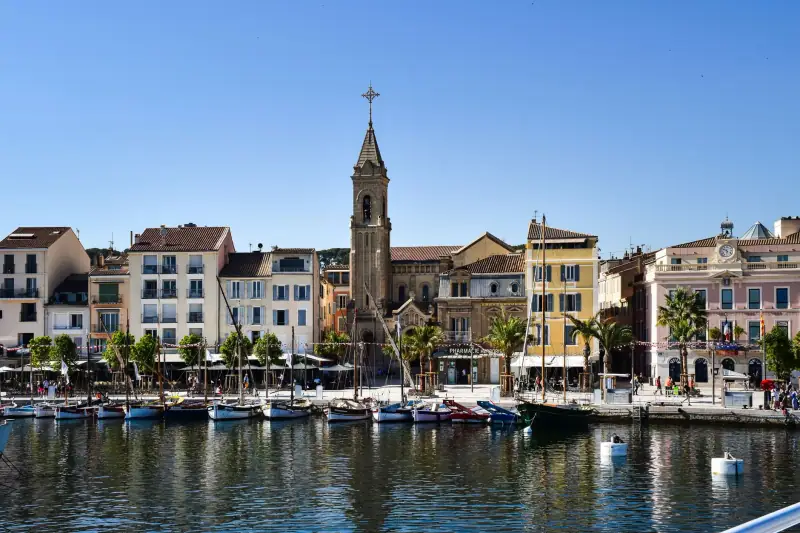
3 days between Marseille, Cassis and Aix-en-Provence: a detailed itinerary
3-day Provence itinerary: Marseille and the Vieux-Port, Cassis calanques, Aix-en-Provence and its fountains. Day by day, distances and tips.
5 days
5-day Provence itinerary: Avignon, Luberon, Alpilles and Camargue
A day-by-day 5-day Provence itinerary: Avignon, Luberon, Alpilles, Arles, Camargue, Aix and Cassis, with realistic distances and practical tips.
Can be adapted in the planner