What to see
What to see on the Valensole plateau: villages, lavender and gorges to explore
We may earn a commission when you book through links on this page, at no extra cost to you. We don't visit or try the places we cover: we summarize published sources. How we work
In short
- The Valensole plateau covers about 800 km² at an average altitude of about 500 m (1,640 ft), in the Alpes-de-Haute-Provence.
- One day gives an overview (a hilltop village, Riez and a few field stops); two days add Gréoux-les-Bains, Quinson and the lower Verdon gorges.
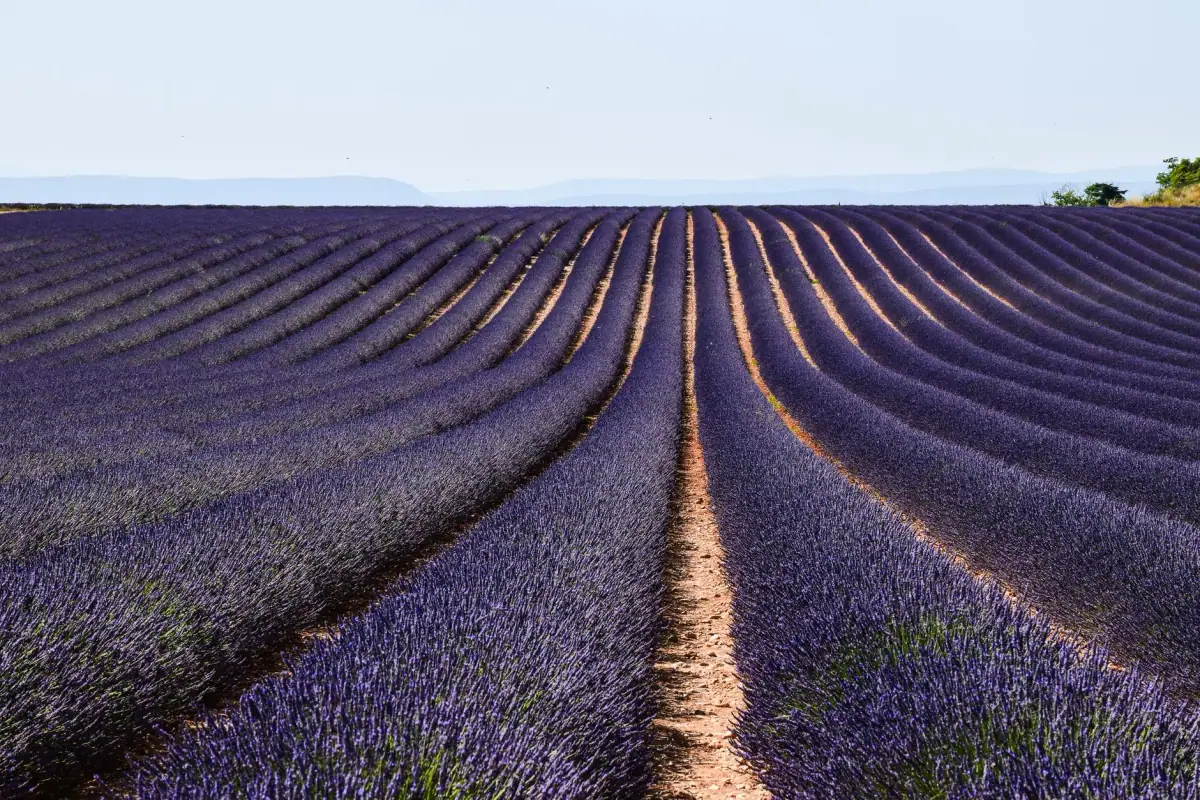
- Lavender usually blooms from late June to mid-July, with a peak around early July. Dates vary each year.
- A car is almost essential: villages are scattered, public transport is limited and gas stations are rare on the plateau.
When people mention the Valensole plateau, they immediately think of the purple waves of lavender, the July postcard. It is an accurate image, but an incomplete one: this 800 km² plateau also holds villages with character, Roman remains, a spa town, olive groves, a gateway to the lower Verdon gorges and landscapes worth the detour all year, not just for a few summer weeks.
This discovery guide helps you understand what there is to see on the Valensole plateau, village by village, and to put together a day or a weekend depending on the season. If you are preparing a complete lavender road trip instead, our 3-day itinerary between Valensole, Sault and the Luberon gives you the day-by-day thread; here we look at the territory itself. Opening hours, prices and access conditions change: check with tourist offices before you go.
Understanding the Valensole plateau
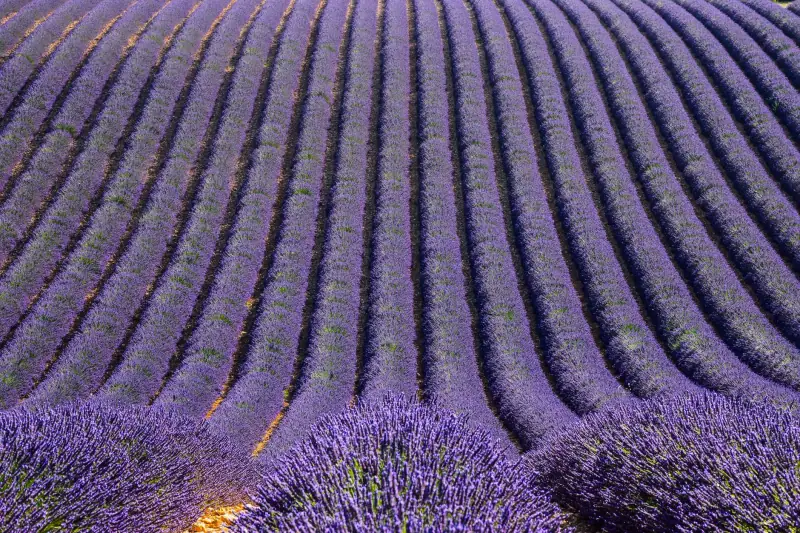
The Valensole plateau is in the Alpes-de-Haute-Provence. It is bounded to the west by the Durance valley, to the north by the Asse valley, and to the south by the Verdon gorges and Lake Sainte-Croix. Its average altitude is close to 500 m (1,640 ft), which places it clearly above the Durance valley and explains the wide panoramas you find there. The Asse valley crosses it and divides it into two unequal parts.
About twenty communes share this territory, including Valensole, Riez, Puimoisson, Allemagne-en-Provence, Gréoux-les-Bains, Quinson, Les Mées and Oraison. Many are small villages of a few hundred inhabitants: the plateau is very rural, and that is precisely its charm.
Farmland before it was a postcard
The plateau was long the region’s “granary,” with cereals, and the almond tree was its emblematic tree for centuries. Lavender and above all lavandin took the place of that old economy. Today you still come across wheat fields, olive trees on the best-exposed slopes, orchards and even a few truffle groves. This mosaic of crops explains why the landscape changes so much from one season to the next, and why the plateau deserves to be seen outside July.
When to come
- Late June to mid-July: lavender in bloom is high season, with busy roads and full accommodation. See our guide to when to go to Provence to plan ahead.
- Spring: green landscapes, almond trees in bloom early in the season, mild temperatures, few people.
- September and October: golden light, harvested fields, grape and other harvests in the surrounding area, reasonable crowds.
- Winter: quieter, some shops and tourist sites are closed or on reduced hours.
Valensole, the village that gave the plateau its name
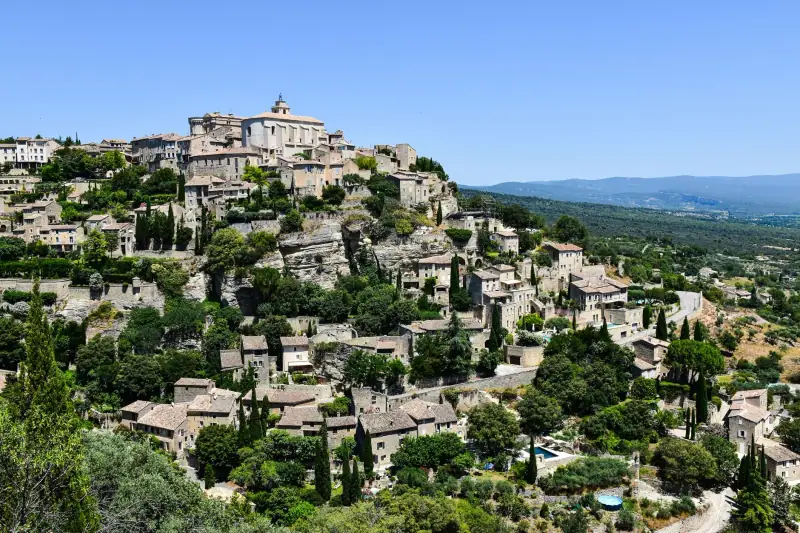
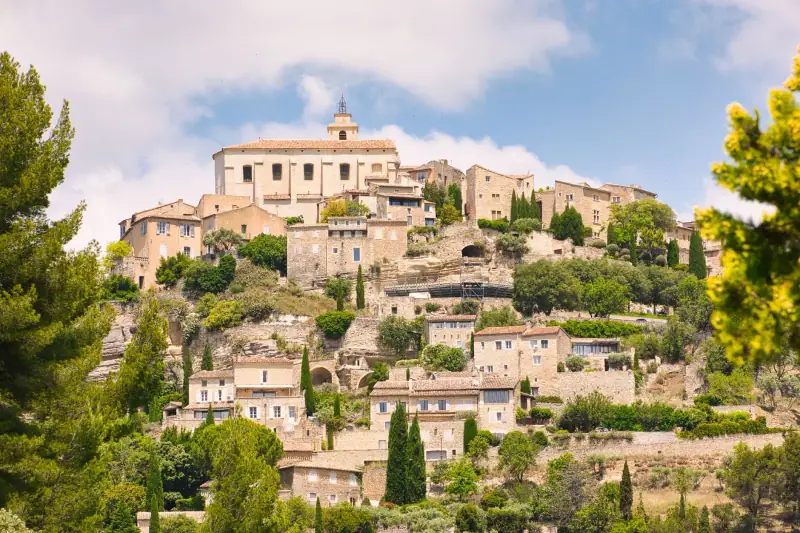
With a little over 3,000 inhabitants, Valensole is the plateau’s namesake village. Its center is perched at about 600 m (1,970 ft) in the middle of vast farmland. People often come for the fields around it, but the village also deserves a stop: lanes to wander at leisure, a lively central square, small shops selling local products.
Every year the village hosts a lavender festival on the Place de la Grande Fontaine and, around All Saints’ Day, gatherings devoted to storytelling. If your stay coincides with one of these events, ask the tourist office for the dates: they change from year to year.
Around Valensole: the field roads
The best viewpoints are not in the village but on the small roads linking it to neighboring hamlets. A few simple principles to enjoy them:
- Leave early in the morning or late in the afternoon: the light is softer, the bees less active and the heat bearable.
- Park only in designated spots or allowed shoulders, without getting in the way of tractors.
- Stay out of the crops and don’t pick anything.
- Visit a farm or distillery that welcomes the public: it is the most respectful way to enjoy the fields, and to bring back essential oil, honey or related products.
Guided lavender tour
Don't want to drive? Compare lavender excursions and distillery visits in the region.
Riez, the plateau’s Roman town
Riez is probably the town richest in heritage on the plateau. Today it is a small commune of about 1,600 inhabitants, labeled “Village et cité de caractère,” but it was once an important episcopal seat. Several sites can be visited on foot, in an easy half day.
The four Roman columns
This is the emblematic image of Riez: four granite columns about 6 m (20 ft) high, topped with white marble Corinthian capitals, standing in a meadow beside a stream. They are the remains of a temple, which tradition attributes to Apollo, probably built at the end of the 1st century. They have stood in place since antiquity and are classified as a historic monument. The site is freely accessible in its meadow: an obvious photo stop, especially in evening light.
The baptistery
The baptistery of Riez, probably dating to the 5th century, is one of the oldest Christian monuments in the region. It has an octagonal plan set within a square building, with eight ancient granite columns topped with Corinthian capitals. It was built with salvaged materials and its dome was rebuilt in the 12th century. As with all monuments, check opening times and visiting conditions before you travel.
The old town
In the center, stroll among the old facades: some 15th- and 16th-century houses keep plasterwork decoration. The Clocher de l’Horloge (clock tower), a relic of the ramparts, overlooks the square. Notre-Dame-de-l’Assomption cathedral, whose construction began in the late 15th century, was rebuilt after the destruction of 1574. On the neighboring hill, the Saint-Maxime chapel, completed in 1665, offers a viewpoint over the surroundings.
Riez is also a good base: it is the gateway to Moustiers-Sainte-Marie and the Verdon Gorge while being in the middle of the plateau. If you are looking for a place to stay, also see our guide on where to stay in Provence.
Stay on the Valensole plateau
B&Bs, gîtes and small hotels in Riez, Valensole and around: compare before lavender season fills everything.
Puimoisson and Allemagne-en-Provence: villages and castles
Puimoisson, a village at 700 meters
Puimoisson, with about 700 inhabitants, sits at about 700 m (2,300 ft) on the south slope of the plateau. It has a pretty central square shaded by nettle trees, stepped streets, remains of the medieval wall with two gates still standing, and a 16th-century Saint-Michel church. A fortified chapel, Saint-Apollinaire, is a classified historic monument. The village also produces olive oil, at the altitude limit for olive growing, and has a lavender distillery that sells its production there. The village is a member of the Verdon Regional Natural Park.
Allemagne-en-Provence, a castle between the Middle Ages and the Renaissance
The village of Allemagne-en-Provence, with a little over 500 inhabitants, is on the road between Gréoux-les-Bains and Riez. Its castle, a classified historic monument, combines a medieval part with a late 14th-century keep and a 16th-century Renaissance residence, with a fireplace decorated with plasterwork. The half-hectare park is a protected site. The Saint-Marc church, with a Romanesque nave, and the old houses with balustraded staircases complete the visit. The place is calm, away from the big crowds, and can be visited in about an hour.
These two villages illustrate what makes the plateau interesting: neither a museum nor a theme park, but living villages with discreet heritage, discovered by driving without hurry.
Gréoux-les-Bains, hot springs and the “Templars” castle
Gréoux-les-Bains, with a little over 3,000 inhabitants, is the plateau’s spa town. Its springs were already used by the Romans, and spa tourism remains one of its main activities today: a large share of visitors are spa guests who come for treatment stays.
What to see there:
- The so-called “Templars” castle: despite its nickname, the Templars never owned it. It dates in part from the 12th to the 17th centuries, belonged to the counts of Provence from 1248, then to the Hospitallers, and is a classified historic monument. The commune has owned it since the early 1980s.
- The chapels: Notre-Dame-des-Ormeaux and Notre-Dame-des-Œufs are among the commune’s religious buildings.
- The Verdon landscapes: the Verdon runs through the commune, held back upstream by a dam, and the commune’s slopes carry olive groves. The Malakoff gorges and the Saint-Sébastien caves are among the natural sites.
Gréoux is a pleasant stop if you travel as a family or want a relaxing stay: several spa establishments offer day packages. Ask them directly about prices and conditions.
Quinson and the lower Verdon gorges
South of the plateau, the village of Quinson opens the door to the lower Verdon gorges. With about 370 inhabitants, it is a small medieval village whose wall, built after 1419, includes two gates and seven towers. Several 15th-century houses, some with curved (“accolade”) lintels, remain in the center.
The Prehistory Museum of the Verdon gorges
The village’s main attraction, this museum opened in 2001. It was designed by the British architect Norman Foster: a building of gray concrete curves set against a large retaining wall of natural stone. The museum tells the story of prehistoric occupation of the region, notably the Baume Bonne cave, occupied intermittently for more than 400,000 years. For the visit, allow about half a day including the outdoor areas; check opening hours, which vary by season.
Activities on the water and on foot
The Verdon forms Lake Quinson here, and a water-sports base is the starting point for walks toward the lower gorges. The garde-canal path, laid out in 1990 along the old Verdon canal, offers an easy walk. For tougher hikes and white-water sports, read our guide to activities in the Verdon Gorge.
Activities around the Verdon
Kayak, paddleboard, guided hikes: compare the outings offered in the Verdon Gorge.
Les Mées and its Pénitents rocks
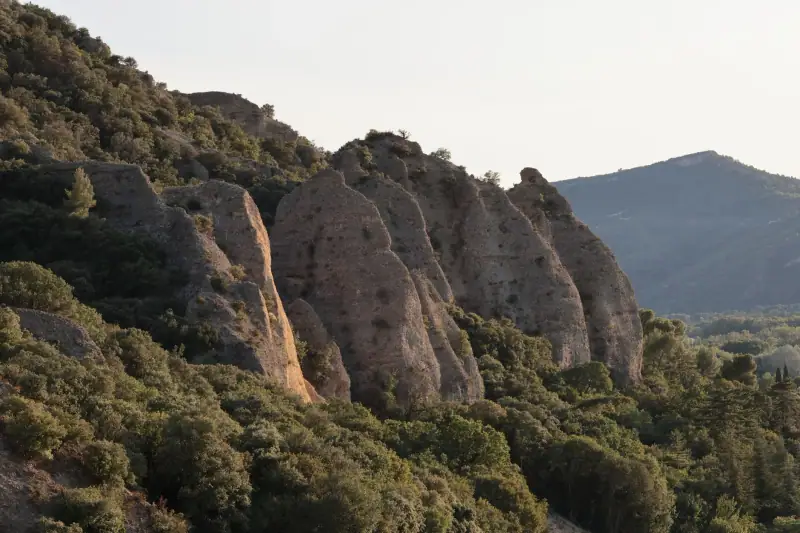
On the west side of the plateau, at the edge of the Durance valley, the commune of Les Mées is known for its Pénitents rocks: a long line of conglomerate columns, a rock made of cemented pebbles, from the western edge of the Valensole plateau. Their silhouette evokes, according to popular tradition, a procession of hooded monks. The village is at about 400 m (1,310 ft) on the left bank of the Durance, between Sisteron and Manosque.
Les Mées is also olive country: olive oil has been a source of wealth since the late Middle Ages, and the parish still bears the name Notre-Dame de l’Olivier. A caution: in December 2019, a large block broke away from the cliff above the village. Respect signs and access bans if some areas are closed.
Planning your visit
One day: the plateau as a loop
For a first discovery, the most balanced combination is: morning in Valensole and on the field roads, lunch in a village, then afternoon in Riez with its columns and baptistery. If time allows, end with a sunset over the plateau.
A weekend: the plateau and the Verdon
With two days, add Gréoux-les-Bains and Quinson on the first day, then devote the second to Riez, Puimoisson and an extension toward Moustiers-Sainte-Marie and Lake Sainte-Croix. Don’t plan too many stops: plateau roads are slow and photo stops add up.
Getting around
A car is almost essential. Fill up before climbing onto the plateau, because gas stations are rare, and avoid driving in the hot hours of July with a broken air conditioner. To compare transport options in the region, see our guide to getting around Provence.
Rent a car for the plateau
Compare rental companies: in July, cars go fast, so book early.
Practical tips
- Heat: in summer, bring water, a hat and sunscreen. There is little shade on the plateau.
- Booking: accommodation fills up from spring for the lavender period. Book with free cancellation if possible.
- Allergies: bees are numerous around the fields; take care if you are allergic.
- Respect for the place: don’t enter the fields, don’t leave litter and don’t block farm tracks.
- Budget: to estimate your spending, see our guide to the Provence budget.
Key takeaways
The Valensole plateau is more than a lavender photo. Between the Roman columns of Riez, the hilltop villages of Valensole and Puimoisson, the castle of Allemagne-en-Provence, the spa town of Gréoux-les-Bains, the Prehistory Museum in Quinson and the Pénitents rocks of Les Mées, there is enough to fill a whole weekend in any season. Come in July for the bloom, in spring or fall for the calm, and always keep some flexibility in your schedule: on these plateau roads, the pleasure of driving slowly is what makes the trip.
Frequently asked questions
Where exactly is the Valensole plateau?
The Valensole plateau is in the Alpes-de-Haute-Provence. It is bordered to the west by the Durance valley, to the north by the Asse valley and to the south by the Verdon gorges and Lake Sainte-Croix. It covers about 800 km² at an average altitude of about 500 m (1,640 ft), which explains its wide horizons and a drier, brighter climate than the coast.
How long does it take to visit the Valensole plateau?
One day is enough for an overview: a hilltop village, Riez and a few stops in the fields. With two days, you add Gréoux-les-Bains, Quinson and the lower Verdon gorges without rushing. In lavender season, allow extra time, because plateau roads are slow and photo stops are many.
When can you see lavender on the Valensole plateau?
Bloom is generally between late June and mid-July, with a peak often around early July. Dates vary from year to year with the weather: check recent information from the tourist office before you book. Our guide to the lavender seasons details the calendar.
What is there to see on the Valensole plateau outside lavender season?
A lot: the Roman columns and baptistery of Riez, the villages of Valensole and Puimoisson, the castle of Allemagne-en-Provence, the spa town of Gréoux-les-Bains, the Prehistory Museum in Quinson and the Pénitents rocks of Les Mées. In spring and fall, crowds are far smaller and the landscapes remain beautiful: green wheat, harvested fields, almond trees in bloom in early spring.
Can you visit the Valensole plateau without a car?
It is very difficult. Villages are scattered and public transport is limited. A car is by far the most practical solution. If you don't drive, look at organized excursions from nearby towns or stays in one place with transfers.
What is the difference between lavender and lavandin?
Lavandin is a hybrid of true lavender and spike lavender. It is more vigorous, yields more essential oil and blooms a little later, often at the end of the season. To the eye, rows of lavandin are generally bigger and wider. On the Valensole plateau, lavandin is very common.
Can you walk into the lavender fields to take photos?
No, unless the farmer explicitly allows it. The fields are crops that support families, and trampling damages the plants. Take photos from the roadside, from designated spots, or visit a farm that welcomes the public.
More Provence guides
Keep reading
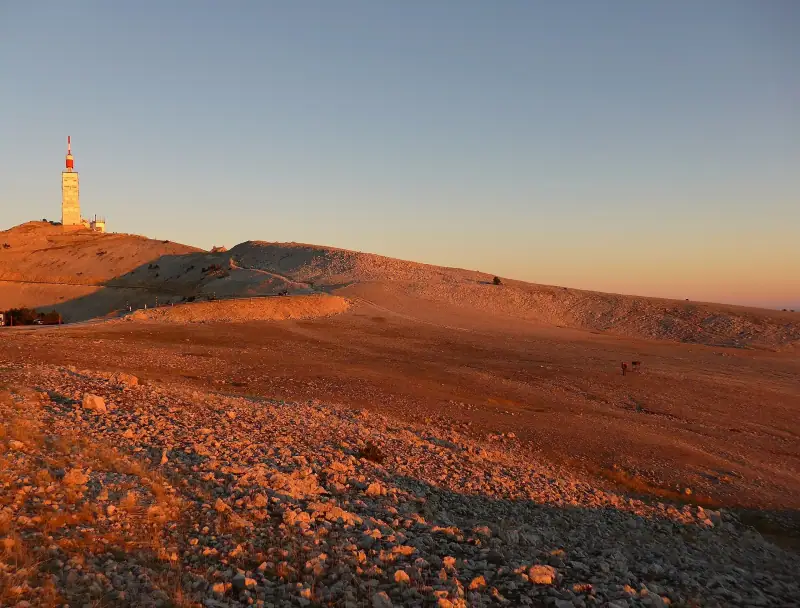
What to see around Mont Ventoux: the climb, Nesque gorges, Dentelles and villages
What to see around Mont Ventoux: the summit, Nesque gorges, Dentelles de Montmirail, Sault, Bédoin and Vaison-la-Romaine. A guide to plan your visit.
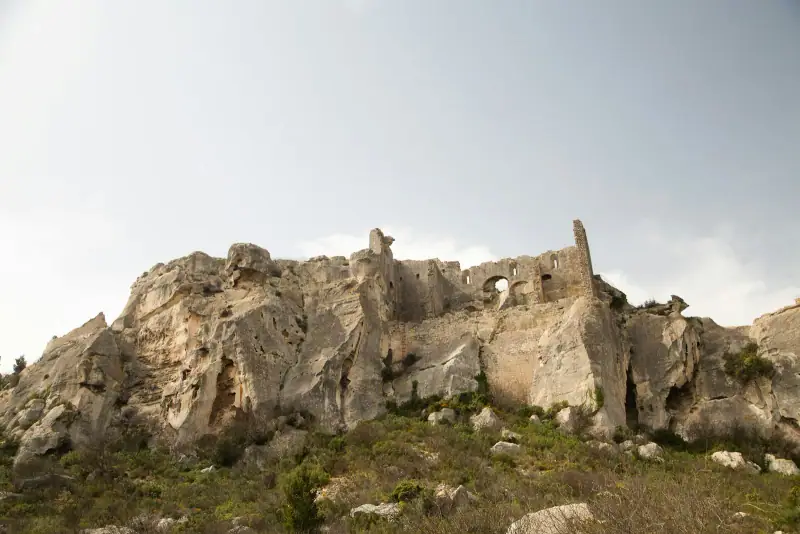
What to see in the Alpilles: Les Baux, Saint-Rémy and villages worth a stop
What to see in the Alpilles: Les Baux-de-Provence, Saint-Rémy, Glanum, Fontvieille, olive groves and trails. A guide to plan 2 to 3 days in the range.
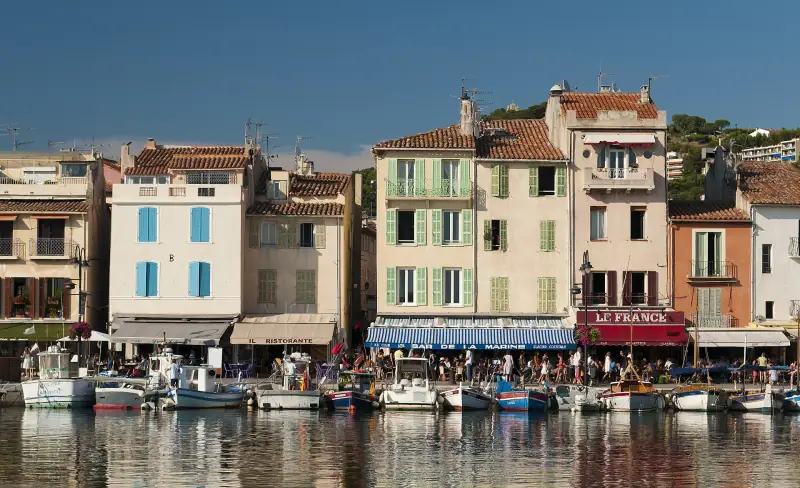
Visiting Cassis: what to see and do in 1 to 2 days
Harbor, Cap Canaille, Route des Crêtes, calanques from Port-Miou to En-Vau, local white wines: a guide to visiting Cassis and planning your stay.
Ready-made
Provence itineraries
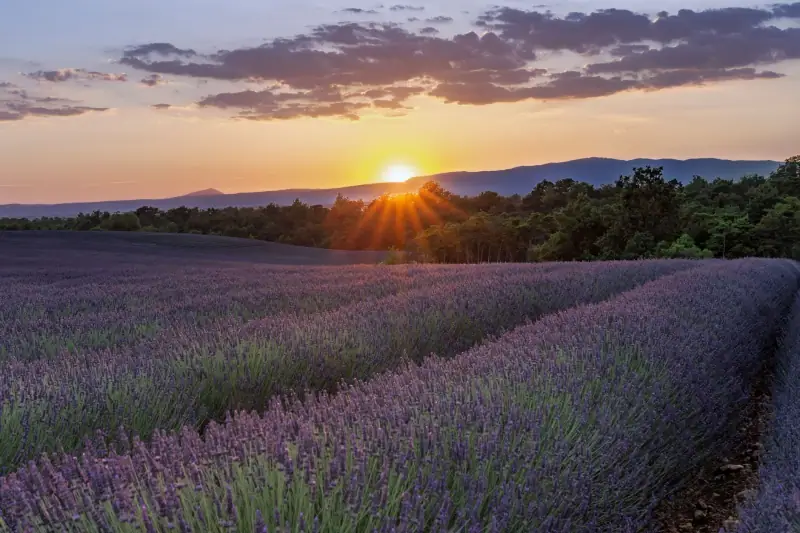
3 days
Lavender route in Provence in 3 days: Valensole, Sault and the Luberon, stops and distances
Moustiers-Sainte-MarieSault
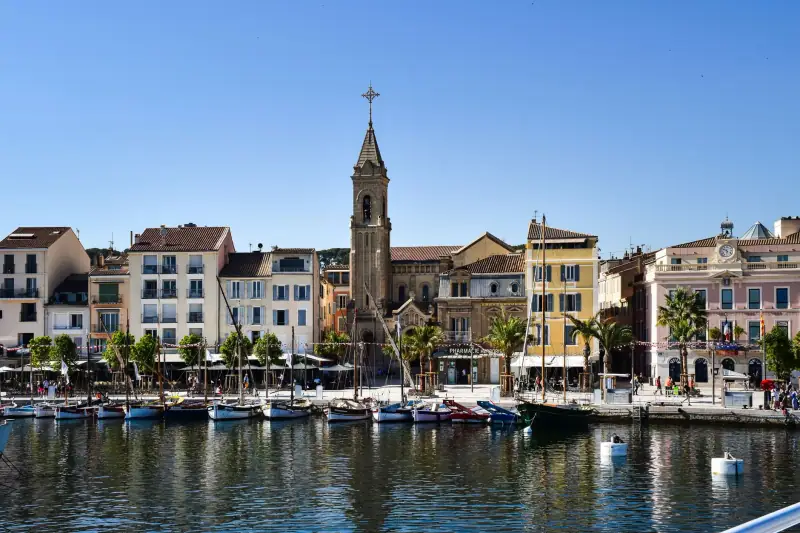
3 days
3 days between Marseille, Cassis and Aix-en-Provence: a detailed itinerary
3-day Provence itinerary: Marseille and the Vieux-Port, Cassis calanques, Aix-en-Provence and its fountains. Day by day, distances and tips.
5 days
5-day Provence itinerary: Avignon, Luberon, Alpilles and Camargue
A day-by-day 5-day Provence itinerary: Avignon, Luberon, Alpilles, Arles, Camargue, Aix and Cassis, with realistic distances and practical tips.
Can be adapted in the planner