Itineraries
5 days in Balagne: Calvi, L'Île-Rousse and the perched villages
We may earn a commission when you book through links on this page, at no extra cost to you. We don't visit or try the places we cover: we summarize published sources. How we work
Day by day
- Day 1Calvi: Genoese citadel, beach, Notre-Dame de la Serra
- Day 2Sant'Antonino, Pigna, Aregno and the Haute-Balagne villages
- Day 3L'Île-Rousse: covered market, beaches, Île de la Pietra
- Day 4Balagne tram, beach stops, Algajola
- Day 5Ostriconi beach, then return to Calvi or L'Île-Rousse
Weather through the year on this route
| Jan | Feb | Mar | Apr | May | Jun | Jul | Aug | Sep | Oct | Nov | Dec | |
|---|---|---|---|---|---|---|---|---|---|---|---|---|
| High °F (°C) | 5211 | 5211 | 5714 | 6116 | 6820 | 7725 | 8228 | 8429 | 7524 | 6820 | 5915 | 5412 |
| Low °F (°C) | 457 | 436 | 468 | 5010 | 5714 | 6418 | 7021 | 7222 | 6619 | 5915 | 5211 | 468 |
| Rain in (mm) | 3.180 | 2.870 | 2.870 | 2.665 | 2.050 | 1.025 | 0.410 | 0.615 | 2.460 | 3.795 | 4.7120 | 3.590 |
Normals 1991–2020 at Ajaccio: averages over 30 years, not a forecast. Source: NASA POWER (MERRA-2), grid of about 50 km. Figures computed by us in November 2026.
In short
- Five days cover Calvi (citadel and beach), the perched villages of Haute-Balagne, L'Île-Rousse and its market, a car-free beach train day, and the Ostriconi beach.
- A rental car is essential for the perched villages such as Sant'Antonino and Pigna; the Balagne tram links Calvi and L'Île-Rousse along the coast.
- Driving stages are short, 20 to 60 km (12 to 37 mi) a day, but mountain roads are winding and take longer than the distances suggest.
- June and September are ideal. In July-August, book lodging several months ahead.
Balagne, in the northwest of Corsica, is often nicknamed the “garden of the Island of Beauty”. Olive groves, vineyards, medieval villages perched on rocky peaks, fine sand beaches washed by a turquoise sea: this region concentrates in a few dozen square kilometers everything that makes Corsica unique. This five-day itinerary is designed to explore Balagne without rushing, alternating beaches, villages of the interior and moments of good food.
What you need:
- A rental car (essential for the perched villages)
- 5 nights of lodging, ideally split between Calvi and L’Île-Rousse
- Flexibility: Corsican mountain roads deserve to be taken slowly
Day 1: Arrival in Calvi, the citadel and the bay
Calvi naturally stands out as the entry point to Balagne. Calvi-Sainte-Catherine airport is a few minutes from the town center, and the town itself is compact enough to explore on foot on the first day.
Morning: the Genoese citadel
The Calvi citadel, built by the Genoese (Office of Saint George) in the 15th century, with additional works in the 16th century, overlooks the bay from its promontory. It still houses residents and shops. Stroll its white limestone lanes, admire the Saint-Jean-Baptiste church and take in the 360° view over the sea and the mountains of Balagne. Entry to the walls is free.
A local legend, not confirmed by historians, presents Calvi as the possible birthplace of Christopher Columbus; a ruined house in the citadel bears his name. True or not, it makes for a curious stop.
Afternoon: Calvi beach
Calvi beach stretches about 4 to 5 km (2.5 to 3 mi) of fine sand, from the citadel to the Marine de Sant’Ambroggio. It is reachable on foot from the center. Outside July and August, you will easily find a quiet corner.
Late afternoon: Notre-Dame de la Serra
From the center of Calvi, a marked trail climbs to the Notre-Dame de la Serra chapel in about 30 to 40 minutes of walking. The panorama over the citadel, the bay and the peaks of Haute-Balagne is remarkable, especially at the end of the day when the low light gilds the sea.
Where to stay in Calvi?
Seafront hotels, guesthouses in the citadel or residences steps from the beach.
Evening: Calvi harbor
The Quai Landry, along the marina, is lively in the evening. It is the ideal place for a dinner of grilled fish or Corsican soup in one of the many restaurants facing the boats. Prefer places slightly set back from the main quay, generally less touristy.
Day 2: The perched villages of Haute-Balagne
This is Balagne’s emblematic day: a circuit through the medieval villages of the interior, nestled between 300 and 600 meters (985 and 1,970 ft) of altitude, with constant views of the sea and the mountains.
Morning: Sant’Antonino
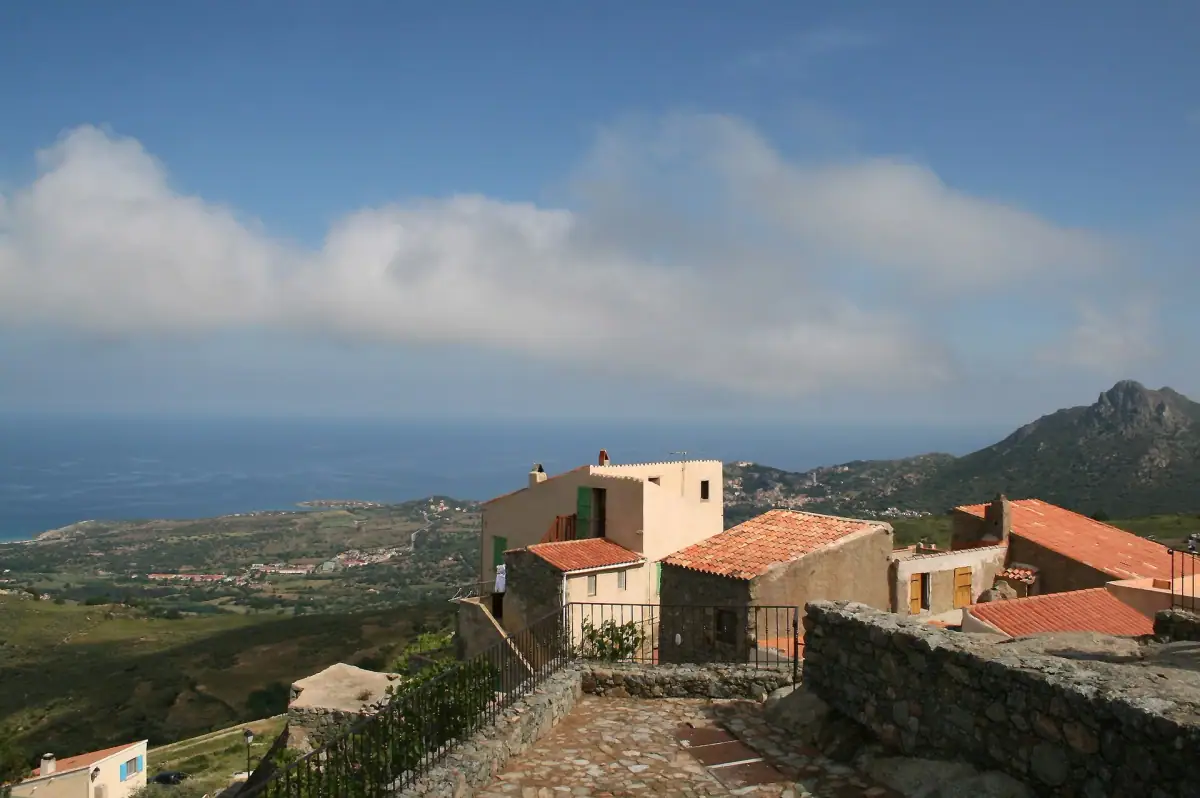
Sant’Antonino is one of the most photographed villages in Corsica. Perched on its rocky peak at about 500 meters (1,640 ft), it is regularly cited among the most beautiful villages in France. The road from Calvi (about 21-22 km / 13 mi, 25-30 minutes) is already a treat: terraced olive groves, green valleys, peaks in the background.
You visit the village entirely on foot. The lanes are narrow, the blond-stone houses pressed against each other. From the terrace at the top, the view takes in all of Balagne, from Calvi to L’Île-Rousse, with the sea as a backdrop. Allow an hour to an hour and a half to enjoy it fully.
Late morning: Pigna
About ten minutes by car from Sant’Antonino, the village of Pigna has built its identity around crafts and traditional Corsican music. Workshops of potters, luthiers and textile artisans are set up in the restored old houses. The village hosts a polyphonic music festival every year (Casa Musicale) that draws groups from across the Mediterranean world. Outside the festival, the atmosphere is calm and the village pleasant for a lunch break.
Lunch
Several cafés and small village restaurants offer plates of Corsican charcuterie, spelt soups or local cheeses. These places do not always post strict hours; show up between noon and 2 pm.
Afternoon: Aregno and the return to the coast
On the road back to Calvi or L’Île-Rousse, stop at Aregno to see the church of the Trinity and San Giovanni, a 12th-century Romanesque building made of green serpentine and white limestone, whose sculpted decoration mixes animal motifs and human figures. Well preserved and rarely crowded, it deserves a five-minute stop.
Day 3: L’Île-Rousse and the market
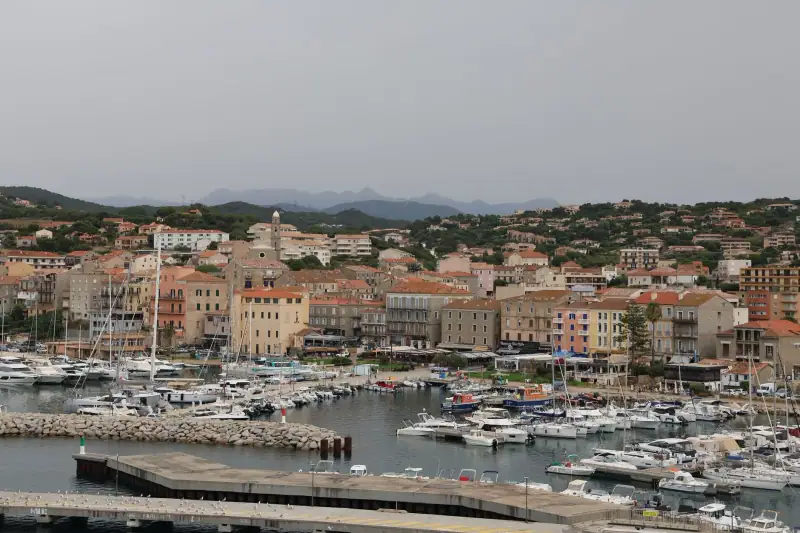
Head to L’Île-Rousse (about 23-24 km / 14-15 mi from Calvi by the T30/N197 or the beach train). This small town owes its name to the red porphyry rocks of the Île de la Pietra, reachable on foot by a causeway from the port.
Morning: the covered market
L’Île-Rousse’s covered market, on Place Paoli, is one of the liveliest on the north coast. In season, local producers sell sheep and goat cheeses (including PDO brocciu), charcuterie (lonzu, coppa, figatellu), Balagne olive oils, chestnut or maquis honeys, fig and citron jams. Arrive before 10 am to see it at its busiest.
Car rental in Balagne
Compare the offers available at Calvi airport for your circuit.
Afternoon: L’Île-Rousse beaches
L’Île-Rousse has several sand beaches right next to the center. Marinella beach is the town’s central beach, next to Place Paoli, ideal for a swim after the market. For more quiet, Bodri beach, toward Calvi, is served by the beach train.
The Île de la Pietra
In the late afternoon, stroll along the causeway linking the mainland to the Île de la Pietra. The lighthouse at the top of the island is reachable after a short climb. The view of L’Île-Rousse from the red rocks, especially against the light, justifies the detour. Entry is free.
Evening
L’Île-Rousse is quieter than Calvi for nightlife, but the restaurants on Place Paoli and at the port offer good fresh fish and traditional Corsican dishes. It is a good evening to order a platter of local cheeses bought that very morning at the market.
Day 4: The Balagne tram and the hidden beaches
The most restful day of the stay: leave the car behind and use the Balagne tram (Chemins de Fer de la Corse) to explore the beaches between L’Île-Rousse and Calvi.
The beach train
This little meter-gauge train, nicknamed the “beach train”, runs along the coast from L’Île-Rousse toward Calvi (or the reverse), serving several stops directly on beaches or a few minutes’ walk from them. The full trip lasts about 45 minutes to 1 hour. Timetables vary by season: in summer, several round trips run each day (not one train an hour). Check the timetables on the Chemins de Fer de la Corse website before leaving.
The stops let you get off as you wish, swim, have lunch in a beach bar, then catch the next train. It is a relaxed way to cover the coast without trying to park on crowded roads.
Algajola
The small citadel of Algajola, closer to L’Île-Rousse (8 km / 5 mi) than to Calvi (16 km / 10 mi), is worth a 30-minute stop. This fortified village, much smaller and quieter than Calvi, has its own sand beach and a well-preserved Genoese tower. The atmosphere is especially gentle off season.
Return and a quiet evening
Head back to L’Île-Rousse or Calvi depending on your base. After a beach day, the evening can be simple: an aperitif based on Cap Corse (the island’s traditional aperitif, bitter and lightly fruity), ice cream or sorbets in local flavors (fig, myrtle, chestnut).
Day 5: The Ostriconi coast and departure
The last day is devoted to an excursion north, at the edge of Balagne and the Agriates Desert.
Morning: Ostriconi beach
Ostriconi beach, about 15 km (9 mi) east of L’Île-Rousse (toward Saint-Florent/Bastia), is one of the wildest and best-preserved beaches in northern Corsica. It is not served by public transport. A dirt track (about 2 km / 1 mi from a small car park) leads to it. The sand is fine, the sea shallow at the mouth of the Ostriconi river, and crowds stay moderate even in season.
In the background, the hills at the start of the Agriates Desert give the place an almost wild character. Bring water and a picnic since no services are available on the beach.
Lunch and return
Head back to Calvi or L’Île-Rousse depending on your flight or boat time. Enjoy a last meal in one of the port restaurants, a coffee on a terrace, or bring home in your luggage a few specialties bought along the way: a bottle of PDO Huile d’olive de Corse – Oliu di Corsica, a jar of fig jam, or a dry-cured sausage.
Practical information
Lodging
Balagne has a full range of lodging: seafront hotels in Calvi and L’Île-Rousse, rural gîtes in the villages of the interior, campgrounds at the edge of the forest. In July-August, be sure to book several months ahead, as good lodging fills early. In May-June and September, you can be more flexible.
For a 5-day stay, a base in Calvi (or L’Île-Rousse for the last 2-3 days) is ideal. Some gîtes in the perched villages offer a more authentic experience, at the price of a bit more driving.
See the articles Where to stay in Calvi and Where to stay in L’Île-Rousse for detailed recommendations.
Indicative budget per day (per person)
| Item | Moderate budget | Comfort budget |
|---|---|---|
| Lodging (off season) | €40-70 (~$46-81) | €90-150 (~$105-175) |
| Lodging (July-August) | €80-120 (~$93-140) | €150-250 (~$175-290) |
| Meals | €30-50 (~$35-58) | €60-100 (~$70-115) |
| Transport (shared car) | €20-35 (~$23-41) | €35-50 (~$41-58) |
| Activities | €10-20 (~$12-23) | €30-60 (~$35-70) |
These ranges are indicative and can vary significantly with the period and your choices.
How to get to Balagne
By plane: Calvi-Sainte-Catherine airport has scheduled flights, mainly in season (April to October). Off season, a connection is often needed.
By ferry: The port of L’Île-Rousse receives ferries from Marseille (Corsica Linea, all year) as well as from Nice and Toulon (Corsica Ferries, seasonal services, roughly April to August). For Calvi, check with the operators for the services offered. The crossing takes about 5 h 30 to 6 h from Nice and is clearly longer from Toulon or Marseille (often overnight).
By train from Bastia: The Bastia-Calvi line crosses all of Haute-Corse and Balagne. The trip takes about 3 hours. It is an interesting option if you arrive through the port of Bastia or want to combine the two regions.
Recommended period
- May - June: Ideal. Green vegetation, sea still cool but fine days, few people.
- July - August: High season. Hot, crowded on beaches and roads, but all activities are available.
- September: Excellent. Warm sea, falling crowds, magnificent autumn light in the villages.
- October - April: Off season. Many hotels close. Balagne remains beautiful but some restaurants and activities are unavailable.
What you will not see in 5 days
Five days in Balagne is already a lot, but this region still holds other corners that would each deserve an extra day:
- The Giussani: an inland valley with the villages of Pioggiola and Olmi-Cappella, surrounded by pine and beech forests. Reachable from L’Île-Rousse in about 1 hour of driving.
- Saint-Florent and the Agriates Desert: technically on the edge of Balagne and the Nebbiu, but the trip from L’Île-Rousse is worth it (about 45 km / 28 mi, 35-40 minutes by road). Lotu beach, reachable from Saint-Florent by boat or on foot (about 2 h), is often cited among the most beautiful in Corsica.
- Montemaggiore: a small perched village whose terrace has one of the most complete views over all of Balagne, from Calvi to L’Île-Rousse.
To go further, read our complete guide Visiting Balagne and our article on Visiting Calvi.
FAQ
In short: a car is essential for the perched villages, May-June and September are the best periods, and book lodging well in advance in July-August. The Balagne tram is an excellent way to spend a day without driving between the two main towns.
Sources
- Les Plus Beaux Villages de France: figures checked November 2026
Frequently asked questions
How do you get around Balagne without a car?
The Balagne tram (nicknamed the 'beach train') links Calvi to L'Île-Rousse along the coast, with stops at many beaches. To visit the perched villages of the interior such as Sant'Antonino or Pigna, a rental car is still necessary because the mountain roads are not served by public transport.
What is the best time to visit Balagne?
June and September are the ideal months: the sea is already warm (22-25 °C / 72-77 °F in September), crowds are thinner than in July-August, and the mountain roads are fully accessible. In July-August, plan to arrive early in the perched villages and book lodging several months ahead.
How many kilometers should you plan per day for this itinerary?
The stages are deliberately short: 20 to 60 km (12 to 37 mi) of actual driving a day. Balagne is a compact region. Mountain roads are winding and require careful driving, so allow more time than the distances suggest.
Does the Balagne tram stop at beaches?
Yes, that is its main tourist appeal. It serves several beaches between Calvi and L'Île-Rousse, including those of Algajola. Timetables vary by season: in summer, several round trips a day let you travel between beaches without a car. Check the CFC (Chemins de Fer de la Corse) timetables before you leave.
Are there hiking trails accessible from Calvi?
Yes. The trail to the Notre-Dame de la Serra chapel, above Calvi, offers a remarkable view of the citadel and the bay. It can be reached on foot from the center in about 30 to 40 minutes. Other trails leave the perched villages of Balagne toward the interior. The Calvi tourist office provides trail guides.
Can you do this itinerary as a family with children?
Absolutely. The beaches of Balagne are generally less windy and more accessible than those of the south. The beach train is an experience children enjoy. The mountain roads to the perched villages deserve careful driving but present no particular danger. Plan regular breaks.
More Corsica guides
Keep reading
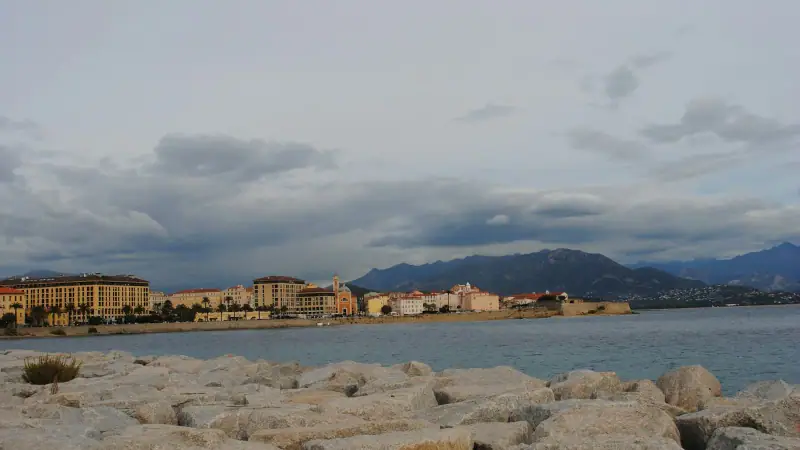
Bastia or Ajaccio: where to stay in Corsica without a car
Bastia or Ajaccio as a car-free base in Corsica? Train access, walkable areas and possible excursions: a full comparison to help you choose.
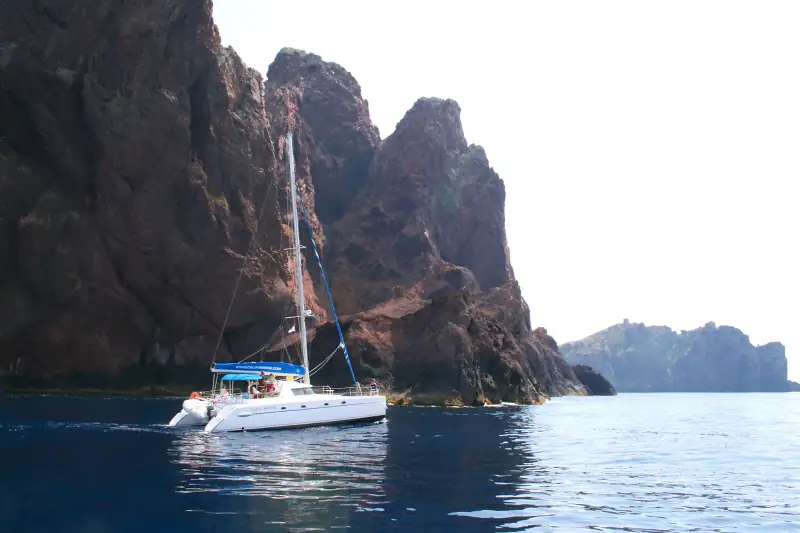
Boat trip to Scandola and Girolata: book ahead or on the spot?
Scandola and Girolata by boat: book ahead or on the spot? Departure ports, prices, duration, seasickness and best season.
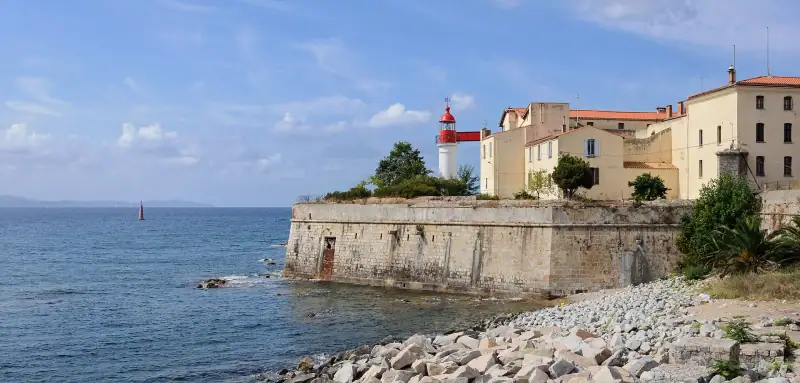
Visiting Ajaccio: a complete guide to the capital of Corsica
Everything to visit Ajaccio: Maison Bonaparte, Fesch Museum, Sanguinaires Islands, old harbor and beaches. A practical guide to Corsica's capital.
Ready-made
Corsica itineraries
10 days
Corsica in 10 days: a complete itinerary around the Island of Beauty
A 10-day Corsica itinerary around the whole island: Bastia, Cap Corse, Balagne, Ajaccio, Bonifacio, Porto-Vecchio and the mountains.
14 days
Corsica road trip: a 10 to 14 day itinerary to see it all
The ultimate Corsica road trip in 10 to 14 days: the best route through the island's beaches, villages, mountains and food.