What to see
Visiting Balagne: a complete guide to the region of perched villages
We may earn a commission when you book through links on this page, at no extra cost to you. We don't visit or try the places we cover: we summarize published sources. How we work
In short
- Balagne is the northwest of Corsica, the island's garden, between Calvi and L'Île-Rousse, with perched villages in the hills.
- The Balagne tram (Train des plages) links Calvi and L'Île-Rousse (22 km / 14 mi) in 40 to 45 minutes. A car is essential for inland villages.
- Sant'Antonino takes 1 h 30 to 2 h to visit. May-June is best for hiking and discovery, September for swimming.
- The GR20 north start is at Calenzana, about 13 km (8 mi) from Calvi.
Balagne spreads across the northwest of Corsica like a living painting: silvery olive groves cascade down steep slopes, granite villages clinging to rocky spurs overlook a deep blue sea, and two coastal towns, Calvi and L’Île-Rousse, punctuate a coastline of crystal-clear water. It is called the “garden of Corsica” for its citrus orchards, vineyards and olive fields that contrast with the wild image of the rest of the island.
Less known than Corse-du-Sud but just as appealing, Balagne is for travelers who do not want to choose between beach and mountain, between town and authentic village. In one well-organized day you can have a coffee at Calvi harbor, swim in a wild cove reachable only by the coastal tram, lunch in the medieval lanes of a perched village and be back in L’Île-Rousse at sunset. That is the magic of Balagne.
Calvi, capital of Balagne
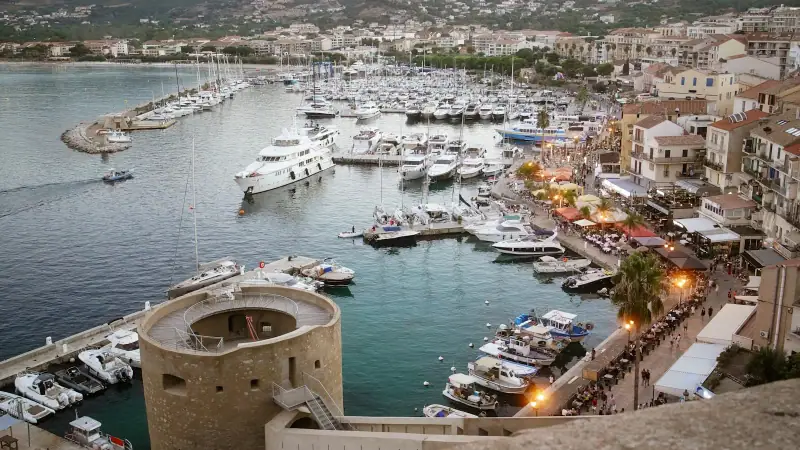
Calvi is the natural gateway to Balagne for most travelers: it has an international airport and a railway station linked to Bastia via Ponte-Leccia. But beyond its role as a hub, Calvi is a destination in its own right that deserves at least two days.
Its Genoese citadel, built in the 13th-15th centuries, overlooks the bay from a rocky promontory. From the walkway, the view takes in the fine sand beach stretching about 4.5 kilometers (2.8 mi), the snowy peaks of the Monte Cinto massif in the distance and, in clear weather, the Gulf of Girolata. The Saint-Jean-Baptiste cathedral holds, among other things, an ebony Christ of Miracles that has long been an object of local devotion.
Below, the marina enlivens the waterfront with its terraces and fresh fish restaurants. Calvi beach is one of the longest and most beautiful in the whole region: lined by a pine grove that gives shade in summer, it suits families with children as well as water sports fans.
Calvi is also the ideal starting point for exploring inland Balagne. About 13 km (8 mi) to the southeast, the village of Calenzana marks the north start of the GR20, the great traverse of Corsica considered one of the most difficult hiking trails in Europe.
For a full presentation of the town, see our guide to Calvi.
Hotels in Balagne
Stay in Calvi, L'Île-Rousse or an inland village to explore Balagne at your own pace.
L’Île-Rousse, the other gateway to Balagne
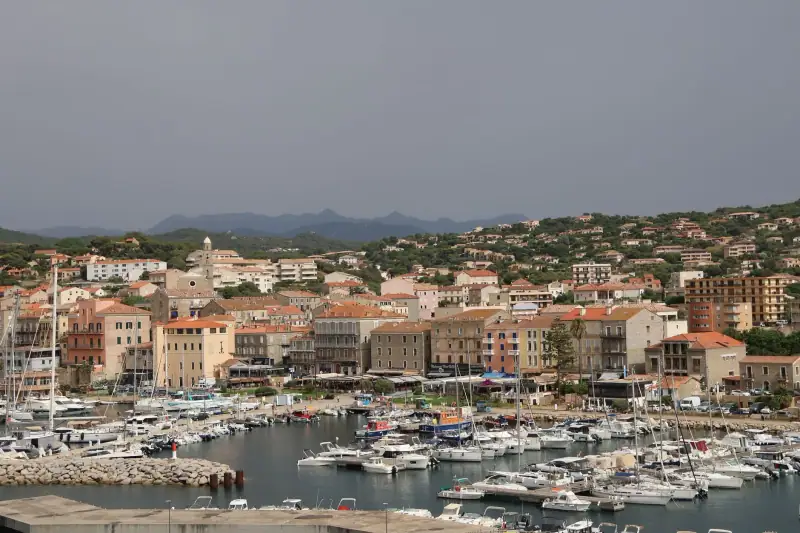
About 25 kilometers (16 mi) east of Calvi by the coast road, L’Île-Rousse is the second town of Balagne and the most commercially lively. Founded in the 18th century by Pasquale Paoli to rival Genoese-dominated Calvi, it owes its name to an archipelago of red porphyry rocks, the Île de la Pietra, which closes the bay to the north.
The market, heart of the town
L’Île-Rousse’s daily attraction is its covered market, known as one of the liveliest in Corsica. Set under halls built in the 19th century, it offers every morning (in season) Corsican cheeses, cured meats, garden vegetables, maquis honeys and local olive oils. It is the ideal place to take the pulse of local life and leave with a few specialties in your luggage.
The waterfront and beaches
L’Île-Rousse’s seafront is more discreet than Calvi’s, but the beaches of the area more than make up for it. Lozari beach, a few kilometers to the north, is one of the largest and wildest in the region, exposed to the wind and popular with kitesurfers. The coves reachable from the tram between Calvi and L’Île-Rousse rank among the island’s most beautiful hidden beaches.
For everything about the town, see our guide to L’Île-Rousse.
The perched villages: the soul of Balagne
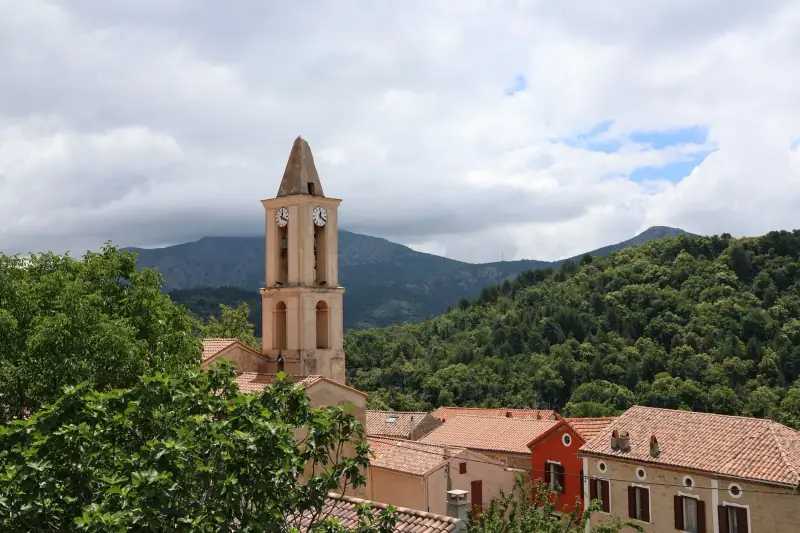
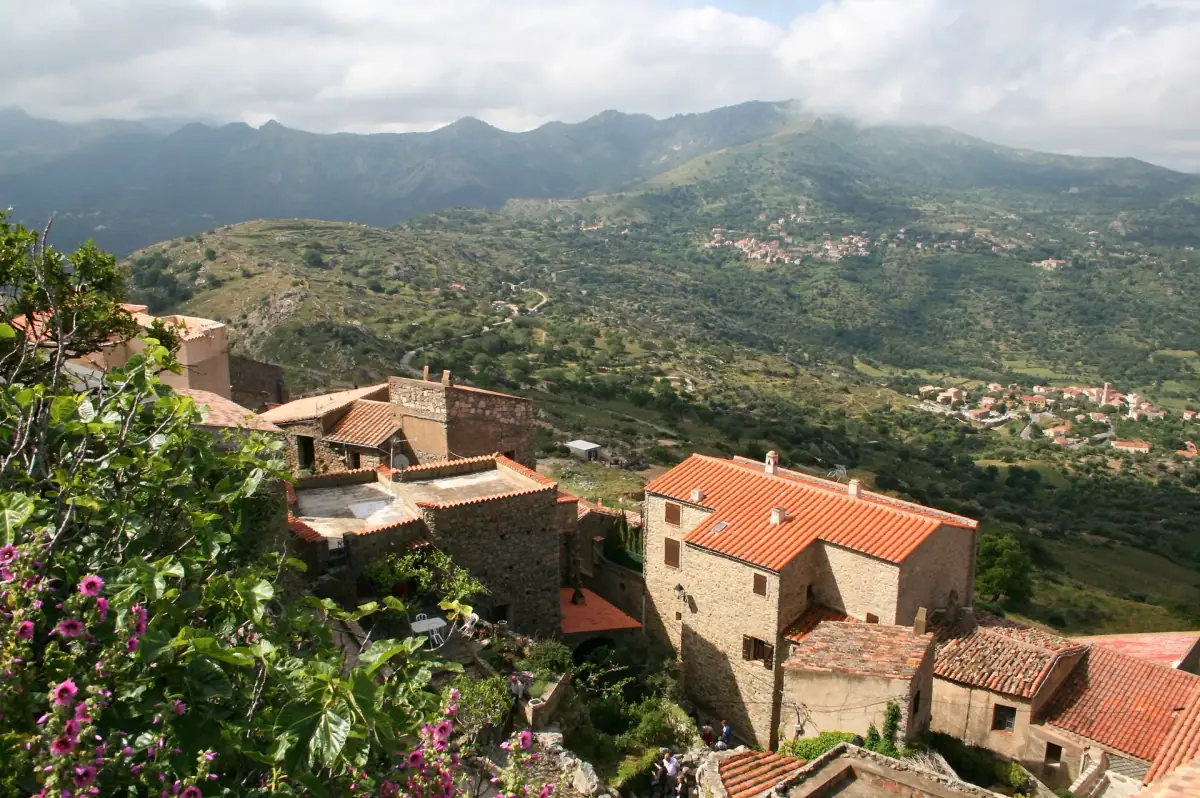
It is in its inland villages that Balagne reveals its most authentic character. About twenty granite villages clinging to ridges at between 200 and 700 meters (655 and 2,295 ft) of altitude dot the hills. Each has its own personality, its viewpoint, its baroque church. By car, you can link several of them in the same day.
Sant’Antonino: the most beautiful village in Corsica?
Sant’Antonino is often cited as one of the most beautiful villages in France and as the oldest village in Balagne. Perched on a rocky spur at about 500 meters (1,640 ft), it has a 360° view over the sea, vines, olive trees and the Balagne coast that leaves you speechless.
Its granite-paved lanes, too narrow for cars, tangle between medieval houses, some dating back to the 9th century. You wander among flower boxes, vaulted passages and shaded little squares. In season, small artisans and art galleries have settled in the old houses.
The visit takes between 1 h 30 and 2 hours. You park at the foot of the village in a designated car park, then walk up.
Pigna: the village of music
A few kilometers from Sant’Antonino, Pigna is the village of artisans and musicians of Balagne. Since the 1970s a cooperative of artisans has settled there to revive traditional Corsican skills: pottery, instrument making, weaving, cabinetmaking. Craft shops line its lanes and make Pigna a good stop for picking up something authentic.
Pigna is also home to the Casa Musicale, a center dedicated to Corsican polyphony, and hosts the Festivoce festival every summer, an international festival of voice and polyphony whose reputation reaches well beyond the island.
Tours and excursions in Balagne
Guided hikes in the perched villages, 4x4 tours, visits to the Pigna artisans: discover Balagne differently.
Speloncato: the balcony of Balagne
More isolated and less touristy than Sant’Antonino, Speloncato is another jewel of inland Balagne. Perched at about 600 meters (1,970 ft), the village has a spectacular view over the plain and the sea. Its lanes, deserted in the low season, give an impression of suspended time. There is a baroque church and a few manor houses that testify to the place’s past wealth.
Algajola: the beach town with a citadel
On the coast between Calvi and L’Île-Rousse, Algajola is a pleasant small town with a lovely sand beach and an old 16th-century Genoese citadel (rebuilt in the 17th century after the pirate raid of 1643). Less known than Calvi, it attracts vacationers looking for calm and authenticity on a less crowded seafront. Algajola beach, facing due south, is reachable on foot from the tram station.
The beaches of Balagne
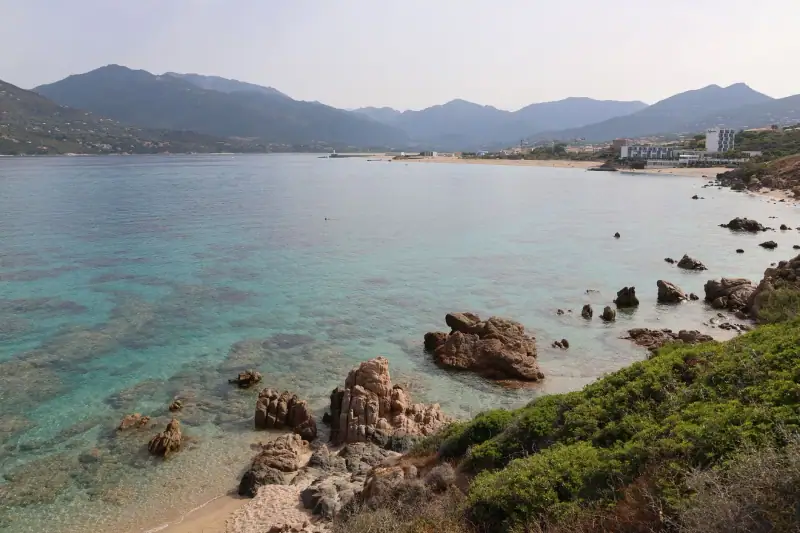
Balagne has a remarkable coastline of more than 60 kilometers (37 mi). Between the large beaches easily reached by car and hidden coves reachable only by tram or on foot, there is something for every taste.
Beaches worth a visit:
- Calvi beach: 4.5 km (2.8 mi) of fine sand, full services, crystal-clear water with a Blue Flag
- Algajola beach: quieter, south-facing, golden sand, reachable by tram
- Bodri beach: large wild and windy beach between Calvi and L’Île-Rousse, ideal for board sports
- Lozari beach: north of L’Île-Rousse, a vast stretch of fine sand with few facilities, wild and preserved
- Tram coves: several small wild beaches reachable only from the stops of the Train des plages between Calvi and L’Île-Rousse; tell the driver which stop you want
Car rental in Balagne
A car is essential to explore the perched villages of Balagne. Book ahead, especially in July and August.
Food and crafts of Balagne
Balagne deserves its nickname “garden of Corsica”. Its fertile land has produced for centuries the olive oil, wines, citrus and chestnuts that form the backbone of local cuisine.
Olive oil, the liquid gold of Balagne
The region concentrates much of the production of Corsican olive oil under the PDO “Huile d’olive de Corse – Oliu di Corsica”. Thousands of olive trees, some centuries old, blanket the hills of inland Balagne. Several mills and olive estates open their doors for visits and tastings, notably in October and November during the harvest. It is an ideal souvenir to bring back.
AOC Calvi wines
The Balagne vineyard produces wines under the AOC Calvi appellation, one of the nine AOCs of Corsica. Nielluccio, Sciaccarellu and Vermentino are the leading grapes. The rosés of Balagne are particularly appreciated: fruity, fresh and lightly aromatic, they pair ideally with local cured meats and cheeses.
Markets and producers
The markets of Calvi and L’Île-Rousse are the best places to buy directly from producers. You will find artisan cured meats (lonzu, coppa, figatellu, Corsican saucisson), fresh or aged sheep and goat cheeses, maquis honeys, citron jams and chestnuts. The L’Île-Rousse market, under its 19th-century halls, is particularly renowned and worth an early wake-up.
To go deeper into the island’s food, see our guide to Corsican food.
How to get around Balagne
The Balagne tram: the railway of the beaches
The Balagne tram, nicknamed the “Train des plages”, is one of the most picturesque experiences in all of Corsica. This meter-gauge railway links Calvi to L’Île-Rousse over about 22 kilometers (14 mi) along the coast, with stops on request at all the intermediate coves and beaches. The trip takes about 40 to 45 minutes.
In summer, the tram runs several times a day. It lets you reach wild beaches inaccessible by car and avoid parking problems in high season. It is also one of the most striking rail panoramas in France: the track runs along the sea a few meters from the waves, between maquis and rocks.
A car for the interior
To explore the perched villages and olive groves of inland Balagne, a rental car is essential. The roads between villages are narrow and winding, so prefer a compact car. Allow about 30 to 40 minutes from Calvi to reach most inland villages.
Book your vehicle well ahead: in July-August availability runs out quickly and prices soar. Calvi-Sainte-Catherine airport has counters of all the major rental brands.
When to visit Balagne
| Period | Advantages | Drawbacks |
|---|---|---|
| May – June | Few crowds, flowering maquis, low prices, cool sea | Water still cool for the less hardy |
| July – August | Lively beaches, festivals, all activities available | Crowds, high prices, crowded roads |
| September – October | Warm sea, golden light, grape harvest, calm returns | Some businesses close in mid-October |
| November – April | Absolute calm, wild nature | Limited lodging, cold sea |
The best period remains May-June for hiking and discovery fans, and September for those who want to swim without the summer crush. Our guide to the best time to visit Corsica will help you choose according to your type of trip.
Suggested itinerary: 3 days in Balagne
Day 1: Calvi and its citadel Arrive in Calvi, settle in, visit the Genoese citadel and walk the ramparts. Evening at the harbor.
Day 2: Perched villages of the interior Drive to Calenzana (viewpoint), then Sant’Antonino (visit, panoramic view), Pigna (artisans, Casa Musicale), lunch in a village restaurant, return via Speloncato and its viewpoints. Aperitif in Calvi or L’Île-Rousse.
Day 3: L’Île-Rousse and the beach tram L’Île-Rousse covered market in the morning, then back to Calvi by tram with stops at the wild beaches. Swim at Algajola or in a tram cove. Evening in Calvi.
For a fuller itinerary across the island, see our Corsica road trip guide.
Balagne is a region you have to earn: its best treasures hide a few kilometers from the coast, in villages that hurried travelers never see. Take the time to park the car, walk up to a perched village and sit on a granite bench facing the sea. It is in those moments that Corsica reveals what is most precious about it.
Sources
Frequently asked questions
What is Balagne in Corsica?
Balagne is a natural region in the northwest of Corsica, known as the 'garden of Corsica' for its olive groves, orchards and perched villages. It extends roughly between Calvi in the west and L'Île-Rousse in the east, and rises toward the mountain foothills to the south. Its landscapes combine turquoise sea, fragrant maquis and perched villages of character.
How do you get around Balagne without a car?
The Balagne tram (Train des plages) links Calvi to L'Île-Rousse along the coast for about 22 km (14 mi), with stops at all the intermediate coves and beaches. For the inland villages (Sant'Antonino, Pigna, Speloncato) a rental car is essential: the roads are narrow but passable. Local taxis also serve some villages from Calvi or L'Île-Rousse.
When is the best time to visit Balagne?
May-June and September-October offer the best conditions: pleasant weather, flowering maquis, a sea warm enough for swimming and far fewer tourists than in midsummer. July-August is the high season with maximum activity but high prices and crowded roads. Winter is mild by the sea but some inland villages can be isolated.
Is Sant'Antonino really worth the detour?
Absolutely. Sant'Antonino is considered one of the most beautiful villages in France and one of the oldest in Corsica. Its granite-paved lanes, medieval houses built on top of a rocky spur and the 360° view over the sea, vines and olive groves make it one of the most memorable visits in Balagne. Allow 1 h 30 to 2 hours there.
Can you hike in Balagne?
Yes, Balagne has fine hikes for all levels. The Mare e Monti Nord (a regional long-distance trail) crosses the region from north to south, linking Calenzana to Cargèse through several inland villages. Local loops exist around each perched village. For the GR20, the north start is at Calenzana, about 13 km (8 mi) from Calvi.
What are the food specialties of Balagne?
Balagne is known for its olive oil (PDO Huile d'olive de Corse – Oliu di Corsica), its AOC Calvi wines, sheep and goat cheeses, Corsican cured meats (lonzu, coppa, figatellu) and maquis honey. Several local producers sell directly at the farm or in the markets of Calvi and L'Île-Rousse, notably the daily market of L'Île-Rousse.
More Corsica guides
Keep reading
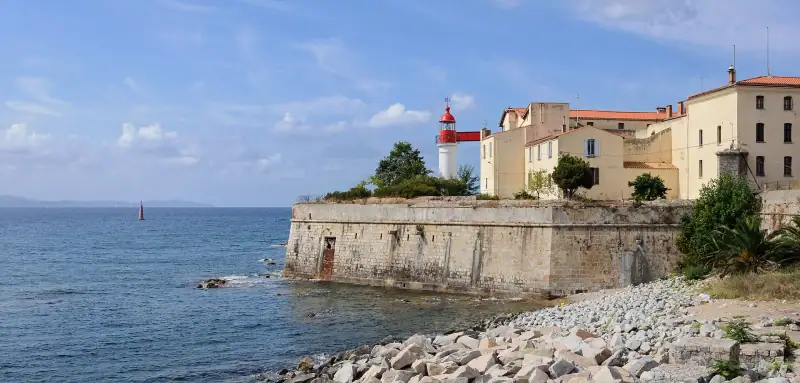
Visiting Ajaccio: a complete guide to the capital of Corsica
Everything to visit Ajaccio: Maison Bonaparte, Fesch Museum, Sanguinaires Islands, old harbor and beaches. A practical guide to Corsica's capital.
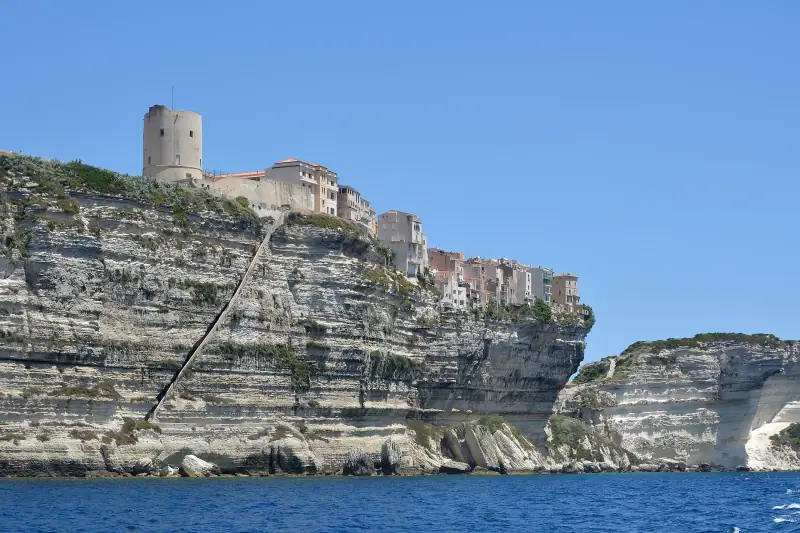
Visiting Bonifacio: a complete guide to the city of the cliffs
Genoese citadel, white cliffs, sea caves and the Lavezzi Islands: a complete guide to visiting Bonifacio, Corsica's most spectacular town.
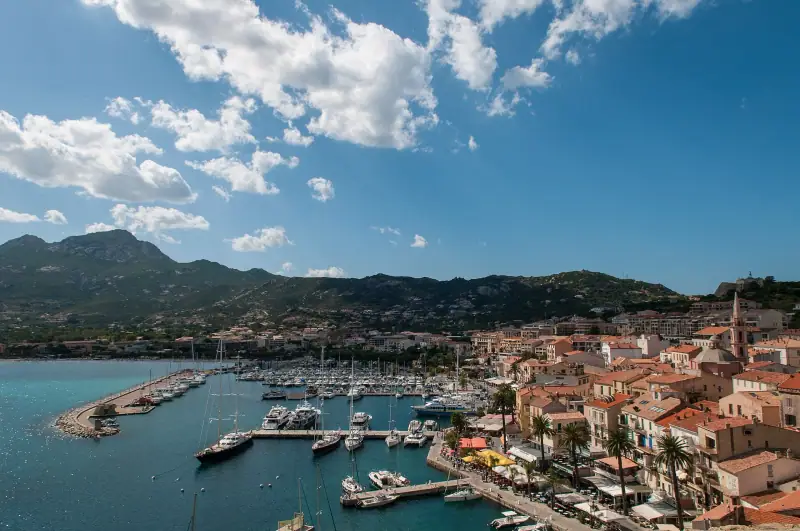
Visiting Calvi: a complete guide to the pearl of Balagne
Visit Calvi: Genoese citadel, 4.5 km beach, Revellata, the beach train and the GR20. A complete practical guide for staying in Calvi, Corsica.
Ready-made
Corsica itineraries
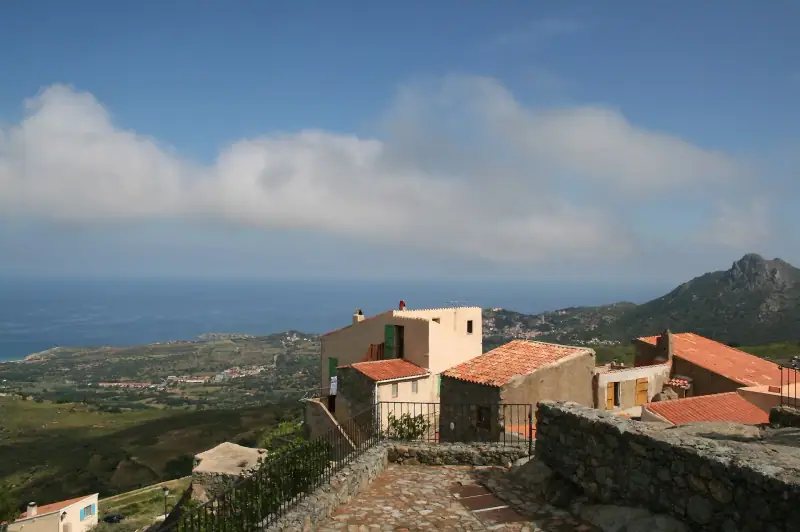
5 days
5 days in Balagne: Calvi, L'Île-Rousse and the perched villages
5-day Balagne itinerary: Calvi, L'Île-Rousse, Sant'Antonino, Pigna. Perched villages, beaches, olive oil and the beach train. A complete guide.
10 days
Corsica in 10 days: a complete itinerary around the Island of Beauty
A 10-day Corsica itinerary around the whole island: Bastia, Cap Corse, Balagne, Ajaccio, Bonifacio, Porto-Vecchio and the mountains.
14 days
Corsica road trip: a 10 to 14 day itinerary to see it all
The ultimate Corsica road trip in 10 to 14 days: the best route through the island's beaches, villages, mountains and food.