What to see
Visiting Bonifacio: a complete guide to the city of the cliffs
We may earn a commission when you book through links on this page, at no extra cost to you. We don't visit or try the places we cover: we summarize published sources. How we work
In short
- Two full days are ideal: the citadel and upper town on foot, then a boat trip to the sea caves and the Lavezzi Islands.
- From Ajaccio it is about 2 h 15 by the N196 (131-138 km / 81-86 mi); from Porto-Vecchio 30 minutes (28 km / 17 mi). There is no train station.
- Sea cave tours cost €15 to €20 (~$17 to $23); Lavezzi shuttles about €35 to €40 (~$41 to $46).
- May, June and September are the best months; in July-August the town is saturated and prices climb.
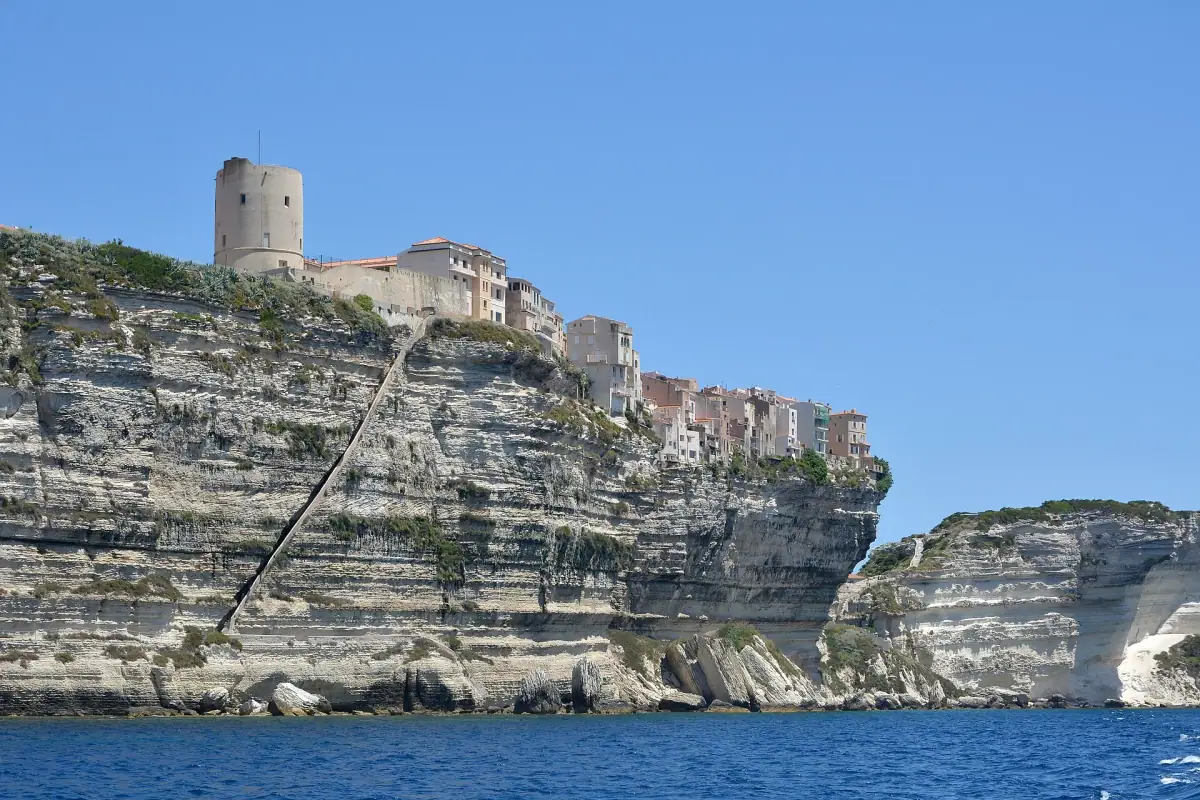
Bonifacio is one of the most striking towns in Europe. Perched on a white limestone promontory 70 meters (230 ft) above the sea, its Genoese citadel seems to defy the laws of physics. Below, the cliffs plunge sheer into turquoise water that shifts toward electric blue depending on the hour and the light. Opposite, only 12 kilometers (7.5 mi) away, the coast of Sardinia draws the horizon. Here, at the Strait of Bonifacio, two countries face each other and the water between them is a road that boats have used since antiquity.
Bonifacio is both a postcard town and a place of dense history. Its citadel, built by the Genoese from the 12th century, is the best preserved in Corsica. Its sea caves carved into the white limestone rank among the most spectacular in the Mediterranean. Its Lavezzi Islands, a few miles offshore, form a marine nature reserve of absolute beauty.
This guide gives you all the keys to explore Bonifacio as it deserves.
The Citadel and the upper town
You explore the upper town of Bonifacio on foot, climbing from the port by Rue Saint-Érasme or the Montée Saint-Roch. As soon as you pass through the Porte des Gênes, the only historic entrance to the fortified town, you enter another world.
The Porte des Gênes and the ramparts
Built from the 12th century by the Genoese, the Porte des Gênes is a drawbridge with a baroque triumphal arch added in 1598. It is the main way into the citadel. The ramparts around the upper town date from the same century and testify to the defensive power the Genoese had designed for their southernmost colony.
From the walkway, the view over the Strait of Bonifacio with Sardinia in the background is one of the finest on the island. In clear weather, you can make out the Sardinian coast of Santa Teresa Gallura with the naked eye.
Sainte-Marie-Majeure Church
Sainte-Marie-Majeure Church is Bonifacio’s emblematic religious monument. Built between the 12th and 18th centuries in a mix of Romanesque, Gothic and baroque styles, it stands out for its outdoor loggia where the town’s elders once deliberated. Inside, a 14th-century rainwater cistern, visible under a glass panel in the floor, testifies to the hydraulic ingenuity of the besieged town.
The most precious piece is the Veil of Saint Lucy, a finely embroidered white silk lace that legend attributes to divine intervention during the Aragonese siege of 1420.
Free entry. Open daily in season.
The Étendard bastion
The old defensive bastion that watched over the entrance of the Bonifacio channel now houses a museum devoted to the history and prehistory of the town. Archaeological digs carried out from 1966 to 1975 in the Bonifacio area uncovered sites dating back to 6,500 BC, among the oldest in Corsica. The Lady of Bonifacio, discovered in 1972, is one of the most remarkable finds.
The bastion’s viewpoint gives one of the most vertiginous views over the cliffs and the natural harbor below.
Price: about €6.50 (~$8) for the monuments pass (King of Aragon’s steps + Étendard bastion), to be checked with the tourist office. Open in season.
Guided tours of Bonifacio
Explore the Genoese citadel and the secrets of the upper town with a local guide.
The King of Aragon’s steps
The King of Aragon’s steps are one of the most extraordinary sites in Corsica. These 187 steps cut right into the vertical limestone cliff descend 60 meters (200 ft) from the upper town to the foot of the cliffs, a technical feat achieved, according to legend, in a single night by the Aragonese troops during the siege of 1420.
The historical reality is more nuanced: the steps were probably used since the Middle Ages to reach a freshwater spring at the foot of the cliffs during sieges. But the legend persists, and it adds to the vertigo of the descent.
What to know before going down:
- The descent takes 10-15 minutes, the climb back 20-25 minutes
- The steps are cut in the rock, and some are uneven
- Metal handrails secure the route
- Closed in strong wind and after heavy rain (slippery ground)
- Closed shoes are essential; flip-flops are not recommended
At the bottom of the steps, a small platform lets you see the cliffs up close. The upward view of the citadel suspended in the air is striking.
The sea caves and the Strait of Bonifacio
The boat trip is the highlight of Bonifacio. From the marina, glass-bottom shuttles and small boats offer tours of 1 h to 1 h 30 around the cliffs and into the sea caves. It is one of the most memorable moments of a stay in Corsica.
The Sdragonato cave
The Sdragonato cave (“the little opening” in Corsican) is the most spectacular. The vault of the cavern has a natural fissure whose shape, seen from inside, recalls the silhouette of Corsica. When sunlight passes through this opening at midday (between noon and 2 pm), it casts an unreal turquoise beam on the water of the cave.
Boat trips generally pass through this cave at the optimal moment depending on the season, as the boatmen know the ideal light times.
The Queen Joan cave
Slightly less known than the Sdragonato, the Queen Joan cave is a deeper sea cavern with a natural pool of turquoise water. Legend says that Queen Joan I of Naples bathed there during a stopover in Bonifacio in the 14th century.
The Strait of Bonifacio
The strait between Corsica and Sardinia is not only beautiful; it is also a strategic and ecologically remarkable maritime zone. The strong currents that cross it make it one of the most demanding straits in the Mediterranean for sailors. The Bouches de Bonifacio international nature reserve, created by decree on September 23, 1999, protects this exceptional marine ecosystem with its posidonia meadows, dolphins and loggerhead turtles.
Where to take the excursions: Departures are from the port of Bonifacio (Quai Jérôme Comparetti). Allow €15-20 (~$17-23) per adult for a basic tour (sea caves + cliffs). Packages including the Lavezzi Islands cost about €35-40 (~$41-46) (round-trip shuttle) and last 3 h to 4 h; small-boat trips with cave access are clearly more expensive.
Boat trips in Bonifacio
Sea caves, Lavezzi Islands and the Strait of Bonifacio: the best excursions you can book online.
The Lavezzi Islands: the marine nature reserve
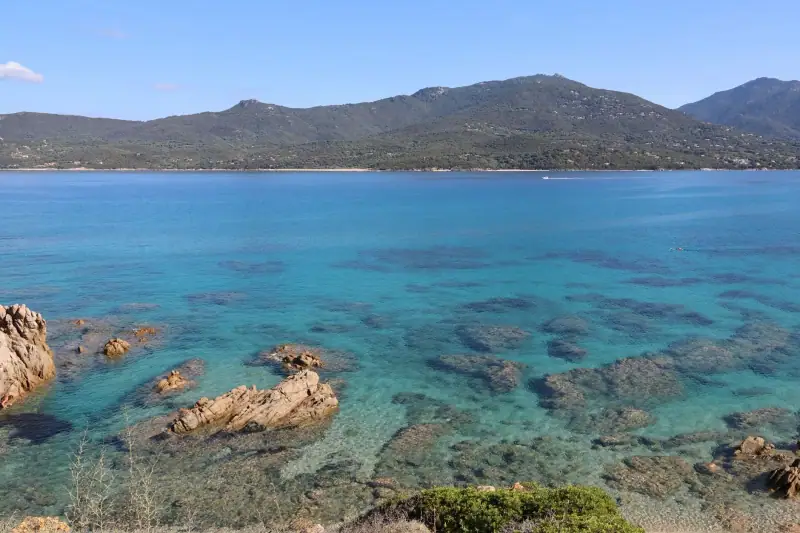
10 kilometers (6 mi) southeast of Bonifacio, the Lavezzi Islands form an archipelago of about twenty granite rocks set in water of absolute purity. A nature reserve since 1982, these islands are one of the great places of Mediterranean marine biodiversity and one of the wildest spots in Corsica. To choose between shuttle, cruise or RIB, see our comparison Lavezzi Islands from Bonifacio.
What you will find there
The Lavezzi have no hotel, no restaurant and no roads, just rocks rounded by erosion, transparent water between 15 and 25 °C (59-77 °F) in summer, and a few marked paths among tamarisks and junipers.
The marine life is exceptional: groupers, barracudas, moray eels, octopus and schools of sea bream live in the posidonia meadows and rock crevices. Experienced divers find some of the best spots on the island. Snorkelers can watch dense marine life from the surface in the sheltered coves.
The sailors’ cemetery of La Sémillante recalls the shipwreck on February 15, 1855 of a French frigate that cost about 693 lives, a tragic story that haunts these seemingly paradisiacal islands.
How to get there
Only boat trips from Bonifacio give access to the Lavezzi (anchoring and access are regulated). The shuttles generally stop for 1 h 30 to 2 h to allow swimming and snorkeling. Daily capacity is limited to 750 people, so book ahead in July-August.
The marina and the lower town
The port of Bonifacio stretches at the end of a natural channel 1.3 kilometers (0.8 mi) long. This ria (limestone fjord) is one of the most spectacular geographic configurations in the Mediterranean: the cliffs fall sheer on each side, the channel is so narrow in places that you could almost jump from one bank to the other, and the boats venturing in seem to sail between two white walls.
Quai Jérôme Comparetti
Bonifacio’s main quay is the essential promenade of the lower town. In summer it turns into a succession of restaurants, bars, excursion agencies and souvenir shops. The buzz peaks from 6 pm to midnight, when people come down from the cliffs and beaches for the aperitif, the tables fill and the boats return to port.
It is the best place to watch boats entering and leaving the harbor, often perilous in strong wind because of the narrowness of the channel.
The climb to the upper town
Several lanes link the lower town to the citadel. The Montée Saint-Roch (stairs) and Rue du Général de Gaulle (a narrow drivable road) are the two main accesses. The climb takes 10-15 minutes on foot, essential for understanding the town’s particular geography, built on two radically different levels.
Hotels in Bonifacio
Stay with a view of the cliffs or inside the citadel. Compare and book with free cancellation.
Beaches around Bonifacio
Bonifacio is not only a town of cliffs and citadel; its surroundings hold some of the most beautiful beaches of southern Corsica.
Rondinara beach
20 kilometers (12 mi) north of Bonifacio on the road to Porto-Vecchio, Rondinara beach is regularly ranked among the 10 most beautiful beaches in Europe. Its perfectly rounded shell shape, its lagoon-blue water of absolute clarity and the white sand lining it make it an exceptional place.
In high season, Rondinara is reached by a narrow road and the car park fills early (from 10 am). Arrive before 9 am or after 5 pm to find a space.
Santa Manza beach
8 kilometers (5 mi) from Bonifacio, Santa Manza beach stretches in a vast bay sheltered from the Bonifacio wind (libecciu). Its fine sand and shallow water make it an ideal family beach for children. A seasonal restaurant is set up there in summer.
Maora beach and the Spérone peninsula
The Spérone peninsula, east of Bonifacio, offers several small white sand beaches in a setting of Corsican maquis and granite rocks. The Spérone estate houses the most spectacular golf course in Corsica, with some greens looking straight onto the Strait of Bonifacio.
Maora beach (reachable on foot from the Spérone car park) is one of the most beautiful coves of the peninsula, in a preserved wild setting.
What to eat in Bonifacio
Bonifacio’s cuisine is part of the culinary tradition of southern Corsica, with a few particularities linked to the proximity of Sardinia.
Local specialties
Corsican cured meats: Coppa (dried loin), lonzu (dried fillet) and pancetta are found in all the citadel’s restaurants. Artisans of the Alta Rocca (the mountain region north of Bonifacio) send their best production here.
Corsican cheeses: Brocciu (fresh), fleur du maquis (coated in aromatic herbs) and sheep’s milk nustrale are tasted in the upper town’s cheese shops. Neighboring Sardinia also influences the local cheeses, and you may find Sardinian pecorino on the boards.
Fish and seafood: The port restaurants work with local fishermen. Bottarga (dried mullet roe), influenced by Sardinian tradition, is a rare specialty to try. Grilled spiny lobster, sea bream and sea bass are all worth trying.
Wines of southern Corsica: The vineyards of the area produce exceptional wines. The AOP Corse Figari to the south and the AOP Corse Porto-Vecchio (which covers Bonifacio and its surroundings) offer powerful reds and fresh rosés that go perfectly with local cuisine.
Where to eat
- Citadel (upper town): a more romantic setting, sea views, slightly higher prices
- Port (lower town): lively atmosphere, fish menus, ideal for lunch while watching the boats
- Surrounding villages (Santa Manza, Pianottoli-Caldarello): more authentic tables, fewer tourists
To explore Corsican cuisine more broadly, see our guide to Corsican food.
Excursions from Bonifacio
Alta Rocca and Zonza
60 km (37 mi) to the north by the D268 road, the Alta Rocca region offers a striking contrast to the coast. The villages of Zonza, Quenza and Levie are perched on ridges at 1,000 meters (3,280 ft) of altitude, surrounded by laricio pine forests. The region is the starting point for exceptional hikes, including access to the GR20 through the Bavella sector.
The Bavella needles, those jagged red rock towers overlooking the pass at 1,218 meters (3,996 ft), are one of the most spectacular landscapes of inland Corsica.
Porto-Vecchio and the coast
Only 28 kilometers (17 mi) to the north, Porto-Vecchio is easily reached in a day from Bonifacio. Its gulf holds famous beaches: Palombaggia, Santa Giulia, Tamaricciu. Porto-Vecchio is also a lively town with a Genoese citadel and renowned nightlife.
To plan your stay in Porto-Vecchio, see our Porto-Vecchio lodging guide.
Sardinia by ferry
From the port of Bonifacio, daily ferries reach Santa Teresa Gallura (Sardinia) in 50 minutes to 1 hour. Crossing the Strait of Bonifacio is a sight in itself. At Santa Teresa, you discover another world: Sardinian architecture, Sardinian cuisine (culurgiones, sebadas) and the pink granite beaches of Gallura.
The services are run by Moby Lines and Ichnusa Lines, with fewer sailings off season; their public service agreement ran until October 31, 2026, so check the timetables. Booking is advised in season.
Car rental in Bonifacio
Essential to explore the beaches and villages of the Alta Rocca from Bonifacio.
Practical tips for visiting Bonifacio
When to go: May-June or September are the ideal months. The light is beautiful, temperatures pleasant (22-26 °C / 72-79 °F), the sea is warm enough for swimming from June and the July-August crowds are absent.
Lodging: Book several months ahead for July-August; Bonifacio is one of the most requested destinations in Corsica. Hotels in the citadel (upper town) have the most spectacular views but no parking spaces. In the lower town (port), access by car is easier. To compare the upper town, the port and the surroundings, see our guide where to stay in Bonifacio.
Parking: The paid Marine car park (lower town) is the most central. Off season, you can easily park in the streets at the entrance to town. In July-August, plan on the Araguina car park (above the town) and come down on foot or by shuttle.
Budget: Bonifacio is one of the most expensive destinations in Corsica. Plan on €20-35 (~$23-41) for a dinner per person at a port restaurant and €100-200 (~$116-230) a night in a hotel in high season. Boat trips (€15-35 / ~$17-41) are an extra to budget for.
Wind and weather: The libecciu (southwest wind) blows hard in Bonifacio, sometimes up to 80-100 km/h (50-62 mph). Boat trips can be canceled on very windy days, so leave some margin in your schedule. If you travel with a drone, check the restricted zones before taking off in our guide drone in Corsica.
Phone and network: Mobile coverage is good in town and at the port, but limited in remote areas of the Alta Rocca.
To organize your stay in southern Corsica, see our comparison of Corse-du-Sud and Haute-Corse or the complete guide to Corsica for an overview of the island.
Frequently asked questions
How long do you need to visit Bonifacio?
Two full days are ideal: the first to explore the citadel and upper town on foot, the second for a boat trip to the sea caves and the Lavezzi Islands. A single day lets you see the essentials if you arrive early, but the town deserves more.
How do you get to Bonifacio from Ajaccio or Porto-Vecchio?
From Ajaccio, allow about 2 h 15 on the N196 via Propriano (131-138 km / 81-86 mi). From Porto-Vecchio it is only 30 minutes on the N198 (28 km / 17 mi). There is no train station in Bonifacio, so a car or a bus from Porto-Vecchio are the only options.
Can you go to Sardinia from Bonifacio?
Yes, daily ferries link Bonifacio to Santa Teresa Gallura (Sardinia) in about 1 hour. Crossing the Strait of Bonifacio is spectacular. Moby Lines and Ichnusa Lines operate the route, with reduced frequency outside the season. Their public service agreement ran until October 31, 2026: check timetables with the operators.
When should you visit Bonifacio to avoid the crowds?
May, June and September are the best periods. In July-August, Bonifacio is saturated with tourists and prices soar. Off season (October-April), many restaurants and hotels close, but the town regains its authentic character. Summer nights remain very lively.
Is the sea cave tour worth the price?
Absolutely. The sea caves of Bonifacio (Sdragonato cave, Queen Joan cave) are among the most spectacular in the Mediterranean. The natural light coming through the Sdragonato fissure and drawing the shape of Corsica on the water makes it a unique place. Allow 1 h 30 for the standard excursion.
Where do you park in Bonifacio?
The Marine car park (at the foot of the cliffs) is the most convenient for the lower town. In high season it is full by 10 am. Prefer the outlying car parks (Sperone, Araguina) and come down on foot or by free shuttle. Do not try to park in the upper town: the streets are impossible.
Are the King of Aragon's steps dangerous?
No, they are secured with handrails, but they still require good physical condition. The 187 steps cut into the limestone cliff are steep and can be slippery in wet weather. Wear closed shoes and take your time. They are sometimes closed in strong wind (libecciu or tramontane).
More Corsica guides
Keep reading
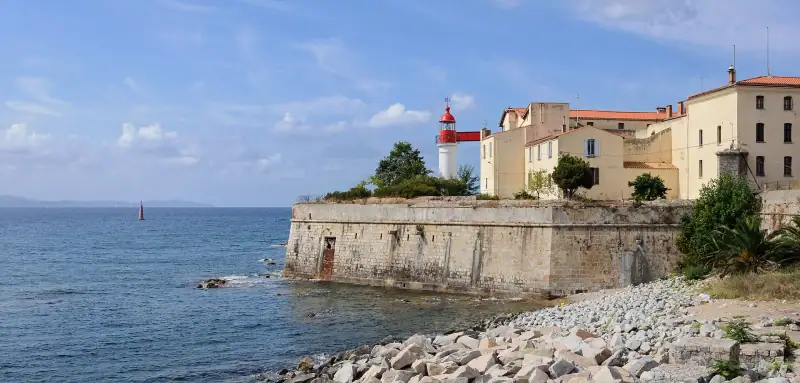
Visiting Ajaccio: a complete guide to the capital of Corsica
Everything to visit Ajaccio: Maison Bonaparte, Fesch Museum, Sanguinaires Islands, old harbor and beaches. A practical guide to Corsica's capital.
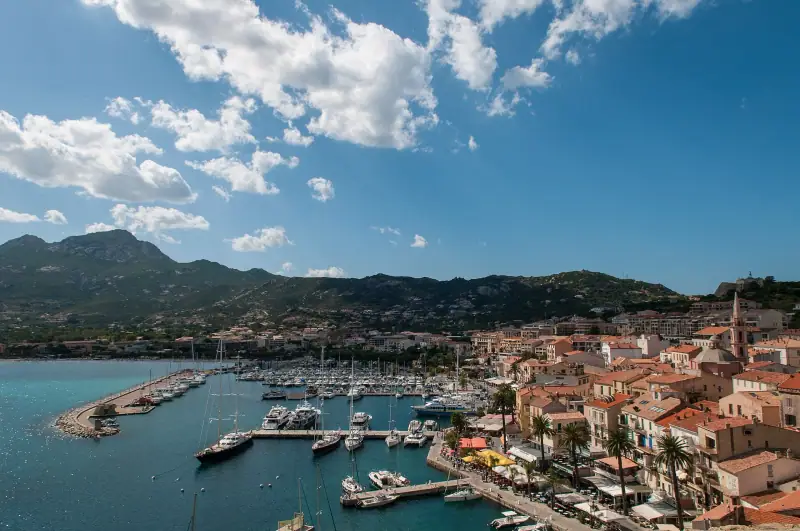
Visiting Calvi: a complete guide to the pearl of Balagne
Visit Calvi: Genoese citadel, 4.5 km beach, Revellata, the beach train and the GR20. A complete practical guide for staying in Calvi, Corsica.
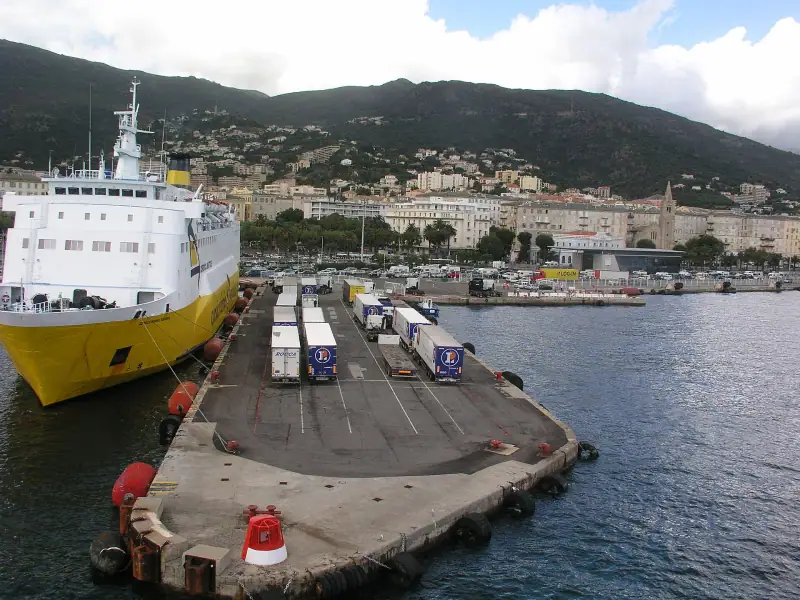
Visiting Bastia: a complete guide to the capital of northern Corsica
Discover Bastia: Old Port, Terra Vecchia, Citadel, Cap Corse, markets and food. A practical guide to visiting Corsica's second city.
Ready-made
Corsica itineraries
5 days
5 days in Balagne: Calvi, L'Île-Rousse and the perched villages
5-day Balagne itinerary: Calvi, L'Île-Rousse, Sant'Antonino, Pigna. Perched villages, beaches, olive oil and the beach train. A complete guide.
10 days
Corsica in 10 days: a complete itinerary around the Island of Beauty
A 10-day Corsica itinerary around the whole island: Bastia, Cap Corse, Balagne, Ajaccio, Bonifacio, Porto-Vecchio and the mountains.
14 days
Corsica road trip: a 10 to 14 day itinerary to see it all
The ultimate Corsica road trip in 10 to 14 days: the best route through the island's beaches, villages, mountains and food.