Itineraries
Spain in 14 days: Castile and the Basque Country by car
We may earn a commission when you book through links on this page, at no extra cost to you. We don't visit or try the places we cover: we summarize published sources. How we work
Day by day
- Days 1-3Madrid: Prado, Retiro, Royal Palace, Plaza Mayor
- Day 4Toledo: cathedral, Alcázar, El Greco
- Days 5-6Segovia: Roman aqueduct, Alcázar, cathedral
- Days 7-8Salamanca: university, Plaza Mayor, two cathedrals
- Day 9Burgos: Gothic cathedral and the Arlanzón riverbank
- Days 10-11Bilbao: Guggenheim, Casco Viejo, Biscay coast
- Days 12-13San Sebastián: old town, La Concha bay, pintxos
- Day 14Drive to San Sebastián Airport and fly home
Where to sleep
- Madrid3 nights
- Toledo1 night
- Segovia2 nights
- Salamanca2 nights
- Burgos1 night
- Bilbao2 nights
- San Sebastián2 nights
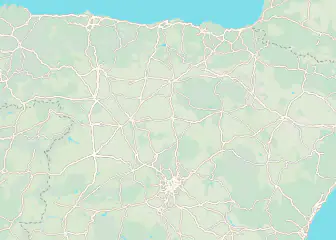
Opens the trip planner with these stops and nights already filled in. Add a stop, drop one or change the nights.
Weather through the year on this route
| Jan | Feb | Mar | Apr | May | Jun | Jul | Aug | Sep | Oct | Nov | Dec | |
|---|---|---|---|---|---|---|---|---|---|---|---|---|
| High °F (°C) | 4910 | 5211 | 5714 | 6016 | 6720 | 7624 | 8228 | 8228 | 7524 | 6619 | 5613 | 5010 |
| Low °F (°C) | 362 | 373 | 404 | 436 | 4910 | 5513 | 6016 | 6116 | 5714 | 5010 | 436 | 383 |
Normals 1991–2020 at Toledo, Segovia, Salamanca, Burgos, Bilbao and San Sebastián: averages over 30 years, not a forecast. Source: NASA POWER (MERRA-2), grid of about 50 km. Figures computed by us in November 2026. Rain is shown only where a weather station confirms the figures.
In short
- Fly into Madrid, fly out of San Sebastián: three nights in Madrid, then Toledo, Segovia, Salamanca, Burgos, Bilbao and San Sebastián, with a car from day 4.
- The longest drive is Salamanca to Burgos, 2 h 45. Between bases the route is about 890 km (555 mi), roughly 10 h 55 behind the wheel.
- Pick the car up when you leave Madrid, not on arrival: our guides say parking in central Madrid is complicated. Expect a one-way fee at drop-off.
- May and September suit this route best: the plateau is not scorching and the Basque coast is not at its busiest.
This route is for travelers who want the Spain of Madrid’s great museums, the walled and Gothic cities of Castile, and the Basque Country’s two best-known cities, Bilbao and San Sebastián, in two weeks with a rental car for the middle part. You fly into Madrid-Barajas Airport (MAD), spend three nights in the capital, then drive north and east through Toledo, Segovia, Salamanca and Burgos to Bilbao and San Sebastián, and fly home from San Sebastián Airport (EAS).
The driving is moderate. Between bases the route is about 890 km (555 mi), roughly 10 h 55 behind the wheel, spread over six driving days. The longest leg is Salamanca to Burgos at 2 h 45; the others run from 1 h 00 to 2 h 05. Each base keeps a half day or more for walking, which is how our guides recommend visiting these cities.
The route at a glance
| Days | Base | Nights | Drive from previous base |
|---|---|---|---|
| Days 1-3 | Madrid | 3 | From Madrid-Barajas Airport (MAD): 20 min, 15 km (9 mi) |
| Day 4 | Toledo | 1 | 1 h 00, 73 km (46 mi) |
| Days 5-6 | Segovia | 2 | 2 h 00, 163 km (101 mi) |
| Days 7-8 | Salamanca | 2 | 2 h 05, 152 km (95 mi) |
| Day 9 | Burgos | 1 | 2 h 45, 243 km (151 mi) |
| Days 10-11 | Bilbao | 2 | 1 h 50, 159 km (99 mi) |
| Days 12-13 | San Sebastián | 2 | 1 h 15, 102 km (63 mi) |
| Day 14 | San Sebastián Airport (EAS) | - | 25 min, 22 km (14 mi) |
Car rental in Spain
Pick up on day 4 in Madrid, drop off at San Sebastián Airport on day 14, and compare one-way fees before you book.
Day by day
Days 1-3: Madrid
Madrid is a capital you discover on foot, and three days are enough for the essentials. From the airport, metro, commuter train, bus and taxi all reach the center: compare them according to where your hotel is. The 20-minute, 15 km (9 mi) figure in the table is the driving time, but our guides advise renting the car only for the days you need it, because parking in central Madrid is complicated.
On day 1, keep it light around the Puerta del Sol and the Plaza Mayor, a large enclosed square with arcades built under the Habsburgs. It is quieter in the morning, so you may prefer to come back for it on day 3.
Day 2 is for art. The Prado Museum holds masterpieces by Velázquez and Goya, and tickets cost about €18 (~$21) for adults, with free entry for everyone at the end of the day (Monday to Saturday 6 to 8 pm, Sundays and holidays 5 to 7 pm). Pick a few galleries rather than trying to see everything, and book ahead. The Reina Sofía, home of Picasso’s Guernica, and the Thyssen-Bornemisza complete what is called the triangle of art, but one major museum per half day is plenty. In the afternoon, rest in Retiro Park, with its pond, rowboats and the glass Crystal Palace.
Day 3 starts with the Royal Palace, one of the largest palaces in Europe (allow about two hours, and check for ceremony days). Walk the Gran Vía and the lanes of Malasaña, then end at the Temple of Debod, a rebuilt Egyptian temple that is popular at sunset, so arrive a little early. Dinner rarely starts before 9 pm; tapas bars serve at any hour. Pickpocketing happens in the metro and around the Puerta del Sol.
For neighborhoods and hotel types, see where to stay in Madrid; the full program is in our 3-day Madrid itinerary. You can compare rooms with Hotels in Madrid, and look at activities in Madrid for guided visits.
Day 4: Toledo
Pick up the car as you leave Madrid and drive to Toledo: 1 h 00, 73 km (46 mi). Toledo sits on a hill almost surrounded by the Tagus, and its old town is a UNESCO World Heritage Site. It long housed Christian, Jewish and Muslim communities, which is why it is called the city of the three cultures.
The main sights are the Gothic cathedral, the Alcázar that dominates the city, and the Church of Santo Tomé, where El Greco’s Burial of the Count of Orgaz hangs. Slopes are steep and cobblestones uneven, so wear suitable shoes. The town is crowded with day-trip groups during the day; sleeping here is the point of this stop, since the streets are almost empty in the early evening and early morning. Search Hotels in Toledo for your night.
Days 5-6: Segovia
Day 5 is a 2 h 00 drive, 163 km (101 mi), to Segovia. Its granite Roman aqueduct, assembled without mortar, crosses the city on tall arches and earned the old town its UNESCO listing. Higher up, the Alcázar stands on a rocky spur between two rivers, and the Gothic cathedral, nicknamed the lady of cathedrals, occupies the Plaza Mayor. Book the Alcázar ahead in high season. Segovia is also a good place to taste Castilian cooking.
Day 6 can stay in Segovia, or you can add Ávila, ringed by one of the best-preserved medieval walls in Europe. You can climb onto part of the wall walk, and the city is small enough to see in half a day. At over 1,100 m (3,610 ft), it is often cool there, even in spring. Our guides give no road time between Segovia and Ávila, so check it before you commit. Hotels: Hotels in Segovia.
Days 7-8: Salamanca
Day 7 is a 2 h 05 drive, 152 km (95 mi), to Salamanca, one of the most beautiful cities in Castile and León. Its university, founded in the 13th century, is one of the oldest in Europe, and the historic center is UNESCO-listed. The golden stone of its monuments takes on warm hues at the end of the day, so plan your first walk for late afternoon.
The Baroque Plaza Mayor is often cited among the most harmonious squares in Spain, and you will see students, families and visitors there from morning until late at night. Look for the small frog among the carvings of the university facade. The old and new cathedrals are joined and are visited together. Our guides say Salamanca deserves a night or two, and the second night makes sense here: the city is lively in the evening thanks to its student population, and its lanes are calmer than Madrid’s. Search Hotels in Salamanca.
Day 9: Burgos
Day 9 is the longest drive of the trip: 2 h 45, 243 km (151 mi), to Burgos in northern Castile. Its Gothic cathedral is a UNESCO World Heritage Site: openwork spires outside, richly decorated chapels and sculptures inside. The city is tied to the legend of El Cid, and it is a major stage on the Camino de Santiago, so you will see walkers with pilgrim shells in the center.
Walk the Arlanzón riverbank and the pedestrian streets lined with tapas bars. Burgos is cooler and calmer than Madrid. Hotels: Hotels in Burgos.
Days 10-11: Bilbao
Day 10 is a 1 h 50 drive, 159 km (99 mi), to Bilbao, the largest city of the Basque Country. A former industrial and port city, it reinvented itself after the Guggenheim Museum opened in 1997. The building, by Frank Gehry, is all titanium curves, and it is worth seeing from the riverbank even if you skip the galleries; the giant flowered dog and the spider at the entrance have become famous. For the interior, check hours and fares on the museum’s official website, since temporary exhibitions change.
The rest of the city is explored on foot. The Casco Viejo, the old town, is organized around the Siete Calles, with Santiago Cathedral, the arcaded Plaza Nueva and many pintxos bars; the mood is more local than in San Sebastián, with regulars doing a round at the end of the day. Along the estuary (ría) you pass the Ribera market, one of the largest covered markets in Europe according to local guides. Other options are the Fine Arts Museum and the Artxanda funicular for a view of the city. Our guides advise leaving the car out of historic centers and checking parking rules, which can be paid or reserved for residents.
Day 11 can stay in Bilbao, or you can go out by car. Guernica (Gernika), about 35 km (22 mi) away, was bombed in April 1937 and inspired Picasso’s painting, which is in Madrid, not on site; allow half a day for the Peace Museum and the Casa de Juntas. San Juan de Gaztelugatxe, an islet with a hermitage at the top of more than 200 steps, is on the Biscay coast. Access is regulated, so book a time slot online and check the conditions on the official Biscay website; wear good shoes, as the steps are slippery when wet. The fishing villages of Bermeo, Mundaka and Elantxobe suit a grilled-fish lunch. Our guides give no road times for these outings, so check them first. Details are in the Spanish Basque Country beyond San Sebastián. Hotels: Hotels in Bilbao.
Days 12-13: San Sebastián
Day 12 is a 1 h 15 drive, 102 km (63 mi), to San Sebastián (Donostia in Basque). Street parking is limited and regulated, so use an underground public car park near the old town or the beach, and avoid fines in regulated zones. Spend the evening in the Parte Vieja, the old town at the foot of Mount Urgull.
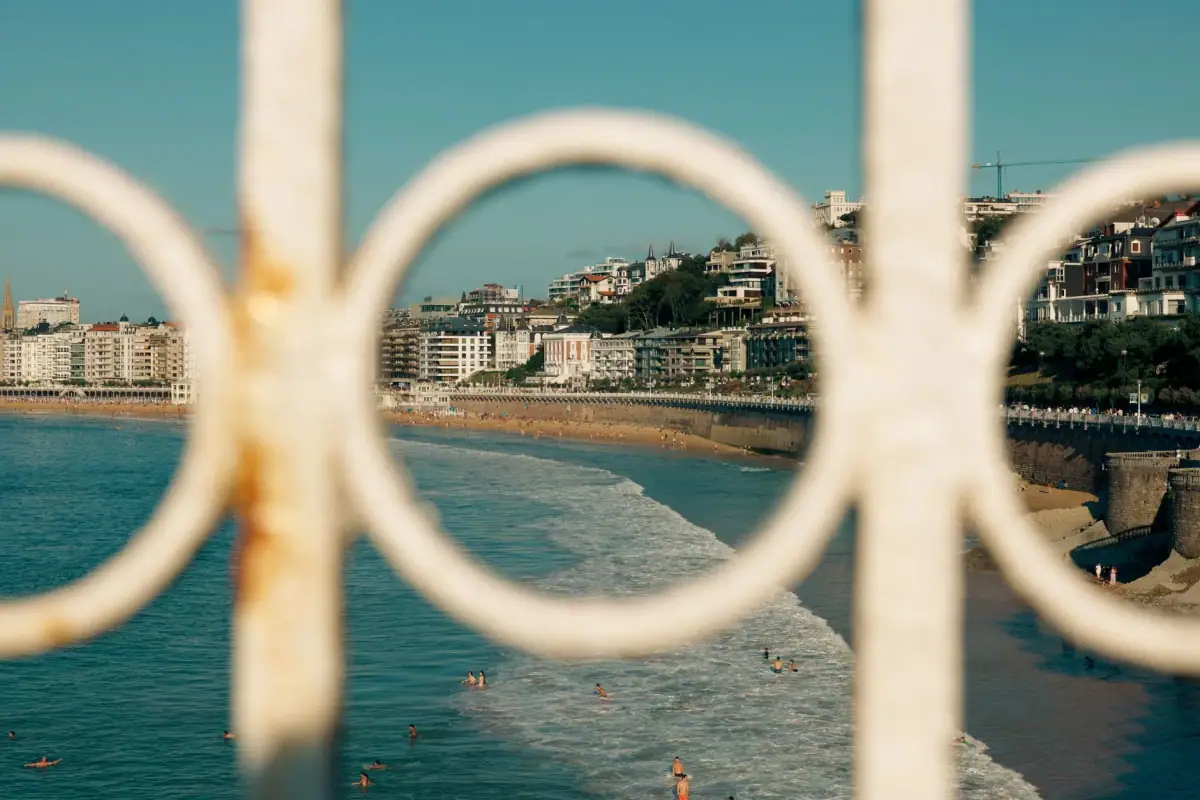
On day 13, walk the old town early, before the midday crowd: the Plaza de la Constitución, the Basilica of Santa Maria del Coro and the fishing port. Climb Mount Urgull for views over the bay, then do a pintxos round. Do not settle in a single bar, watch what the regulars order, and ask how payment works. The afternoon suits La Concha bay and its promenade, the Mount Igueldo funicular, or the Gros district across the Urumea river, with Zurriola beach and the Kursaal. Our one-day San Sebastián guide lays out the day in detail, and the 3 days in the Basque Country itinerary covers the wider region.
If you would rather leave the city, Getaria and Zarautz are less than 30 km (19 mi) away. Getaria is a fishing port known for grilled fish, txakoli white wine and a museum devoted to the couturier Cristóbal Balenciaga; Zarautz has one of the longest beaches in the region. The French Basque coast is also close: Biarritz is about 50 km (31 mi) from San Sebastián (see visit Biarritz), and you carry your passport or ID since spot checks at the border are possible. Search Hotels in San Sebastián, early for summer, when accommodation there weighs most on the budget, and see activities in San Sebastián for tastings and guided visits.
Day 14: San Sebastián Airport
Drive 25 min, 22 km (14 mi), to San Sebastián Airport (EAS) and return the car. Check the rental desk’s return hours and leave a margin before your flight.
Getting there and away
Madrid-Barajas Airport (MAD) is the main international airport of our Spain planner and the arrival point of this trip; the departure airport is San Sebastián Airport (EAS). Check with your airline or a flight search for routes from the US, the UK, Canada and Australia; our guides do not list flights. An open-jaw ticket (into Madrid, out of San Sebastián) saves backtracking to Madrid.
Because you pick the car up in Madrid and drop it in San Sebastián, rental companies usually charge a one-way (drop-off) fee. It varies by company, so check it when you compare offers. The fee is higher when the drop-off is in another country, which matters if you ever end the trip on the French coast instead. Picking up on day 4 rather than at the airport also avoids paying for a car that sits in a Madrid garage.
Entry rules depend on your passport: check the official travel advice of your government before you book (travel.state.gov for the US, GOV.UK for the UK, travel.gc.ca for Canada, Smartraveller for Australia). For driving with a foreign licence, check the same official source.
When to go
Our guide to the best time to visit Spain suggests May or September for a first multi-city trip, and that suits this route. Madrid sits on a high plateau: July and August afternoons often exceed 30 to 35 °C (86 to 95 °F), and the best months are April, May, June, September and October. The same reasoning applies to Toledo and Segovia. Winter is cold in Segovia, Ávila and Burgos.
The north has an oceanic climate with possible rain in every season, so pack a light windbreaker whatever the month. San Sebastián’s film festival in September and its summer festivals can raise accommodation prices. Our Basque Country seasons guide points to May, June and September as the best compromise, though it is written for the French side. A car is more expensive and in higher demand in summer, so book ahead for July and August.
Budget
These figures come from our Spain budget guide (Spain-wide orders of magnitude, not a quote). For two travelers sharing a room, mid-range comfort is about €120 to 140 (~$140-162) per person per day, and a tight budget about €55 to 65 (~$64-75). Those profiles assume trains between cities, so add the car: the guide estimates rental at around €40 (~$46) a day on a small budget and €60 (~$70) or more upscale, plus fuel, some tolls and parking, which is often expensive and complicated in cities.
On food, a weekday menú del día averages about €14 (~$16) and is the best-value meal, a little higher in the Basque Country. In San Sebastián, our Basque budget guide puts pintxos at €2 to 4 (~$2-5) each for the classics, and a full meal of a few pintxos and a drink at €15 to 25 (~$17-29) per person. The Prado costs about €18 (~$21). More detail is in our Spain travel budget and Basque Country budget guides.
Adapt it
For a shorter trip, drop Salamanca and Burgos and drive from Segovia to Bilbao, or end after Segovia and return to Madrid. With more time, add Ávila as a half-day stop from Segovia, Cuenca for a quieter night in Castilla-La Mancha, or Getaria for a night on the Basque coast. Cuenca is about 170 km (106 mi) from Madrid, per our Madrid and Castile guide. The route table has no drive times for these extra stops, so check each leg before you add it. The Madrid and Castile guide and the northern Spain guide describe them, and the complete guide to Spain places the trip in context.
Frequently asked questions
Do I need a car for the whole 14 days?
No. The three Madrid days are done on foot and by metro, and our guides say parking in the center is complicated. Pick the car up on day 4, when you leave for Toledo.
How long are the driving days?
The longest is Salamanca to Burgos, 2 h 45. Burgos to Bilbao is 1 h 50, Segovia to Salamanca 2 h 05 and Toledo to Segovia 2 h 00. The shortest are Madrid to Toledo (1 h 00) and Bilbao to San Sebastián (1 h 15).
Will I pay extra for dropping the car in San Sebastián?
Probably. Rental companies usually charge a one-way (drop-off) fee when you return the car in a different city. It varies by company, so check it when you compare offers.
When is the best time to go?
May and September. Madrid is very hot in July and August, Segovia, Ávila and Burgos can be cold in winter, and the Basque coast can be rainy in any season, so bring a light waterproof jacket.
How much does the trip cost per day?
Our Spain budget guide gives about €120 to 140 (~$140-162) per person per day for mid-range comfort with trains between cities, and about €55 to 65 (~$64-75) on a tight budget. A rental car comes on top.
Ready-made
Spain itineraries
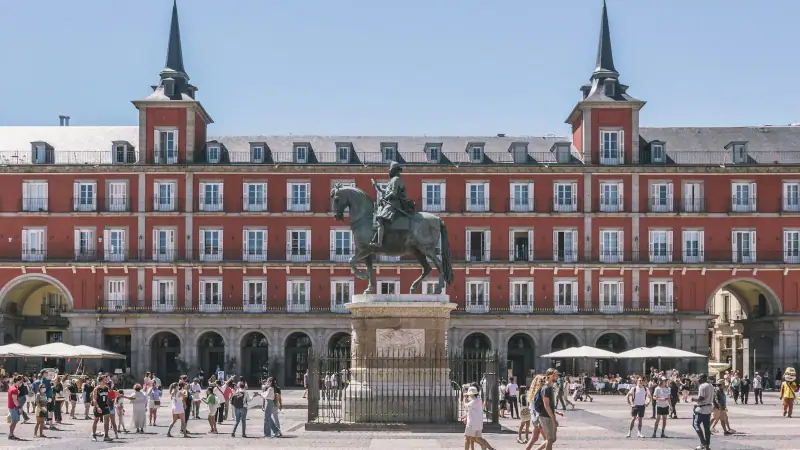
10 days
Spain in 10 days: Madrid, Castile and the Basque coast
MadridToledoSegoviaBurgosSan Sebastián
Can be adapted in the planner
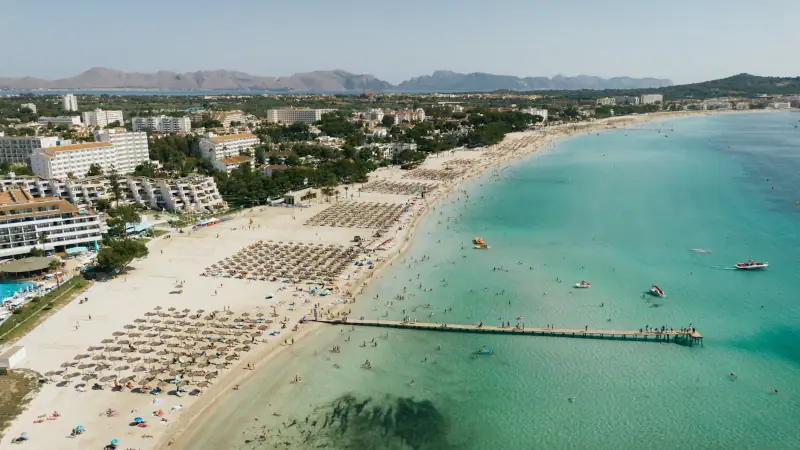
14 days
Spain in 14 days: Madrid, Castile and Mallorca
MadridToledoSegoviaSalamancaPalma (Mallorca)Alcúdia or Pollença (northern Mallorca)