Itineraries
Madrid in 3 days: an itinerary to discover Spain's capital
We may earn a commission when you book through links on this page, at no extra cost to you. We don't visit or try the places we cover: we summarize published sources. How we work
Day by day
- Day 1Puerta del Sol, Plaza Mayor, Royal Palace, La Latina
- Day 2Prado Museum and Retiro Park
- Day 3Gran Vía, Malasaña and the Temple of Debod
Where to sleep
- Madrid2 nights
Estimated budget
$140 – $250 per person (€130 – €230)
For 2 travelers sharing a double room, with mid-range lodging.
| Item | Per person |
|---|---|
| Lodging | $96 – $160 |
| Paid visits | $49 – $86 |
Not included: international flights, meals, local transport and insurance.
In short
- Three days cover historic Madrid on day 1, the Prado and Retiro Park on day 2, and Gran Vía, Malasaña and the Temple of Debod on day 3.
- Everything can be done without a car, by metro, bus and on foot. A car only helps for trips into the region.
- Book the most popular museums such as the Prado ahead and check the weekly closing days.
- Madrid summers are very hot; spring and fall are much better for walking. Restaurant kitchens often open around 8:30 or 9 pm.
Madrid does not have the instant silhouette of Barcelona or Seville, and that is exactly its charm: a capital you discover on foot, square by square, with great museums, parks, café terraces and a nightlife that starts late. Three days are enough to grasp the essentials, as long as you group your visits by neighborhood.
The principle of this itinerary: one day for historic Madrid, one day for art and the big Retiro Park, and a third for the lively neighborhoods and, if you wish, a day trip. To choose your season, see our guide to when to go to Spain: Madrid summers are very hot, while spring and fall are far more pleasant for walking.
Day 1: Puerta del Sol, Plaza Mayor and the Royal Palace
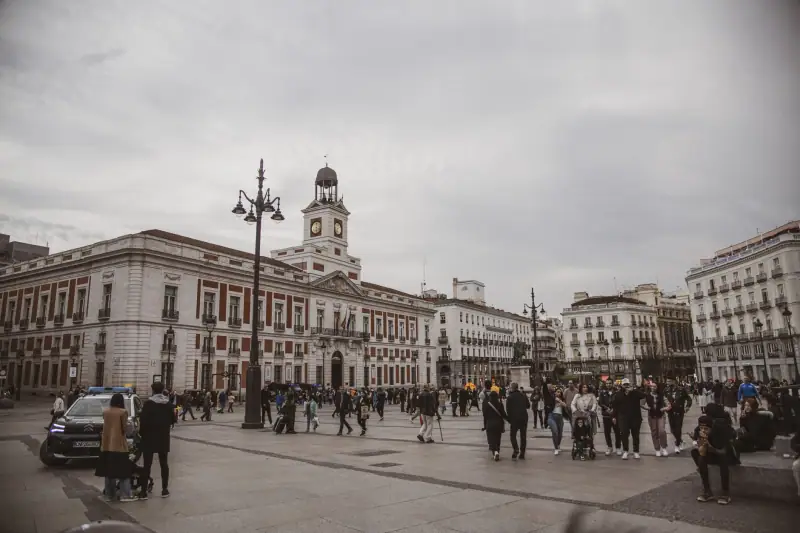
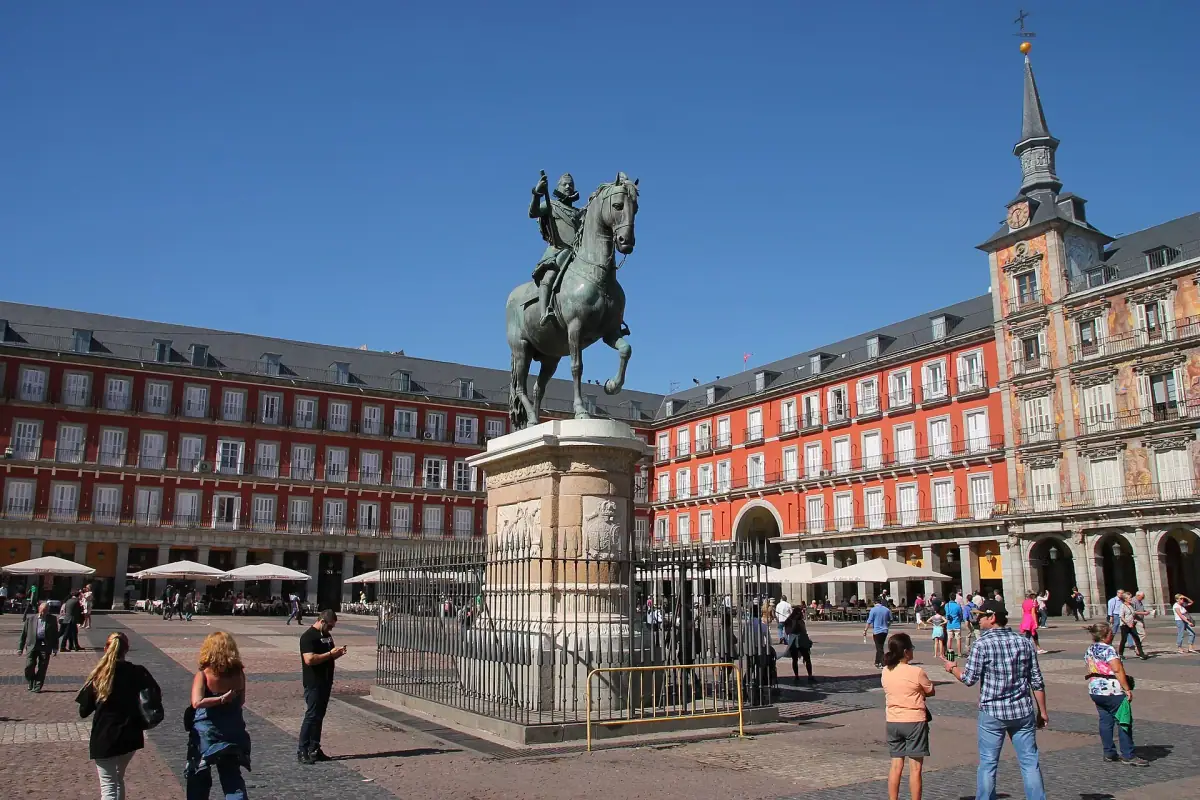
Start at the Puerta del Sol, the central landmark of the city, where you will find the famous kilometer zero of Spain’s roads. From there, a few minutes’ walk leads to the Plaza Mayor, a vast enclosed square surrounded by arcades, built under the Habsburgs. Morning is the ideal time to see it without the crowd, before the café terraces fill up.
Continue to the Royal Palace, one of the largest palaces in Europe, visited for its richly decorated salons. Even if you do not plan to go in, the Plaza de Oriente and the neighboring gardens are worth a stroll. Allow about two hours for the full visit, and check the days when the palace hosts official ceremonies, which can restrict access.
Finish the afternoon around the nearby Almudena Cathedral, then head down to the La Latina neighborhood for an aperitif. On Sundays, the El Rastro flea market fills the neighborhood in the morning, which can complicate or enrich your plans depending on your taste.
Where to stay in Madrid
Compare accommodation in the historic center, Huertas or Malasaña according to your dates and budget.
Day 2: the Prado Museum and Retiro Park
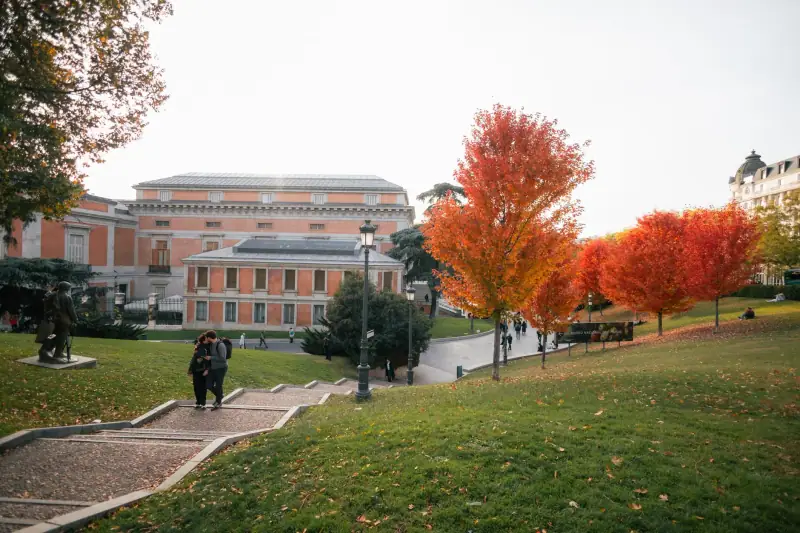
Madrid is one of Europe’s great art capitals. The Prado Museum, home to masterpieces by Velázquez and Goya among others, is the first must-see: its collections are immense, so there is no point trying to see everything. Pick a few galleries, for example the Spanish painters, and leave the rest. A visit of two to three hours is a good compromise.
Two other major museums are nearby: the Reina Sofía, devoted to modern art and known for Picasso’s Guernica, and the Thyssen-Bornemisza. Together they form what is called Madrid’s “triangle of art.” For a three-day stay, choose one or two according to your taste rather than doing all three back to back.
In the afternoon, relax in Retiro Park, the big park in the heart of the city. You can stroll along shaded paths, by the pond where you can rent rowboats, and to the Crystal Palace, an elegant glass-and-metal greenhouse. It is an excellent place to rest between visits, especially in good weather.
Tours and activities in Madrid
Guided museum tour, a walk through historic Madrid or a tapas discovery: compare the experiences on offer.
Day 3: Gran Vía, Malasaña and the Temple of Debod
For the last day, set the big monuments aside and take the pulse of the city. The Gran Vía, an avenue lined with early 20th-century buildings, is the capital’s main shopping and theater axis. Walking up it with your head tilted back lets you spot remarkable facades.
From there, head to the Malasaña neighborhood, north of the Gran Vía: lively lanes, secondhand shops, cafés and bars with a range of atmospheres. It is a good place for lunch or a drink in a more relaxed setting than the tourist center.
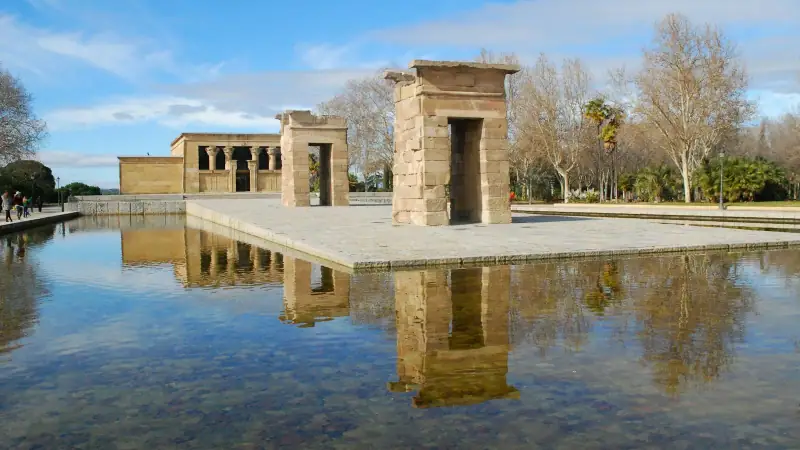
Late in the afternoon, go to the Temple of Debod, a former Egyptian temple given to Spain and rebuilt in a park west of the Royal Palace. It is known for its sunsets: the spot is very busy at that hour, so arrive a little early to find a good place.
Day trip to Toledo or Segovia
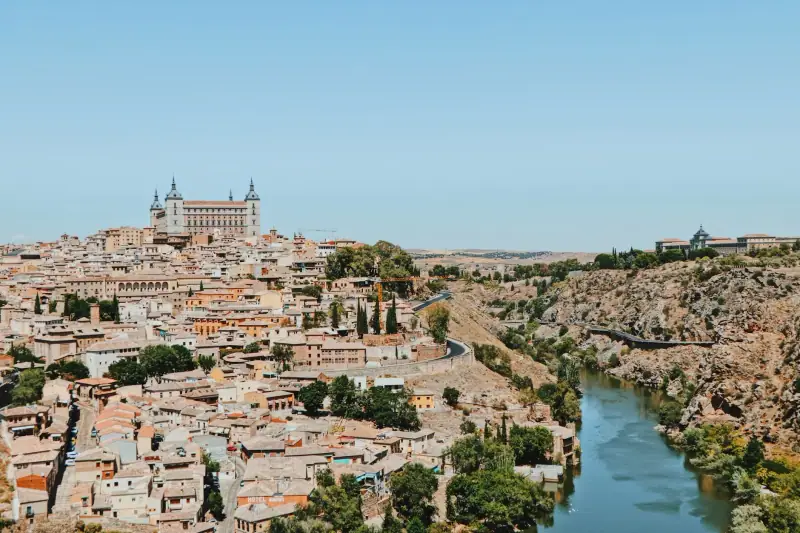
If you have one more day, or if you would rather replace a museum visit, Toledo and Segovia are the two classic day trips from Madrid. Toledo, perched on a hill above the Tagus, is a fortified city that preserves a rich medieval heritage, with Christian, Jewish and Muslim influences. Segovia is known for its Roman aqueduct, its alcázar and its cathedral.
Both towns can be reached by train or bus from Madrid, in under an hour on the fastest services: check schedules and fares before you go. To see them in peace, leave early in the morning: around midday, organized groups flood the main streets.
Day trip from Madrid
Toledo, Segovia or another day-long escape: compare guided excursions from the capital.
Where to eat in Madrid: tapas and hours
In Madrid, people dine late: many restaurants only open their kitchens from 8:30 or 9 pm. For an earlier meal, favor tapas bars, where you can snack at any hour. A few specialties to try: calamares, croquetas, tortilla and cocido madrileño, the capital’s traditional chickpea stew, especially in winter. Our guide to what to eat in Spain details the dishes to know.
To understand what you are eating before you dive in, a tasting or a guided food tour can be a good introduction. Avoid restaurants with picture menus in several languages around the big squares: the neighboring streets often have better places at gentler prices.
Getting around Madrid
This whole itinerary can be done without a car. The metro is dense, well signposted and handy for linking the main neighborhoods, and the historic center is explored on foot. A multi-trip transit pass is generally cheaper than single tickets. From the airport, metro, commuter train, bus and taxi services reach the center: compare them according to where your accommodation is.
If you want to extend your trip with a road trip through Castile or to the south, a car will be useful, but rent it only for those days: parking in central Madrid is complicated.
Budget, safety and practical tips
Madrid is visited mostly on foot, which calls for good shoes and, in summer, something to drink: afternoons can be very hot. A few useful tips:
- Book the most visited museums ahead, notably the Prado, and check the weekly closing days.
- Watch your belongings in the metro, around the Puerta del Sol and in very busy areas: pickpocketing happens there.
- Adopt the local rhythm: late lunch, even later dinner, and use the end of the day to stroll.
- Consider travel insurance suited to your trip.
Book your stay in Madrid
Well-located accommodation fills up fast in high season: book as soon as your dates are set.
What if you have more time?
With four or five days, add a day trip to Toledo or Segovia, or another major museum, and keep a half day unplanned to wander a neighborhood you liked. Madrid is better savored without too tight a list. For a different urban atmosphere, our 3-day Barcelona itinerary is a good complement, and our 7-day Andalusia itinerary naturally extends the trip south.
Frequently asked questions
Are three days enough to see Madrid?
Yes, for a first visit. Three days let you see the Madrid of the Habsburgs and the Bourbons, one or two major museums, Retiro Park and several lively neighborhoods, without rushing.
Do you need to book museums in advance?
It is recommended for the major museums such as the Prado, especially in high season and on weekends. Book on the museum's official website and check opening hours and free-entry slots before you go.
Do you need a car in Madrid?
No. The metro, buses and walking are enough for every site in this itinerary. A car only becomes useful for trips into the region, and the train is often simpler for Toledo or Segovia.
Which neighborhood should you choose to stay in Madrid?
For a first stay, the historic center (around the Puerta del Sol and the Plaza Mayor) and the neighboring districts of Huertas or Malasaña are the most convenient. Lively streets can be noisy at night: ask for a room on the courtyard side if you are a light sleeper.
Can you take a day trip from Madrid?
Yes. Toledo and Segovia are classic day trips, reachable by train or bus from the capital. Choose your times carefully so you can enjoy the town once you are there.
More Spain guides
Keep reading
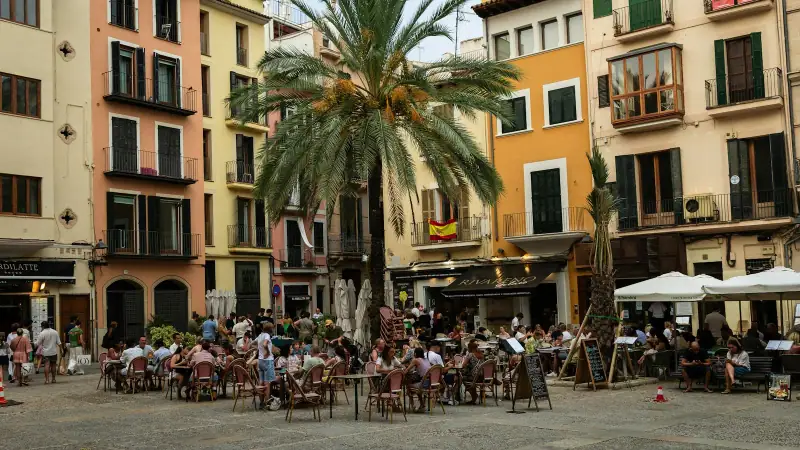
Budget for a trip to Spain: real costs and 3 profiles with figures
How much does a trip to Spain cost? Lodging, transport, meals, visits: three daily budgets with figures (tight, comfort, upscale) and saving tips.

What to see in Catalonia: the region's 12 must-sees
What to see in Catalonia? Barcelona, Girona, Costa Brava, Figueres, Montserrat, Tarragona, Pyrenees: our selection to plan a stay in the region.

Skiing in Spain: Sierra Nevada, Baqueira-Beret and the Spanish Pyrenees resorts
Skiing in Spain: Sierra Nevada, Baqueira-Beret, Formigal, Masella. 2026-2027 dates, access, lift passes, accommodation and tips to choose your resort.
Ready-made
Spain itineraries
2 days
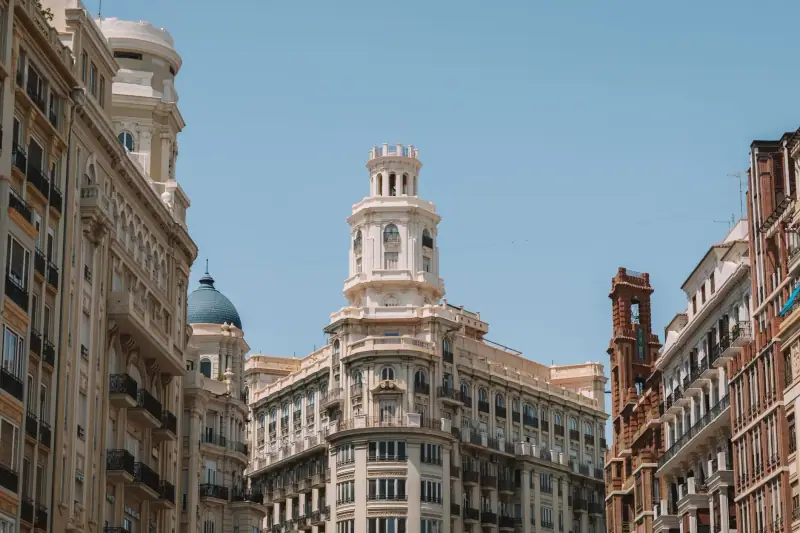
Valencia in 2 days: an itinerary through the old town, the Turia and the beach
What to do in Valencia in 2 days? Historic center, market, City of Arts and Sciences, Turia Gardens, paella and beach: our day-by-day itinerary.
7 days
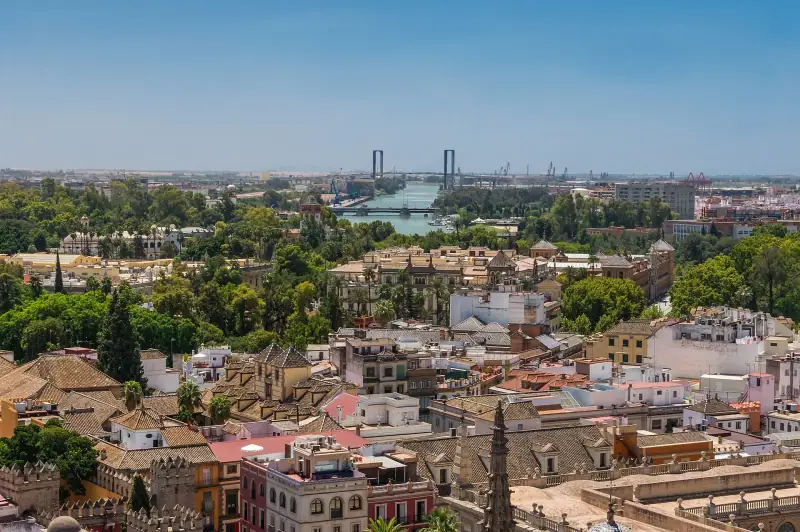
Andalusia in 7 days: Seville, Córdoba, Granada and Málaga
A 7-day Andalusia route: Seville, Córdoba, Granada and Málaga, with travel times, a day-by-day pace, useful reservations and pitfalls to avoid.
3 days
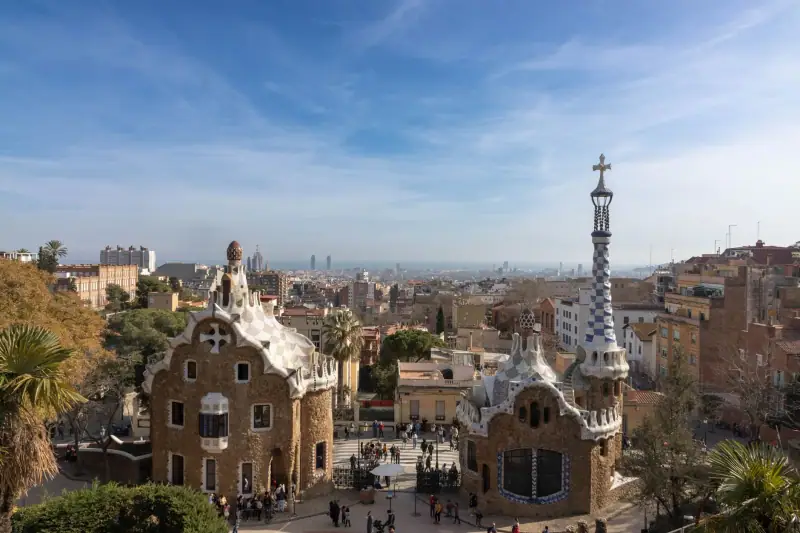
Barcelona in 3 days: a day-by-day itinerary for a first stay
Sagrada Família, Park Güell, Barri Gòtic, Montjuïc and Barceloneta: a 3-day Barcelona itinerary with the best order of visits, transport and tips.