Itineraries
Italy in 14 days: Tuscany and the Amalfi Coast by car
We may earn a commission when you book through links on this page, at no extra cost to you. We don't visit or try the places we cover: we summarize published sources. How we work
Day by day
- Days 1-2Lucca: walls, Piazza dell'Anfiteatro, Pisa's Leaning Tower
- Days 3-5Florence: Duomo, Uffizi, Accademia, Oltrarno
- Day 6San Gimignano: towers, Collegiata, vernaccia
- Days 7-8Siena: Piazza del Campo, cathedral, San Galgano
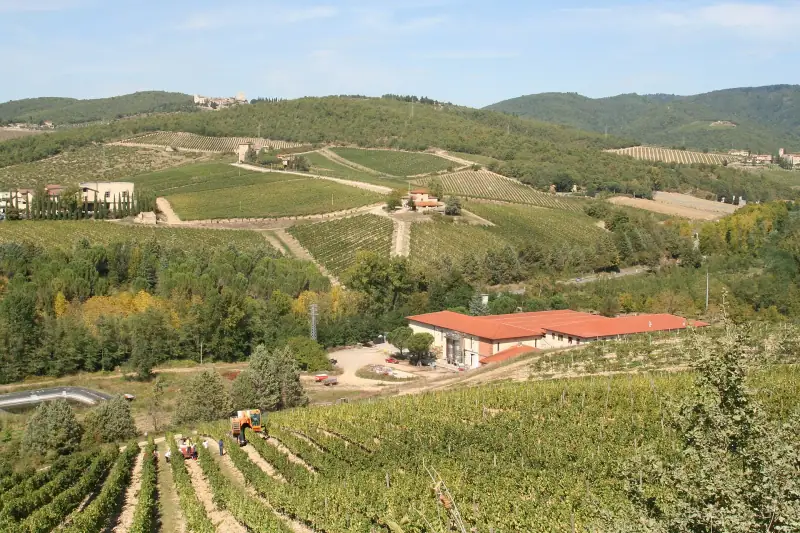
- Days 9-10Pienza and the Val d'Orcia villages
- Days 11-13Amalfi: Ravello, Path of the Gods, Valley of the Mills
- Day 14Short drive to Naples airport
Where to sleep
- Lucca2 nights
- Florence3 nights
- San Gimignano1 night
- Siena2 nights
- Pienza2 nights
- Amalfi3 nights
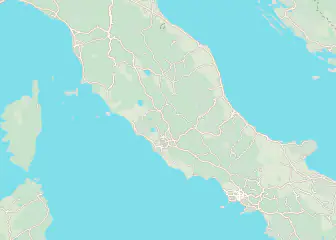
Opens the trip planner with these stops and nights already filled in. Add a stop, drop one or change the nights.
In short
- Fly into Pisa, fly out of Naples: 13 nights in six bases (Lucca, Florence, San Gimignano, Siena, Pienza, Amalfi), with a rental car.
- The longest drive is 5 h 05 (Pienza to Amalfi, 441 km / 274 mi). Every other leg takes between 30 minutes and 1 h 10.
- May, June and September suit both regions. October is lovely in Tuscany, but some Amalfi Coast hotels and ferries start closing late in the month.
- Pick up the car at Pisa and drop it at Naples: expect a one-way fee that varies by company. The car sits unused in Florence and Amalfi.
This route suits travelers who want the classic Tuscany of walled cities, hill towns and farmhouses, then the cliffs and lemon terraces of the Amalfi Coast, in one trip. You fly into Pisa, drive through six bases and fly out of Naples. It works best for people who like to settle for two or three nights at a time and drive only a little each day.
The shape is simple: 13 nights, five Tuscan bases and one long drive. Within Tuscany, every leg takes between 30 minutes and 1 h 10. The only heavy day is the transfer from Pienza to Amalfi, 5 h 05, which gets a day to itself.
The route at a glance
| Days | Base | Nights | Drive from previous base |
|---|---|---|---|
| 1-2 | Lucca | 2 | 30 min, 37 km (23 mi) from Pisa-Galilei Airport (PSA) |
| 3-5 | Florence | 3 | 1 h 00, 77 km (48 mi) from Lucca |
| 6 | San Gimignano | 1 | 1 h 05, 56 km (35 mi) from Florence |
| 7-8 | Siena | 2 | 55 min, 46 km (28 mi) from San Gimignano |
| 9-10 | Pienza | 2 | 1 h 10, 67 km (42 mi) from Siena |
| 11-13 | Amalfi | 3 | 5 h 05, 441 km (274 mi) from Pienza |
| 14 | Naples Capodichino Airport (NAP) | - | 1 h 10, 74 km (46 mi) from Amalfi |
Car rental in Italy
You drop the car in another city, so compare the one-way fee, and book early for May to September.
Day by day
Days 1-2: Lucca and a day in Pisa
From Pisa-Galilei Airport it is 30 minutes (37 km / 23 mi) to Lucca, a calm first stop. Traffic is very limited in the center and the medieval lanes are peaceful. Like most Tuscan historic centers, Lucca is a limited traffic zone (ZTL) with automatic fines, so park outside the center and ask your hotel how to proceed.
Start with the walls, a tree-lined promenade of about 4 km (2.5 mi) built in the 16th and 17th centuries that you can walk or cycle. Then see Piazza dell’Anfiteatro, an oval square built on the footprint of a Roman amphitheater, and Via Fillungo, the winding main shopping street. Torre Guinigi, a medieval tower crowned with oak trees, can be climbed, and San Martino Cathedral has a marble facade with stacked galleries. Lucca is also the birthplace of Puccini, and concerts are often held in the churches in season.
Use day 2 for Pisa, which is a little over half an hour from Lucca by train. Piazza dei Miracoli gathers the cathedral, baptistery, Camposanto and the Leaning Tower, a UNESCO World Heritage Site. The tower climb (about €18, ~$21) is by time slot and must be booked online in advance. Allow two to three hours, and eat in the lanes toward Piazza dei Cavalieri rather than on the square itself. Our guide to Pisa and Lucca in one day has the details, and you can browse tours in Pisa.
Where to sleep: Hotels in Lucca, ideally steps from the walls.
Days 3-5: Florence
Drive 1 h 00 (77 km / 48 mi) from Lucca. Much of Florence’s center is a ZTL, so settle the car question with your hotel before you arrive. The guides say the car is not needed in town, so you can leave it in a garage for three days.
Spread the classics over the days. On the first, take Piazza del Duomo: Brunelleschi’s dome, Giotto’s bell tower and the Baptistery. The dome climb needs a reservation. Then walk to Piazza della Signoria and the Ponte Vecchio. On day 4, book the Uffizi (Botticelli’s The Birth of Venus and Primavera) and the Accademia Gallery, home to Michelangelo’s David. Several major state museums are generally closed on Mondays, so check your dates. In the evening, cross to the Oltrarno and climb to Piazzale Michelangelo for the panorama; San Miniato al Monte is a calmer viewpoint a little higher.
Day 5 is left loose on purpose: revisit a museum, shop at the central market in San Lorenzo, or use the Chianti road if you want vineyards (see Chianti by car). The two-day plan is in Florence in 2 days, and the neighborhood comparison in where to stay in Florence.
Where to sleep: Hotels in Florence. Florence charges a tourist tax of €6 (~$7) per person per night in a 3-star hotel and €7 (~$8) in a 4-star, for up to seven consecutive nights, paid locally.
Day 6: San Gimignano
Drive 1 h 05 (56 km / 35 mi) from Florence. The historic center is a ZTL, so use the paid lots around the walls and walk in through a gate. In high season, arrive before 9:30 am for a wider choice of spaces.
About fifteen towers remain of the seventy or so said to have stood here, and the center is a UNESCO World Heritage Site. Piazza della Cisterna and Piazza del Duomo touch each other. The Collegiata is covered in medieval and Renaissance frescoes, including Ghirlandaio’s work on Saint Fina. Torre Grossa, the tallest tower, rewards the steep climb with a view over the roofs and hills. Taste vernaccia, the local white wine, at an enoteca and walk the walls at the end of the day. The village is busy between late March and October, and much calmer before 10 am and after 5 pm, which is the reason to sleep here. See San Gimignano in one day.
Where to sleep: Hotels in San Gimignano; our comparison is in where to stay in Siena and San Gimignano.
Days 7-8: Siena
Drive 55 min (46 km / 28 mi) from San Gimignano. The heart of Siena is also a ZTL with camera fines, so park on the outskirts and finish on foot.
Piazza del Campo is the landmark: three hills converge on it, so downhill always leads you back. Visit the Palazzo Pubblico, where the civic museum holds Simone Martini’s Maestà and Lorenzetti’s Allegory of Good and Bad Government, and climb the Torre del Mangia (a narrow staircase, no elevator, limited slots). The cathedral has striped columns, a starry vault and an inlaid marble floor that is uncovered only at certain times of the year, so check before you go. Add the Piccolomini Library and the Museo dell’Opera terrace. Eat on a street next to the Campo, and try panforte, ricciarelli and pici.
On day 8, take a break from the city. With a car, the roofless abbey of San Galgano makes an easy half day. The Palio horse race runs twice a year, in early July and mid-August, and fills the square. The one-day plan is in Siena in one day.
Where to sleep: Hotels in Siena. A night in town is a big plus once the day-trippers leave.
Days 9-10: Pienza and the Val d’Orcia
Drive 1 h 10 (67 km / 42 mi) from Siena. This is the Tuscany of postcards, a UNESCO cultural landscape since 2004, and a car is truly the best way to see it. Historic centers are ZTLs, so park outside the walls. Some country roads are gravel; drive slowly.
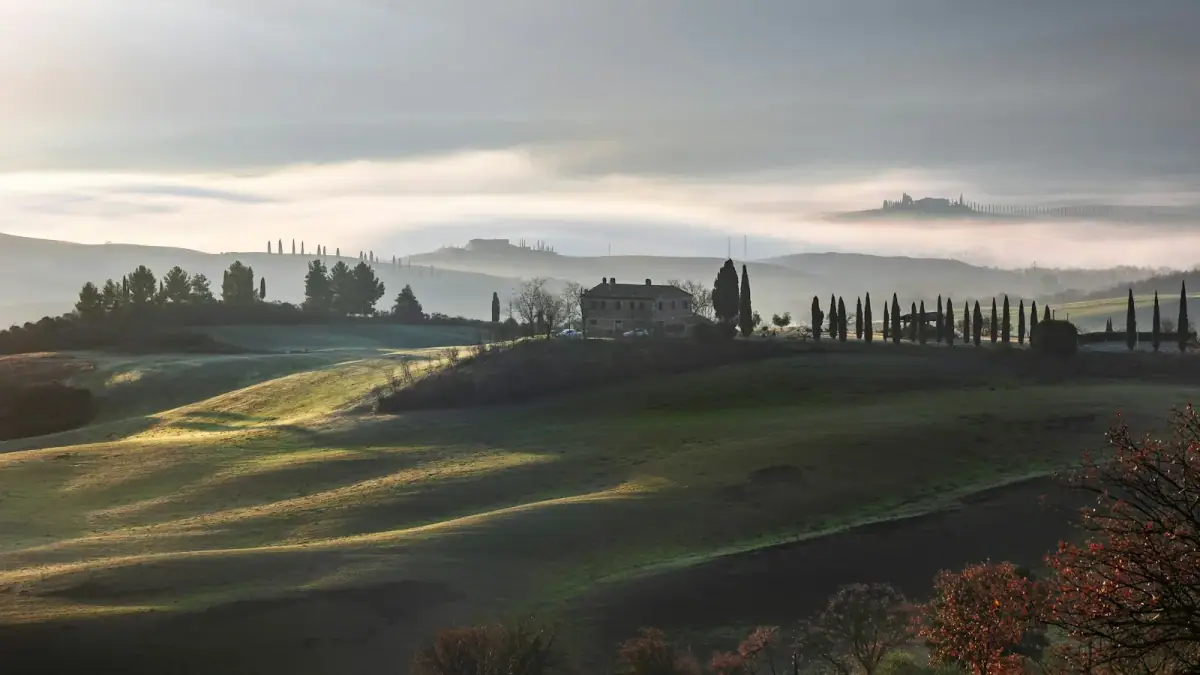
Pienza was rebuilt in the 15th century by Pope Pius II as an ideal city. Piazza Pio II, the cathedral and the Palazzo Piccolomini take one to two hours, and the ramparts have the best view of the valley. It is also the capital of pecorino. On the second day, take the road to San Quirico d’Orcia, passing the cypress lines and the Madonna di Vitaleta chapel, best early in the morning when mist can fill the hollows. Stop at the Horti Leonini garden and at Bagno Vignoni, where the central square is a hot-water pool (bathing in it is no longer allowed). Montalcino (Brunello, and Sant’Antimo Abbey nearby) and Montepulciano (Vino Nobile, Piazza Grande) are the other two stops: pick one, or both if you start early. Book tastings in advance, and designate a driver. The full loop is in the Val d’Orcia road trip.
Where to sleep: Hotels in Pienza, or a farm stay in the countryside (see agriturismo in Tuscany).
Day 11: the long drive to Amalfi
Pienza to Amalfi is 5 h 05 (441 km / 274 mi), so leave early and plan on a late arrival rather than any sightseeing. Rome lies on the way between Tuscany and the Amalfi Coast, but it is not covered by our guides. Stop for lunch along the route and keep the evening free.
Before you arrive, settle parking. The center of Amalfi is heavily restricted, and parking is organized around seafront or underground lots that are often expensive in summer. Book a hotel that guarantees a space or names a partner garage, and note whether your address is in a ZTL. The guides’ rule applies: the parking space beats the view.
Days 12-13: Amalfi, Ravello and the hikes
Amalfi is a practical base: the harbor, the bus stops and the cathedral square are close together, and the town is less vertical than Positano. It is crowded between late morning and mid-afternoon, so the quiet hours are early morning and evening. Once you arrive, park the car and leave it. The SS163 is narrow, with hairpin bends and buses that sometimes force drivers to back up; buses and seasonal ferries link the villages. Check the last bus before dining in another village.
- Ravello. Take the bus up (about half an hour, longer in high season) to visit Villa Rufolo and its terraces, then Villa Cimbrone and its Terrace of Infinity. Two villas, the square and a quiet lunch already make a full day. See visiting Ravello.
- Atrani. Less than 1 km (0.6 mi) from Amalfi and about ten minutes on foot, it takes one to two hours. See Atrani.
- Valley of the Mills. A 15 to 20 minute walk from the cathedral square, with the old paper mills and the Museo della Carta. The longer Pontone to Amalfi hike is about 6 km (3.7 mi) and takes 3 to 4 hours. See the Valley of the Mills.
- Path of the Gods. Bomerano to Nocelle, about 7 to 8 km (4.3 to 5 mi) in 3 to 4 hours, then a staircase of about 1,500 steps down to Positano. Take the bus from Amalfi rather than the car. See the Path of the Gods and visiting Positano.
For the road itself, our Amalfi Coast road trip by car covers driving rules, and hotels with parking compares the villages.
Where to sleep: Hotels in Amalfi, or see where to stay in Amalfi, Atrani and Ravello.
Day 14: to Naples airport
Amalfi to Naples Capodichino Airport is 1 h 10 (74 km / 46 mi). Traffic can be heavy around Naples, and end-of-day jams on the coast can be significant. Do not book a same-day flight without several hours of margin, and fill the tank before the villages, since gas stations are rare on the corniche.
Getting there and away
Pisa-Galilei Airport is the main airport in Tuscany for international flights, close to the city, and Florence-Peretola mostly handles European flights. Naples is the usual gateway for the Amalfi Coast. If you fly from the US, the UK, Canada or Australia, the usual big gateways to Italy include Rome Fiumicino (FCO) and Milan Malpensa (MXP); how they connect to this route is not covered by our guides, so compare open-jaw tickets into PSA and out of NAP with those options.
Because you pick up the car in Pisa and drop it in Naples, rental companies usually charge a one-way (drop-off) fee, and it varies by company: check it when you compare offers. For entry rules, visas and driving licence requirements, check the official government source of your own country. The Tuscany guides also suggest picking up the car when you leave Florence, since it would sit unused in a garage. If you do, take the train for Pisa and Lucca and from Lucca to Florence, then pick up the car at the edge of Florence; the drive times in the table apply from there.
When to go
For Tuscany, May is the favorite of almost everyone: green countryside, long days and crowds far from the summer peak. June and September also work well. October is the harvest month, with golden vines and morning mists, though weather is more variable. July and August are hot (28 to 35 °C / 82 to 95 °F inland) and crowded.
For the Amalfi Coast, the guides name May, June and September as the best overall balance of weather, open services and crowds. July and August bring full buses, slow traffic and the highest prices. Winter brings seasonal closures from November to March, and in late October some hotels, restaurants and ferries begin to close. Ferries mostly run from spring to early fall. Easter is very busy in Florence. So aim for May, June or September, and in October check that your Amalfi hotel is open. See the best time to visit Tuscany and the best time to visit the Amalfi Coast.
Budget
Only the Tuscany budget guide gives figures; the Amalfi Coast guides give none, so the last three nights are not costed. The Tuscany guide estimates, per person for a couple sharing a room and excluding flights, about €80 (~$93) a day on a thrifty budget, €160 (~$185) at comfort level and €290 (~$335) at premium.
- Lodging: an average farm stay is about €97 (~$113) a night for a double room, and a central 3-star in Florence is about €140 to €210 (~$165 to $245) a night in October.
- Rental car: about €39 (~$45) a day for a small economy car on average, and a realistic all-in car budget of €55 to €70 (~$64 to $81) a day for a couple, with parking, fuel and fees.
- Meals: about €15 (~$17) for a two-course meal and €25 (~$29) for three courses.
- Sights: the Uffizi is about €25 to €29 (~$29 to $34), and the Brunelleschi Pass for the Florence Duomo about €30 (~$35).
Parking on the Amalfi Coast weighs heavily on a stay of several days.
Adapt it
For a shorter trip, drop San Gimignano and one Siena night, or end in Tuscany and skip the 5 h 05 drive. With more time, add Sorrento or Positano on the Amalfi Coast: Sorrento suits arrivals from Naples and tighter budgets, and Positano is more spectacular but pricier and steeper. Our Italy planner also covers other stops (Matera, Alberobello, Polignano a Mare and Lecce in the south; Stresa, Bellagio, Varenna and Sirmione on the lakes; Bolzano, Ortisei and Cortina in the north), but they would need their own trip.
Frequently asked questions
Is 14 days enough for Tuscany and the Amalfi Coast?
Yes, with six bases and no more. Five Tuscan bases fill 10 nights with short drives, then one long drive of 5 h 05 takes you to Amalfi for the last 3 nights.
Do you need a car for this itinerary?
In the Tuscan countryside, yes: hilltop villages and the Val d'Orcia are much simpler by car. In Florence you do not need it, and on the Amalfi Coast you can leave it parked and use buses and boats.
Can you fly into Pisa and out of Naples?
The route is built that way: arrive at Pisa-Galilei Airport (PSA) and leave from Naples Capodichino Airport (NAP). Book an open-jaw or multi-city ticket and expect a one-way fee on the car.
When is the best time for this trip?
May, June and September work in both regions. July and August are hot and crowded, and the Amalfi Coast is at its busiest. Late October risks closures on the coast.
How much does it cost?
Our only budget guide covers Tuscany: about €80 (~$93) a day thrifty, €160 (~$185) comfort and €290 (~$335) premium per person, excluding flights. The Amalfi Coast guides give no price figures.
Ready-made
Italy itineraries
10 days
Italy in 10 days: the Italian Lakes and the Dolomites by car
BellagioSirmioneOrtisei (Val Gardena)Cortina d'Ampezzo
Can be adapted in the planner
21 days
Italy in 21 days: from the Lakes to Puglia by car
BellagioSirmioneOrtisei (Val Gardena)FlorenceSienaSorrentoMatera (Basilicata)Lecce
Can be adapted in the planner
12 days
Southern Italy in 12 days: the Amalfi Coast, Matera and Puglia by car
SorrentoAmalfiMatera (Basilicata)AlberobelloLecce
Can be adapted in the planner