Where to stay
Where to stay in Amalfi, Atrani and Ravello: which base to choose on the coast
We may earn a commission when you book through links on this page, at no extra cost to you. We don't visit or try the places we cover: we summarize published sources. How we work
In short
- Amalfi is central, flatter than Positano and well served by buses and boats: the most logical base to explore the whole coast.
- Atrani is a tiny village a few minutes' walk from Amalfi; Ravello is up on the hill, with no beach and fewer evening buses.
- Minori and Maiori are flatter villages with generally gentler rates, still linked to Amalfi by bus and boat.
- For high season, book several months ahead with free cancellation, and ask how many steps lead to your room.
When you plan a stay on the Amalfi Coast, one question comes up almost every time: should you sleep in Positano, the postcard, or in Amalfi, the practical base? For many travelers, the second option is the wiser one. Amalfi is in the middle of the coast, it is a hub of buses and boats, and its terrain is gentler than that of its neighbors. A few minutes away is Atrani, a tiny village stuck to the rock, and higher up, Ravello, on its green terrace.
This guide compares these bases, along with Minori, a quieter neighbor, to help you choose according to your pace, your budget and your tolerance for stairs. If you are still hesitating between all the villages, start with our comparison on choosing where to stay on the Amalfi Coast, then come back here to refine. And if Positano tempts you, we have a dedicated guide to the best neighborhoods to stay in Positano.
Why Amalfi is an excellent base for exploring the coast
Amalfi has a central position. From the harbor, boats serve other villages in season, and the coast road reaches Positano on one side, and Minori, Maiori or Ravello on the other. For a traveler without a car, that is a considerable asset: you can change village for the day without ever changing hotels. Our guide to getting around the Amalfi Coast details the bus and ferry options.
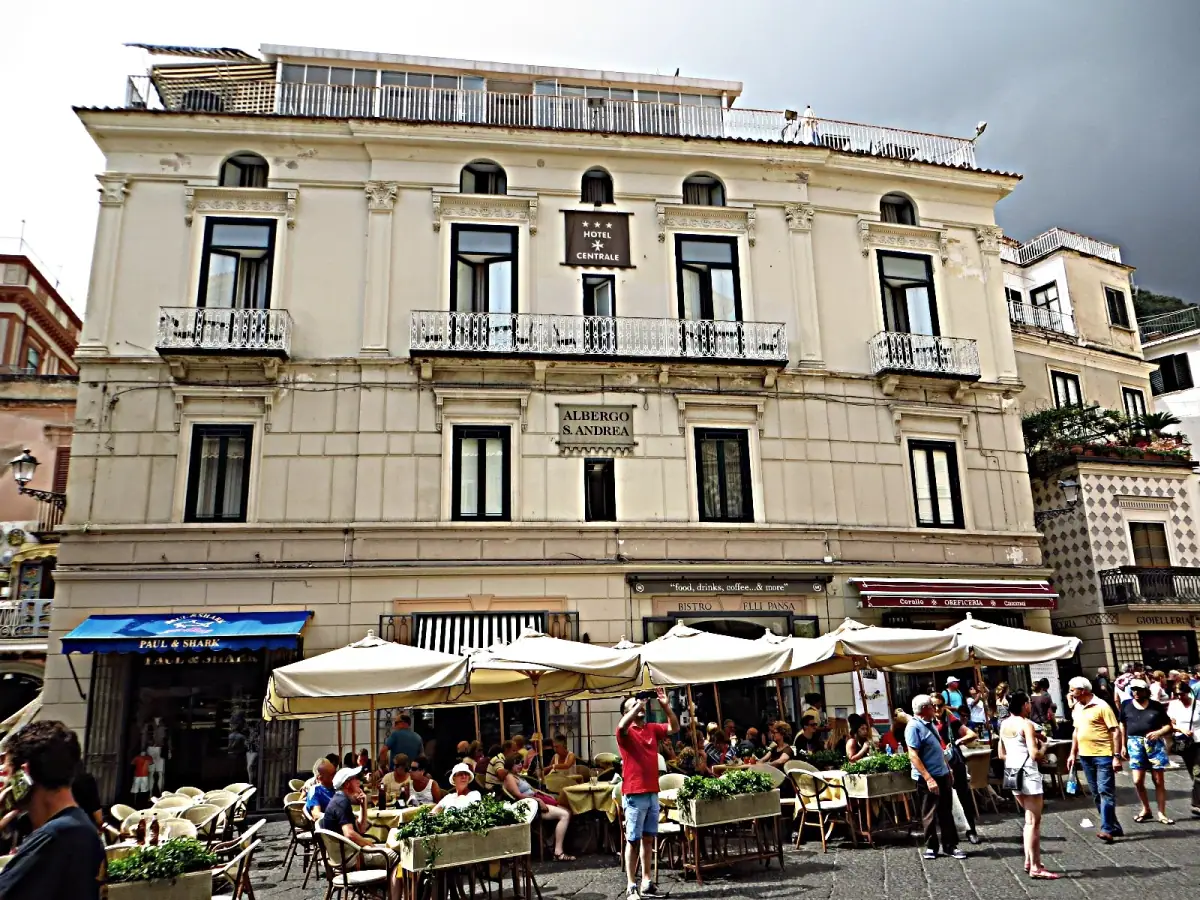
Another advantage: the town is alive all year, with shops, bakeries, restaurants and services that do not depend only on passing tourists. Its historic center is organized around the cathedral square, vaulted lanes and a seafront that is easy to walk. You do not find Positano’s extreme verticality here, which changes a lot when you are carrying a suitcase.
There is a downside: Amalfi is a heavily visited day destination. Between late morning and mid-afternoon, the center is saturated with visitors who arrived by tour bus or boat. Sleeping there lets you enjoy the quiet hours, early in the morning and late in the evening, when the town regains its rhythm.
Central Amalfi: everything on foot, but lively
Sleeping in the historic center means choosing proximity: the cathedral, the harbor, the bus stops, the shops and the restaurants are a few minutes’ walk away. It is ideal for a first stay, a late arrival, or for those who want to enjoy the town without complicated organization.
Points to know:
- Noise: the lanes echo, and lively terraces can be audible late in season. Ask for a room on a courtyard or an upper floor, and read reviews about sound insulation.
- Stairs: the center is more accessible than many other villages on the coast, but many old buildings have no elevator. Check this if you travel with a big suitcase or a child in a stroller.
- Prices: proximity to the main square costs extra, especially in high season. Lodging slightly off-center but close to a bus stop often offers better value.
- Access by car: the center of Amalfi is heavily restricted. If you rent a vehicle, be sure to check whether your lodging has parking or a nearby solution before booking.
This area suits travelers who want to do everything on foot, short stays, fans of town atmosphere and those planning boat excursions from the harbor. To plan these outings, our article on boat excursions on the Amalfi Coast gives an overview of the options.
Lodging in Amalfi
Compare hotels, B&Bs and apartments in Amalfi for your dates, with free cancellation when offered.
Atrani: the discreet village ten minutes from Amalfi
East of Amalfi, squeezed between two rock walls, Atrani is one of the smallest villages in Italy. You reach it from Amalfi on foot, in a few minutes, by a passage that follows the coast. It is built around a square where people linger in the evening, stacked whitewashed houses and a small beach.
Sleeping in Atrani means enjoying a village atmosphere, clearly calmer than Amalfi, while staying within walking distance of buses and boats. Many travelers also appreciate finding a more intimate setting, with residents chatting on the square and children playing in the evening.
The limits are just as clear:
- Little lodging: the village is tiny, so rooms go fast and rates rise in high season.
- Many stairs: the village climbs toward the mountain, and a room with a nice view can mean several flights of steps.
- Few services: for groceries, ATMs and shops, you go back down or walk to Amalfi.
- A square that comes alive: in the evening, the central square can stay lively, which may bother rooms facing it.
Atrani suits couples, travelers who like calm and those who want the advantage of Amalfi as a base without the full bustle. For a stay of three nights or more, it is a very good compromise. To see what the village offers visitors, read our guide: Is Atrani worth the detour from Amalfi?
Ravello: sleeping up high, between gardens and silence
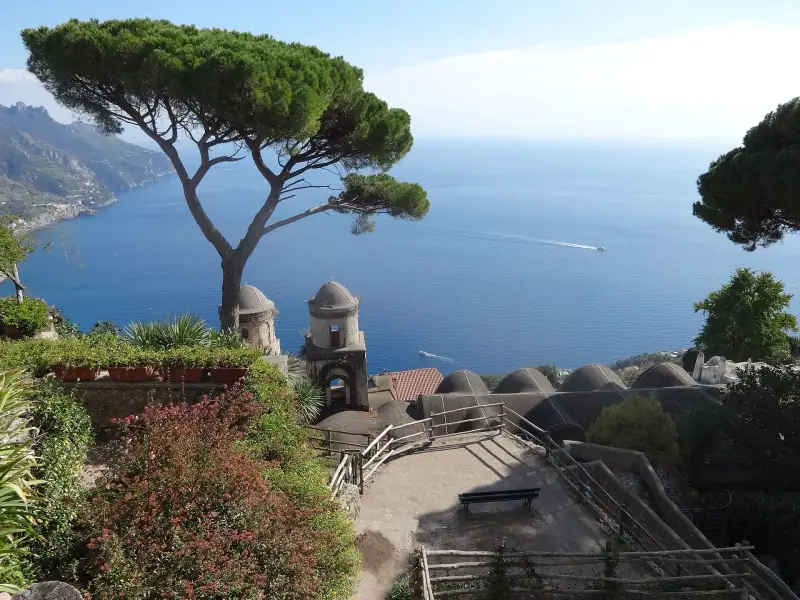
Ravello occupies a terrace on the hill, above the sea. You reach it from Amalfi by a winding mountain road, which the bus covers in a little under half an hour depending on traffic. The atmosphere is completely different from the coastal villages: relative coolness in summer, quiet streets in the evening, and an almost hushed mood once the day-trippers have left.
The village is famous for its villas and gardens, notably Villa Rufolo and Villa Cimbrone, and for its summer music festival. Our guide to visiting Ravello, its villas and gardens details these visits. Sleeping there lets you enjoy the sites before the day’s crowds arrive, and live the village at a pace day visitors never know.
What to know before choosing Ravello:
- No beach: to swim, you go down to the coast by bus or car, then back up. It is not the best base for a sea-focused stay.
- Less frequent evening transport: check the last bus times before dining down in Amalfi, or you may have to pay for a taxi.
- Superb views: many lodgings have a sea-facing terrace, sometimes at high rates in season.
- Real elevation change: the center is compact, but some addresses require climbing or descending stairs with your luggage.
Ravello appeals to couples, fans of music, gardens and tranquility, and travelers who have already seen the coast and want a different rhythm. It suits less those who plan to spend their days at the beach.
Minori and Maiori: flat villages for reasonable budgets
East of Amalfi and Atrani, Minori and Maiori are two seaside villages that offer a clearly more relaxed experience. They are relatively flat, with a promenade along the water and large sand or pebble beaches. Minori is smaller and more intimate, with a small shopping area and a Roman archaeological site in town. Maiori is more spread out, with a longer beach and more hotels.
The appeal of these villages is threefold:
- Often gentler rates than Amalfi, Positano or Ravello, particularly outside peak weeks.
- Less demanding terrain: easier to get around with a stroller, a suitcase or mobility issues.
- A less touristy atmosphere, with more visible local life, especially in the evening and off-season.
The trade-off is obvious: you lose some of the spectacular charm of the perched villages. But for a family, a budget stay or a practical base, they are excellent options. A bus or a boat reaches Amalfi in a short time, and the rest of the coast stays accessible. To compare possible budgets, see our page on the budget for a stay on the Amalfi Coast.
Hotel, B&B, apartment: which type of lodging in Amalfi and Ravello?
The supply falls into a few main families, which meet different needs.
The hotel: comfort and services
For a short stay or a couple’s getaway, the hotel remains the simplest. Reception, breakfast, sometimes a terrace or sea access: everything is organized. Several establishments on the coast occupy former convents or cliffside villas, with remarkable views. The upper categories are expensive and book early; mid-range options exist too, provided you plan ahead.
The B&B and guesthouse: local welcome
Often run by families, these places offer a personal welcome, local tips and breakfast on a terrace. The value for money can be very good. Do read the reviews on access, stairs and noise level.
The apartment: space and independence
Practical for families, groups or week-long stays: kitchen, space, sometimes a balcony. Check the arrival arrangements (who greets you, at what time), air conditioning in summer, and the presence of an elevator or the number of steps. Keep in mind too that a tourist tax applies and varies by municipality.
Budget solutions
Hostels are rare on the coast. To limit spending, the most effective approach remains choosing a cheaper base (Minori, Maiori, or lodging slightly off-center) and getting around by bus or boat.
Flights to Naples
Compare flights to Naples, the main gateway to the Amalfi Coast, before locking in your nights.
The criteria that really matter before booking
Beyond the town you choose, a few details make the difference between a successful stay and a week of frustration.
- The number of steps: this is question number one. Write to the lodging and ask how many steps separate the drop-off point or bus stop from the room door.
- Air conditioning: almost essential from June to September, especially under the roof.
- Sound insulation: old buildings let street and terrace noise through. Traveler reviews are often very precise on this point.
- The actual view: a “sea view” can be full or partial. Look at travelers’ photos rather than only the property’s.
- Luggage storage: if you arrive early or leave late, ask whether they can keep your bags.
- Parking: if you rent a vehicle, check whether it exists and what it costs before booking. In this region, parking is difficult.
- Cancellation policy: weather and sea can disrupt connections; a flexible rate is almost always worth its slight extra cost.
When to book and which season to choose
High season runs from late spring to early fall, with a peak in July and August: heat, crowds, rising rates and reduced availability. April-May and September-October generally offer a better balance between pleasant weather, reasonable crowds and choice of rooms. Our guide on the best time to go to the Amalfi Coast details these periods month by month.
Off-season, some hotels, restaurants and boat services may close or run at reduced capacity. If you travel in winter or early spring, confirm that your lodging is open, the bus times and the frequency of sea connections. For high season, book several months ahead with free cancellation.
Arriving with your luggage: practical tips
Most travelers arrive via Naples, by train then bus or ferry, or by private transfer. Once on the coast, the last stretch is often on foot, including on stairs.
- Travel light: a soft suitcase or a backpack is much more comfortable than a big hard-shell suitcase.
- Tell your lodging your arrival time and means of transport: they can point you to the best stop or the easiest access.
- Avoid the car if possible: narrow roads, dense traffic in season, scarce and often paid parking. If you rent one, choose a small model and study the parking before arriving.
- Keep a margin before a flight: a delayed bus or a rough sea can shift everything, especially on departure day.
Can you combine several bases?
Yes, and it is often the best idea. Instead of spending all your nights in the same place, you can split your stay:
- Two nights in Amalfi or Atrani, for village life, the cathedral and boat excursions.
- One to two nights in Ravello, for the gardens, the music and a slower pace.
- Two nights in Positano or Praiano, for the atmosphere of the terraced villages and hike departures, such as the Path of the Gods.
This formula multiplies luggage changes a little, but spares you from going back and forth across the coast every evening. For a stay of five days or more, it is a good idea.
Lodging in Ravello
To sleep up high, between gardens and silence, compare hotels and guesthouses in Ravello.
Which base for your profile?
- First stay, without a car, wanting to see everything: central Amalfi.
- Couple seeking calm, with services within walking distance: Atrani.
- Gardens, music, silence and views: Ravello, accepting the absence of a beach.
- Family, small budget, gentler terrain: Minori or Maiori.
- Stay of more than five days: combine two or three bases.
In every case, read the reviews on accessibility carefully, check the number of steps, book early for high season and choose a flexible rate. The Amalfi Coast rewards those who plan ahead: once you find the right base, all that remains is to enjoy the sea, the lemon trees and the evening light on the cliffs.
Frequently asked questions
Is it better to stay in Amalfi or Positano?
Amalfi is more central, flatter and better served by buses and boats; Positano is more spectacular but more vertical and generally pricier. To branch out across the whole coast, Amalfi is the most logical base.
Is Atrani too small for several nights?
Atrani is a very small village, reached on foot from Amalfi in a few minutes. Two or three nights work well there if you like calm, because all of Amalfi's services are close by.
Is sleeping in Ravello practical without a car?
Yes, a bus links Ravello to Amalfi, but Ravello is perched on the hill: expect a bus ride to go down to the sea, and check the last bus back before dining down below.
Where should you sleep on the Amalfi Coast on a small budget?
The flat villages of the eastern part, such as Minori or Maiori, generally offer gentler rates than Amalfi or Positano, while still being linked by bus and boat.
Do you need to book far ahead in Amalfi?
For high season, yes: several months ahead, preferably with a free-cancellation rate. Off-season, availability is much wider, but some businesses close.
Is Amalfi suitable for families and people who walk little?
Amalfi's center is relatively flat, an advantage over Positano. Lodging up high does involve stairs, however: ask how many steps there are before booking.
How many nights should you plan in Amalfi?
Three to four nights let you visit Amalfi, Ravello and Atrani and take a boat or Pompeii excursion without rushing.
More Amalfi Coast guides
Keep reading
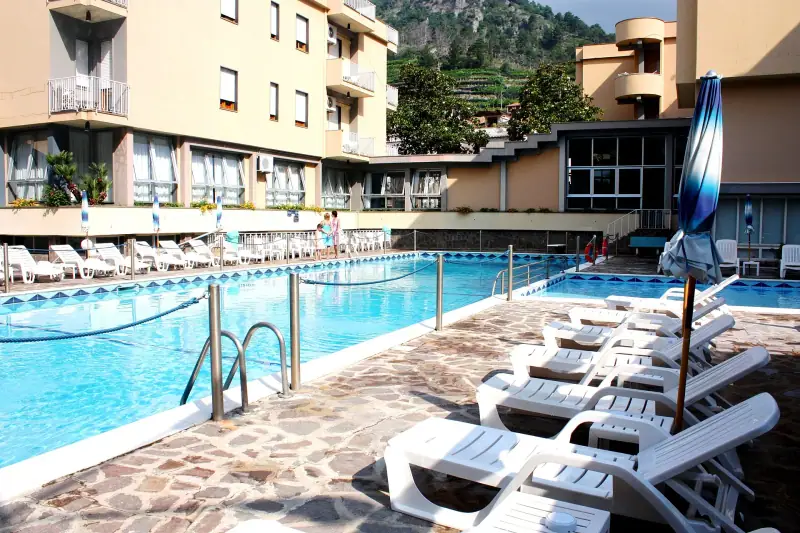
Hotels with parking on the Amalfi Coast: which town to choose?
Hotel with parking on the Amalfi Coast: Praiano, Maiori, Minori, Amalfi, Positano and Sorrento compared, to sleep without parking or ZTL hassles.
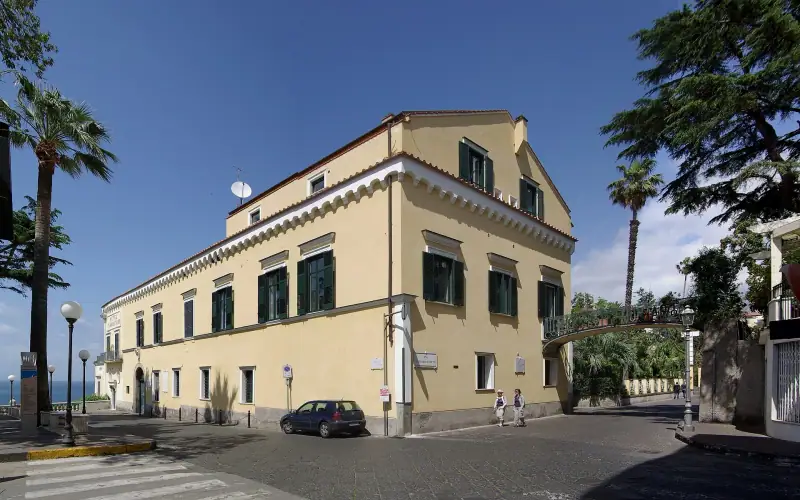
Staying in Sorrento to visit the Amalfi Coast: a good idea or not?
Staying in Sorrento to visit the Amalfi Coast: bus, ferry, train, realistic travel times, pros, limits and who it suits (or not).
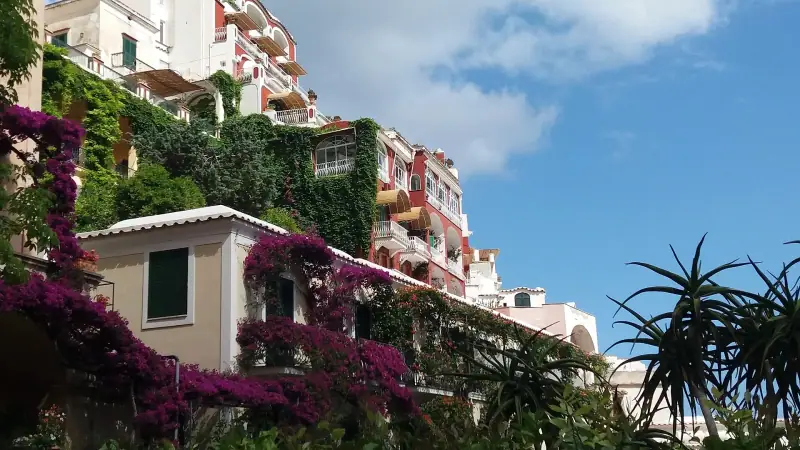
Where to stay on the Amalfi Coast: Positano, Amalfi, Praiano or Ravello?
Where to stay on the Amalfi Coast? Positano, Amalfi, Praiano, Ravello, Minori and Sorrento compared: atmosphere, budget, access and tips for choosing.
Ready-made
Amalfi Coast itineraries
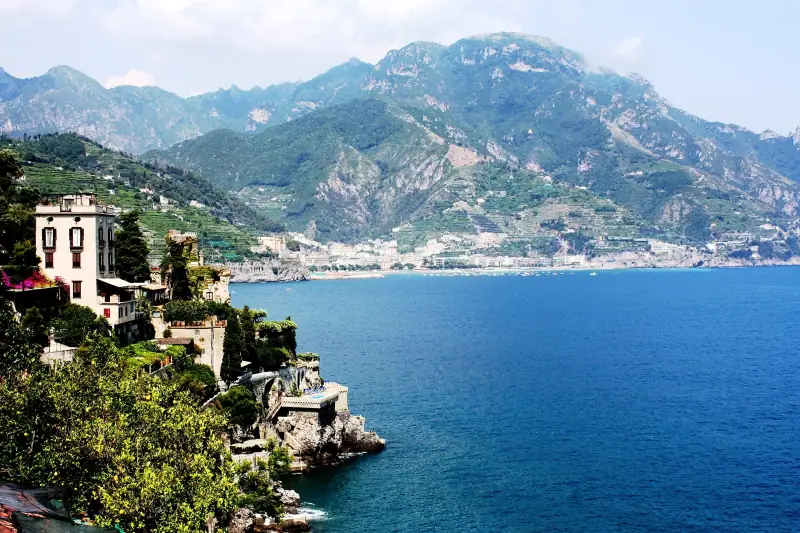
3 days
Amalfi Coast in 3 days: a day-by-day itinerary without a car
Plan 3 days on the Amalfi Coast without a car: Amalfi, Ravello, the Path of the Gods and Positano, with bus, ferry and practical tips for each day.
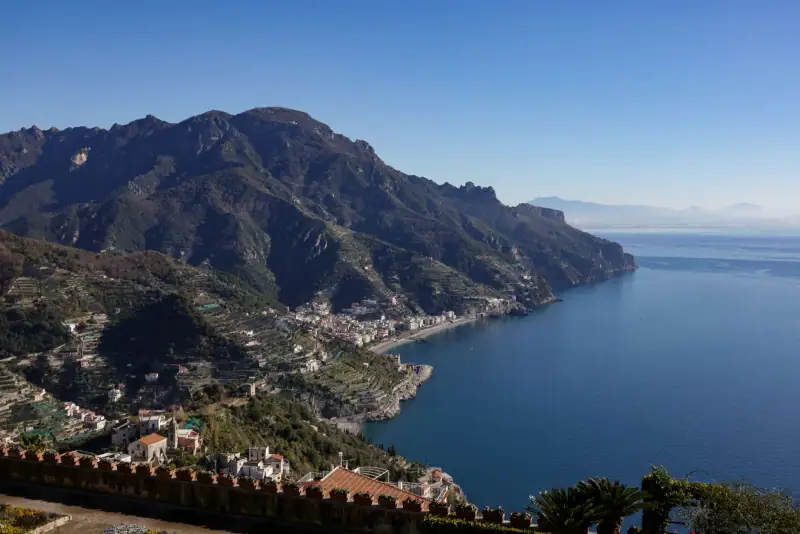
5 days
Amalfi Coast road trip by car: a Sorrento to Salerno itinerary
Drive the Amalfi Coast from Sorrento to Salerno on the SS163: stops in Positano, Amalfi and Ravello, parking, and tips for narrow roads.
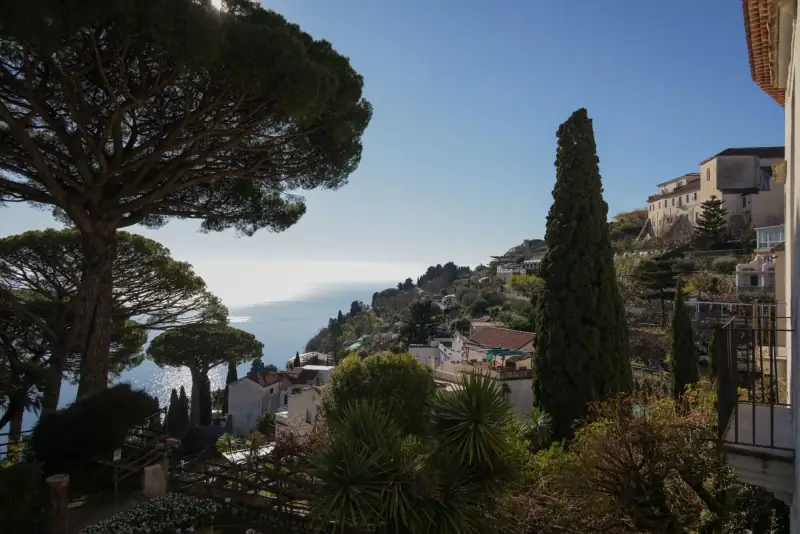
5 days
Amalfi Coast without a car: a 5-day itinerary by bus, ferry and train
Visit the Amalfi Coast without a car in 5 days: day-by-day itinerary by bus, ferry and train, with Amalfi, Ravello, Positano, Capri, Pompeii and tips.