Itineraries
Florence in 2 Days: A Walking Itinerary, Day by Day
We may earn a commission when you book through links on this page, at no extra cost to you. We don't visit or try the places we cover: we summarize published sources. How we work
Day by day
- Day 1Duomo district, Piazza della Signoria, Ponte Vecchio
- Day 2Uffizi, Accademia, Oltrarno, sunset at Piazzale Michelangelo
Weather through the year on this route
| Jan | Feb | Mar | Apr | May | Jun | Jul | Aug | Sep | Oct | Nov | Dec | |
|---|---|---|---|---|---|---|---|---|---|---|---|---|
| High °F (°C) | 5010 | 5211 | 5915 | 6418 | 7222 | 8127 | 8831 | 8831 | 7926 | 7021 | 5915 | 5211 |
| Low °F (°C) | 394 | 394 | 436 | 489 | 5513 | 6317 | 6820 | 7021 | 6317 | 5513 | 489 | 415 |
| Rain in (mm) | 2.255 | 2.255 | 2.255 | 2.460 | 2.050 | 1.640 | 1.025 | 1.435 | 3.180 | 4.1105 | 4.5115 | 3.075 |
Normals 1991–2020 at Pisa: averages over 30 years, not a forecast. Source: NASA POWER (MERRA-2), grid of about 50 km. Figures computed by us in November 2026.
In short
- Two days cover the classics: the Duomo, Piazza della Signoria, the Uffizi, the Accademia and the Oltrarno. You will not see every museum, but it is a very good first look.
- Book tickets for the Uffizi, the Accademia and the Duomo dome climb, which requires a reservation. Several state museums are generally closed on Mondays.
- The historic center is walkable and largely a limited traffic zone (ZTL); a car is only useful for Chianti or Val d'Orcia excursions.
- Plan 2 to 3 hours for the Uffizi and a little over an hour for the Accademia.
Florence lends itself beautifully to a short stay. Its historic center is compact, almost everything is reachable on foot, and the city packs in a rare density of art and architecture. The trap is trying to see everything: it is better to pick a few places and enjoy them than to go from one line to the next.
This itinerary spreads the big classics over two days: the first devoted to the monumental heart of the city, the second to the Renaissance in the museums, then to the Oltrarno, on the other side of the Arno. Before you go, take a look at our guide to the best time to visit Tuscany to choose your dates.
Before you go: organizing your two days
Three habits make the stay much simpler. First, book your tickets for the Uffizi, the Accademia Gallery and the climb up the Duomo dome: these sites draw big crowds and slots go fast in high season. Second, check closing days: several major state museums are generally closed on Mondays, which can upend a plan if you arrive early in the week. Finally, wear comfortable shoes: the streets are cobbled and you will walk a lot.
For where to stay, the historic center or the area around the station keeps travel time down. Our article where to stay in Florence compares the neighborhoods by type of traveler.
Hotels in Florence
For a short stay, choose central accommodation and book early, especially in spring and fall.
Day 1 morning: the Duomo and its district
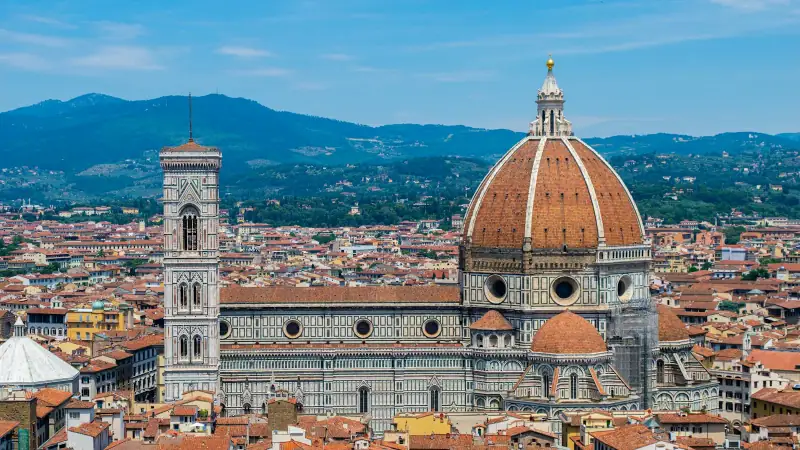
Start with the symbolic heart of the city: Piazza del Duomo. The Santa Maria del Fiore cathedral impresses with its facade of white, green and pink marble, but it is above all its dome, by Brunelleschi, that rules the skyline and can be spotted from very far away. Giotto’s bell tower and the Baptistery of St. John, with its famous bronze doors, complete the ensemble.
If you are ready to climb, the dome offers a superb view over the terra-cotta rooftops, but it takes good lungs and a reservation in advance. The bell tower is a slightly less crowded alternative, with the dome in full view in front of you. Inside, the cathedral is surprisingly plain compared with its facade; entering the nave is generally easier than going up the monuments.
Allow about three hours for this morning if you climb somewhere, two if you stick to the exterior and the nave. The streets around the square are very busy: start early for a calmer atmosphere.
Day 1 afternoon: Piazza della Signoria and Ponte Vecchio
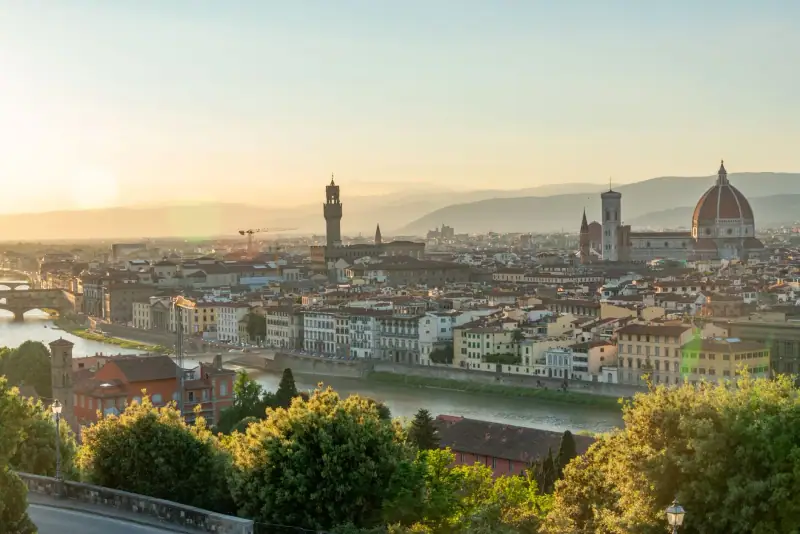
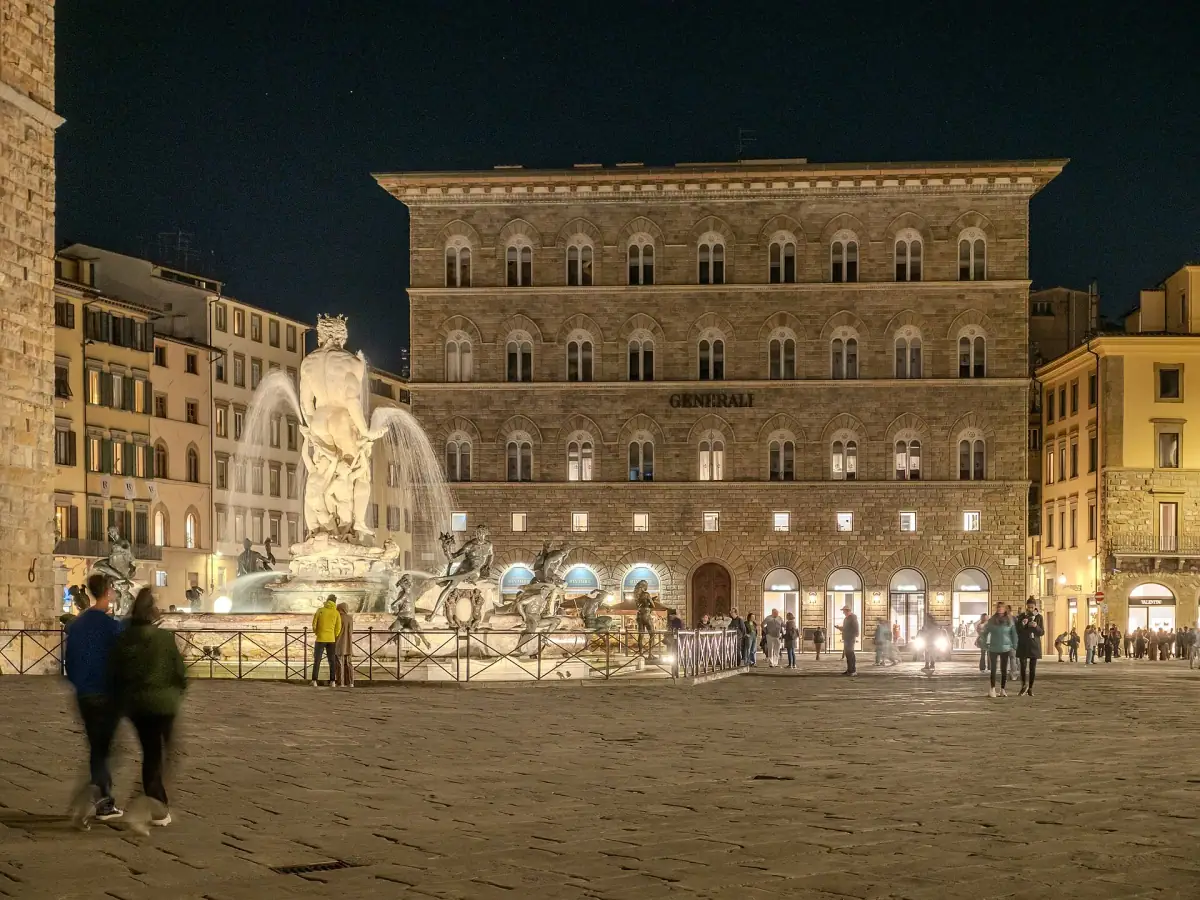
After a lunch break, walk to Piazza della Signoria, an open-air museum. The Palazzo Vecchio, the former seat of Florentine power, takes up one side with its crenellated tower; under the Loggia dei Lanzi, sculptures can be seen freely. You are in the middle of medieval and Renaissance Florence.
Continue toward the Arno to reach the Ponte Vecchio, the oldest bridge in the city. Its small goldsmith and jewelry shops, clinging to both sides, give it a unique charm. The bridge is busy all day; the best viewpoint for admiring it remains the neighboring embankments, or the golden light of late afternoon.
If you still have energy, a walk along the river brings you gently back toward the center. In the evening, let yourself drift through the lanes: Florence is a city where people like to stroll after dinner.
Guided tours in Florence
Guided tour of the historic center, skip-the-line museum access or a themed walk: compare the options and available slots.
Day 2 morning: the Uffizi and the Accademia
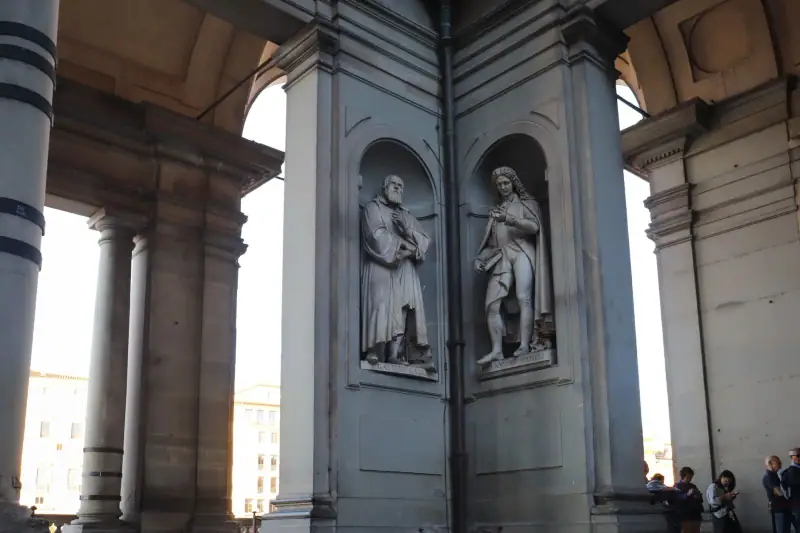
The second day is the art day. The Uffizi Gallery holds one of the finest collections of Italian Renaissance painting, including Botticelli’s The Birth of Venus and Primavera. There are many rooms: without a strategy, you get lost quickly. Choose two or three rooms or artists that speak to you, and accept skimming the rest.
Allow two to three hours. A guided tour can help structure the route, but an audio guide or a quick bit of preparation before the visit is enough too. Remember: the museum is generally closed on Mondays.
If time allows, follow with the Accademia Gallery, home to Michelangelo’s David. Its size, its presence and the purity of its lines almost always strike visitors, even those who do not expect much from a statue. The museum is smaller than the Uffizi, so it can be visited in a little over an hour. Book here too.
Lunch: tasting Florentine cuisine
Florence is also a city to eat in. For lunch, you have several options: the central market in the San Lorenzo district, with its counters of fresh produce and takeaway dishes, or a traditional trattoria in the neighboring streets. Among the specialties to try are bistecca alla fiorentina (grilled T-bone steak, meant for sharing), lampredotto (a tripe snack sold at street stalls), ribollita (bread and vegetable soup) and schiacciata, a flatbread with olive oil that you eat as a sandwich.
We detail these dishes in our guide what to eat in Tuscany. For a quick lunch, a filled schiacciata or a plate of local cured meats and cheeses recharges your batteries without losing an hour at the table.
To go further, a cooking class or a guided tasting is a nice way to discover the local food.
Cooking classes and tastings
Fresh pasta, Chianti wine, market produce: several food experiences are available in Florence.
Day 2 afternoon: the Oltrarno, the artisans’ side
Cross the Arno to discover the Oltrarno, the district “beyond the Arno”. The atmosphere changes: fewer crowds, more artisan workshops, small squares and cafés for regulars. This is where you will find the Pitti Palace, former residence of the grand dukes of Tuscany, and the Boboli Gardens that stretch out behind it, with their paths, fountains and viewpoints over the city.
If the museum does not tempt you, the Boboli Gardens are a nice green break. Around Piazza Santo Spirito, the neighborhood then offers a relaxed atmosphere, with terraces where you can have a drink at the end of the day.
Take the time to look at the shop windows: several artisan workshops still work leather, paper, gilding or goldsmithing in these streets. It is one of the most authentic moments of a stay in Florence.
Sunset at Piazzale Michelangelo
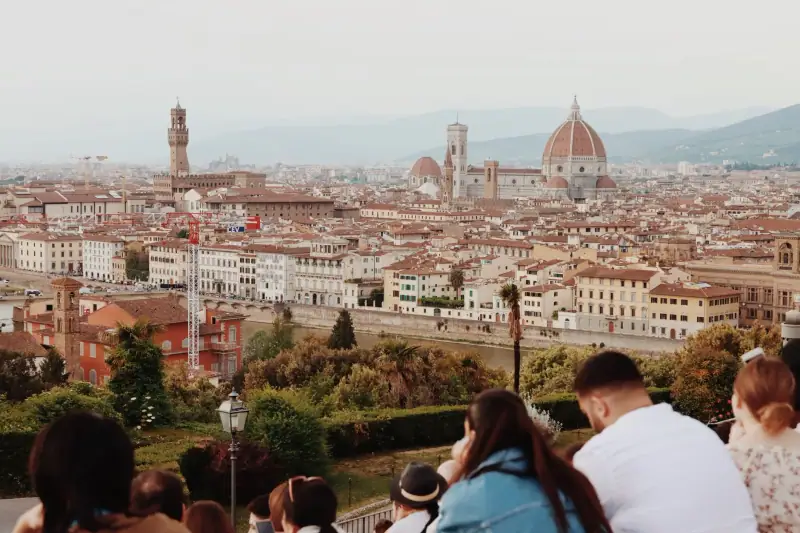
To finish in style, go up to Piazzale Michelangelo, a large viewing terrace over the city from the south bank of the Arno. From there, the panorama takes in the Duomo, the Palazzo Vecchio, the Arno and its bridges. It is the ideal place to wrap up your two days, especially at sunset, when the rooftops turn golden.
You can walk up from the center, a few dozen minutes of uphill walking, or take public transport. A little higher, the church of San Miniato al Monte offers a calmer viewpoint and a lovely Romanesque setting. The spot is very busy at dusk: arrive a little early to find a place along the parapet.
Practical tips for your stay
- Getting around: everything is done on foot in the center. For excursions, see our guide to getting around Tuscany.
- Car: unnecessary in town, and the center is largely a limited traffic zone (ZTL). If you come by car, park outside the center and ask your accommodation.
- Season: spring and early fall are pleasant. In summer the heat is intense: visit early in the morning and take a break in the afternoon.
- Dress: to enter churches, covered shoulders and knees are generally required.
- Safety: as in all very touristy cities, keep an eye on your belongings in crowds, especially near monuments and on public transport.
What if you have one more day?
A third day opens doors to other Tuscan cities reachable by train or car. Our article on Pisa and Lucca in one day offers an itinerary that is easy to do from Florence, as does visiting Siena in one day. If you prefer the countryside, the Chianti road combines landscapes and wine tastings.
For an overview of the region, you can also see our 7-day Tuscany itinerary, which places Florence at the start of the trip.
Key takeaways
Two days in Florence is a balance between monuments, museums and strolling. Book your tickets in advance, group your visits by neighborhood, keep time for walking and eating, and resist the temptation to see everything. Florence often reveals itself better when you agree to slow down: it is also an excellent reason to come back.
Sources
- Uffizi Galleries: figures checked November 2026
Frequently asked questions
Are two days enough to visit Florence?
Two days let you see the big classics: the Duomo, Piazza della Signoria, the Uffizi, the Accademia and the Oltrarno district. You will not see every museum, but you will get a very good first look to the city.
Do you need to book tickets in advance in Florence?
It is strongly advised for the Uffizi and the Accademia Gallery, which are very busy, and for the climb up the Duomo dome, which requires a reservation. Booking avoids long lines.
Which day of the week should you avoid for museums?
Several major state museums, including the Uffizi and the Accademia Gallery, are generally closed on Mondays. Check closing days on the official websites when you plan your stay.
Do you need a car to visit Florence?
No. The historic center is walkable and a large part of it is a limited traffic zone (ZTL). A car is only useful for excursions in Chianti or the Val d'Orcia.
Where should you stay for a 2-day trip?
The historic center or the Santa Maria Novella station area let you do everything on foot and save time. Our guide to the neighborhoods details the pros and cons of each.
More Tuscany guides
Keep reading
San Galgano Abbey and the Sword in the Stone: Hours, Prices and Access from Siena
Roofless abbey and Montesiepi hermitage near Siena: hours, 2026 rates, getting there without a car, visit length and what you really see.
Siena in One Day: Itinerary, Highlights and Tips
What to see in Siena in one day? Piazza del Campo, the cathedral, Palazzo Pubblico, Torre del Mangia and local sweets: a realistic plan and practical tips.
Where to Stay in Siena and San Gimignano: Neighborhoods, Villages and Tips
Where to stay in Siena and San Gimignano? Medieval center, areas by the walls or nearby countryside: pros, limits, parking and tips for choosing well.
Ready-made
Tuscany itineraries
1 day
Pisa and Lucca in One Day from Florence: A Train Itinerary
Pisa and Lucca in one day from Florence: train itinerary, travel times, top sights and tips for enjoying both cities.
7 days
Tuscany in 7 Days: A Road Trip from Florence to the Val d'Orcia
A 7-day Tuscany itinerary: Florence, Pisa, Lucca, Chianti, Siena, San Gimignano and the Val d'Orcia, with realistic drives and practical tips.
2 days
Val d'Orcia Road Trip: Pienza, Montalcino and Montepulciano
A 2-day road trip in the Val d'Orcia: Pienza, Bagno Vignoni, Montalcino and Montepulciano. Route, practical tips, wine and cypress-lined landscapes.