What to see
Siena in One Day: Itinerary, Highlights and Tips
We may earn a commission when you book through links on this page, at no extra cost to you. We don't visit or try the places we cover: we summarize published sources. How we work
In short
- One day is enough for the classics: Piazza del Campo, the cathedral, the Palazzo Pubblico and the tower. The historic center is compact and walkable.
- Siena is about 70 km (43 mi) from Florence. The center is a limited traffic zone (ZTL) with automatic fines, so park on the outskirts.
- The Palio horse race is held twice a year on Piazza del Campo, in early July and mid-August; book far ahead if you stay then.
- Try the local sweets: panforte, ricciarelli and cantuccini.
Siena was long Florence’s great rival, and it shows: the city built its own cathedral, its own town hall and its own square, and wanted them as beautiful as its neighbor’s. The result is a medieval center of rare coherence, a UNESCO World Heritage Site, where red brick, sloping lanes and marble facades answer one another.
Good news: the historic center is compact. If you start early, one day is enough to see the essentials without rushing. Here is a plan from morning to evening, with tips to avoid the crowds and organize the day. If Siena is just one stop on your trip, it fits naturally into our 7-day Tuscany itinerary.
Arriving in Siena and getting your bearings
Siena is about 70 km (43 mi) from Florence, in the heart of the Tuscan hills. The trip from Florence is easy by bus or train; coaches generally drop visitors near the gates of the center. If you drive, keep in mind that the heart of the city is a limited traffic zone (ZTL): cameras automatically fine unauthorized vehicles. The simplest way is to use a parking lot on the outskirts and finish on foot, using the escalators that climb toward the center if needed.
The city layout is simple to understand. Three big hills converge on Piazza del Campo, which serves as a landmark: if you are lost in the lanes, head downhill and you will almost always end up there. The streets are cobbled and steep, so comfortable shoes are essential.
Arrive as early as possible. Day-trip groups flood in mid-morning and leave in late afternoon; the first hours and the end of the day are the most pleasant, notably in summer, when the cobblestones get hot.
Piazza del Campo, the heart of Siena
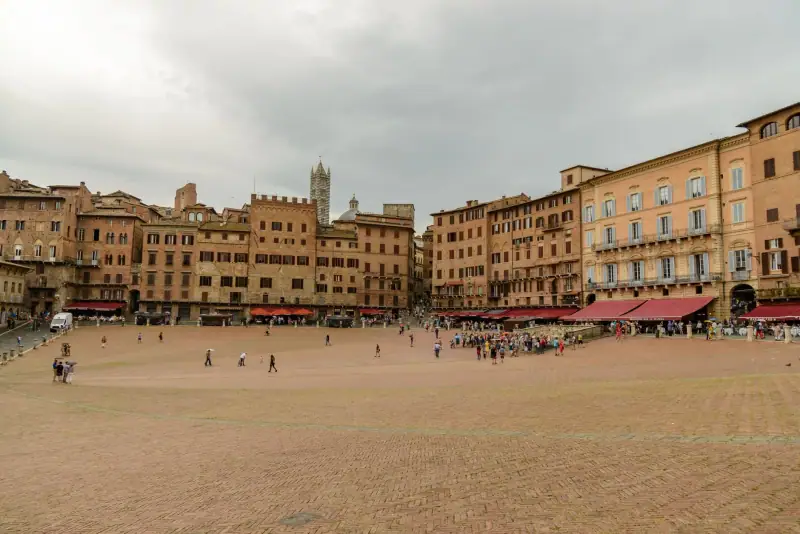
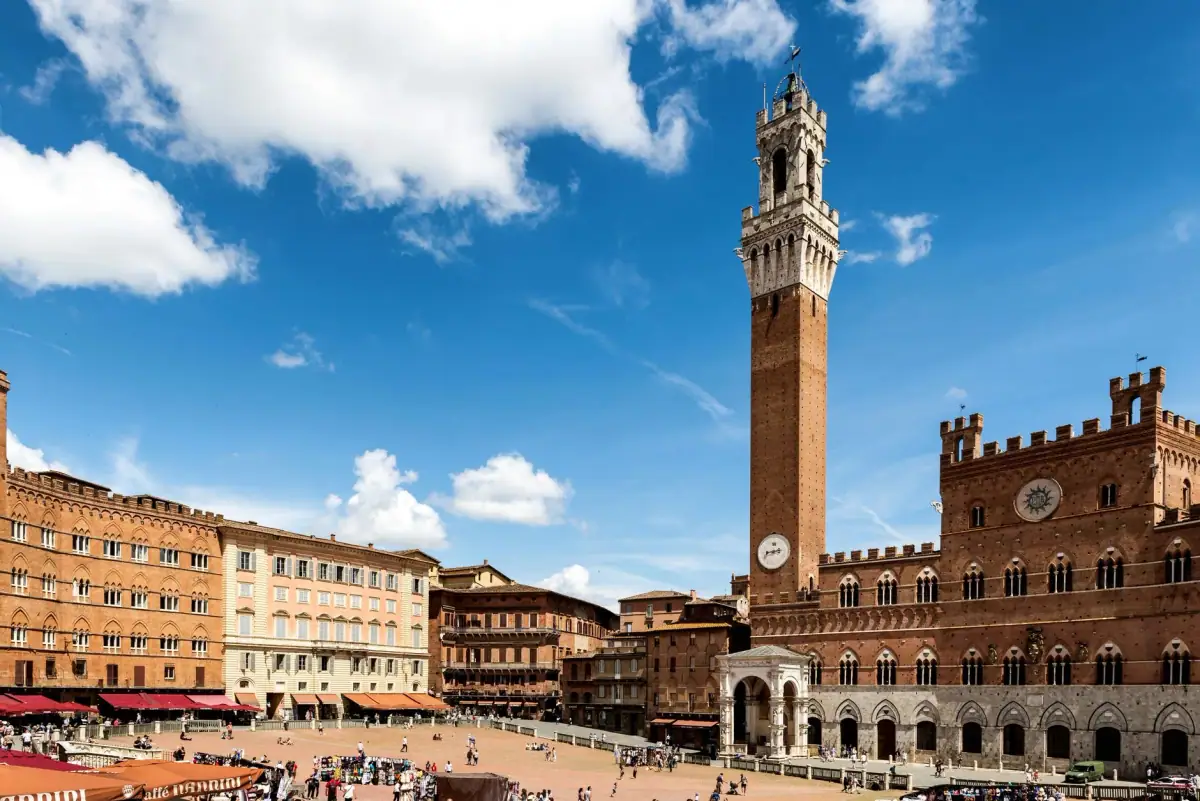
Piazza del Campo is one of the most beautiful public spaces in Europe. Its shell shape, tilted slightly toward the Palazzo Pubblico, is unique: the brick floor is divided into nine sections by bands of pale stone, said to recall the Government of the Nine that ran the city in the Middle Ages.
This is where the Palio is run, the famous horse race between city districts called contrade. It takes place twice a year, in early July and mid-August, and turns the square into an arena packed with people. Outside those dates, the square is mostly a place to pause: people sit on the brick itself, legs stretched toward the tower, and watch the city go by. The terraces lining the square are pricey for what they offer; it is better to have a drink there and eat on an adjacent street.
Take the time to look up at the Torre del Mangia, which rises beside the palace. It is among the tallest medieval towers in Italy, and its slender silhouette dominates the whole historic center.
The Palazzo Pubblico and the Torre del Mangia
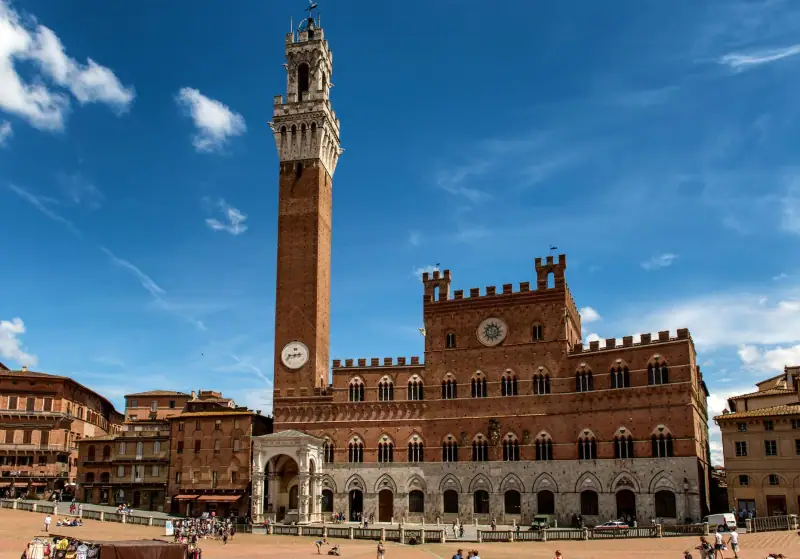
The Palazzo Pubblico houses the civic museum, which is well worth the visit. The rooms hold major frescoes of 14th-century Sienese painting. You can see in particular Simone Martini’s great Maestà and Ambrogio Lorenzetti’s Allegory of Good and Bad Government, a rare work: a secular cycle in which the life of a well-governed city, with its craftsmen, merchants and dancers, is set against that of a city delivered to tyranny.
The climb up the Torre del Mangia is by a narrow staircase of several hundred steps, with no elevator. The effort is rewarded: from the top, you discover the brick rooftops, the cathedral and the surrounding hills. Access slots are limited, which can mean waiting in high season; check booking details before you come and save this climb for a moment when you have energy.
Hotels in Siena
Staying in town lets you enjoy the city in the evening and early morning. Compare stays, with free cancellation if possible.
The cathedral and its complex
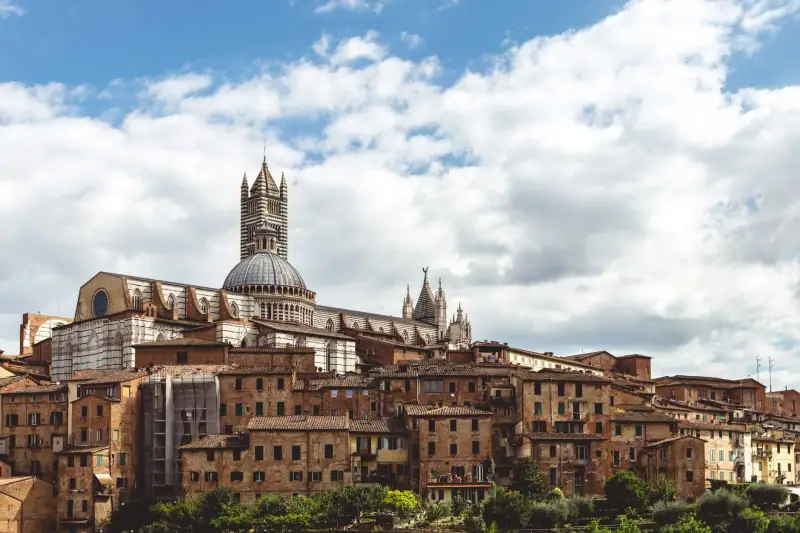
Siena’s Duomo is one of the masterpieces of Italian Gothic. Its white, green and pink marble facade, adorned with sculpture, is spectacular, but it is the interior that impresses most: columns striped white and black, a starry vault, a carved pulpit and above all an inlaid marble floor, made up of historical and biblical scenes. To protect it, much of this floor is uncovered only at certain times of the year: find out before your visit.
Don’t skip the Piccolomini Library, a hall decorated with frescoes whose colors are still vivid, which tell the life of Pope Pius II. Depending on the ticket you choose, the visit of the complex may also include the baptistery, the crypt and the Museo dell’Opera, whose terrace offers a fine view of the city. A combined ticket is generally the best value for those who want to see everything; compare the options at the ticket office or online.
Allow about an hour and a half for the cathedral complex. If you are in Siena in summer, plan this visit for the hottest hours: the interior is cool and out of the sun.
Wandering the lanes and districts
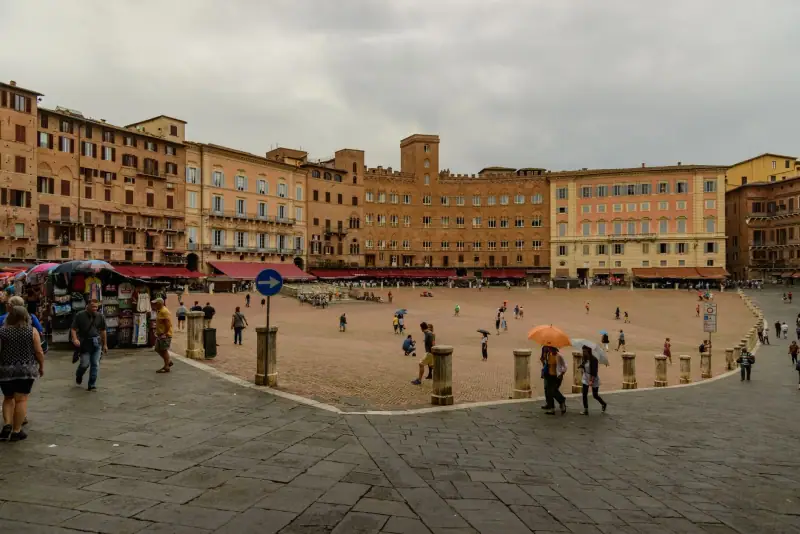
Between two monuments, the best thing in Siena is getting lost. The center is crossed by three main shopping streets that meet near the Campo, lined with medieval palaces and shops selling local products. Around a corner, banners and fountains in the colors of the contrade remind you that each district has its emblems, festivals and rivalries.
Depending on your time, add one of these visits:
- The Basilica of San Domenico, away from the Campo, associated with Saint Catherine of Siena, patron saint of Italy, and whose terrace offers a view of the center.
- The Fortezza Medicea, a 16th-century fortress ringed by walls, whose surroundings now serve as a walking spot for residents.
- The lanes around the contrade, quieter than the tourist core, where you can still see the daily life of the Sienese.
Keep some energy for late afternoon: the golden light on the brick, once the groups have left, is the best time to return to Piazza del Campo.
Guided tours in Siena
Walking tours of the historic center, tickets and day excursions from Florence.
What to eat in Siena
Siena is a city for people who love to eat, and its sweet specialties are known throughout Italy. Panforte is a dense, spiced cake made with dried and candied fruit; ricciarelli are small soft almond-paste cookies; cantuccini, dry almond biscuits, are traditionally dipped in a sweet wine. You will find them in pastry shops in the center, often to take home as souvenirs.
On the savory side, Sienese cooking is that of Tuscany: cured meats, fresh pasta such as pici, a kind of thick hand-rolled spaghetti, grilled meats and slow-cooked dishes. For all the specialties of the region, see our guide what to eat in Tuscany. To avoid tourist traps, skip the restaurants lined up directly on Piazza del Campo and choose the adjacent streets, where menus are shorter and more local.
The region’s wines, from Chianti to Brunello di Montalcino, can be tasted in the city’s wine shops (enoteche). If you plan to keep driving, leave the drinking to someone else and let the driver abstain.
Organizing your day in Siena
Here is a realistic plan, to adapt to your arrival time:
- Morning: early arrival, Piazza del Campo, then the Palazzo Pubblico and, if you have the energy, the climb up the Torre del Mangia.
- Lunch: a break on an adjacent street, with local specialties.
- Early afternoon: cathedral, Piccolomini Library and the Museo dell’Opera.
- Late afternoon: a stroll through the lanes, the Basilica of San Domenico or the Fortezza Medicea.
- Evening: back to Piazza del Campo, dinner in town if you stay overnight in Siena.
A few tips so everything goes well:
- Season: spring and early fall are the most pleasant for walking in the city. See our guide to the best time to visit Tuscany to choose your dates.
- Shoes: the streets are steep and cobbled, so plan on good soles.
- Dress: covered shoulders and knees are generally required to enter the cathedral and churches.
- Water: fountains dot the city; a water bottle is useful in summer.
- Tickets: book ahead in high season for the busiest monuments.
Tastings around Siena
Cellar visits and tastings in Chianti, without having to drive.
Siena in one day or one night?
One day is enough for the classics, but Siena reveals itself differently in the evening, once the day-trippers have left: Piazza del Campo calms down, the lanes empty and the city regains a medieval air. If your itinerary allows, a night in town is a big plus. For those staying in Florence, the city is also an easy day trip, as our guide where to stay in Florence suggests.
Siena combines easily with Chianti, San Gimignano or the Val d’Orcia in a single road trip: that is precisely the route of our 7-day Tuscany itinerary. With a car and a free half day, the roofless abbey of San Galgano is about 45 minutes from Siena.
Frequently asked questions
Is one day enough to visit Siena?
Yes, for the big classics: Piazza del Campo, the cathedral, the Palazzo Pubblico and the tower. The historic center is compact and walkable. A night in town does let you enjoy the city once the groups have left.
How do you get from Florence to Siena?
Siena is about 70 km (43 mi) from Florence. You can go by bus or train, or by car, but the historic center is a limited traffic zone: it is better to park on the outskirts and walk to the center.
Should you climb the Torre del Mangia?
It is one of the best viewpoints over the city and the surrounding countryside, but the climb is by a narrow staircase, with no elevator. Slots are limited: check booking details in advance, especially in high season.
When is the Palio di Siena held?
The Palio, a horse race run on Piazza del Campo between the city's districts (contrade), is held twice a year, in early July and mid-August. The city is then very busy: book far in advance.
What should you taste in Siena?
Local sweets are the city's specialty: panforte, a dense cake of dried fruit and spices, ricciarelli, soft almond cookies, and cantuccini to dip in a sweet wine.
More Tuscany guides
Keep reading
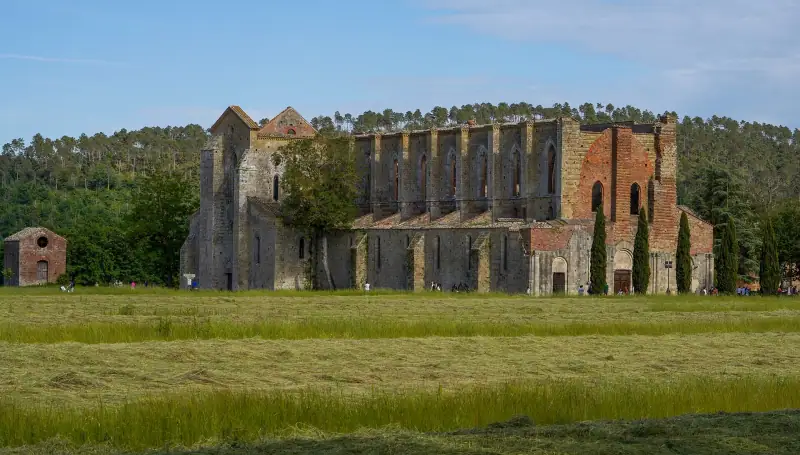
San Galgano Abbey and the Sword in the Stone: Hours, Prices and Access from Siena
Roofless abbey and Montesiepi hermitage near Siena: hours, 2026 rates, getting there without a car, visit length and what you really see.
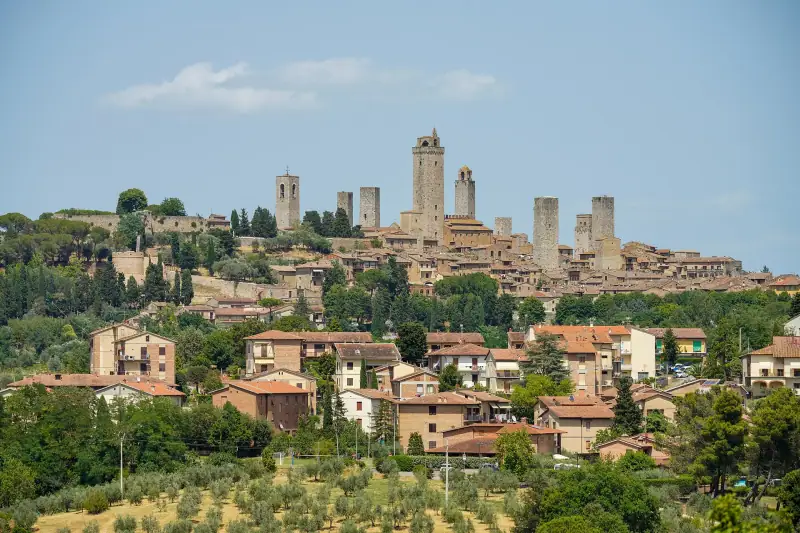
San Gimignano in One Day: Towers, Vernaccia and Tips
San Gimignano in one day: medieval towers, the Collegiata, vernaccia, the best time to avoid crowds and how to get there from Florence.
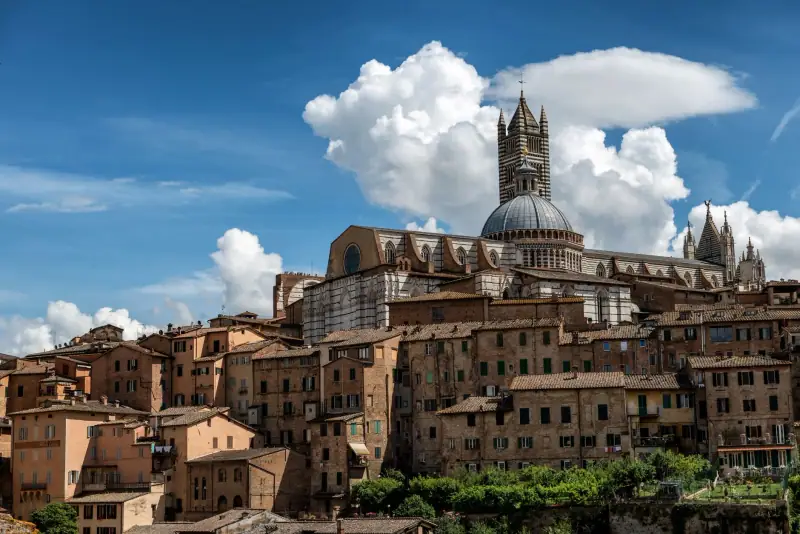
Complete Guide to Visiting Tuscany: Cities, Highlights and Tips
Everything to plan your Tuscany trip: regions, cities, highlights, best time, transport, accommodation and budget, with our detailed guides.
Ready-made
Tuscany itineraries
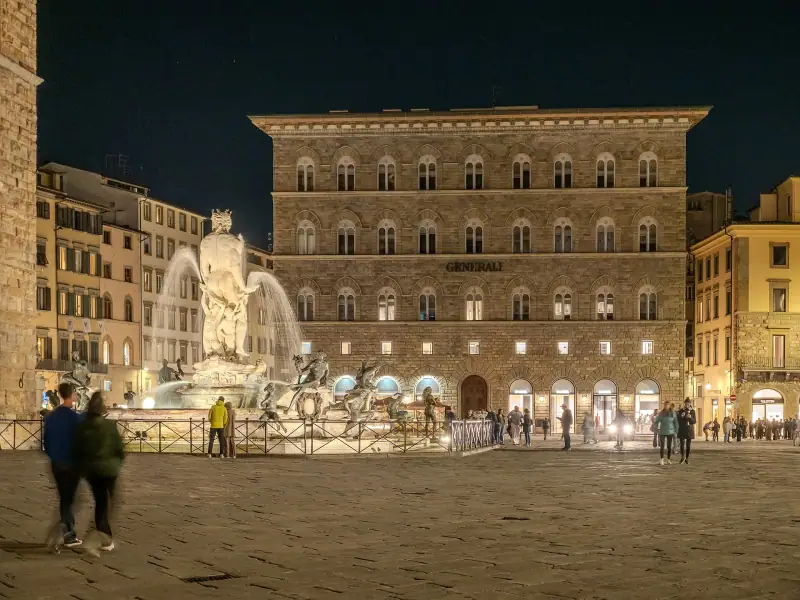
2 days
Florence in 2 Days: A Walking Itinerary, Day by Day
Florence in 2 days: Duomo, Uffizi, Accademia, Ponte Vecchio, Oltrarno and Piazzale Michelangelo. A realistic walking itinerary without rushing.
1 day
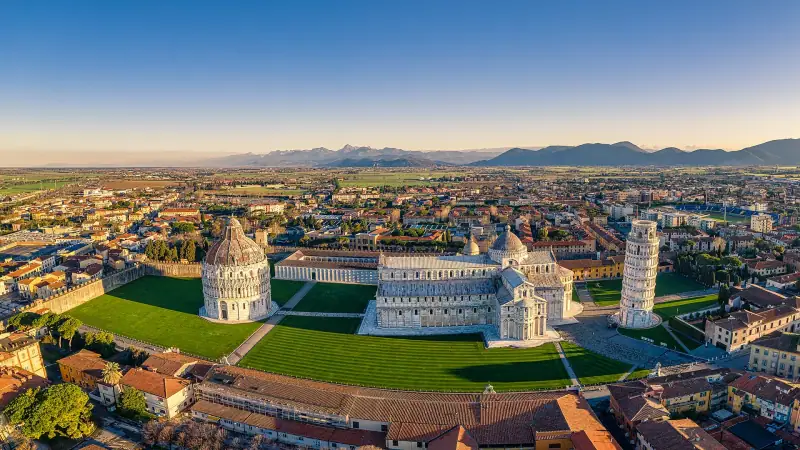
Pisa and Lucca in One Day from Florence: A Train Itinerary
Pisa and Lucca in one day from Florence: train itinerary, travel times, top sights and tips for enjoying both cities.
7 days
Tuscany in 7 Days: A Road Trip from Florence to the Val d'Orcia
A 7-day Tuscany itinerary: Florence, Pisa, Lucca, Chianti, Siena, San Gimignano and the Val d'Orcia, with realistic drives and practical tips.