Itineraries
Amalfi Coast road trip by car: a Sorrento to Salerno itinerary
We may earn a commission when you book through links on this page, at no extra cost to you. We don't visit or try the places we cover: we summarize published sources. How we work
Day by day
- Day 1Arrive via Naples, Sorrento peninsula and viewpoints
- Day 2Sorrento to Positano on the scenic road
- Day 3Praiano, Furore fjord, arrive in Amalfi
- Day 4Ravello villas and gardens, Minori and Maiori beaches
- Day 5Drive to Salerno, end of the loop
In short
- The drive from Sorrento to Salerno is only about 60 km (37 mi), but it can take several hours in summer because of the bends and traffic.
- Parking is the real challenge: free spaces are rare in the villages and paid lots fill up fast. Choose lodging with parking.
- Plan at least four to five days. A small car is much easier than an SUV on the SS163.
- Limited traffic zones (ZTL) carry fines that the rental company passes on to you. Watch for the signs.
The road along the Amalfi Coast is one of the most famous drives in Italy: a corniche clinging to the cliff, pastel villages, terraced lemon groves and the sea far below. Driving it gives you real freedom, but it also takes preparation. This guide offers a five-day road trip itinerary from Sorrento to Salerno, with realistic stops, driving tips and parking solutions.
Naples appears here only as a possible arrival point, by airport or train station. The trip itself takes place on the Sorrento peninsula and then on the coast between Positano and Salerno.
Before you get behind the wheel: what to know
The Amalfi Coast is one of the places where a car is both the most tempting and the trickiest option. The main road, the SS163, links Sorrento to Salerno along the cliff. It is narrow in places, with hairpin bends, tunnels and tour buses passing each other, which sometimes forces drivers to back up.
A few realities to take in before you book:
- The distance is short, the time is long: between Sorrento and Salerno it is about 60 km (37 mi), but a full drive can take several hours in summer.
- Parking is the real challenge: free spaces are rare in the villages, and paid lots fill up quickly.
- Size matters: a small car is far more comfortable than an SUV for passing buses and parking.
- Season changes everything: outside July and August, driving is much more relaxed. Our article on the best time to go details the most pleasant months.
Temporary traffic restrictions may be put in place in high season on some stretches. Ask your rental company and check the local authorities’ websites before you leave, because the rules change from year to year.
To compare all transport options, including buses and ferries, see our guide to getting around the Amalfi Coast.
Day 1: arrival and the Sorrento peninsula
Most travelers arrive through Naples airport, then reach the Sorrento peninsula by train or by road. If you pick up the car at the airport, allow about one hour of driving to Sorrento without traffic; however, traffic can be heavy around Naples. For a calmer first experience, some people take the train and pick up the car only in Sorrento.
Sorrento is a good first base: a mid-size town with many hotels, shops and a pleasant center for a first evening. The historic center is largely pedestrian, so plan parking ahead, ideally through your lodging. Our guide on where to stay on the Amalfi Coast compares the villages to help you choose your starting point.
The end of the day is ideal for a walk on the viewpoints above the sea and for tasting lemon products, a specialty of the region. It is all explained in our article on lemons and limoncello.
Hotels in Sorrento
Compare Sorrento lodging for your dates, with or without parking, to start the road trip.
Day 2: from Sorrento to Positano on the scenic road
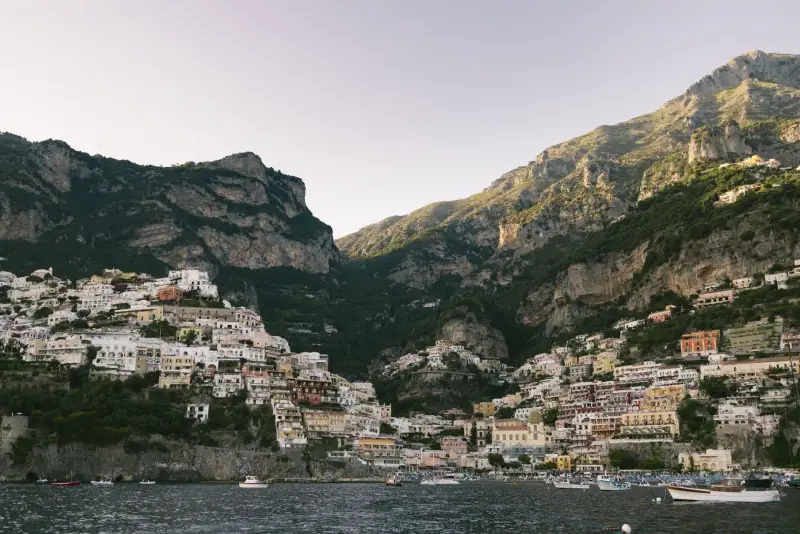
This is where the road trip really begins. From Sorrento, the road crosses the ridge of the peninsula before dropping toward the Amalfi side. The drive to Positano is about 20 km (12 mi), but allow a good hour, more in summer. Stop at the viewpoints along the road: it is the best way to enjoy the view without staying in the path of the buses.
Positano is built like an amphitheater, and the main road runs high above it. You leave the car in a paid lot before walking down the stairs and lanes. Walking distances are short but vertical, so bring good shoes. Our article on visiting Positano describes the beaches and neighborhoods to see, and the one on where to stay in Positano helps you choose a neighborhood if you spend the night there.
Many travelers prefer to sleep in a neighboring village, quieter and a little cheaper, such as Praiano. In that case, check that your lodging has a parking space: it is a deciding factor on this coast.
Day 3: Praiano, Furore and arrival in Amalfi
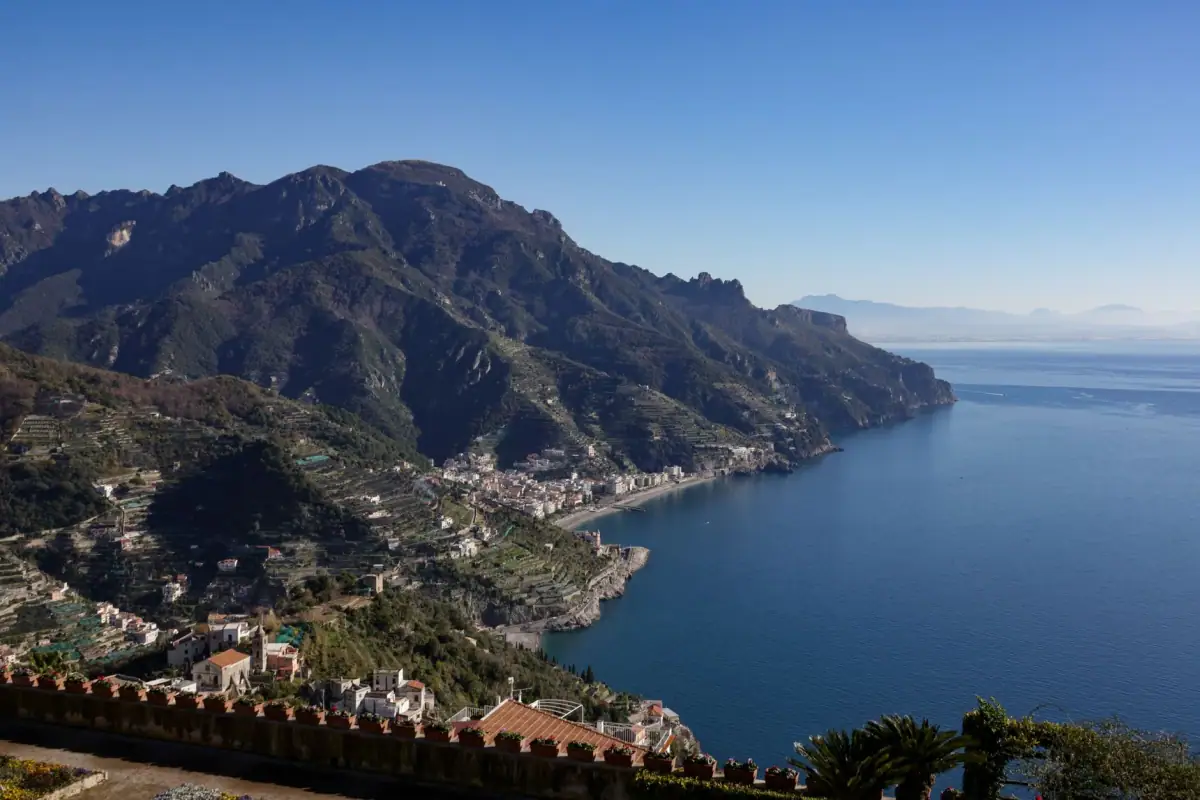
Beyond Positano, the road becomes wilder. Praiano stretches along the cliffside, with small coves reached by stairs. Farther on, Furore is known for its fjord, a deep rocky cut that a road bridge crosses. It is an excellent photo stop and a swimming spot in season for those willing to walk down to the small beach.
The Furore area is also wine country: the terraced vineyards produce well-known white wines. Our article on Amalfi Coast wines gives you ideas for a tasting along the way.
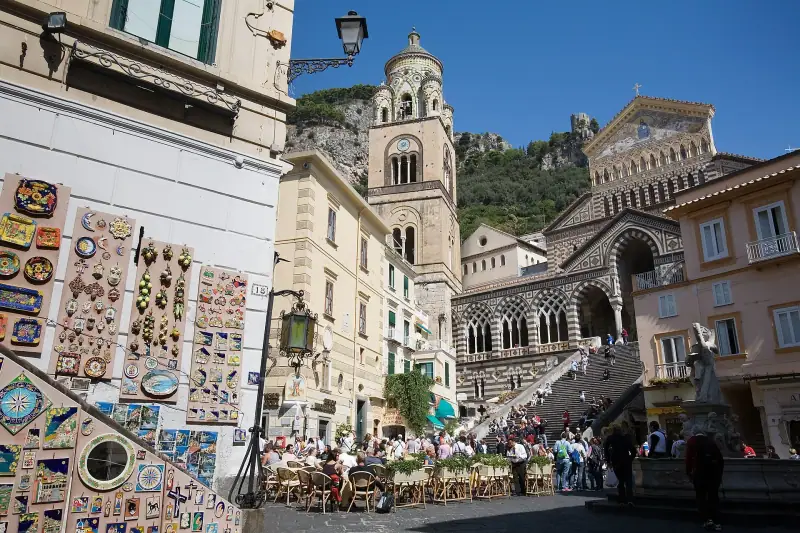
End the day in Amalfi. The small town was once a great maritime republic, and its cathedral overlooks the central square. Parking is organized around seafront or underground lots, generally paid and often expensive in summer. Reserve or ask your hotel, and avoid driving in the pedestrian center.
Day 4: Ravello, Minori and Maiori
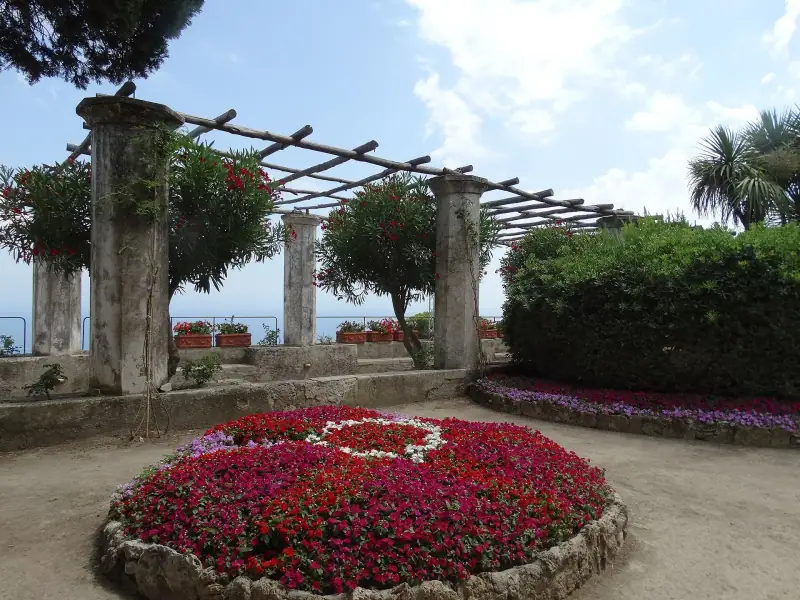
The next day climbs to higher ground. From Amalfi, the road to Ravello zigzags up the valley, with a few very narrow sections. The drive takes a short half hour in normal conditions, but it can be longer in season. In Ravello, the villas and their terraced gardens are the main attraction, in a calmer atmosphere than on the coast. Find the details in our guide to visiting Ravello.
Then drive back down to the coast to reach Minori and Maiori, two small, more family-oriented seaside resorts with long gray-sand beaches, which are rarer on this coast. They make a pleasant break after a morning of sightseeing, and parking there is generally easier than in Positano or Amalfi.
If you feel like walking, the Path of the Gods can be reached by mountain roads from this area, but it needs a dedicated day. See our guide to the Path of the Gods to choose the variant that suits your fitness.
Boat excursions
For a day without driving, discover the boat trips along the Amalfi Coast.
Day 5: toward Salerno and the end of the loop
The last stretch of the SS163 leads to Salerno, the largest city and the rail hub of the region. The road stays scenic before widening as you approach the city. Salerno is a good starting or ending point: it has a train station, a port and rental agencies, which makes returning the car easier.
From Salerno, several options let you extend the trip. You can reach Pompeii and Herculaneum by train or by car, as detailed in our article on Pompeii and Herculaneum from the Amalfi Coast. You can also head back toward Naples airport for your return flight. Check the route and timing in advance, because end-of-day traffic jams can be significant.
Driving on the Amalfi Coast: practical tips
Driving takes more attention than technical skill. A few simple rules make the experience much calmer.
Local rules and habits
- Honk in blind bends: it is a common local practice to signal your presence, especially to bus drivers.
- Let large vehicles pass: buses and coaches effectively have priority in narrow passages.
- Drive without pressure: let hurried drivers overtake you as soon as possible.
- Avoid driving at night if you are not comfortable: lighting is limited outside the villages.
- Respect the ZTL: these limited traffic zones are marked by signs, and fines are sent to the rental company and then to you.
Parking
Parking is the main headache. In the villages, the supply is mostly paid lots (private or municipal) and a few roadside spaces, often marked by blue lines (paid). Rates are higher in summer. The simplest approach is to choose lodging with parking, or to ask the hotel to point you to a partner garage.
Alternatives for some stages
Nothing forces you to do everything behind the wheel. A ferry ride between two villages, in season, lets the driver rest and shows you the coast from the sea. For a day on Capri, you leave the car on the mainland anyway: read our article on the Capri excursion from the Amalfi Coast. If you hesitate between a car and public transport, compare with our 5-day itinerary without a car and the 3-day one.
Flights to Naples
Compare flights to Naples, the main airport for starting the road trip.
Renting the car: good practices
Before you book, a few points deserve your attention.
- Choose a small car: a city car or compact, preferably with a manual gearbox if you are used to it, or an automatic if you want to concentrate on the road (automatics are in shorter supply and more expensive).
- Check the insurance: full coverage without a high deductible is useful on a road where body scratches are common.
- Photograph the car at pickup, from every angle, to avoid disputes on return.
- Check the terms: fuel, mileage, fees for returning to a different office.
- Bring a GPS or a phone with offline navigation, because the signal is patchy in some valleys.
The pickup point matters too: starting from Salerno or Sorrento avoids the intense city driving of Naples.
As for budget, allow for the rental, fuel, any highway tolls and above all daily parking, which weighs heavily on a stay of several days. Our budget for the Amalfi Coast helps you estimate the total.
Who is the road trip for?
A car suits travelers experienced in mountain driving, off-season stays and those who want to sleep in the heights or in remote villages. It suits less those who stay in a single village and mostly visit on foot, who will find buses and ferries cheaper and more restful.
A mixed approach often works very well: a car to reach the coast and explore the heights, then public transport for the most congested villages. You keep flexibility without spending your days looking for a parking space.
Last-minute tips
- Leave early in the morning: the road is clearer and the light is better.
- Fill the tank before entering the villages; gas stations are rare on the corniche.
- Keep coins for parking lots and ticket machines.
- Bring water, a cap and a snack, because traffic jams can drag on.
- Check the weather: in heavy rain, rockfalls can slow or interrupt traffic on some stretches.
Well prepared, this road trip offers one of the most beautiful coastal landscapes in Europe. By driving slowly, choosing your stops and planning parking, you will enjoy the Amalfi Coast with a freedom that no bus can truly give you.
Frequently asked questions
Is it reasonable to visit the Amalfi Coast by car?
It is possible, but demanding. The SS163 is narrow, winding and often jammed in high season, and parking in the villages is limited and paid. A car suits the off-season best, or travelers who want to explore the heights and isolated villages.
How long should an Amalfi Coast road trip last?
Plan at least four to five days to enjoy the route between Sorrento and Salerno without rushing. The distance is short, but the bends and traffic stretch travel times considerably.
Where can you park in Positano or Amalfi?
The villages mostly offer paid lots, often private, sometimes roadside or in garages. Spaces are scarce and rates are high in summer: ask your lodging, which can sometimes reserve a spot.
Do you need an international driving permit to drive in Italy?
Rules on driving licenses and permits depend on where your license was issued. Check the requirements with your rental company and the official travel advice of your government before you book, and bring your passport and the rental documents.
What is a ZTL and how do you avoid it?
The ZTL (zona a traffico limitato) is a town-center zone reserved for residents or authorized vehicles. Driving in without authorization leads to a fine sent to the rental company, which passes it on to you. Watch for the signs and ask your lodging whether its address is affected.
Should you drive in Naples?
It is not necessary. Naples is only a gateway: you can pick up a car at the airport or the station, but taking the train to Sorrento or Salerno and renting there is often simpler, depending on your schedule.
More Amalfi Coast guides
Keep reading
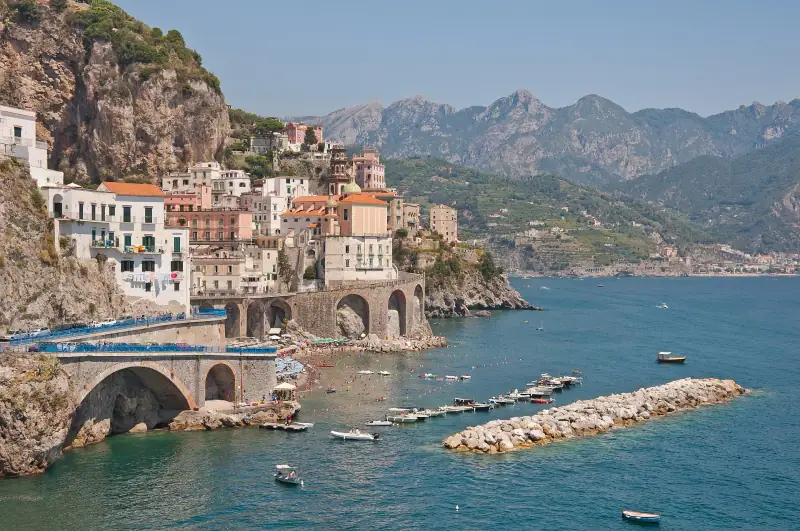
Is Atrani worth the detour from Amalfi? A half-day walking visit
Is Atrani worth the detour from Amalfi? Walking access, churches, beach, stairs to the Santuario del Bando, where to eat and visit length for half a day.
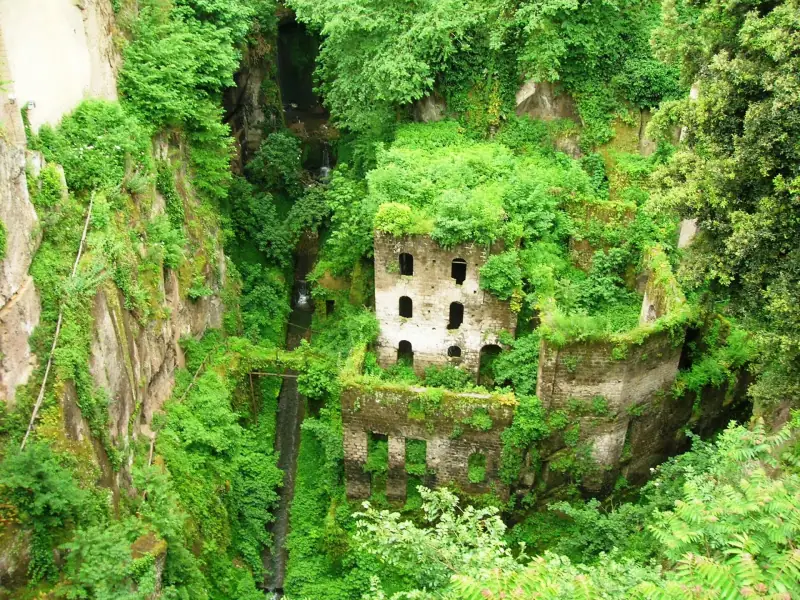
Valley of the Mills and Valle delle Ferriere in Amalfi: hiking without a guide, time, access and difficulty
Valley of the Mills and Valle delle Ferriere above Amalfi: hiking without an agency, duration, access to Pontone, difficulty, Paper Museum and FAQ.
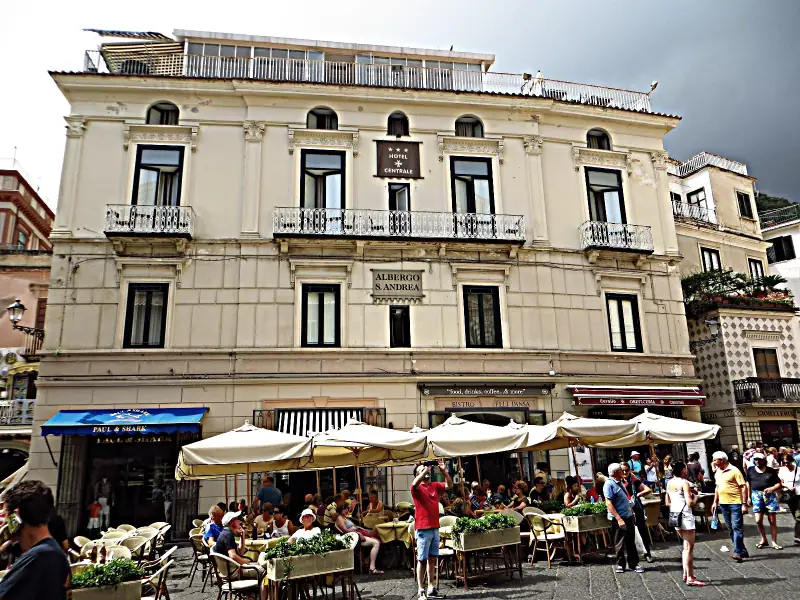
Where to stay in Amalfi, Atrani and Ravello: which base to choose on the coast
Where to stay in Amalfi, Atrani, Minori or Ravello? Bases compared, from seafront to hilltop, with tips on luggage, noise, transport and budget.
Ready-made
Amalfi Coast itineraries
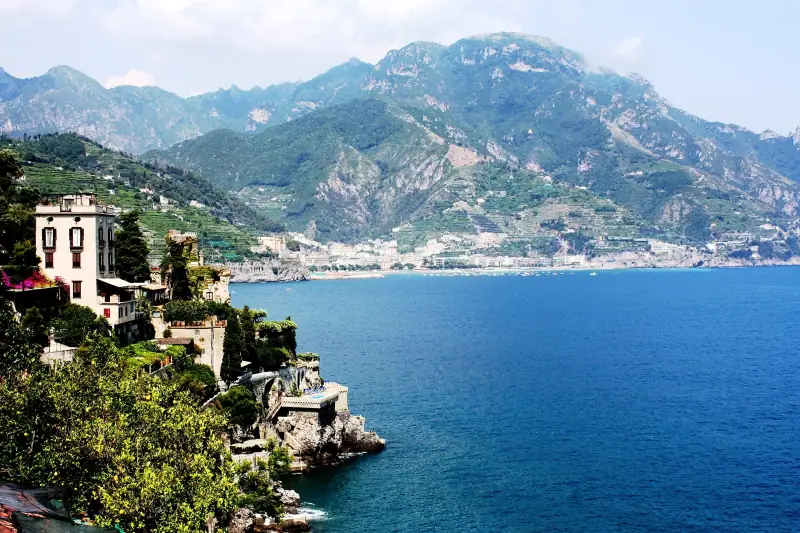
3 days
Amalfi Coast in 3 days: a day-by-day itinerary without a car
Plan 3 days on the Amalfi Coast without a car: Amalfi, Ravello, the Path of the Gods and Positano, with bus, ferry and practical tips for each day.
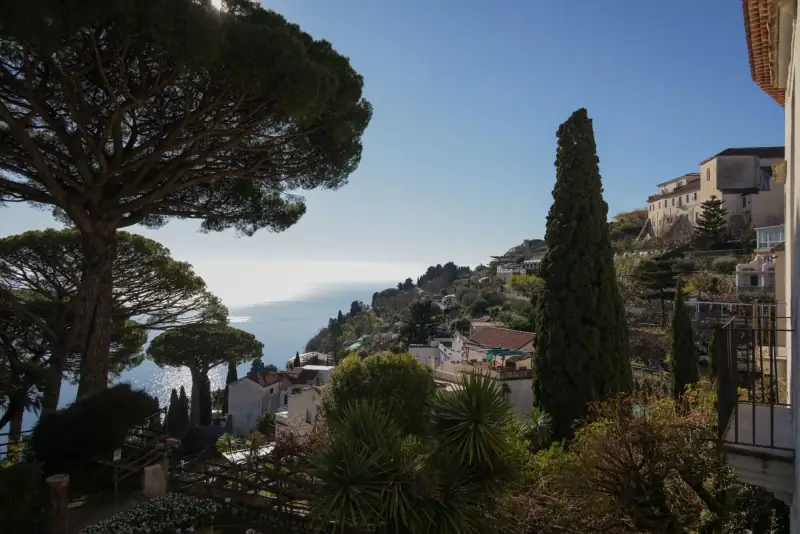
5 days
Amalfi Coast without a car: a 5-day itinerary by bus, ferry and train
Visit the Amalfi Coast without a car in 5 days: day-by-day itinerary by bus, ferry and train, with Amalfi, Ravello, Positano, Capri, Pompeii and tips.